Eastern Europe (diaspora worldwide)
Ashkenazi Jewish
Also: Ashkenazi cuisine, Eastern European Jewish cooking, deli food, Jewish deli cuisine
A cuisine of resourceful beauty shaped by kashrut law, shtetl scarcity, and centuries of Eastern European exile — brisket, gefilte fish, matzah ball soup, latkes, and rugelach as cultural monuments.
Ashkenazi cuisine is the food tradition of Jewish communities who settled in the Rhine Valley from the 10th century and spread across Eastern Europe (Poland, Russia, Ukraine, Romania, Hungary, the Baltic states) through the medieval and early modern periods. It is defined above all by kashrut (Jewish dietary law): no pork, no shellfish, strict separation of milk and meat (no butter with brisket; chicken schmaltz instead). Within these constraints, Ashkenazi cooks built a cuisine of extraordinary resourcefulness — nose-to-tail cooking, the transformation of cheap cuts into luxuries (brisket, chicken feet), and a festive calendar of ritual foods tied to Shabbat and the Jewish holidays.
The flavour base
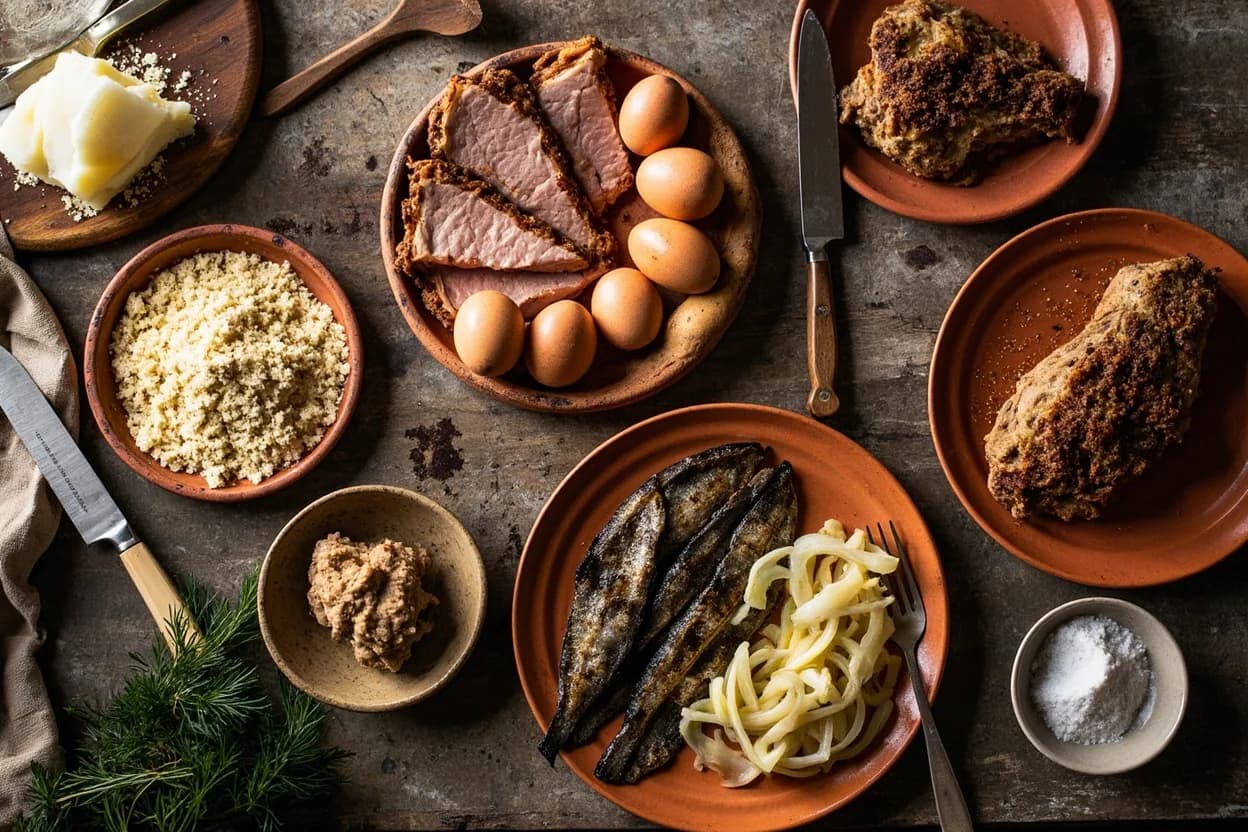
Schmaltz (rendered chicken or goose fat) with caramelized onion as the foundational fat-aromatic pair; horseradish as condiment counterpoint; dill and parsley as fresh herb defaults; braising liquid and bone broth as the carrying medium for most meat dishes.
Pantry staples
Key ingredients
Signature techniques
Signature dishes
Ashkenazi Jewish on the table
At the table
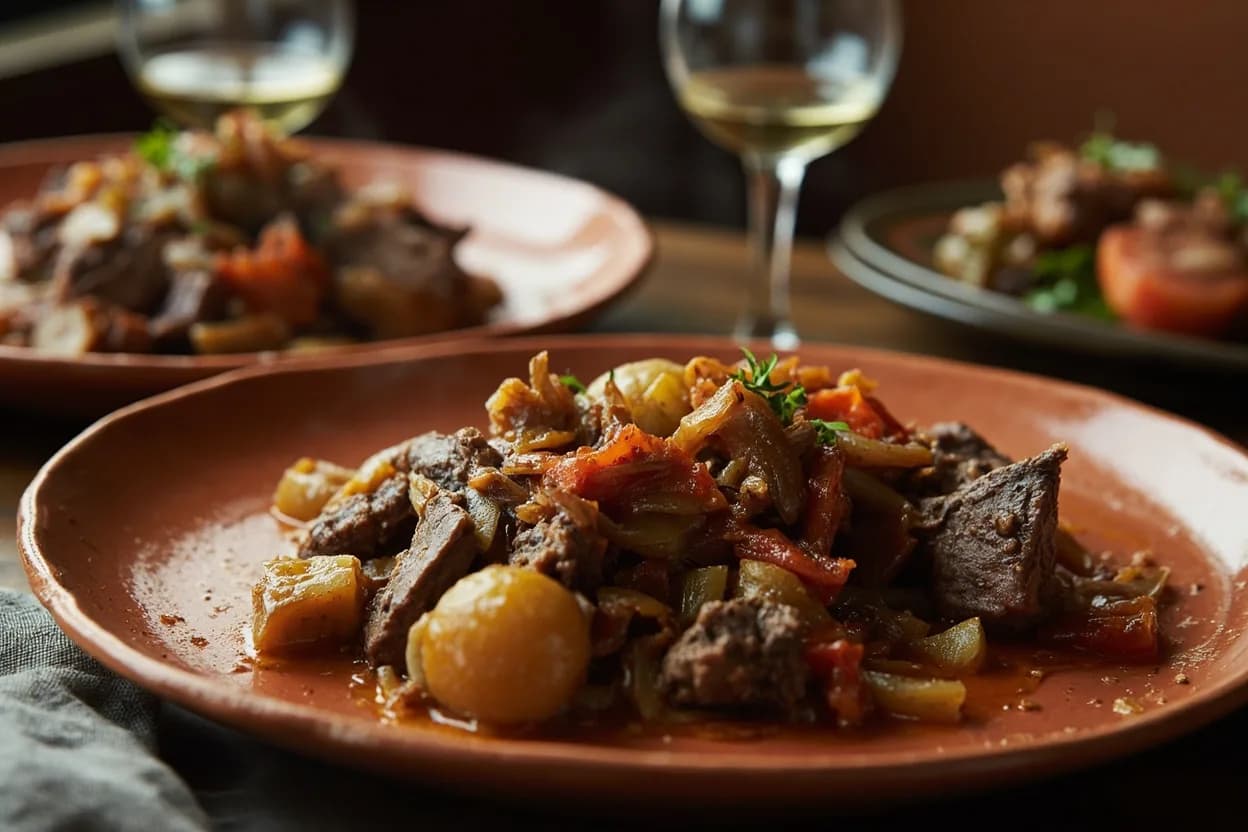
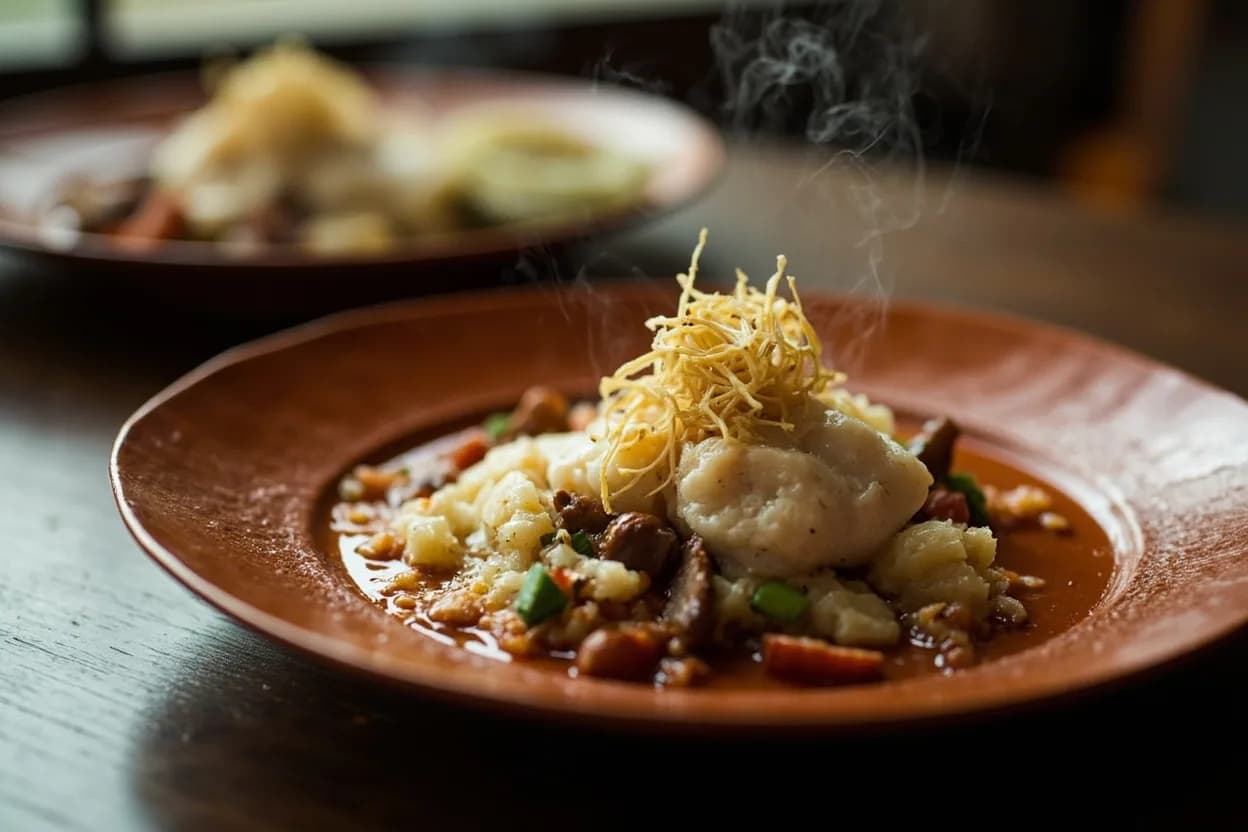
The Shabbat table is the structural reference: challah blesses the meal, followed by gefilte fish or herring with chrein, then chicken soup with matzah balls or kreplach, then roast chicken or brisket with tzimmes (carrot stew) or kugel. Dessert is cake (honey cake, apple cake) or fruit compote. Daily eating was simpler — rye bread, herring, kasha — organized around the dairy/meat separation so that the same week included both butter-rich dairy meals and schmaltz-rich meat meals.
History & context
Ashkenazi Jews migrated from the Rhineland into Central and Eastern Europe from the 10th century onward, adapting local ingredients — carp from Polish rivers, potatoes from the post-Columbian pantry, Eastern European rye bread, Slavic soured cream — to kashrut constraints. The result was a hybrid cuisine that is distinctly neither Polish nor Russian but deeply shaped by both landscapes. The great wave of Jewish emigration to the United States (1880–1924) transplanted this cuisine to New York, Chicago, and beyond, where the Jewish deli became an American institution. The Holocaust destroyed the shtetl world; what survived in memory was reconstructed by descendants, food writers, and anthropologists. Today, a generation of chefs — most visibly in New York and Tel Aviv — are reviving and reinterpreting the tradition with deep historical research.
Regional variations
- Litvak (Lithuanian Jewish)
Restrained, less sweet, more white pepper and salt; gefilte fish is unsweetened and peppered rather than sweet; cholent simpler.
- Galician (Polish-Ukrainian Jewish)
Sweeter profiles: gefilte fish is sweetened, tzimmes is honey-rich, desserts more elaborate; stronger Habsburg Central European influence.
- Romanian Jewish
Cornmeal mamaliga alongside kasha; chicken paprikash echoes Hungarian influence; strong smoked-meat tradition.
- American deli
The New York deli tradition that crystallized in the early 20th century: pastrami on rye, corned beef, matzo ball soup, black-and-white cookies, and babka — now its own cultural institution.
Related cuisines
- Sephardic Jewish
The parallel tradition of Jews expelled from Spain (1492), developing via the Ottoman Empire, North Africa, and the Levant — same kashrut law, entirely different pantry (olive oil, cumin, eggplant, rice).
Shared landscape: carp, potato, rye, sour cream — Ashkenazi cuisine absorbed and transformed the Polish peasant pantry through the kashrut filter.
Paprika, goose liver (foie gras via Hungarian Jewish goose farmers), and strudel all crossed into the Ashkenazi tradition from Hungary.
- Israeli
Ashkenazi dishes are one of four foundational pillars of modern Israeli cuisine, alongside Sephardic, Mizrahi, and Arab-Palestinian traditions.
Canonical recipes
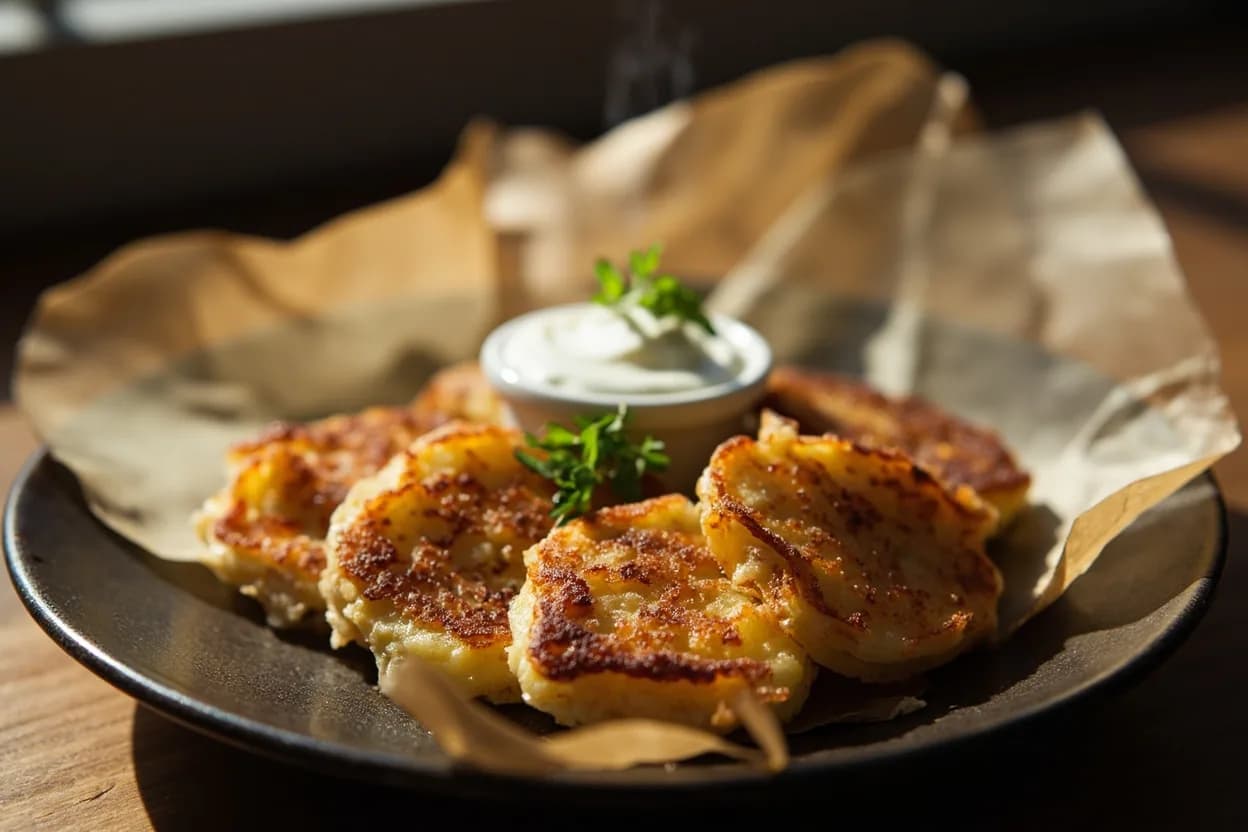
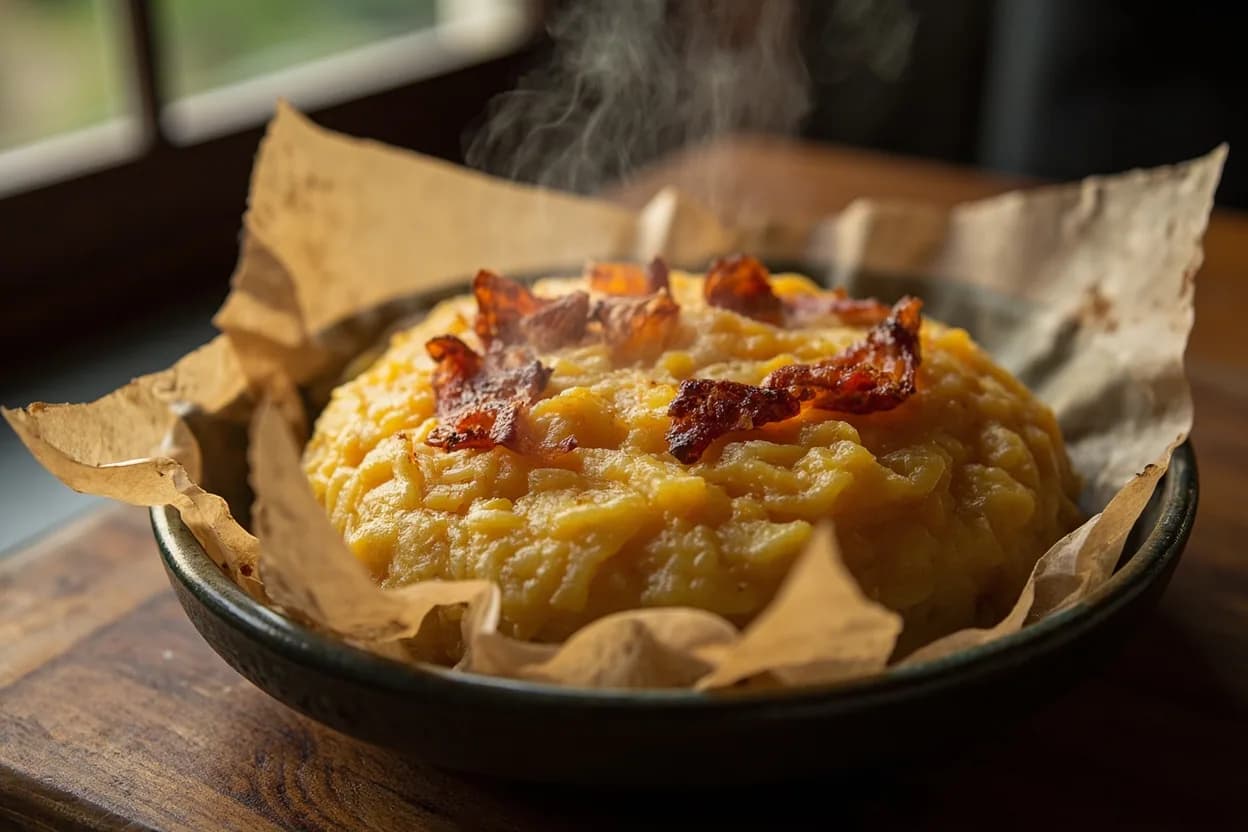
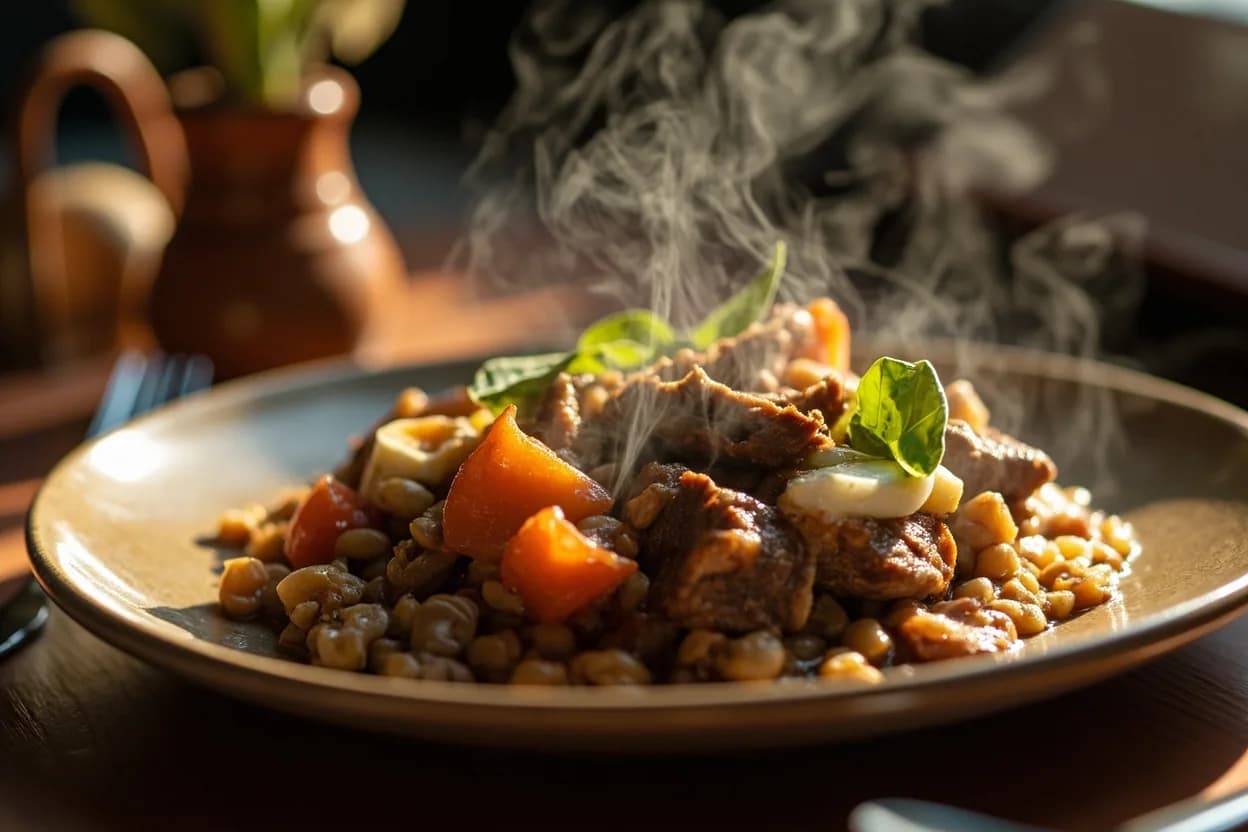
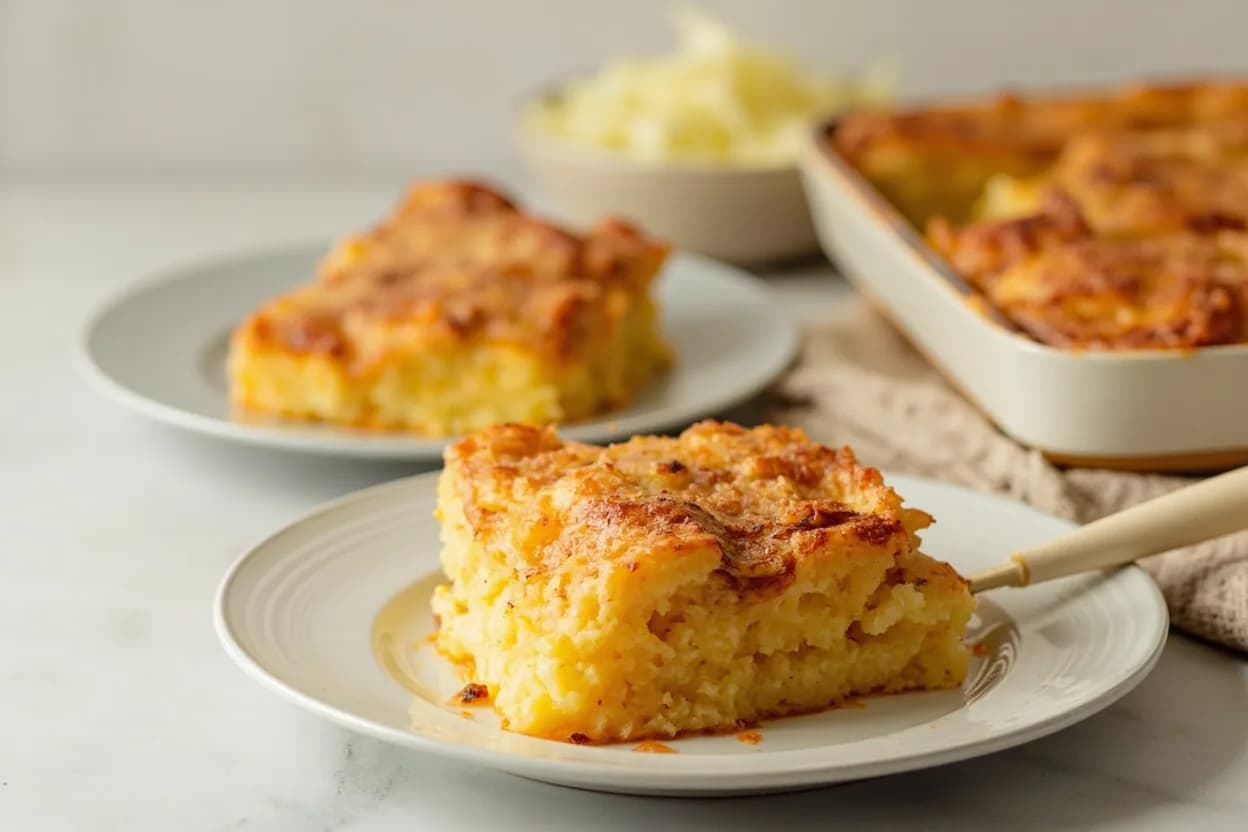
The dishes that define Ashkenazi Jewish, documented in the Canon.

References
- 1.The Book of Jewish Food — Claudia Roden (1996)
- 2.Quiches, Kugels, and Couscous — Joan Nathan (2010)
- 3.Eat Something: A Wise Sons Cookbook — Evan Bloom & Rachel Levin (2020)
- 4.The Gefilte Manifesto — Jeffrey Yoskowitz & Liz Alpern (2016)
- 5.Jewish Cooking in America — Joan Nathan (1994)
Confidence: high
Notes
Kashrut as creative constraint
The prohibition on mixing milk and meat is not merely a restriction — it structures Ashkenazi menus into two distinct registers. A meat-based Shabbat dinner uses schmaltz wherever a French cook would use butter; a dairy lunch or breakfast uses cream cheese, sour cream, and butter freely. This binary shapes the entire flavor architecture of the tradition.
Schmaltz and the art of nothing wasted
When chickens were rendered for schmaltz, the crispy skin and fat solids (gribenes) became a prized snack or topping. Chicken feet flavored the stock. The liver was chopped with schmaltz and egg into chopped liver. The neck was stuffed and roasted (helzel). This comprehensive use of a single bird reflects the historical scarcity and thrift that shaped the cuisine.
The deli as cultural institution
The New York Jewish delicatessen — Katz's, Second Avenue Deli, Carnegie Deli (closed 2016) — became the primary vehicle through which Ashkenazi food entered American popular culture. Pastrami, lox, bagels, and brisket are now American foods; their Ashkenazi origins are sometimes forgotten. A serious revival movement since the 2010s has worked to reconnect these foods to their tradition.