West Africa
Asante (Akan Ghanaian)
Also: Ashanti cuisine, Akan cuisine, Ashanti-Twi cooking
The regal cooking of the Asante kingdom — fufu pounded to silk, kontomire slow-cooked with palava, and ceremonial one-pots that once fed the Asantehene's court.
Asante cuisine is the cooking tradition of the Asante (Ashanti) people of south-central Ghana, a Akan sub-group whose kingdom, centred on Kumasi, was one of the wealthiest and most politically organised polities in pre-colonial West Africa. It sits within the broader Akan culinary tradition but carries distinctive markers: a preference for fufu pounded from cassava and plantain (not yam alone), an elaborate vocabulary of soups and stews served with it, the central role of palm nut in both cooking fat and soup, and ceremonial foods — including specific dishes tied to the Odwira festival and the Asantehene's court — that have no exact parallel elsewhere in Ghana.
The flavour base
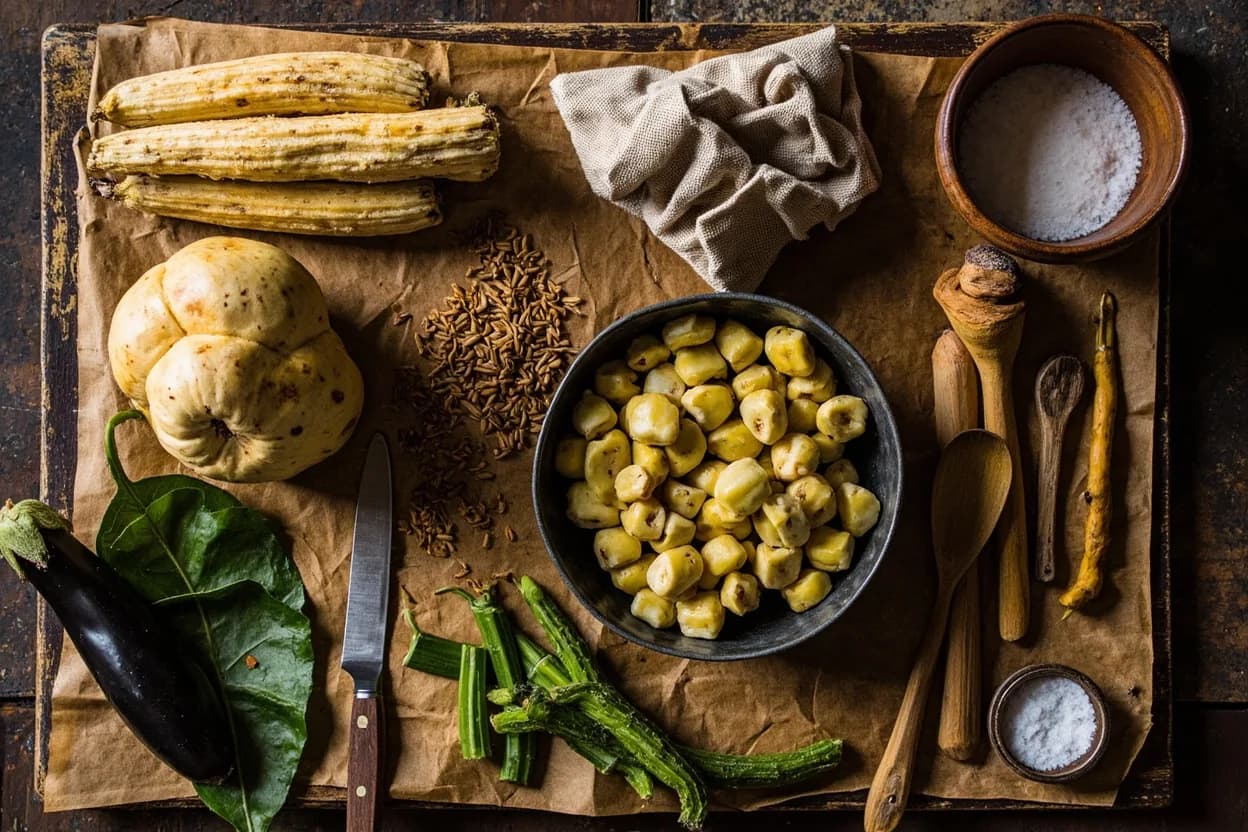
Palm fruit pulp (extracted from boiled and pounded palm nuts) forms the base of many soups; dried herrings and smoked catfish add depth; ground crayfish, agushi (egusi/melon seeds), and fermented dawadawa (locust bean) layer savory complexity into nearly every sauce.
Pantry staples
Key ingredients
Signature techniques
Signature dishes
Asante (Akan Ghanaian) on the table
At the table
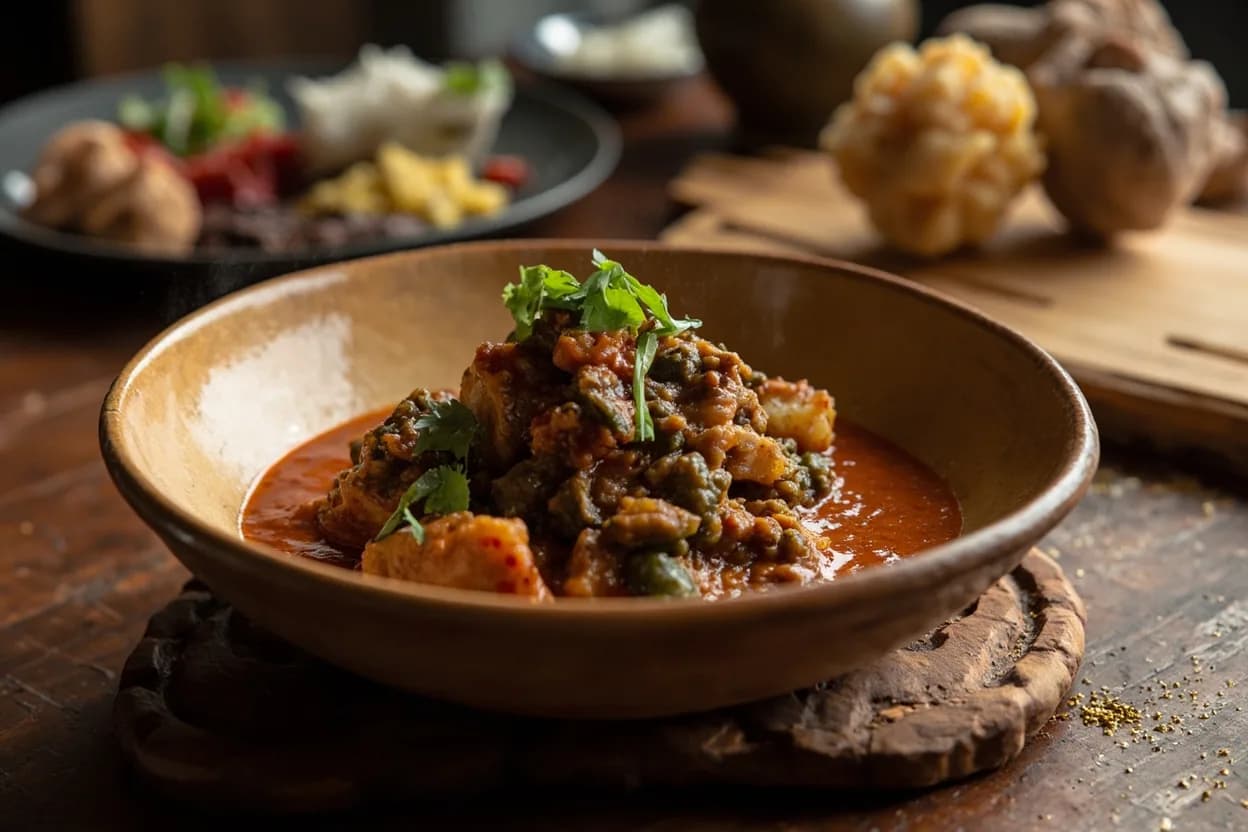
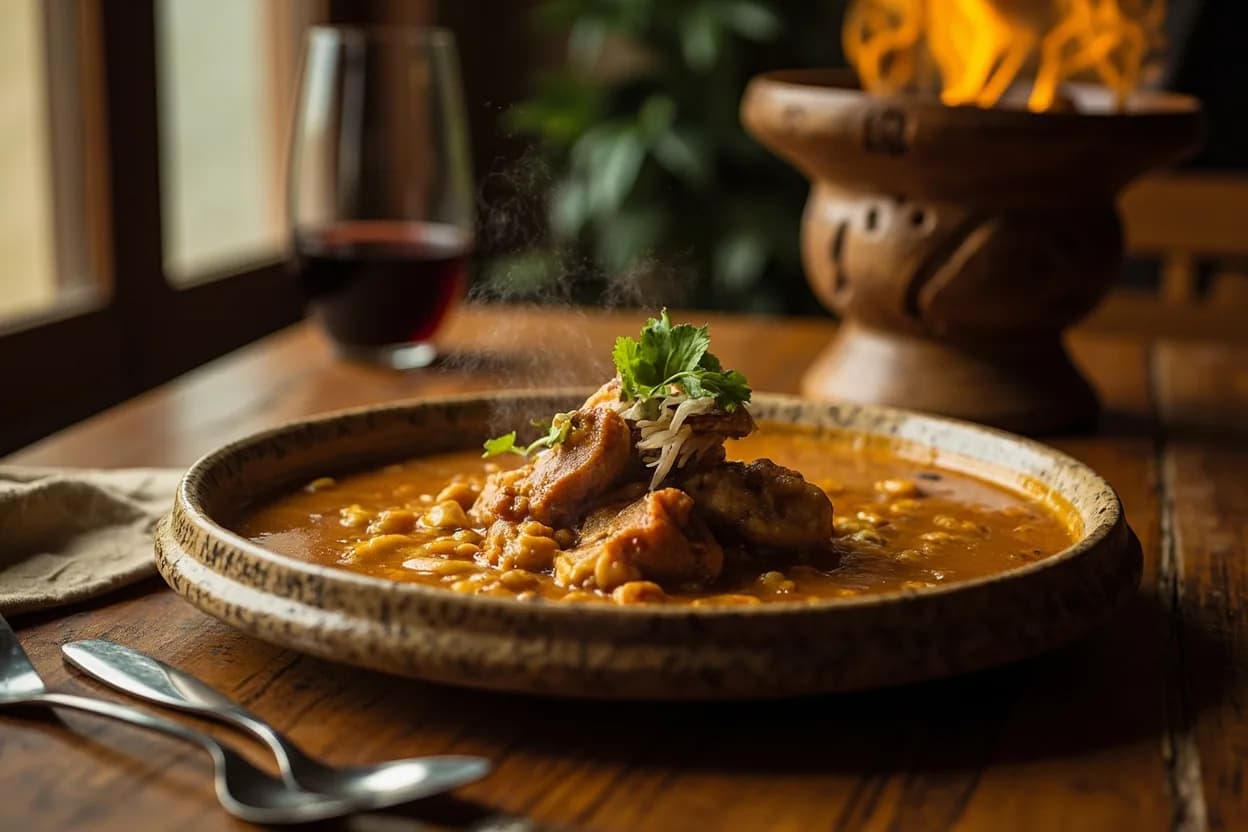
The main meal is eaten in the afternoon. A soup or stew is prepared centrally; fufu is pounded fresh and eaten immediately — it is not a leftover food. Meals are communal: family members gather around a shared bowl, each pulling a ball of fufu, dipping it in the soup, and swallowing without chewing (chewing fufu is considered poor etiquette). Breakfast is light — kenkey with pepper sauce, or koko (fermented corn porridge). Hospitality dictates that a visitor is always offered food; refusal is a mild social slight.
History & context
The Asante Empire was founded in 1701 by Osei Tutu I, who unified the Akan forest states under the Golden Stool (Sika Dwa Kofi). The empire's wealth — built on gold, kola nuts, and control of northern trade routes — supported an elaborate court culture in Kumasi. Royal feasting was governed by protocol: specific soups were prepared for the Asantehene's ceremonies, and the Odwira festival (annual purification and thanksgiving) required yam-based dishes as first-fruits offerings. British colonial contact from the mid-19th century introduced canned sardines and corned beef, which were absorbed into the soup tradition. Post-independence Ghana (1957) preserved these culinary traditions even as urban migration created a fast-food layer around the fufu culture.
Regional variations
- Kumasi (traditional heartland)
Strictest fufu tradition — cassava and unripe plantain pounded together; abenkwan (palm nut soup) considered the definitive Asante soup.
- Brong-Ahafo transition zone
Greater use of yam in fufu; influence of northern Brong cooking introduces more millet-based preparations at the edges.
- Urban Accra Asante diaspora
Fufu increasingly substituted by banku (fermented corn and cassava dough) in urban settings; instant fufu powder used for convenience, though considered inferior by traditionalists.
Related cuisines
- Fante (Coastal Ghanaian)
Fellow Akan sub-group; Fante cuisine is more fish-oriented and uses more fermented fish pastes; fante fante (fish stew) has no direct Asante equivalent.
- Ewe (Volta Region)
Shares fufu, kontomire, and palm soup traditions but with distinct spicing and akple (fermented corn dough) as an alternative starch.
Cross-border Akan populations share attiéké, foufou, and palm soup traditions; Asante and Baoulé cooking share significant vocabulary.
- Nigerian (Yoruba)
Egusi/agushi stew appears on both sides as a parallel development; palm oil-based cooking and dried-fish umami are shared West African forest-zone characteristics.
Canonical recipes
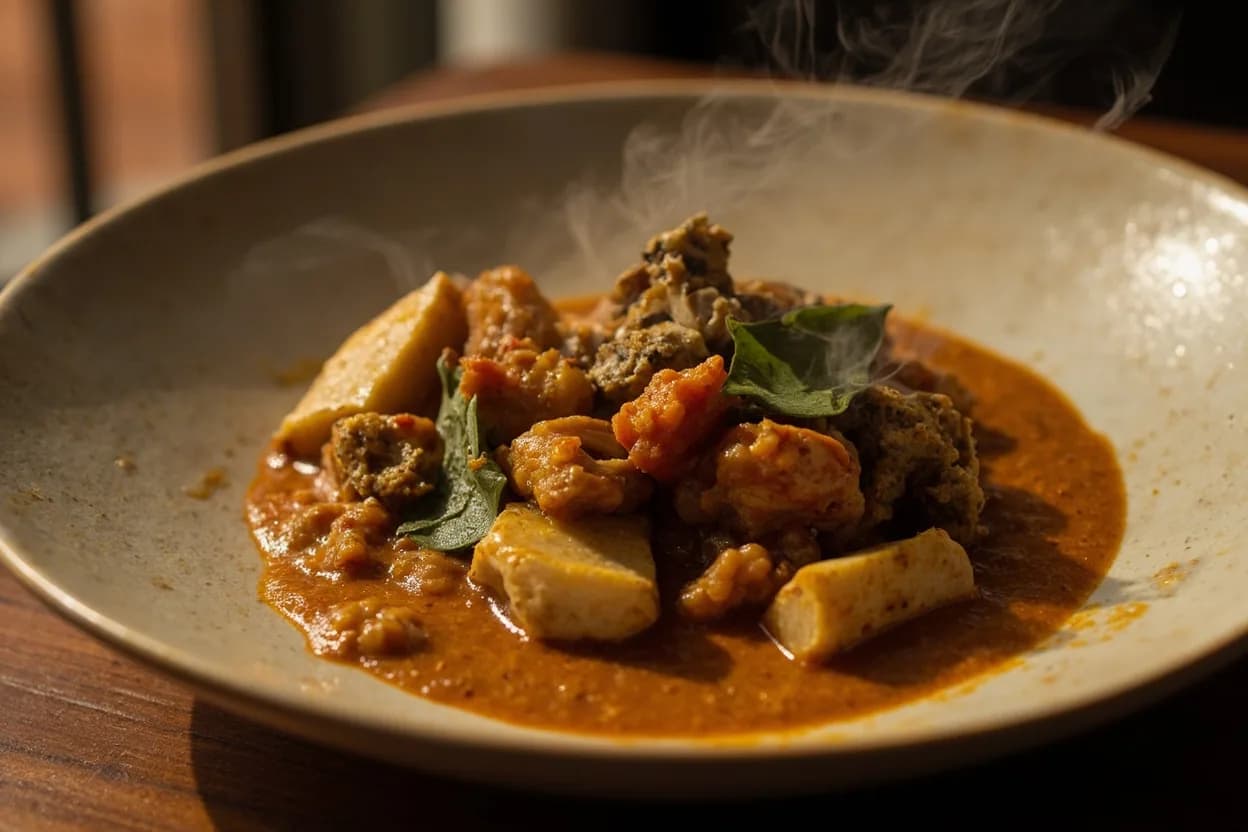
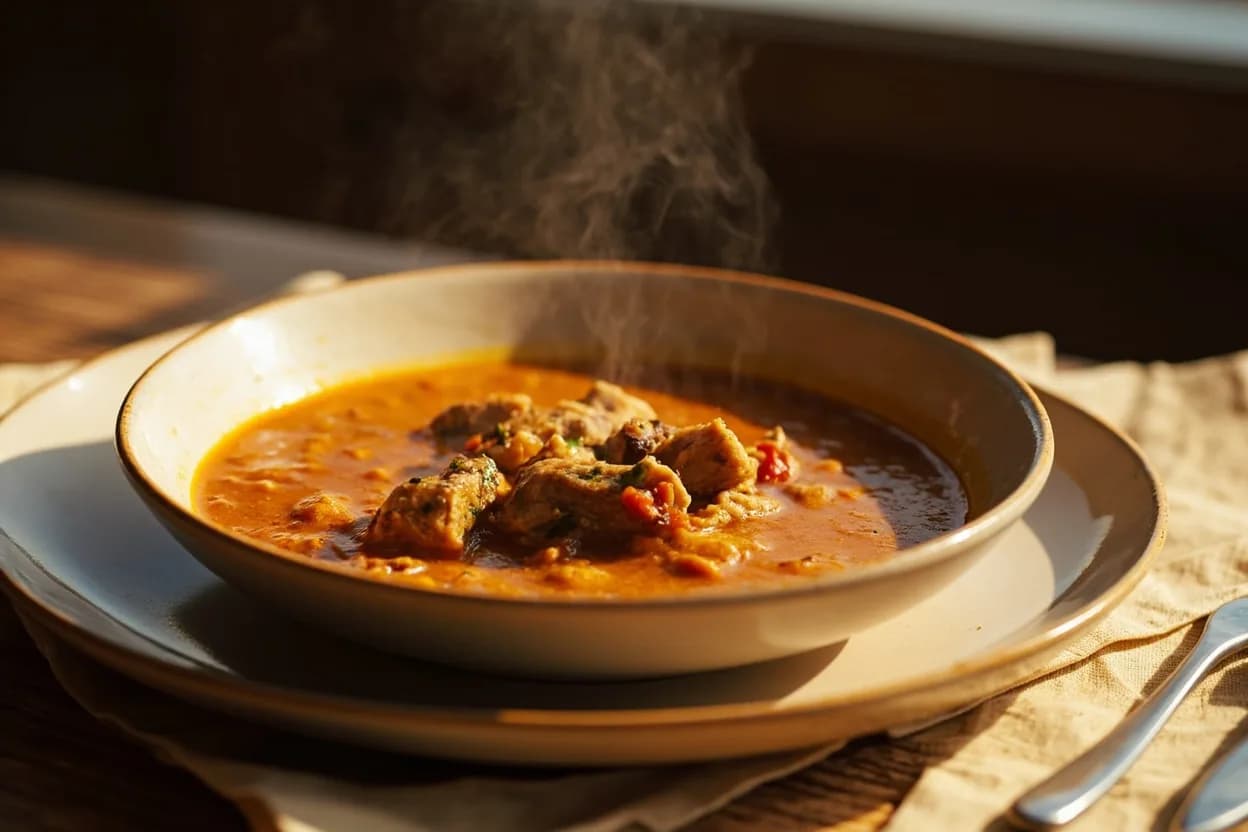
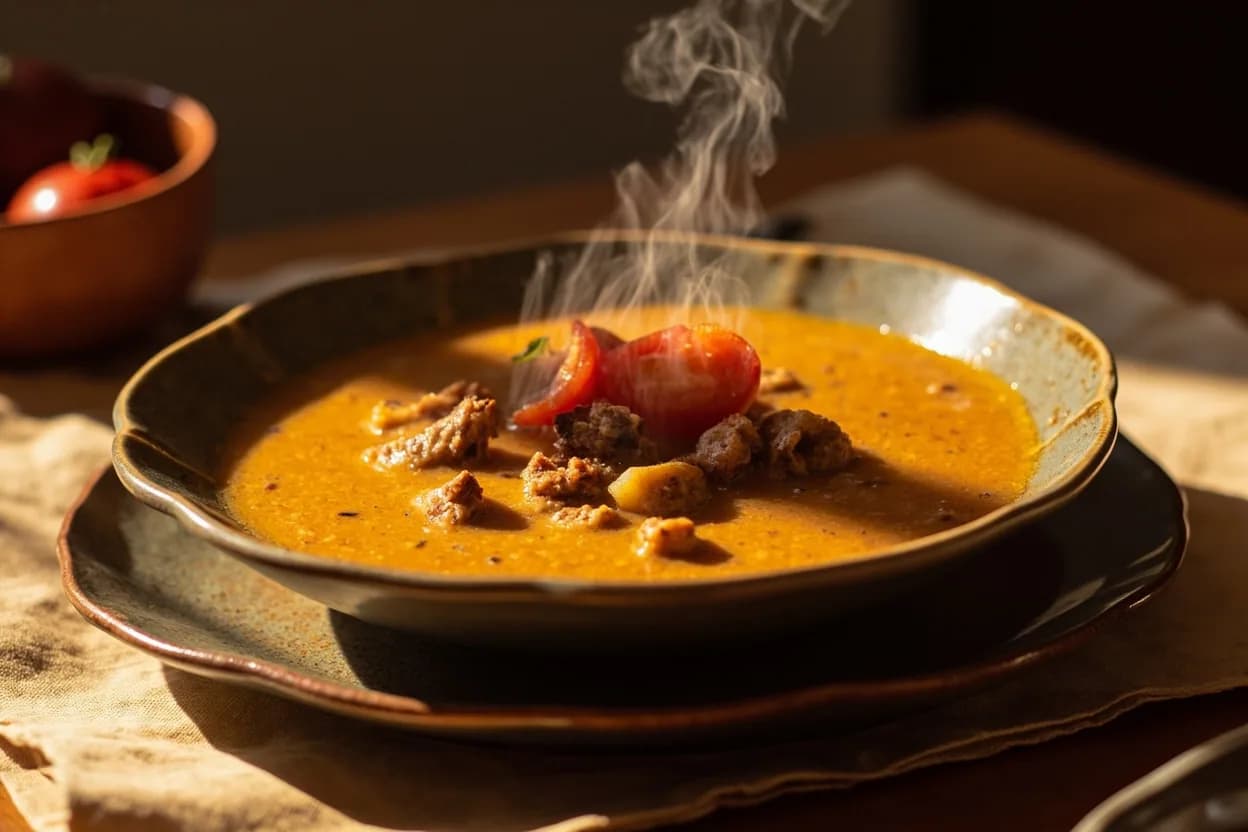
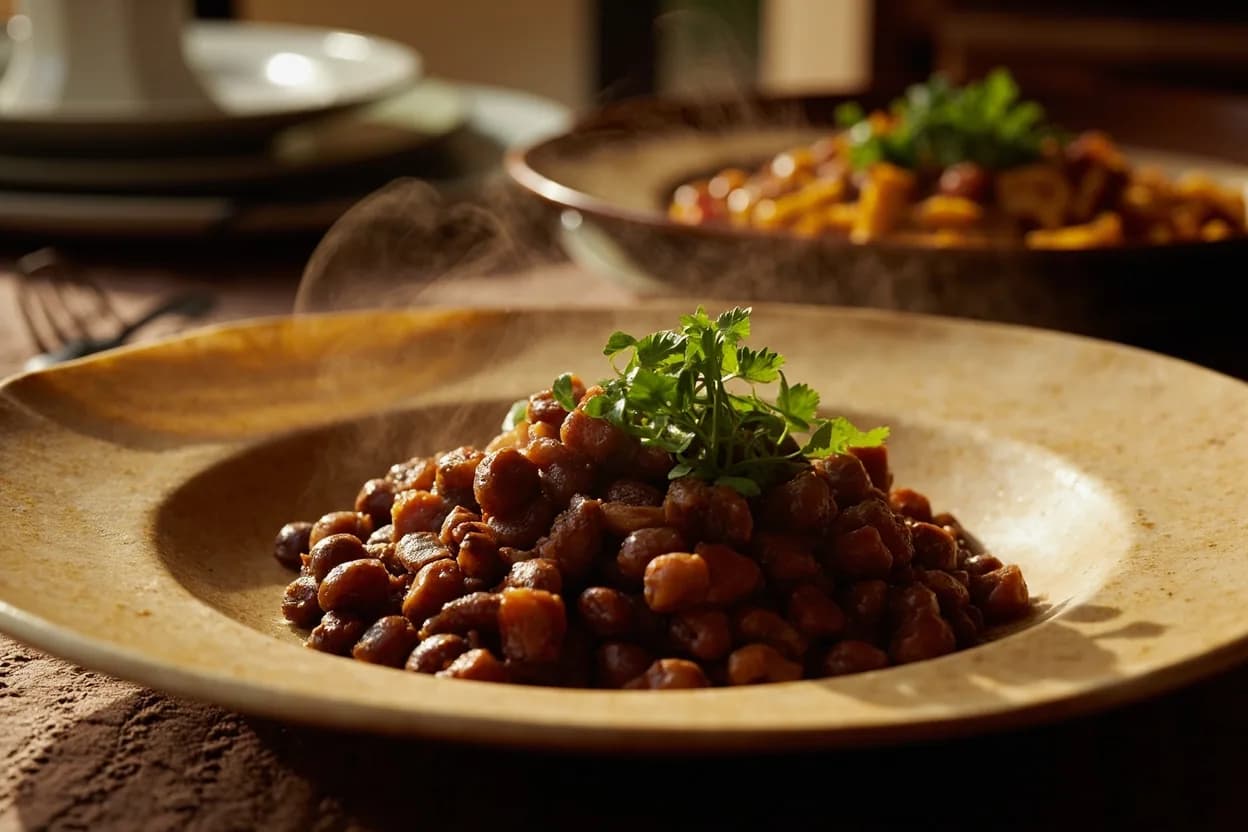
The dishes that define Asante (Akan Ghanaian), documented in the Canon.
References
- 1.Fran Osseo-Asare, 'A Good Soup Attracts Chairs: A First African Cookbook for American Kids' (Pelican Publishing, 1993)
- 2.Fran Osseo-Asare, 'Food Culture in Sub-Saharan Africa' (Greenwood Press, 2005)
- 3.Ivor Wilks, 'Asante in the Nineteenth Century' (Cambridge University Press, 1975)
- 4.Ghana Tourism Authority, 'Traditional Ghanaian Dishes' (Accra, 2018)
Confidence: high
Notes
The etiquette of fufu
Fufu is swallowed, not chewed — a cultural rule that baffles outside observers but makes practical sense: the smooth elastic ball, torn from the mound and dipped in soup, is meant to be swallowed whole in a single smooth motion. Chewing it is considered uncouth and wastes the tactile pleasure of its texture. The right hand only is used; the left hand, traditionally considered unclean, never touches communal food.
Kontomire and the palava stew name
Kontomire stew is sometimes called 'palava sauce' in Accra English — a name borrowed from Krio/Pidgin usage meaning 'trouble' or 'palaver,' possibly because the dish requires significant labour (washing, wilting, and shredding the leaves before long cooking). Cocoyam leaves must be cooked thoroughly as raw taro leaves contain calcium oxalate crystals that cause intense mouth irritation.