Central Europe
Austrian (Heuriger & Viennese)
Also: Viennese cuisine, Wiener Küche, Austro-Hungarian cuisine
A grand imperial kitchen blending Habsburg multicultural heritage with the convivial simplicity of Vienna's wine-tavern culture.
Austrian cuisine, and especially Viennese cooking, is the product of a centuries-long imperial project that drew from Czech, Hungarian, Italian, and Bohemian kitchens while maintaining its own bourgeois identity of precise craftsmanship and opulent pastry-making. The Heuriger tradition — open-air wine taverns permitted by Josef II's 1784 edict to sell their own new wine — forms a counterpoint to the grand restaurant: informal platters of cold cuts, Liptauer cheese, Brettljause, and dark bread consumed alongside young Grüner Veltliner. Together these two registers, imperial and rustic, define Austrian food culture.
The flavour base
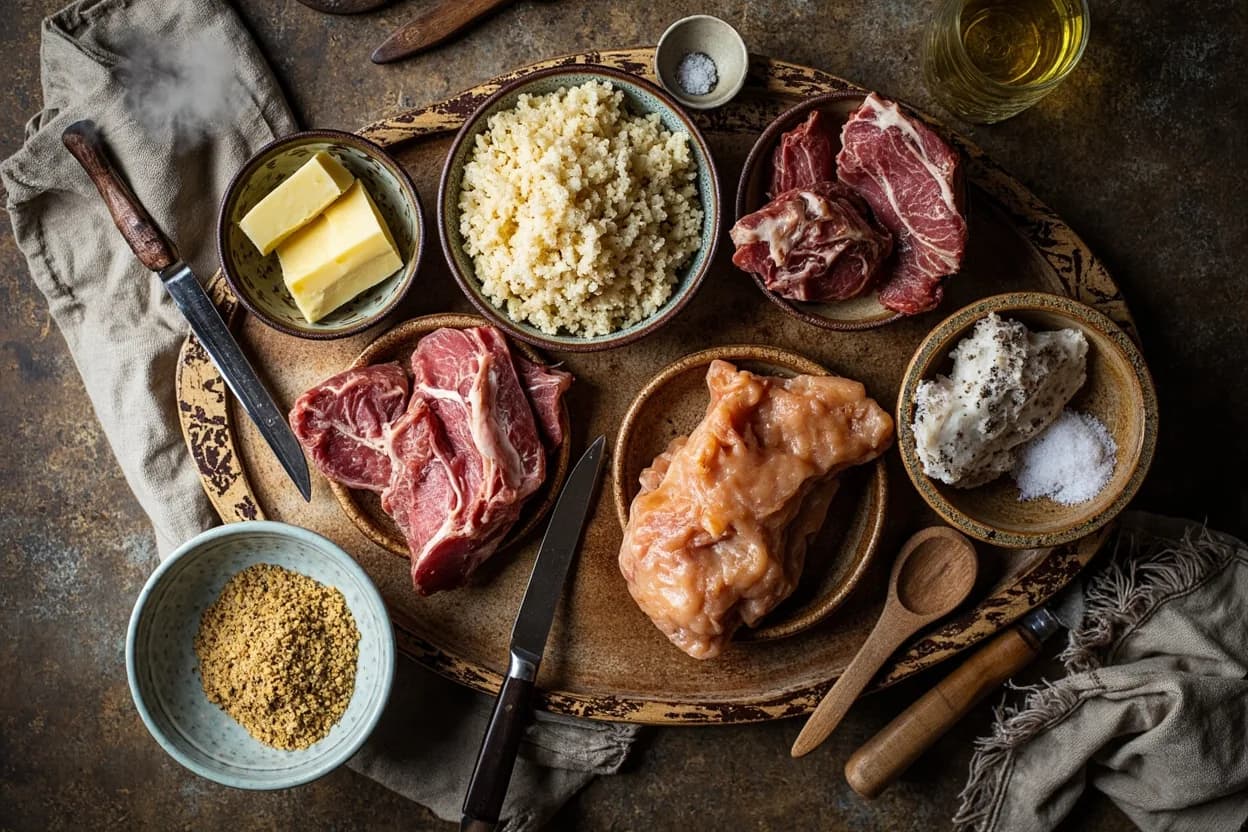
Browned butter and onion foundation with veal or beef stock reductions; cream and paprika for sauced dishes; breadcrumbs as both coating and binder
Pantry staples
Key ingredients
Signature techniques
Signature dishes
Austrian (Heuriger & Viennese) on the table
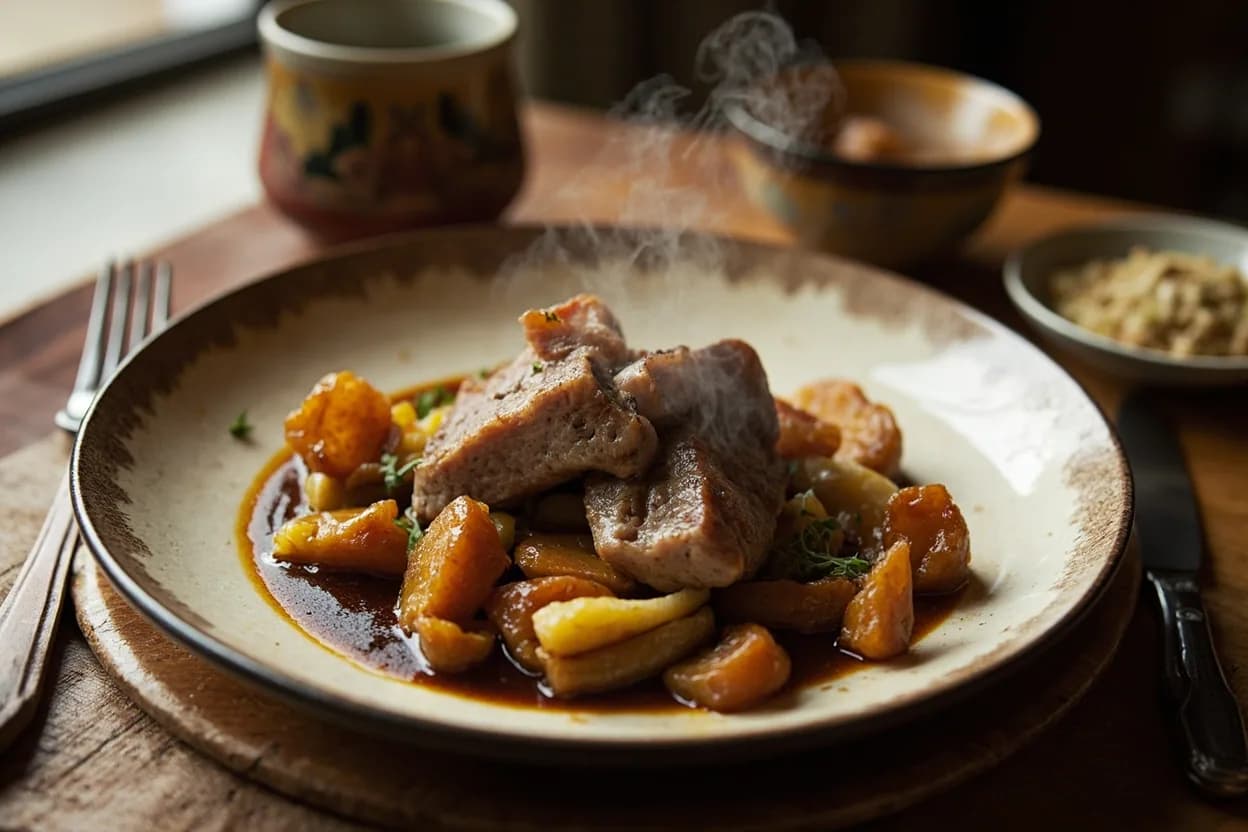
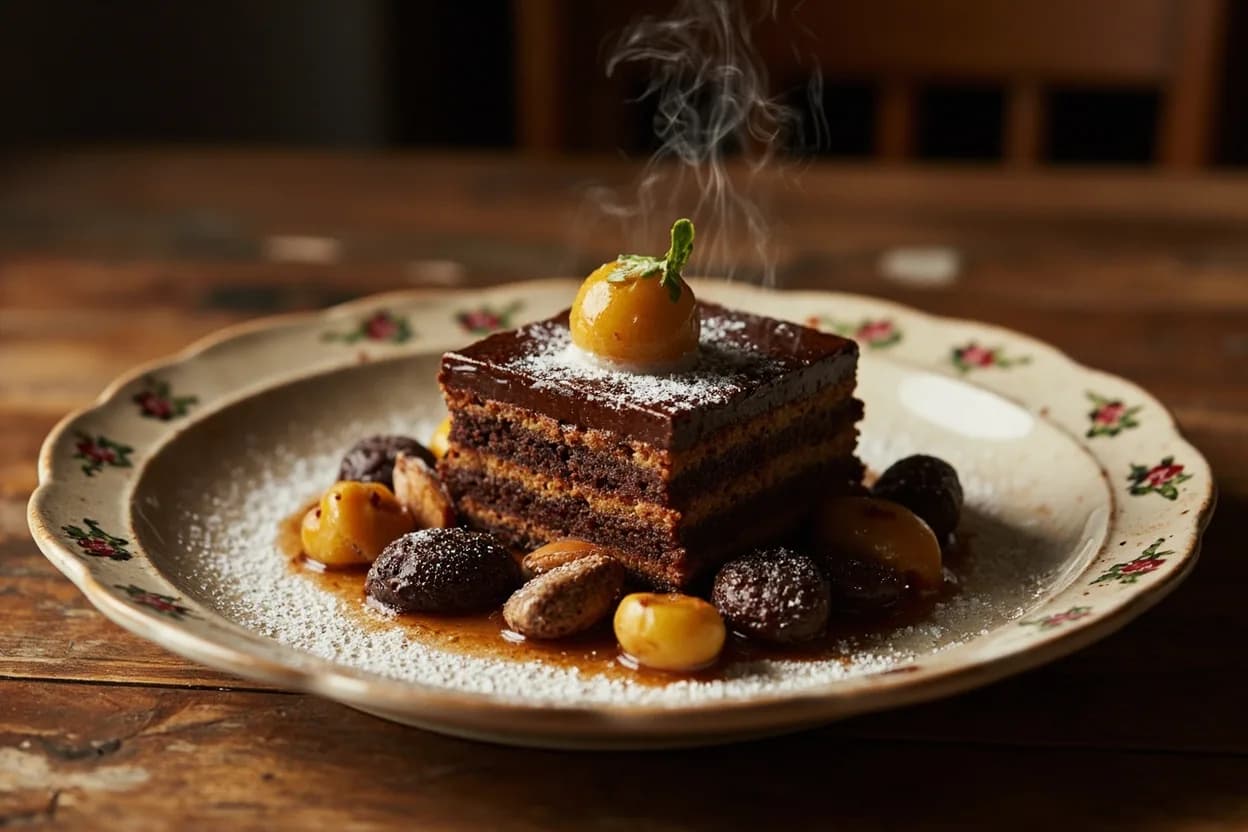
At the table
A formal Viennese meal moves through Vorspeise (starter, often Leberknödelsuppe), Hauptspeise (a large meat course), and Mehlspeise (pastry or sweet course treated as a full destination, not an afterthought). Heuriger eating is informal and shared: cold boards arrive at the table rather than plated courses, and the wine — sold by the Achterl (eighth litre) — is ordered continuously.
History & context
Vienna's position as the Habsburg capital from 1273 to 1918 made it a culinary crossroads. Bohemian dumplings, Hungarian gulyás (absorbed and refined as Viennese Gulasch), Czech knedlíky, and northern Italian pasta traditions all left permanent marks. Court confectioners — many Italian-trained — established the Mehlspeise tradition of layered tortes and strudel. Coffee, introduced via the Ottoman siege of 1683, spawned the Viennese Kaffeehouse institution. After the empire's dissolution, Vienna retained the cultural memory and continued to codify these dishes as Austrian national identity, cementing them in the hotel school traditions of the 20th century.
Regional variations
- Styria
Kürbiskernöl (pumpkin seed oil) used lavishly on salads and soups; Styrian Brettljause features local cured meats.
- Salzburg
Salzburger Nockerl (soufflé dumplings) and trout from Alpine streams dominate; lighter Austrian Alpine style.
- Tyrol
Speckknödel (speck-laden dumplings), hearty mountain fare with rye bread and smoked meats reflecting the Alpine pastoral economy.
- Burgenland
Shared Hungarian influence via the Pannonian plain; goose and carp dishes, Esterhazy estate pastry traditions.
Related cuisines
The Hungarian gulyás and paprikash traditions were codified alongside Viennese court cooking under the same imperial umbrella.
Shared dumpling (Knödel/knedlíky) and roast pork traditions; Bohemian cooks staffed Vienna's aristocratic households.
- German (Bavarian)
Adjacent Alpine food culture with shared schnitzel, pork roast, and beer-garden traditions, though Vienna's Kaffeehouse marks a distinct register.
Canonical recipes
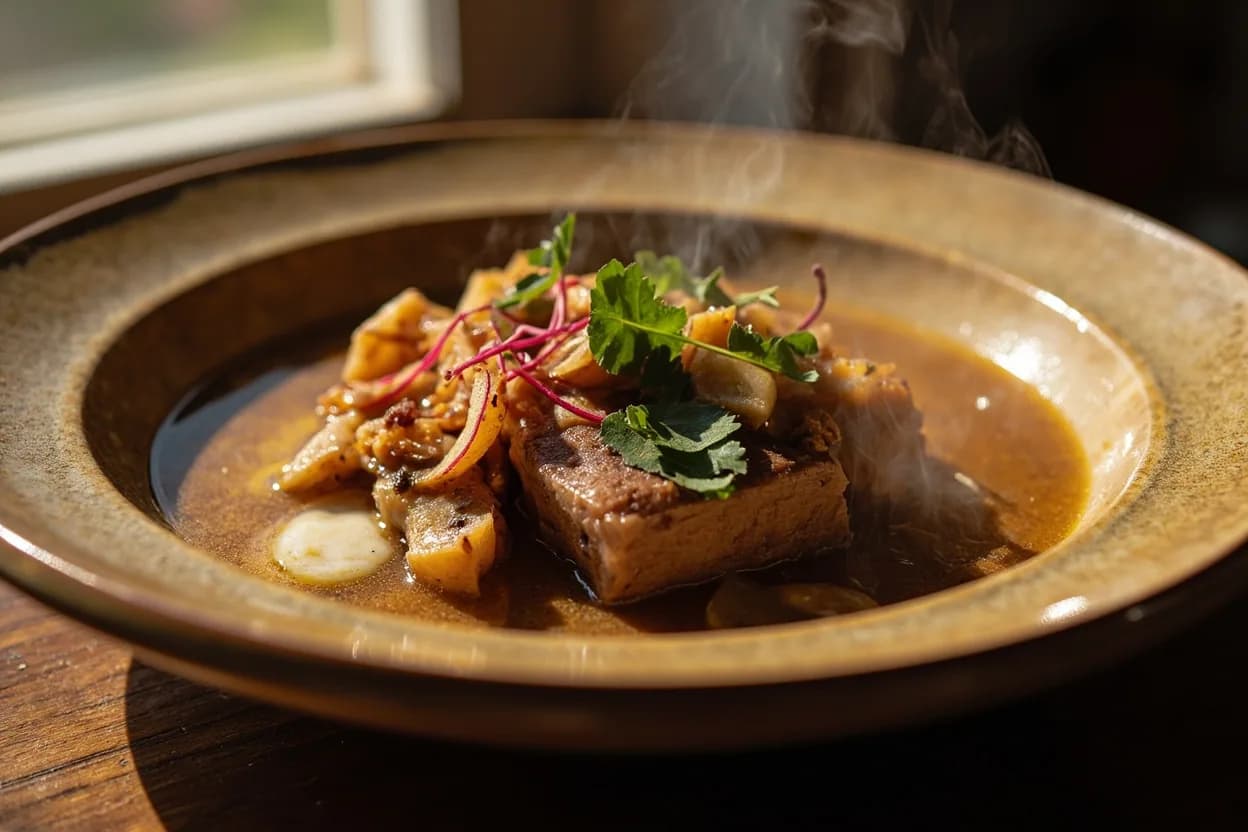
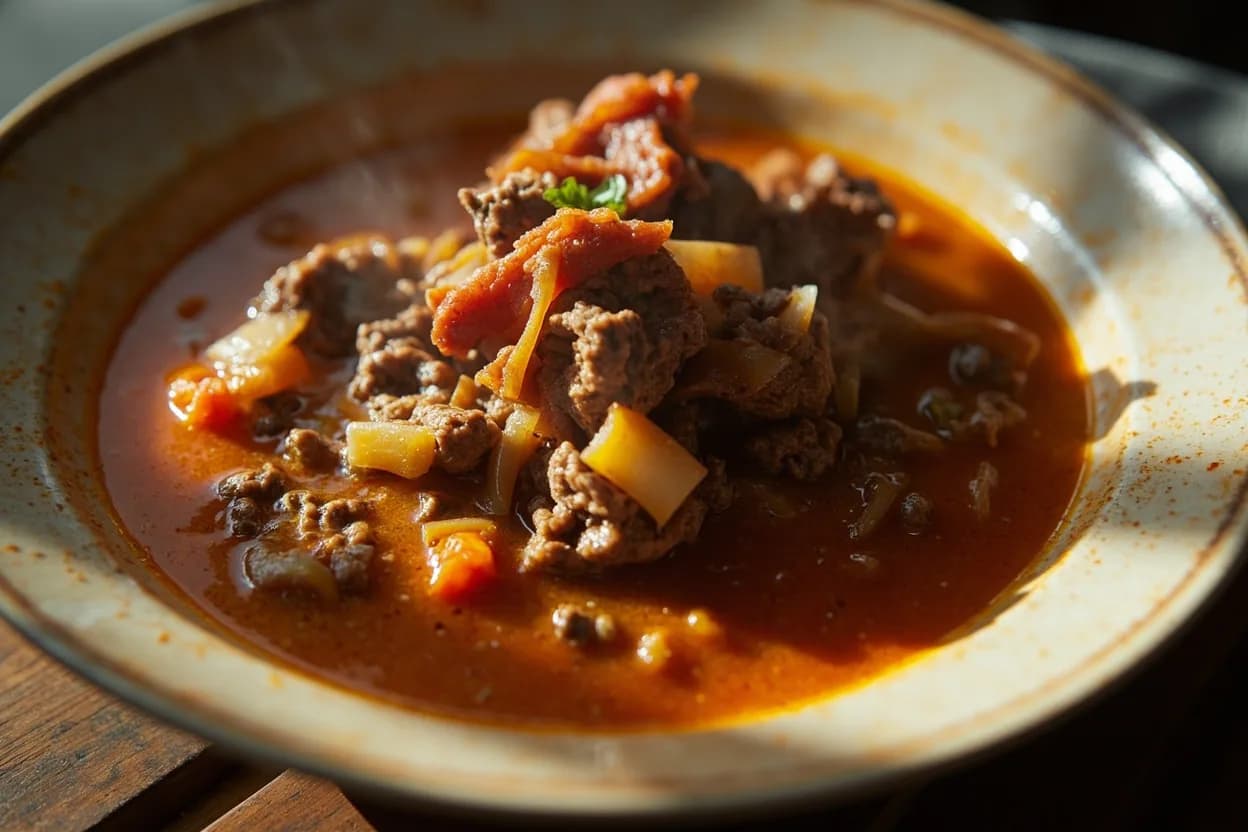
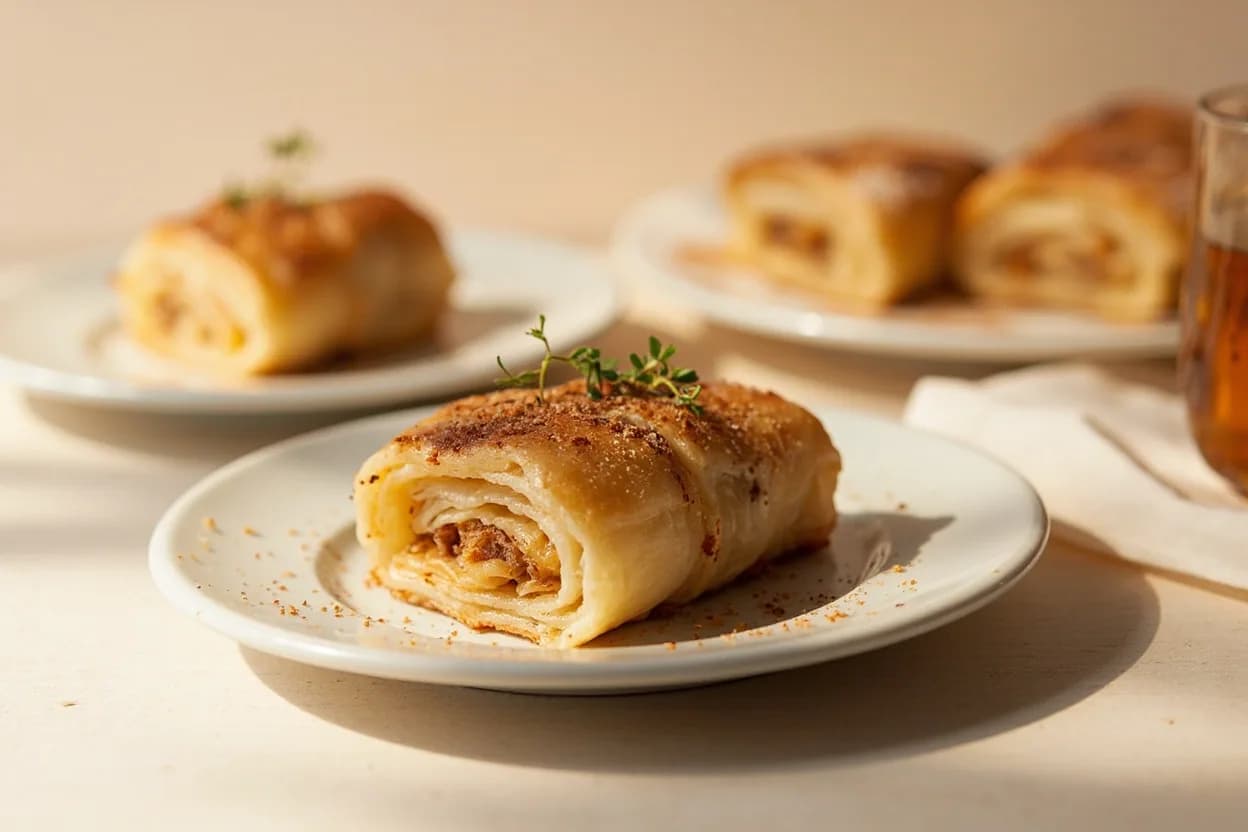
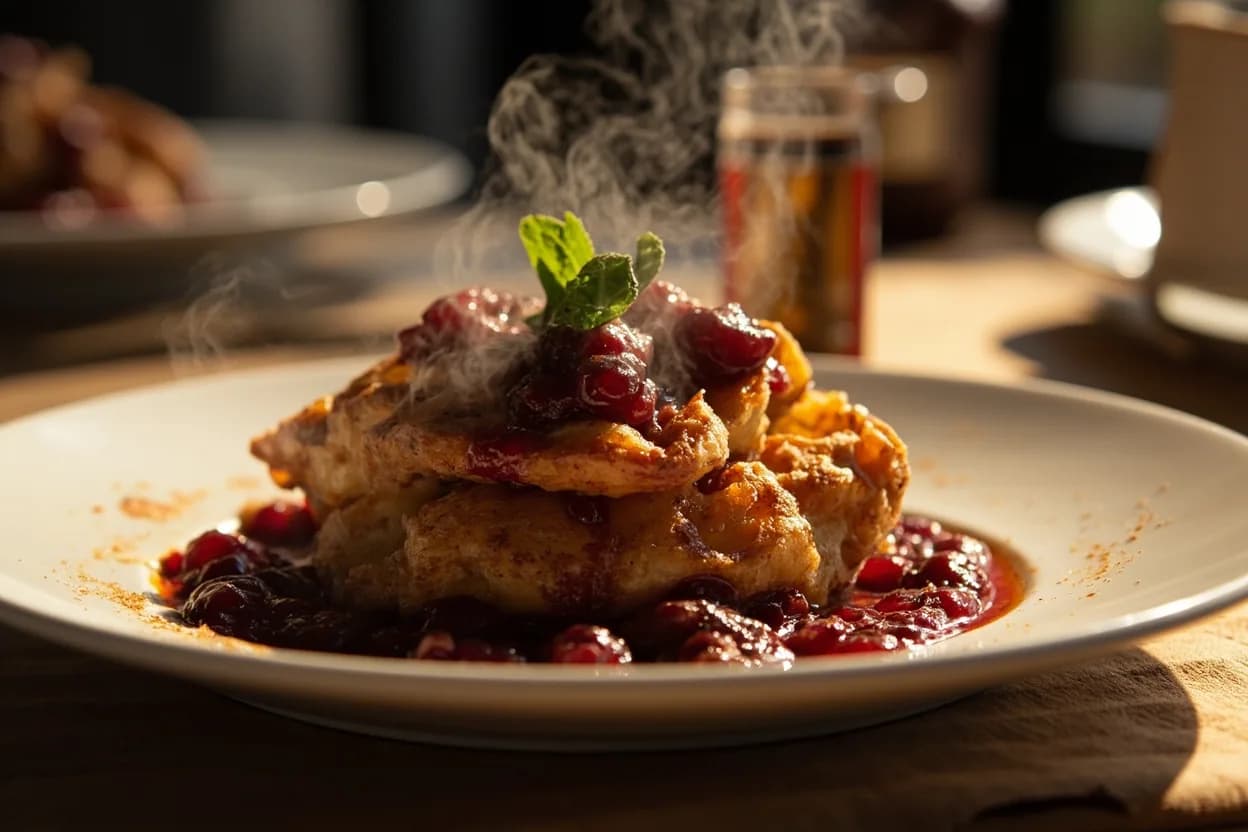
The dishes that define Austrian (Heuriger & Viennese), documented in the Canon.
References
- 1.Plachutta, E. & Plachutta, M. — Wiener Küche (Brandstätter Verlag, 2013)
- 2.Bauer, J. — Das große Buch der österreichischen Küche (Styria, 2008)
- 3.Mennell, S. — All Manners of Food: Eating and Taste in England and France from the Middle Ages to the Present (Blackwell, 1985)
- 4.Sacher Hotel, Vienna — official Sacher torte documentation
Confidence: high
Notes
The Schnitzel question
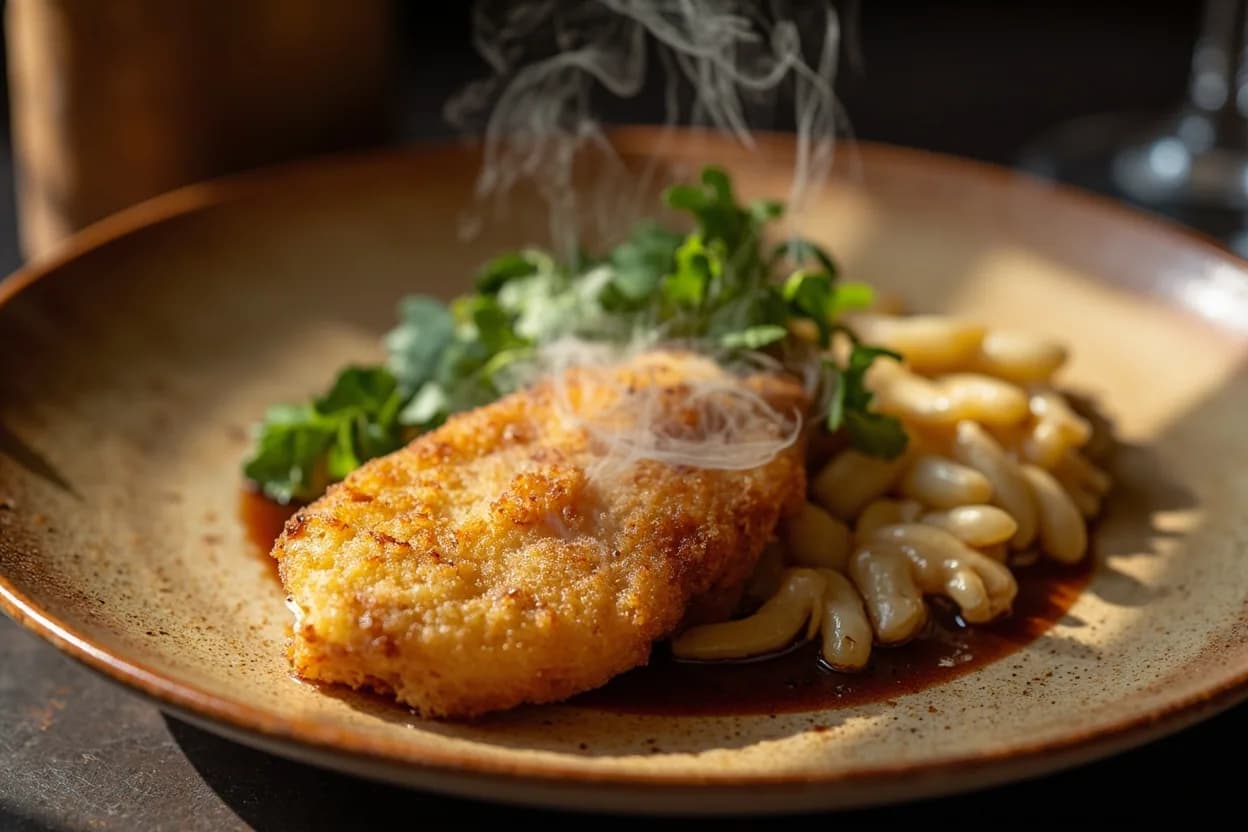
Authentic Wiener Schnitzel must be veal (Kalb), pan-fried in clarified butter until the breadcrumb crust 'swims' and forms waves — a technique called souffléed crust (the fat temperature causes the coating to puff away from the meat). Pork schnitzel (Schnitzel Wiener Art) is a legal distinction on Austrian menus.
Heuriger culture
A genuine Heuriger is licensed to sell only wine produced on its own estate; a pine branch (Buschen) hung above the door signals it is open. The food is secondary but essential — cold platters of Liptauer cheese blended with paprika, capers, and onion; smoked meats; and dark bread absorb the young, high-acid Viennese white wine.