Produce
Elderflower
Fragrant creamy blossoms infused into cordials, syrups and desserts for a floral aroma.
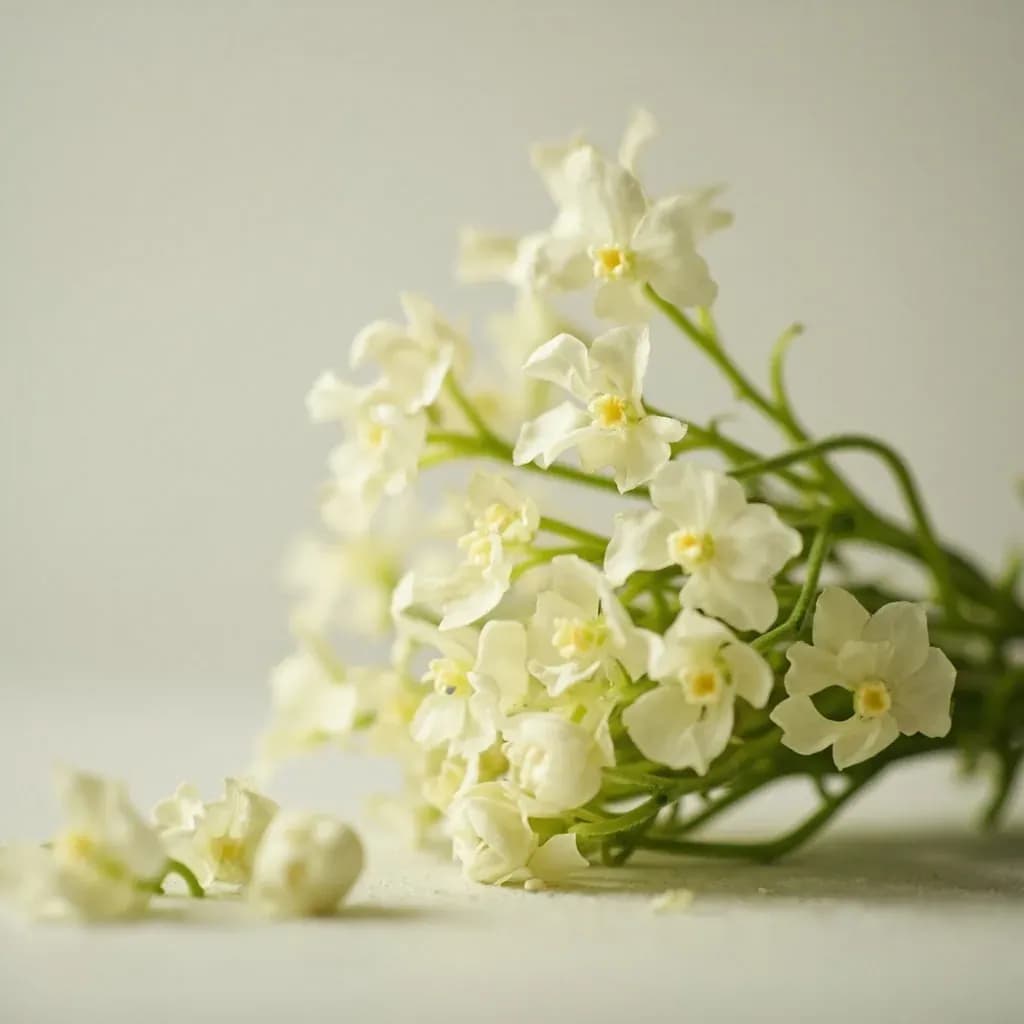
Elderflowers are the delicate, creamy-white blossom clusters of the elder tree, intensely fragrant with a honeyed, floral, slightly muscat aroma. They are steeped into cordials and syrups, used to flavor desserts, jellies, and sparkling drinks, and dipped in batter to fry as fritters. The fresh blooms are highly perishable and most often captured by infusing them into liquid the same day they are picked.
Elderflower is the fragrant blossom of the elder tree (Sambucus nigra), a hedgerow and woodland-edge shrub native to Europe and naturalized across temperate regions. The tiny creamy-white florets grow in dome-shaped clusters and carry an intensely aromatic, honeyed-floral scent with subtle citrus and grape-like notes. This delicate fragrance comes from volatile compounds including linalool and nerol, which evaporate readily when heated. The ingredient has been prized in European culinary traditions for centuries, particularly in British, French, and Scandinavian kitchens where it anchors cordials, champagnes, and desserts.
Behavior in the kitchen is governed by fragility. The aromatics are water-soluble and temperature-sensitive, so most preparations favor cold infusion over heat. Fresh flower heads brown quickly when wet or crushed, and the blooms lose fragrance rapidly once picked—use within a day or two, or preserve immediately. Raw elderflower contains trace cyanogenic glycosides, which are destroyed by cooking or fermentation, making properly prepared cordials and baked goods safe. The green stems, leaves, bark, and unripe green berries contain higher concentrations of these compounds and are never used. Harvest windows are short: flowers peak for only three to five days once fully open before petals drop and scent fades.
Foraging requires positive identification. Elder displays opposite compound leaves with five to seven serrated leaflets, shredding grey-brown bark, and grows in characteristic dense stands along hedgerows. The dome-shaped flower clusters and unmistakable floral scent when crushed distinguish it from toxic look-alikes like hemlock, which has flat-topped white clusters but ridged stems and a musty, unpleasant smell. Always leave enough flower clusters on the tree to ensure the plant sets berries—these dark, cooked berries are edible and support local wildlife.
- Measured in
- g
- Storage
- Fridge
Types & varieties
The culinary standard; largest, most fragrant flower clusters; most widely cultivated for food use
Native North American species; smaller flower clusters but similar flavor profile; now cultivated commercially in the US
Western North American species; flowers edible but less commonly harvested for culinary use
Not used for food; berries and all other parts are more toxic than other Sambucus species
Common uses
Tips & pitfalls
- Never wash fresh flower heads — the pollen carries much of the flavor; shake vigorously to dislodge insects and debris instead
- If washing is unavoidable, dunk briefly and shake dry immediately; sitting wet causes rapid browning and flavor loss
- Harvest only fully open, creamy-white flower clusters; skip green buds (unripe, less flavorful) and brown or wilted heads (past their prime)
- Remove every trace of green stem and leaf before using — they impart a bitter, medicinal note that overwhelms the delicate floral character
- For cordials, steep flowers cold for 24–48 hours rather than heating; high heat drives off the delicate top notes that define good elderflower
- Pick on a dry, sunny morning after dew has evaporated for maximum fragrance; wet flowers deteriorate fast
- To freeze fresh: spread picked, stem-free florets on a baking sheet, freeze solid, then transfer to a freezer bag — this prevents clumping
- When making syrup, add a small amount of citric acid or lemon juice; it brightens the flavor and acts as a preservative
- Learn to recognize the tree: opposite compound leaves with 5–7 serrated leaflets, shredding grey-brown bark, and an unmistakable floral scent when crushed
- Do not confuse with cow parsley, hemlock, or other toxic look-alikes — elder has dome-shaped flower clusters and grows in hedgerows; toxic plants lack the characteristic elder scent
Nutrition
Energy
113 kJ · per 100 g
Where the calories come from
Protein
1.3g
3% DV
Carbs
6.7g
2% DV
Fat
0g
0% DV
Sodium
15mg
1% DV
Source · USDA FoodData Central · approx. Sesbania flower, raw
View on FDC →In the shops
Matched grocery products
No matched grocery products for Elderflower yet.
Good to know
- Source plant
- Elder tree (Sambucus nigra)
- Part used
- Fresh flower clusters (florets)
- Peak season
- Late spring to early summer (May–June Northern Hemisphere)
- Primary flavor compounds
- Linalool, nerol, and other volatile aromatics; intensely fragrant without requiring added sugar for the floral character
- Fresh shelf life
- 1–2 days refrigerated; browns quickly when wet or crushed
- Preserved shelf life
- Dried: 6–12 months airtight; frozen florets: 6 months; cordials/syrups: several months refrigerated
- Toxicity
- Raw flowers contain trace cyanogenic glycosides destroyed by heat; bark, leaves, stems, and green berries are toxic
- Yield
- 20–30 heads per average foraging session; 15–25 heads for 1 liter of cordial
Substitutes
- Orange blossom water — Closest floral substitute; use at half the volume; distinct citrus note, less sweet
- Rose water — More aromatic with a heavier floral character; adjust to taste; works in desserts but not in cordials
- Lilac florets — Similar delicate floral quality; far less common; use fresh only, in small quantities
- Hibiscus flower syrup — Provides floral notes with tartness; not a direct substitute but works well in beverages
- Violet syrup — Floral with a deeper, slightly perfumed quality; use sparingly
Pairs with
Also called
Elder Flower · Sambucus Blossom
Related

Tomato
Juicy, sun-sweet fruit for sauces, salads, and slow-cooked depth

Yellow Onion
The aromatic backbone of soups, sofritos, and braises

Garlic
Pungent cloves that perfume nearly every savory dish

Lemon
Bright, acidic citrus that wakes up almost any dish

Potato
Humble, hearty staple — roast, mash, fry, or boil

Carrot
Sweet, crunchy root — raw, roasted, or the base of a sofrito

Cucumber
Cool, crisp, and watery — for salads, pickles, and tzatziki

Lettuce
Crisp leaves for salads, wraps, and a fresh crunch