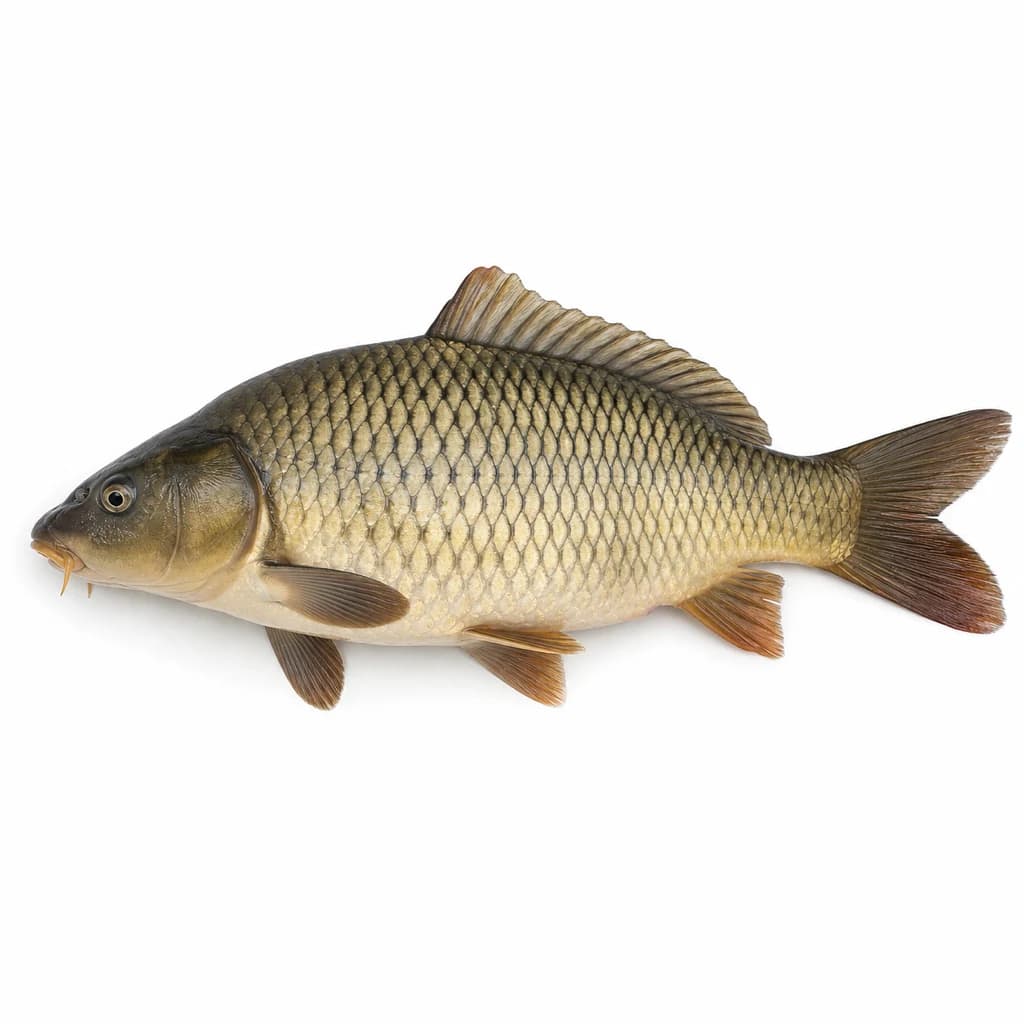
Natural form
A whole fresh carp showing its large silvery scales, deep body, and barbels near the mouth.
Establishes the fish's unmistakable physical identity — scale pattern, body depth, and barbels distinguish carp from other freshwater species.
Proteins
Carp
Meaty freshwater fish — fried, baked, or stewed; a Central European holiday and Middle Eastern grilling staple.
Carp is a meaty freshwater fish with firm, slightly sweet flesh and a number of fine bones. It is a Central European Christmas tradition fried or baked, and the centerpiece of Iraqi masgouf, where it is butterflied and grilled over open fire. Its rich flavor suits robust seasonings and slow cooking.
Carp (Cyprinus carpio) is one of the oldest cultivated fish in the world, domesticated in China around 1000 BCE and now farmed globally. Its dense, fatty flesh distinguishes it from most other freshwater fish—where cod or sole are delicate and quick-cooking, carp behaves more like a sturdy ocean fish, holding together well through frying, baking, and long braises. The flavor is mild and slightly sweet, with the best eating coming from late fall through winter when the fish has accumulated fat reserves. This richness makes carp forgiving for inexperienced cooks but also means it can taste strongly fishy or muddy if not handled properly. Beyond its culinary utility, carp carries deep cultural weight: it is the Christmas Eve centerpiece across Poland, Czech Republic, and Slovakia; a cornerstone of Jewish Ashkenazi Shabbat cholent and gefilte fish; and a grilling staple from the Middle East to China. Understanding how to handle its signature Y-bones and manage its flavor profile transforms this humble fish from bony and pondy to genuinely excellent eating.
- Measured in
- g
- Storage
- Fridge
Allergens
Types & varieties
Fully scaled; the most widely available commercial variety
Irregular scale pattern resembling scattered mirrors; especially popular in Central European cooking
Virtually scaleless; easier prep, identical flavor to scaled varieties
Smaller (1–3 lbs), golden color, milder flavor; common in Eastern Europe and Russia
Larger body, leaner meat; vegetable-fed diet produces a cleaner, less muddy taste
Ornamental variety bred for color and pattern; genetically common carp but not typically eaten
Common uses
Tips & pitfalls
- Always remove the Y-bones (intermuscular bones running along the lateral line) by making a shallow cut on each side of the bone and pulling it free—this step is essential, not optional, for pleasant eating
- Soak fillets or whole fish in heavily salted water or plain milk for 2–4 hours before cooking to draw out muddy compounds and residual blood
- Bleed the fish immediately upon catching or purchasing for cleaner flavor and whiter flesh—this single step dramatically improves the final dish
- Score the skin deeply before frying to prevent curling and ensure even, crispy cooking throughout
- Do not overcook—carp is best served when the flesh is just opaque throughout; residual heat will continue cooking it off the heat
- Use the backbone and frames to make a rich, gelatinous stock for soups rather than discarding them
- When baking whole, tent loosely with foil for the first 20 minutes to retain moisture, then uncovered to crisp the skin
- Source carp from clean, flowing water whenever possible; stagnant pond fish require the full milk soak to overcome muddy flavor
- Common mistake: skipping the soaking step because you bought from a clean source—still soak to be safe and improve flavor
Nutrition
Energy
498 kJ · per 100 g
Where the calories come from
Protein
17.5g
35% DV
Carbs
0g
0% DV
Fat
4.9g
6% DV
Fiber
0g
0% DV
Sodium
75mg
3% DV
Source · USDA FoodData Central · Fish, drum, freshwater, raw
View on FDC →In the shops
Matched grocery products
No matched grocery products for Carp yet.
Good to know
- Scientific name
- Cyprinus carpio (common carp); multiple species across Cyprinidae family
- Origin
- Native to Europe and Central Asia; one of the earliest domesticated fish, farmed in China since ~1000 BCE
- Flavor
- Mild, slightly sweet; firm, moist flesh with high fat content peaking in late autumn and winter
- Texture
- Dense and meaty; contains pin bones and distinctive Y-bones that must be removed before cooking
- Season
- Best from late fall through winter when fat content peaks; traditionally harvested before winter freeze
- Yield
- Approximately 45–50% edible meat after filleting and bone removal
- Storage
- Use within 1–2 days when fresh; freeze at 0°F for up to 3 months
- Key challenge
- Can develop muddy or pondy flavor if from stagnant water; requires proper bleeding and soaking
Substitutes
- Catfish — Similar firm texture and mild flavor; farmed catfish has consistently clean taste without muddy notes
- Halibut — Firmer and leaner; reduce cooking heat and shorten time to prevent drying out
- Cod — Milder flavor and flakier texture; acceptable for fish cakes but not for traditional whole-fish preparations
- Traditional recipes have no true substitute — For cholent, gefilte fish, or Christmas carp, a blend of white fish (pike, catfish, whitefish) is authentic; single substitutes lack carp's distinctive fatty density
Pairs with
Also called
Carp (Karpfen) · Freshwater Fish (Carp) · River Fish (Carp for Masgouf) · Karpfen
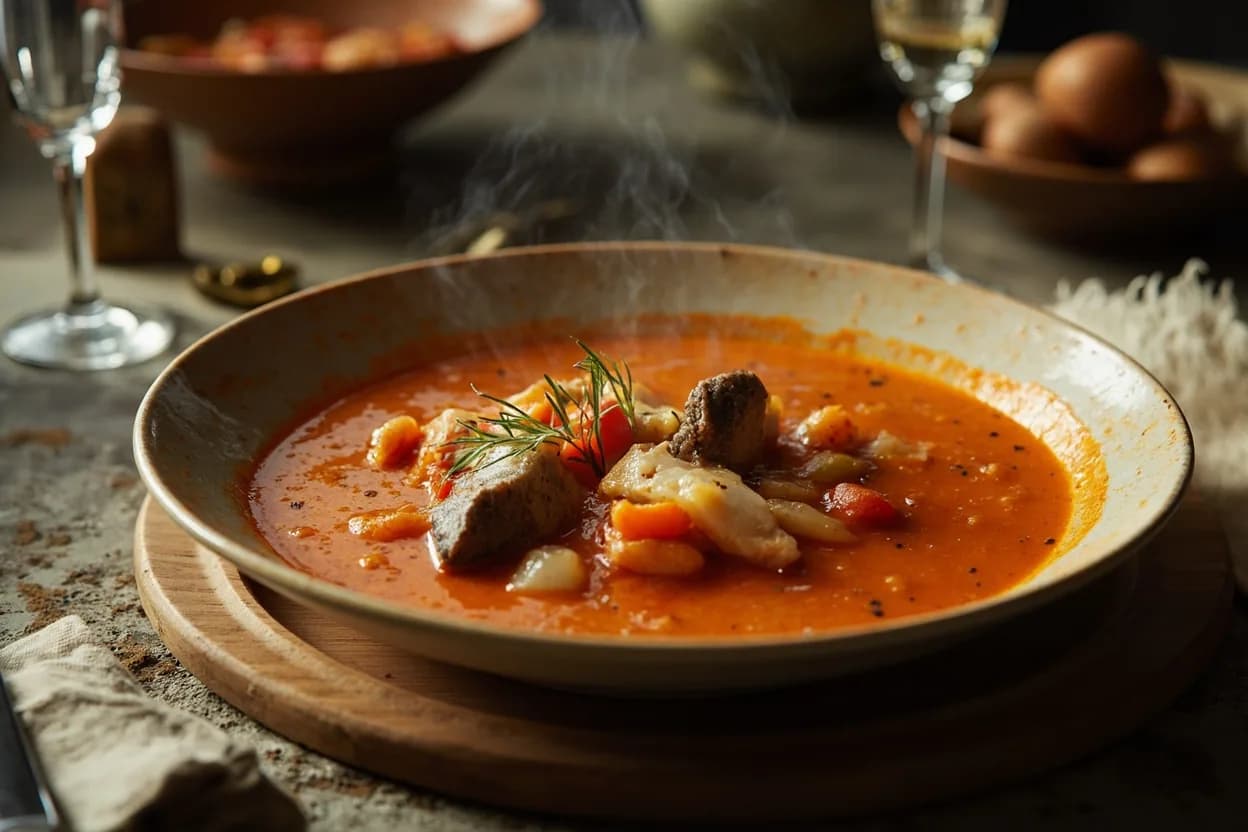
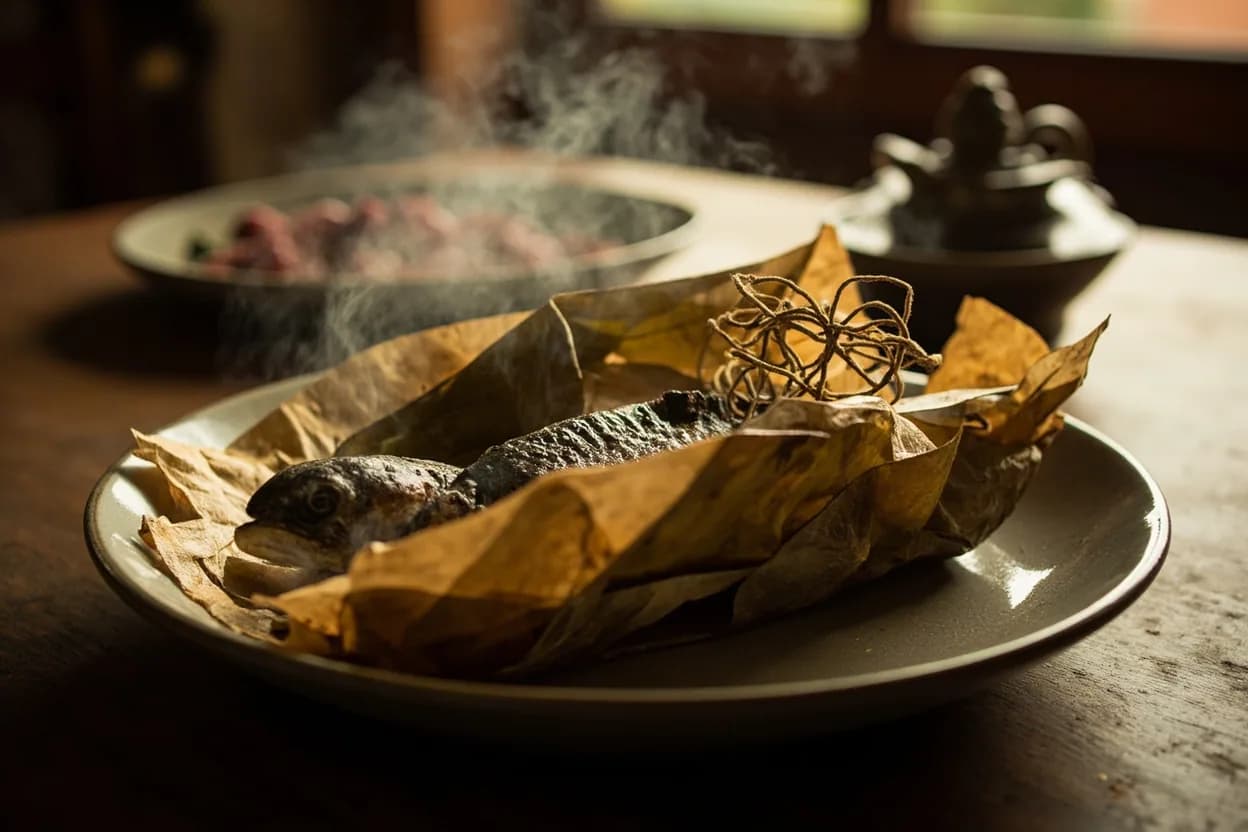
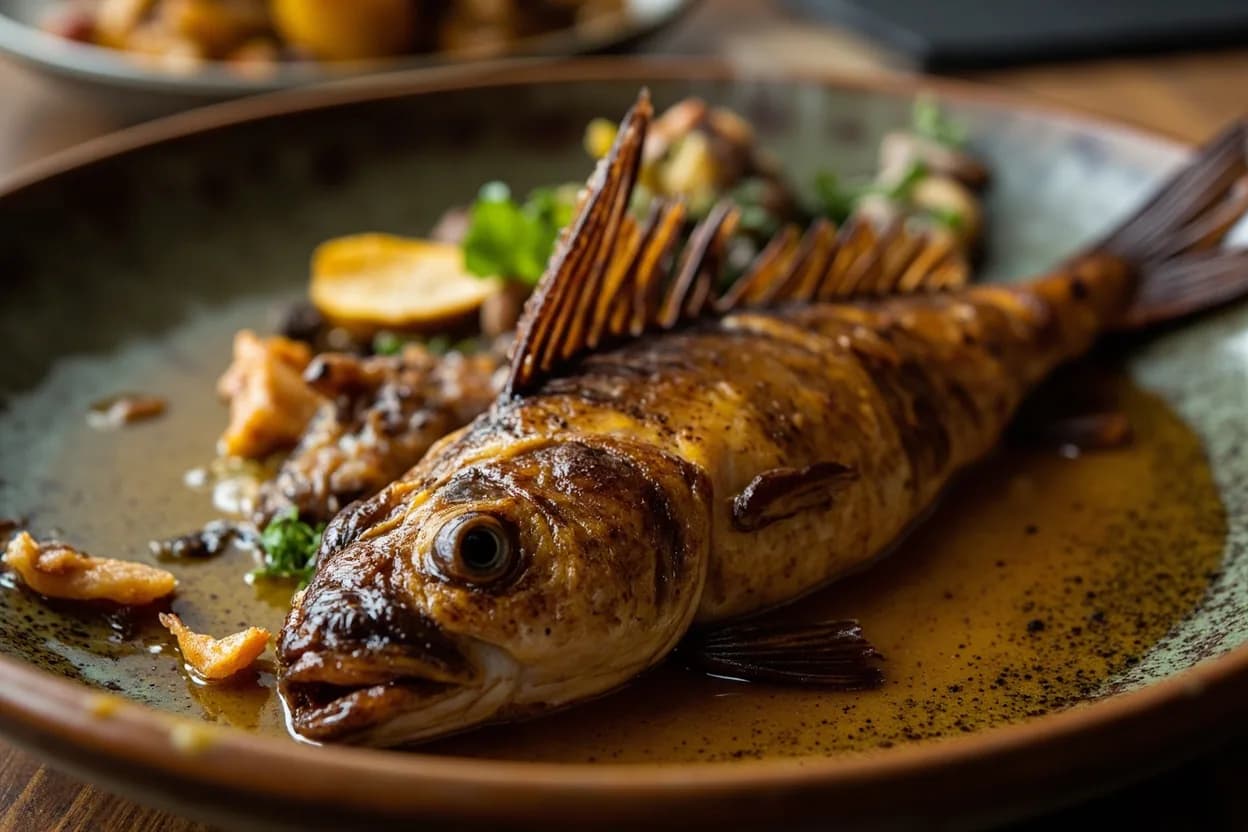
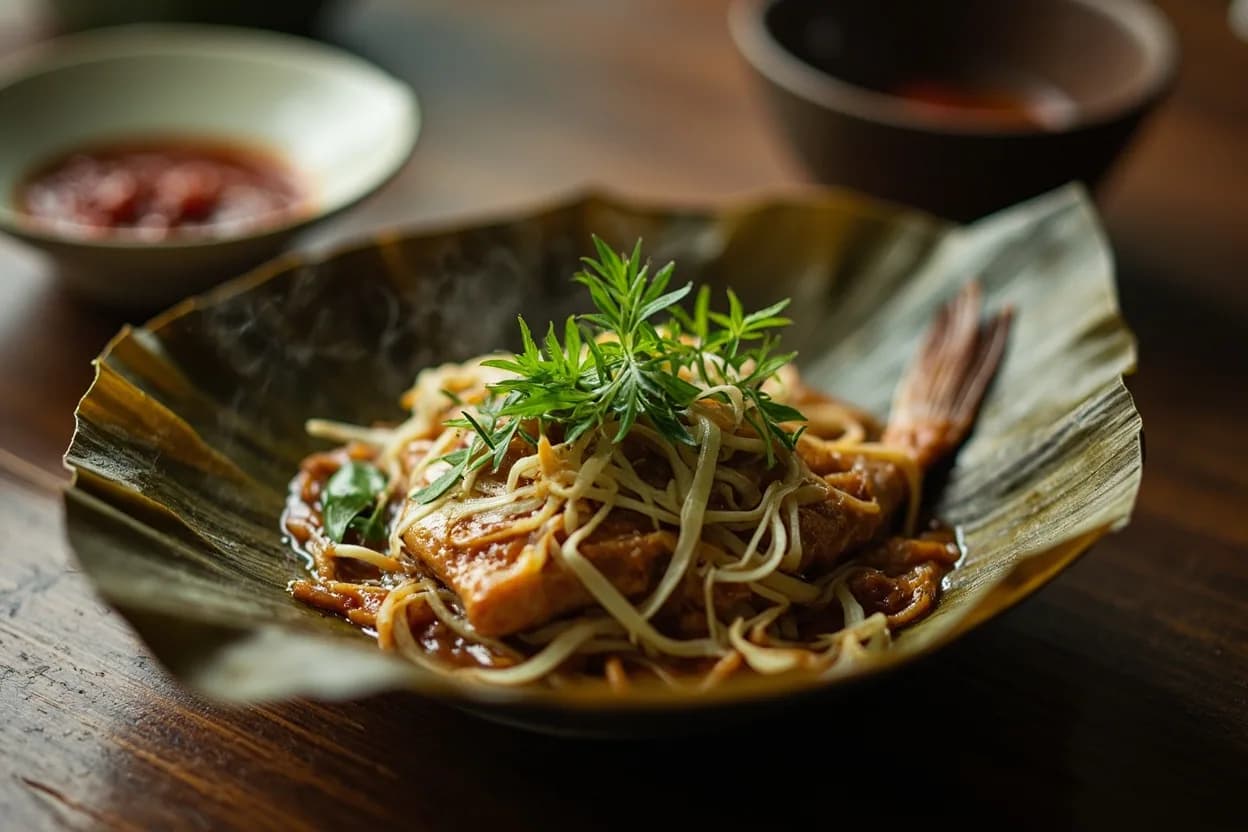
Appears in these dishes

Related
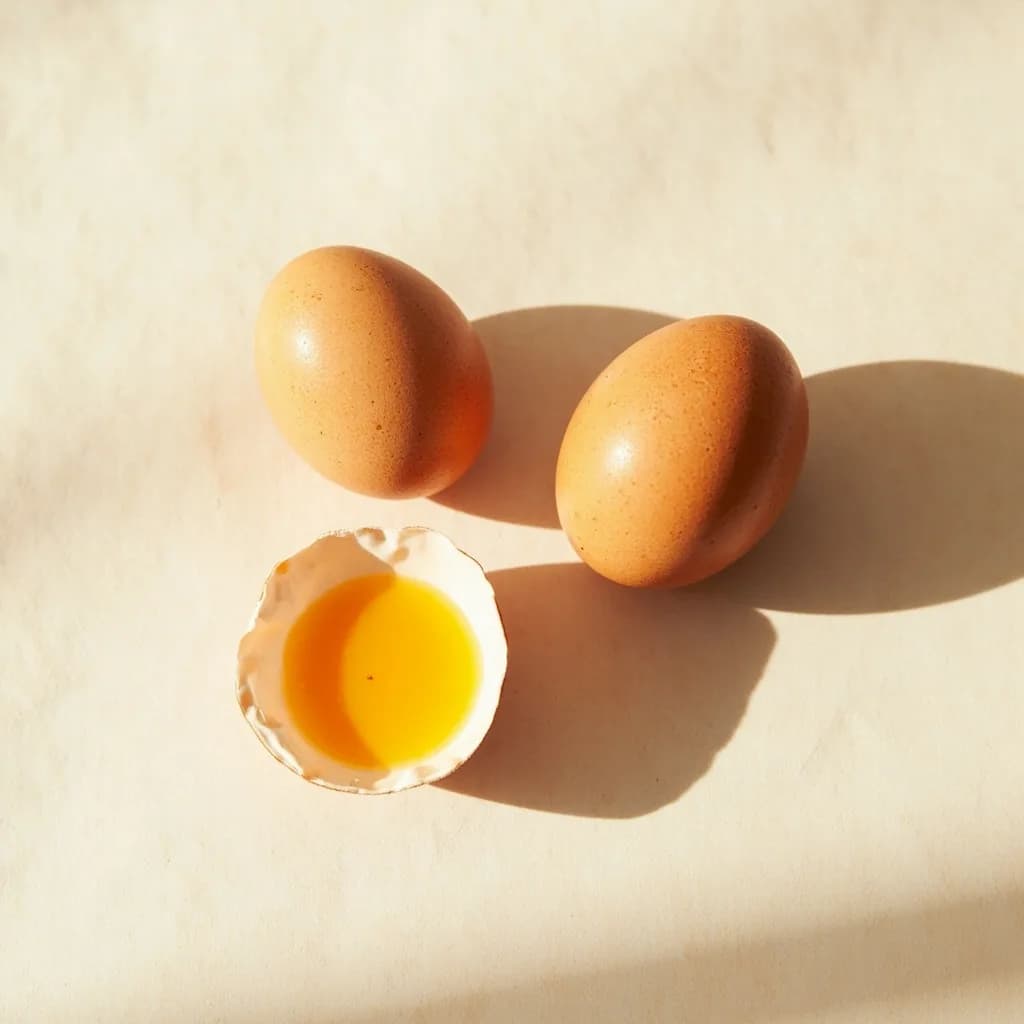
Egg
The kitchen's everything ingredient — bind, leaven, enrich, or fry
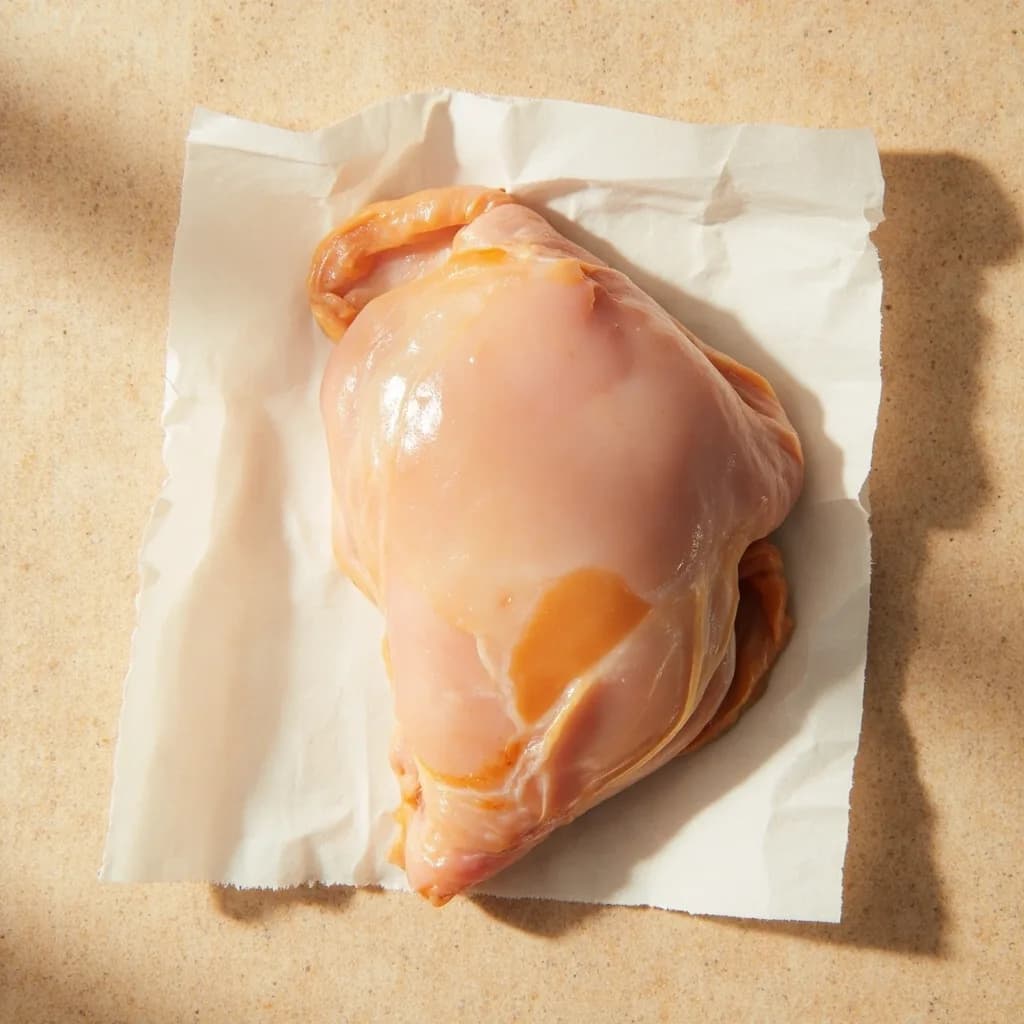
Chicken Breast
Lean, quick-cooking white meat for everyday dinners

Ground Beef
Versatile minced beef for burgers, ragù, tacos, and meatballs
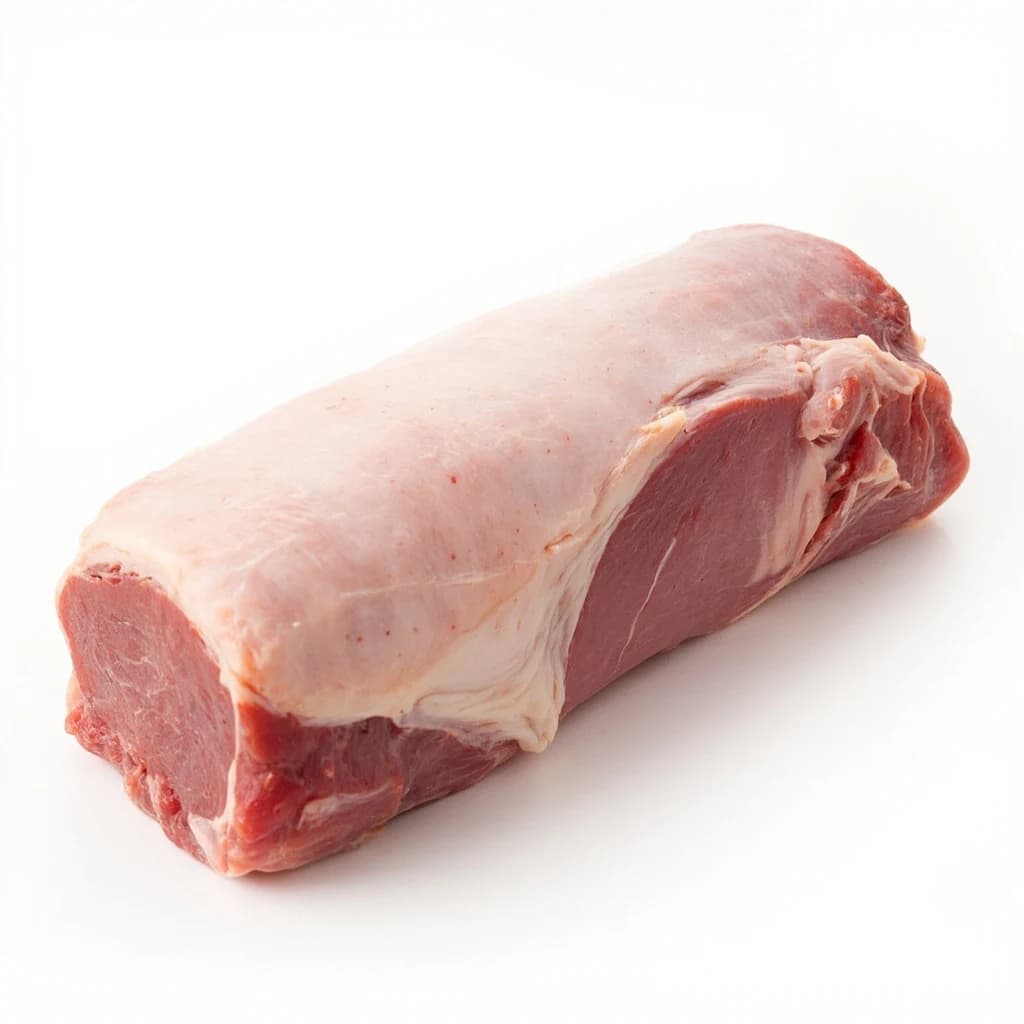
Pork Loin
Lean, tender roasting cut that stays juicy with care
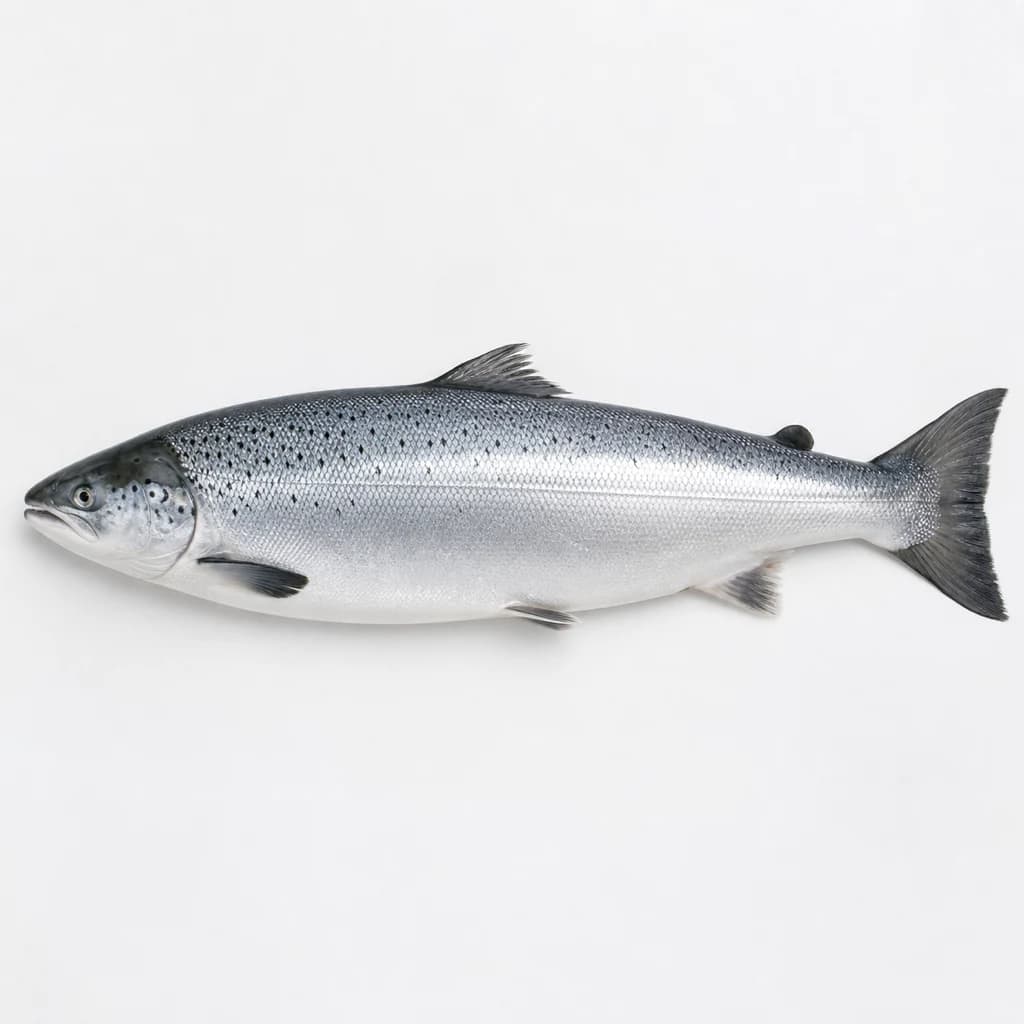
Salmon
Rich, rosy fish that roasts, grills, or cures beautifully

Egg White
Pure protein that whips to airy peaks for meringue and more

Egg Yolk
Rich, golden yolk for custards, mayonnaise, and pasta

Quail Egg
Tiny, speckled eggs for garnishing and elegant bites