South Asia
Awadhi (Lucknowi)
Also: Lucknowi Cuisine, Nawabi Cuisine, Awadh Cuisine
The most refined of North India's courtly cuisines — Lucknow's nawabs perfected dum cooking, gossamer kebabs, and layered biryani into an art of restraint and fragrant subtlety.
Awadhi cuisine is the cooking tradition of the Awadh region centered on Lucknow, the capital of what was once a semi-autonomous nawabi state under Mughal suzerainty. From the 18th century onward, the Nawabs of Awadh patronized an extraordinary culinary court that systematized dum (sealed-vessel slow-cooking), refined kebab making to extraordinary delicacy, and developed a flavor profile of cool subtlety — rose water, kewra (screw pine essence), mace, and ittar (perfume) — in deliberate contrast to the brasher spicing of Punjabi or Rajasthani food. The defining ethos is naz — an aristocratic refinement in which understatement signals greater mastery than boldness. Dishes are cooked low and slow; spices are used to perfume rather than overwhelm; and the best preparations emerge from minimal apparent effort.
The flavour base
Onion base slow-cooked until golden (not browned), infused with mace, cardamom, kewra water, and rose water; yogurt provides acid and body; dum sealing (dough-sealed vessel) traps steam and aromatics; saffron colours and perfumes the final dish
Pantry staples
Key ingredients
Signature techniques
Signature dishes
Awadhi (Lucknowi) on the table
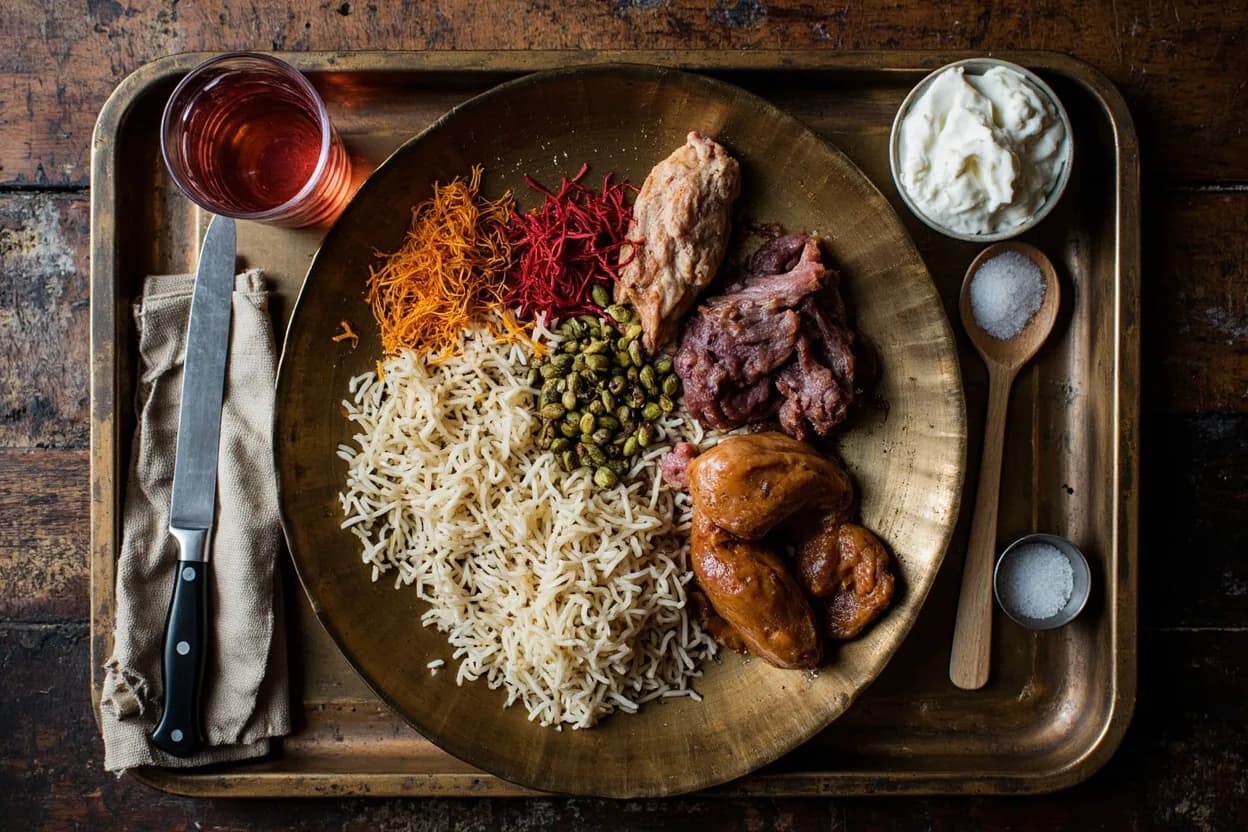

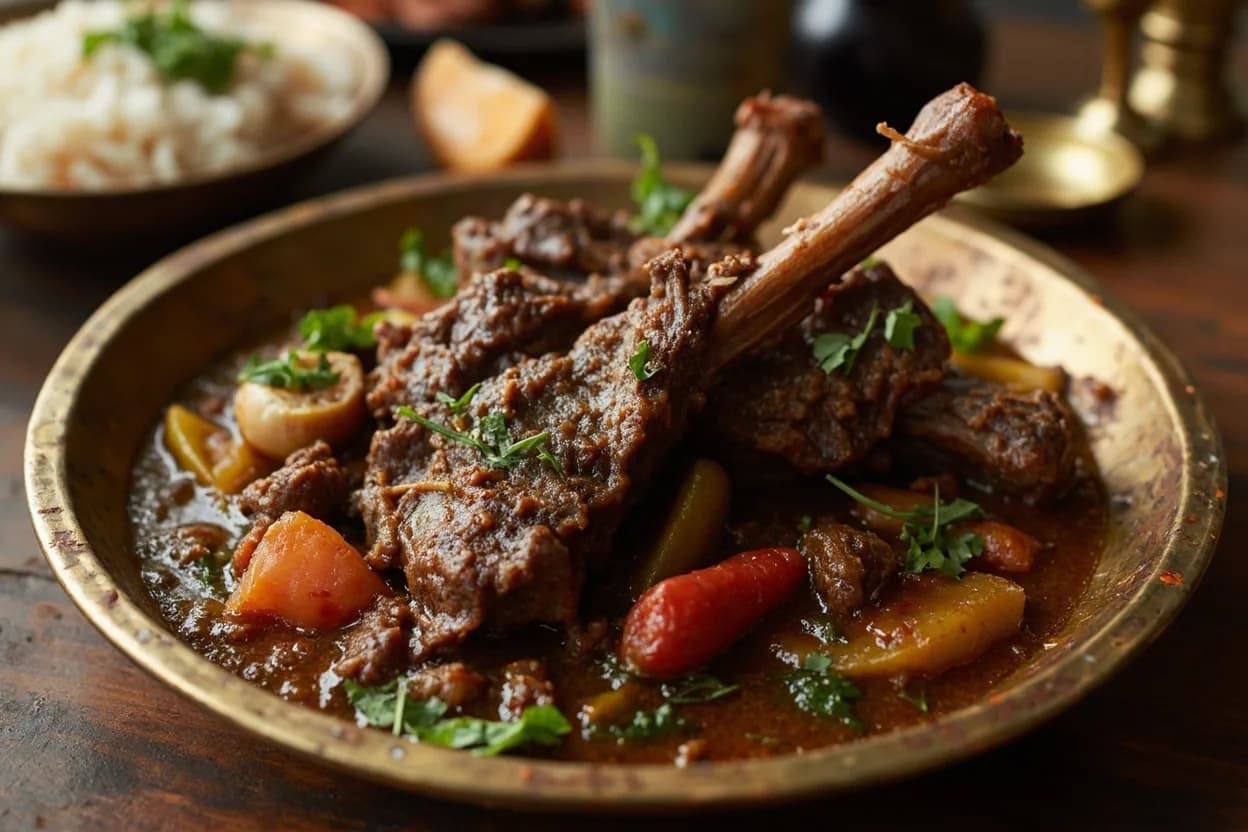
At the table
Formal Awadhi meals follow a sequence descended from Mughal dastarkhwan (floor cloth spread): shorba (broth) first, then kebabs as appetizers, then the main dum dishes with biryani or breads, followed by sheermal, and concluding with meetha (sweets) and mukhwas (fennel seed digestives). In practice, restaurant meals compress this into courses. The meal is languid — never rushed.
History & context
Awadh came into its own as Mughal central power declined in the early 18th century. The Nawabs — nominally Mughal viceroys — built Lucknow into a center of Urdu poetry, dance, architecture, and cuisine. Nawab Asaf-ud-Daula (r. 1775–1797) is traditionally credited with patronizing the development of dum cooking during a famine-relief public works project, when vast sealed pots of rice and meat fed laborers overnight. The galawati kebab was reportedly invented for an aged nawab who had lost his teeth — ground meat so fine and papain-tenderized it required no chewing. British annexation of Awadh in 1856 dispersed the court, but the cuisine survived through the khansamas (royal cooks) who entered the employ of wealthy families and hotels, preserving techniques that persist today.
Regional variations
- Lucknow city
The most refined form; Old City establishments like Tunday Kababi and Idris ki Biryani maintain nawabi lineage recipes; heavy floral aromatics and dum predominate
- Rural Awadh (Uttar Pradesh)
Simpler, less perfumed; more everyday: dal, sabzi, roti; the spice subtlety of the court food is reserved for festivals and weddings
- Hyderabadi overlap
Hyderabad's Nizam court absorbed many Awadhi khansamas after 1856; some dishes (biryani, haleem) have parallel traditions in both cities with slight divergence in spicing
Related cuisines
Direct ancestor; Awadhi cuisine is Mughlai refined and localized by the Lucknow court, emphasizing perfume and dum over the more robust Mughal originals
Sister Mughal-descended court cuisine; shares biryani and korma structure but Hyderabadi versions are spicier and tamarind-inflected
The contrast case — bold, butter-forward, less subtle; where Awadhi food whispers, Punjabi food announces itself
Canonical recipes
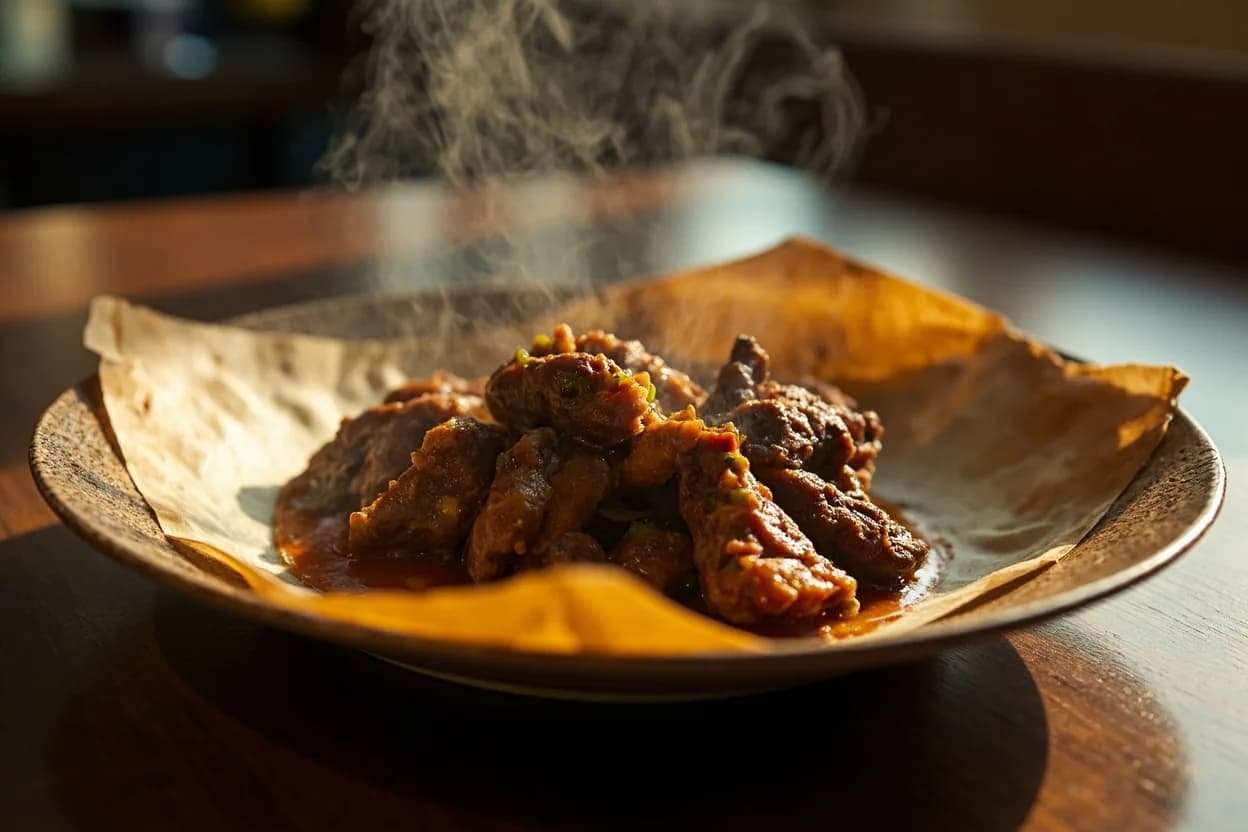
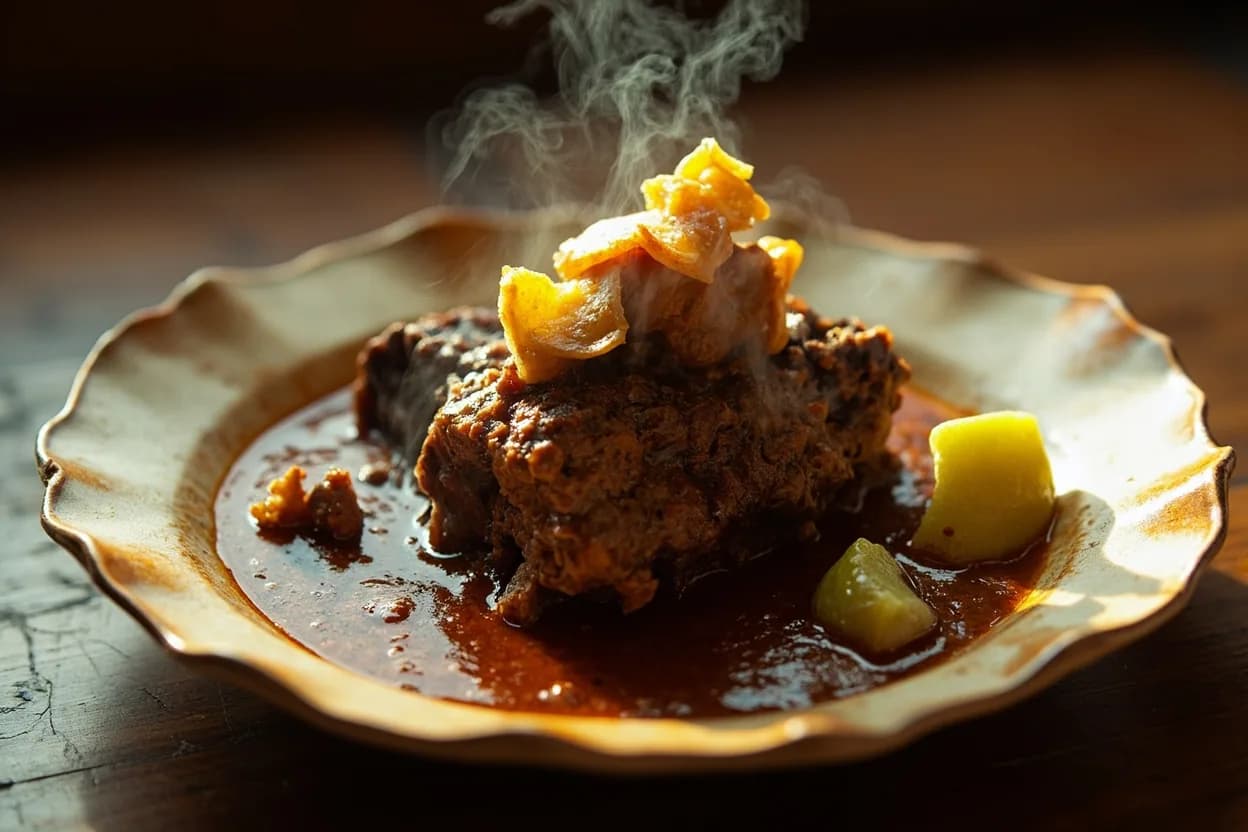
The dishes that define Awadhi (Lucknowi), documented in the Canon.
References
- 1.Prashad: Cooking with Indian Masters — J. Inder Singh Kalra
- 2.India: The Cookbook — Pushpesh Pant
- 3.The Glorious Food of India — Julie Sahni
- 4.Dastarkhwan-e-Awadh — Sangeeta Bhatnagar & R.K. Saxena
Confidence: high
Notes
The 160-spice galawati
Traditional galawati kebab recipes list between 100 and 160 individual spice components, most present in fractional quantities. The intent is not heat or any single flavor but a composite aromatic signature that is smooth, harmonious, and impossible to reduce to any identifiable individual spice — taste without source.
Dum as flavor seal
Dum sealing (sealing the pot with atta dough rope) is not merely a slow-cooking method but a flavor-concentrating one. Every volatile aromatic — kewra, rose water, cardamom — that would evaporate in an open pot is instead forced back into the rice and meat during the hours-long cook. Breaking the seal at the table is theatrical and aromatic.