South Caucasus
Azerbaijani
Also: Azeri, Azerbaycani, Caucasian Azerbaijani
A Silk Road table where Persian refinement, Turkic steppe traditions, and Caspian abundance converge in aromatic plov and pomegranate-laced stews.
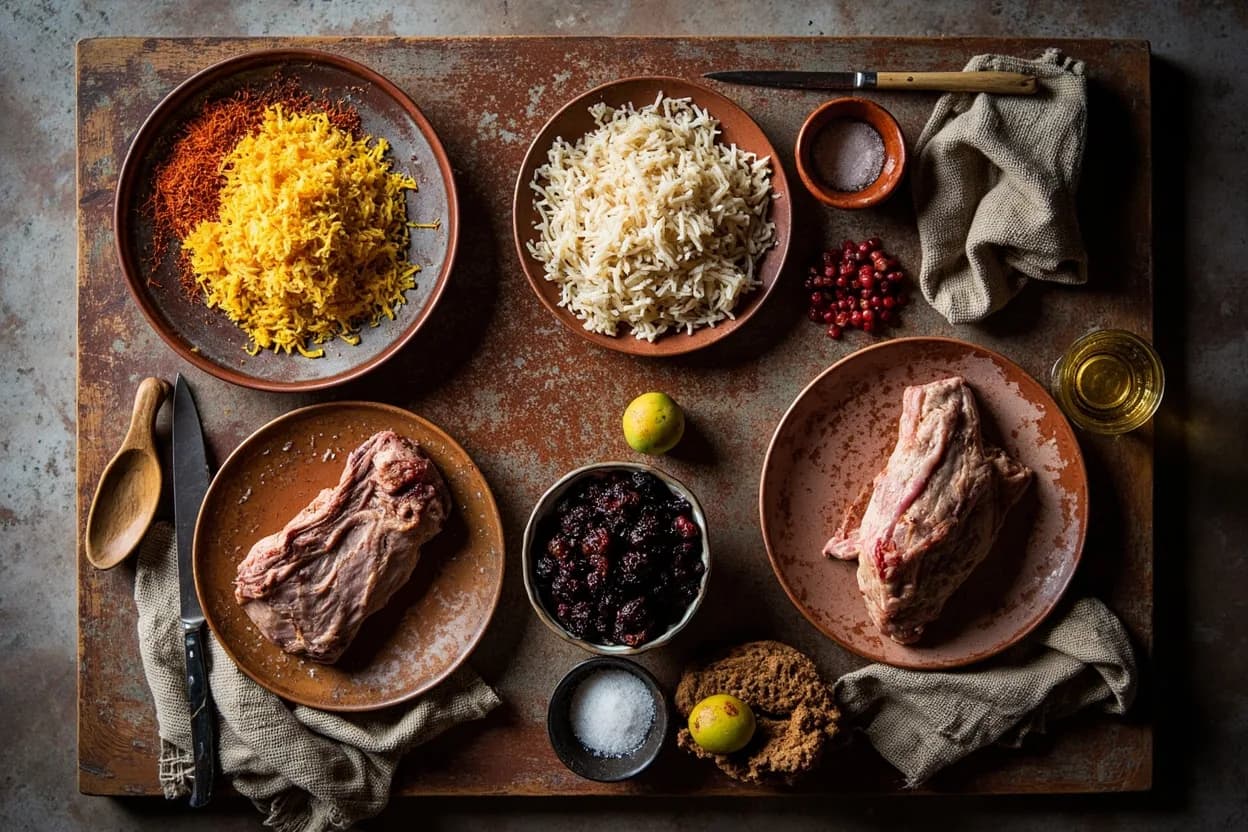
Azerbaijani cuisine is the culinary expression of a people positioned at the crossroads of the ancient Silk Road, between the Caspian Sea to the east and the South Caucasus mountains to the west. It shares structural DNA with Persian cuisine — particularly the love of saffron, dried fruits, and herb-rice combinations — while absorbing Turkic traditions of grilled meat, dough-wrapped morsels, and fermented dairy. The Caspian coast contributes a unique maritime dimension: sturgeon, beluga caviar, and kutum fish. Sourness (from sour plums, pomegranate, and sumac) and sweetness coexist deliberately in the same dish, a hallmark balance that separates Azerbaijani cooking from its neighbors.
The flavour base
Sautéed onion enriched with turmeric and saffron, frequently finished with pomegranate juice or tart dried fruits (alcha, cornelian cherry); lamb fat provides depth.
Pantry staples
Key ingredients
Signature techniques
Signature dishes
Azerbaijani on the table


At the table
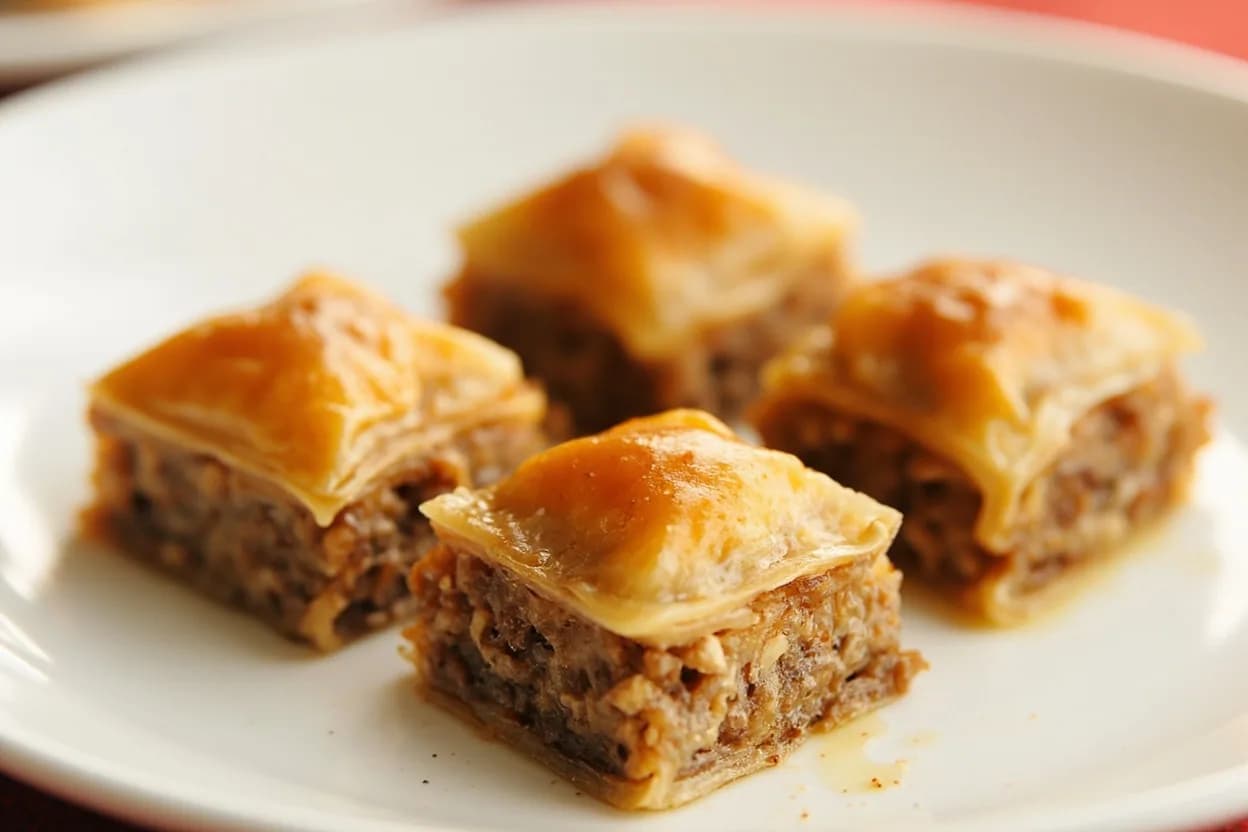
Meals begin with a spread of fresh herbs (radishes, scallions, basil, tarragon), pickles, and flatbreads alongside tea. Main dishes center on plov — often the most elaborate preparation — flanked by kebabs or stews. Sweets such as pakhlava and shekerbura appear for holidays. Tea (black, from glass armudu cups with jam on the side) bookends every meal and is a social ritual in itself.
History & context
Azerbaijan's position astride the ancient Silk Road made it a conduit for spices, goods, and culinary ideas moving between China, Persia, and Europe. Persian imperial influence under the Achaemenids and Safavids left a deep imprint: court-style rice dishes, saffron use, and the sweet-sour flavor philosophy. Turkic migrations from Central Asia from the 11th century introduced grilled meat traditions and dairy fermentation. The Caspian Sea provided caviar that was historically exported to tsarist Russia and later became an Azerbaijani cultural symbol. Soviet-era collectivization disrupted agricultural variety, but post-independence revived traditional preparation of clay-pot dishes and regional festival foods.
Regional variations
- Baku
Cosmopolitan capital style with more Persian refinement; fish dishes and ornate plov preparations dominate.
- Sheki
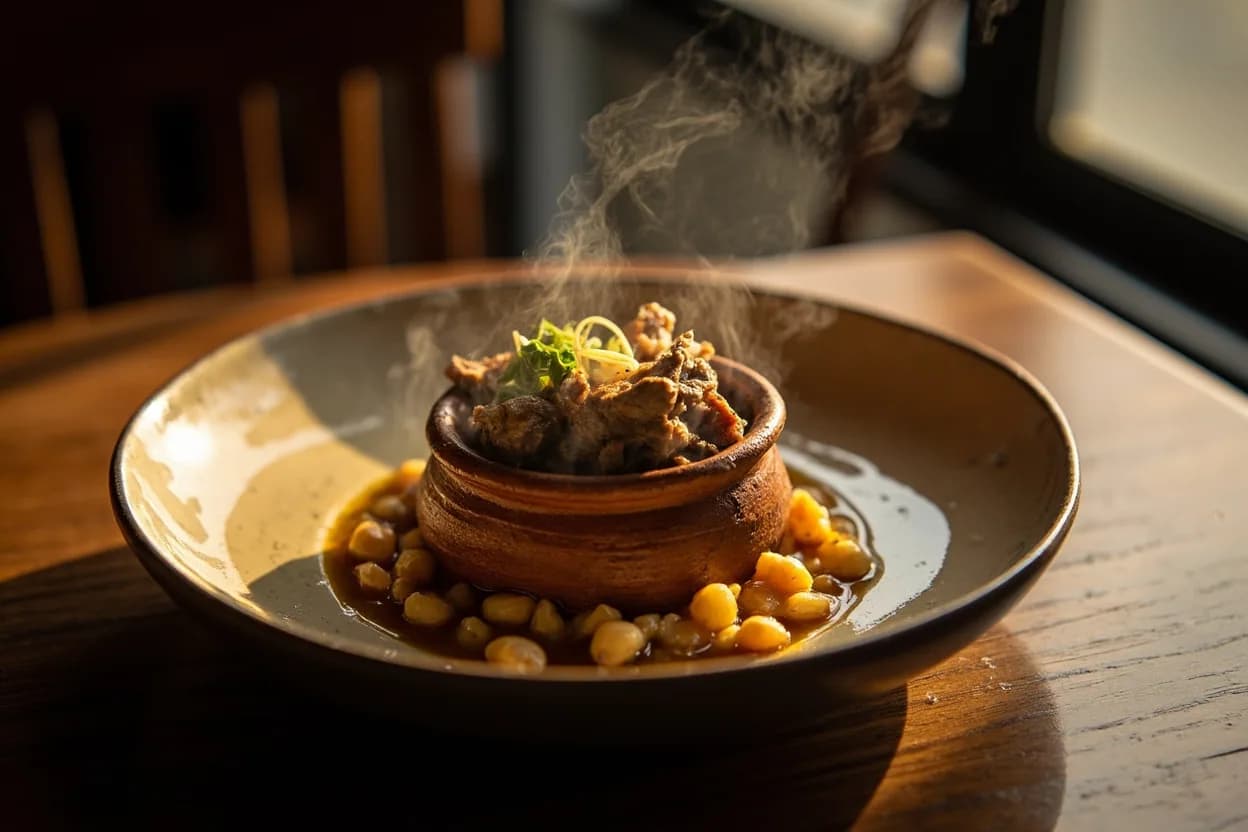
Famous for piti (clay-pot lamb stew) and Sheki halva, a rice-flour and saffron confection unique to the region.
- Lankaran (Talysh)
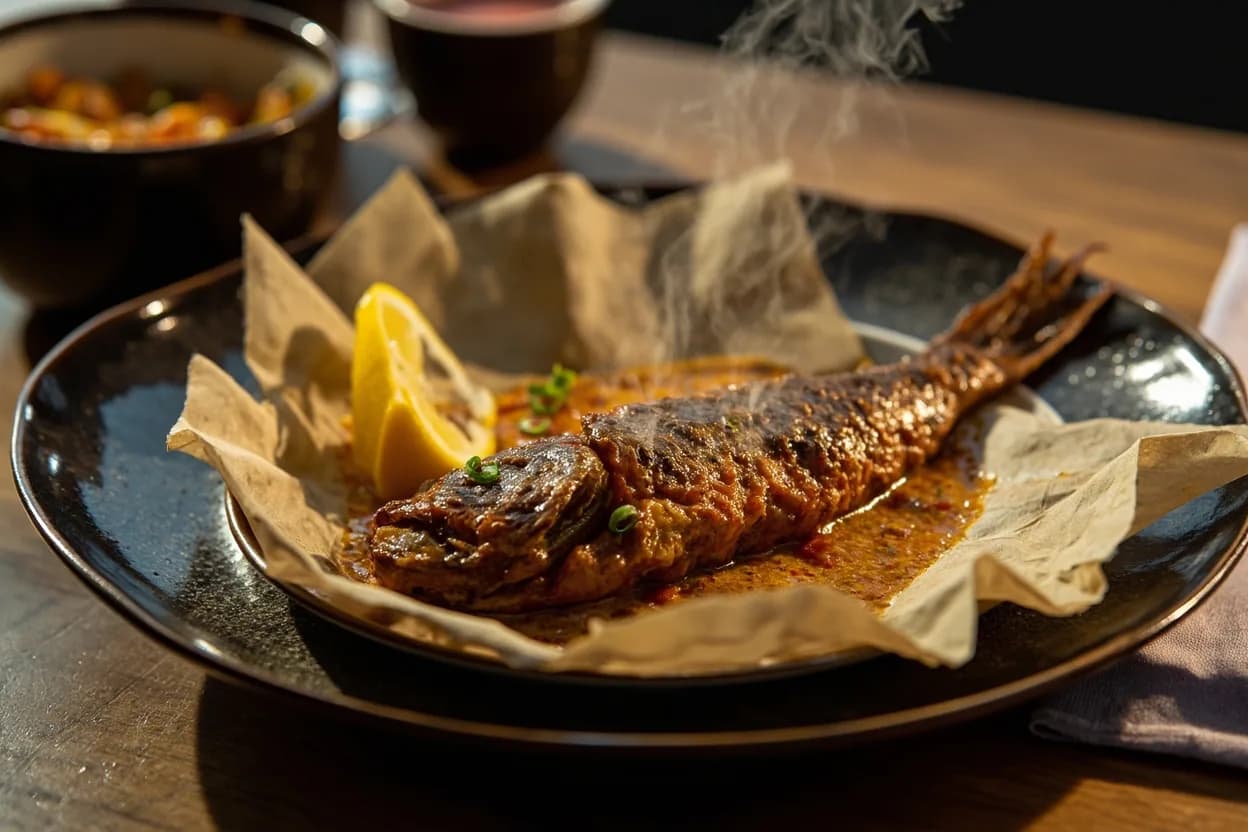
Caspian lowland cuisine with strong fish emphasis, levengi-style stuffings, and Persian-Talysh herb use.
- Karabakh
Mountainous region with heavier lamb and game dishes, dried fruit use, and robust shepherds' breads.
Related cuisines
Shares saffron-rice technique, khoresh stew logic, and sweet-sour balancing; Persian influence is the primary historical shaping force.
Shared Turkic heritage produces parallel kebab traditions, dolma, and börek-family pastries.
- Georgian
Caucasian neighbor sharing walnut sauces, stuffed doughs, and grilled meats, though flavor profiles diverge sharply.
- Armenian
Close geographic neighbor with overlapping dolma and pilaf traditions; intense historical and culinary entanglement.
Canonical recipes
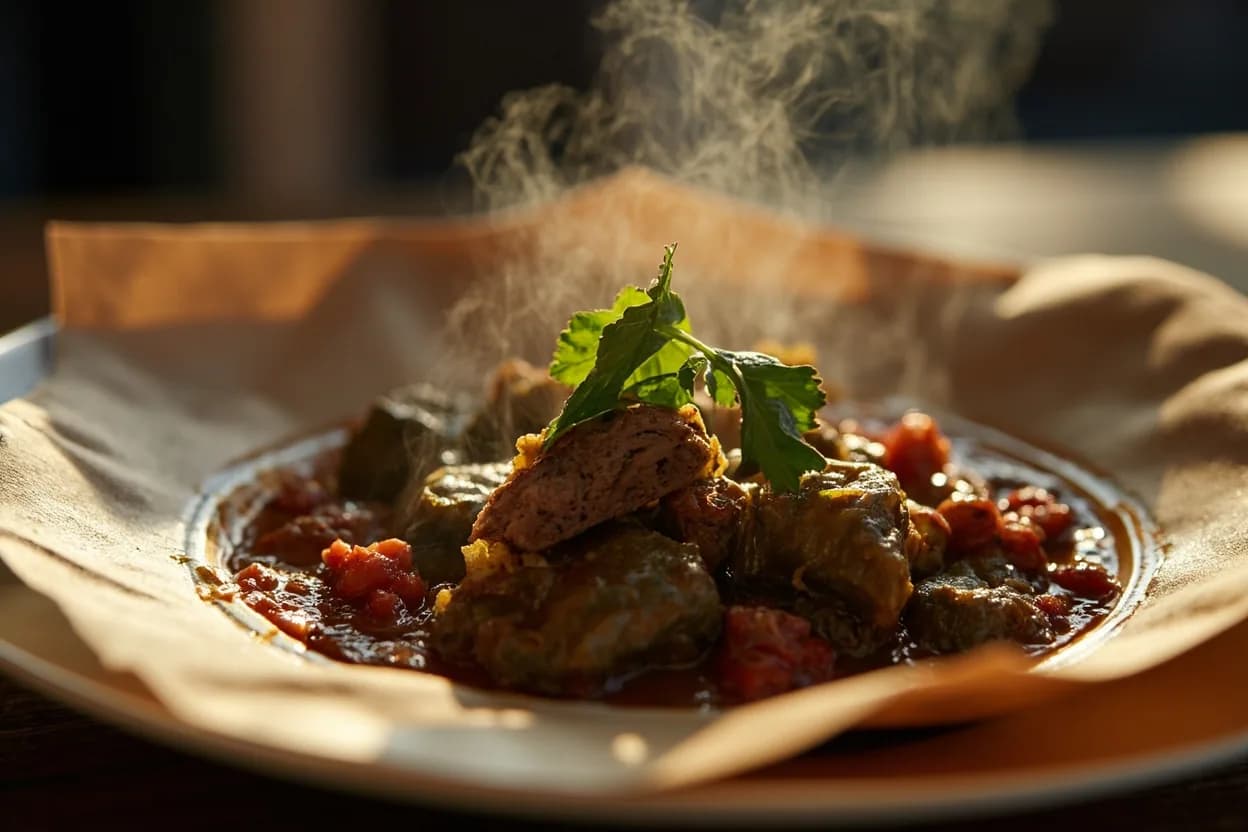
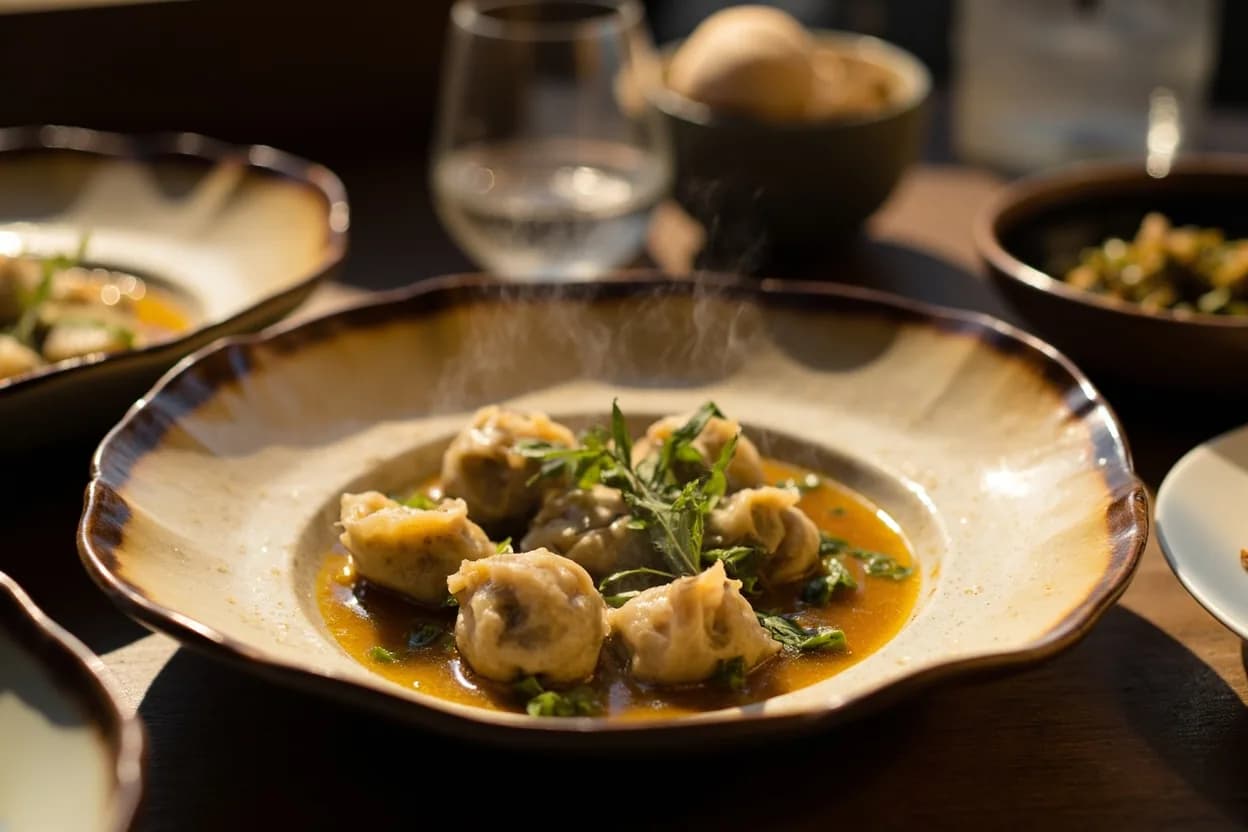
The dishes that define Azerbaijani, documented in the Canon.
References
- 1.Taste of Persia — Naomi Duguid (2016)
- 2.The Cuisines of the Caucasus Mountains — Kay Shaw Nelson (2004)
- 3.Culinary Arts of Azerbaijan — Tahir Amiraslanov (2010)
- 4.Oxford Companion to Food — Alan Davidson, 3rd ed. (2014)
Confidence: high
Notes
Caviar culture
Historically, beluga and osetra caviar from the Caspian was a common food rather than a luxury — salted, eaten with flatbread, or stirred into egg dishes. Soviet export quotas and post-independence stock depletion have made wild Caspian caviar rare, but farmed sturgeon operations now operate within Azerbaijan.
The gazmag
Azerbaijani plov is distinguished by its gazmag — the crisp rice or flatbread crust formed at the bottom of the pot. Unlike the Iranian tahdig, it is often a layer of buttered lavash or egg-enriched dough, producing a shatteringly crisp base that is the most coveted portion.