
Natural form
Fresh grape leaves showing their broad lobed shape and veined surface.
Shows the reader the exact botanical form and scale of an unprocessed grape leaf before any preparation.
Produce
Grape Leaf
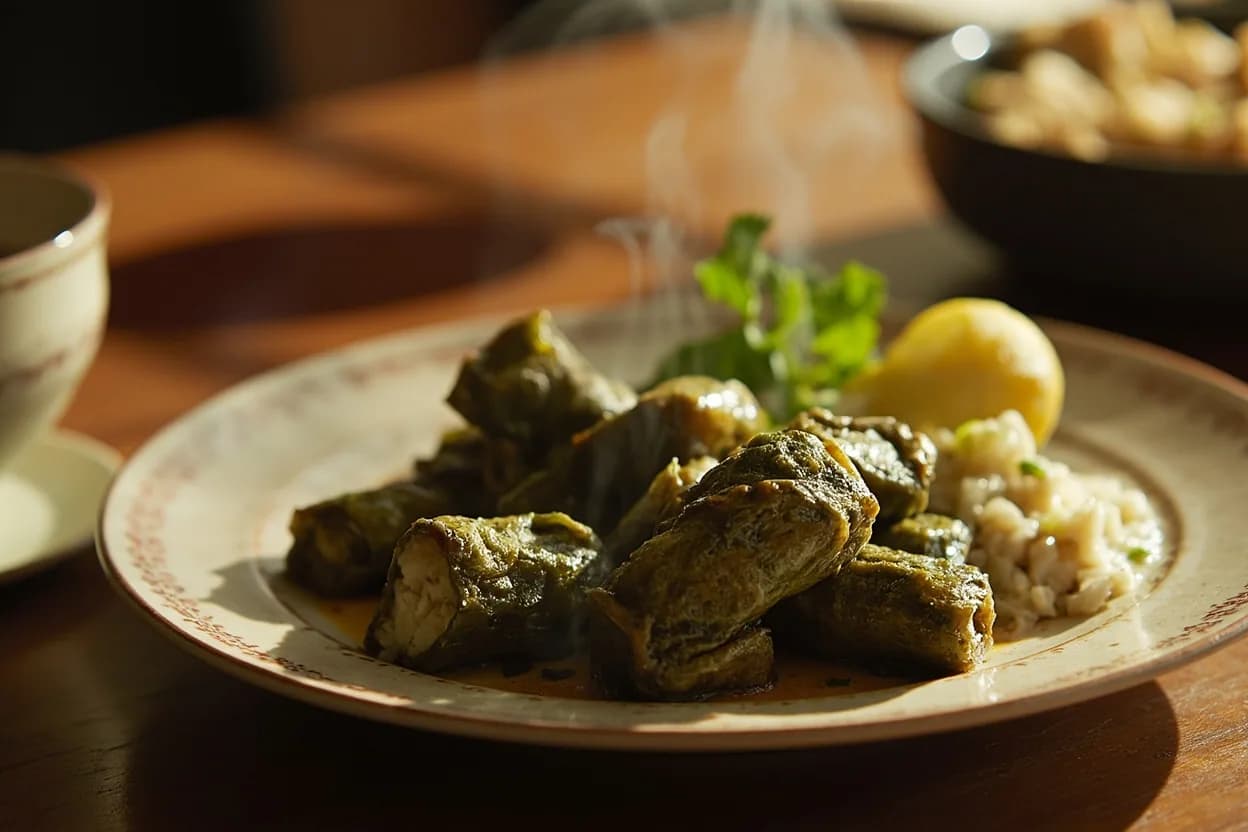
Tender grapevine leaves brined and wrapped around rice or meat fillings like dolmades.
Grape leaves are the broad, lobed leaves of the grapevine, blanched or brined to make them pliable and tangy. They are most famous as wrappers for rice or meat fillings in dolma and dolmades across the Mediterranean, Middle East, and Balkans. Sold fresh, jarred in brine, or vacuum-packed, they impart a gently sour, herbaceous note to the filling.
Grape leaves are the edible foliage of the common grapevine (Vitis vinifera), harvested in late spring when they are young, thin, and pliable. For millennia they have served as a natural wrapping in Mediterranean, Middle Eastern, and Balkan cuisines—stuffed with rice, meat, or both, then simmered in fragrant broths. The leaf's structure is ideal: thin enough to become tender during cooking, strong enough to hold fillings without tearing, and large enough (3–6 inches flattened) to create a compact roll. Brined grape leaves—the most common retail form—retain their suppleness in the jar and rehydrate quickly once rinsed, making them a pantry staple far beyond the fresh-harvest season. The flavor is mild and vegetal, with brined leaves contributing a gentle sour-saltiness that seasons the filling from within during cooking.
The technique of stuffing vine leaves predates written history; both ancient Greeks and Romans prepared similar dishes, and the practice extends eastward through Anatolia to the Levant and the Caucasus. The Turkish word dolma (from dolmak, "to be filled") now broadly describes any stuffed preparation, while dolmades refers specifically to the rolled vine-leaf form. Warak enab, the Lebanese counterpart, typically uses a rice-and-tomato filling and is often served cold dressed with olive oil and lemon. The same leaves also function as a grilling wrapper, steaming fish or meat over live fire while imparting a subtle herbal aroma.
When sourcing fresh leaves from a vineyard, harvest by hand in late spring, selecting young leaves from the shoot tips—they should be pale green, thin, and tender. Avoid any leaves from vines treated with pesticides or from ornamental or hybrid grapes of unknown origin. Commercially brined leaves are almost always from Vitis vinifera varieties; the brine (typically water, salt, and sometimes citric acid or vinegar) preserves without cooking, leaving leaves pliable and ready to stuff after a thorough rinse. A standard 16-ounce jar contains roughly 40–60 individual leaves, enough for a generous batch of dolmades.
- Measured in
- g
- Storage
- Pantry
Types & varieties
The most widely used variety for dolmades; thin, tender leaves from seedless table grapes
Common in Greece and Turkey; slightly thicker leaves, excellent for rolling
Foraged from ungrafted vines in hedgerows; prized in rural Greek and Turkish cooking for intense flavor
Bulgarian and Balkan white wine variety; leaves used in regional stuffed-leaf dishes
French-American hybrid; occasionally used in North American home cooking
Blanching Fresh Grape Leaves
If you harvest your own leaves or buy them fresh, they require blanching before stuffing. Bring a large pot of water to a rolling boil. Submerge the leaves individually or in batches for 30–60 seconds—until they turn a brighter green and become pliable. Immediately plunge them into ice water to stop the cooking and preserve their color. Lay them flat on a kitchen towel to drain. This step is non-negotiable for fresh leaves; unstuffed raw leaves will not soften adequately during the subsequent simmer, and the rolls will be tough and fibrous.
- Blanch 30 seconds for very young, thin leaves; up to 60 seconds for mature leaves
- Ice bath immediately to prevent overcooking and discoloration
- Pat dry before stuffing to ensure the filling adheres
Removing the Central Stem
Every grape leaf—even young ones—has a central vein that runs from stem to tip. This rib is too tough to eat and will prevent a tight roll. To remove it: lay the leaf flat, underside up. Fold the leaf in half lengthwise, sandwiching the vein along the fold. Cut the vein away with kitchen scissors or simply tear it out by hand, pulling from the stem end toward the tip. The leaf should now be a clean, symmetrical oval ready for filling.
- Work with the leaf flat and rib-side up for best control
- A sharp pair of kitchen scissors makes quick work of multiple leaves
- Do not skip this step—even thin ribs will remain chewy after cooking
Common uses
Tips & pitfalls
- Rinse brined leaves thoroughly under cold water before using to remove excess salt from the preservation brine
- Blanch fresh leaves in boiling water for 30–60 seconds, then plunge into ice water to preserve color and texture
- Remove the central stem by folding the leaf in half lengthwise and cutting or tearing the rib away
- Roll tightly from the stem end toward the tip: a tight roll prevents the filling from falling out during cooking
- Do not overfill: 1–2 teaspoons of filling per small leaf, 1–2 tablespoons per large leaf is sufficient
- Secure rolls with kitchen twine or nest them seam-side down in the pot so they hold each other in place
- Simmer gently in olive oil and lemon broth (or tomato sauce for some regional styles) for 45–60 minutes; do not boil vigorously
- Store leftover dolmades refrigerated, submerged in their cooking liquid or a film of olive oil, for up to 5 days
- If using fresh wild-foraged leaves, verify the vine has not been sprayed with pesticides
- A tight roll also ensures even heat penetration and consistent texture throughout the batch
Nutrition
Energy
389 kJ · per 100 g
Where the calories come from
Protein
5.6g
11% DV
Carbs
17.3g
6% DV
Fat
2.1g
3% DV
Fiber
11g
39% DV
Sugars
6.3g
of which
Sodium
9mg
0% DV
Source · USDA FoodData Central · Grape leaves, raw
View on FDC →In the shops
Matched grocery products
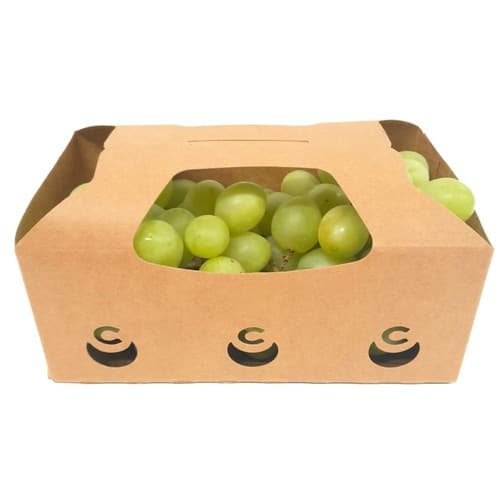 €2.85
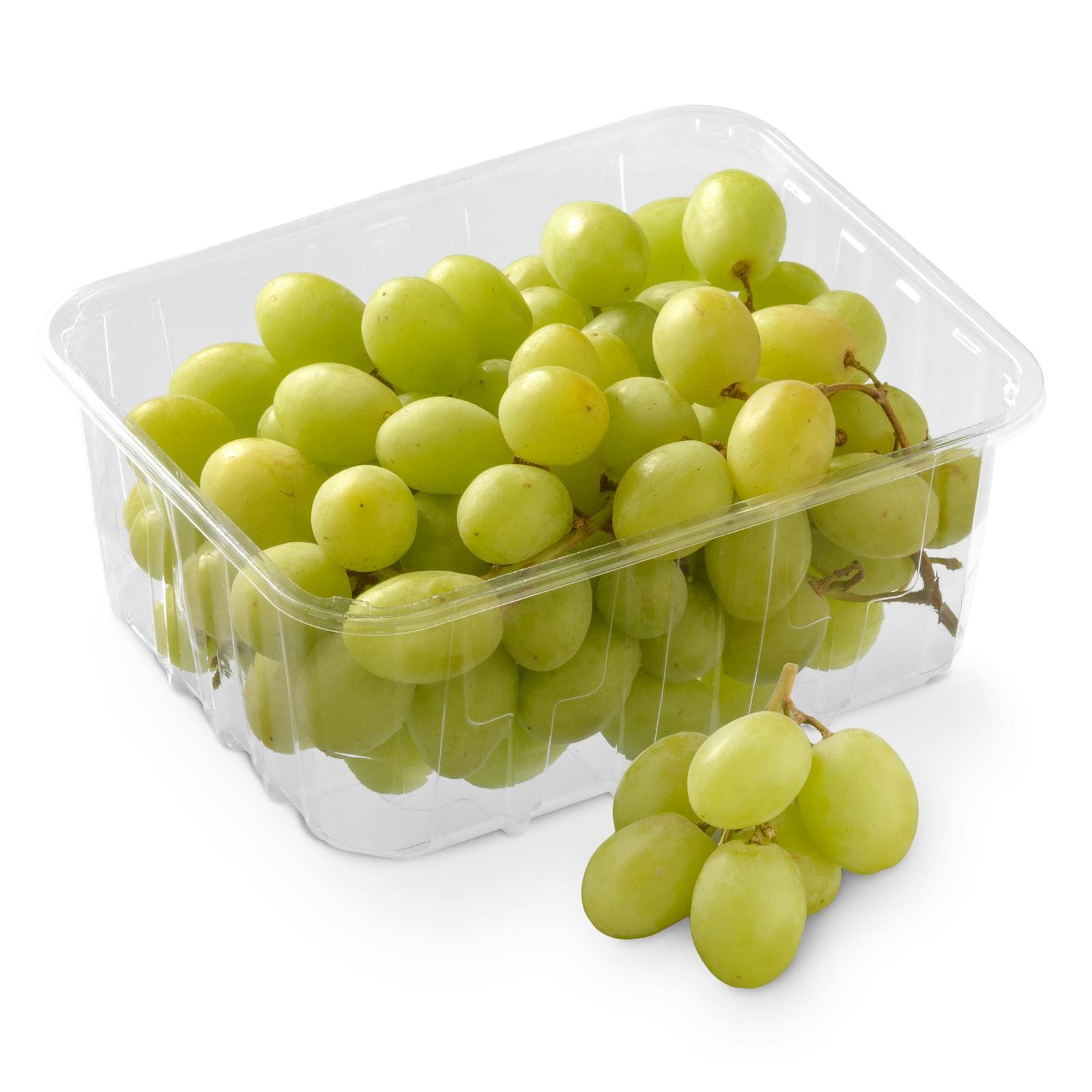
€2.85White Seedless Grapes 500g Tray
LA COLLITA · kg · Bonpreu
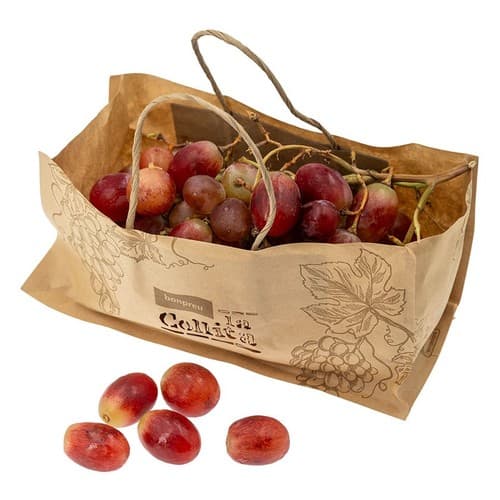 €2.89
€2.89Seedless Red Grapes in 500g Bag
LA COLLITA · kg · Bonpreu
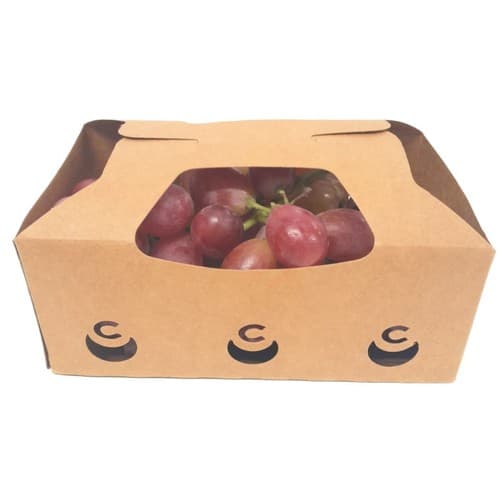 €2.89
€2.89Seedless Red Grapes in 500g Tray
LA COLLITA · kg · Bonpreu
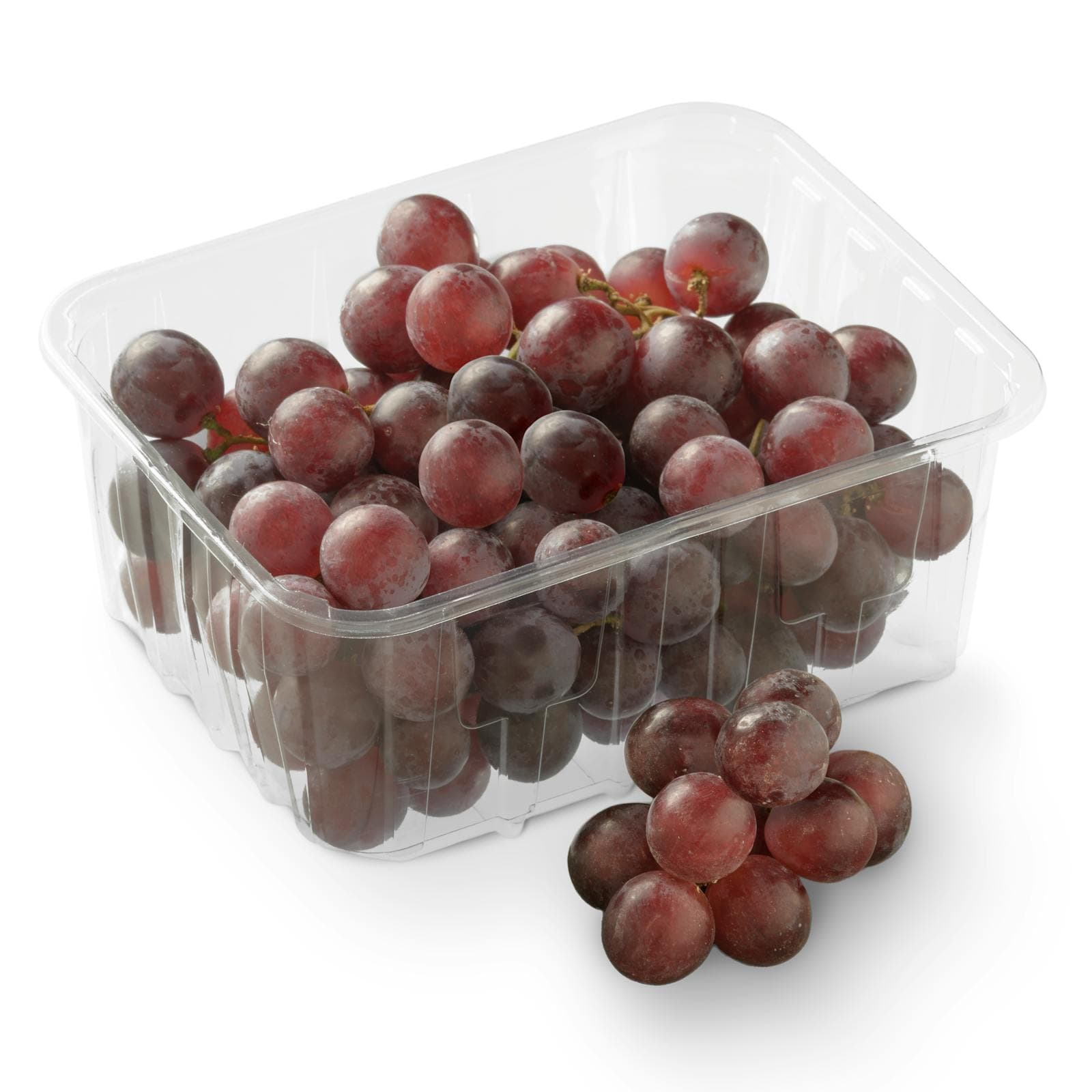 €3.30
€3.30Seedless Red Grapes
600 g · Mercadona
 €3.30
€3.30White Seedless Grapes
600 g · Mercadona
Good to know
- Scientific name
- Vitis vinifera (common wine and table grape)
- Origin
- Mediterranean basin, Middle East, and Caucasus region; cultivated for wine and fresh eating, with leaves harvested from the same vines
- Peak season (fresh)
- Late spring to early summer, when leaves are young and tender (roughly May–June in the Northern Hemisphere)
- Available forms
- Fresh (seasonal, farmer's markets), brined in jars (most common retail form), preserved in vinegar
- Flavor
- Mild, slightly vegetal, faintly grassy; brined leaves carry a gentle sour-saltiness
- Typical leaf size
- 3–6 inches (7–15 cm) across when flattened
- Shelf life
- Unopened brined jar: 1–2 years refrigerated; opened jar: 2–3 weeks refrigerated submerged in brine; fresh leaves: 2–3 days in a damp towel in the fridge
- Yield
- Average jar contains 40–60 individual leaves; about 1 pound (454 g) fresh leaves per large vine
Substitutes
- Cabbage leaves (blanched) — More robust and require longer cooking; suitable for heartier stuffings; blanch 2–3 minutes before use
- Swiss chard leaves — Similar tenderness and mild flavor; blanch briefly to soften the thick center rib
- Collard greens — Tougher texture; must be blanched 2 minutes and the thick rib removed; better for longer-cooking stuffings
- Bok choy leaves — Work well for Asian-inspired stuffings; blanch 30 seconds before filling
- Fresh fig leaves — A regional Mediterranean substitute; impart a subtle coconut-honey aroma; blanch before using
Pairs with
Also called
Grape Leaves · Vine Leaves · Ampelofylla · Grape Vine Leaves · Dolma Leaves
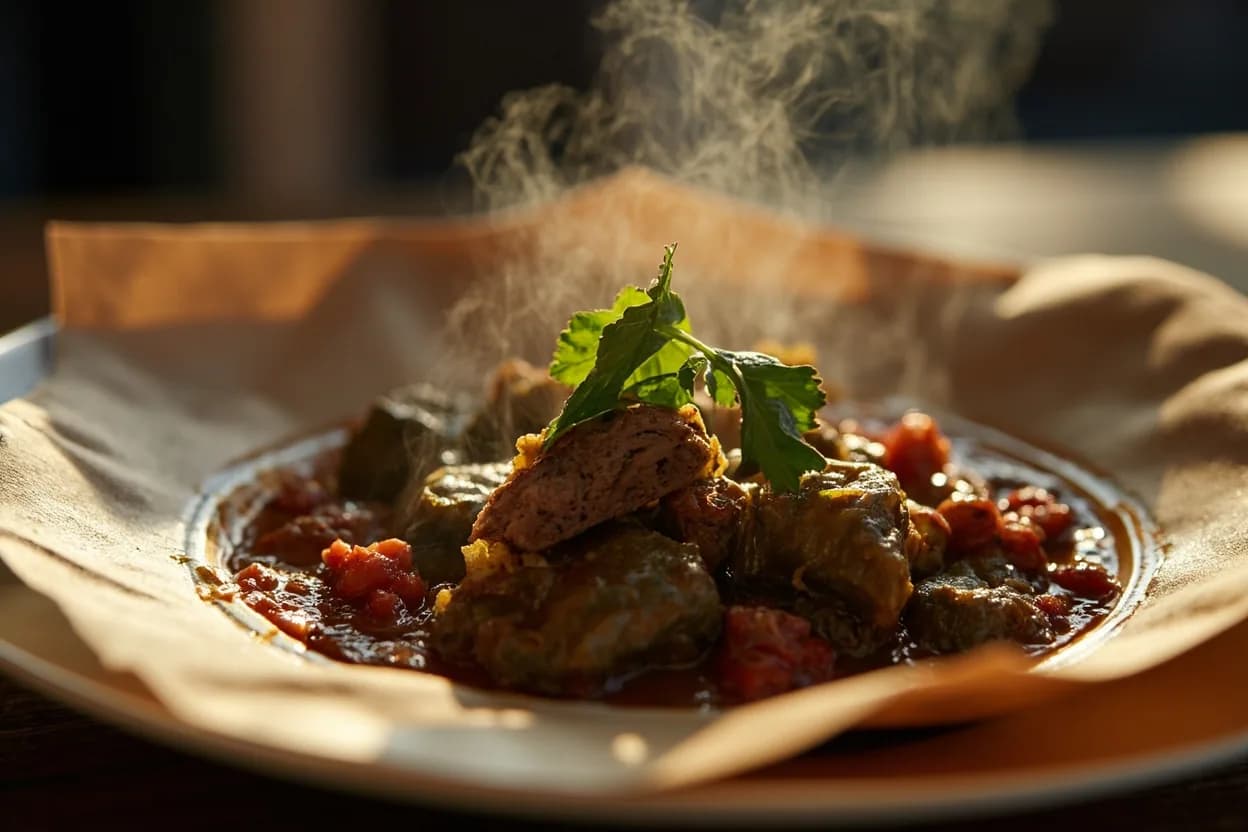
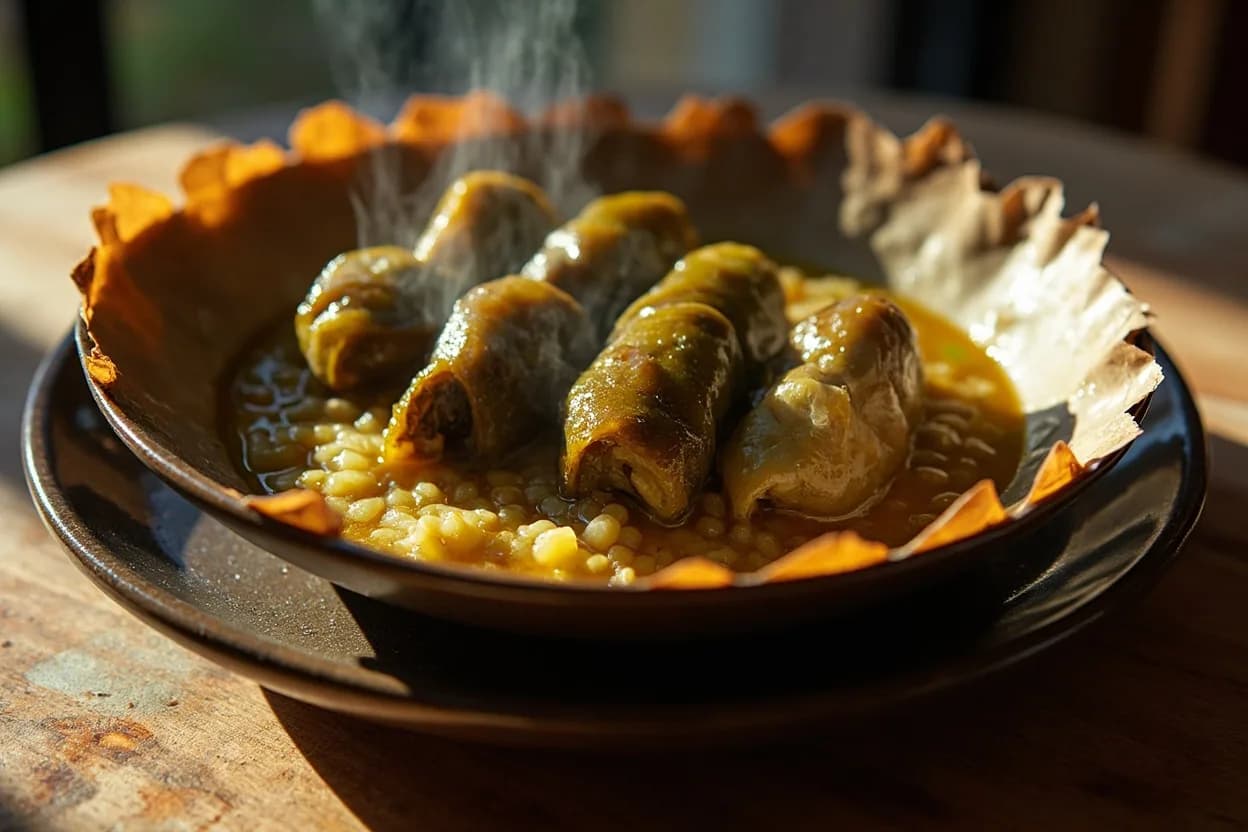
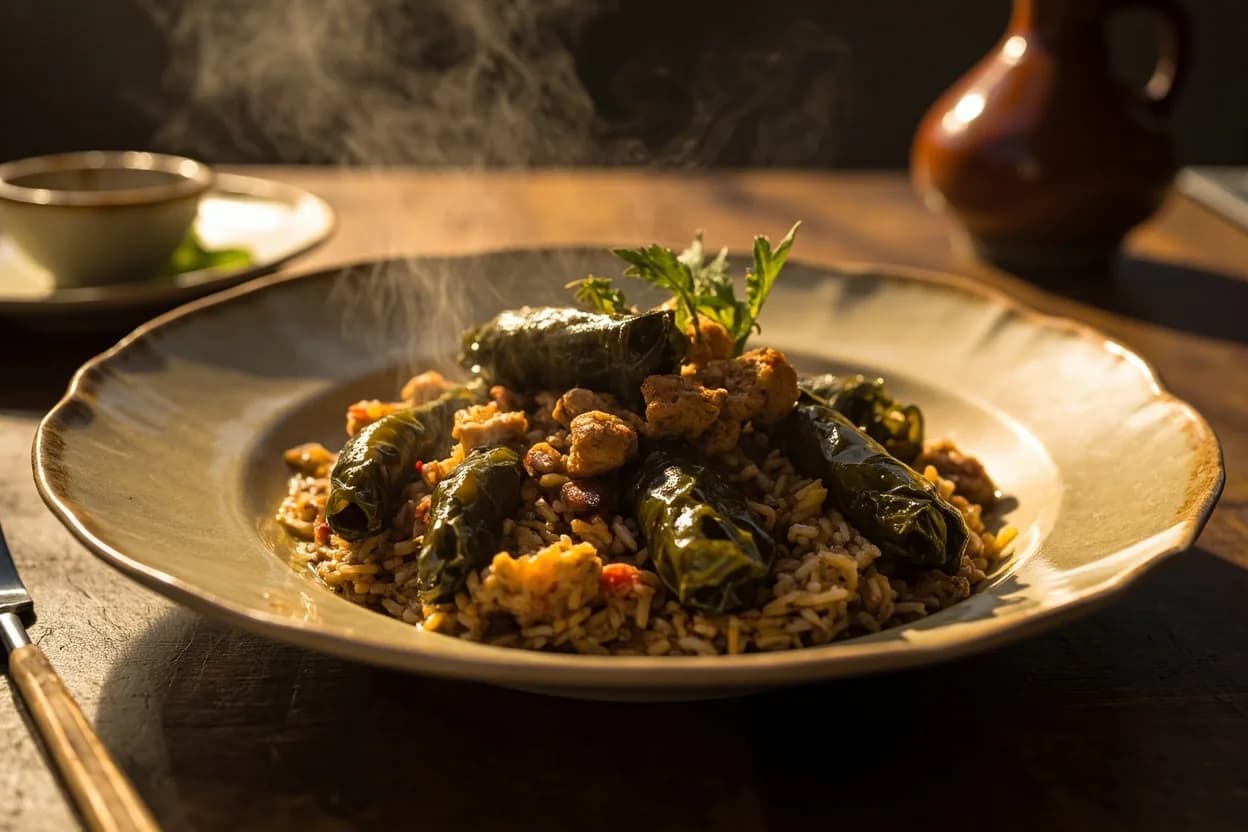
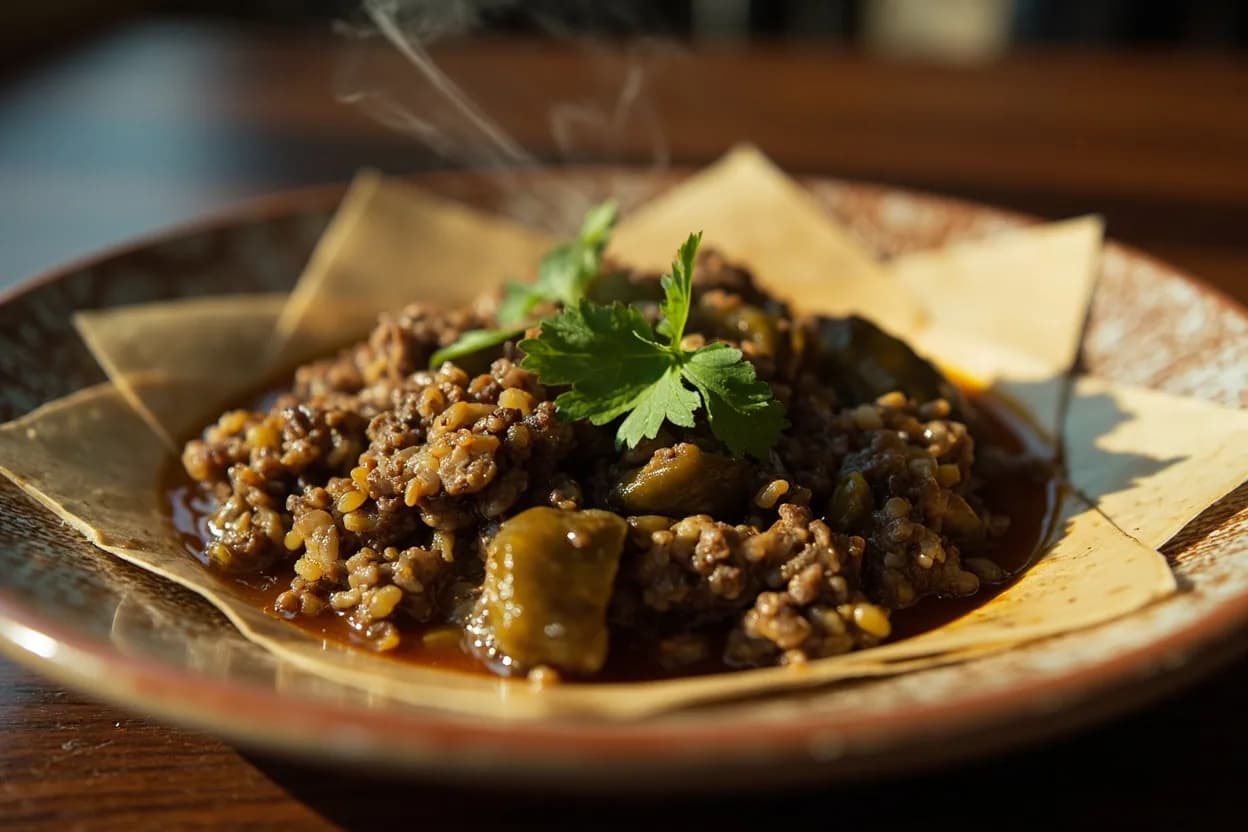
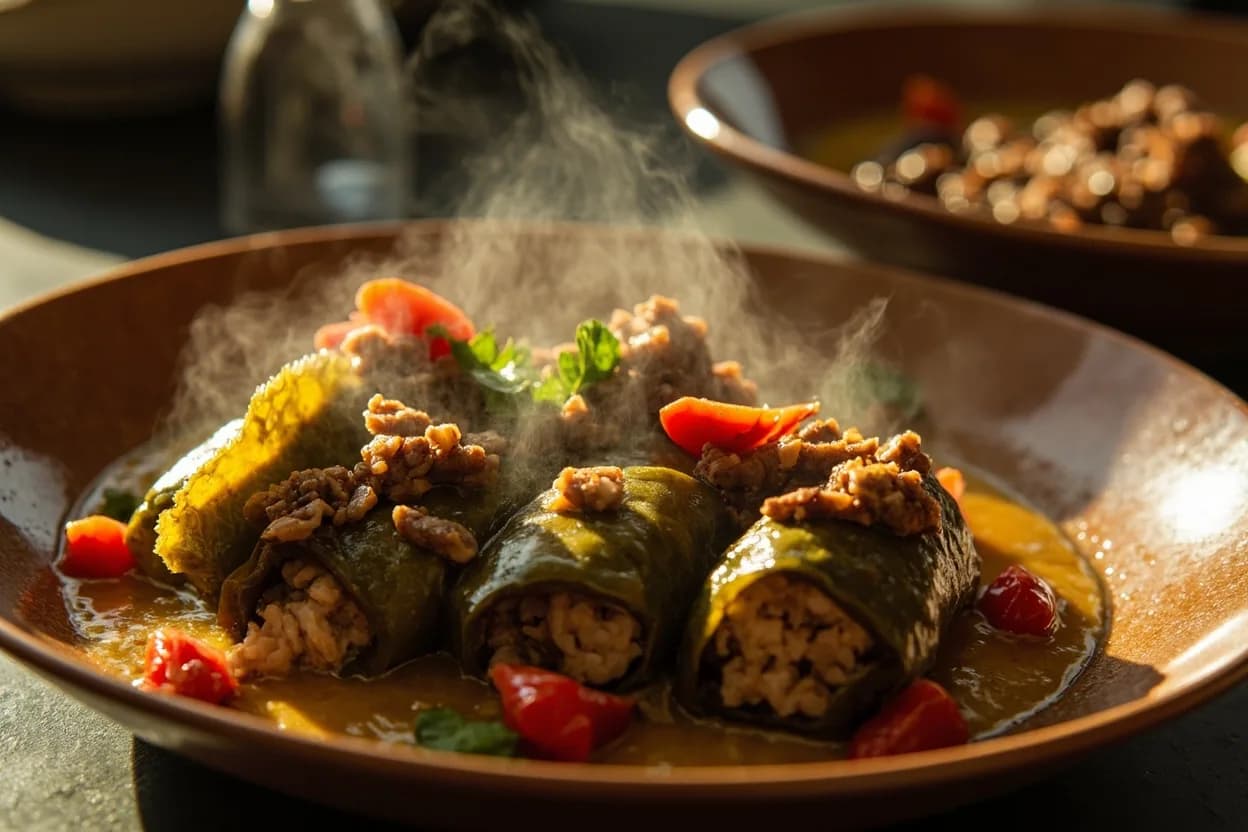
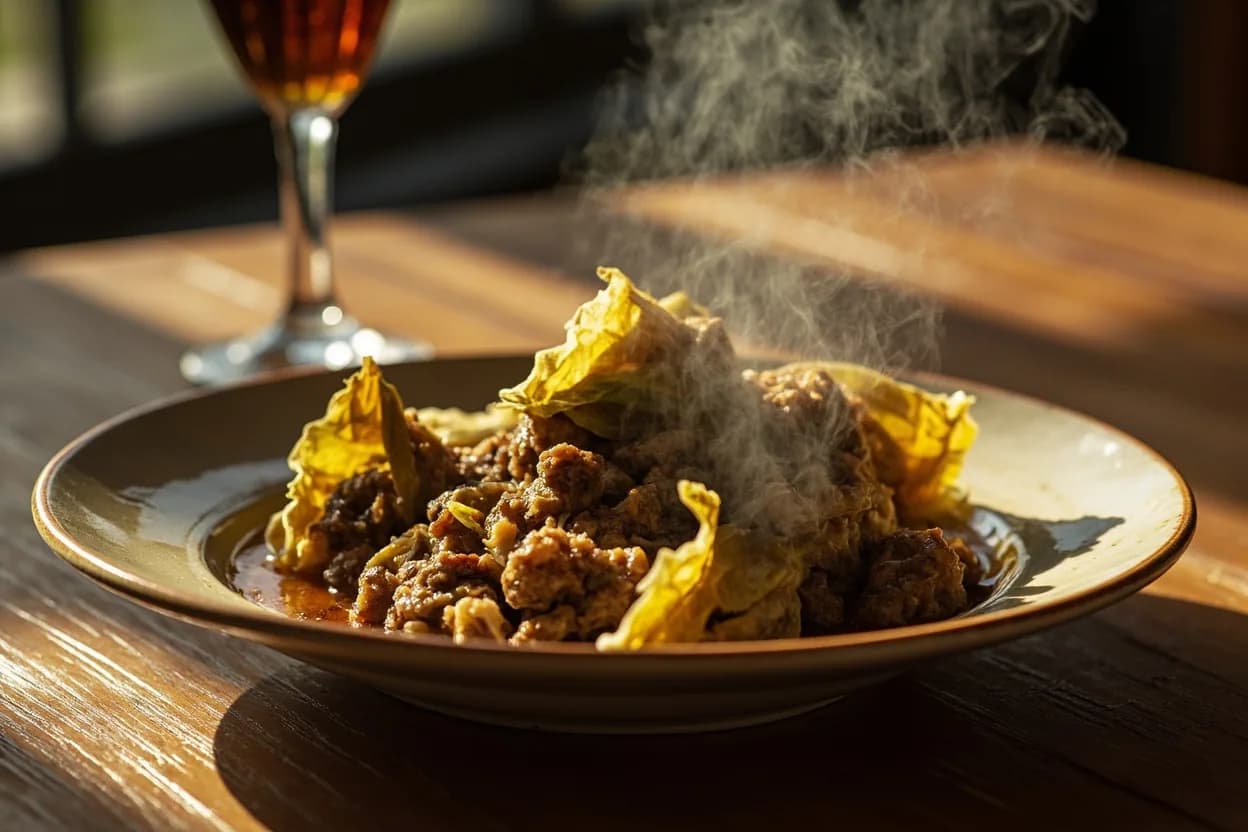
Appears in these dishes
Related

Tomato
Juicy, sun-sweet fruit for sauces, salads, and slow-cooked depth

Yellow Onion
The aromatic backbone of soups, sofritos, and braises

Garlic
Pungent cloves that perfume nearly every savory dish

Lemon
Bright, acidic citrus that wakes up almost any dish

Potato
Humble, hearty staple — roast, mash, fry, or boil

Carrot
Sweet, crunchy root — raw, roasted, or the base of a sofrito

Cucumber
Cool, crisp, and watery — for salads, pickles, and tzatziki

Lettuce
Crisp leaves for salads, wraps, and a fresh crunch