Middle East
Persian (Iranian)
Also: Iranian cuisine, Persian cooking, Irani food
One of the world's great rice civilizations — Iran's kitchen is built on crispy tahdig, saffron and dried lime, pomegranate-walnut stews, the fragrant herb frittata kuku sabzi, and a sweet-sour philosophy that influenced cuisines from Spain to India.
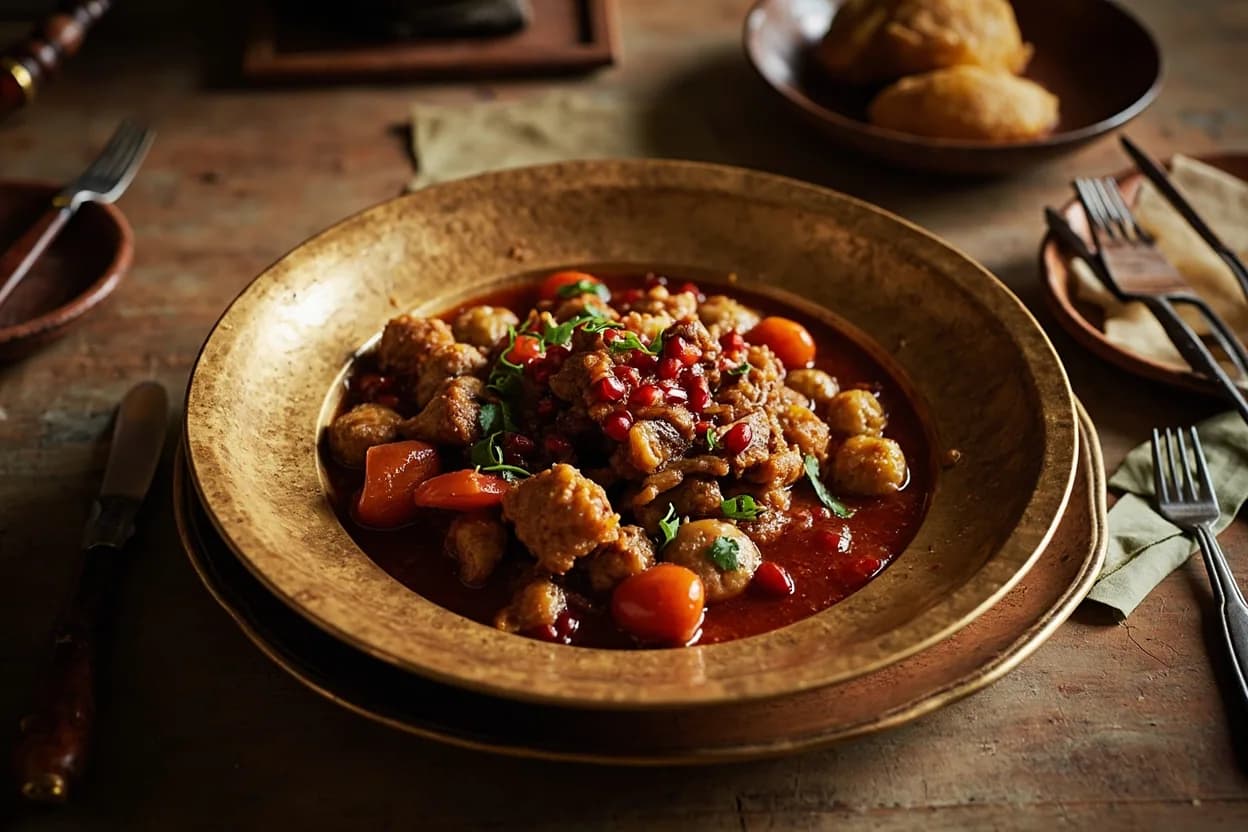
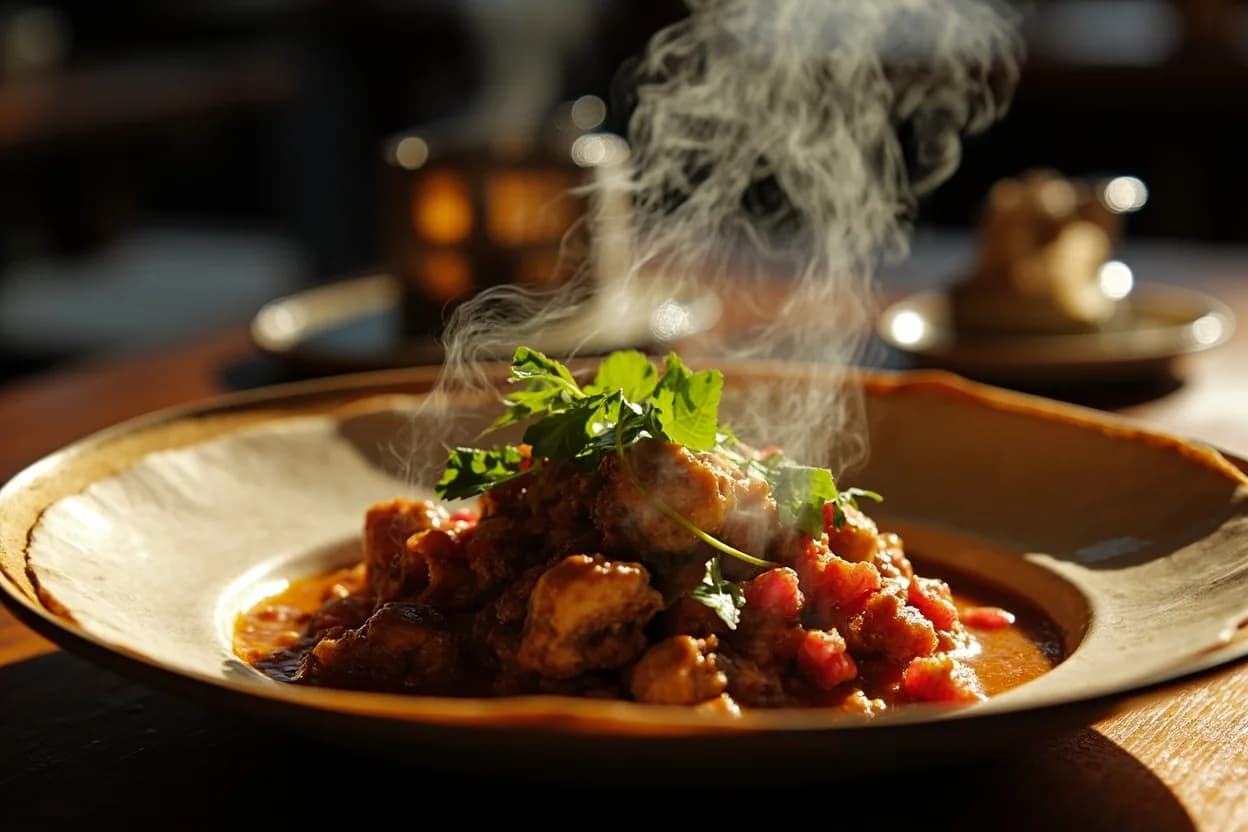
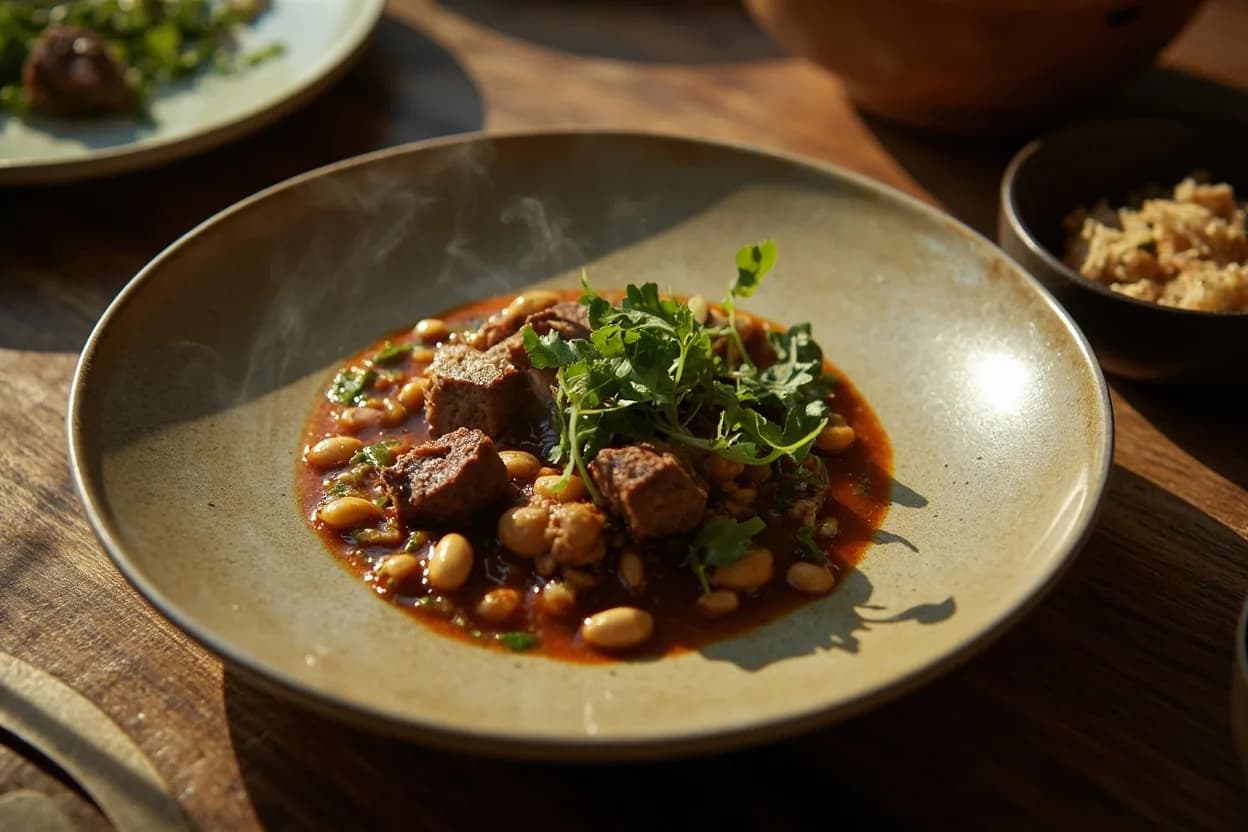
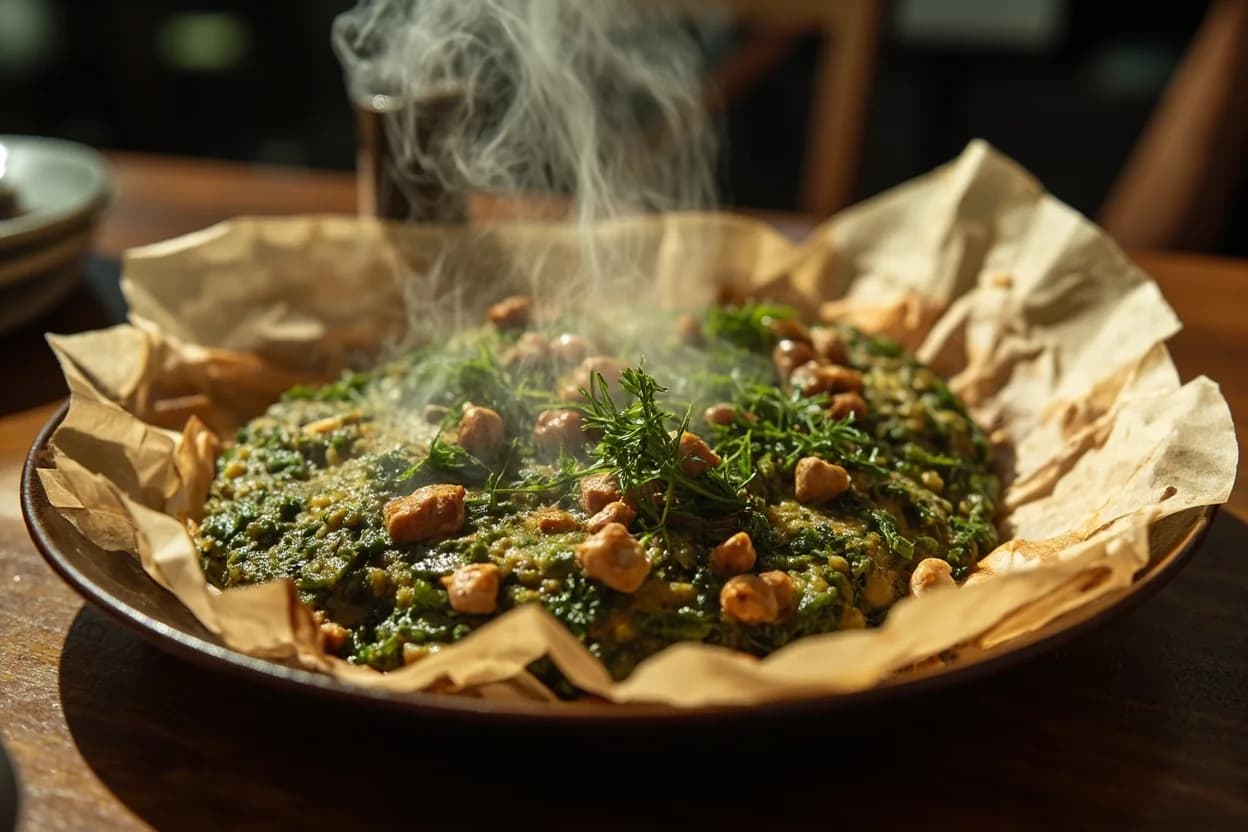
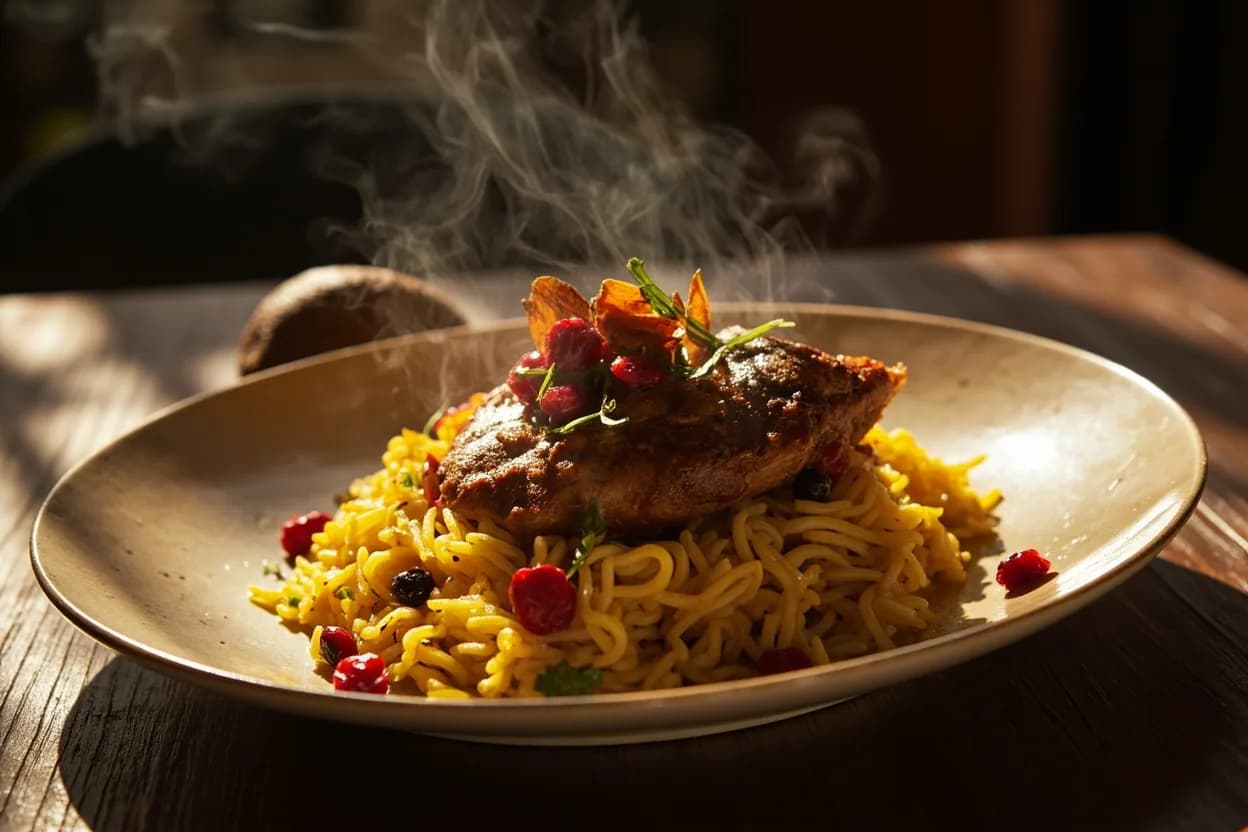
Persian cuisine is the ancient, sophisticated food culture of Iran, shaped by a geography that encompasses Caspian sea coast, arid plateau, lush valleys, and alpine highlands. It is, above all, a rice culture: the centerpiece of every serious Persian meal is a mound of long-grain rice cooked with extraordinary care, its base formed into a golden crust called tahdig — arguably the most sought-after element of any Persian table. Around the rice pivot, khoresh (stews) are built from combinations that deliberately balance sour (pomegranate, dried lime, barberry, sour orange), sweet (dates, dried apricots, honey), and aromatic (saffron, turmeric, cinnamon, rose water). Fresh herbs — parsley, cilantro, fenugreek, dill — are used in extraordinary quantities: not as garnish but as structural ingredients. Persian cooking is one of the world's few sophisticated culinary traditions that has exerted documented historical influence on Arab, Turkish, Mughal Indian, and Central Asian cuisines without losing its own coherence.
The flavour base
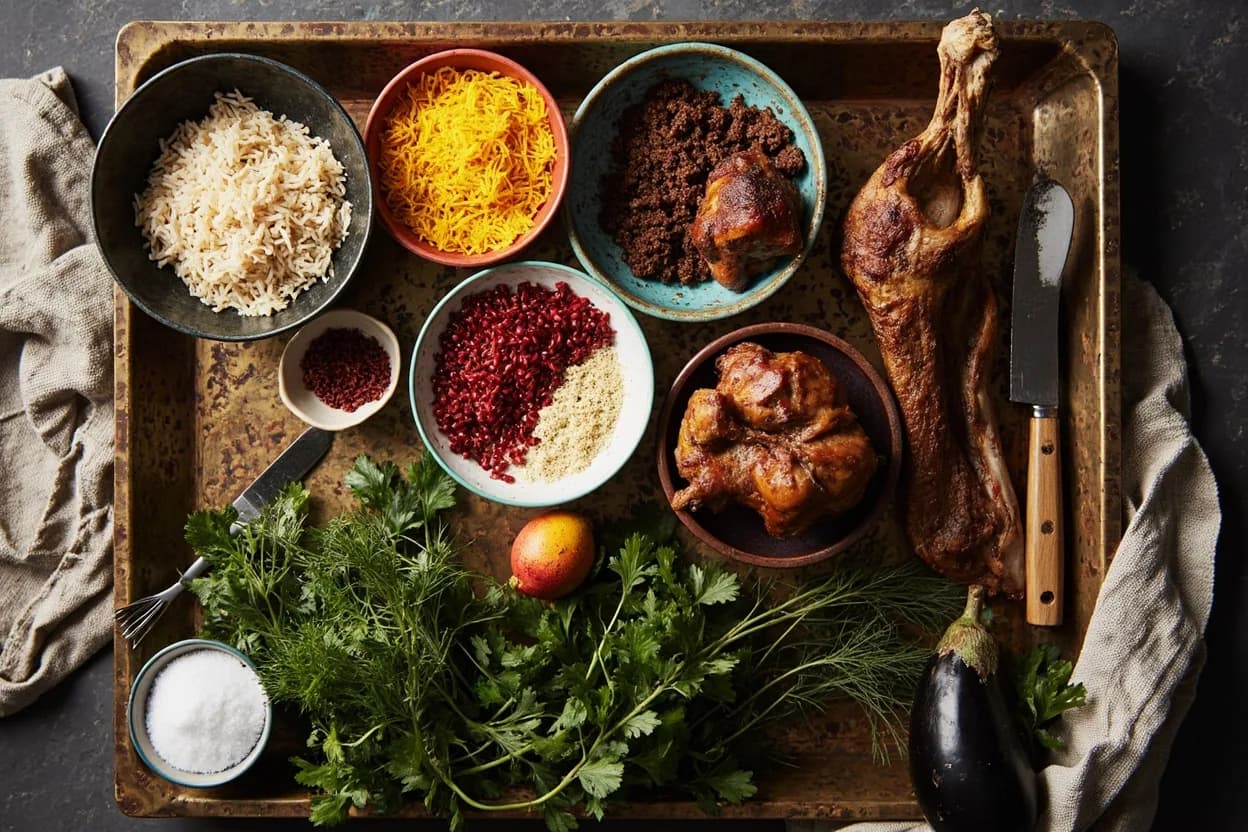
Saffron dissolved in hot water (the essential Persian seasoning agent), dried lime (limoo amani), turmeric, and the sour-sweet balance created by pomegranate molasses, barberry (zereshk), or sour orange juice form the cuisine's flavor grammar. Onion fried until deeply golden underpins nearly every khoresh.
Pantry staples
Key ingredients
Signature techniques
Signature dishes
Persian (Iranian) on the table
At the table
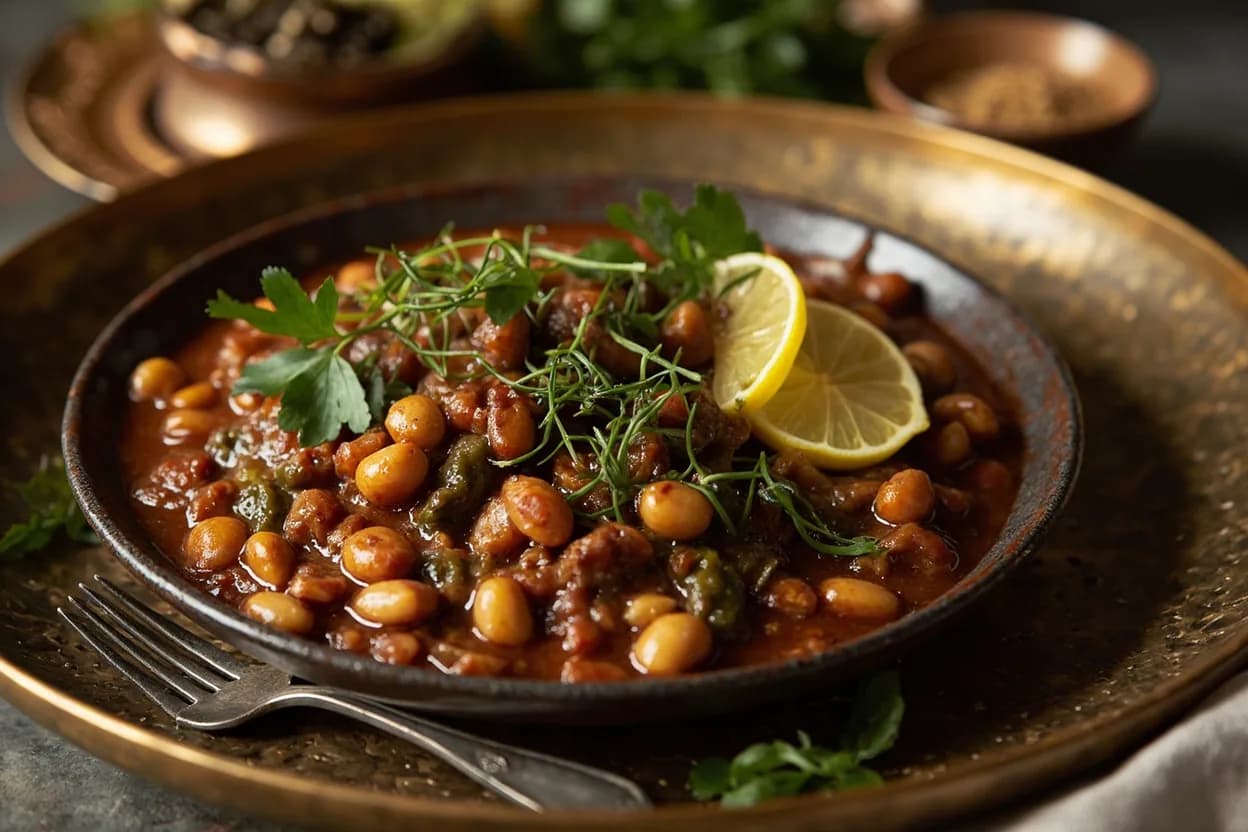
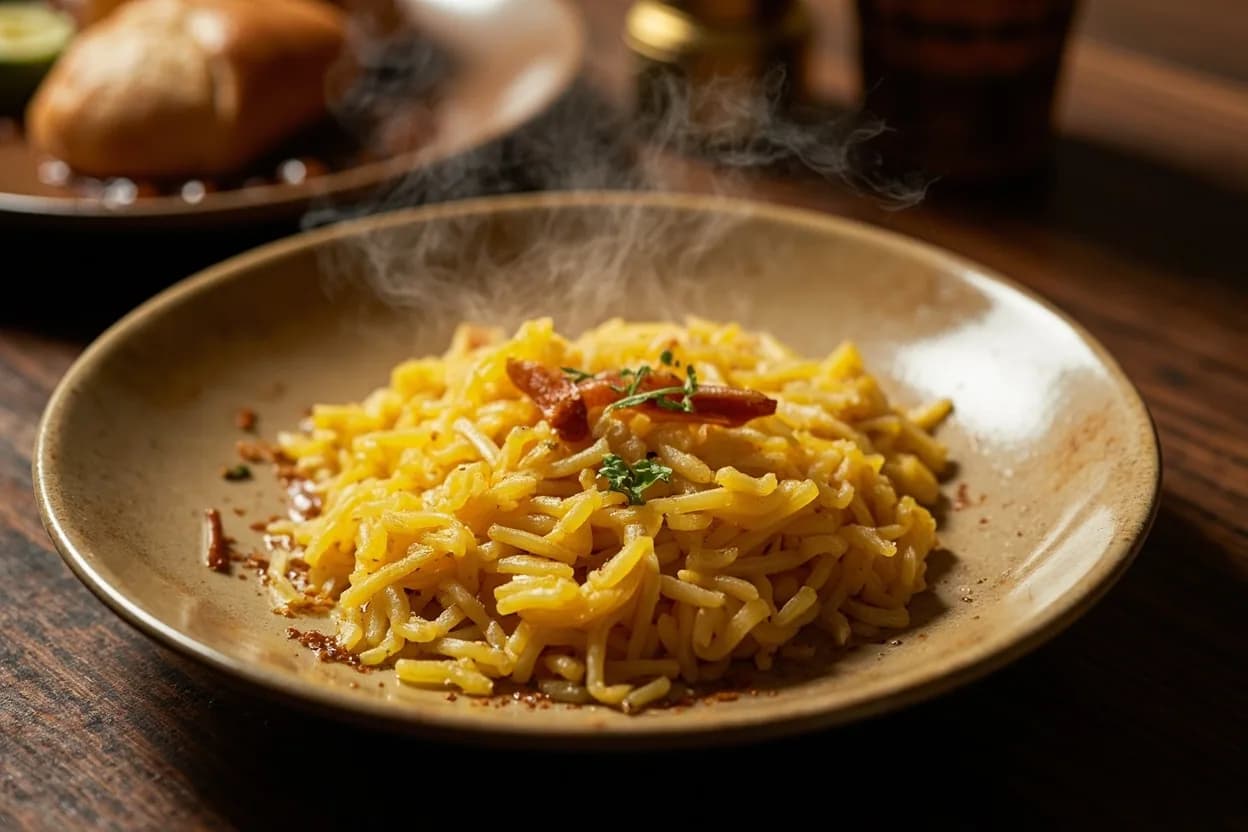
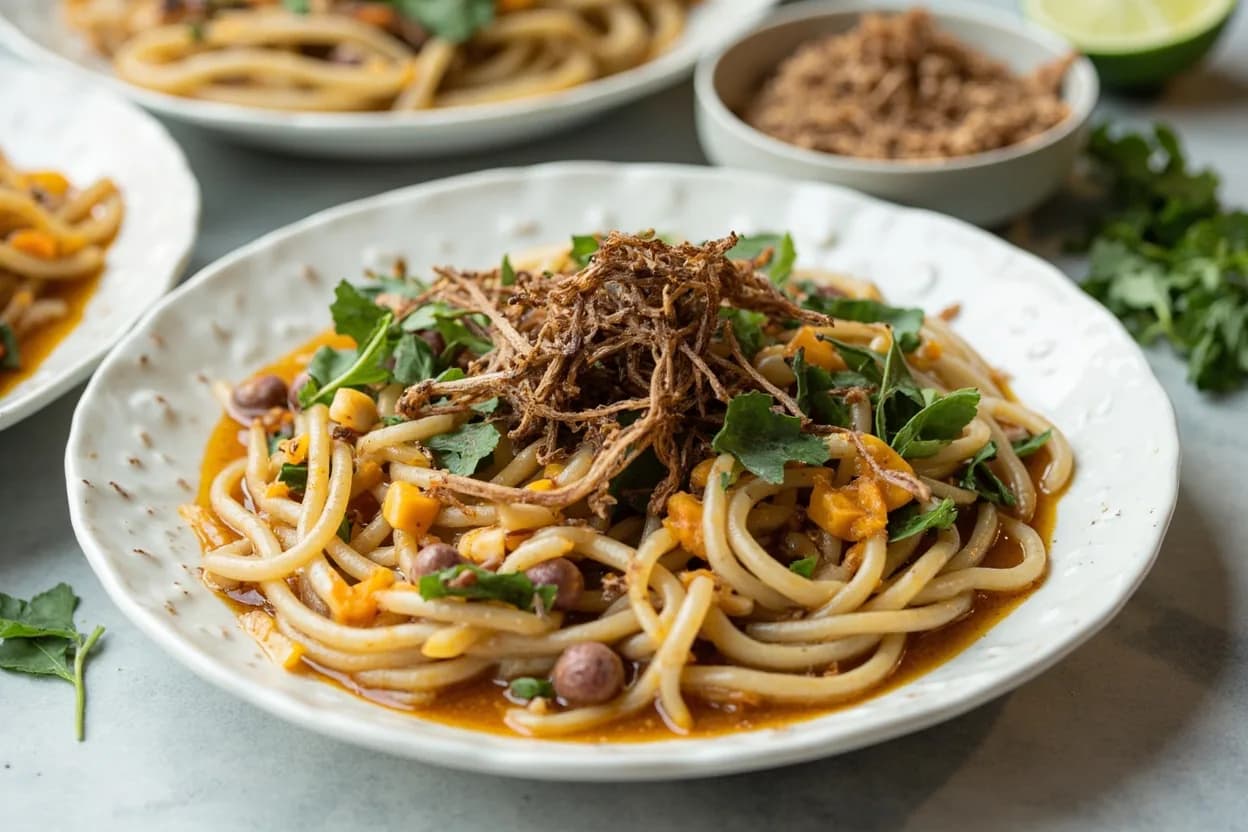
A formal Persian meal is served all at once: rice in a large mound, one or more khoresh in separate bowls, grilled meats, yogurt dishes (mast-o-khiar), fresh herb plate (sabzi khordan), flatbread, and pickles (torshi). Soup (ash) may precede the main course or be a standalone light meal. Rice is the organizing center; everything else is a satellite. Tea (chai) is drunk constantly throughout the day in small tulip-shaped glasses; the meal ends with tea, fresh fruit, and pastries or sweets (baklava, shirini, halva). Nowruz (Persian New Year, March equinox) has specific dishes: kuku sabzi and fish for prosperity, ash reshteh for fate, and reshteh polo.
History & context
The Persian culinary tradition is documented from the Achaemenid Empire (6th–4th century BCE), when Persian royal courts developed cooking practices that influenced the entire ancient Near East. The medieval Islamic Golden Age saw Persian culinary texts — including the 10th-century Bundahishn and later the 13th-century manuals from Persia — codify sophisticated rice, stew, and confectionery techniques. Persian cooks and Persian food culture traveled with the courts of the Abbasid Caliphate (the court was in Baghdad but Persian culture dominated), and then spread further through the Timurid and Safavid dynasties. The Mughal Empire was founded by Persianized Timurids; biriyani and korma are Persian-derived words describing Persian-originated techniques that entered Indian cooking. The 1979 Islamic Revolution and subsequent emigration of large numbers of Iranians to North America and Europe created a substantial diaspora that has, unusually, maintained Persian food culture with high fidelity — largely because the cuisine requires skill and specific ingredients that cannot be easily substituted.
Regional variations
- Caspian / Gilan and Mazandaran
Rice grown locally (not basmati import); fish from the Caspian Sea are central; mirza ghasemi (smoked eggplant with egg and tomato) is a regional signature; jungle herbs and sour plum flavor broths differently from the plateau.
- Tabriz / Azerbaijani Persian
Kufteh Tabrizi (enormous stuffed meatballs), ash-e doogh (yogurt soup), and Turkish-influenced spicing; dolma tradition overlaps with Caucasian Armenian and Azerbaijani variants.
- Isfahan / Central Plateau
Most refined and court-influenced; beryani (lamb lung and onion dish, not Indian biriyani) is a local specialty; rose water and saffron used most lavishly.
- Khuzestan / Arab-Persian south
Heavier use of tamarind, fish, and date products from Gulf proximity; dishes like samboosak share vocabulary with Iraqi and Gulf cuisines.
- Iranian diaspora (Los Angeles, Toronto)
'Tehrangeles' has produced arguably the most faithful diaspora food scene of any cuisine — Persian grocery stores, tachdigs made on induction cooktops, and ice cream shops serving saffron-pistachio bastani are all present.
Related cuisines
Afghan cuisine is the closest living relative — qabili pulao (rice with lamb and carrot) is the Afghan equivalent of Persian polo; the saffron-dried fruit-rice grammar is shared.
- Mughal Indian
Biriyani, korma, haleem, and naan all derive from Persian court cooking introduced by Timurid-Mughal rulers; rose water, saffron, and dried fruit in rice are direct descendants.
Centuries of Mesopotamia-Persia exchange mean shared dried lime (loomi), sour-sweet stew philosophy, and slow-cooked lamb and rice; Baghdad was a Persian-administered city for much of its history.
Canonical recipes
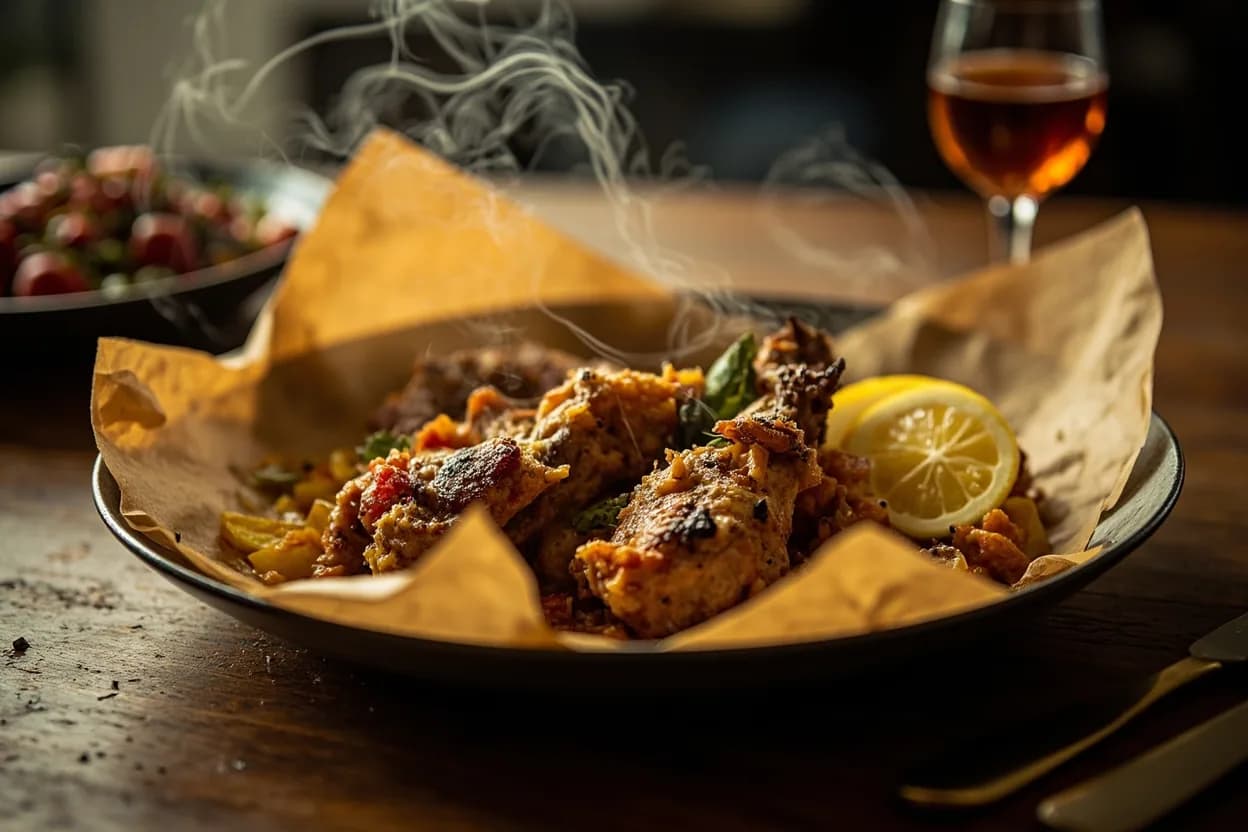
The dishes that define Persian (Iranian), documented in the Canon.
References
- 1.Najmieh Batmanglij, 'Food of Life: Ancient Persian and Modern Iranian Cooking and Ceremonies' (2011)
- 2.Naomi Duguid, 'Taste of Persia: A Cook's Travels Through Armenia, Azerbaijan, Georgia, Iran, and Kurdistan' (2016)
- 3.Claudia Roden, 'The New Book of Middle Eastern Food' (2000)
- 4.Charles Perry et al. (trans.), 'A Baghdad Cookery Book' (12th century, Prospect Books 2005)
Confidence: high
Notes
Tahdig — the physics of Iranian cooking
Tahdig (literally 'bottom of the pot') is the defining technical achievement of Persian rice cookery. After the rice is parboiled, it is layered back into the pot over a base of butter or oil plus a crisping agent — yogurt, lavash, potato slices, or plain rice — and cooked on very low heat with a cloth (damsaz) wrapped around the lid to absorb steam and concentrate the heat at the base. The crust that forms, golden-brown and crisp, is inverted at serving. Getting a good tahdig is considered a mark of household competence; burning it (being tahdig-sookhteh) is a social embarrassment. The crust is fought over at table.
Saffron as technology, not spice
Persian cooks do not use saffron the way Europeans scatter it into paella or risotto. It is bloomed — a small amount is ground with a pinch of sugar in a mortar, dissolved in two tablespoons of hot water, and left to steep for at least 30 minutes until the liquid runs deep amber. This concentrated infusion is then added by the tablespoon to finish rice, stews, or ice cream. The technique extracts far more color and flavor from the spice than hot-water steeping alone, and it explains why Iranian saffron cookery looks and tastes more intensely saffron-yellow than any other cuisine's.