Western Europe
Périgord
Also: Cuisine du Périgord, Cuisine périgourdine, Dordogne cuisine
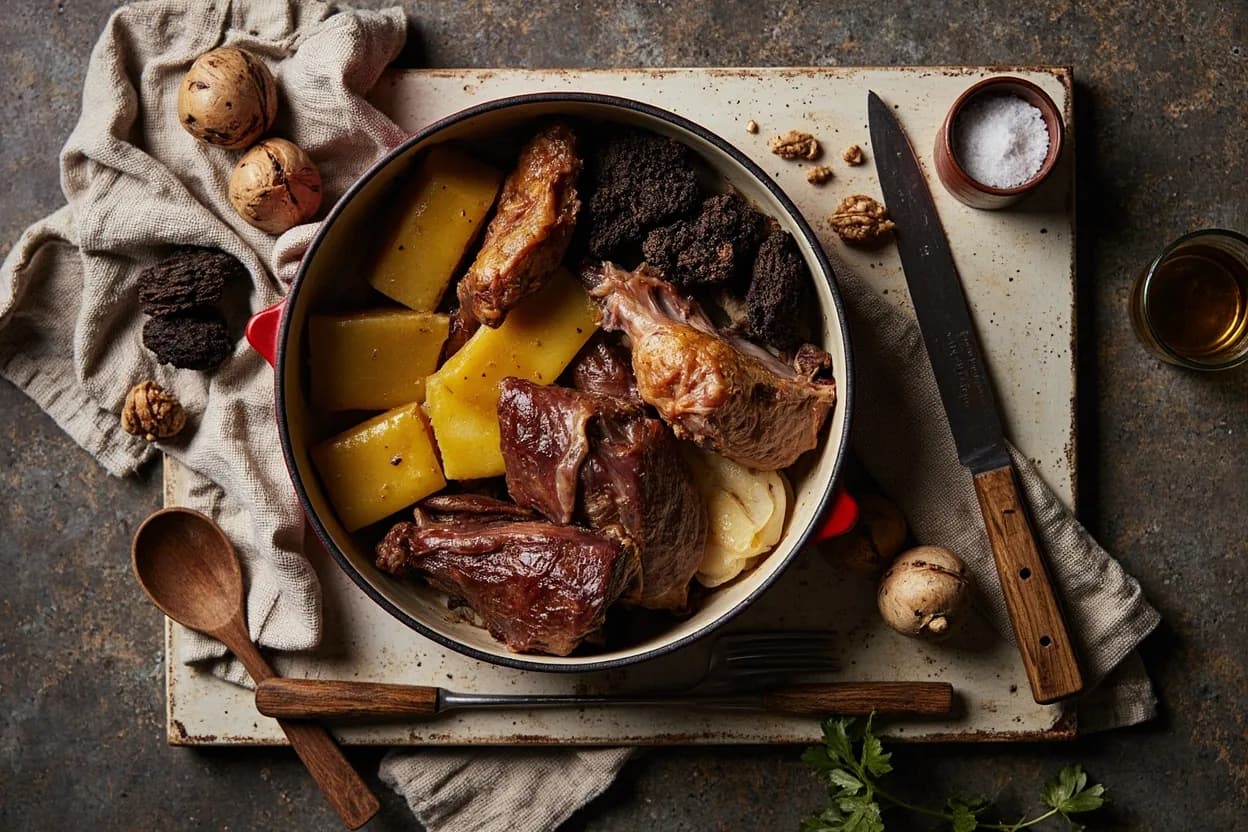
The opulent peasant table of southwest France — foie gras, duck confit, black Périgord truffles, and walnuts over everything.
Périgord cuisine is the cooking of the Dordogne department and the ancient province it corresponds to, nestled between Bordeaux wine country and the Massif Central. It is simultaneously France's most luxurious regional table and its most robustly peasant-rooted: the same farms that produce foie gras and truffles also make walnut oil, prune eau-de-vie, chestnut flour, and hearty stews that sustained river-valley farmers through hard winters. The cuisine's central axis is the duck — fattened by gavage for foie gras, then preserved as confit in its own fat — along with the black truffle (Tuber melanosporum), which grows under the oak forests of Périgord Noir.
The flavour base
Duck fat is the cooking medium for everything from potatoes to cassoulet-adjacent bean stews. A duxelles or persillade of garlic and flat-leaf parsley finishes dishes; walnut oil appears in dressings and pastry; and black truffle is shaved or puréed into sauces, omelets, and foie gras to create the region's signature double-luxury combinations.
Pantry staples
Key ingredients
Signature techniques
Signature dishes
Périgord on the table
At the table
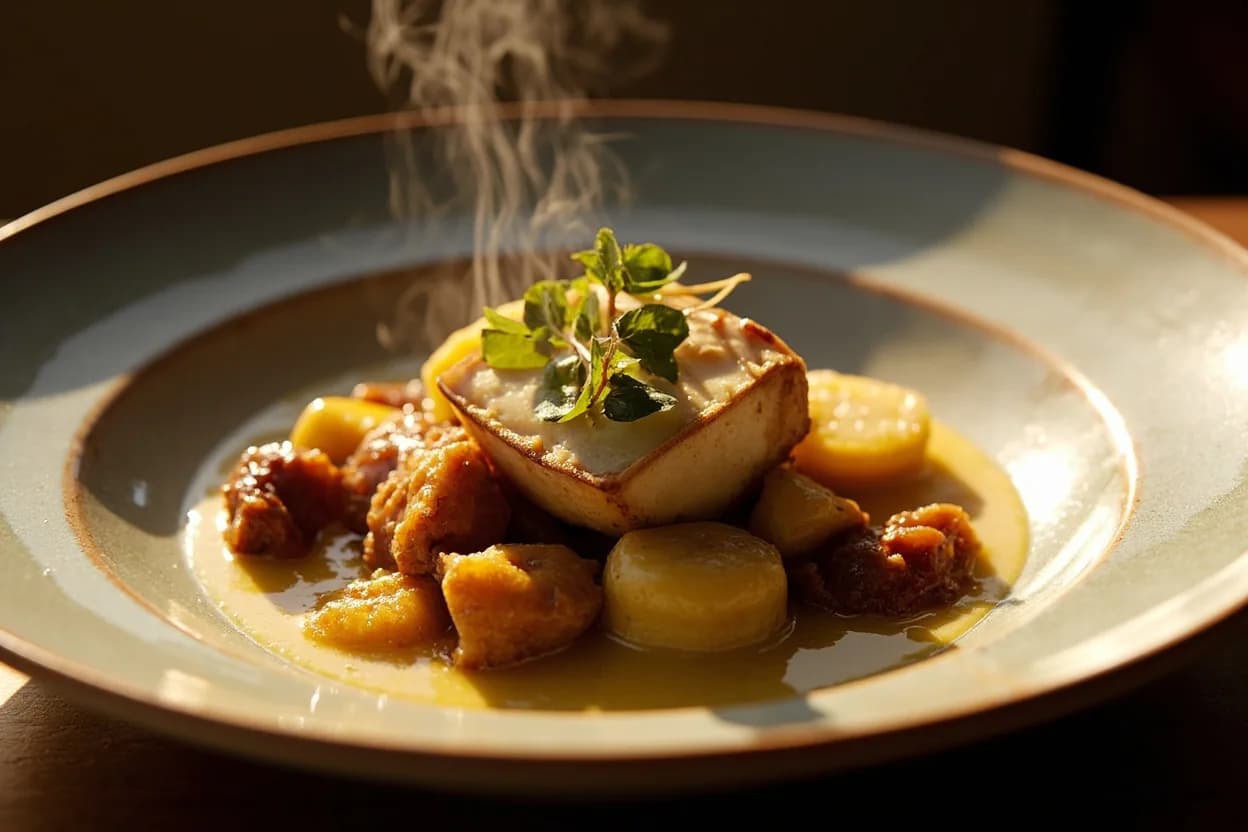
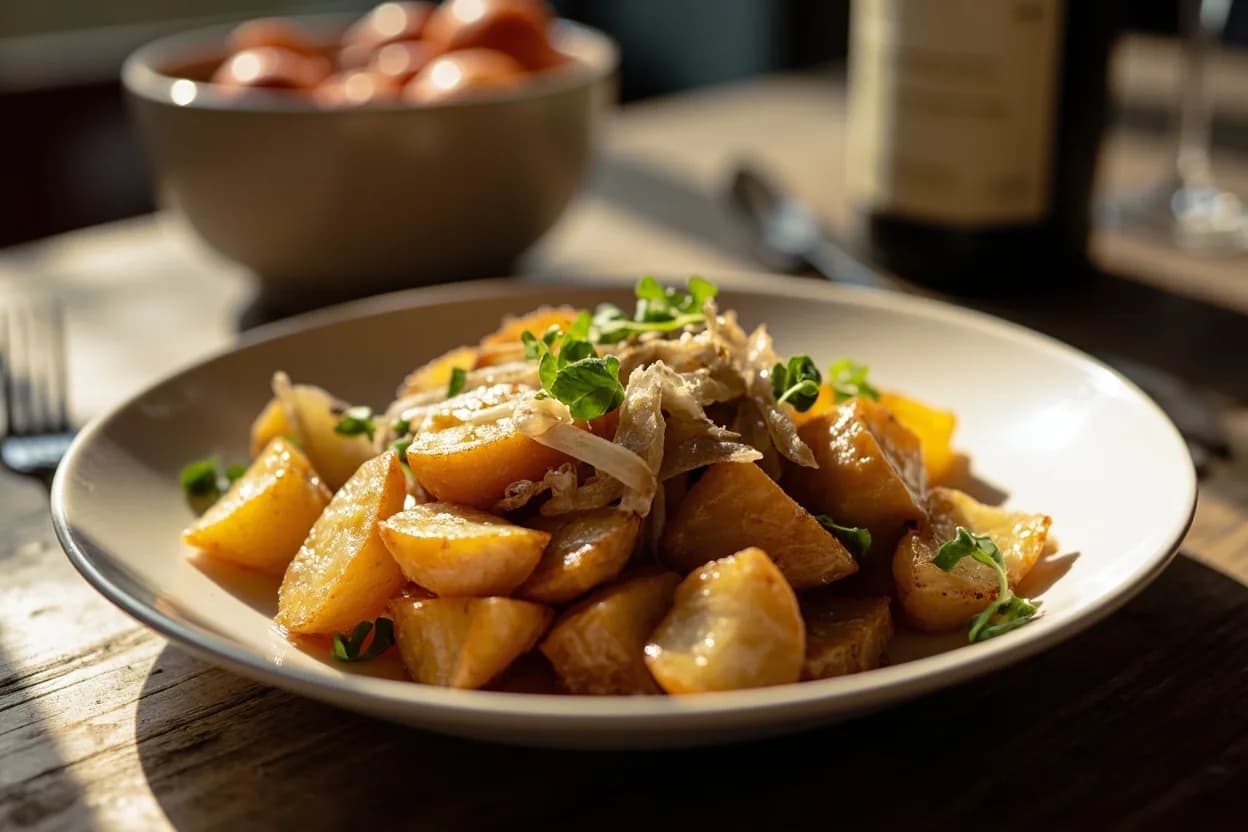
A classic Périgord meal opens with foie gras or a walnut salad, progresses to a meat course built around duck or pork with sarladaises, and closes with walnut cake or a prune tart. Monbazillac (sweet white Bergerac wine) is the canonical pairing for foie gras; aged Bergerac red accompanies the confit. Meals are generous, unhurried, and conceived for the table rather than the plate.
History & context
The Dordogne valley was one of the earliest settled regions of human history — the Vézère valley caves (Lascaux, Font-de-Gaume) show Paleolithic hunters who chased the ancestor species of the modern ducks that still define the local table. Medieval monks cultivated walnut groves for oil and introduced the systematic fattening of geese for foie gras, a technique imported from Jewish communities in Alsace and then adapted to local duck breeds. The truffle trade boomed in the 19th century after the phylloxera vine crisis forced farmers to plant oak on abandoned vineyards — Tuber melanosporum flourishes in the calcareous soil beneath young oaks. At its peak (1900), France produced 1,000 tonnes of truffles annually; today production is around 50 tonnes, making Périgord truffles intensely precious. Fernand Point and later Michel Guérard elevated the cuisine's profile nationally in the postwar period, though the table remains resolutely rooted in the farm.
Regional variations
- Périgord Noir (south-east, Sarlat)
Truffle and walnut heartland; the most tourist-visited sub-region; highest concentration of foie gras farms; Sarlat market is the regional showcase.
- Périgord Blanc (centre, Périgueux)
Cereal-growing plains; more modest everyday cooking; pâtés and terrines predominate over luxury foie gras; the préfecture of the Dordogne.
- Périgord Vert (north, Nontron)
Greener, wetter landscape bordering Limousin; chestnut and mushroom traditions stronger; less foie gras, more freshwater fish from the Isle river.
- Périgord Pourpre (west, Bergerac)
Wine country; Bergerac and Monbazillac appellations; wine-based braising sauces and the Agen prune trade from neighbouring Lot-et-Garonne.
Related cuisines
Immediate south-western neighbour; shares the duck confit, foie gras, and Armagnac traditions; Gascony is even more duck-centric and less truffle-focused.
- Quercy (Lot)
Neighbouring department to the south; similar truffle and walnut traditions; saffron (formerly cultivated in Quercy) adds a distinctive note absent in Périgord.
- Limousin
Northern neighbour; shares chestnut and cèpe traditions; but Limousin is beef country (the breed is named for it) rather than duck country.
Canonical recipes
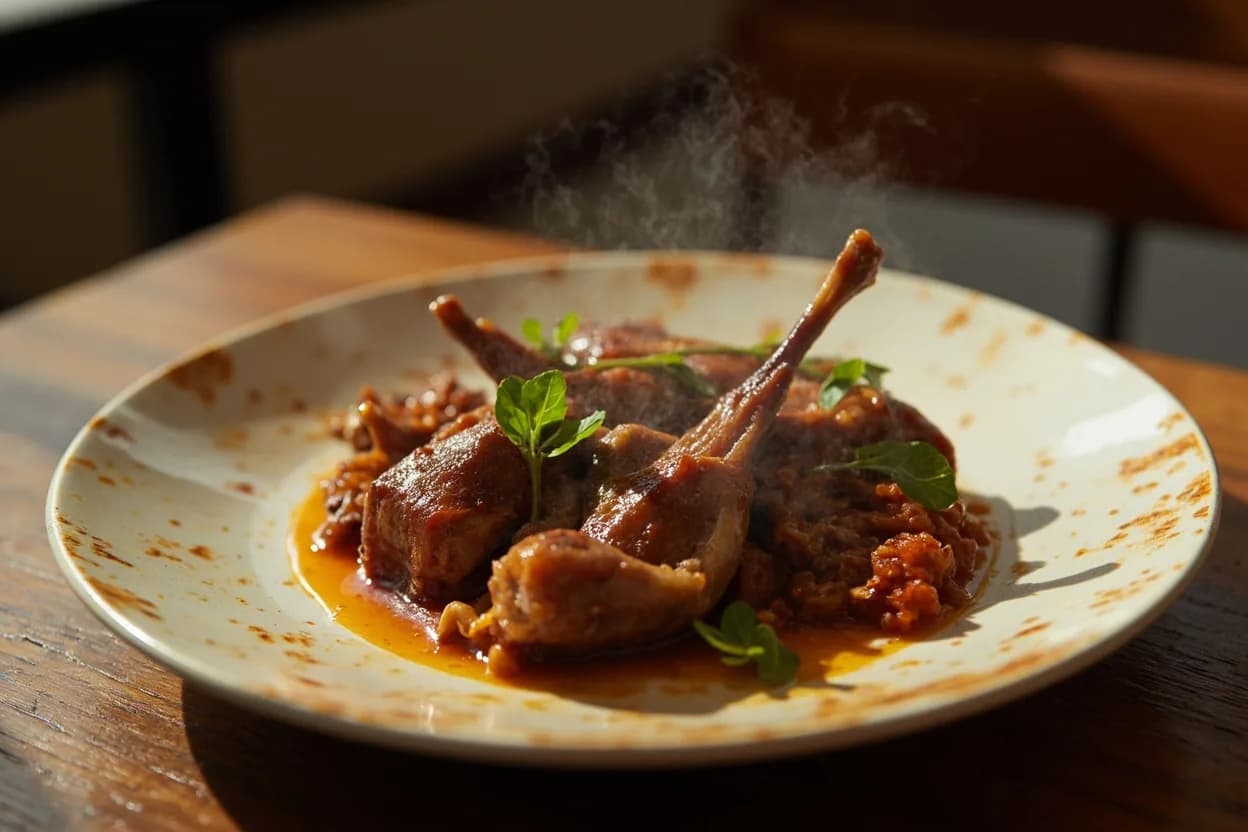
The dishes that define Périgord, documented in the Canon.
References
- 1.French Country Cooking — Elizabeth David (1951)
- 2.The Cooking of Provincial France — M.F.K. Fisher, Time-Life Foods of the World (1968)
- 3.The Food of France — Waverley Root (1958)
- 4.Foie Gras: A Passion — Michael Ginor et al. (1999)
- 5.Truffles: The Black Diamond of Périgord — Gilles Ber (various editions)
Confidence: high
Notes
Magret vs. confit
The magret de canard (breast of a fattened duck, grilled like a steak) is a relatively modern innovation — credited to André Daguin of the Hôtel de France in Auch in the 1960s. Before that the breast was considered an inferior cut; the legs and their fat were the prize. The magret's rise to restaurant menus is one of the 20th century's more interesting French culinary reversals.
The truffle calendar
Black Périgord truffles (Tuber melanosporum) are harvested between late November and early March. The Richerenches truffle mass in Vaucluse and the Sarlat and Périgueux winter markets are the key trading venues. Buying outside this window almost always means imported Spanish or Chinese truffles — similar species but markedly inferior aroma.