Western Europe
Gascon
Also: Cuisine gasconne, Gascony cuisine, Southwest French
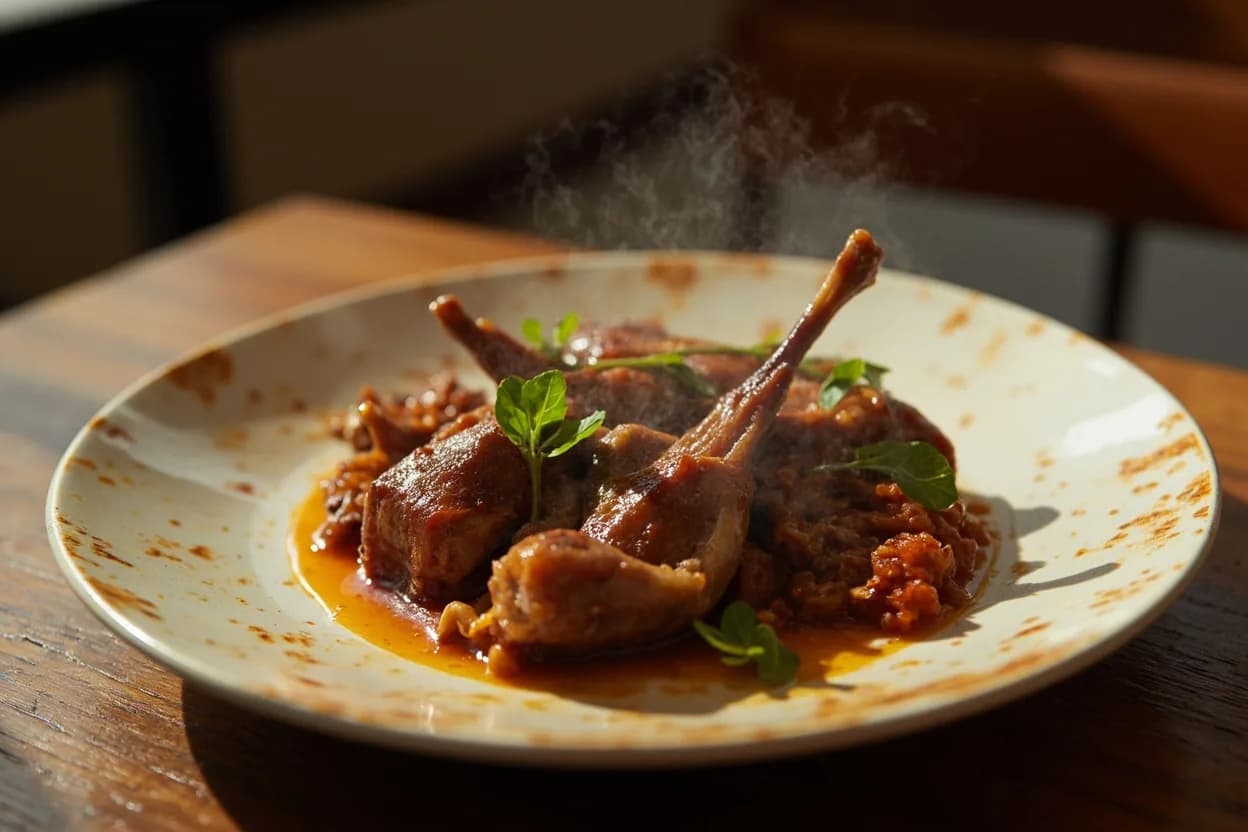
The fat-forward, duck-centered cuisine of Southwest France — cassoulet, confit, garbure, and Armagnac — where duck fat replaces butter and preservation is an art form.
Gascon cuisine is the cooking of historical Gascony, a territory now spanning the Gers, Landes, Hautes-Pyrénées, and parts of Lot-et-Garonne. It is one of the most distinctive regional cuisines in France: robustly caloric, unapologetically carnivorous, and rooted in the preservation traditions that turn the slaughtered duck and fattened goose into confit, foie gras, magret, rillettes, and gizzard salads. Duck fat is the foundational cooking medium, replacing both butter and olive oil. Armagnac — France's oldest distilled brandy, from the Gers — appears in marinades, desserts, and at the end of every serious meal. The cuisine resists refinement; its power comes from honest peasant technique applied to exceptional raw materials.
The flavour base
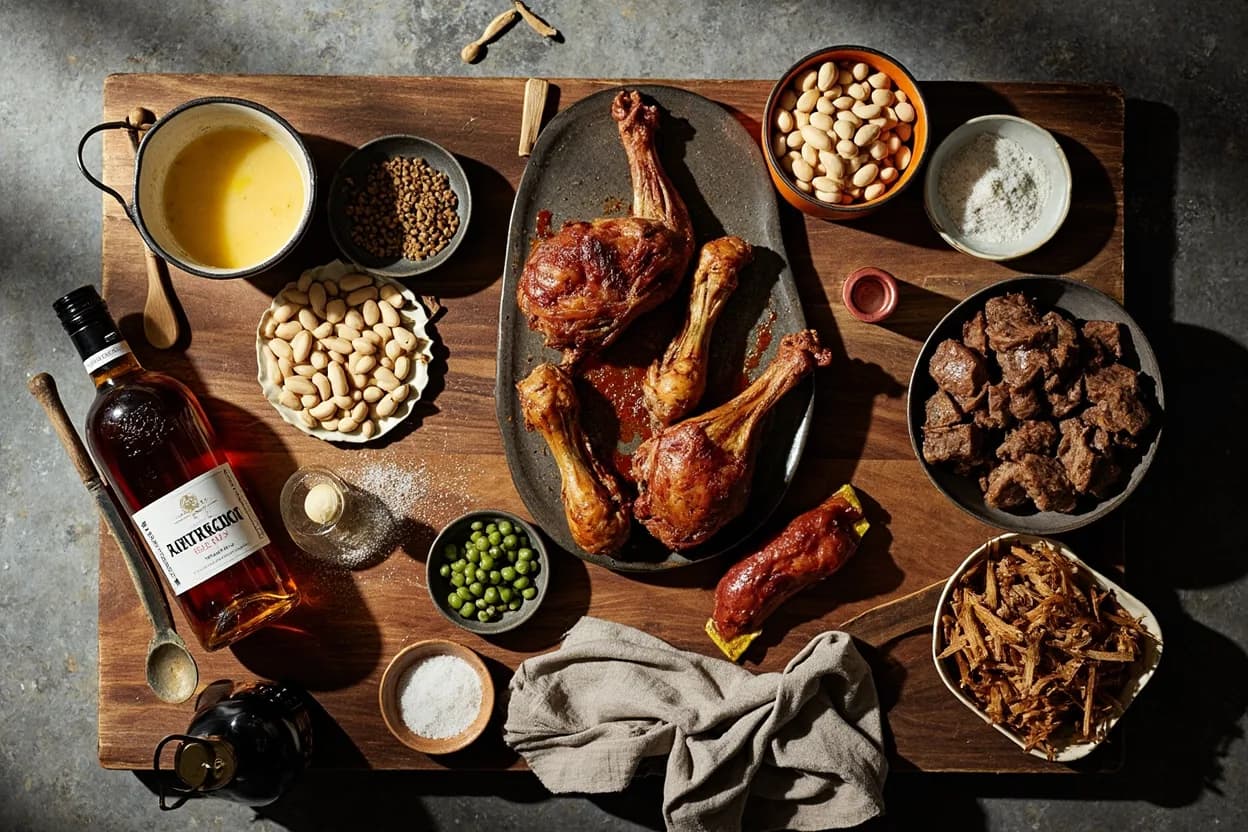
Duck fat as the universal cooking medium; a base of confit duck or goose fat, garlic, and flat-leaf parsley (the Gascon persillade); Armagnac as the deglazing spirit and aromatic counterpoint
Pantry staples
Key ingredients
Signature techniques
Signature dishes
Gascon on the table
At the table
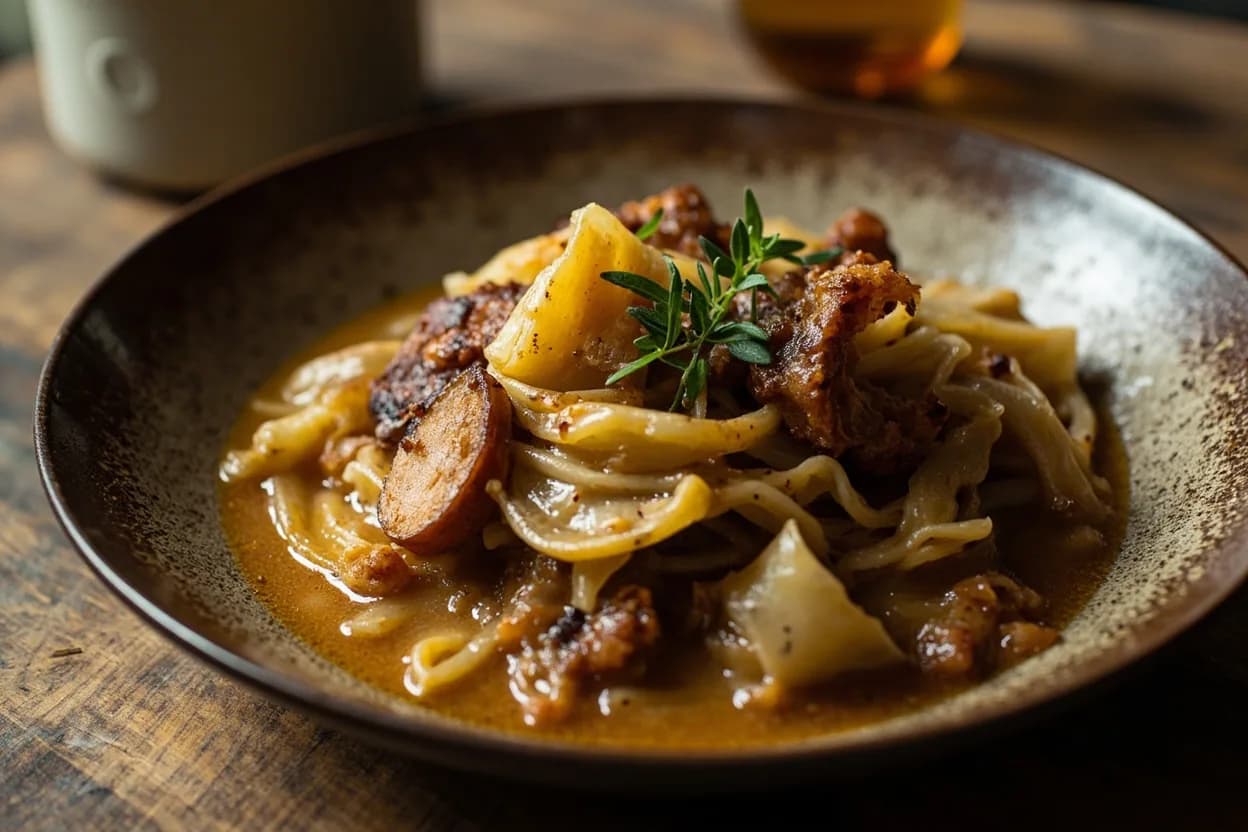
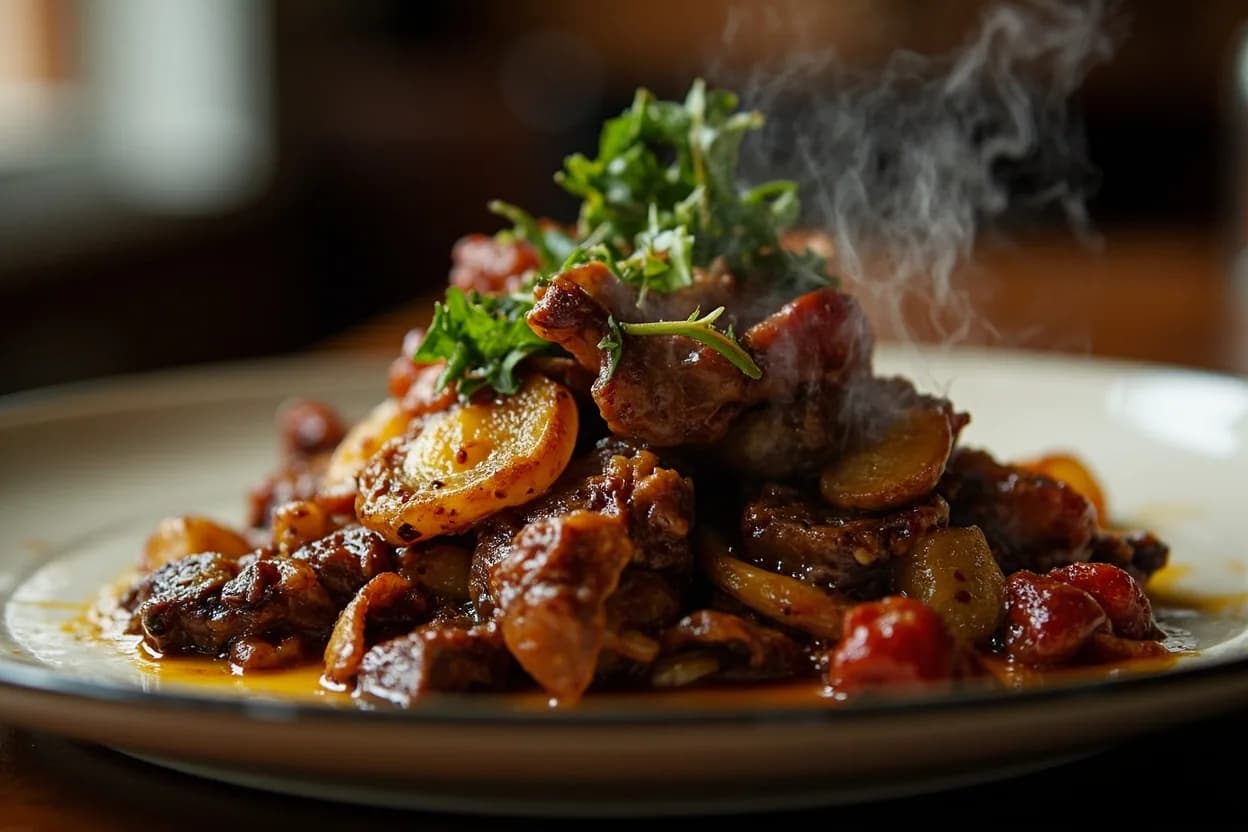
Gascon meals are generous and unhurried. A market-day lunch might open with foie gras and Sauternes or Monbazillac, followed by confit de canard with sarladaise potatoes, and close with Armagnac poured directly into the dregs of the coffee cup (le trou gascon). Weekday meals are simpler but still substantive — a bowl of garbure serves as both soup and main course, the confit submerged in it retrieved and eaten separately.
History & context
Gascony's food culture was shaped by the Hundred Years War, which impoverished the region and drove an ingenuity of preservation — anything that could be salted, fermented, smoked, or cooked down into fat was a hedge against winter scarcity. The medieval practice of force-feeding geese (gavage), inherited from Roman and possibly Egyptian practice, became institutionalized in the Gers by the 18th century and made foie gras a Gascon birthright. Armagnac has been distilled since at least the 15th century, predating Cognac by a century. Alexandre Dumas, himself descended from a Gascon family, immortalized the swaggering Gascon archetype in d'Artagnan; the bravado carries into the food. André Daguin at the Hôtel de France in Auch (1960s–90s) elevated the cuisine to fine dining without domesticating it.
Regional variations
- Gers (heartland)
The richest expression: foie gras capital, Armagnac production, and the most duckcentered menus; Auch is the culinary capital.
- Landes
Pine forest terroir adds wild asparagus, palombe (wild wood pigeon), and distinctive Landes lamb (IGP); slightly lighter than Gers cooking.
- Béarn and Hautes-Pyrénées
Mountain influence brings lamb, trout, and the Béarnaise sauce tradition; garbure is more prevalent here than confit-based dishes.
- Lot-et-Garonne
Prune d'Agen IGP territory; the cuisine integrates dried plum with foie gras, pork, and Armagnac more systematically than elsewhere in Gascony.
Related cuisines
- Périgord (Dordogne)
Immediate neighbor to the northeast; similarly duck-centered and truffle-rich; the two regions share cassoulet variations and confit traditions.
- Basque
Southern neighbor; shares dried bean traditions and the use of piment d'Espelette, but Basque cooking uses olive oil and tomato where Gascony uses duck fat.
- Languedocien
Cassoulet's other claimants (Carcassonne, Castelnaudary) fall in Languedoc; the Gascon version insists on confit duck where Languedoc favors lamb and partridge.
Canonical recipes
The dishes that define Gascon, documented in the Canon.
References
- 1.The Cooking of South-West France — Paula Wolfert (1983)
- 2.Foie Gras: A Passion — Michael Ginor & Mitchell Davis (1999)
- 3.The Food of France — Waverly Root (1958)
- 4.Gascony — Kate Whiteman (2000)
Confidence: high
Notes
The cassoulet dispute
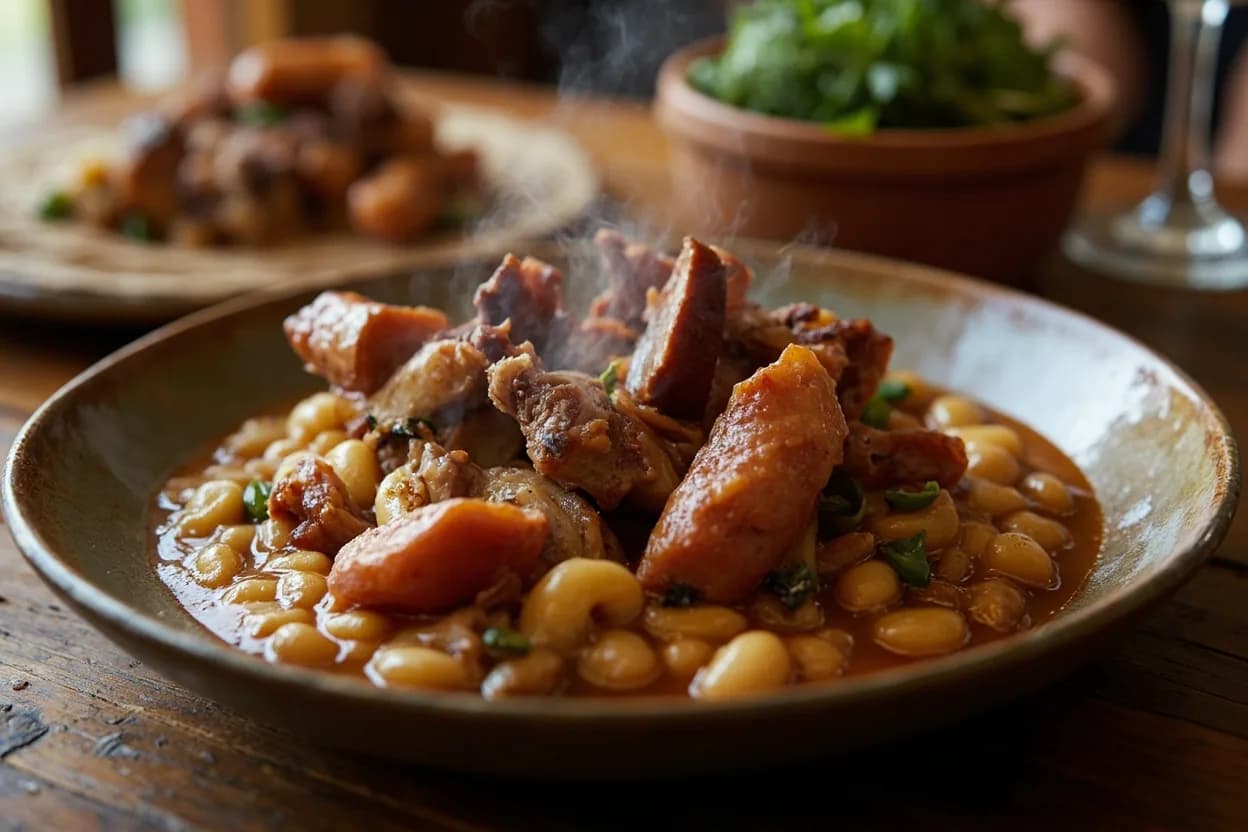
Cassoulet is claimed by three towns: Castelnaudary (white beans, pork, sausage — said to be the original), Carcassonne (adds partridge and lamb), and Toulouse (Toulouse sausage and confit duck). The Gascon cassoulet typically uses confit de canard as the centerpiece, haricots tarbais or lingots, and Toulouse sausage; it differs from the Languedoc versions in the quality of fat and the absence of lamb.
Duck versus goose
Historical Gascony used fattened goose as its primary confit and foie gras animal; the shift to duck accelerated in the 20th century because ducks reach slaughter weight faster and adapt more easily to industrial gavage. Today, duck dominates commercial production, but farmhouse producers still maintain the oie grasse tradition, and goose foie gras commands a significant premium.