Caucasus
Georgian (Caucasus)
Also: Kartvelian cuisine, Sakartvelo cuisine
An ancient Caucasian table built on walnut pastes, herb-laden stews, fermented dairy, and the world's oldest continuous winemaking tradition.
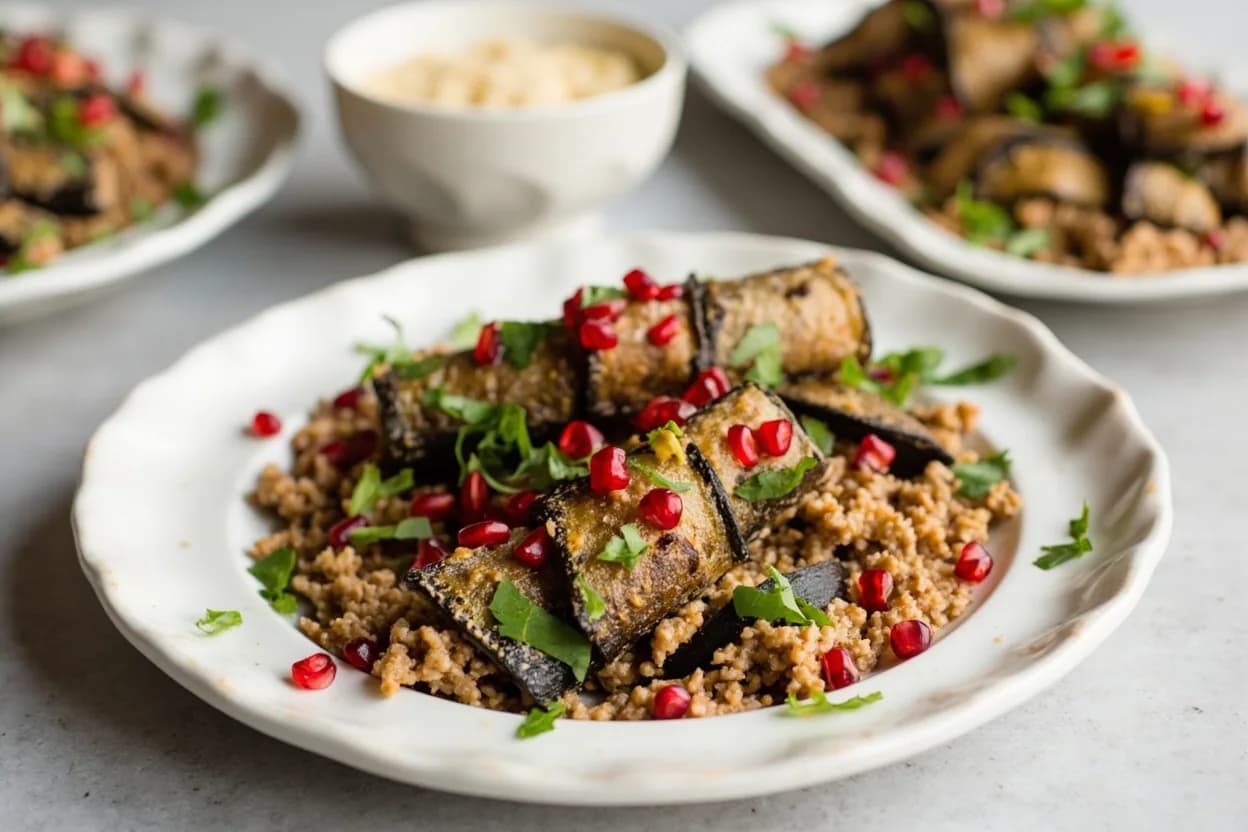
Georgian cuisine is one of the world's most distinctive culinary traditions, shaped by Georgia's position at the crossroads of Europe and Asia. It is characterized by the pervasive use of walnuts — ground into rich sauces and stuffed into vegetables — along with sour plum and pomegranate, khmeli-suneli spice blend, wild herbs (tarragon, fenugreek, blue fenugreek), and fermented dairy. The cuisine resists simple categorization: it is neither Middle Eastern nor Eastern European but a sovereign tradition dating back millennia.
The flavour base
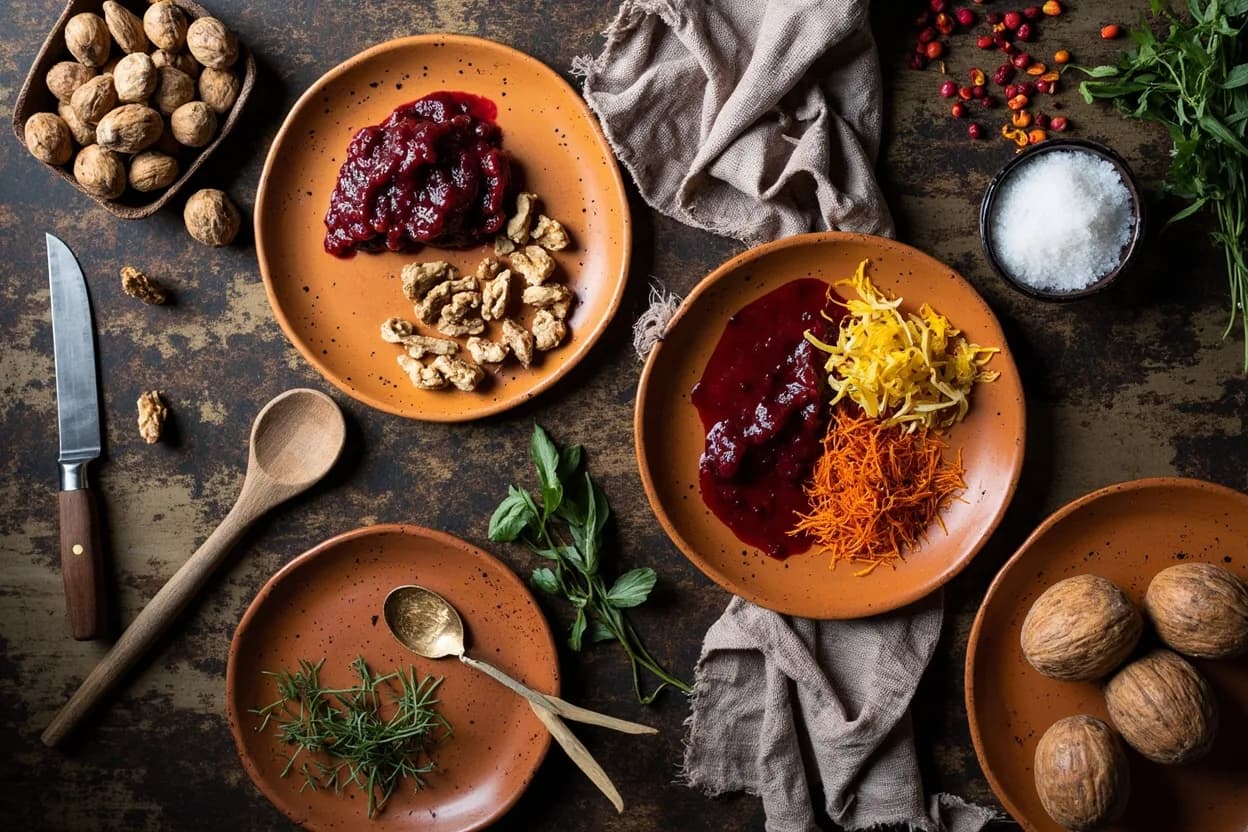
Walnut paste (satsivi base) emulsified with garlic, onion, and vinegar; the herb quartet of tarragon, coriander, dill, and flat-leaf parsley; and tkemali (sour plum sauce) or pomegranate molasses as the acidic counterpoint.
Pantry staples
Key ingredients
Signature techniques
Signature dishes
Georgian (Caucasus) on the table

At the table
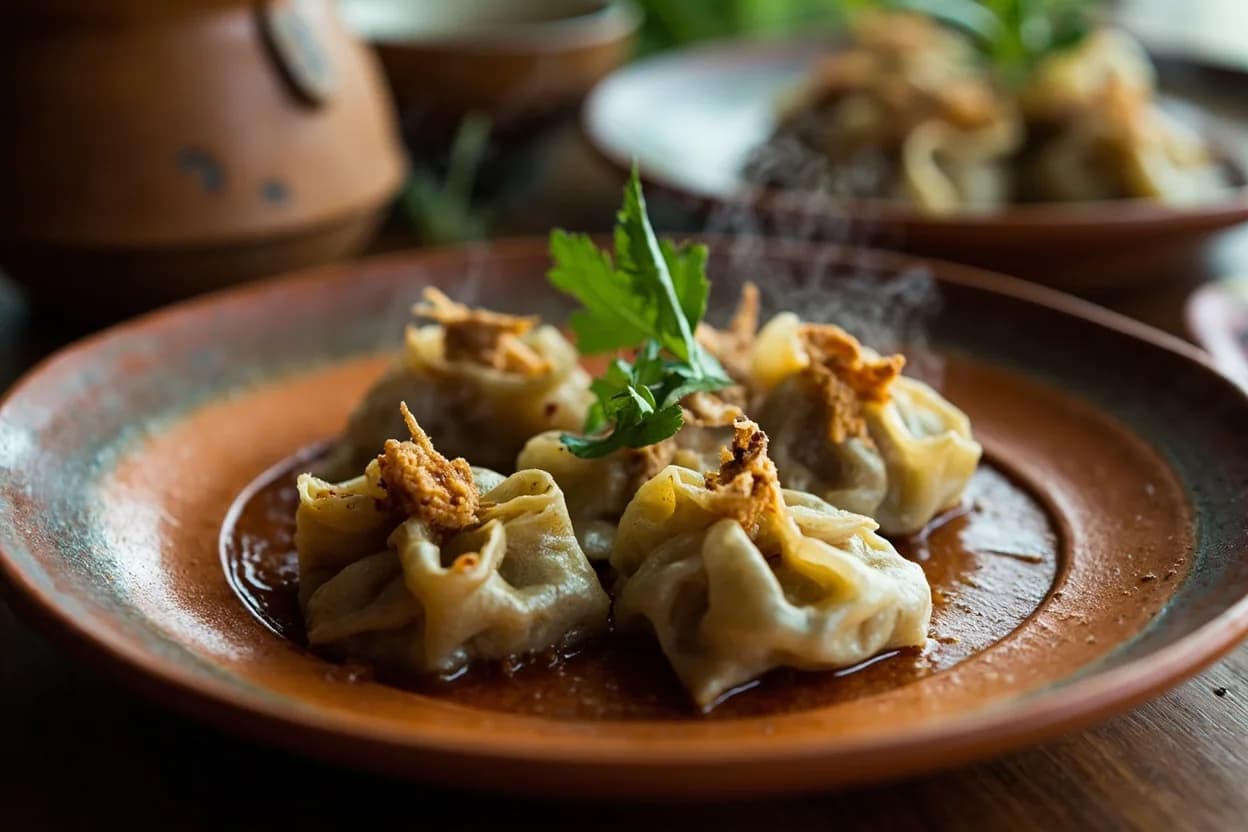
The supra (feast) is the defining social institution: a table loaded simultaneously with cold dishes (pkhali, badrijani, salads), then hot courses (soups, stews, grilled meats), with wine poured continuously by a tamada (toastmaster). Bread — especially shoti and tonis puri from the tone oven — anchors every course. Meals are communal and long.
History & context
Georgia claims an unbroken winemaking tradition of 8,000 years, evidenced by qvevri clay vessels found at Neolithic sites in Kakheti. Georgian culinary identity was forged by its position on ancient Silk Road routes connecting Persia, Byzantium, and the steppe. Arab and Persian influences introduced new spices; Mongol and Ottoman invasions brought pressure without erasing the core tradition. Soviet-era collectivization standardized some dishes but the supra culture survived as a form of cultural resistance. Today Georgian cuisine, particularly the qvevri amber wine tradition, holds UNESCO intangible heritage status.
Regional variations
- Kakheti
Georgia's wine heartland; heavier use of meats, stronger winemaking tradition with qvevri amber wines; churchkhela originates here.
- Imereti
Lighter, more sour flavor profile; Imeretian khachapuri is the flat, open-faced standard; Imeretian cheese is milder and used more widely.
- Adjara
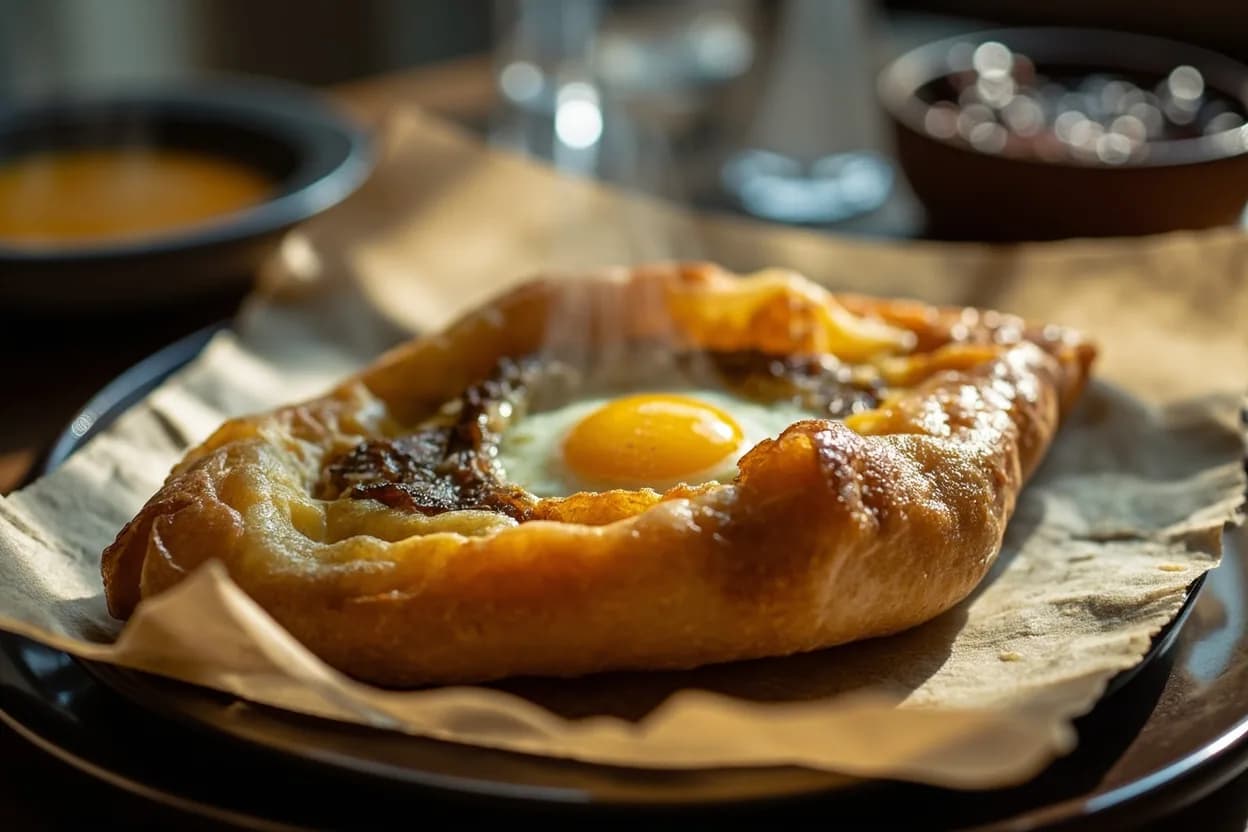
Black Sea coastal region with strong Ottoman influence; Adjaruli khachapuri (boat-shaped with egg and butter) is its signature; more seafood.
- Svaneti
High-altitude mountainous region; svanebi salt (a complex spice salt with caraway and dried marigold) is endemic; smoked meats and kubdari meat bread predominate.
- Megrelia
Western Georgia; uses more adjika (chile-spice paste) and has a notably spicier profile; elarji (polenta with cheese) is a staple.
Related cuisines
- Armenian
Shares Caucasian ingredients and lamb-centric traditions; lavash, pomegranate, and walnut appear in both.
Neighboring South Caucasus tradition; overlapping use of pomegranate, lamb, and herb-rich pilafs, though with stronger Persian influence.
- Persian
Historical influence via trade routes; sour-fruit balancing and walnut sauces echo Persian fesenjan and khoresht traditions.
Canonical recipes
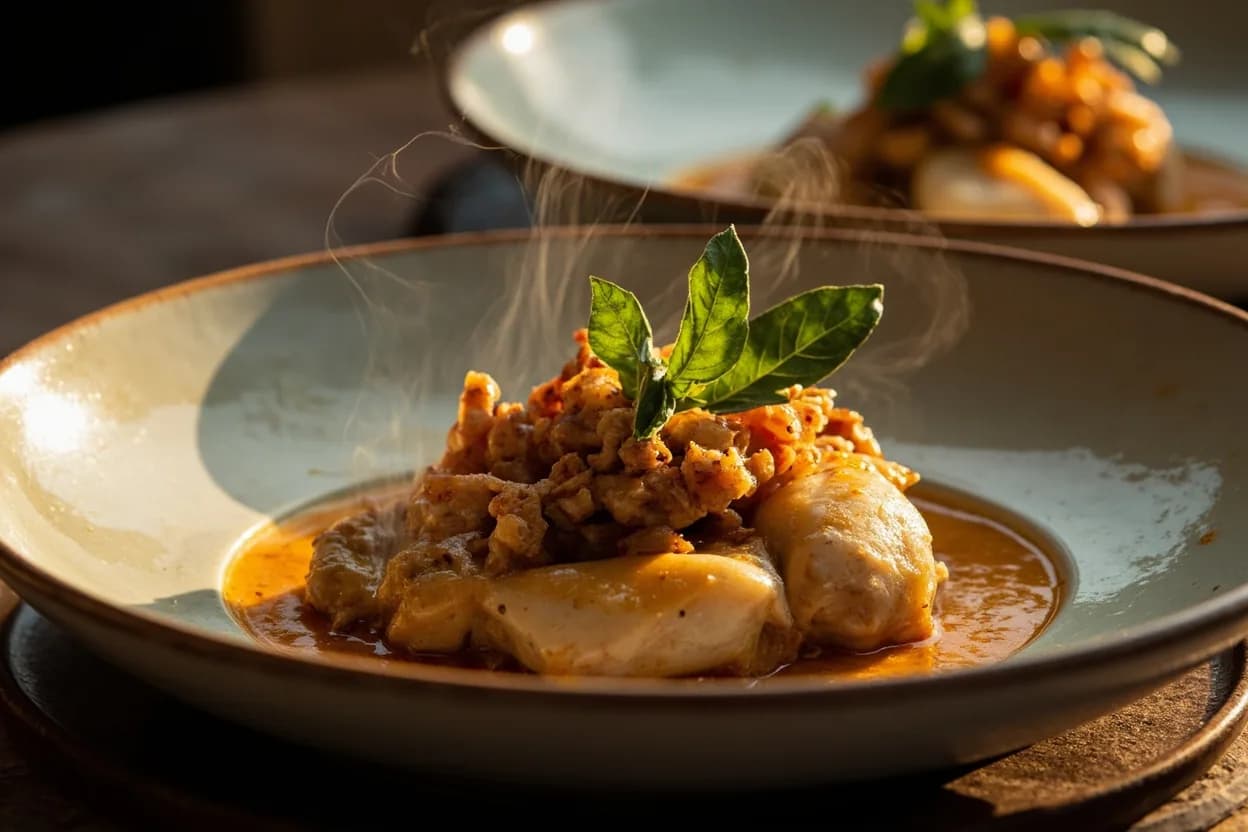
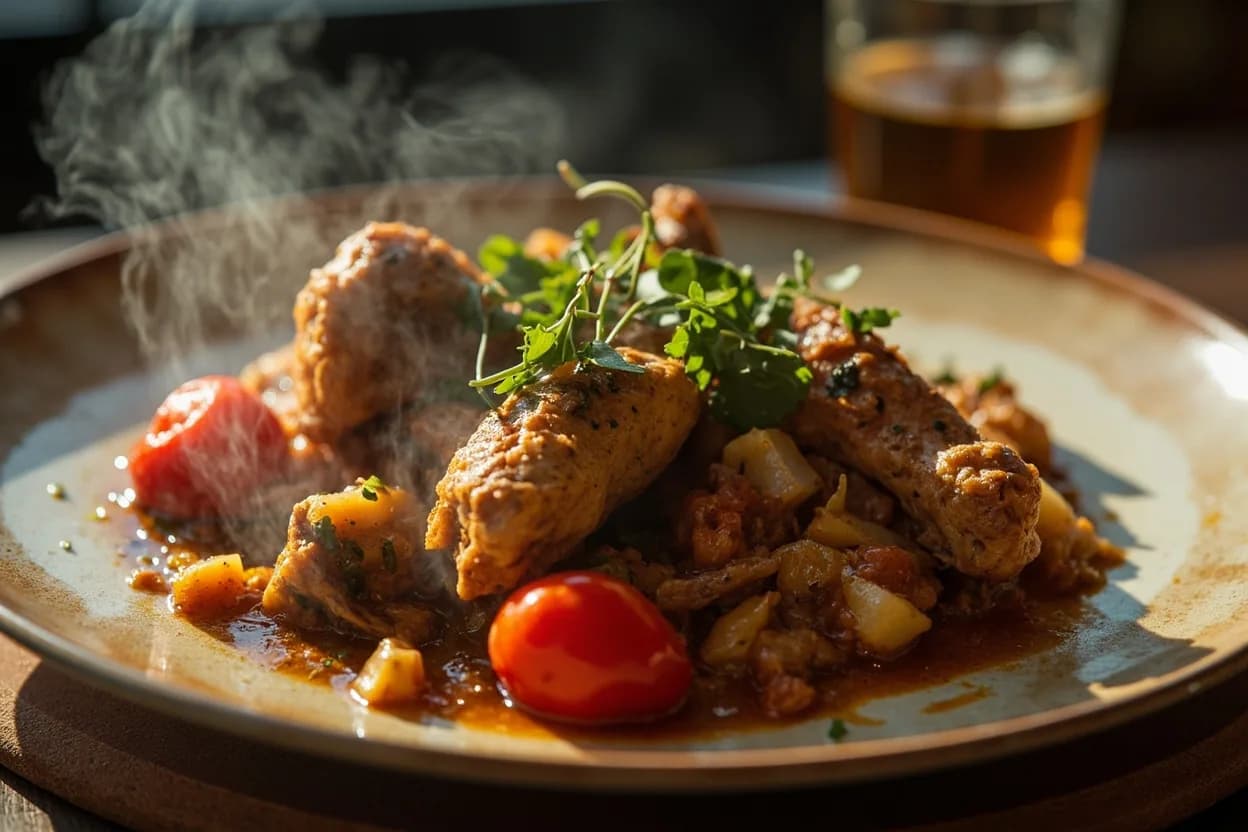
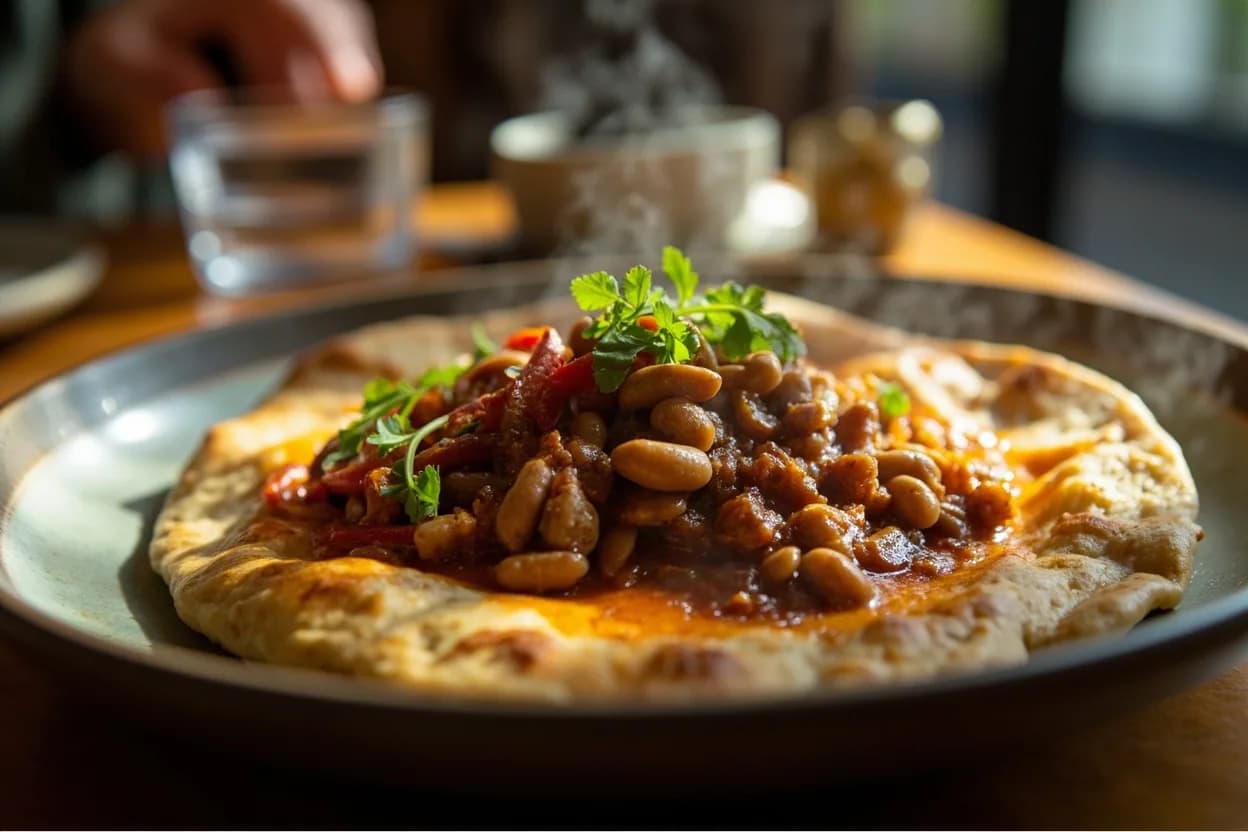
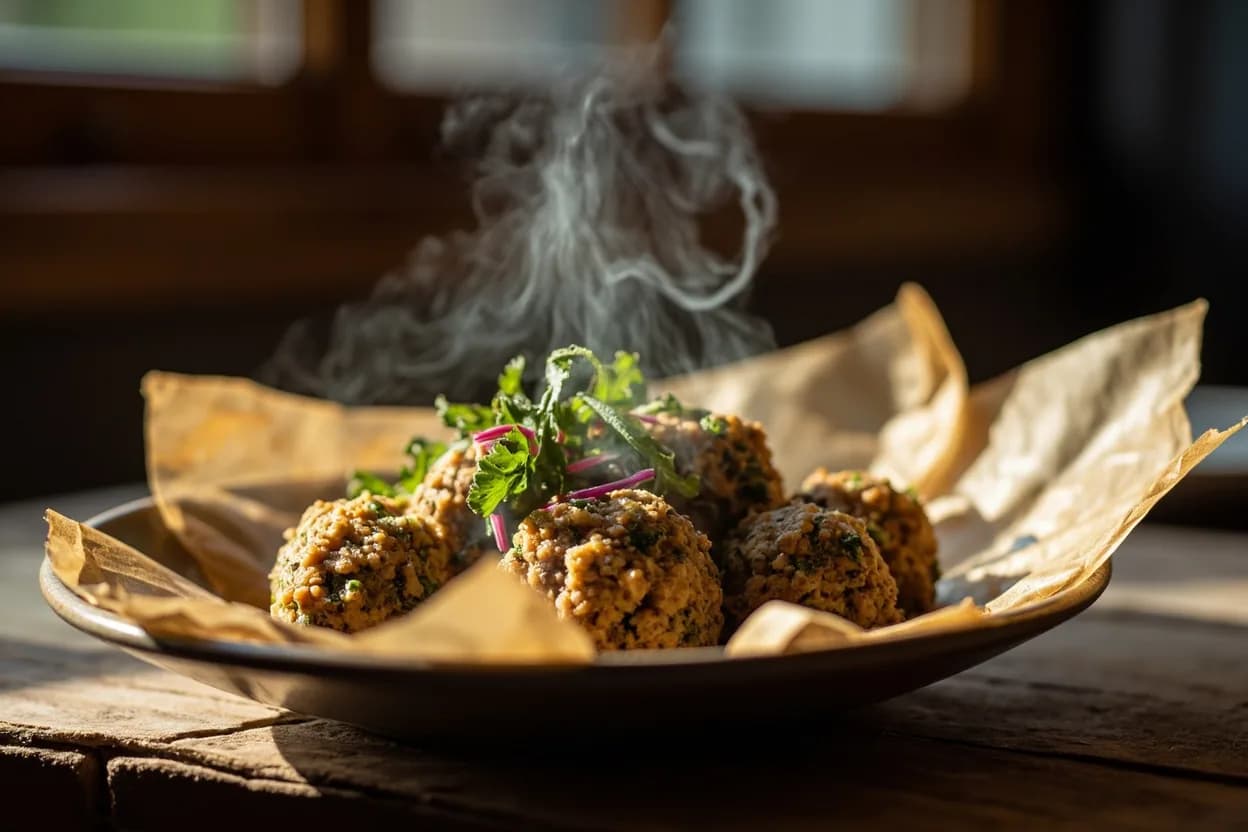
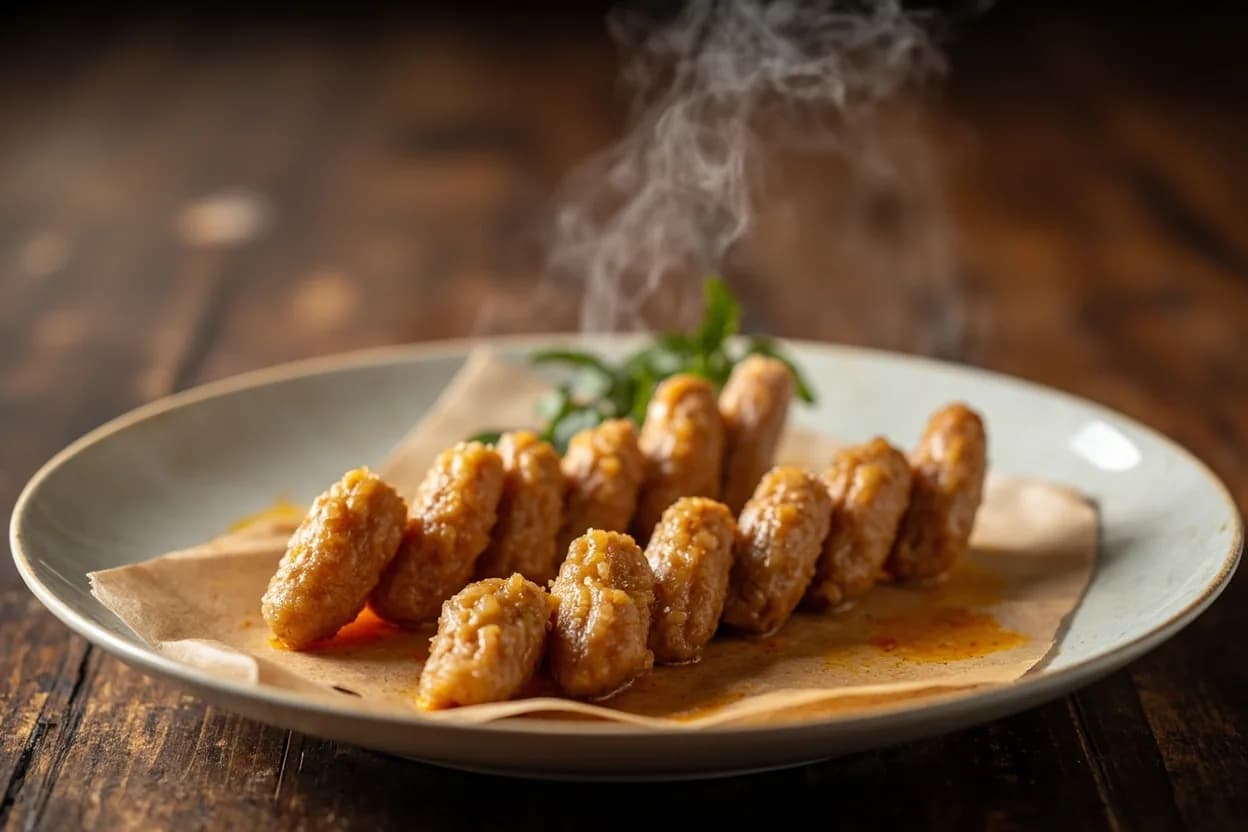
The dishes that define Georgian (Caucasus), documented in the Canon.
References
- 1.The Georgian Feast — Darra Goldstein (1993)
- 2.Tasting Georgia — Carla Capalbo (2017)
- 3.Please to the Table — Anya von Bremzen & John Welchman (1990)
Confidence: high
Notes
Qvevri wine tradition
Georgia's qvevri method — fermenting whole-cluster grapes (including skins and seeds) in buried clay amphoras — produces the amber wines now fashionable globally as 'orange wine.' This is not a trend but an 8,000-year-old technique; the UNESCO inscription in 2013 recognized it as the world's oldest continuous winemaking tradition.
Walnut as a staple, not a garnish
In Georgian cooking walnuts function structurally: ground into thick pastes that emulsify with vinegar and spices to become sauces (satsivi, bazhe), used as fillings, or rolled into churchkhela. A Georgian kitchen without walnuts is not a Georgian kitchen.