Central & South Asia
Afghan
Also: Afghan cuisine, Afghani, Afghan-Persian
A landlocked Silk Road cuisine of extraordinary restraint and depth — fragrant qabuli palau, handmade dumplings, charcoal-kissed kebabs, and bread that anchors every meal and carries spiritual weight.
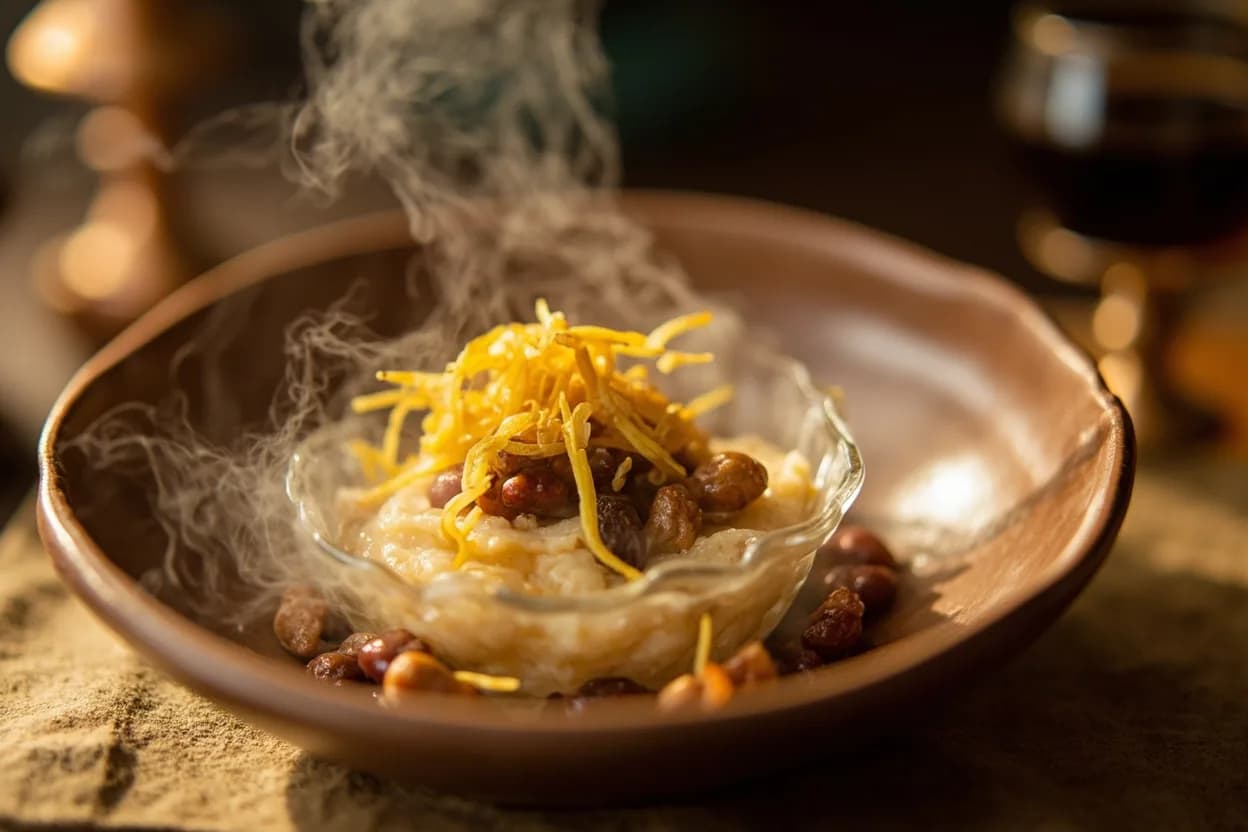
Afghan cuisine occupies a singular position at the intersection of Persian, Turkic, Central Asian, and South Asian culinary traditions — absorbing influences from all directions without being subsumed by any. It is a cuisine shaped by altitude, aridity, and pastoralism: lamb is the dominant protein, wheat and rice the twin starches, and dairy (yogurt, qurut dried yogurt balls, ghee) a nutritional cornerstone. What distinguishes Afghan cooking is its relative restraint in spicing compared to Indian food and its greater grain complexity compared to Iranian food: cardamom, cumin, and coriander seed appear in specific combinations rather than in complex masala blends. The national dish, qabuli palau, distills this philosophy — fragrant rice layered with lamb, carrots, and raisins, unified by the cooking juices of the meat.
The flavour base
Caramelized onion slowly rendered in lamb fat or ghee, scented with cumin and coriander seed; the stock (yakhni) from boiling lamb is the unifying liquid for rice and stew dishes.
Pantry staples
Key ingredients
Signature techniques
Signature dishes
Afghan on the table
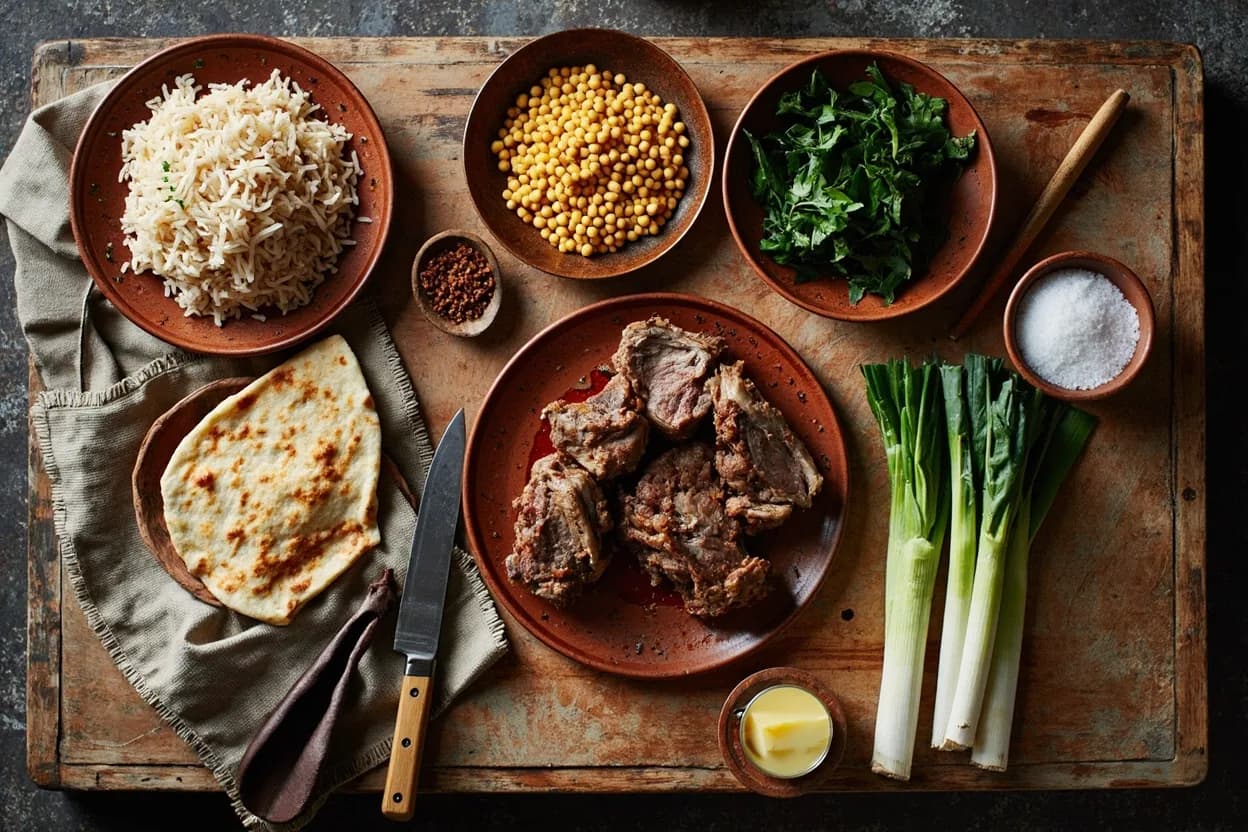
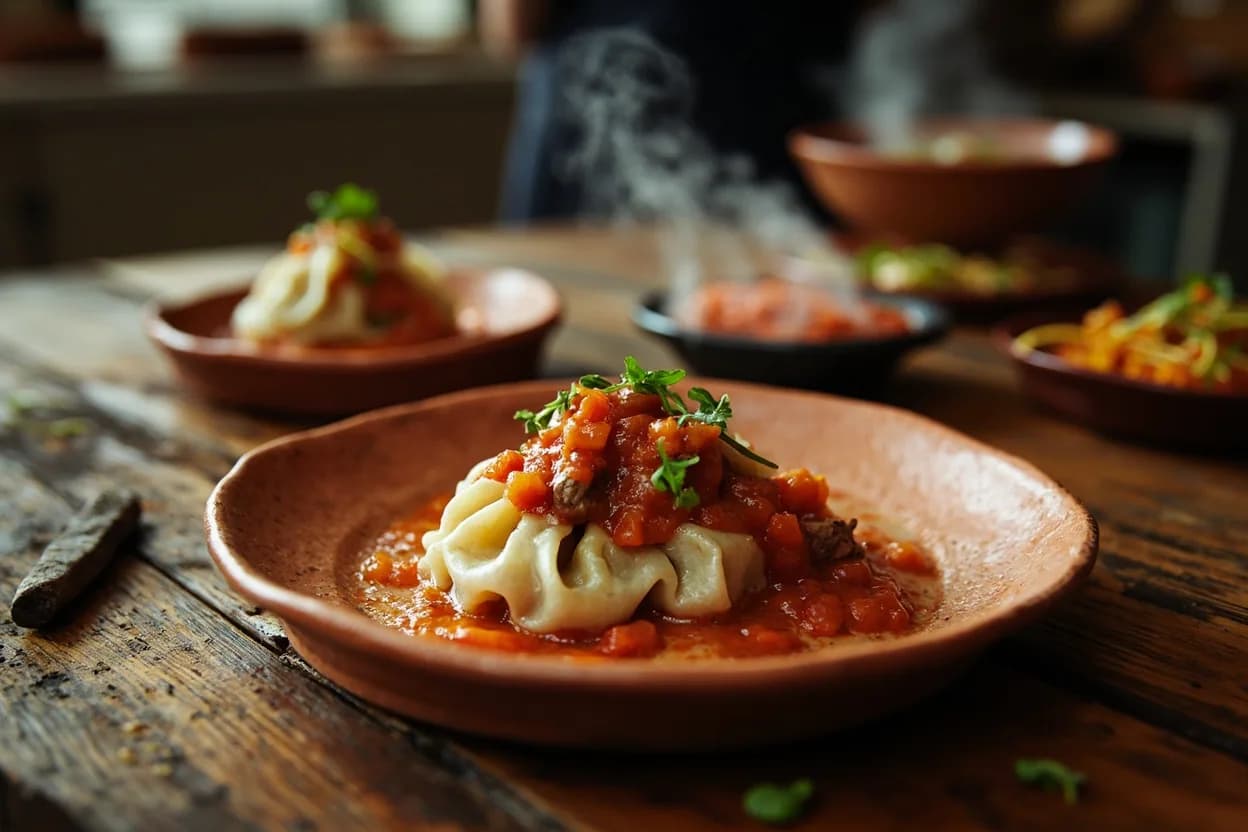
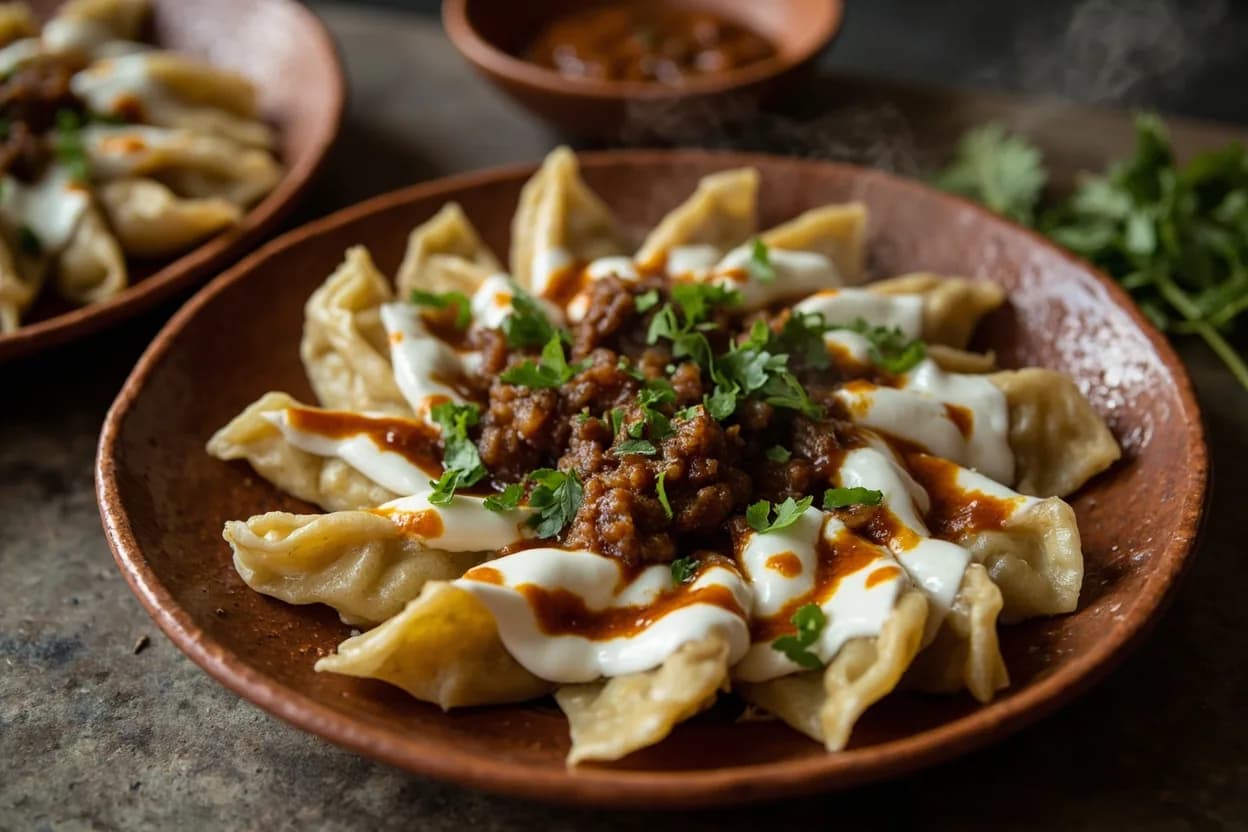
At the table
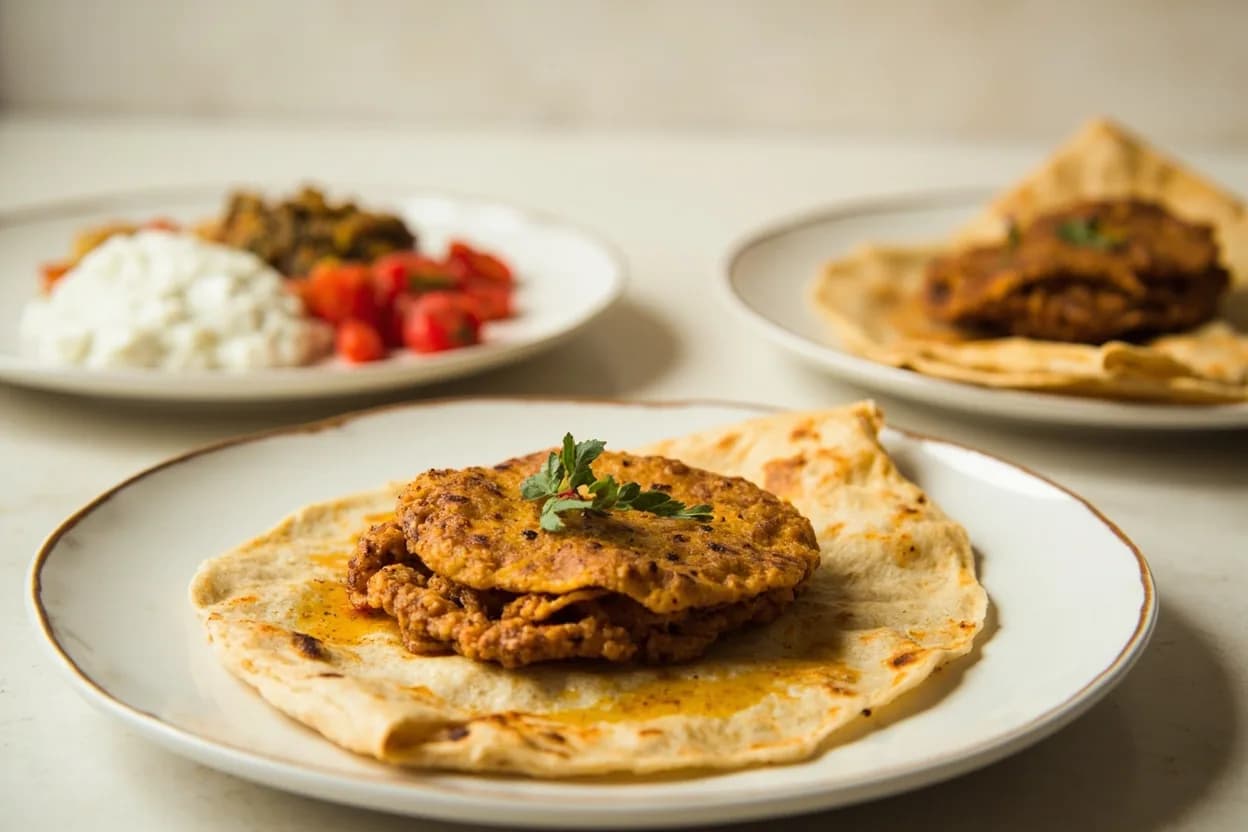
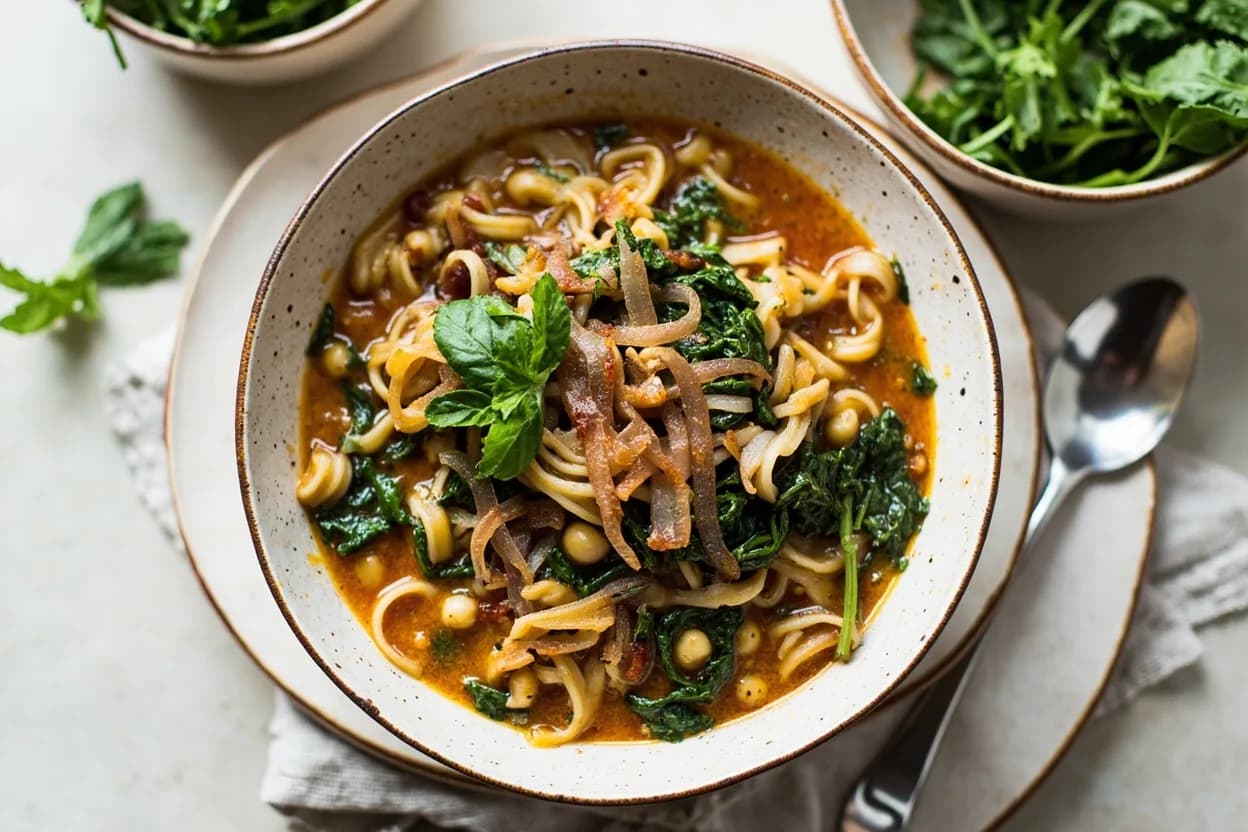
Bread — naan, lavash, or bolani — is present at every meal and occupies a near-sacred role; wasting it is culturally taboo. Rice dishes (palau) are the apex of a formal meal, served on large communal platters around which diners gather. Soup (aush, shorwa) is common as a separate first course or a complete meal. Tea (green in summer, black in winter, both with cardamom) is served before and after food. Formal meals follow a sequence: shorwa, then rice dish, then sweets and tea.
History & context
Afghanistan has been a crossroads of civilizations for three millennia — conquered successively by Achaemenid Persians, Alexander the Great, Mauryan Indians, Kushans, Sassanids, Arabs, Ghaznavids, Mongols, Timurids, Mughals, and Durranis. Each left culinary traces. The Timurid court at Herat (15th century) was one of the most refined in the Islamic world, producing a literature of elaborate rice dishes that survives in today's palau tradition. The Durrani Empire (18th century) unified the region and crystallized a national cuisine around Pashtun and Dari-speaking traditions. Trade routes brought spices from India, rice cultivation techniques from Central Asia, and dairy culture from nomadic Turkic peoples. Decades of conflict in the late 20th and early 21st centuries disrupted food systems but also spread Afghan cuisine globally through diaspora communities.
Regional variations
- Kabul
Urban capital style with the most Persian refinement; mantu and sophisticated palau variations are associated with Kabul.
- Kandahar (Pashtun south)
Plainer, meat-centric cooking; whole-lamb roasts, lamb-fat richness, and simpler rice preparations.
- Herat (west)
Strongest Persian influence; dishes closest to Khorasani Iranian cooking; more delicate spicing and herb use.
- Mazar-e-Sharif (north)
Uzbek and Turkmen influence; mastawa (rice and lamb yogurt stew) and qurut-forward dishes more prominent.
- Badakhshan (northeast)
High-altitude mountain cooking; dried mulberry flour, walnut oil, and preserved meats from long winters.
Related cuisines
Historical Greater Khorasan encompasses both; palau and rice-with-lamb traditions are nearly identical; Herat and Mashhad share culinary DNA directly.
- Uzbek
Northern Afghan Uzbek communities cook nearly identical plov/palau; fat-tail sheep, carrots, and rice are the shared tripod.
- Pakistani
Pashtun culinary traditions cross the Durand Line; karahi and kebab styles appear on both sides with minor variation.
Shared Turkic heritage produces parallel dolma, dumplings, and lamb-fat use; historical connections through Timurid court culture.
Canonical recipes
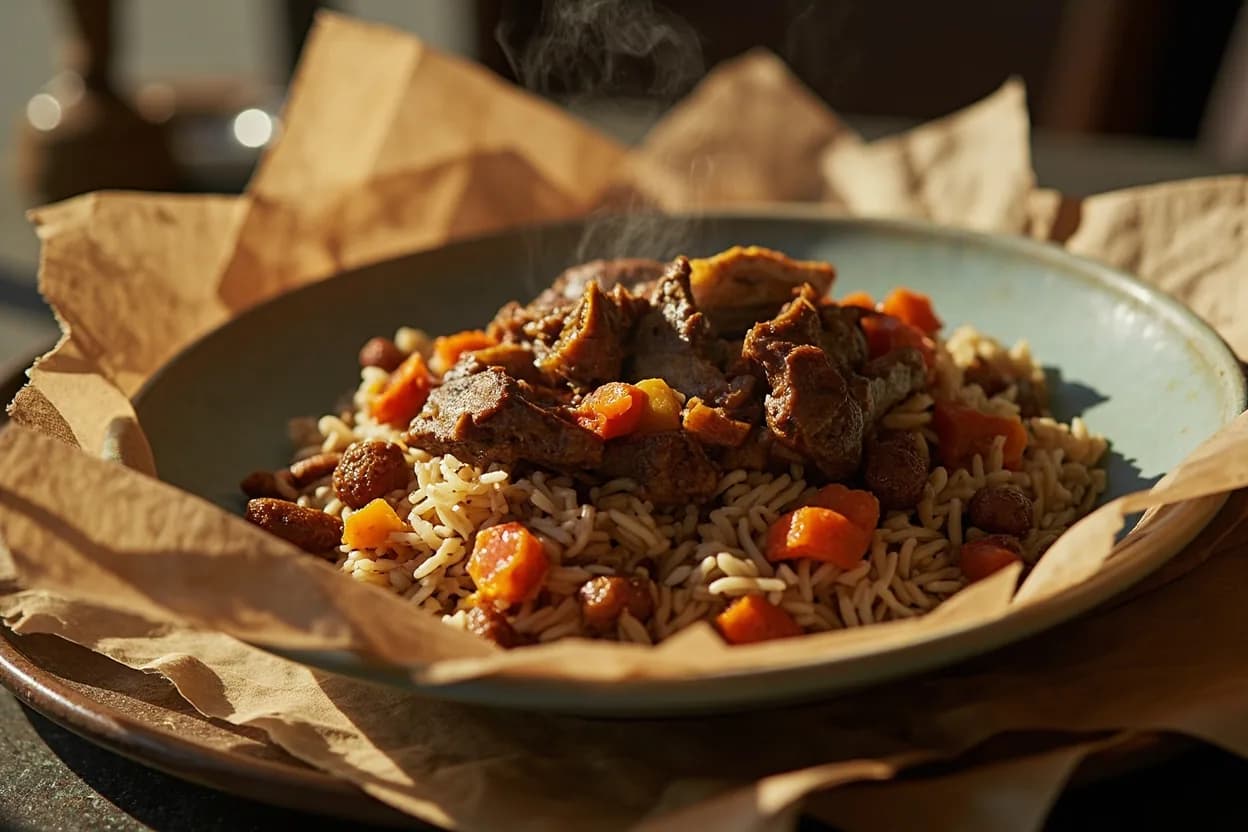
The dishes that define Afghan, documented in the Canon.
References
- 1.The Afghan Kitchen — Nawida Saidhosin (2018)
- 2.Taste of Persia — Naomi Duguid (2016)
- 3.The Oxford Companion to Food — Alan Davidson, 3rd ed. (2014)
- 4.Celebrating Afghan Food — Zarghuna Haroon (2014)
Confidence: high
Notes
Qabuli palau — national dish anatomy
Qabuli palau (also romanized as kabuli palau or qorma palau) is distinguished by its layered construction: lamb shanks or shoulder are first boiled to make a rich yakhni stock, then browned; julienned carrots are caramelized in lamb fat with sugar until mahogany; raisins are plumped in the same fat. Long-grain rice is parboiled in the yakhni, then layered over the lamb and topped with the carrots and raisins before a final dum (sealed steam) cooking. The result is aromatic but not spicy — cardamom and cumin in restraint.
Mantu vs ashak
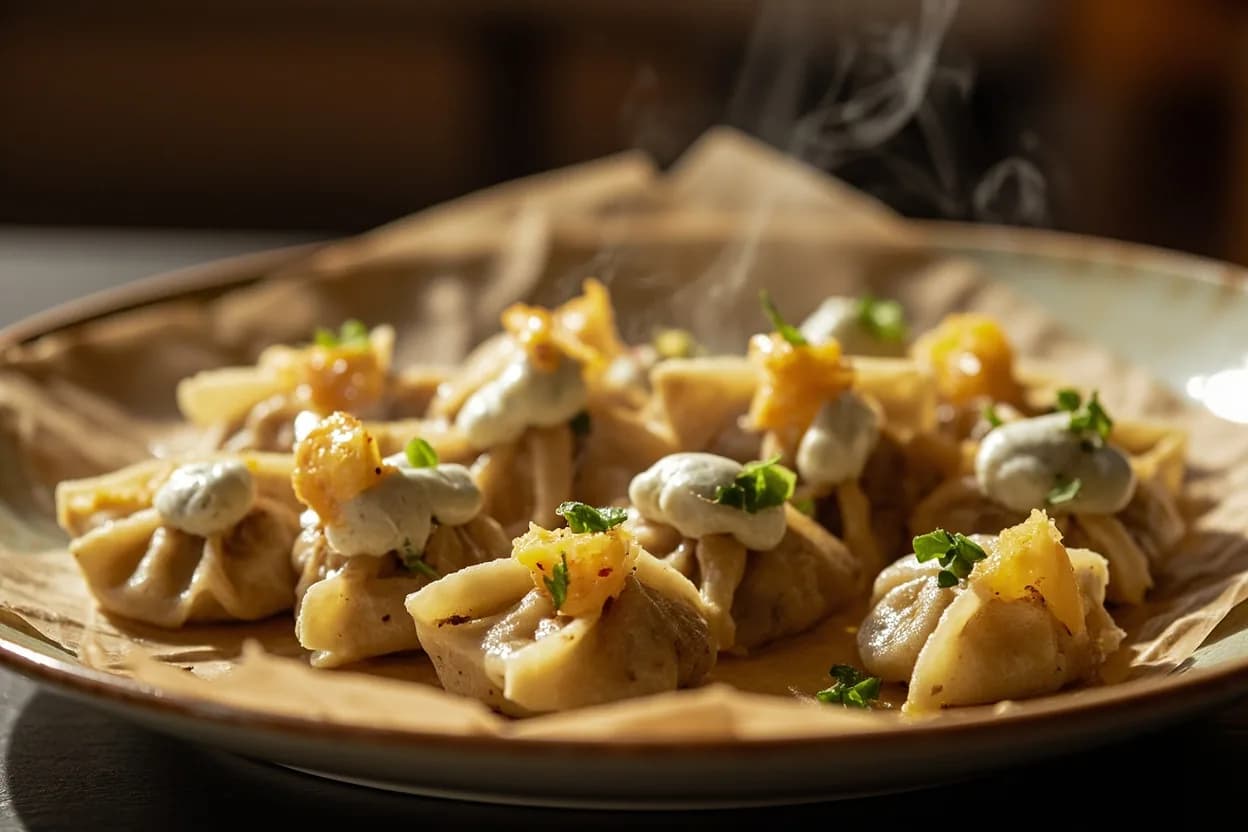
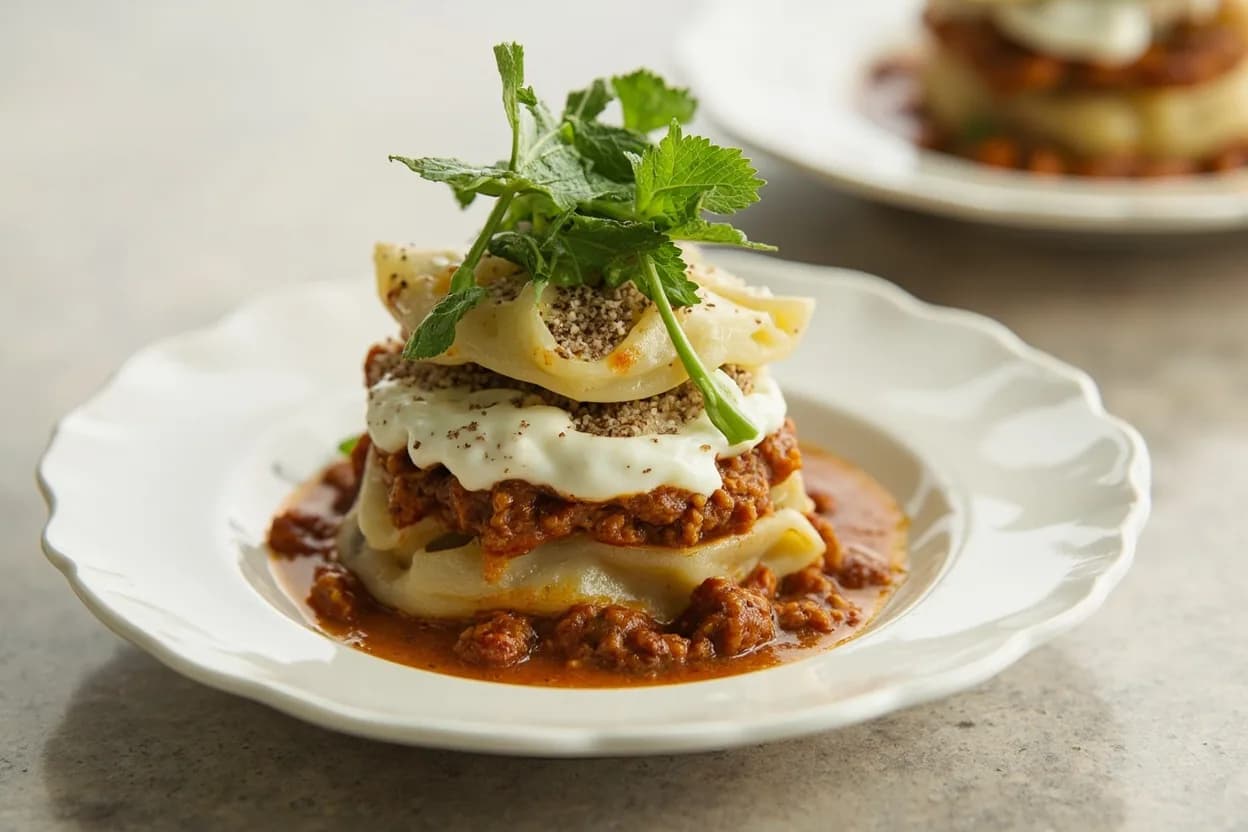
Both are dumpling dishes and both are topped with the same sauce trio — qurut (reconstituted dried yogurt thinned with water and garlic), tomato-based meat sauce (qorma), and dried mint. Mantu are larger, steamed, filled with lamb and onion, and associated with Kabul. Ashak are boiled, filled with leek and spring onion, and associated with Panjshir and the north; their filling is more delicate and their pleating more intricate.