Southeast Asia
Acehnese (Indonesia)
Also: Aceh cuisine, masakan Aceh, food of Aceh
The fiercely independent Islamic cooking of Sumatra's northern tip — Arab spice trade meets dense tropical aromatics, producing Indonesia's most distinctively Middle Eastern-inflected cuisine.
Acehnese cuisine is shaped by geography, religion, and centuries of spice trade. Aceh (Nanggroe Aceh Darussalam) sits at the northern tip of Sumatra and was historically the first major Islamic port in Southeast Asia, a gateway for Arab, Indian, Persian, and Yemeni traders whose ingredients and cooking methods left permanent marks. The cuisine is fully halal (no pork, no alcohol) and leans heavily on lamb and goat alongside beef, with spice combinations — cumin, fennel seed, cardamom, clove — more Middle Eastern than typical Indonesian cooking. Simultaneously, it uses dense tropical aromatics: fresh turmeric, galangal, kaffir lime, and lemongrass. The result is Indonesian technique with an unmistakably Arab-Indian-inflected spice profile.
The flavour base
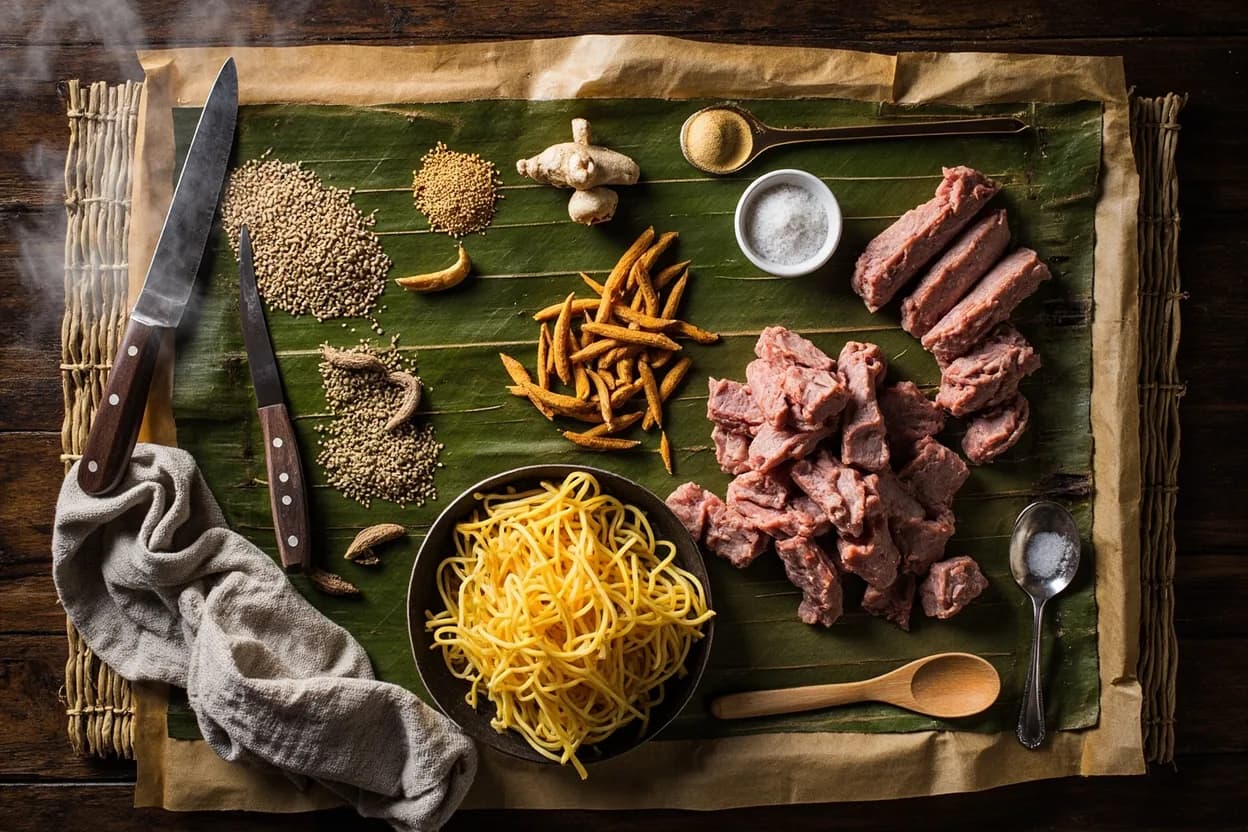
A rempah of shallots, garlic, red chili, fresh turmeric, galangal, and lemongrass is fried in oil, then building spices (cumin, fennel, coriander, cardamom) are bloomed in the paste — a method that reflects both Malay and Arab-Indian culinary influences working in synthesis.
Pantry staples
Key ingredients
Signature techniques
Signature dishes
Acehnese (Indonesia) on the table


At the table
Rice-centric communal eating at all main meals. As a devout Muslim-majority province, meal times align with daily prayer and abstain from pork and alcohol entirely. Festivals (especially communal Eid feasts) involve kuah beulangong — enormous wok-cooked goat curries prepared in the mosque courtyard and distributed to the community. Mie aceh, served at dedicated noodle stalls, functions as a popular evening meal and late-night food.
History & context
Aceh was the first significant point of Islamization in Southeast Asia, receiving Arab and Indian Muslim traders from at least the 9th century CE. The Sultanate of Aceh (established 1520) became one of the most powerful Islamic kingdoms in the region and a center of Islamic scholarship and trade in pepper, gold, and camphor. Arab, Yemeni (Hadrami), Gujarat Indian, and Persian merchants settled there, and their foodways — lamb and goat-centered cooking, cumin-fennel-cardamom spicing, stuffed flatbreads — grafted onto existing Malay-Batak-Minangkabau culinary traditions. Aceh's fierce resistance to Dutch colonialism (the Aceh War, 1873–1914, was the longest colonial war in Indonesian history) meant the province remained more culturally isolated than Java or Bali, preserving these distinct culinary traditions. Following the 2004 Indian Ocean tsunami and a subsequent peace agreement ending a separatist conflict, Acehnese cuisine has received wider Indonesian and international attention.
Regional variations
- Coastal Aceh (Banda Aceh, Sabang)
Heavier seafood presence — fresh-caught fish, squid, and prawns appear in curries and mie aceh; Arab-Indian trader spice influence most concentrated here near the historic port.
- Gayo Highlands (Central Aceh)
Home of the Gayo people (ethnically and linguistically distinct from coastal Acehnese); cooking incorporates more coffee (Gayo is a major arabica-growing region), wild herbs, and river fish; less Arab-inflected, more Batak-adjacent.
- Aceh Tamiang (Eastern Border)
Malay cultural overlap with Sumatra's east coast; cooking is milder and more similar to coastal Riau Malay cuisine than western Acehnese food.
Related cuisines
Neighboring Sumatran cuisine sharing coconut-milk curry technique (gulai) and rempah base, but Padang food lacks the Arab dry-spice layer and is pork-absent by Muslim majority rather than strict Islamic law.
- Yemeni (Hadrami)
Hadrami Arab traders settled in Aceh from the 16th century onward, bringing lamb cooking, spice combinations, and flatbread traditions that persist in Acehnese festival cooking.
- Indian Muslim (Tamil/Gujarat)
Indian Muslim merchant presence introduced martabak, spiced flatbreads, and curry techniques that intersect with Acehnese cooking.
- Malaysian Malay
Shared rempah technique and coconut-milk curry base across the Strait of Malacca.
Canonical recipes
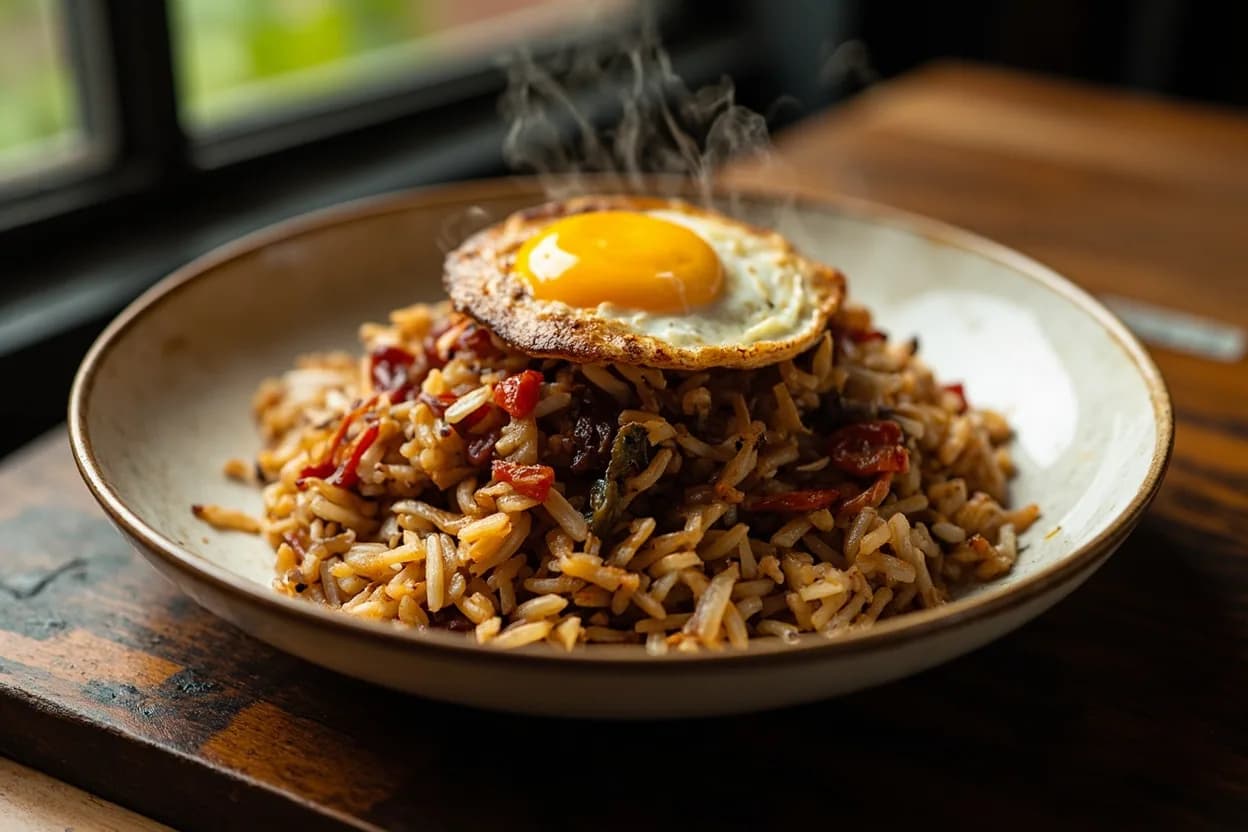
The dishes that define Acehnese (Indonesia), documented in the Canon.
References
- 1.The Food of Sumatra — Sri Owen
- 2.Indonesian Regional Food and Cookery — Sri Owen
- 3.Cradle of Islam: The Acehnese and the Importance of the World — Anthony Reid
- 4.Culinaire in Aceh — Hasballah M. Saad (Indonesian language)
Confidence: medium
Notes
Ayam tangkap and the fried-herb tangle
Ayam tangkap ('caught chicken') is one of the most visually distinctive dishes in Indonesian cooking — a whole chicken fried at high heat with a mountain of fresh herbs (pandan, lemongrass, curry leaves, kaffir lime leaves, galangal) that crisp up and tangle around the bird, flavoring it while becoming edible chips. The technique shows how Acehnese cooks use aromatics not just as flavoring agents but as structural and textural elements.
Kuah pliek u and fermented coconut
Pliek u is fermented, oil-extracted coconut flesh — a uniquely Acehnese ingredient produced by burying coconut meat to ferment, then pressing out the oil. The residual solids are used as a flavoring agent in kuah pliek u, producing a deeply funky, sour curry with a flavor profile found nowhere else in Indonesia. It represents a pre-refrigeration fermentation tradition that persists entirely for flavor rather than preservation.