Southern Europe
Abruzzese
Also: Cucina Abruzzese, Abruzzo cuisine
Rugged Apennine cooking from Italy's most mountainous region: lamb over open fire, hand-cut chitarra pasta, saffron from the Gran Sasso, and an Adriatic fish stew that varies village by village.
Abruzzese cuisine is the food of a mountainous, historically isolated region stretching from the Gran Sasso — the highest Apennine peak — to the narrow Adriatic coast. The twin identities of the cucina di montagna (shepherd and farmer cooking) and cucina di mare (Adriatic fishing tradition) coexist without much overlap. Mountain cooking centres on lamb and mutton, dried legumes, hand-cut pasta on the chitarra iron frame, and the world's highest-altitude saffron (from Navelli and the Altopiano delle Rocche). Coastal towns each claim their own brodetto, coloured differently by tomatoes, vinegar, or saffron depending on the port.
The flavour base
Peperoncino heat, lamb fat rendered from arrosticini, and saffron dissolved in cooking water or wine; coastal dishes use a base of oil, garlic, and white wine with the brodetto's variety of fish.
Pantry staples
Key ingredients
Signature techniques
Signature dishes
Abruzzese on the table
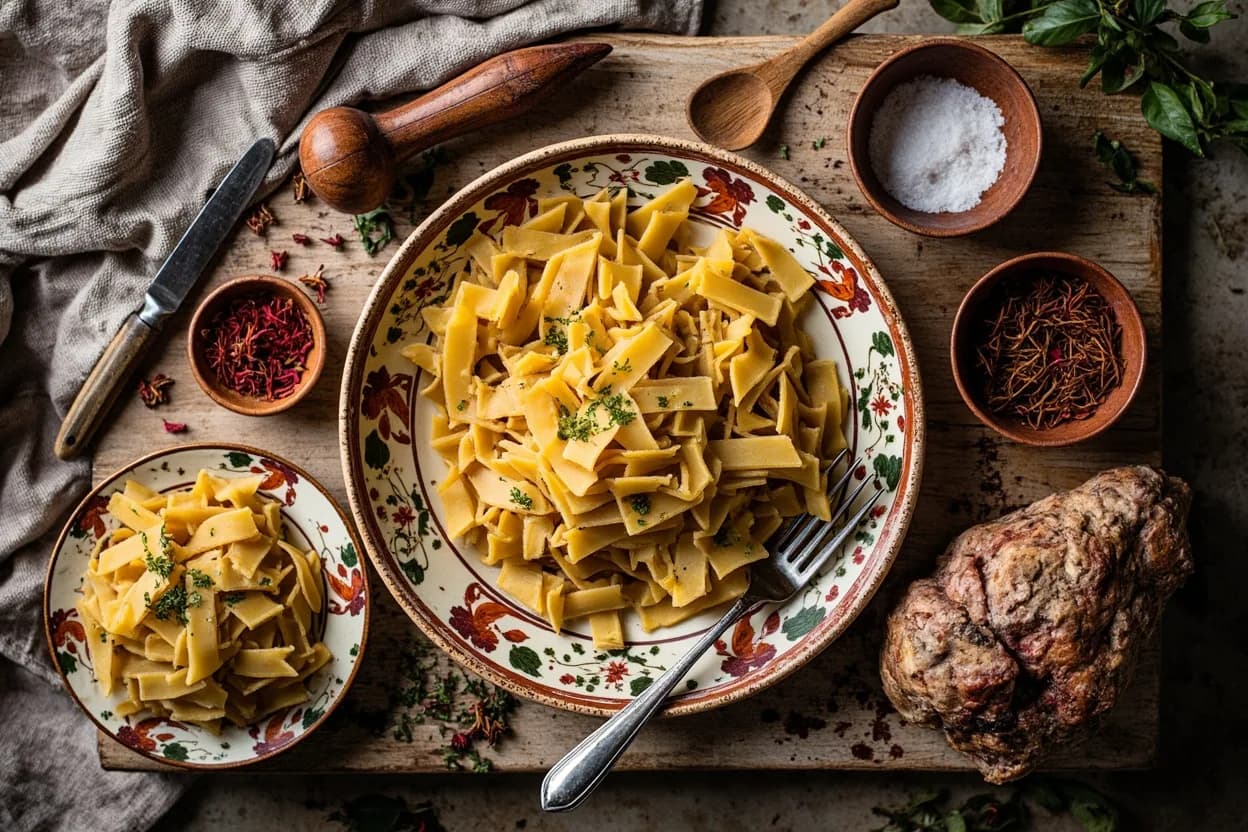
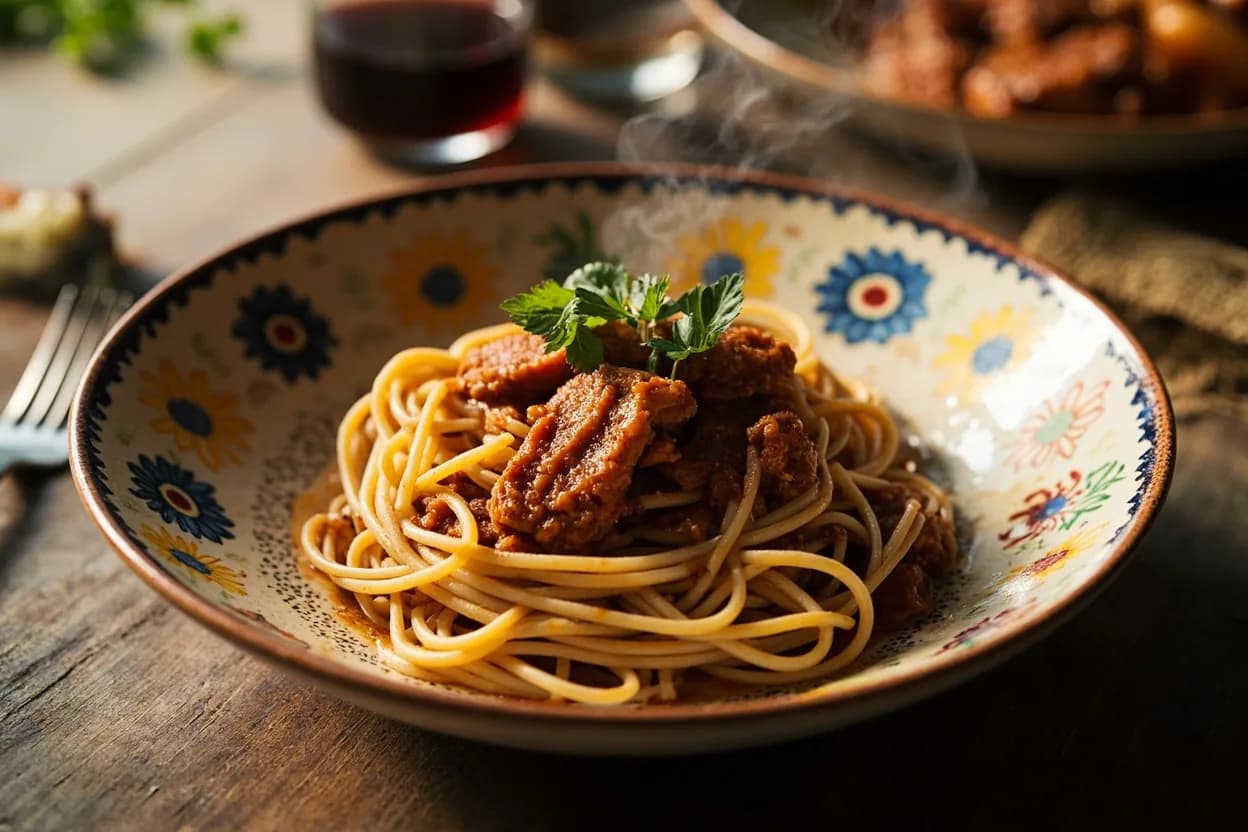
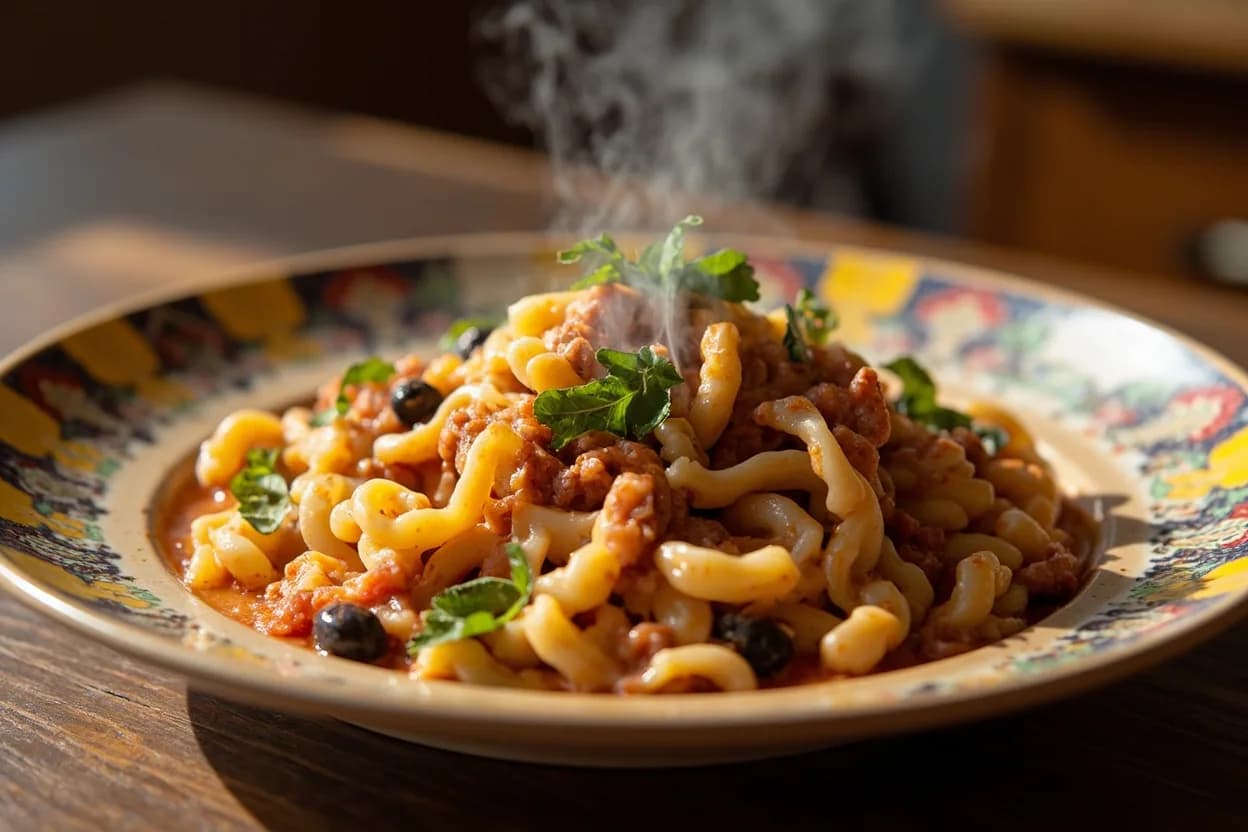
At the table
Mountain meals are hearty and structured around a single substantial primo of pasta or legumes, followed by a meat secondo (almost always lamb or pork in the hills). Easter and feast-day meals feature whole roasted lamb. Coastal towns reverse the emphasis: seafood antipasti, brodetto as the centerpiece, and lesser pasta. Street food culture is minimal except for arrosticini sold from roadside fornacella stands.
History & context
Abruzzo's geographical isolation — bordered by three Apennine massifs — kept it outside the main trade and cultural circuits of Renaissance Italy. The region was historically part of the Kingdom of Naples, and Bourbon neglect left it among the poorer corners of the south. Transhumance, the seasonal movement of sheep flocks between mountain pastures (piano) and Apulian lowlands (tavoliere), was the economic backbone for centuries and explains the dominance of lamb, pecorino, and wool-trade towns like Sulmona. The Gran Sasso saffron — cultivated in the Navelli basin since at least the fourteenth century — was originally brought by a Dominican friar from Spain and became Abruzzo's most prestigious export. Unification in 1861 began to break the isolation, but Abruzzese cuisine retained its austere identity through the twentieth century.
Regional variations
- L'Aquila and Gran Sasso highlands
Saffron dominates; lamb and cicerchie legumes are central; confetti di Sulmona (sugared almonds) are the prestige sweet.
- Chieti and the Vastese coast
Home of brodetto alla vastese (white wine, no tomato) and ventricina del Vastese spreadable salume; tonnarelli with clams.
- Pescara and Francavilla
Adriatic coast with tomato-based brodetto and scamorza abruzzese grilled over charcoal.
- Teramo and the Monti della Laga
Scrippelle 'mbusse (broth-soaked crêpes) and mazzarelle (lamb offal wrapped in endive leaves) are Teramano specialties.
Related cuisines
- Molisan
Immediate southern neighbour sharing chitarra pasta, lamb emphasis, and peperoncino heat.
- Marchigian
Northern Adriatic neighbour; both have brodetto traditions that differ in base (vinegar vs. wine).
- Apulian
Transhumance connected Abruzzese shepherds to Apulia's Tavoliere plains for centuries, exchanging lamb and cheese traditions.
- Lazio
Western neighbour sharing the abbacchio (milk lamb) tradition around Rome's hills.
References
- 1.Italian Regional Cooking, Ada Boni (1969)
- 2.La Cucina Abruzzese, Maria Antonietta Zorzi (Idealibri, 1989)
- 3.Il Cucchiaio d'Argento (The Silver Spoon), Editoriale Domus, 8th ed.
- 4.Zafferano dell'Aquila DOP — Disciplinare di Produzione, Italian Ministry of Agriculture
Confidence: high
Notes
Arrosticini culture
Arrosticini are not merely a dish but a social ritual: sold from dedicated fornacella vendors who grill hundreds at a time and hand them over wrapped in foil. The canonical cut is castrato (castrated male sheep) on 3–4 mm cubes, threaded on thin wooden skewers. Arguments over which village makes the best arrosticini are taken seriously.
Saffron provenance
Zafferano dell'Aquila DOP grows only on the Navelli plateau at 700–1,000 m elevation. The labour-intensive harvest (stigmas hand-picked at dawn before petals open) and low yield (150,000 flowers per kilogram of dried saffron) make it among the most expensive food products in Italy by weight.