Southeast Asia
Minangkabau (Padang)
Also: Masakan Padang, West Sumatran cuisine, Minang cooking
The ferociously spiced, matrilineal cuisine of West Sumatra, whose slow-cooked curries and towering restaurant displays of cold dishes have colonized every Indonesian city.
Minangkabau cuisine originates in the Minang highlands of West Sumatra and is arguably the most influential regional cooking tradition in Indonesia. It is defined by three forces: an extraordinary density of spicing (more chiles, more coconut milk, more galangal per dish than most of the neighboring cooking traditions), a matrilineal social structure in which women are the custodians of culinary knowledge and adat (customary law), and the Minang tradition of merantau (migration) — young Minang men travel to other cities to establish restaurants, spreading the cuisine from Aceh to Papua. The padang restaurant model — dozens of cold dishes arranged in tiered displays, brought to the table all at once, with diners paying only for what they eat — is the most distinctive restaurant format in Southeast Asian food service. Beef rendang, acknowledged as originating here before spreading to Malaysia and beyond, is the cuisine's most internationally recognized dish.
The flavour base
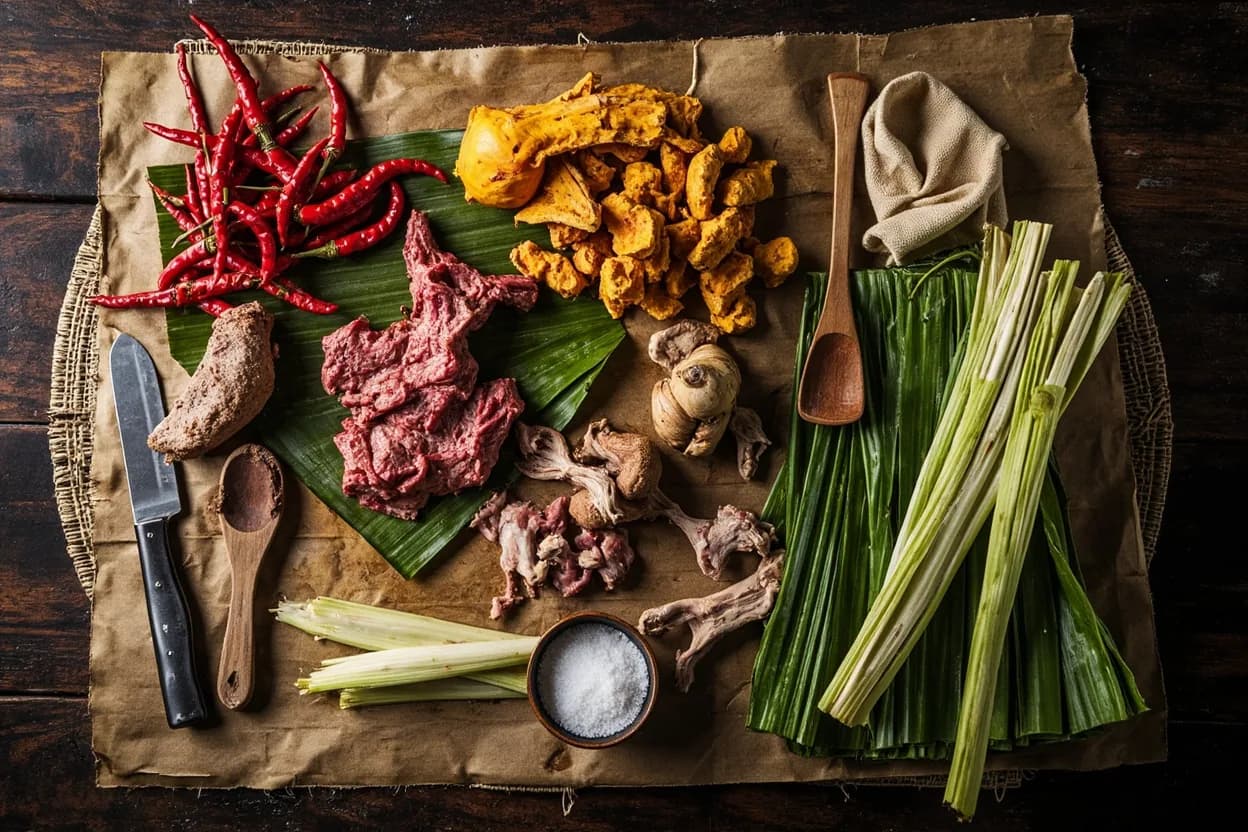
Coconut milk (santan) cooked down with pounded shallots, garlic, galangal, fresh turmeric, lemongrass, and an unusually high quantity of dried red chiles into intensely spiced gulai (curry) and kalio (thickened curry) bases.
Pantry staples
Key ingredients
Signature techniques
Signature dishes
Minangkabau (Padang) on the table
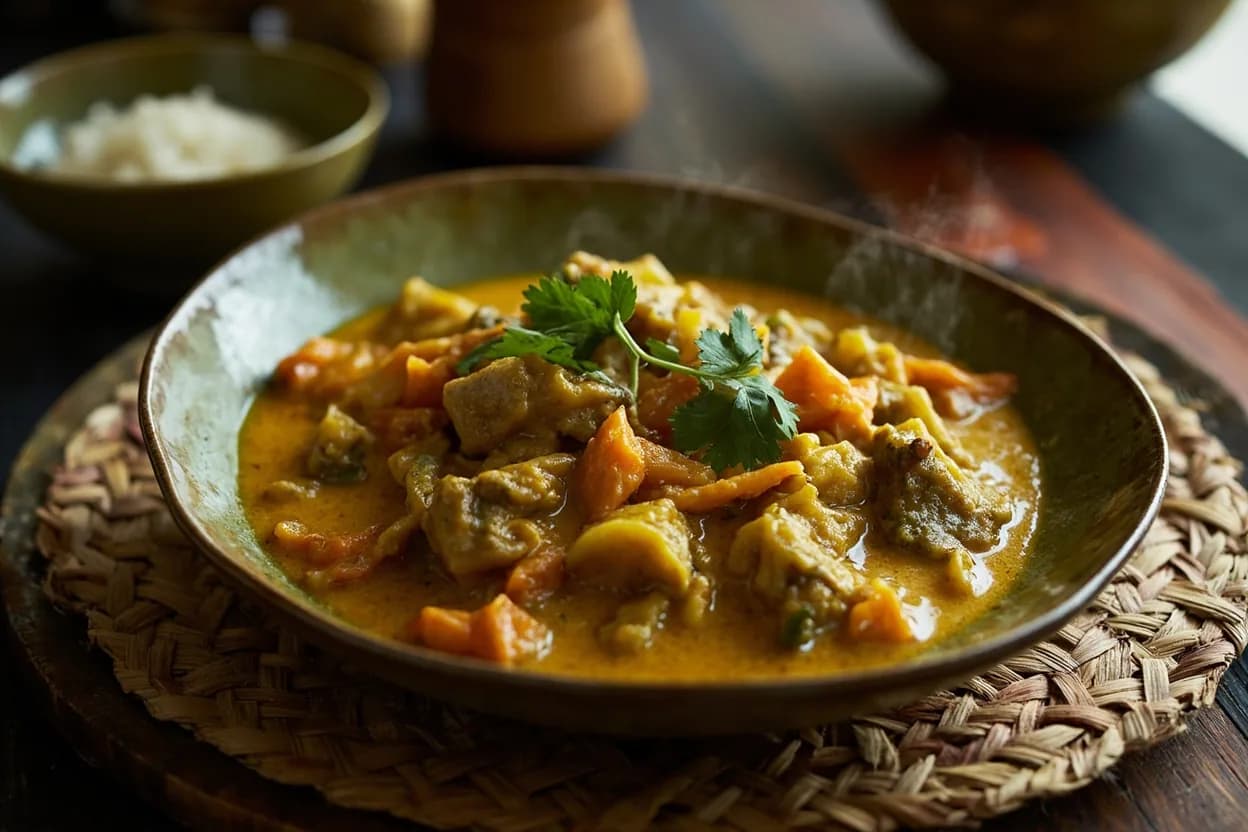
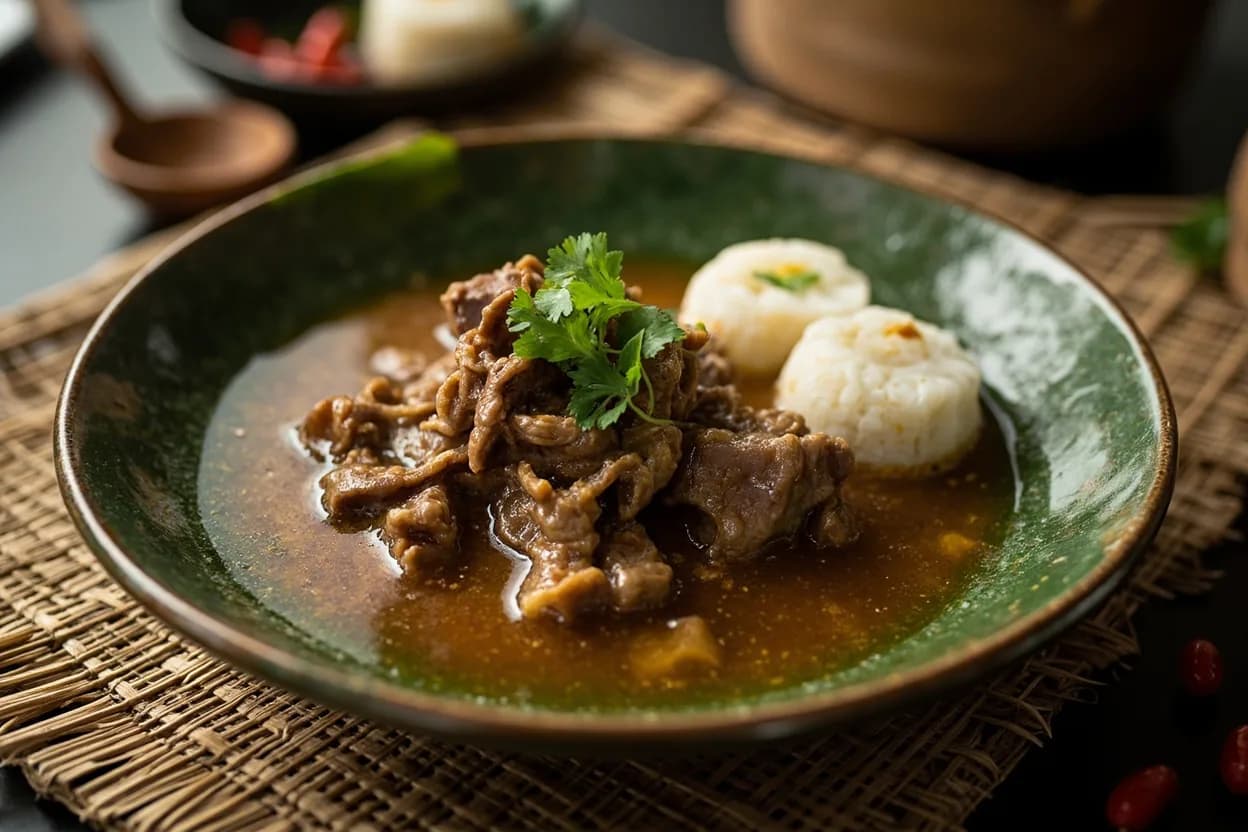
At the table
The padang meal is structured around nasi (steamed rice) surrounded by 3–8 simultaneously served small-portion dishes. In the formal restaurant model, every dish in the display is brought to the table; customers pay only for what they touch. At home, a Minang meal is similarly abundant — a wet curry, a dry protein, a vegetable stir-fry, and always sambal. Meals are communal and eating with the right hand is traditional.
History & context
The Minangkabau kingdom centered on Pagaruyung in the West Sumatran highlands is one of the oldest Malay polities, with roots going back to the 14th century. The cuisine's heat and spice intensity reflect both the rich agricultural ecology of the Bukit Barisan volcanic highlands (chiles, turmeric, galangal all grow locally) and centuries of Indian Ocean trade with Gujarati and Tamil Muslim merchants who reinforced the region's conversion to Islam and introduced curry-construction logic. The merantau migration tradition, embedded in adat law (customary code), has made the padang restaurant the most globally dispersed Indonesian food format — there are padang restaurants across the Netherlands, Malaysia, and Saudi Arabia. The word 'padang' technically refers to the capital city Padang, but has become synonymous with the cuisine internationally.
Regional variations
- Bukittinggi style
Higher altitude, slightly less coconut milk, stronger use of fresh green chiles; nasi kapau (Kapau village variant) uses more vegetables and sweetcorn.
- Pesisir (coastal) Padang
More seafood, especially ikan bakar with chili-tomato sambal and grilled whole fish with turmeric rub.
- Kerinci / Jambi border
Transitional zone with Jambi cooking; less coconut, more sour and herbal notes from jungle spices.
Related cuisines
Closely cognate: both share rendang, coconut-milk curries, and belacan — the Minangkabau are ethnically Malay and their cuisine is the most influential source of Malay cooking.
- Acehnese
Northern Sumatra neighbor; shares the intense spicing and Indian trade influence but has stronger Arab-curry elements and different chile profiles.
Peranakan cooking absorbed Minang spice vocabulary through the Straits trade; ayam buah keluak and laksa rempah share structural DNA.
Canonical recipes
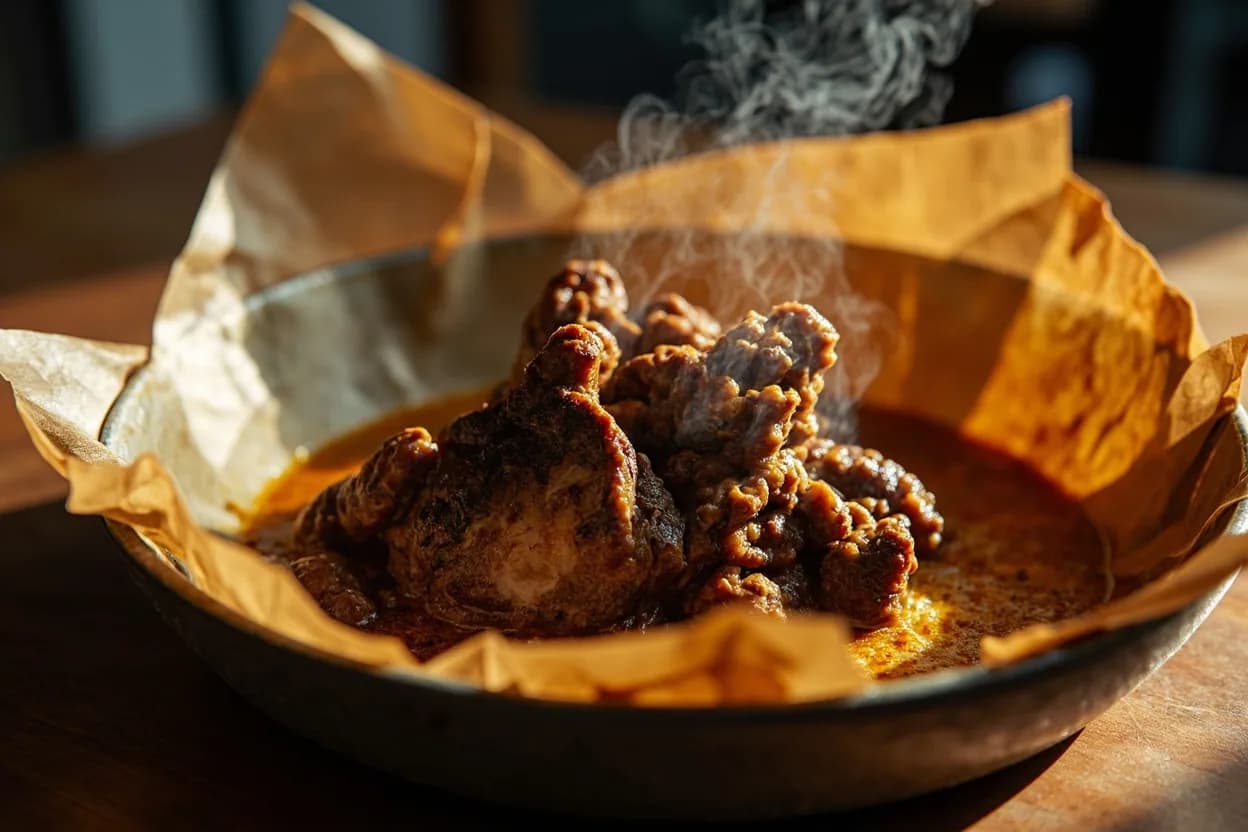
The dishes that define Minangkabau (Padang), documented in the Canon.
References
- 1.The Food of Indonesia — Murdoch Books Test Kitchen (Periplus, 2008)
- 2.Cradle of Gold: The History of Lode Gold Mining in the Minangkabau Highlands — noted in Wijaya, Sri Owen, Indonesian Food and Cookery (Prospect Books, 1986)
- 3.Indonesian Regional Cooking — Sri Owen (Frances Lincoln, 1994)
- 4.Padang Food — William Wongso (Gramedia, 2019)
- 5.Flavours of Indonesia — Sri Owen (Pavilion Books, 2012)
Confidence: high
Notes
Rendang: Minang vs. Malaysian claims
Rendang is claimed by both Minangkabau and Malaysian cuisine, and both claims are historically valid. The dish originated in the Minang highlands and migrated with Minang settlers to the Malay Peninsula, where it was adopted and adapted into Malaysian cuisine. The 2011 CNN travel poll naming rendang a 'fried food' caused international controversy because rendang is explicitly not fried — it is slow-braised until dry, which is the entire point.
The hidang system and food safety
Padang restaurants display cold dishes at room temperature for hours — a practice that raises food safety questions by modern standards but has functioned for centuries. The dishes are specifically formulated for stability: high salt, high coconut fat, and the antimicrobial properties of galangal, turmeric, and high-acid tamarind inhibit spoilage. Rendang in particular was historically made for long journeys precisely because it is shelf-stable.