Southeast Asia
Nyonya (Peranakan)
Also: Baba Nyonya cuisine, Straits Chinese cooking, Peranakan cuisine
The rich, spiced creole cuisine of the Straits Settlements, born where Hokkien Chinese merchants married Malay women and built a world all their own.
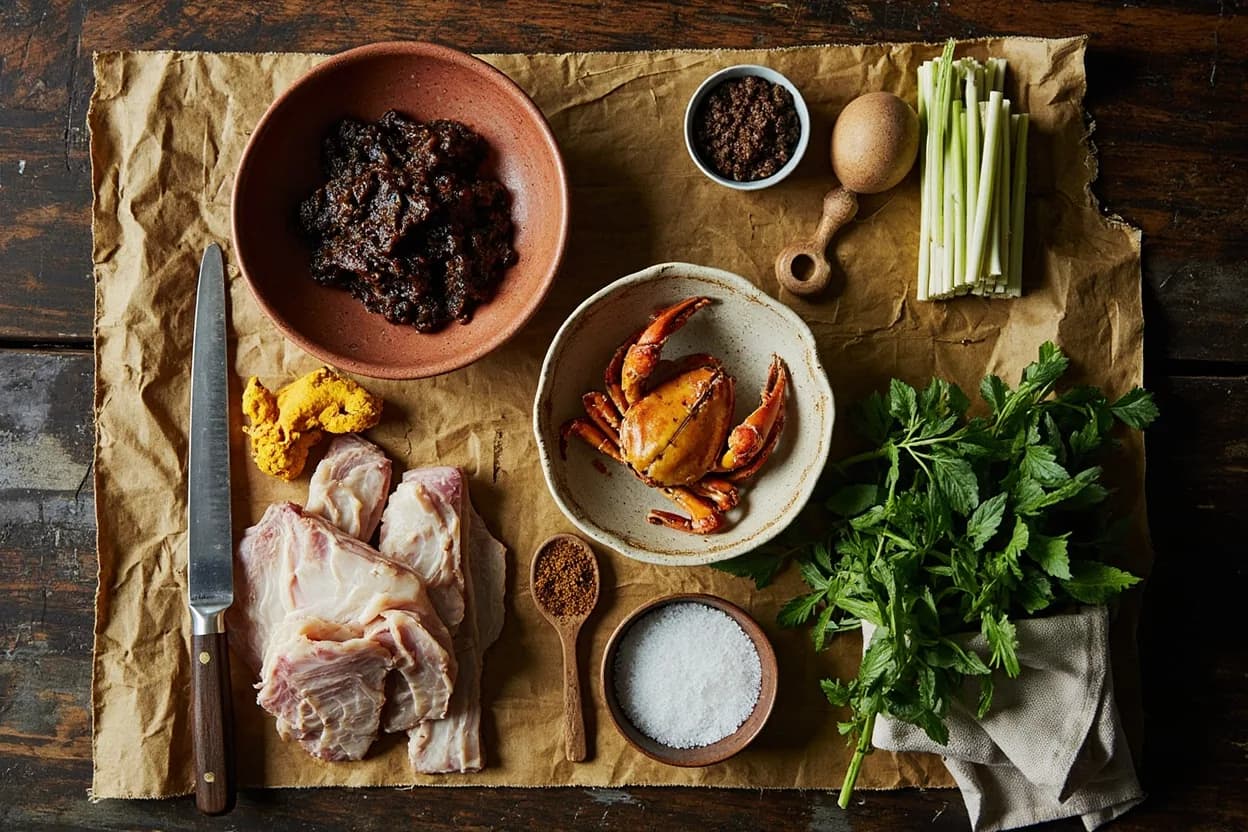
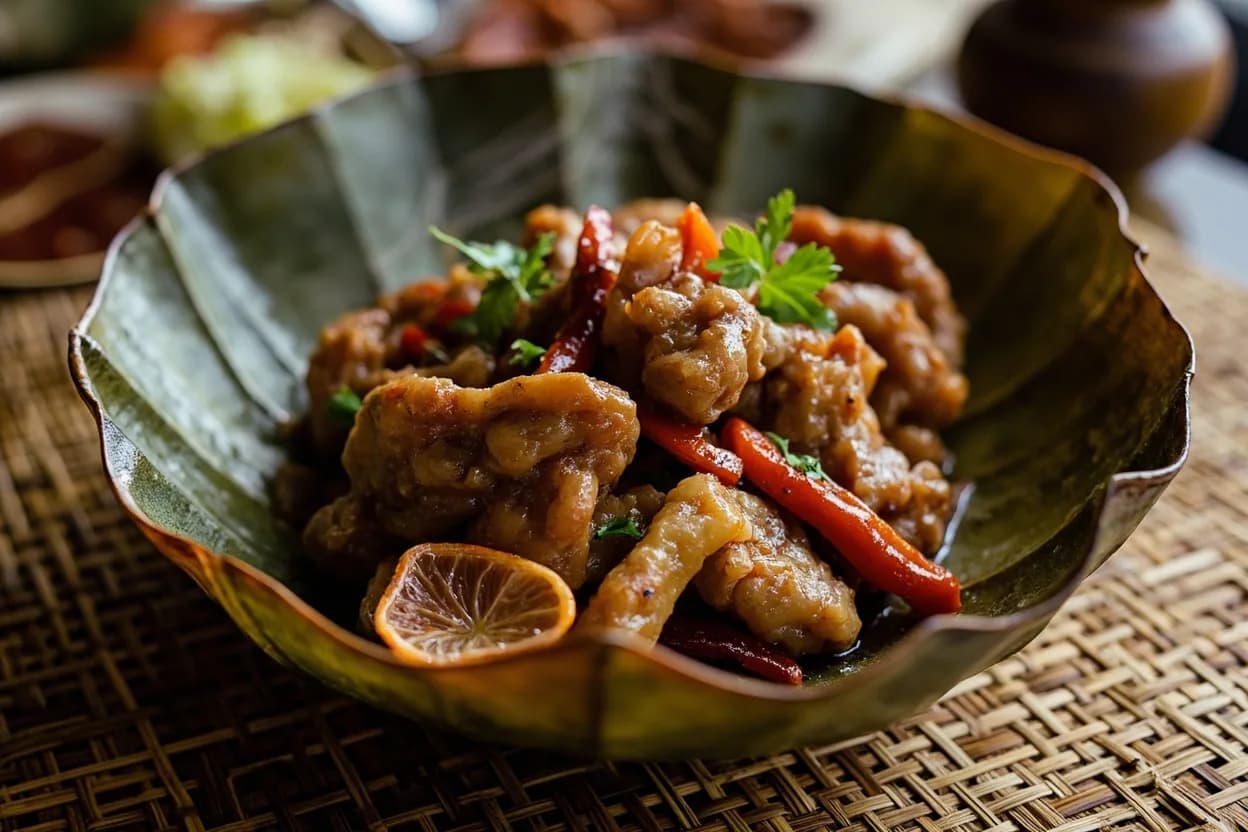
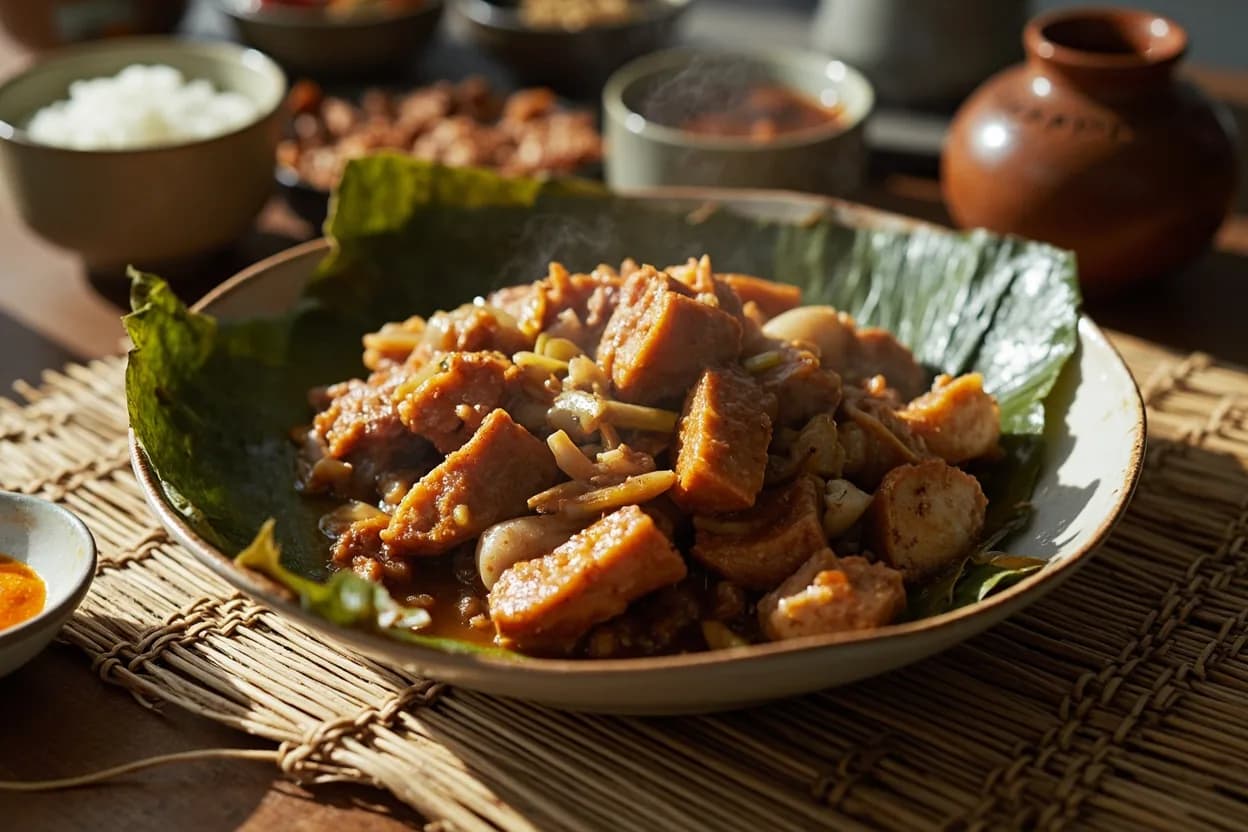
Nyonya (Peranakan) cuisine is the culinary expression of the Peranakan people — descendants of Chinese immigrants, predominantly Hokkien, who settled in Penang, Malacca, and Singapore from the 15th century onward and intermarried with local Malay and Indonesian populations. The cuisine fuses Hokkien-Chinese cooking techniques, preserved meats, and soy with the Malay spice pantry of galangal, lemongrass, belacan (shrimp paste), fresh chiles, and coconut milk. The result is extraordinarily layered: rempah spice pastes ground by hand are the soul of the cuisine, cooked down slowly before wet ingredients are added. Flavor is simultaneously rich and bright — fat coconut curries cut with tamarind, pork braised in fermented soybean sauce with candlenuts. The cuisine is also one of the great confectionery traditions of Asia, producing intricate kueh layer cakes dyed and steamed in ceremonial molds.
The flavour base
Rempah — a hand-ground wet spice paste of shallots, garlic, fresh turmeric, galangal, lemongrass, and dried chiles, fried in oil until fragrant and oil-breaking (tumis).
Pantry staples
Key ingredients
Signature techniques
Signature dishes
Nyonya (Peranakan) on the table
At the table
Traditional Nyonya meals follow a Chinese family-style format: rice at the center, surrounded by shared dishes — a curry, a dry stir-fry, a soup, and pickles. The Peranakan table is formally set; hospitality is inseparable from abundance. Kueh (sweet and savory snacks) are served separately and represent an entire parallel culinary universe tied to weddings, funerals, and festivals.
History & context
The Peranakan identity emerged from the 15th century onward as Chinese traders settled in the ports of the Malay world — particularly after the founding of Malacca around 1400. The men (Baba) adopted Malay dress and language while retaining Chinese ancestral rites; their wives (Nyonya), often of mixed Malay descent, became the custodians of a hybrid kitchen that absorbed Malay, Portuguese, Dutch, and later British colonial influences. By the 19th century, Peranakans in the Straits Settlements held considerable economic power as middlemen between Chinese coolies and European merchants, and their cuisine acquired a reputation for elaborate labor-intensity as a marker of status. The cuisine nearly vanished after WWII and the social upheavals of independence but was revived from the 1980s onward, driven by Peranakan cultural associations, heritage conservation, and a wave of Singapore food writing.
Regional variations
- Penang (Northern)
Spicier and more pungent than Singapore style; heavier use of tamarind and assam; Penang laksa is sour fish-based, not coconut.
- Malacca
Considered the cultural heartland of Peranakan identity; cuisine is slightly sweeter, with stronger Portuguese overlay (influence of the 16th-century colonial period).
- Singapore (Southern)
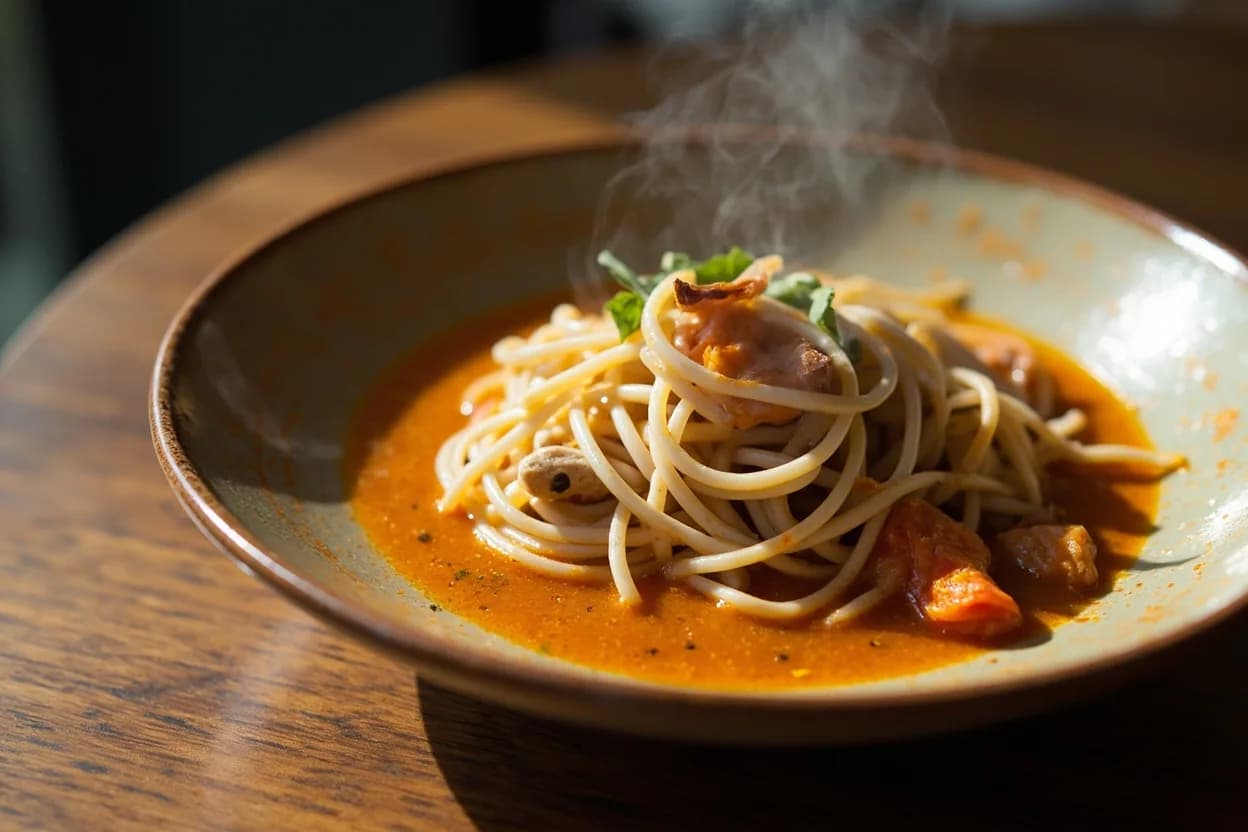
Richest and most coconut-forward; laksa lemak here is the canonical coconut prawn version; more hokkien pork lard influence.
- Jawi Peranakan (Penang)
Muslim Peranakans of Indian-Malay descent with a distinct hybrid cuisine omitting pork but sharing the rempah foundation.
Related cuisines
Parent spice vocabulary — belacan, lemongrass, galangal, coconut milk — is directly shared.
- Hokkien (Fujian)
The Chinese ancestral strain: braised pork techniques, soy, fermented bean pastes, and pork-centric proteins.
Shares buah keluak, sambal belacan, and banana-leaf cooking methods through the wider Austronesian spice world.
Canonical recipes
The dishes that define Nyonya (Peranakan), documented in the Canon.
References
- 1.The Nyonya Cookbook — Cecilia Tan (Times Books International, 1983)
- 2.A Nyonya Mosaic — Carol Tan Koh (Federal Publications, 1985)
- 3.Authentic Nyonya Recipes — Violet Oon (Marshall Cavendish, 2004)
- 4.The Food of Singapore — Violet Oon, Ghillie Basan (Periplus, 2000)
- 5.Peranakan: The Straits Chinese — Asian Civilisations Museum (NUS Press, 2012)
Confidence: high
Notes
Buah keluak: a singular ingredient
Buah keluak (Pangium edule) is a large black nut from the kepayang tree, indigenous to the mangrove swamps of Southeast Asia. Raw kernels are toxic (prussic acid); they are detoxified through a weeks-long fermentation in ash and water. The resulting black, intensely earthy paste — dug out and seasoned, then stuffed back into the shell — has no substitute and is the flavor signature of ayam buah keluak. Importing the nuts outside Southeast Asia is difficult, making the dish a touchstone of Peranakan foodways.
Rempah and the labor question
Pre-ground spice pastes in packets are available across Singapore and Malaysia, but Peranakan cooks insist the texture and oil-release of hand-ground rempah on granite is irreplaceable. This argument is not merely nostalgic — the granite mortar generates heat through friction that activates volatile aromatics differently than a blender blade.