Southeast Asia
Malay
Also: Masakan Melayu, Malaysian Malay cooking, Nusantara Malay cuisine
Coconut-and-spice cooking rooted in the Malay Archipelago, where belacan shrimp paste, lemongrass, and slow-cooked rendang define a cuisine that spread trade winds across the Indian Ocean world.
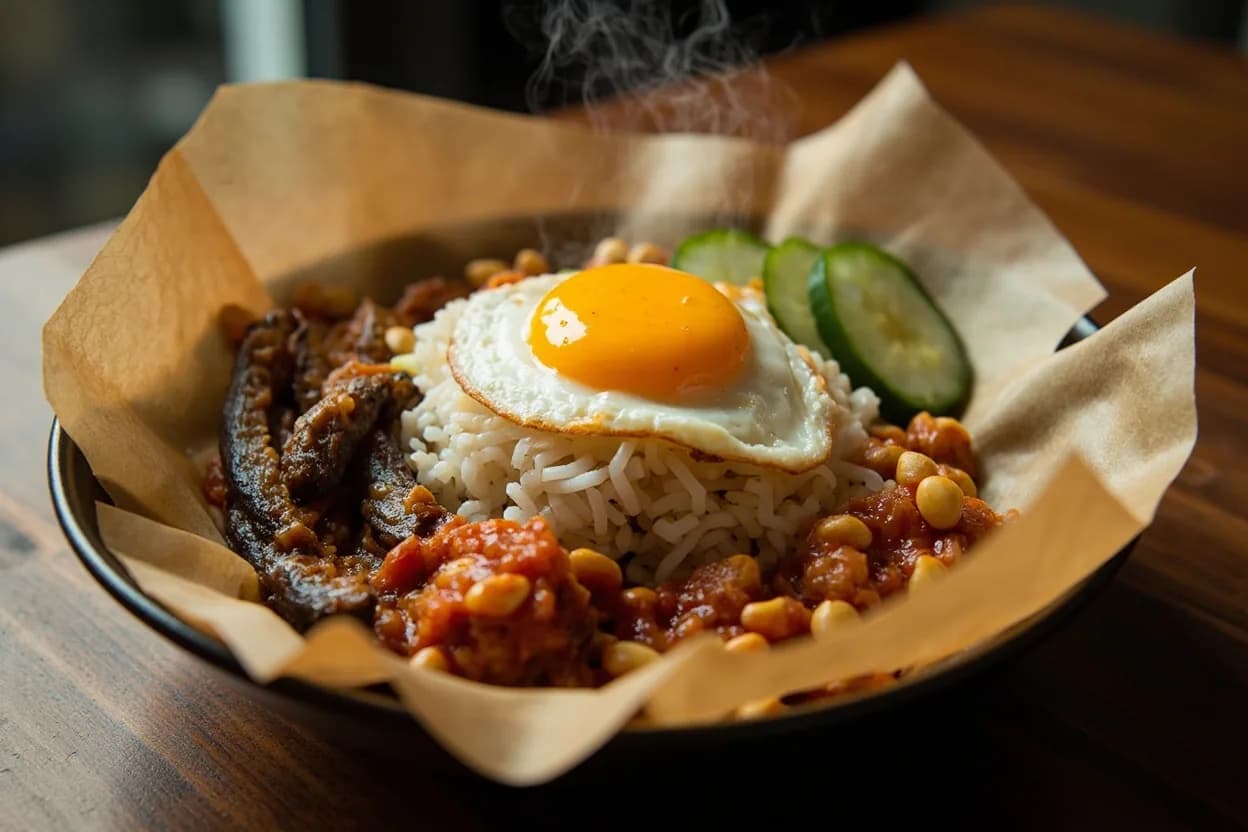
Malay cuisine is the indigenous culinary tradition of the Malay people — the dominant ethnic group of Malaysia, Brunei, southern Thailand, Singapore, and the coastal regions of Sumatra and Borneo. It is built on the Austronesian agricultural foundation of rice, coconut, and fish, layered with spices from centuries of Indian Ocean trade and Islamicized dietary law (halal, no pork). The cuisine's grammar relies on three elements working in concert: rempah (ground spice paste), coconut milk (santan), and belacan (fermented shrimp paste). Dishes range from the ceremonial richness of rendang — often described as the world's most complex dry curry — to the everyday simplicity of nasi lemak (rice cooked in coconut milk, anchovy sambal, cucumber, and a fried egg). Spice palates lean toward galangal, lemongrass, turmeric, and dried chiles rather than the pepper-and-cardamom profile of South Asian curries.
The flavour base
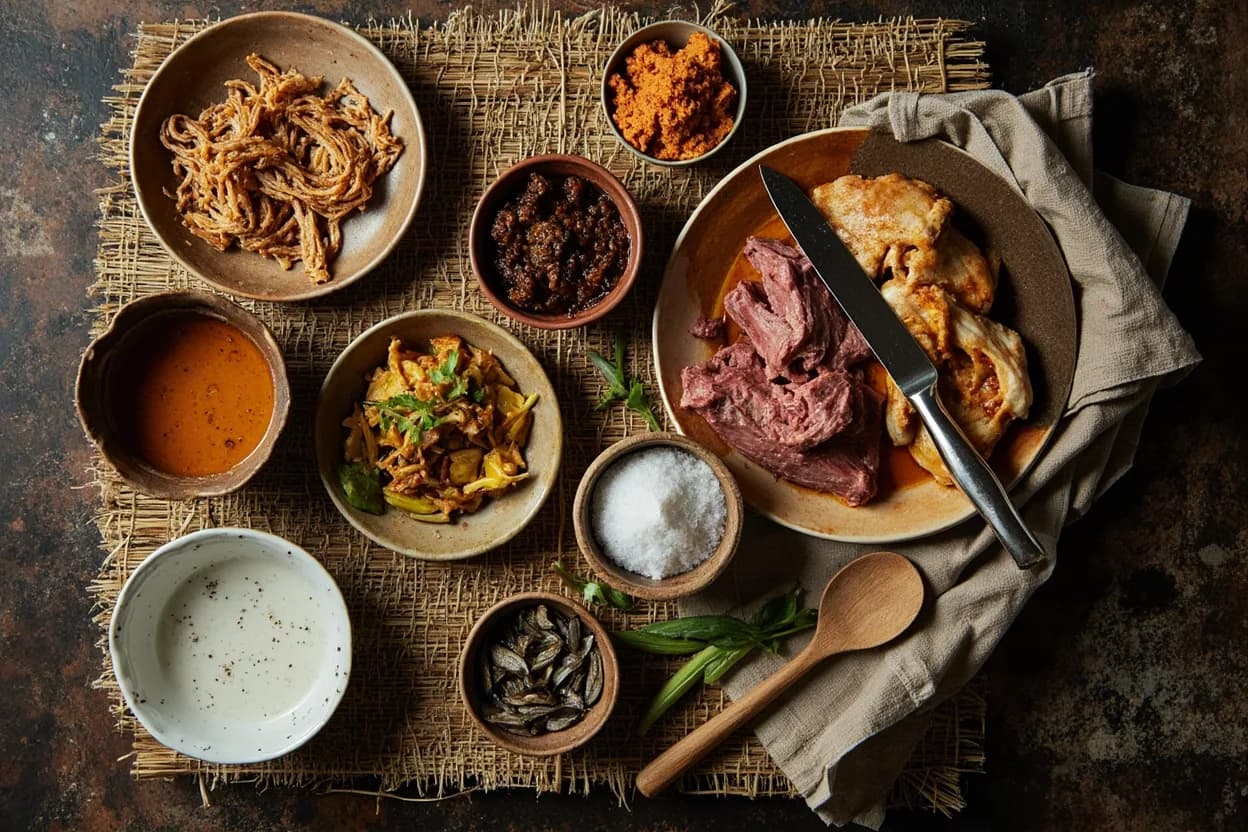
Rempah built from shallots, garlic, fresh chiles, lemongrass, galangal, and dried shrimp paste (belacan), fried in oil until fragrant before coconut milk is added.
Pantry staples
Key ingredients
Signature techniques
Signature dishes
Malay on the table
At the table
The core Malay meal is nasi (rice) at the table's center with a gravy dish (lauk berkuah), a dry dish (lauk kering), a vegetable preparation, and sambal. Eating is communal and often done with the right hand. Kenduri (feasts) for weddings and religious celebrations feature elaborate kuih (sweets) and whole-roasted meats. Ramadan generates its own sub-tradition: bazaar Ramadan stalls selling lamb biryani, kurma, and bubur lambuk (spiced rice porridge).
History & context
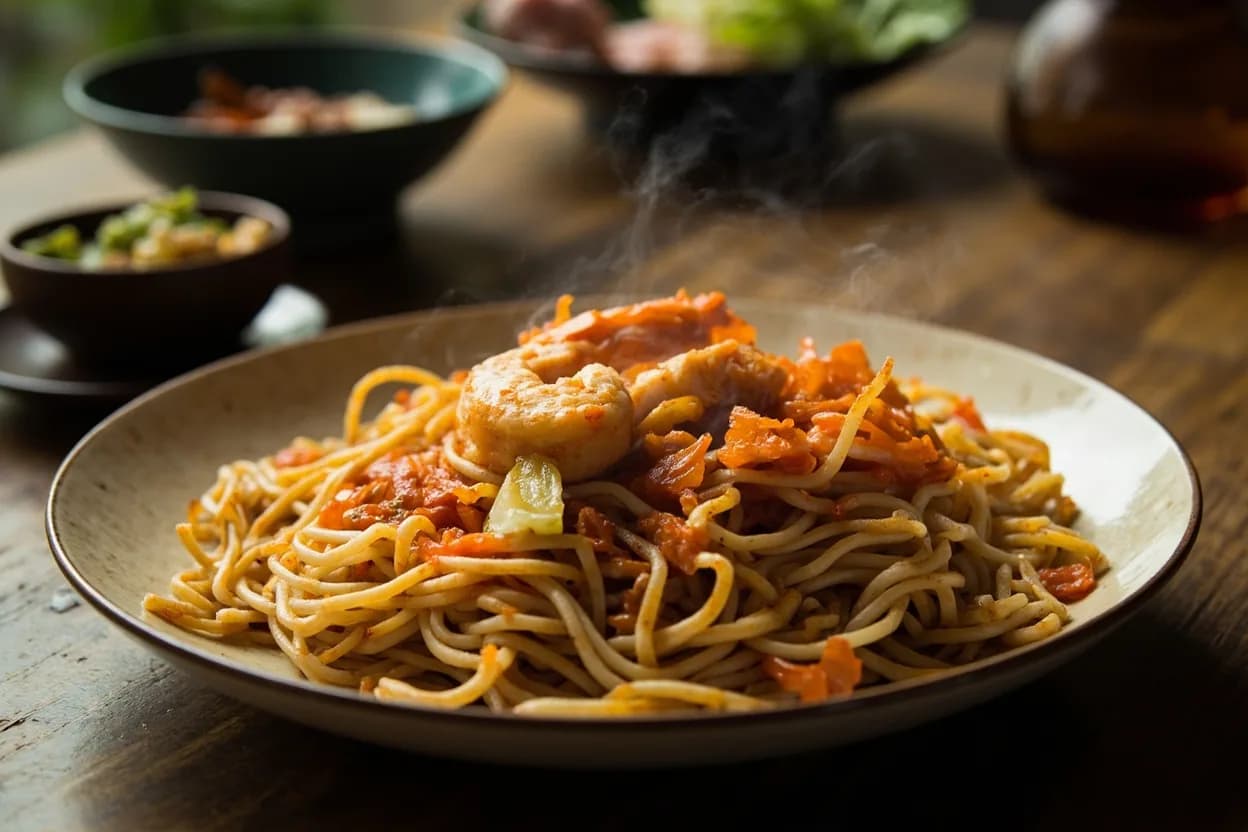
The Malay kitchen sits at one of history's great spice-trade crossroads. The founding of Malacca around 1400 made it the entrepôt of the known world, drawing Arab, Indian Gujarati, Javanese, Siamese, and Chinese merchants whose culinary ideas braided into the local tradition. Indian Muslim traders (later called Mamak) introduced biryani, curry leaves, and dhal, which were absorbed so thoroughly that dishes like roti canai and mee goreng mamak are now claimed as quintessentially Malay street food. British colonial administration (from 1786) added another layer without displacing the core. Post-independence (1957 Malaysia, 1965 Singapore), Malay cuisine became politically and culturally contested as national food policy in Malaysia and Singapore attempted to brand and standardize dishes like nasi lemak and rendang.
Regional variations
- Kelantanese (East Coast Malaysia)
Lighter use of coconut milk, stronger use of fresh herbs and tamarind; the nasi kerabu blue-rice salad is iconic.
- Terengganu
Noted for keropok lekor (fish sausage) and nasi dagang (rice cooked in coconut milk with coconut flakes, served with fish curry).
- Johor (southern Malaysia)
Closer influence of Javanese and Riau Malay cooking; mee rebus and lontong are popular.
- Sarawak and Sabah (Borneo)
Indigenous Dayak and Kadazan elements merge with Malay cooking; bamboo-cooked meats and freshwater fish are prominent.
Related cuisines
Shares the entire spice vocabulary; Peranakan cuisine is the Chinese-Malay creole formed from this base.
The Minang of West Sumatra are ethnically Malay; rendang and many padang dishes are cognate with Malay classics.
- Indonesian (general)
The broader Indonesian archipelago shares coconut, belacan, rempah, and sambal foundations — borders between 'Malay' and 'Indonesian' cooking are fluid.
- Thai Southern
Southern Thailand's Muslim Malay population means significant overlap in coconut curries, sambal, and rice preparations.
Canonical recipes
The dishes that define Malay, documented in the Canon.
References
- 1.The Complete Asian Cookbook — Charmaine Solomon (Tuttle Publishing, 2011)
- 2.Malay Cooking — Wendy Hutton (Periplus, 2003)
- 3.Malaysian Food — Betty Saw (Times Books International, 1986)
- 4.Cradle of Flavours — Norman Musa (Pavilion Books, 2007)
- 5.The Malay Kitchen — Carol Selva Rajah (Marshall Cavendish, 2008)
Confidence: high
Notes
Rendang and the 'dry curry' question
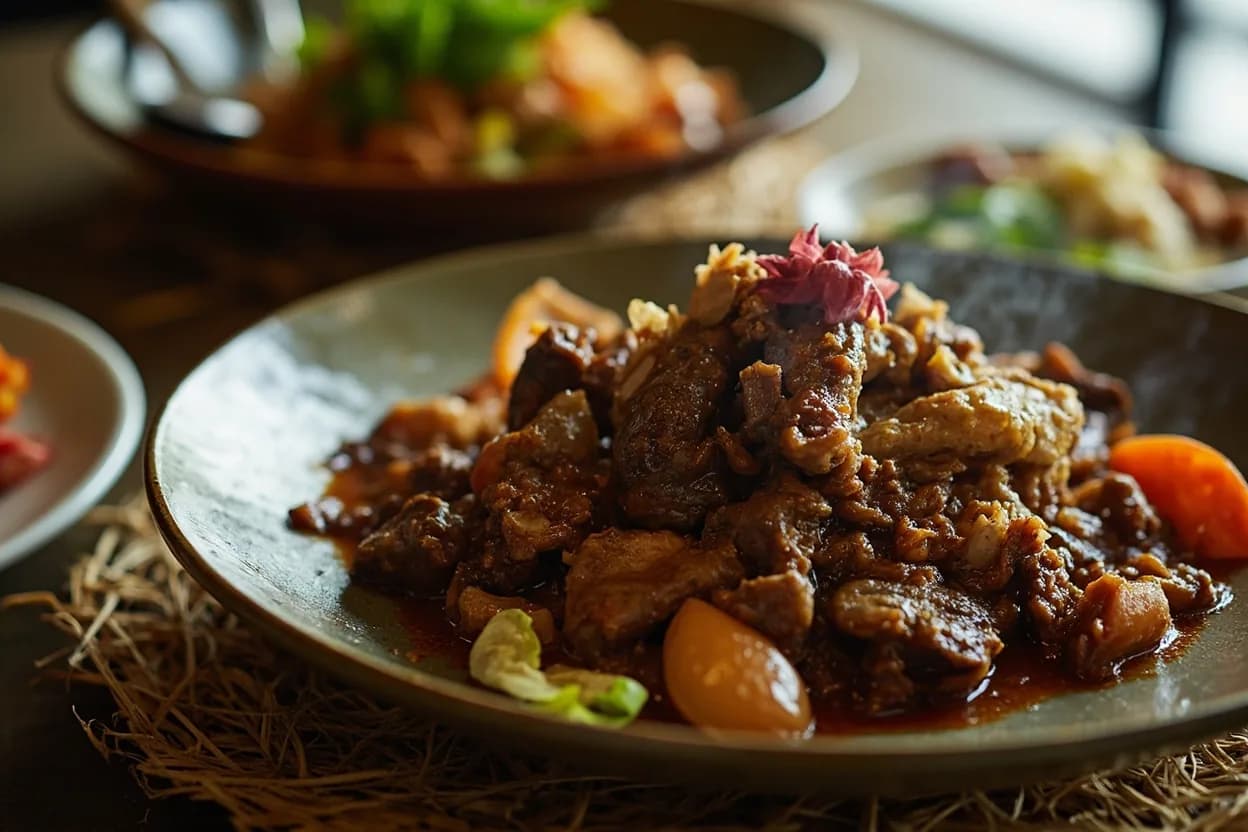
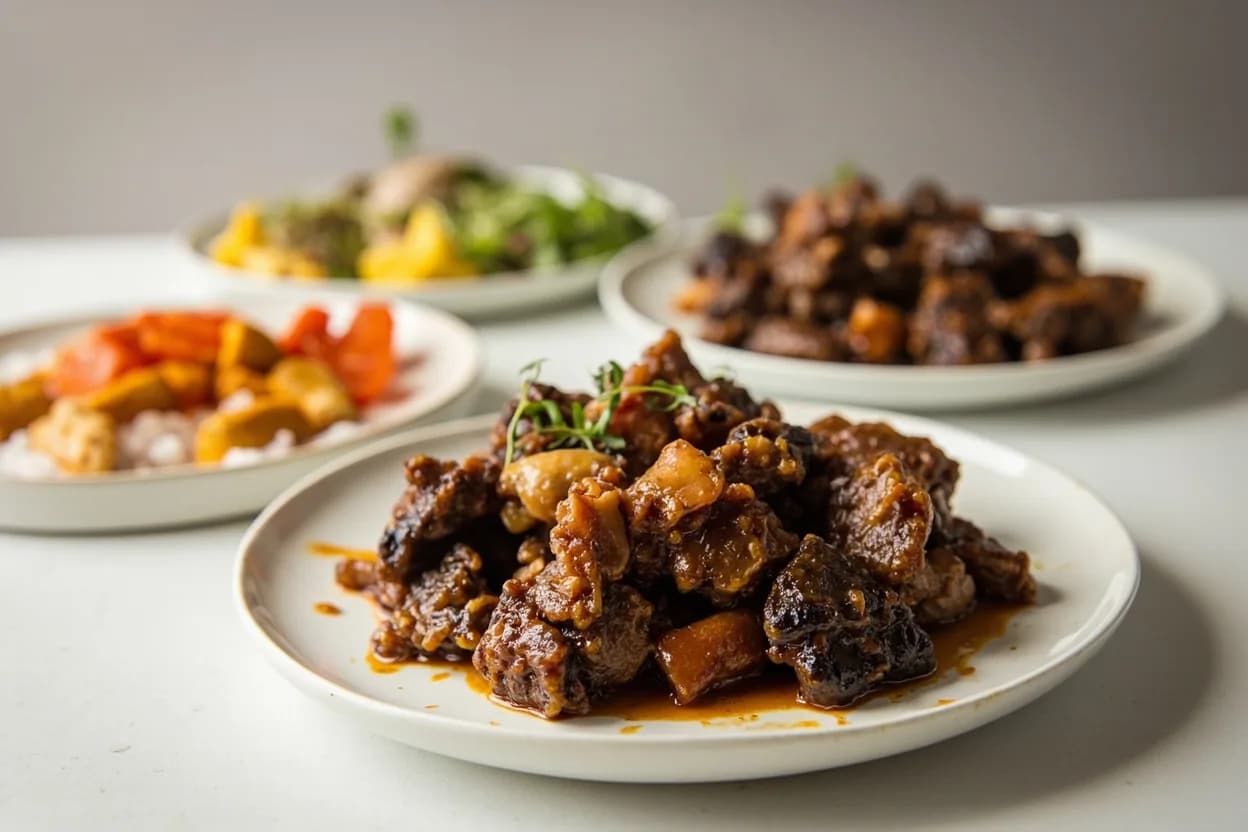
Rendang is frequently misclassified as a curry. It begins as one — beef simmered in spiced coconut milk — but the defining act is the kalio-to-rendang transition: all liquid is cooked off over two to four hours until the coconut solids caramelize and coat the meat in a dark, almost crumbling spice crust. The result is shelf-stable at room temperature for days, making it historically a travel and warfare provision.
Sambal as a culinary system
Sambal is not a single condiment but a category: dozens of named varieties exist, differentiated by base (fresh vs. dried chile), souring agent (lime, tamarind, belimbing), protein addition (anchovies, shrimp, cockles), and form (raw vs. cooked). Sambal belacan — raw pounded chiles with roasted shrimp paste — is the baseline condiment present at virtually every Malay table.