Southeast Asia
Malaysian Chinese (Nyonya / Hokkien)
Also: Peranakan cuisine, Straits Chinese cuisine, Nyonya cooking, Penang Chinese food, Baba-Nyonya cuisine
The creolized cooking of Straits Chinese settlers in Penang and Ipoh — Hokkien technique transformed by Malay spices, producing some of Southeast Asia's most complex dishes.
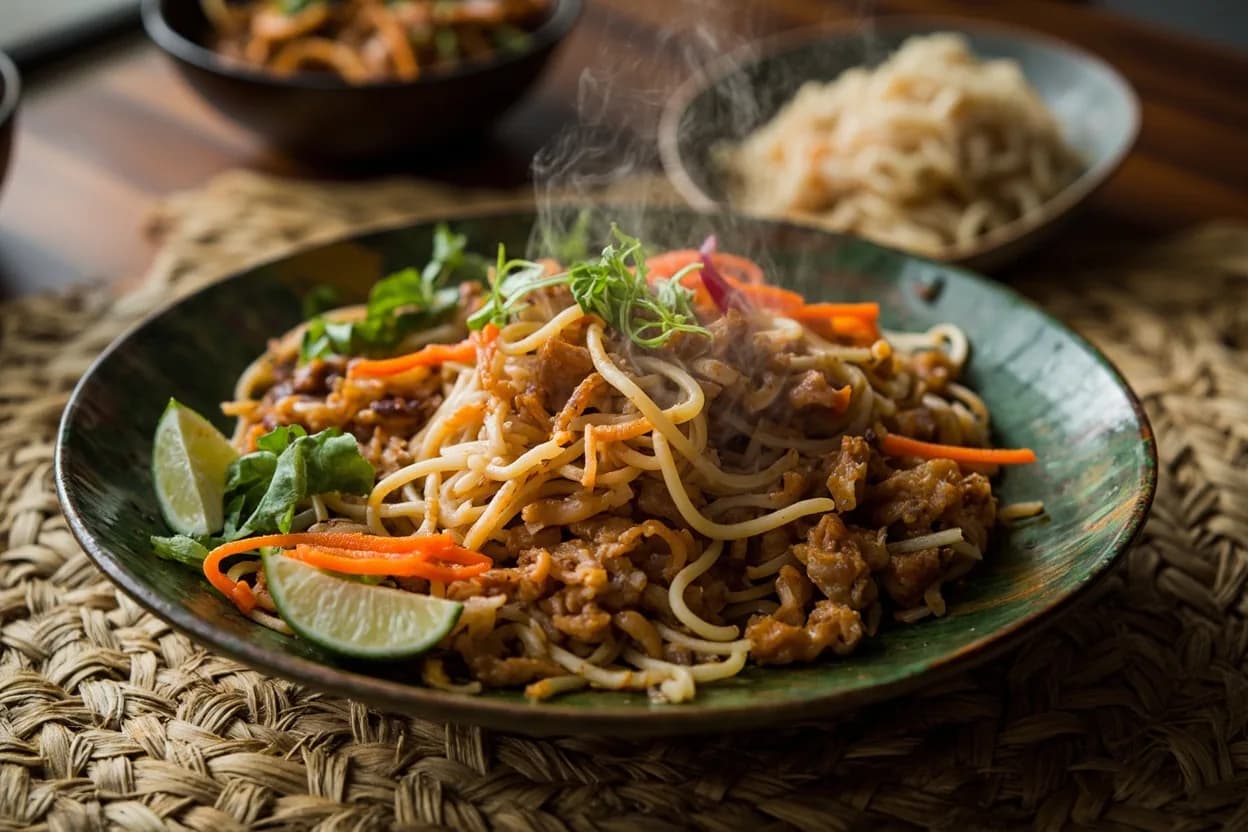
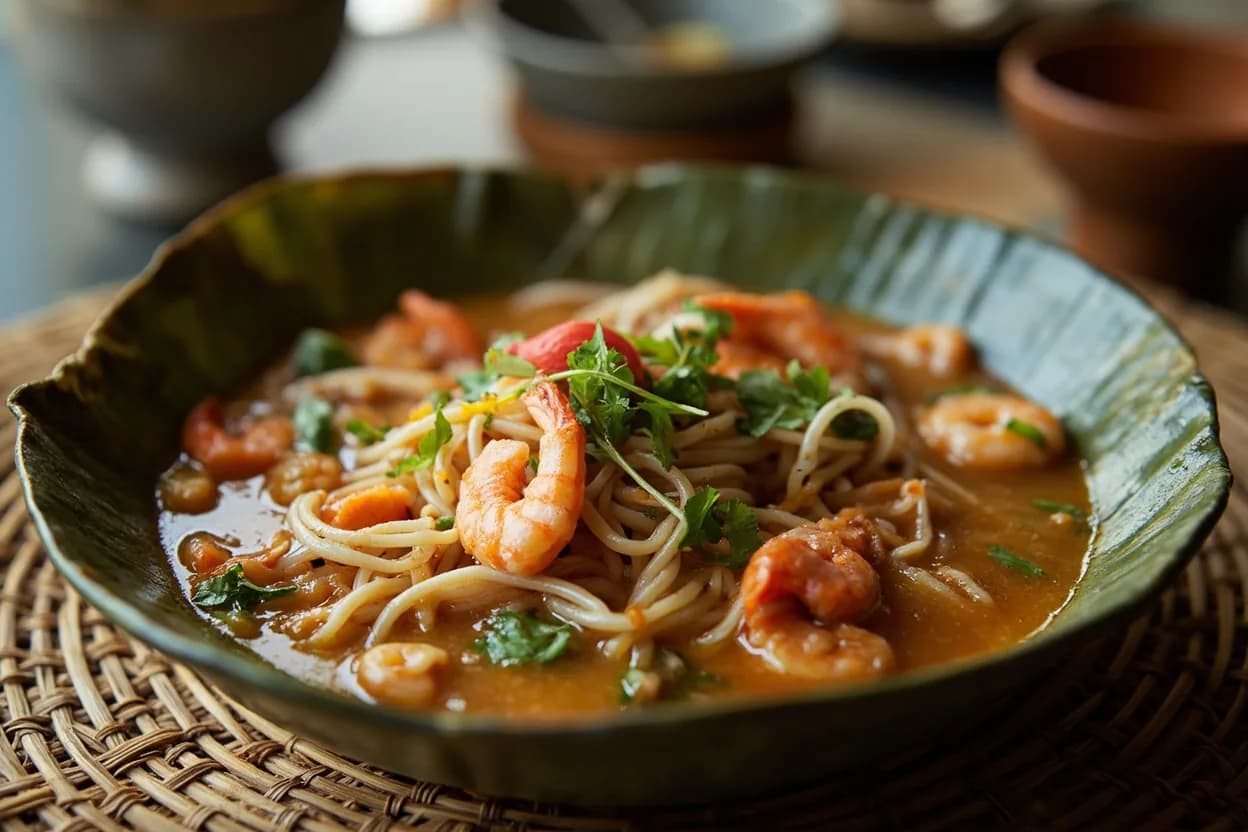
Malaysian Chinese cooking in the northwest — particularly in Penang and Ipoh — represents two intertwined but distinct traditions. Nyonya (Peranakan) cuisine is the cooking developed by Straits-born Chinese descended from Hokkien migrants who settled in Penang, Melaka, and Singapore from the 15th century onward; they adopted Malay spicing, local ingredients, and cooking methods while retaining Chinese structural logic (braising, wok technique, fermentation). Hokkien hawker cooking in Penang and Ipoh is related but more purely derived from Fujian province China — Penang hokkien mee (prawn bisque noodle soup), char kway teow, and Penang laksa are canonical Hokkien adaptations that diverge sharply from their Singapore cousins.
The flavour base
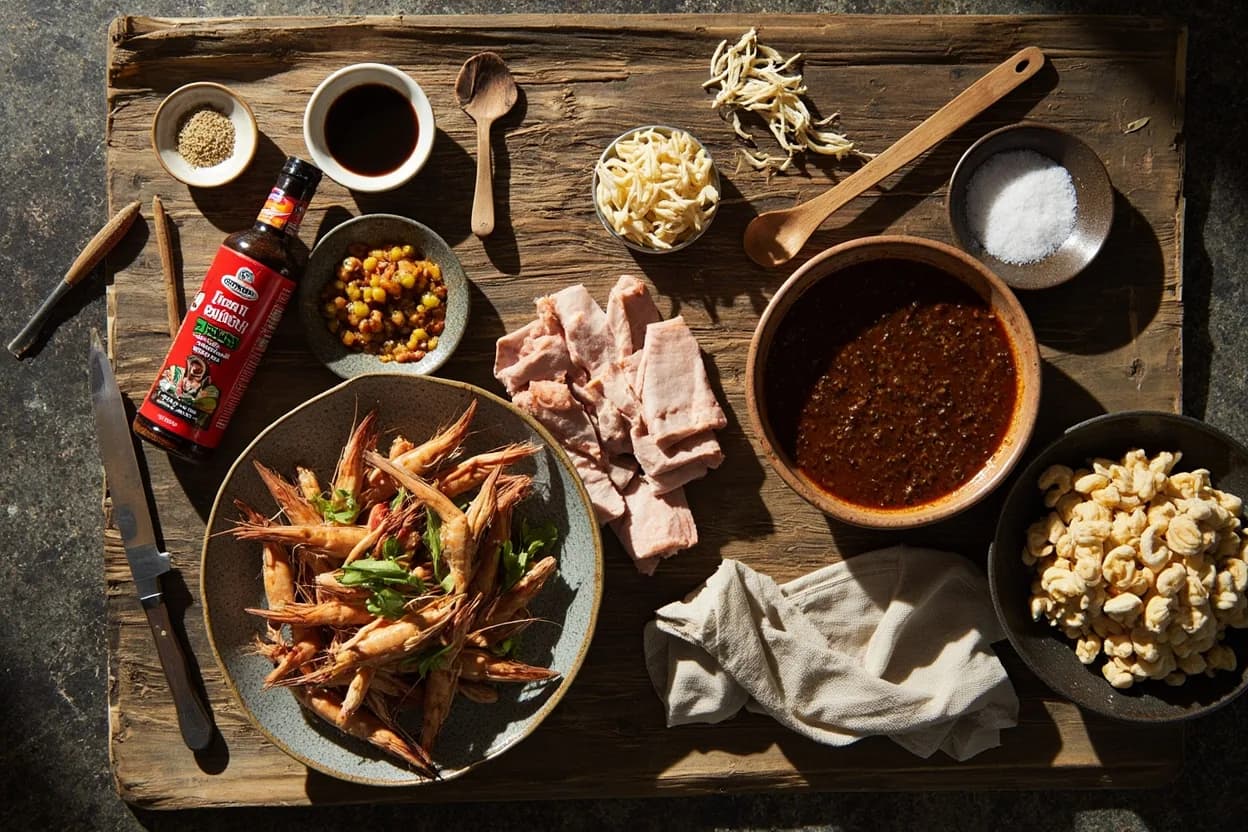
Rempah (blended paste of shallots, lemongrass, galangal, fresh turmeric, belachan, and dried chili) fried in lard until fragrant, then built with coconut milk or tamarind water — this is Nyonya's base. For Hokkien hawker dishes: prawn bisque stock, lard, and dark soy anchor most preparations.
Pantry staples
Key ingredients
Signature techniques
Signature dishes
Malaysian Chinese (Nyonya / Hokkien) on the table
At the table
Nyonya home meals are rice-centered and communal: rice with multiple shared dishes (ulam, sambal, braised proteins, soupy vegetables). Elaborate Nyonya feasts (for weddings, festivals) can involve 12 or more dishes across hours. Hawker-style eating in Penang is informal and plate-by-plate at market stalls; breakfast dishes (congee, nasi lemak, char kway teow) are consumed outside the home by convention.
History & context
The Peranakan Chinese community formed when Hokkien and Teochew traders settled in the Malay ports of Melaka, Penang, and Singapore from roughly the 15th century onward, marrying into Malay and indigenous communities. The resulting Straits-Chinese (Baba-Nyonya) identity was neither fully Chinese nor fully Malay, and their cuisine expresses this: Chinese techniques and pork-centrism fused with Malay spice logic, local aromatics, and the use of coconut milk. Penang — founded as a British trading port by Francis Light in 1786 — attracted a second wave of Hokkien migration; the Hokkien hawker tradition that emerged there is distinct from Nyonya home cooking but shares the same Fujian ancestry. By the 20th century, Penang and Ipoh had become globally recognized as Malaysian food capitals, with Penang assam laksa regularly appearing on lists of the world's best dishes.
Regional variations
- Melaka Nyonya
The oldest and most Portuguese-influenced Peranakan community; Melaka Nyonya cooking is generally richer and less sour than Penang Nyonya, with more coconut milk and a stronger Portuguese-Dutch flavor inheritance (debal curry, feng).
- Penang Nyonya
More tamarind-forward and aromatic than Melaka; bunga kantan (torch ginger flower) is heavily used; Penang assam laksa is the defining dish — tamarind-sour mackerel soup with rice noodles, never coconut.
- Ipoh Chinese
Ipoh's softer, sweeter groundwater produces distinctively tender beansprouts; Ipoh-style har cheong kai (prawn paste chicken), kai si hor fun (chicken noodle soup), and the creamier Ipoh white curry are celebrated regionally.
- Singapore Peranakan
More coconut-milk-forward than Penang; laksa lemak (curry laksa with coconut milk) rather than assam laksa is the Peranakan laksa of Singapore; buah keluak (black nut from Indonesia) is used in Singapore-Nyonya cooking but rarely in Penang.
Related cuisines
Rempah technique, belachan, coconut milk, and local aromatics were absorbed from Malay cooking by Straits Chinese settlers over centuries.
- Hokkien Chinese
The foundational Chinese culinary source — Fujian province wok technique, soy sauce usage, and noodle culture.
Overlapping Hokkien hawker tradition; Penang and Singapore versions of the same dishes have diverged distinctly.
- Indonesian Peranakan
Peranakan communities in Semarang and Surabaya developed parallel hybrid traditions with more Javanese spice influence.
Canonical recipes
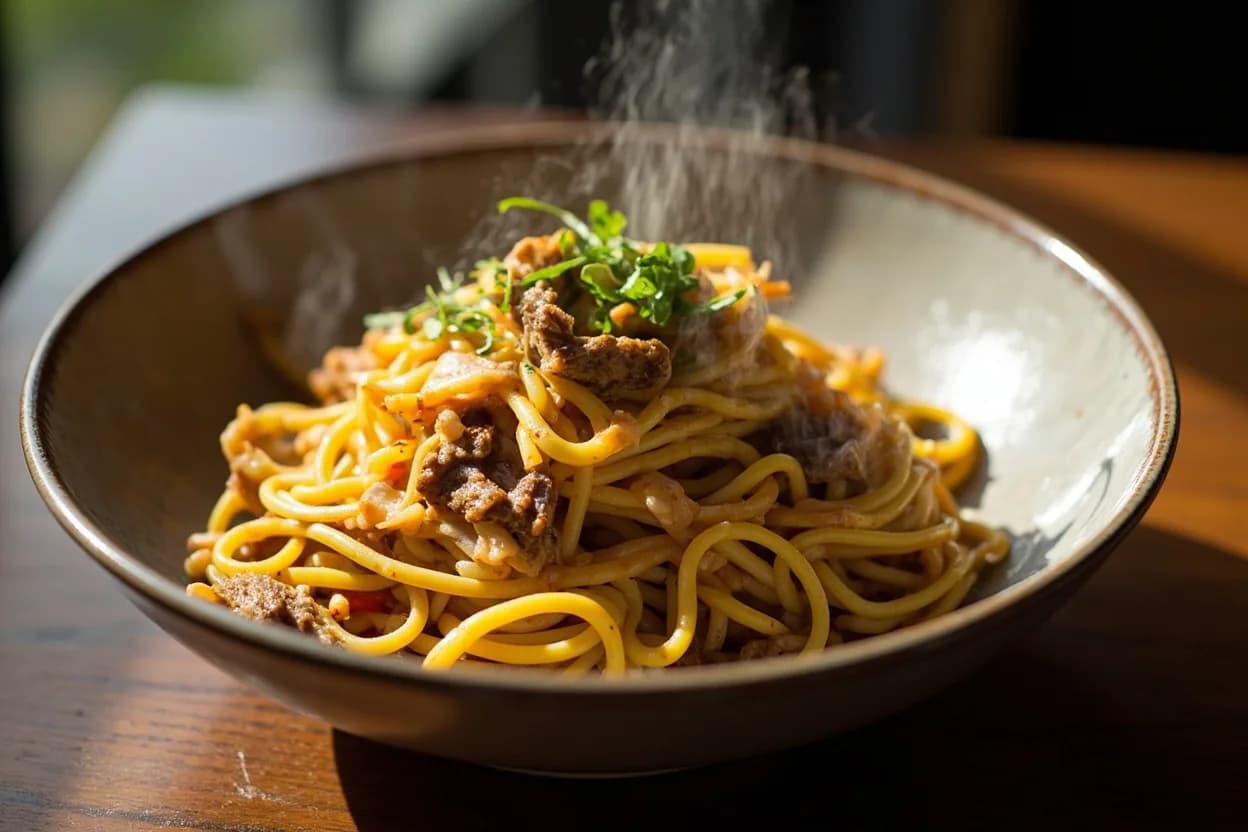
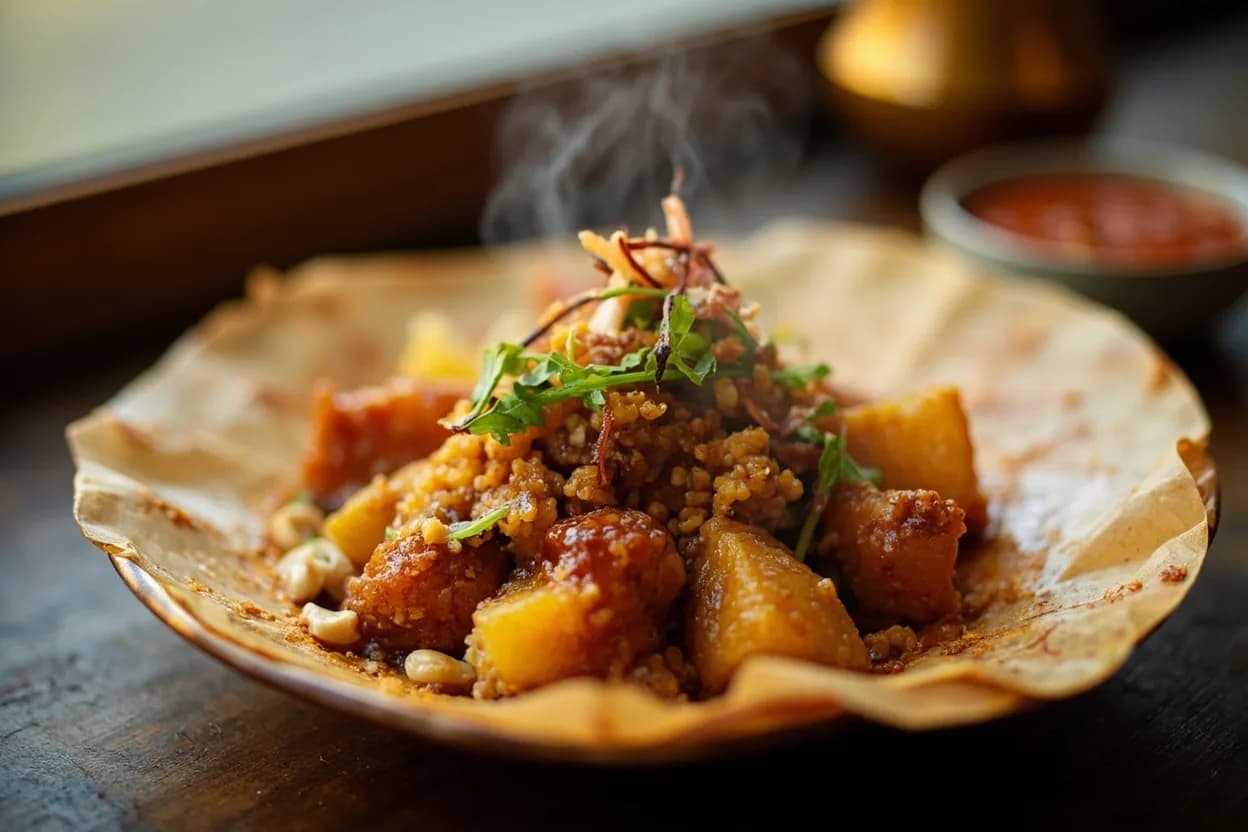
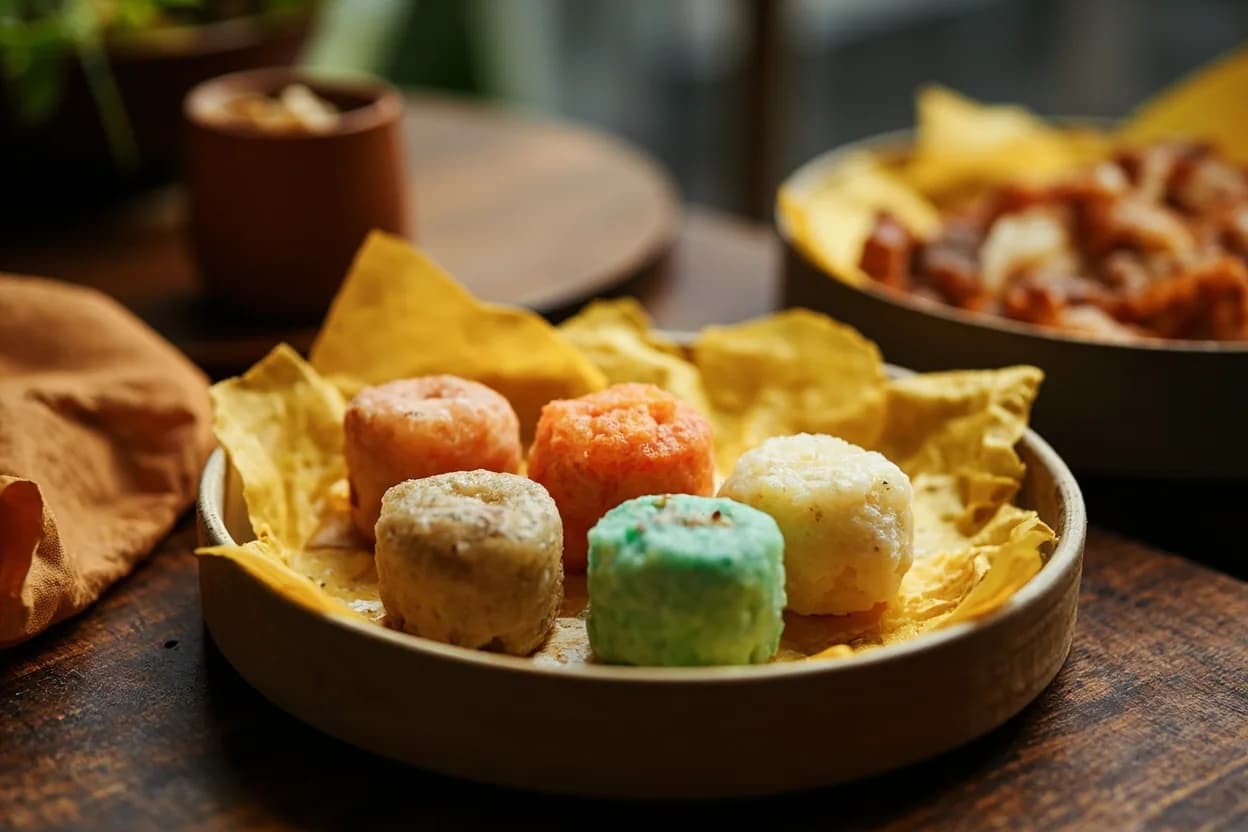
The dishes that define Malaysian Chinese (Nyonya / Hokkien), documented in the Canon.
References
- 1.The Nyonya Kitchen — Elizabeth Goh
- 2.Penang Heritage Food — Khoo Salma Nasution & Malcolm Wade
- 3.The Food of Malaysia — Wendy Hutton
- 4.The Little Nyonya Cookbook — Philip Chia
Confidence: high
Notes
Penang assam laksa vs. curry laksa
The two flagship laksas of Malaysia are categorically different dishes that happen to share a name and a noodle. Penang assam laksa is a tamarind-sour mackerel soup with no coconut milk, topped with pineapple, cucumber, onion, mint, and bunga kantan — one of the most complex sour-fish broths in world cooking. Curry laksa (or laksa lemak) is a coconut-curry soup. Confusing them is a reliable marker of unfamiliarity with the tradition.
Lard as a defining ingredient
Lard (babi lemak) is foundational to Penang Hokkien hawker cooking — char kway teow cooked without lard and with crisp pork lard bits omitted is considered a lesser product. The shift toward vegetable oil in modern hawker stalls for health or halal reasons is widely credited with degrading the quality of several classic dishes.