South Asia
Maldivian (Dried Tuna Cuisine)
Also: Dhivehi cuisine, Maldivian cuisine, Maldive fish cooking
A coral-atoll cuisine defined by one transformative ingredient — Maldive fish, the sun-dried skipjack tuna that seasons everything from breakfast coconut salads to Sri Lankan curries across the Indian Ocean.
Maldivian cuisine is the cooking of the 1,200-island archipelago scattered across the central Indian Ocean, home to roughly 500,000 Divehi-speaking people. The cuisine is shaped by three overwhelming geographic facts: the near-total absence of arable land, an ocean of extraordinary richness, and isolation that made preservation not a preference but a necessity. Dried and smoked skipjack tuna — rihaakuru in its darkest reduced form, Maldive fish in its hard-dried export form — is to the Maldives what fish sauce is to Southeast Asia: the universal umami substrate. Coconut (grated, milked, and as toddy) and rice complete the holy trinity. The cuisine is intensely savory and aromatic, built around tuna, chili, curry leaf, and pandan, with Sri Lankan and Arab trade influence woven through centuries of contact.
The flavour base
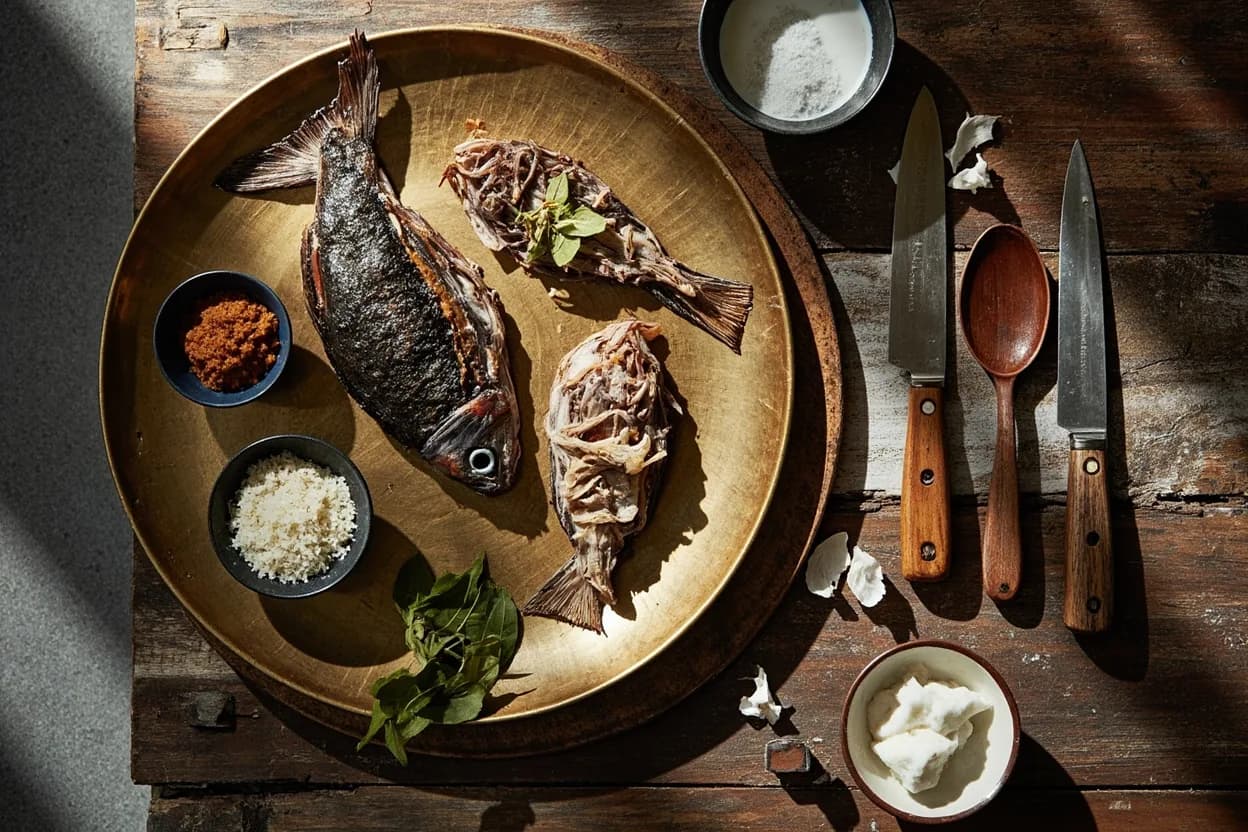
Maldive fish (compressed, sun-dried skipjack tuna) provides deep, fermented-savory umami; fresh and desiccated coconut supplies richness; curry leaves, pandan (rampe), and fenugreek seed form the aromatic base; fresh and dried chilies bring heat.
Pantry staples
Key ingredients
Signature techniques
Signature dishes
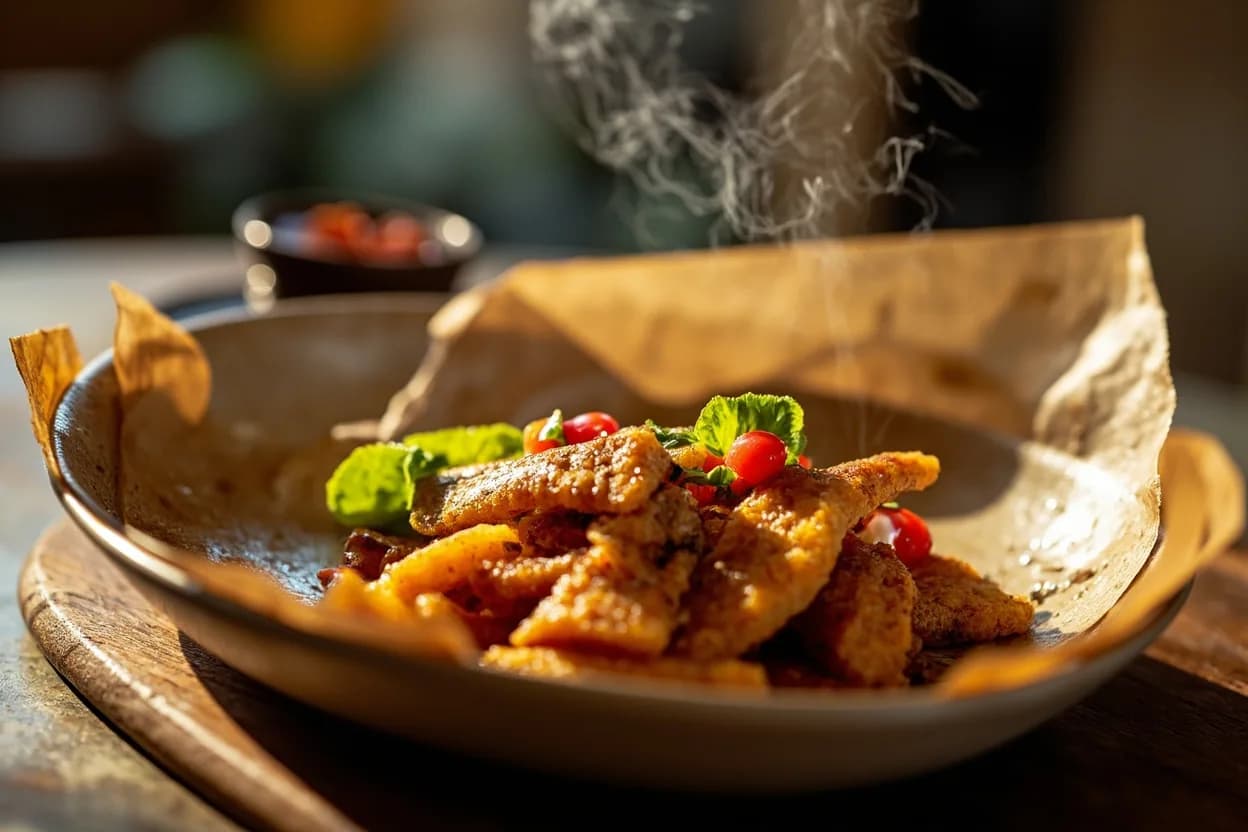
Maldivian (Dried Tuna Cuisine) on the table
At the table
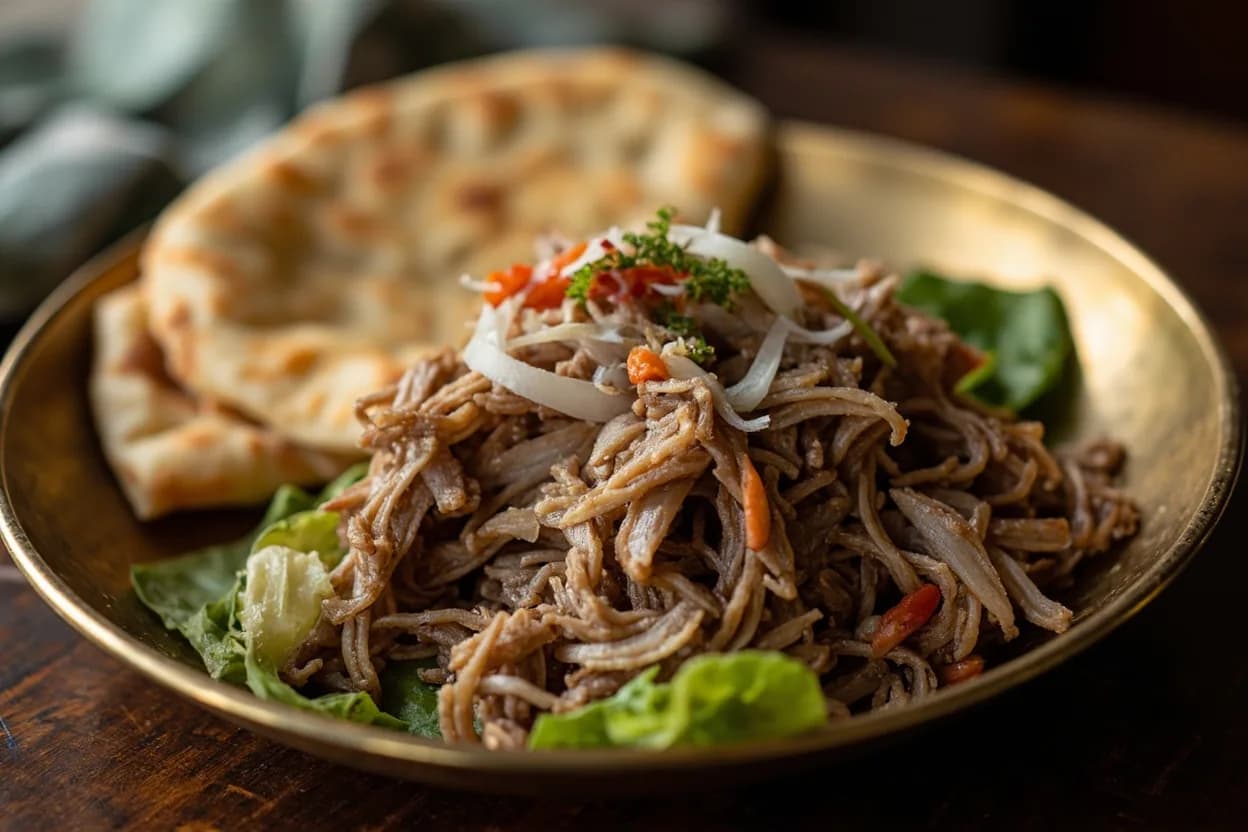
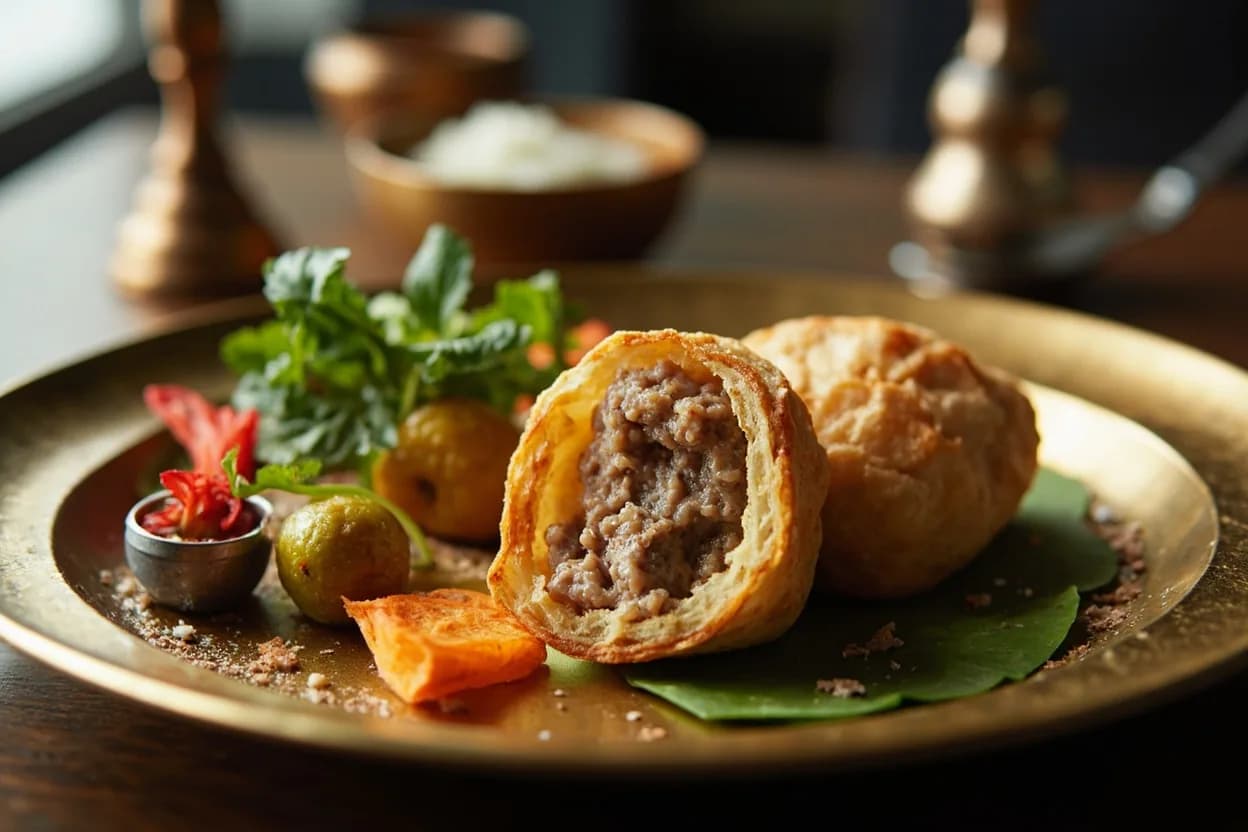
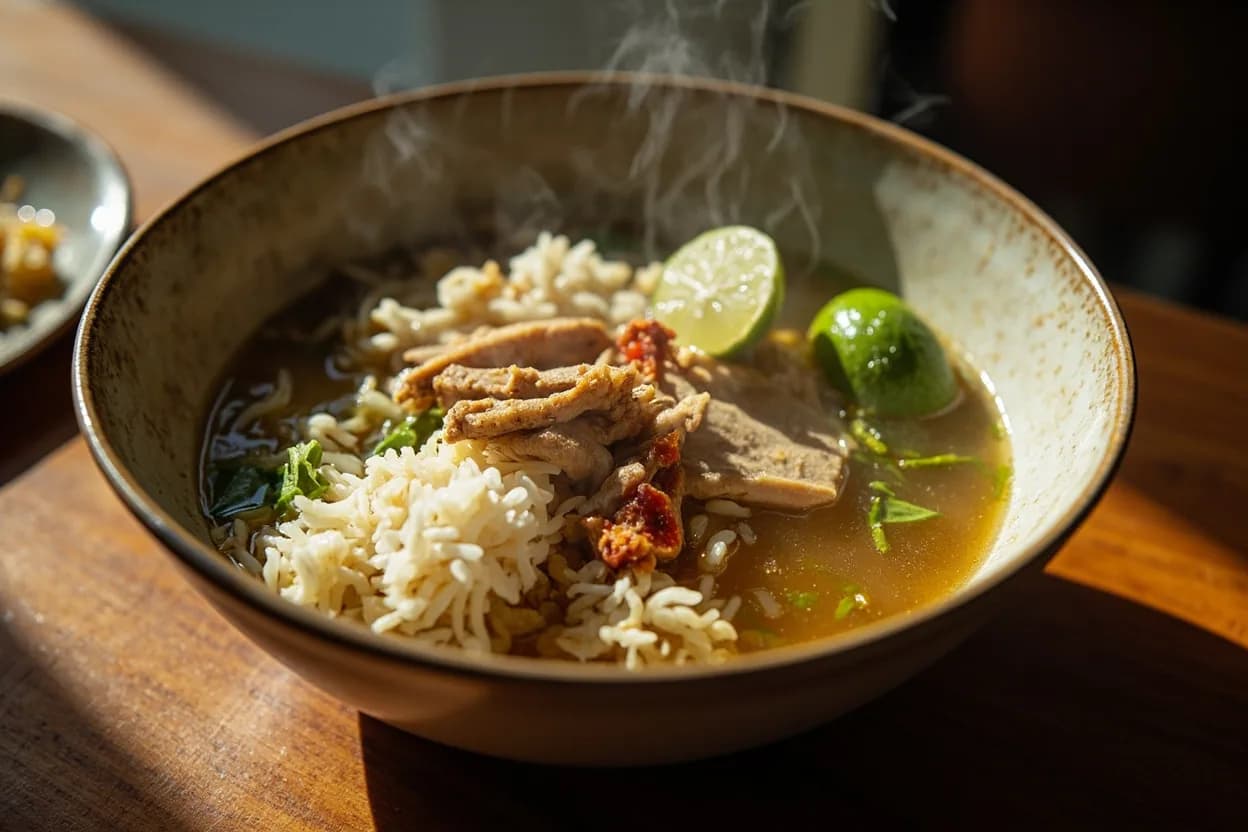
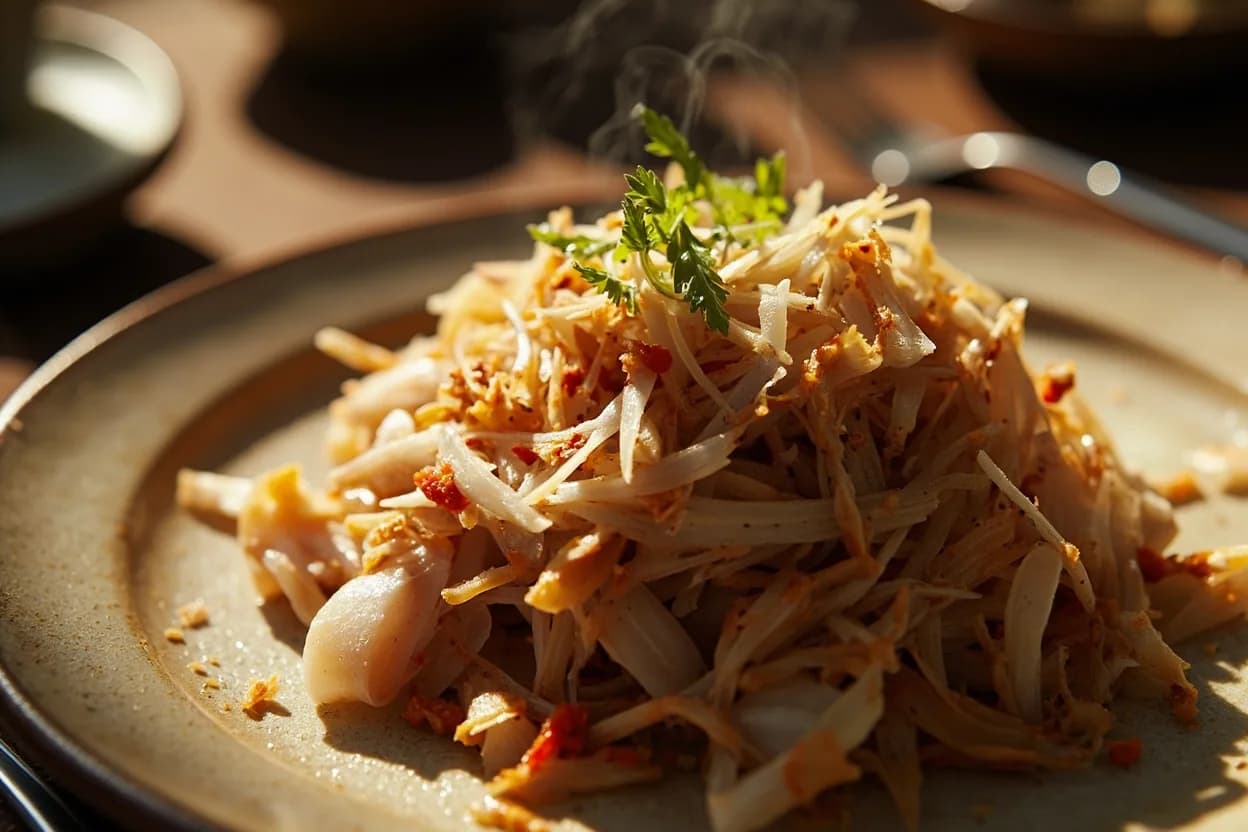
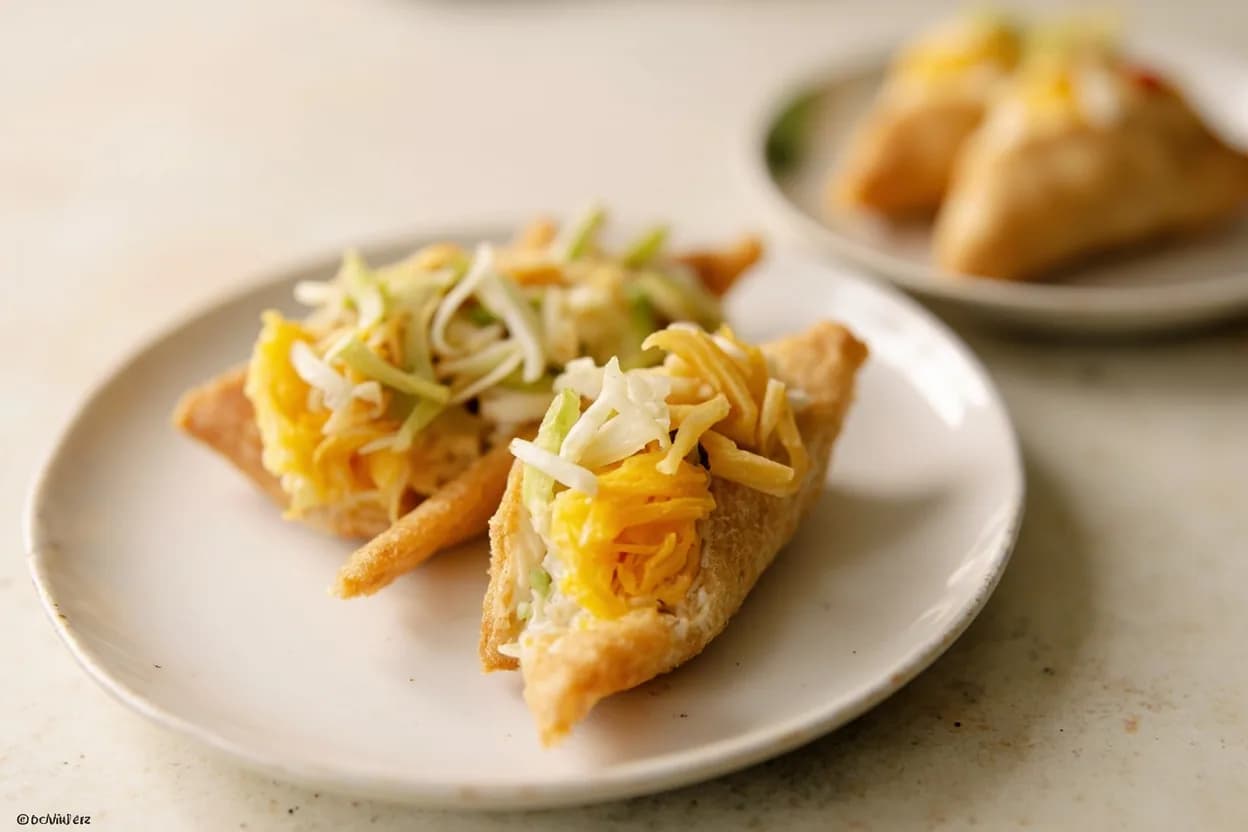
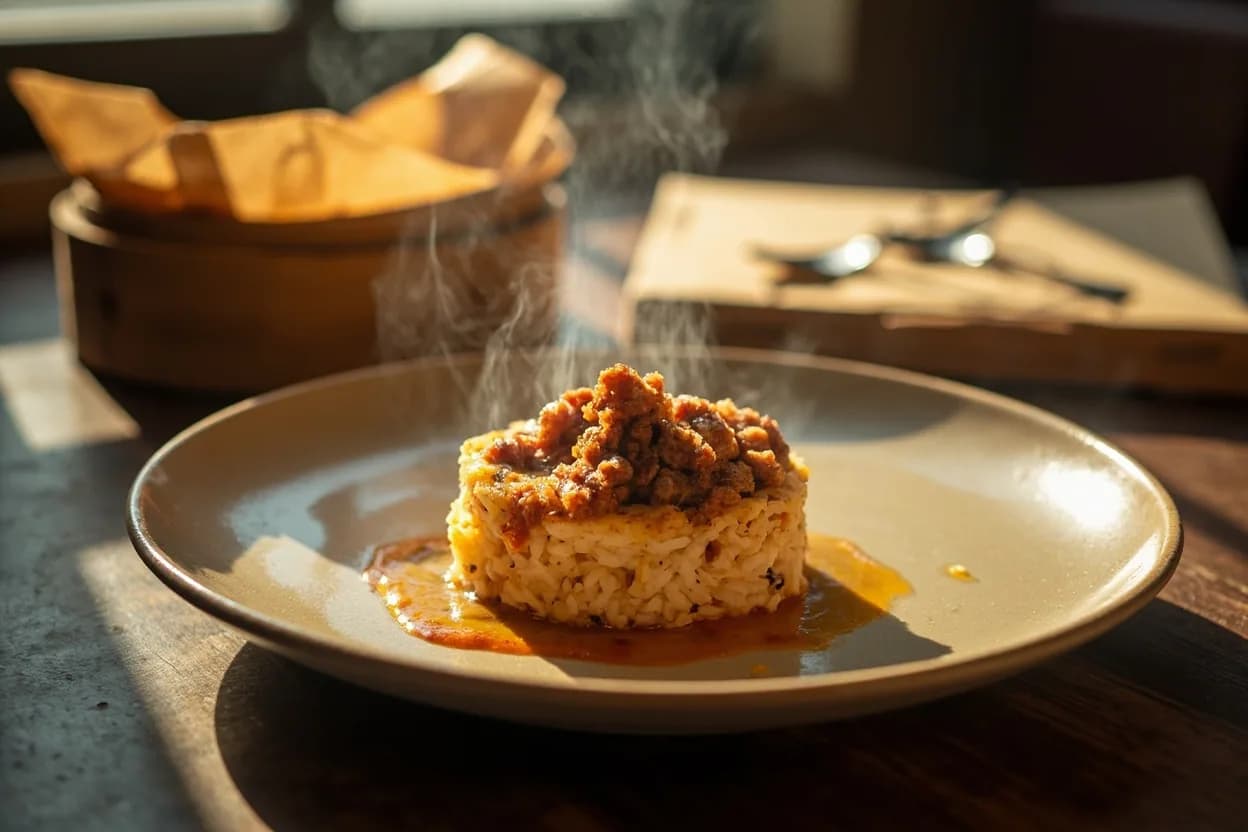
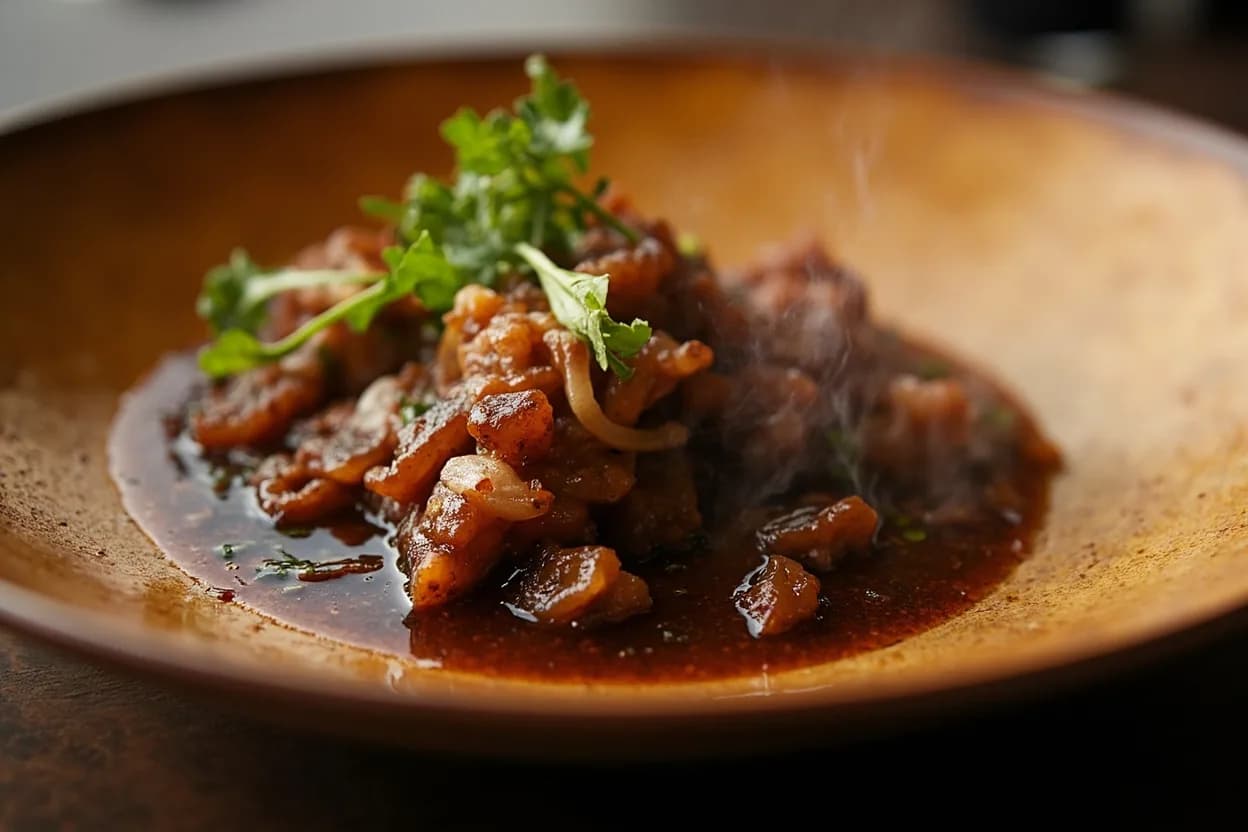
Breakfast is the most important and characterful meal: mas huni (coconut-tuna salad) with roshi (flatbread) is the national morning ritual. Lunch is the main meal, centering on garudhiya — clear tuna broth poured over rice and eaten with lime, chili paste, and pickled onion. Dinner is lighter: leftovers, roshi, or short-eats (hedhika) — fried savory snacks such as gulha (tuna-filled dumplings) and bajiya (pastry puffs) served with tea. Tea culture, influenced by British colonialism, is ubiquitous.
History & context
The Maldives has been settled for at least 2,500 years, with the earliest inhabitants believed to be South Asian (Dravidian-speaking) or Sri Lankan in origin. Arab and East African traders established the spice and cowrie-shell trade routes that passed through the atolls from the 9th century onward, with Islam arriving and permanently establishing in 1153 CE. Dried tuna became a cornerstone of regional Indian Ocean trade — Maldive fish was essential seasoning in Sri Lanka, South India, and East Africa. The British colonial period (1887–1965) introduced tea and biscuit culture. The 20th-century resort industry brought an influx of global influences, but the local diet in inhabited atolls has remained remarkably stable, rooted in the tuna-coconut-rice triad that the sea and atoll dictate.
Regional variations
- Male (capital atoll)
Most exposed to international influence; short-eats culture highly developed; more rice and curry variety than outer atolls.
- Outer Northern Atolls (Haa, Shaviyani)
More subsistence-focused; greater use of breadfruit and taro as starch supplements when rice was unavailable or expensive.
- Addu Atoll (southern tip)
British RAF base presence introduced bread and tinned goods; distinct dialect and slightly different spice profile with more coconut milk in curries.
Related cuisines
The largest recipient of Maldive fish as a seasoning ingredient; Sri Lankan curries are almost definitively flavored with hikimas across the south and coastal regions.
- South Indian Coastal
Shared curry leaf, coconut, and chili grammar; Maldive fish was traded to Kerala and Tamil Nadu fishing communities.
- East African Swahili Coast
Arab dhow trade routes linked the Maldives to Zanzibar and the Kenyan coast; coconut-fish preparations show parallels.
Canonical recipes
The dishes that define Maldivian (Dried Tuna Cuisine), documented in the Canon.
References
- 1.The Oxford Companion to Food — Alan Davidson (3rd ed., 2014)
- 2.Maldives: Nature and Nation — Alan Hancock
- 3.Indian Ocean: The Story of Water, Wind, and People — Michael Pearson (2003)
- 4.Maldivian Cuisine and Food Culture — Maldives Tourism Promotion Board
Confidence: high
Notes
Maldive fish as a global seasoning
Hikimas — the hard, smoke-cured, sun-dried skipjack tuna — is one of the Indian Ocean's most significant culinary exports. In Sri Lanka it is ground and added to virtually every coconut sambol and vegetable stir-fry. In coastal Kerala and Tamil Nadu fishing communities it is a foundational curry seasoning. In the Maldives itself it is shaved, chipped, or crumbled into everything from salads to soups. The production method — boiling, smoking over coconut husk, and sun-drying repeatedly over weeks — concentrates the tuna's protein and oils into a shelf-stable, intensely savory block.
Pole-and-line fishing as ecological practice
Maldivian skipjack tuna has historically been caught by pole-and-line from dhoni boats — a method that catches one fish at a time, avoids bycatch, and has no destructive gear contact with the reef. The Maldives was the first nation certified by the Marine Stewardship Council for a pole-and-line tuna fishery. This is both an environmental achievement and a direct expression of centuries of necessity: you protect your only resource when it is all you have.