West Africa
Malian
Also: Malian cuisine, Cuisine malienne, Cuisine of the Mali Empire
Sahel-forged cooking built on millet, sorghum, peanuts, and river fish, heir to the ancient granaries of the Mali Empire.
Malian cuisine is the cooking tradition of the Republic of Mali, a vast landlocked nation straddling Sahel and Savanna. It is shaped by centuries of trans-Saharan trade, the agrarian rhythms of the Niger River inland delta, and the legacy of the Mali and Songhai empires whose courts elevated dishes still eaten today. Cereals — millet, sorghum, fonio — form the caloric core, supplemented by groundnuts, okra, leafy greens, dried fish, and the prized catfish and capitaine of the Niger. Cooking is communal, nutritionally pragmatic, and deeply seasonally inflected.
The flavour base
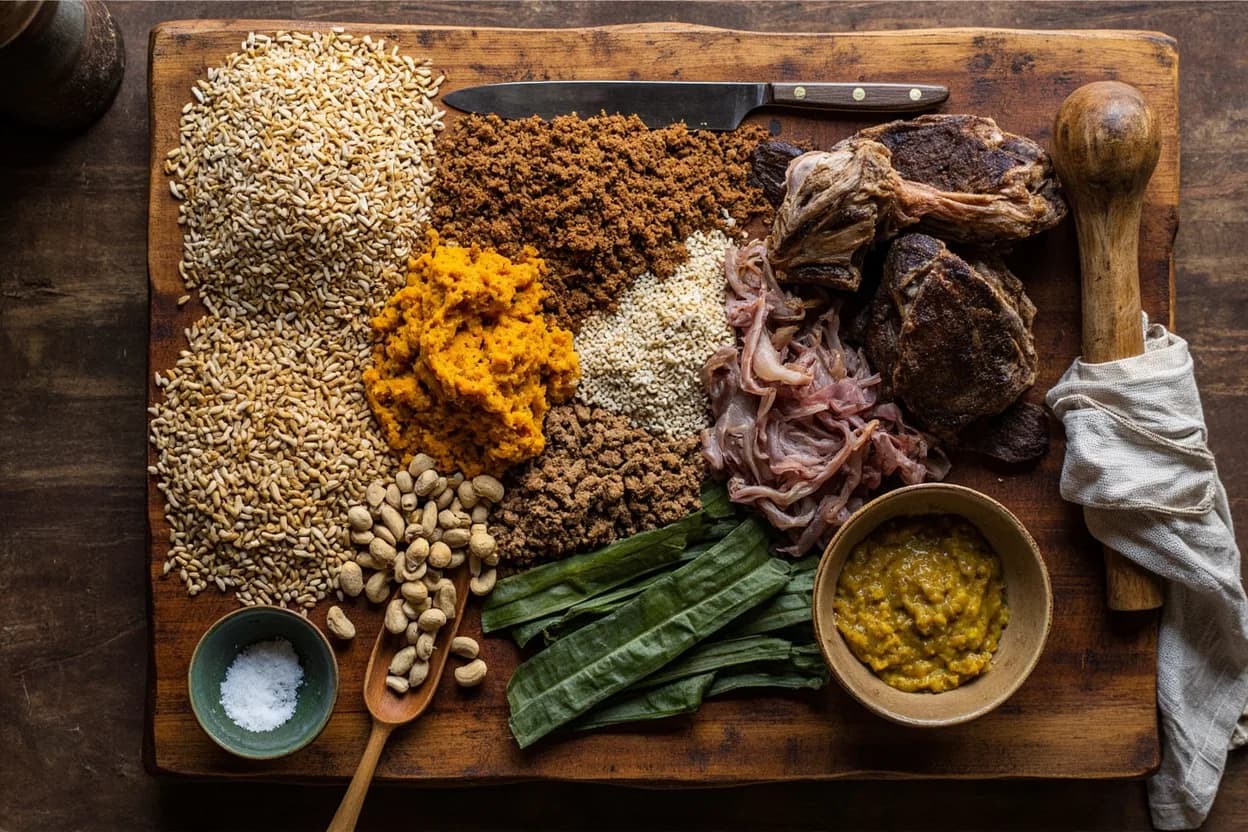
Groundnut paste (tiga) cooked down with tomato, onion, and dried fish or fresh meat; fermented locust-bean condiment (soumbala/nététou) layered into nearly every sauce for umami depth.
Pantry staples
Key ingredients
Signature techniques
Signature dishes
Malian on the table

At the table
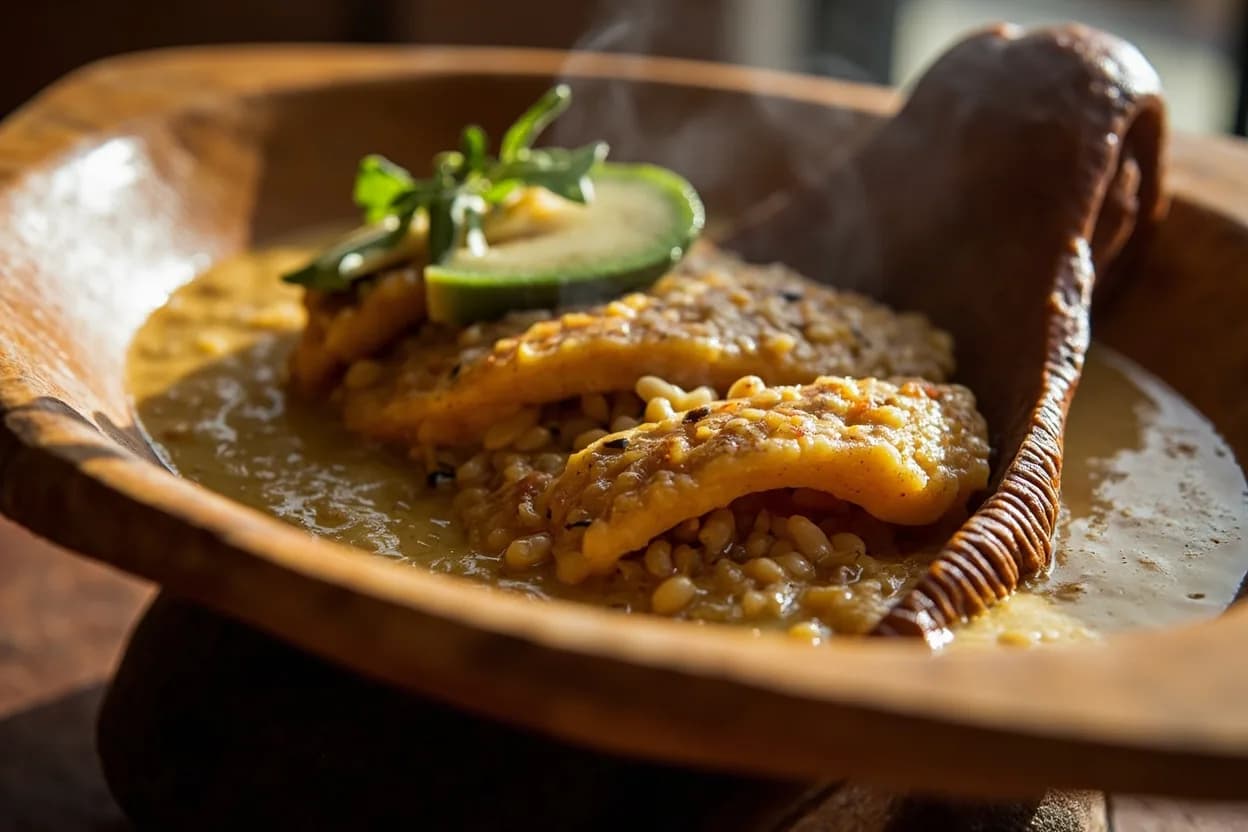
The principal meal is midday (lunch). A communal bowl placed on a mat, with diners sharing from a central vessel — sauce in the centre, starch around the edge. Breakfast is typically porridge (bouillie) of millet or corn with tamarind water or milk. Evening meals are lighter — leftovers, bread with tea, or a small soup. Ataya (heavily sweetened Chinese green tea poured ceremonially through three rounds) accompanies all social occasions.
History & context
The Mali Empire (c. 1235–1600 CE) controlled trans-Saharan gold and salt routes, and its courts in Niani and Timbuktu supported a sophisticated culinary culture. Trade contact with North Africa introduced wheat flatbreads and dried fruits; contact with the Forest Zone introduced palm oil and plantains. The Songhai Empire and later the Bambara Kingdoms maintained these culinary lineages. French colonial rule (1890–1960) introduced baguette-bread culture in urban centres, especially Bamako, while rural traditions remained continuous. Post-independence, millet and sorghum remain the dietary foundation for most of the population outside the capital.
Regional variations
- Niger River Delta (Mopti)
Fish-dominant cooking; smoked catfish and dried Nile perch feature prominently; bourgou aquatic grass harvested seasonally.
- Bamako (urban)
Fusion of French-inflected urban cooking with Bambara tradition; maquis restaurants serve brochettes, attiéké, and Ivorian-influenced dishes alongside tigadèguèna.
- Timbuktu and the Saharan north
Tuareg and Arab influence; camel milk, dates, rice cooked in broth; tajine-adjacent preparations; millet less central than in the south.
- Dogon plateau
Onion cultivation central — Dogon onions are a prized trade commodity; sauces built on fried onion bases; millet beer (dolo) in ceremonial use.
Related cuisines
Shared yassa and thieboudienne influences; Wolof-Bambara culinary exchange along the Gambia River trade corridor.
- Burkinabé
Common Sahelian staples — tô, soumbala, millet porridge — reflecting shared Mossi-Bambara cultural links.
- Guinean
Groundnut stew base and leafy-green sauce tradition shared across Manding cultural zone.
- Mauritanian
Tuareg nomadic foodways overlap in the north; rice and camel-milk preparations cross the border.
Canonical recipes
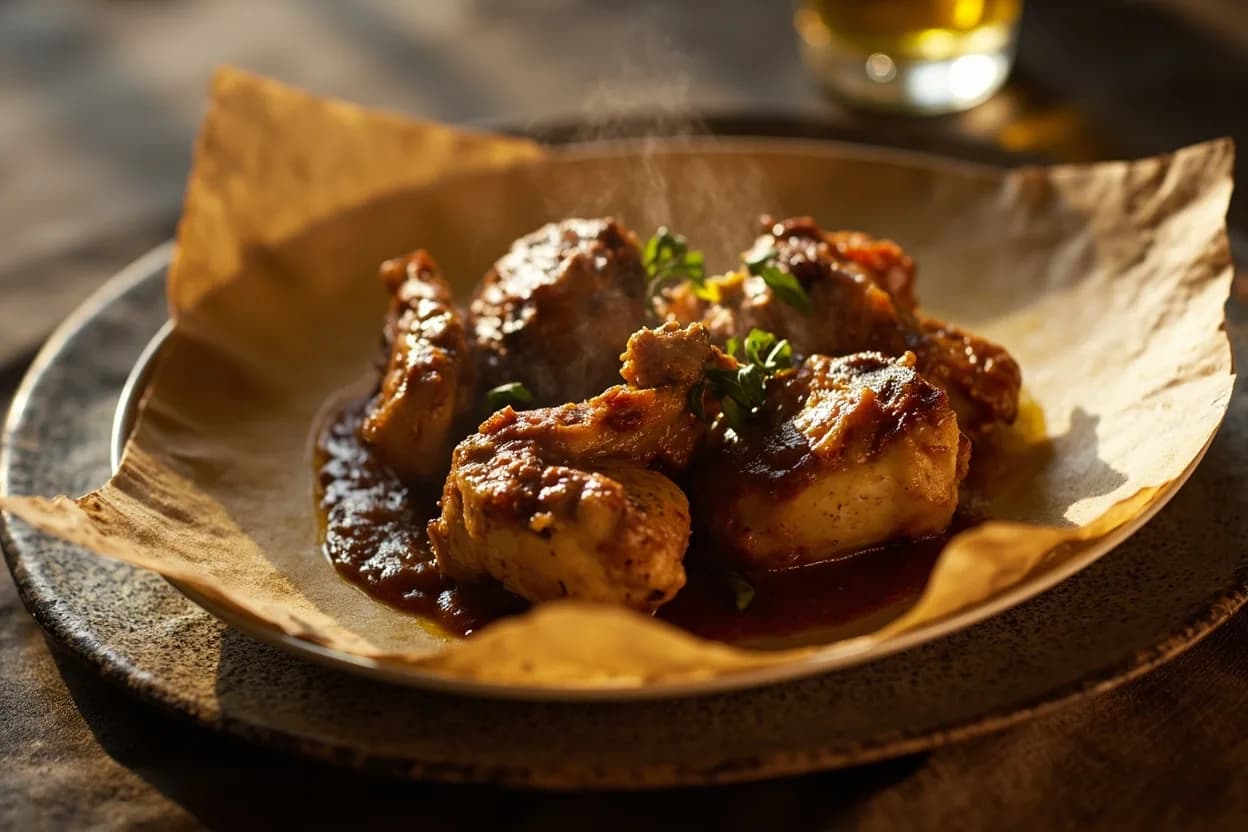
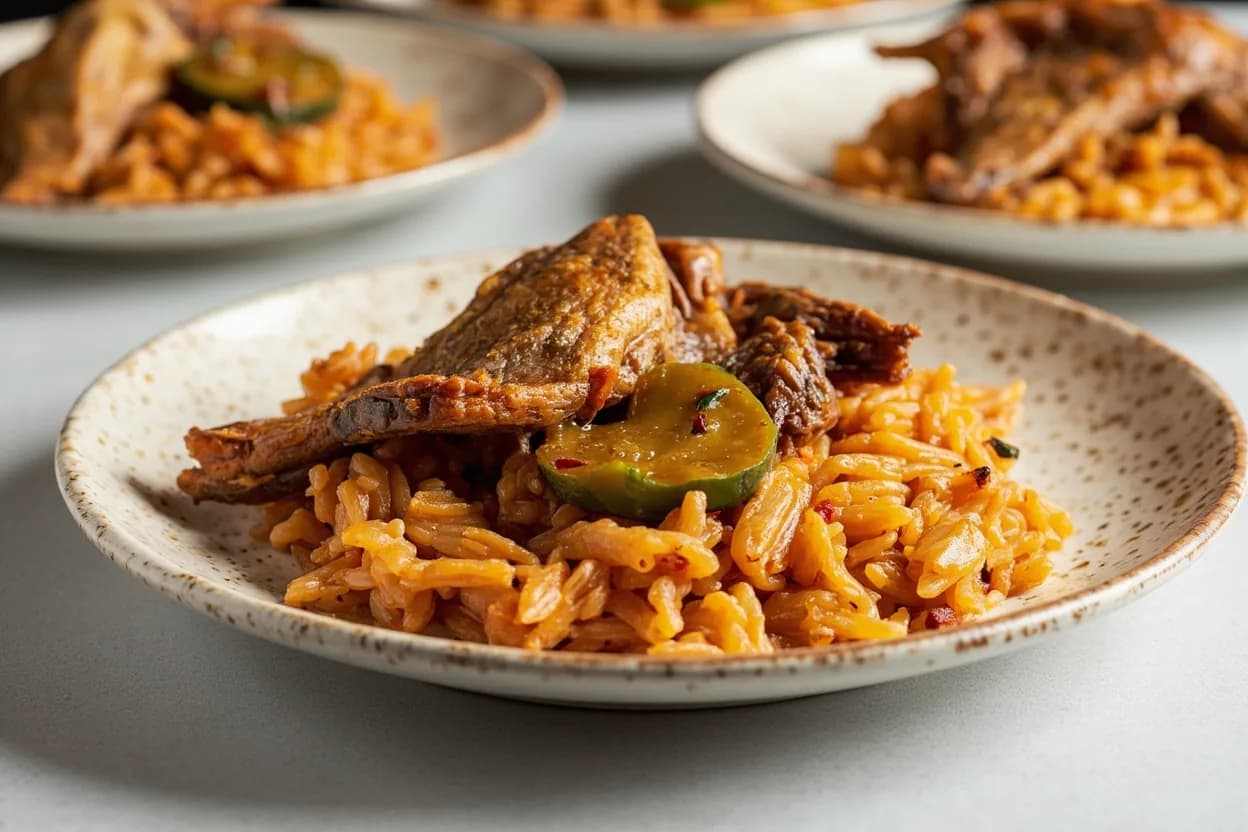
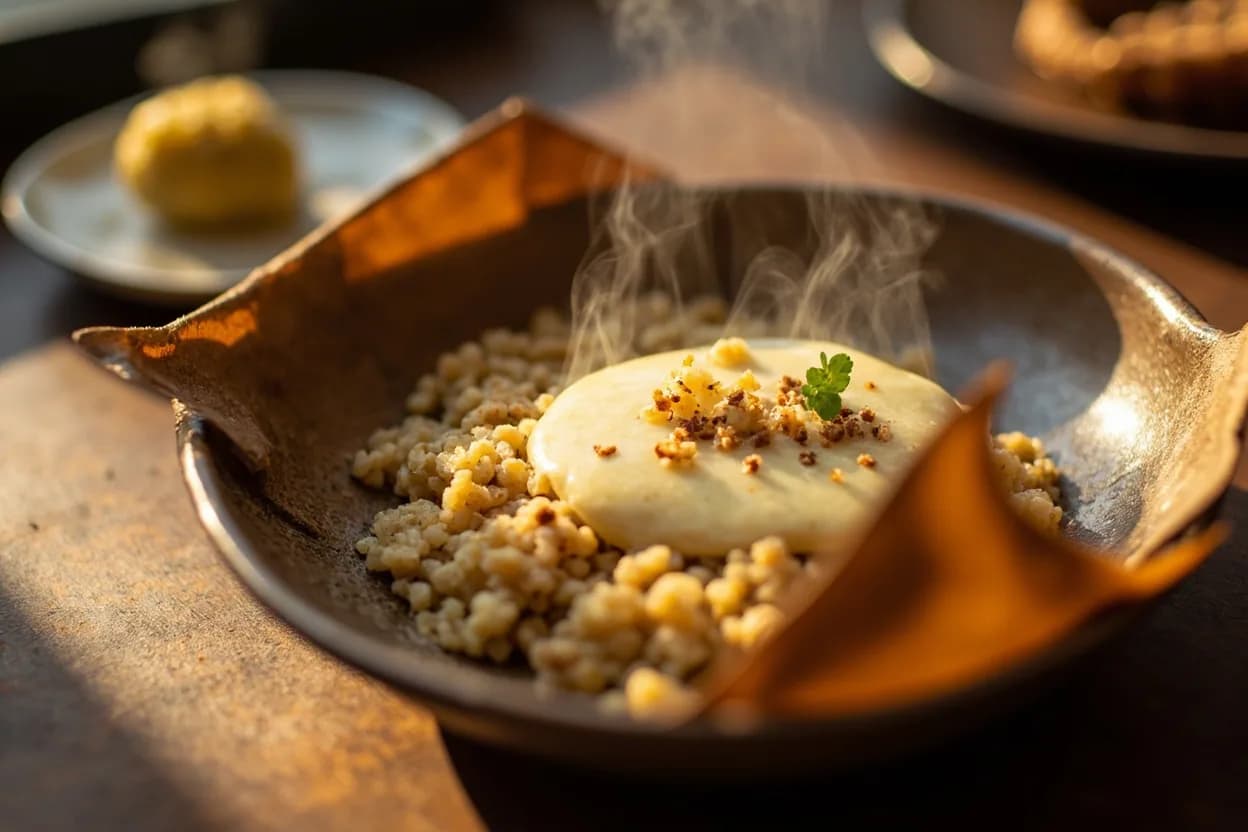
The dishes that define Malian, documented in the Canon.
References
- 1.Moussa Konaté, 'La Cuisine malienne' (Editions Donniya, Bamako, 2003)
- 2.Jessica B. Harris, 'The Africa Cookbook: Tastes of a Continent' (Simon & Schuster, 1998)
- 3.FAO, 'Traditional Food Plants of Mali' (FAO Forestry Paper, Rome, 1988)
- 4.Nehemia Levtzion, 'Ancient Ghana and Mali' (Methuen, 1973)
Confidence: high
Notes
Soumbala — the backbone condiment
Soumbala (also nététou or dawadawa) is fermented locust-bean paste; in Malian cooking it functions as the region's answer to fish sauce or soy sauce — a concentrated umami hit added to nearly every sauce. Made by boiling, dehulling, and fermenting Parkia biglobosa seeds over several days, it is sold in balls at market. Its pungent smell is considered a mark of culinary quality.
Fonio — an ancient grain renaissance
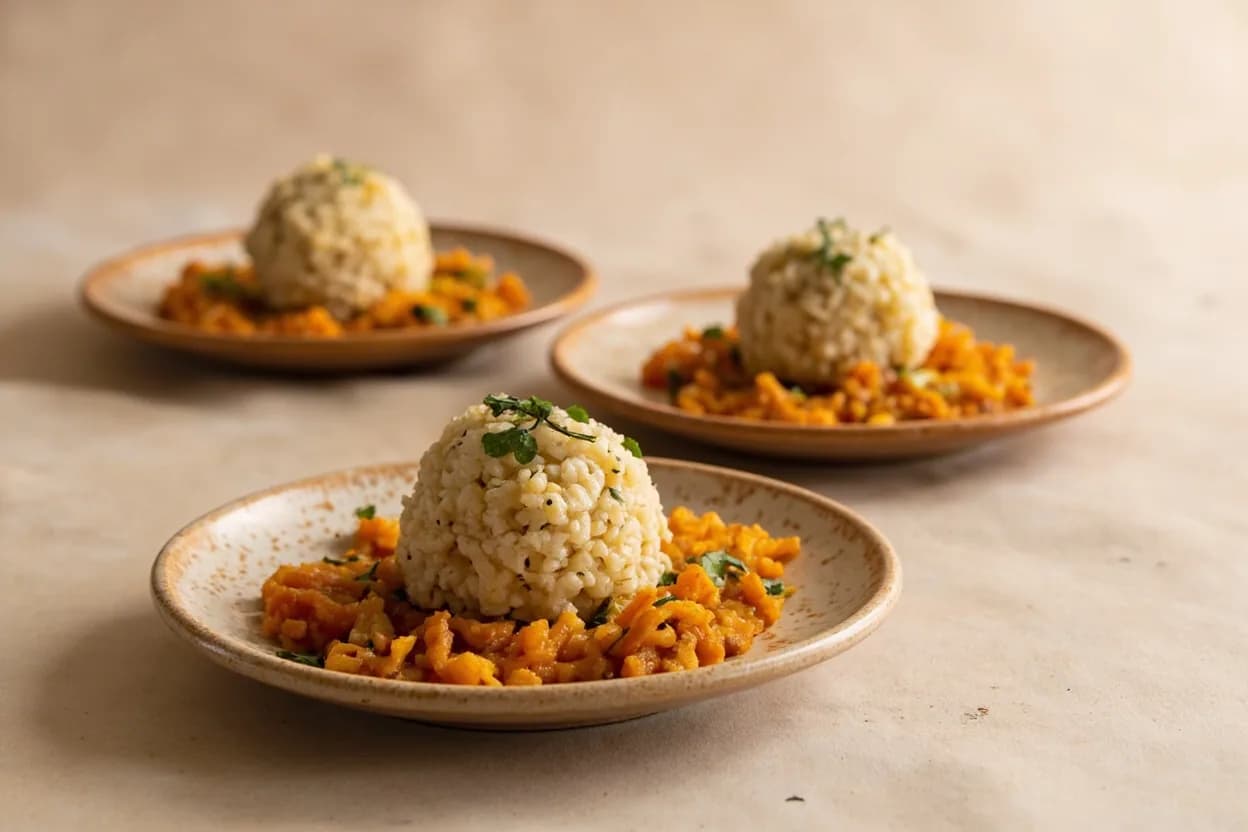
Fonio (Digitaria exilis) has been cultivated in the Sahel for at least 5,000 years. Light, fast-cooking, and naturally gluten-free, it is now experiencing global interest, but in Mali it has always been a prestige grain used at ceremonies and for weaning foods. It is cooked as couscous, porridge, or pounded into flour for fritters.