North America (Texas–Mexico border corridor)
Mexican-American Border (Tex-Mex)
Also: Tex-Mex, Tejano Cuisine, Border Food, Texas Mexican
A distinct, centuries-deep border cuisine born of Tejano ranching culture, where beef, yellow cheese, wheat flour, and chili con carne define a food identity entirely its own.
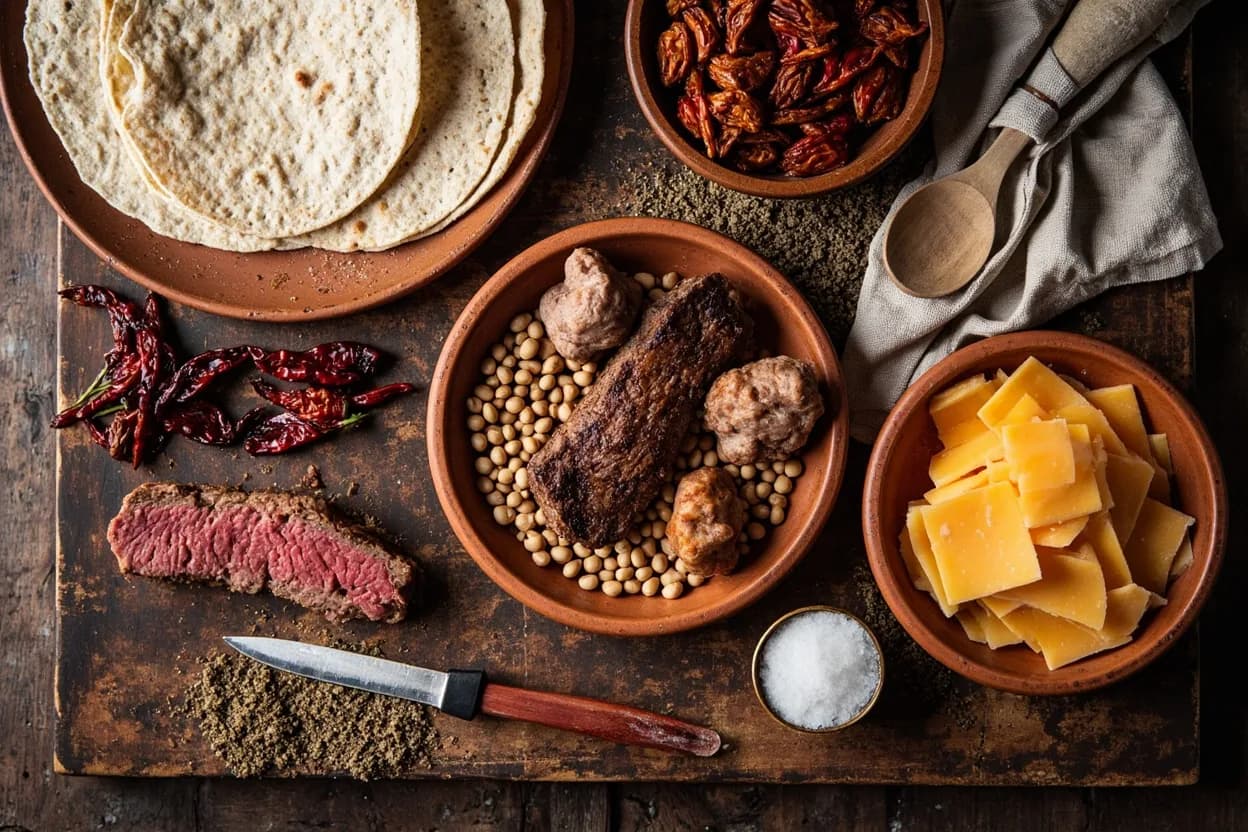
Tex-Mex is not debased or simplified Mexican food — it is the indigenous cuisine of the Tejano people, the Texans of Mexican descent who inhabited the region long before either the Texas Republic or U.S. statehood. Its defining characteristics include the heavy use of yellow processed cheese (cheddar, Velveeta) rather than Mexican fresh cheeses; beef as the dominant protein (reflecting the ranching economy of northern Mexico and south Texas); wheat flour tortillas alongside or instead of corn; chili con carne as a foundational sauce; and an abundance of cumin — a spice far less prominent in interior Mexican cooking. The cuisine codified in San Antonio, Laredo, and El Paso from the 1800s through the mid-20th century, then spread nationally through restaurant chains and frozen food.
The flavour base
Chili con carne (beef, dried red chilies, cumin, and garlic without tomato in its purist Tejano form); rendered beef and pork fat; yellow cheese melted into roux-based sauces; refried pinto beans.
Pantry staples
Key ingredients
Signature techniques
Signature dishes
Mexican-American Border (Tex-Mex) on the table
At the table
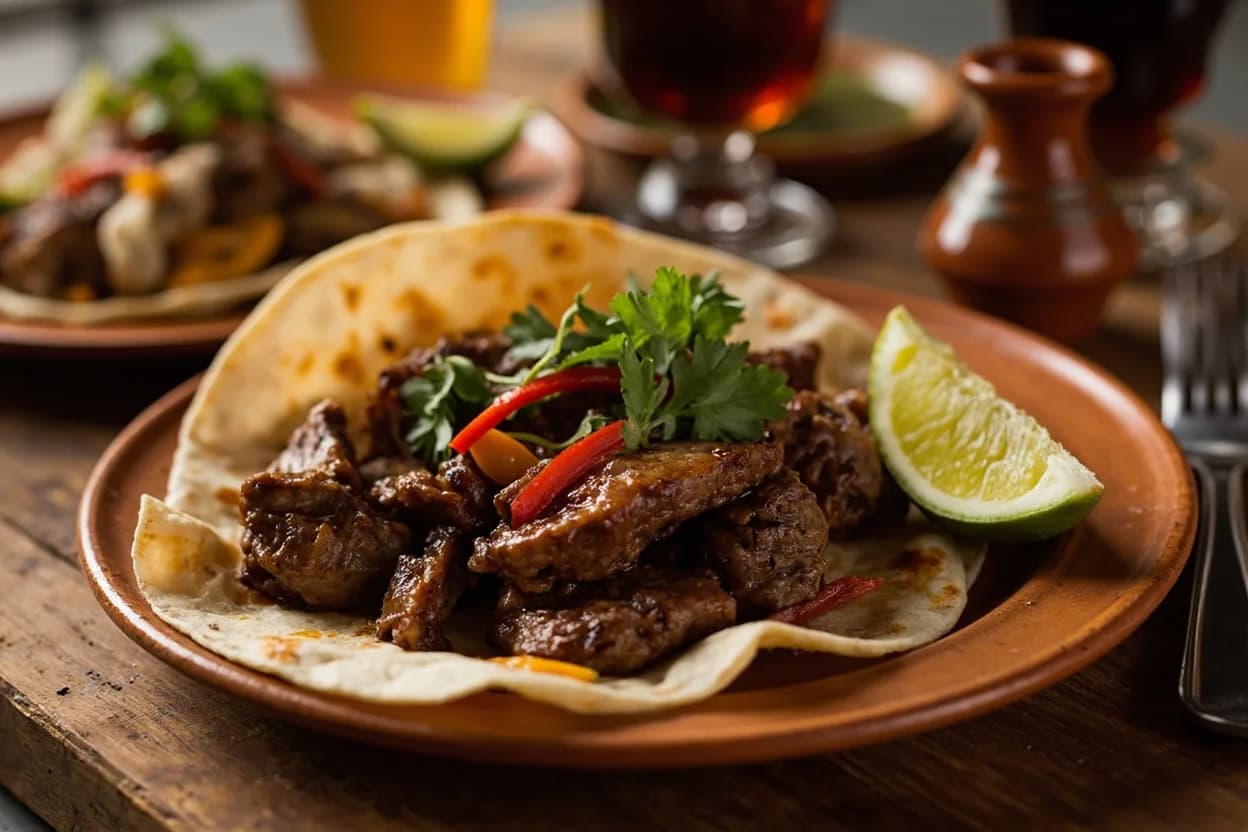
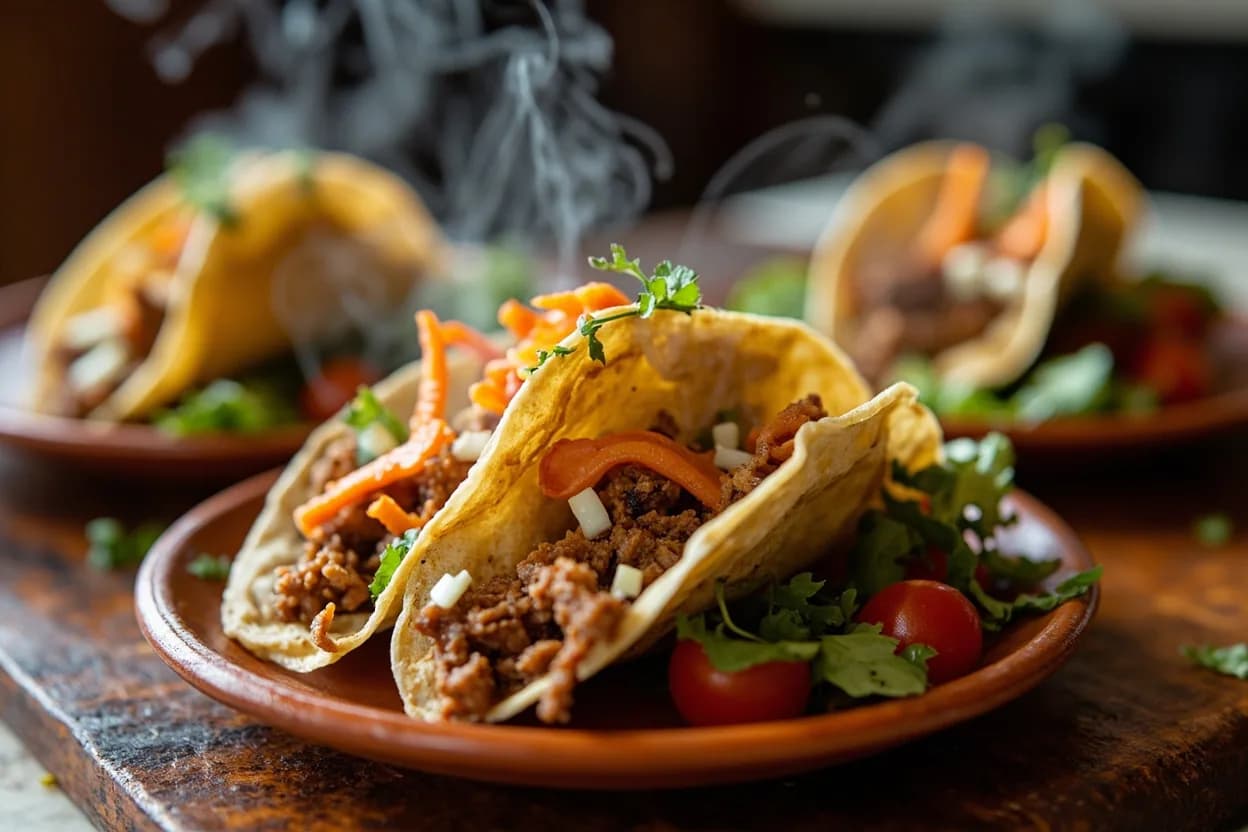
Combination plates (the 'Mexican plate' format) present protein, rice, beans, and a garnish together on one dish — a structure codified by Tejano restaurants in San Antonio by the early 20th century. Breakfast tacos are a distinctive morning tradition. Meals are typically abundant, sharing-oriented, and accompanied by chips and salsa as a standard opening. Weekend barbacoa brunches (slow-cooked head or cheek meat in flour tortillas) are a Tejano ritual across south Texas.
History & context
The roots of Tex-Mex lie in the northern Mexican ranching economy that moved into Texas with Spanish colonization in the 1700s. Tejanos developed a cuisine shaped by cattle herding, wheat agriculture, and frontier provisioning — the chuckwagon culture of the Texas borderlands. After Texas statehood (1845) and the U.S.-Mexico War (1848), Anglo-American ingredients (processed cheese, wheat flour on an industrial scale, canned goods) were layered into an already-distinct Tejano food culture. San Antonio's 'Chili Queens' — Tejana women who sold chili con carne from outdoor stalls in Military Plaza from the 1880s until 1937 — became the defining image of the cuisine nationally. The term 'Tex-Mex' was first applied pejoratively to describe a perceived bastardization of Mexican food; Robb Walsh's 2004 book The Tex-Mex Cookbook reclaimed it as a legitimate and distinct culinary identity. Nachos, fajitas (Sonny Falcon, 1969; popularized by Ninfa Laurenzo, Houston, 1973), and frozen margarita machines (Mariano Martinez, Dallas, 1971) all have documented Tejano or border-zone origin stories.
Regional variations
- San Antonio (Central Texas)
Puffy tacos, cheese enchiladas with chili gravy, and the chili queen tradition make this the canonical Tex-Mex heartland. The Combination Plate was codified here.
- El Paso / Ciudad Juárez corridor
More porous boundary with northern Chihuahuan cuisine; green chile (Hatch, New Mexico variety) features strongly; burritos are large and more Sonoran-influenced.
- South Texas / Laredo / Rio Grande Valley
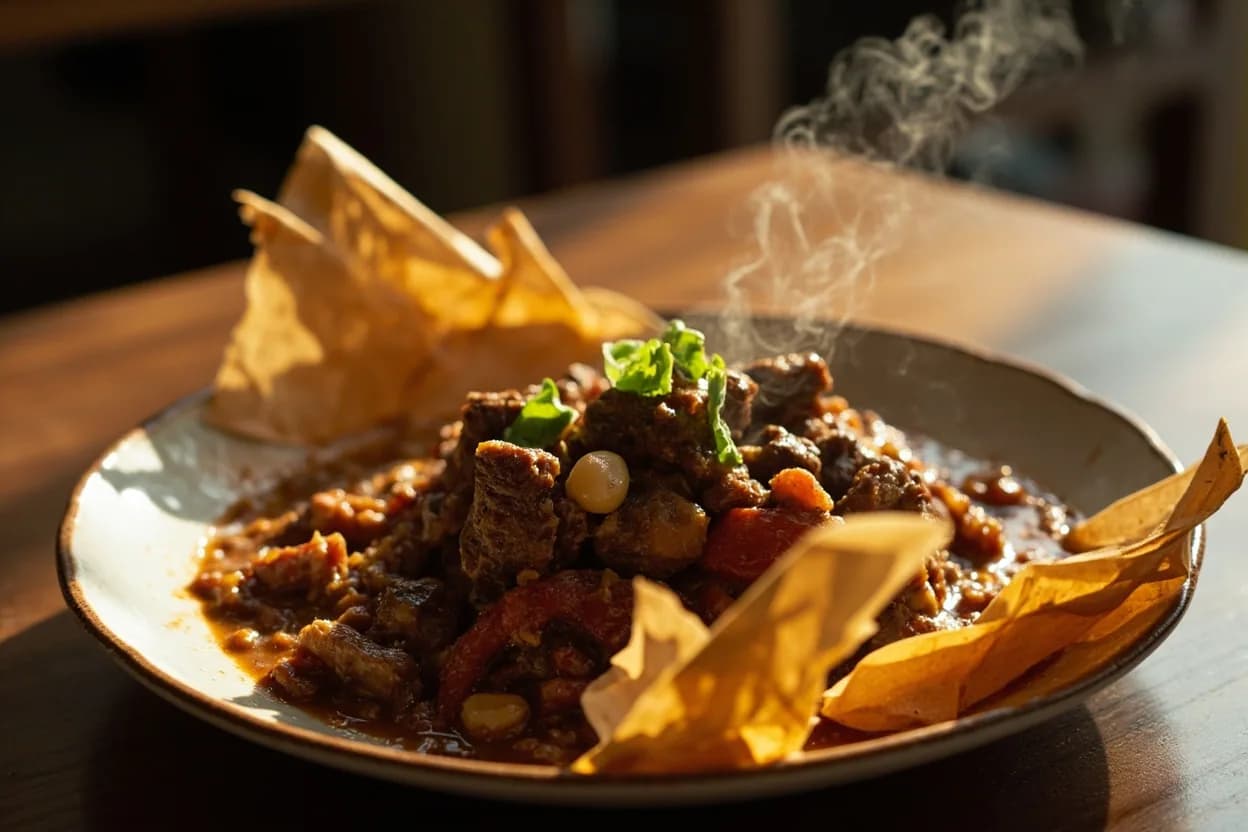
Deepest Tejano roots; breakfast tacos, barbacoa de cabeza on weekends, and carne guisada (braised beef in chili gravy) dominant; less chain-restaurant influence.
- Houston
More diverse with Vietnamese and Central American influences; Ninfa Laurenzo's Ninfa's on Navigation sparked the national fajita craze here in 1973.
Related cuisines
- Northern Mexican (Norteño)
The direct antecedent: flour tortillas, beef, dried chilies, and cheese come from Sonora, Chihuahua, and Nuevo León.
- New Mexican
Sister border cuisine with its own chile culture (Hatch green chile, red chile ristras); asks 'red or green?' where Tex-Mex asks only red.
Tex-Mex retains the nixtamalized maize and bean base of Mesoamerican agriculture even as it departs dramatically from interior Mexican cuisine.
Canonical recipes
The dishes that define Mexican-American Border (Tex-Mex), documented in the Canon.
References
- 1.Walsh, Robb — The Tex-Mex Cookbook: A History in Recipes and Photos (2004, Broadway Books)
- 2.Pilcher, Jeffrey M. — Planet Taco: A Global History of Mexican Food (2012, Oxford University Press)
- 3.Arellano, Gustavo — Taco USA: How Mexican Food Conquered America (2012, Scribner)
- 4.Bentley, Amy — Eating for Victory: Food Rationing and the Politics of Domesticity (1998) — contextual background on processed cheese in American cooking
Confidence: high
Notes
Cumin as the diagnostic spice
If a single ingredient separates Tex-Mex from interior Mexican cooking, it is cumin (comino). Tex-Mex uses cumin at levels — in chili, refried beans, and rice — rarely seen in cuisines south of the Chihuahua border. The spice arrived via the Spanish and became integrated into the northern cattle-ranching economy, where it was used to season the beef-heavy diet.
The fajita invention question
Sonny Falcon of Kyle, Texas documented selling grilled skirt-steak tacos at outdoor fairs from 1969 and is widely credited as the 'Father of the Fajita.' Ninfa Laurenzo of Ninfa's in Houston popularized the restaurant format in 1973. The word 'fajita' derives from 'faja' (belt/strip), a Tejano butcher term for the skirt cut historically given as payment to ranch hands.