Mexico (Central Highlands: Hidalgo, México State, Tlaxcala, Puebla)
Mexican Barbacoa de Hoyo
Also: Barbacoa de Pozo, Pit Barbacoa, Mexican Pit Barbecue
Mexico's ancient pit-roasting tradition — lamb or goat slow-cooked underground in maguey leaves over volcanic stone, a weekend ritual meal as old as Mesoamerican civilization.
Barbacoa de hoyo is the practice of cooking whole or quartered meat — typically sheep (borrego) or goat (chivo) in central Mexico, and beef head (cabeza de res) in northern Mexico — sealed with maguey (agave) leaves inside a rock-lined pit dug into the earth, then covered and left to slow-cook for six to eight hours over residual heat from volcanic stone. The result is extraordinarily tender, deeply smoky, and gelatinous meat that produces a secondary broth (consomé) that collects at the pit's base. The meal is a Sunday and holiday institution across Hidalgo, México State, and the Estado de México valley — sold from early morning until supplies run out, consumed with handmade tortillas, salsa roja, nopales, and pulque or beer.
The flavour base
The flavor architecture rests on smoke and steam: the maguey leaves impart a subtle vegetal-bitter note; the rendered fat and collagen from the meat self-baste everything in the pit; and the consomé — a rich gelatin-laced broth — concentrates all the drippings.
Pantry staples
Key ingredients
Signature techniques
Signature dishes
Mexican Barbacoa de Hoyo on the table
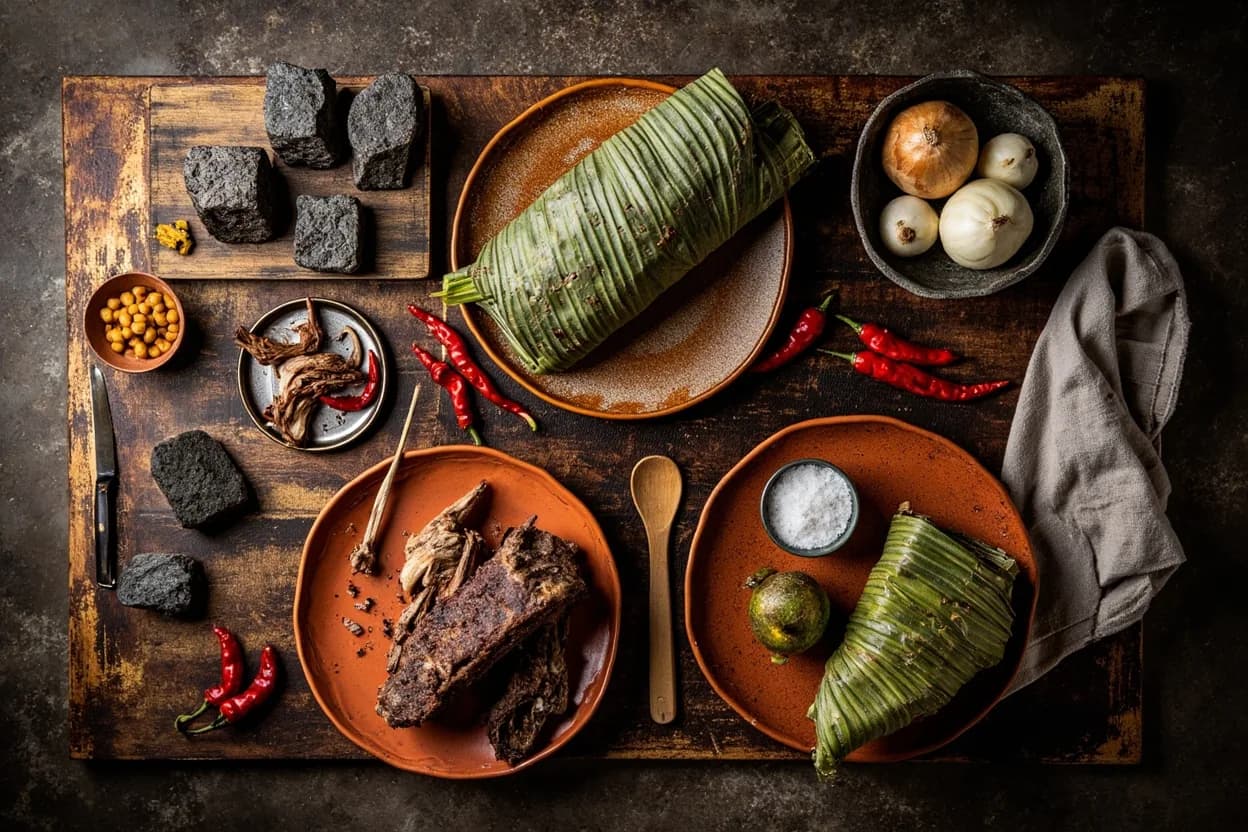
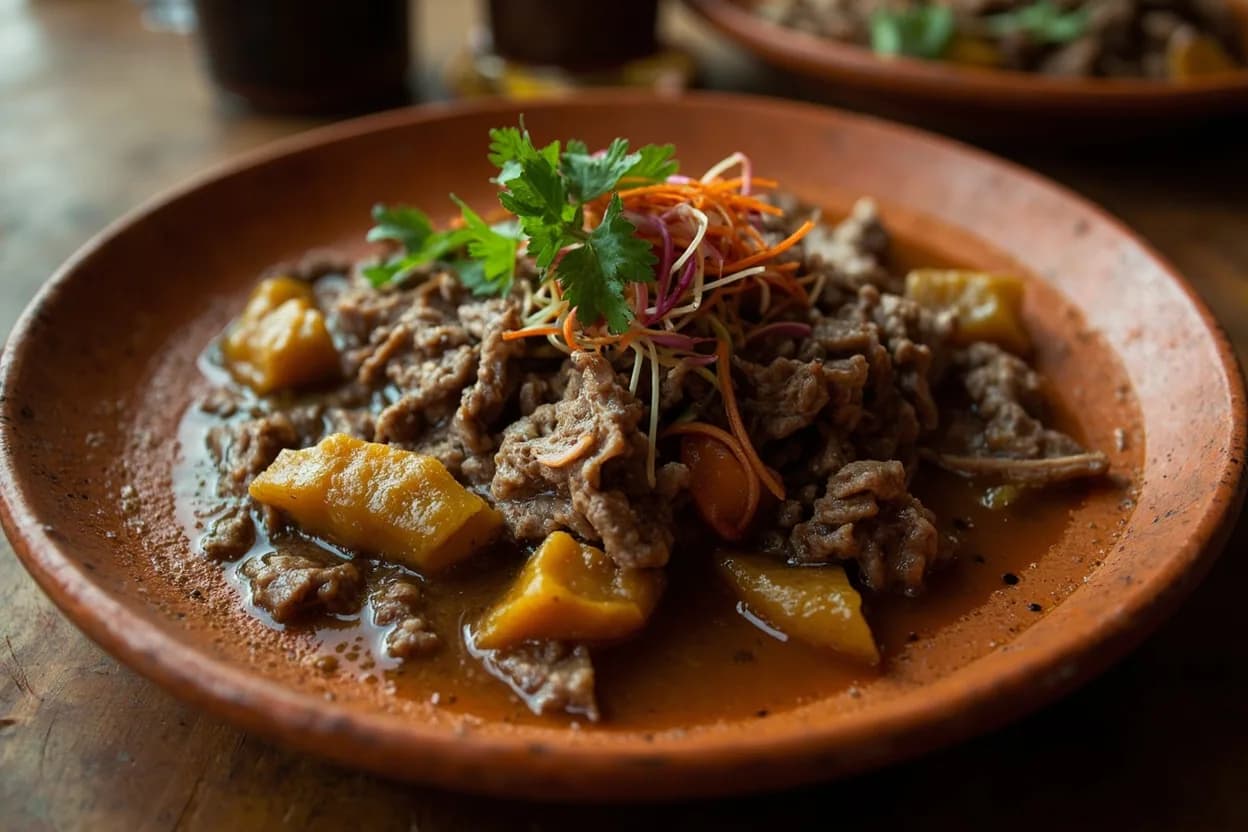
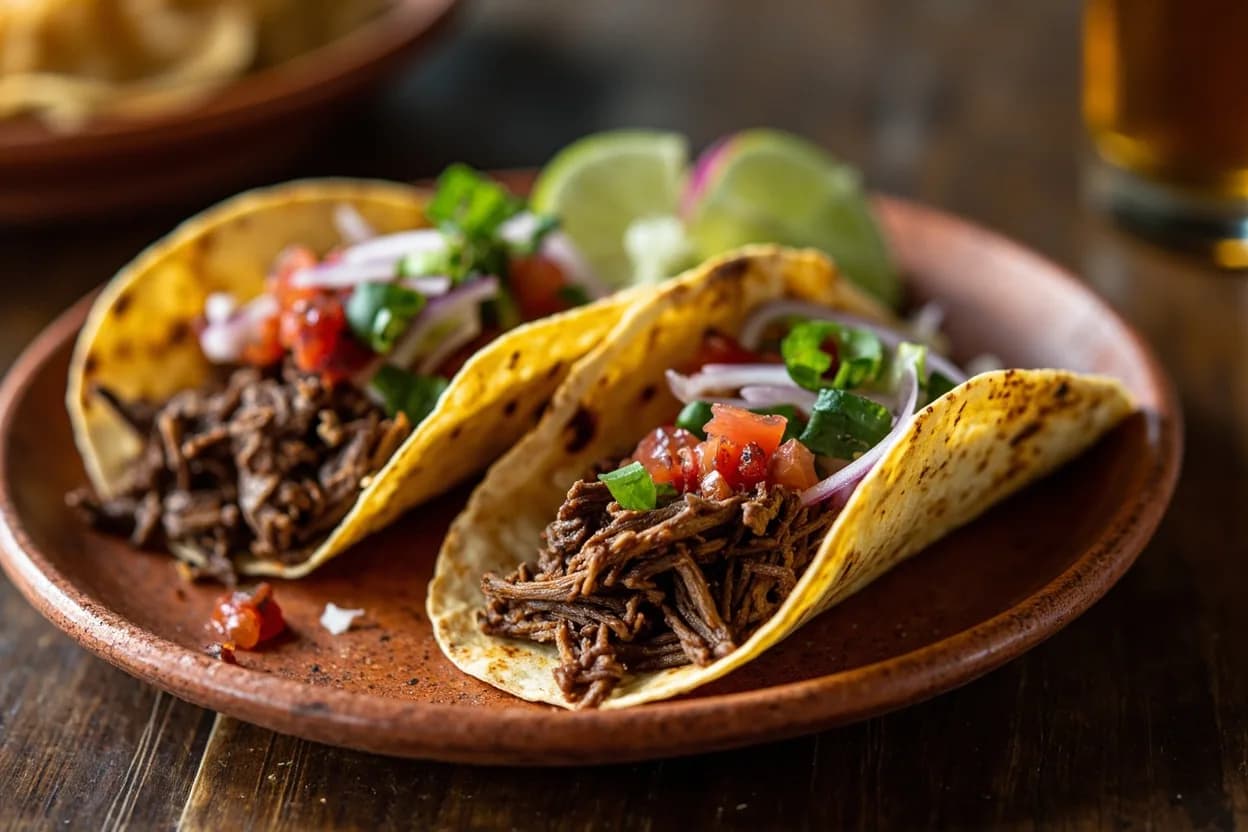
At the table
Barbacoa de hoyo is overwhelmingly a Sunday morning meal, served from roughly 7 AM until noon or until the meat runs out — typically four to six hours after the pit is opened. Diners begin with a bowl of consomé, then progress to tacos assembled at the table with salsa borracha, pickled jalapeños, nopales, and fresh onion. Pulque (fermented agave sap) is the traditional accompaniment; cerveza is now equally common. The meal is communal and unhurried — a weekly ritual of family gathering with a strong ceremonial dimension.
History & context
The practice of earth-oven cooking predates the Aztec Empire by millennia in Mesoamerica; pit-cooking with heated stones is one of the oldest cooking technologies on earth, attested archaeologically across the Americas. The specific form of barbacoa de hoyo as practiced today in central Mexico fuses this ancient technique with post-Conquest sheep and goat herding — both animals were introduced by the Spanish in the 16th century. The word 'barbacoa' itself almost certainly derives from a Taíno word for a framework for smoking or drying meat, adopted by Spanish colonizers and applied to the pit-cooking practice they encountered and then modified across New Spain. By the 18th century, barbacoa de hoyo was entrenched as a weekend institution in the Valley of Mexico. The great barbacoa-producing states today — Hidalgo (especially Actopan), México State (Texcoco), and Tlaxcala — supply the México City metropolitan area's insatiable Sunday-morning demand, estimated at hundreds of thousands of portions per weekend.
Regional variations
- Hidalgo / Actopan (canonical pit lamb)
Actopan is considered the barbacoa capital of Mexico; pit-roasted lamb (borrego) is the exclusive animal; salsa borracha with pulque is canonical; entire weekend economy revolves around the trade.
- Texcoco, México State
Also lamb-based but with some variation in herbs and the consomé seasoning; Texcoco has its own loyal following among CDMX residents.
- Northern Mexico (Nuevo León, Coahuila)
Beef head (cabeza de res) replaces lamb; cuts include cachete (cheek), labio (lip), lengua (tongue), and sesos (brain); tortillas may be flour; more akin to Texas barbacoa.
- Oaxaca
Goat (chivo) rather than lamb; achiote and local dried chilies in the rub; banana leaves sometimes replace maguey; a more festive/wedding preparation than weekly routine.
Related cuisines
Pit cooking with heated stones is the deep Mesoamerican ancestor of barbacoa; the technique is ancient, the sheep and goat post-Conquest.
Border barbacoa uses beef head in a pit or slow-cooker rather than lamb; shares the Sunday-morning-taco ritual but has diverged in protein and technique.
The Yucatecan pib (Maya pit oven) is a direct parallel — same earth-oven logic, different flavoring (achiote, sour orange) and wrapped in banana leaves.
References
- 1.Kennedy, Diana — The Art of Mexican Cooking (1989, Bantam Books)
- 2.Pilcher, Jeffrey M. — ¡Que vivan los tamales! Food and the Making of Mexican Identity (1998, University of New Mexico Press)
- 3.Valderrama Rouy, Pablo — Barbacoa: El sabor de la tradición (2003, Cámara Nacional de la Industria de Restaurantes y Alimentos Condimentados, CANIRAC)
- 4.Presilla, Maricel E. — Gran Cocina Latina (2012, W.W. Norton)
Confidence: high
Notes
The maguey leaf as technology
Maguey (Agave salmiana or A. mapisaga) leaves serve multiple functional roles in the pit: they seal the pit against heat loss, impart a distinct vegetal-smoky character, and protect the meat from direct contact with ash. The same plant's sap is fermented into pulque, its fiber spun into rope, and its leaf-spines used as needles — maguey is one of the most complete subsistence plants in Mesoamerican culture.
Consomé as standalone dish
The consomé of barbacoa — the gelatin-rich broth collected below the meat, thickened with chickpea starch and seasoned with raw onion, cilantro, and dried chile — is considered by many aficionados the most prized part of the meal, and is sometimes sold separately in cups for several pesos at the dawn market. Its restorative reputation (particularly after a heavy Saturday night) is deeply embedded in Mexican popular culture.