Varieties
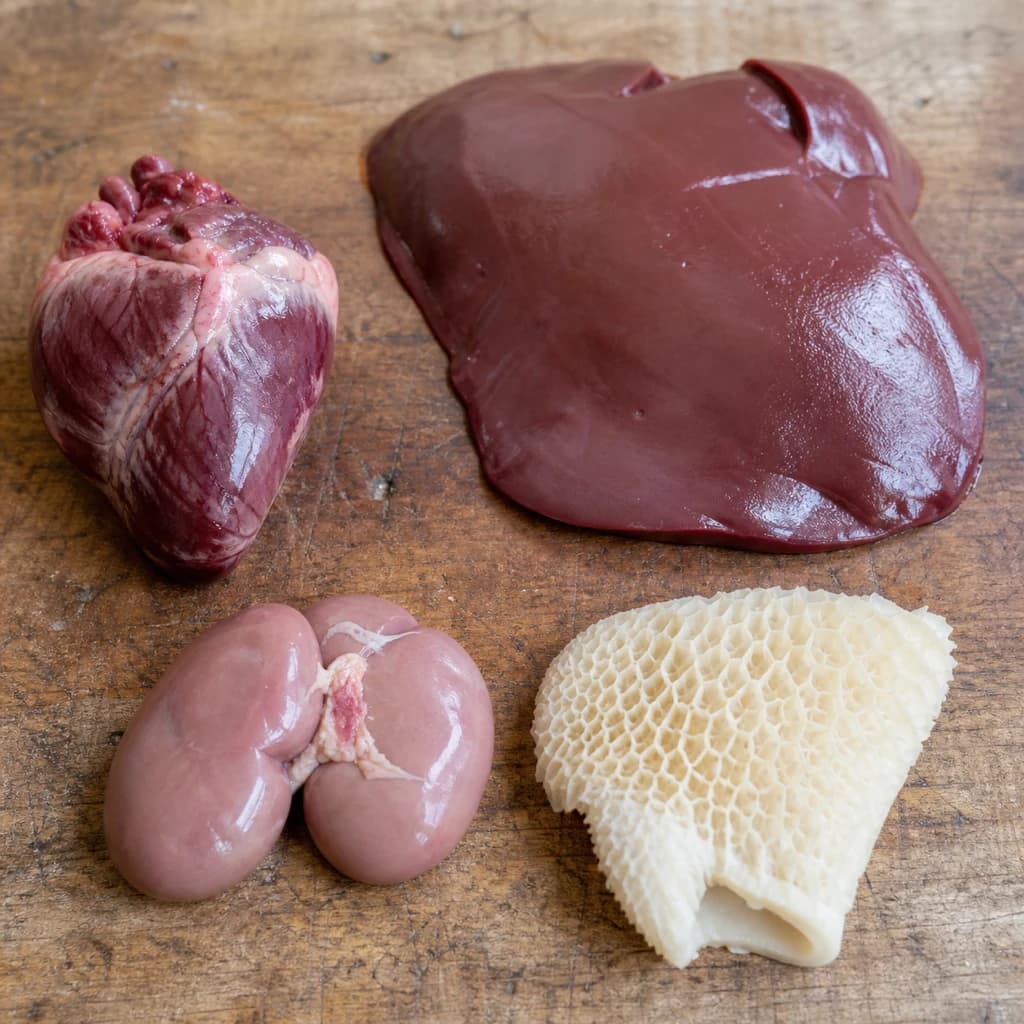
Four common offal types — liver, heart, kidney, and tripe — laid out together on a wooden board.
Showing multiple organ types side by side in one scene teaches readers what offal looks like as a category and how each organ differs in color, shape, and texture.
Proteins
Offal
Organ and variety meats — liver, heart, tripe, kidney — used in nose-to-tail cooking.
Offal refers to the internal organs and variety meats of animals, including liver, heart, kidney, tripe, and intestines. Prized in traditional and nose-to-tail cooking worldwide, it appears in dishes from African serobe and tripe stews to French and Asian organ preparations. Each type has a distinct texture and a deep, mineral-rich flavor that rewards careful cleaning and cooking.
Offal encompasses every organ, gland, and visceral component of a butchered animal — a category so broad it includes the buttery tenderness of foie gras alongside the iron-dense chew of beef kidney. Once the foundational cuisine of European peasants and the prestige ingredients of classical French kitchens, offal fell from favor in mid-twentieth-century America, dismissed as poverty food or simply overlooked in favor of muscle cuts. Today it has reclaimed its place among chefs and home cooks practicing whole-animal cookery, not merely as an act of economy or environmental responsibility, but because these cuts deliver extraordinary flavor, texture, and nutritional density that prime cuts cannot match. The critical reality of offal is that it is not one ingredient but dozens, each with its own behavior: liver sears in minutes and turns chalky if overcooked; heart benefits from hours of braising; sweetbreads demand a precise sequence of blanching, pressing, and searing; tripe requires patient cleaning before it transforms into something silky. Treating offal as a monolithic category guarantees failure. Treat each variety as its own ingredient, and you unlock a pantry of deeply savory, irreplaceable cooking.
- Measured in
- g
- Storage
- Fridge
Types & varieties
Most popular variety; chicken, beef, pork, lamb, duck; flavor ranges from mild (chicken) to pronounced iron-y (beef); smooth, dense texture; base for all pâtés
Pork, beef, lamb, veal; pronounced mineral flavor with slight bitterness; tender when cooked correctly; essential in steak and kidney pie and British savory pies
Chicken, beef, pork, lamb; lean, firm, intensely beefy; benefits from slow braising or quick searing; diced and used like stew meat or stuffed
Honeycomb (second stomach) and blanket tripe from beef or pork; spongy, mild-flavored; requires thorough cleaning; base for Mexican menudo and Spanish callos
Thymus glands (veal is most prized); creamy, delicate texture; must be soaked, blanched, and browned; considered a delicacy
Beef, pork, lamb, veal; rich, beefy flavor; extremely tender when braised slowly; served sliced, diced, or in tacos and sandwiches
Veal, pork, lamb; extremely delicate, custard-like texture; must be soaked and poached; used in classic dishes like brain à la tartare
Enlarged, fatty duck or goose liver; most prized offal; buttery, rich, melt-in-mouth texture when properly seared
Pig, calf, chicken; collagen-rich; used to make aspics, stocks, and long-braised dishes; gelatinous, silky texture
Pig small intestines; traditional in Southern US, French, and Belgian cuisines; must be thoroughly cleaned; often fried or simmered
Beef or pork lungs; used in British and some European cuisines; spongy texture; rarely seen in US markets
Beef, pork; dark, soft texture; used in traditional Jewish cuisine (milts) and some European preparations
Served as a starter or for extracting marrow; rich, fatty, buttery marrow extracted from leg bones by roasting or simmering
Cheek, tongue, and brain from one animal; traditional in Mexican barbacoa, US head cheese, and Italian testina
Why Cook Offal?
Offal earns its place on the modern table for three compelling reasons. First, flavor: these cuts deliver concentrated, mineral-rich savoriness that no ribeye can match. Second, nutrition: organ meats are extraordinarily dense in micronutrients — beef liver provides more than six times the daily requirement of vitamin B12 and well over 100% of vitamin A per serving, along with highly bioavailable iron and zinc. Third, ethics and economy: nose-to-tail cooking honors the entire animal, reducing waste while typically costing a fraction of premium cuts. Chefs like Fergus Henderson at St. John in London and Ryan Anklam at The Breslin in New York have built reputations on whole-animal cookery, demonstrating that offal belongs in refined dining, not just rustic peasant fare.
- Liver provides exceptionally high levels of vitamin A and B12 per serving
- Heart contains dense, iron-rich muscle tissue with notable CoQ10 content
- Offal is the original umami bomb — glutamates concentrate in organs
Handling and Storage
Offal spoils faster than muscle meat because organs are rich in enzymes and have high water activity. Fresh offal should smell clean and meaty, never sour, ammonia-like, or overly pungent — a strong odor indicates age. Purchase from sources with high turnover and use within 24–48 hours, or freeze immediately. For freezing, wrap tightly in plastic wrap, then aluminum foil, or use vacuum bags; most offal keeps 3–4 months frozen. Thaw frozen offal overnight in the refrigerator, never at room temperature. Always handle offal with the same care you'd apply to raw ground beef — clean surfaces, separate utensils, and wash hands thoroughly.
- Smell test: fresh offal smells clean and meaty, not sour
- Freeze fresh offal if not cooking within 24 hours
- Thaw in the refrigerator, never on the counter
- Freezing kidney can firm the flesh and improve texture in some preparations
Common uses
Tips & pitfalls
- Purchase from a trusted source with high turnover — freshness determines odor and flavor more than any technique
- Smell is the best indicator of freshness: offal should smell clean and meaty, never sour or ammonia-like
- Soak kidney in salted water or milk for 1–2 hours before cooking to reduce strong mineral notes
- Soak brain in cold salted water for several hours, changing water twice, to firm texture and remove blood
- Always remove the membrane from liver and any connective tissue from heart before cooking
- Never overcook liver — it turns dry, crumbly, and strongly flavored; a quick sear or brief braise is ideal
- Braise tougher offal (heart, tongue, cheek) low and slow, 2–3 hours, for tenderness
- Sweetbreads should be blanched in acidulated water, then pressed and seared for a crisp exterior
- Tripe requires multiple cleanings: rinse well, then blanch 5 minutes, scrape, and repeat until water runs clear
- Use chicken fat (schmaltz) or duck fat for cooking offal — it complements rich flavors better than neutral oils
- Season aggressively; offal's strong flavors benefit from bold seasoning: garlic, onion, capers, anchovy, herbs, acid
- Don't discard cooking liquid from braised offal — it concentrates flavor and makes an excellent sauce base
- Remove kidneys' ureter and excess fat before cooking — they contain strong-tasting membranes
- Grilled chicken hearts should be served slightly pink inside — overcooking makes them tough and rubbery
- When making pâté, sear livers briefly then finish in a slow oven to prevent browning and achieve a smooth texture
Nutrition
Energy
598 kJ · per 100 g
Where the calories come from
Protein
10.9g
22% DV
Carbs
1.1g
0% DV
Fat
10.3g
13% DV
Fiber
0g
0% DV
Sugars
0g
of which
Sodium
126mg
5% DV
Source · USDA FoodData Central · approx. Beef, variety meats and by-products, brain, raw
View on FDC →In the shops
Matched grocery products
No matched grocery products for Offal yet.
Good to know
- Definition
- Internal organs, glands, and entrails of butchered animals; also called variety meats or organ meats
- Etymology
- From Middle English 'offal' meaning refuse or waste, though these cuts are prized in nose-to-tail cooking
- Nutritional profile
- Extremely nutrient-dense — liver is among the richest sources of vitamin A, B12, iron, and copper; heart is high in CoQ10 and protein; kidney is rich in selenium and B vitamins
- Shelf life
- Highly perishable; use within 1–2 days when fresh; freezes well for 3–4 months
- Typical cost
- A fraction of prime cuts — liver often under $3/lb at ethnic markets and specialty butcher shops
- Acquisition
- Most readily available at ethnic grocery stores, specialty butchers, and farmers markets; increasingly stocked frozen at mainstream supermarkets
- Yield
- High yield for most organs; liver and kidney lose minimal mass; tripe shrinks about 30% when cooked
- Common sources
- Beef, pork, lamb, goat, veal, chicken, duck, and game animals
Substitutes
- Chicken livers — Universal substitute for beef or pork liver in most preparations
- Lean ground beef — For kidney in stews; adds protein but lacks the mineral complexity
- Veal or lamb sweetbreads — Interchangeable; lamb are smaller, veal are creamier
- Beef or pork tongue — Can substitute for each other; pork is smaller, beef is more common
- Rump roast or chuck — For heart in slow braises; similar texture when cooked low and long, but lacks the beefy intensity
- Oxtail — Rich, collagenous substitute for feet in stocks and braises
- Corned beef or brisket — Emergency substitute for tongue; similar texture and richness when braised
- Chicken gizzards — Smaller, chewier, milder than beef or pork tripe; can substitute in slow-cooked preparations
Pairs with
Also called
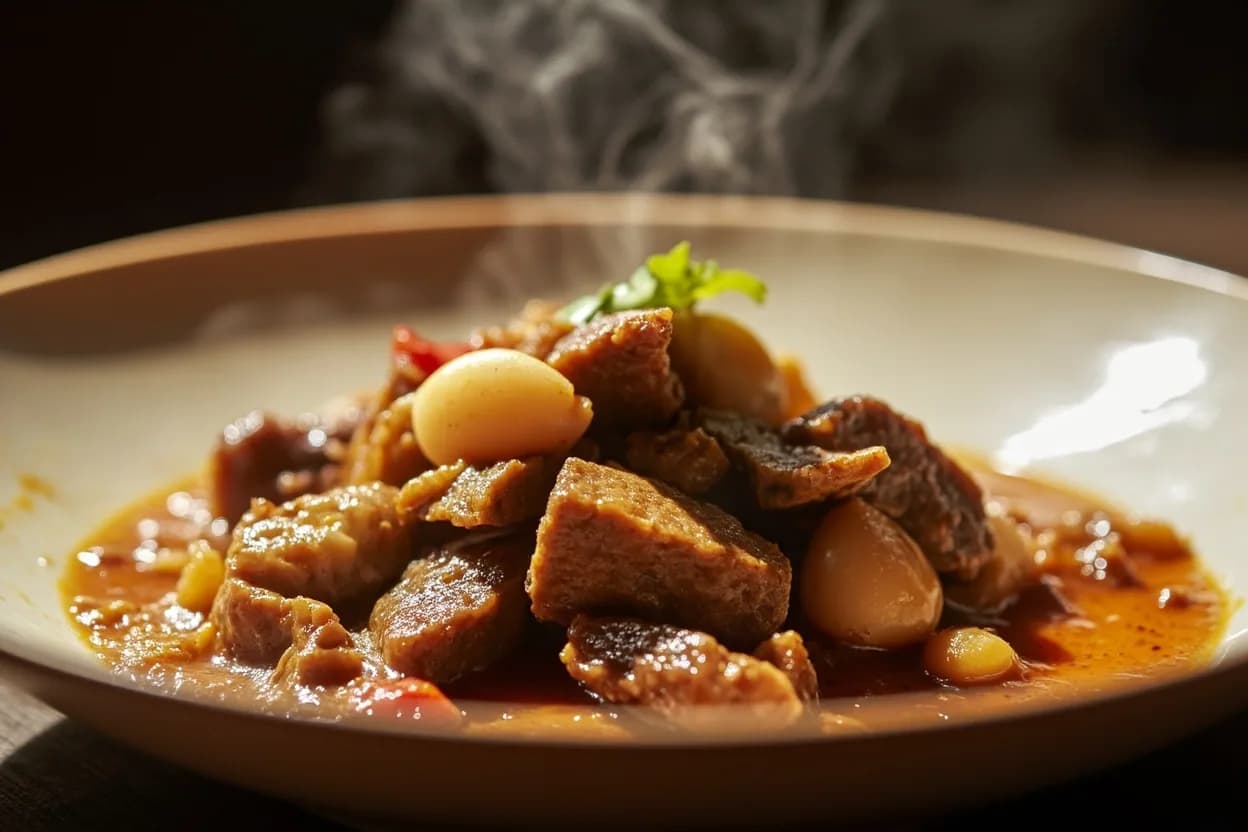
Variety Meats · Tripe · Serobe · Organ Meat
Appears in these dishes
Related

Egg
The kitchen's everything ingredient — bind, leaven, enrich, or fry

Chicken Breast
Lean, quick-cooking white meat for everyday dinners

Ground Beef
Versatile minced beef for burgers, ragù, tacos, and meatballs

Pork Loin
Lean, tender roasting cut that stays juicy with care

Salmon
Rich, rosy fish that roasts, grills, or cures beautifully

Egg White
Pure protein that whips to airy peaks for meringue and more

Egg Yolk
Rich, golden yolk for custards, mayonnaise, and pasta

Quail Egg
Tiny, speckled eggs for garnishing and elegant bites