Latin America
Michoacana
Also: Cocina Michoacana, Purépecha cuisine, Michoacán cuisine
A UNESCO-recognized indigenous heartland cuisine where Purépecha lake culture, mountain corn, and slow-cooked pork meet in dishes of deep, unadorned integrity.
Michoacana cuisine is one of Mexico's most authentically pre-colonial traditions, centered on the Purépecha (Tarascan) people of the Trans-Mexican Volcanic Belt. It draws from the extraordinarily biodiverse Lake Pátzcuaro basin (freshwater fish, aquatic herbs, insects) and the surrounding highlands (corn in dozens of varieties, wild mushrooms, blackberries). The cuisine resists elaborate sauce architecture in favor of ingredient honesty: masa preparations of extraordinary refinement, slow-cooked pork carnitas, and corn-based tamales that define a regional grammar. UNESCO recognized Mexican cuisine as Intangible Cultural Heritage in 2010, with Michoacán's traditions — particularly the Purépecha model of milpa agriculture and communal cooking — as a primary justification.
The flavour base
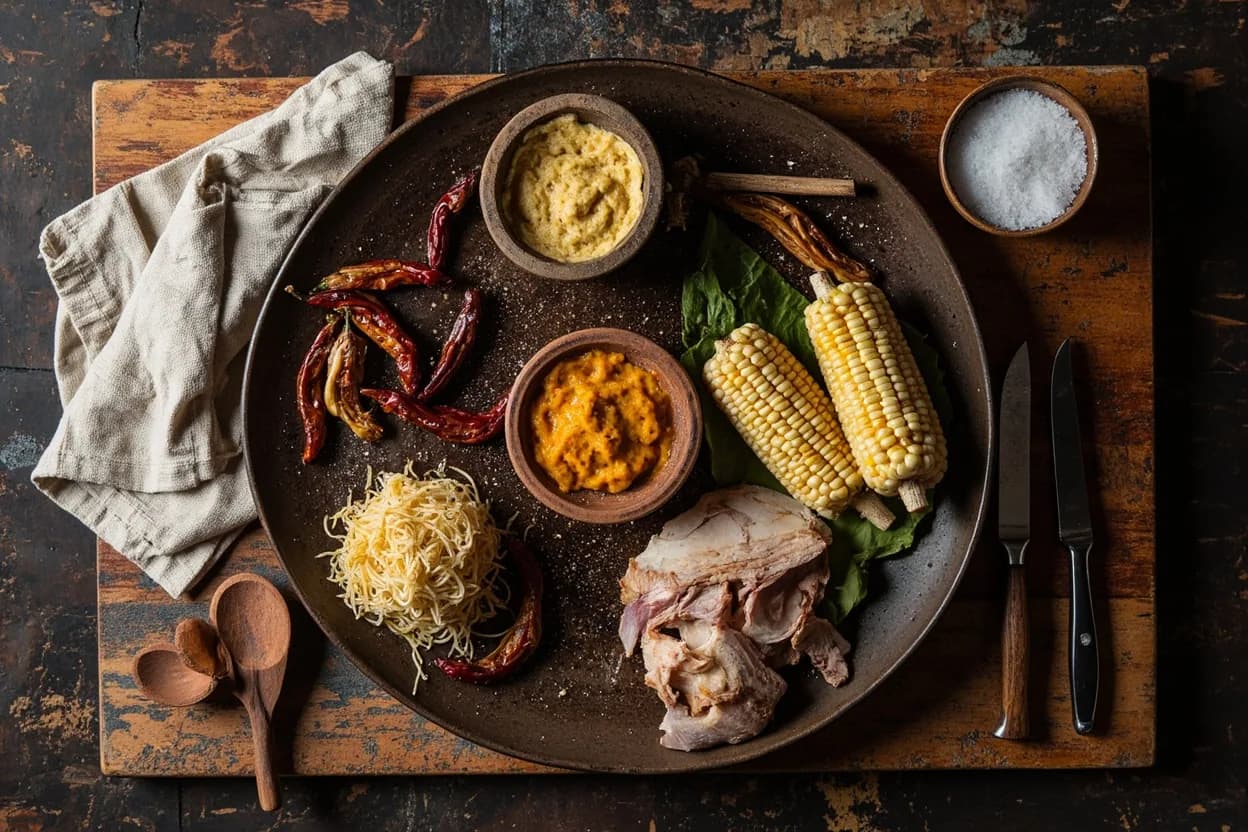
Rendered pork lard and the nixtamalized corn masa underpin the cuisine's most important preparations. Lake fish are seasoned simply with local herbs (yerba santa, chepiche). Chiles are used in moderation compared to other Mexican regions — the Purépecha cuisine of the highlands favors chile ancho, guajillo, and cascabel in restrained amounts.
Pantry staples
Key ingredients
Signature techniques
Signature dishes
Michoacana on the table
At the table
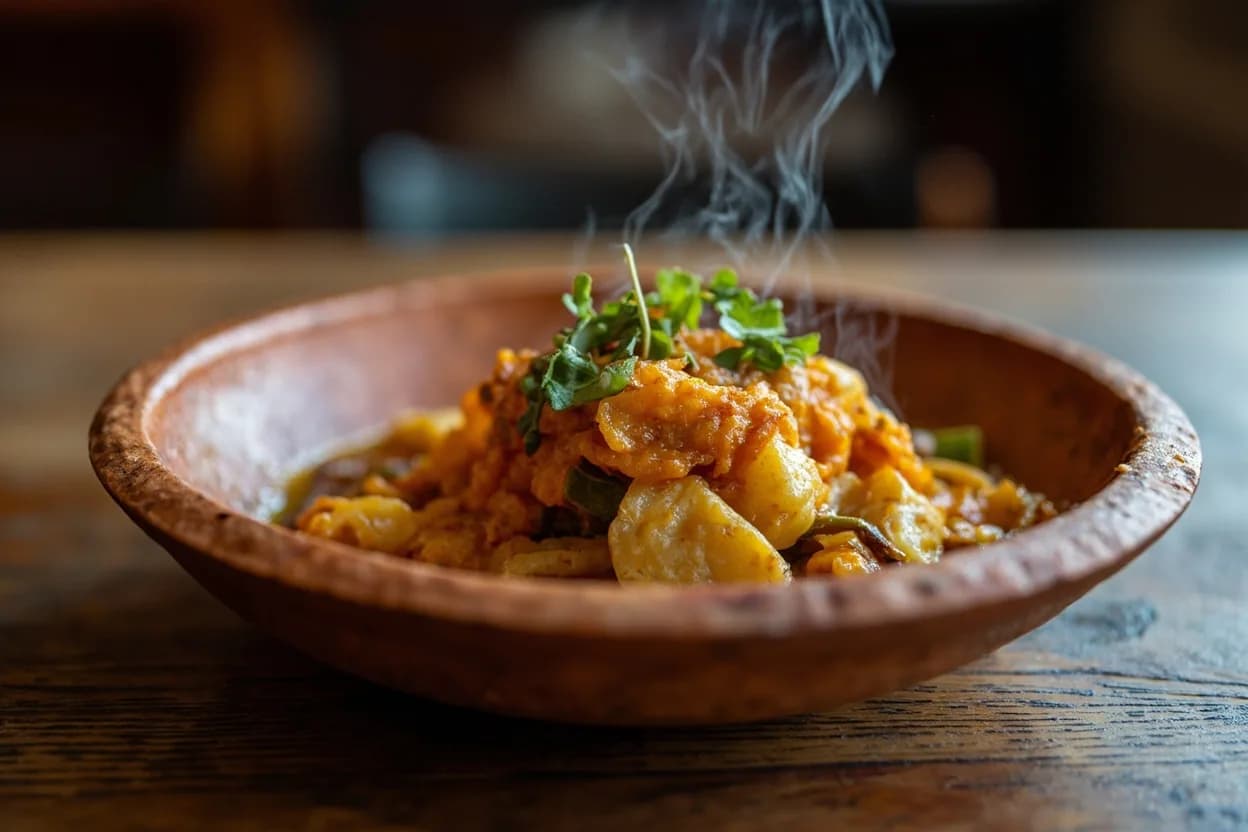
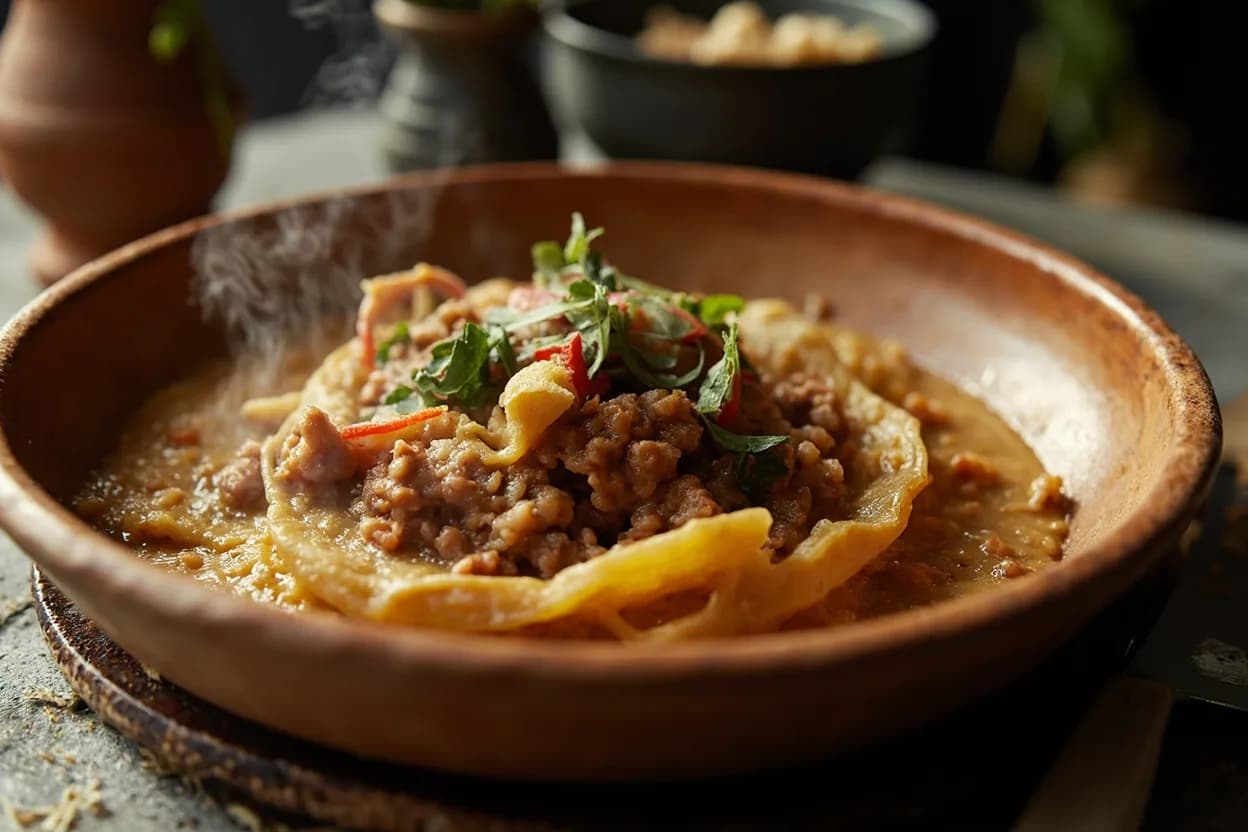
The Purépecha meal centers on masa in all forms — corundas and uchepos at breakfast or as a side, carnitas at midday as the principal protein. Markets and roadside stands serve carnitas by the kilo, eaten with tortillas and salsa at communal tables. Atoles (corn-based hot drinks) bookend meals in cooler highland communities. Sunday carnitas is a near-sacred communal institution throughout the state.
History & context
The Purépecha Empire was the only major Mesoamerican civilization to successfully resist Aztec expansion, a military independence that preserved distinct cultural and culinary practices. The Pátzcuaro basin — Lake Pátzcuaro at 2,035 meters elevation — supported a sophisticated fishing economy producing species found nowhere else. Spanish contact introduced pigs, lard, and copper (Michoacán's artisan copper industry from Santa Clara del Cobre now produces the legendary carnitas cauldrons). The post-colonial fusion of Purépecha corn mastery with introduced pork created carnitas michoacanas, which became Mexico's most widely franchised regional dish. In 2010, UNESCO's inscription of Mexican cuisine cited Michoacán's milpa system and communal cooking — particularly in the town of Quiroga — as a living exemplar.
Regional variations
- Lake Pátzcuaro basin
Concentrated Purépecha fishing culture; pescado blanco (whitefin), charales, and acociles dominate; corundas are the daily starch rather than tortillas.
- Tierra Caliente
Hot lowlands bordering Guerrero; distinct chile heat, stronger African-descendant culinary influence, pozole, and grilled meats replace the highland pork preparations.
- Meseta Purépecha (Sierra)
High pine-forested plateau; wild mushroom cookery, blackberry-based sweets, and the most intact pre-Columbian Purépecha food traditions, including atapakua sauces.
Related cuisines
- Guerrerense
Shares the Tierra Caliente border zone and similar chile-forward stew traditions; Guerrero's pozole has roots in the same lowland culture that edges into Michoacán.
- Jaliscience
Both are major pork and corn cuisines of western Mexico; birria and carnitas share a slow-cooked pork logic though the techniques and fats diverge significantly.
- Michoacán-style heladerías (ice cream)
The Michoacán nieve (ice cream) and paleta tradition, especially from the town of Tocumbo, has spread nationally and internationally; not a cuisine per se but a culinary export of extraordinary reach.
Canonical recipes
The dishes that define Michoacana, documented in the Canon.
References
- 1.Mexico: The Cookbook — Margarita Carrillo Arronte (Phaidon, 2014)
- 2.The Essential Cuisines of Mexico — Diana Kennedy (Clarkson Potter, 2000)
- 3.UNESCO Intangible Cultural Heritage: Traditional Mexican cuisine — UNESCO (2010)
- 4.Cocina Prehispánica Mexicana — Guadalupe Pérez San Vicente (Panorama Editorial, 1992)
Confidence: high
Notes
Carnitas: The Copper Cauldron Method
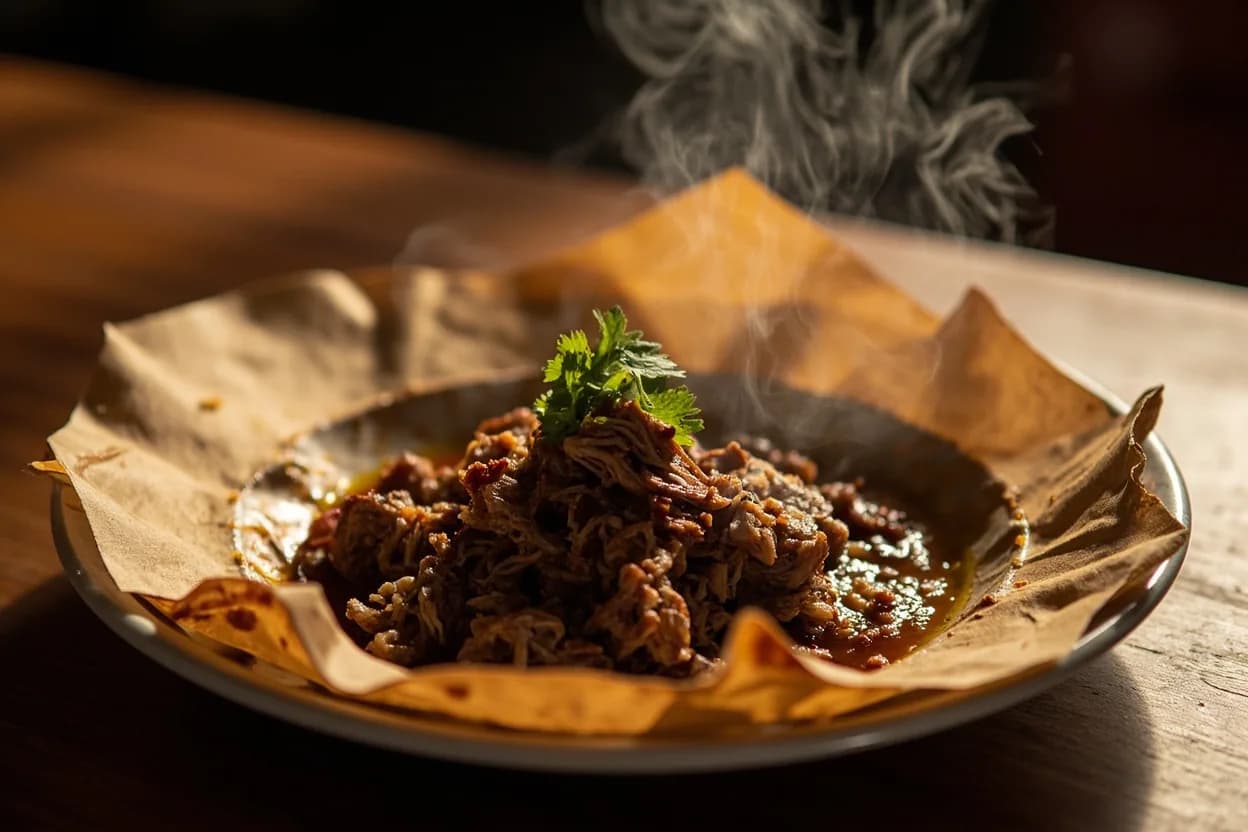
Authentic Michoacán carnitas are cooked in large copper cauldrons (original artisan copper from Santa Clara del Cobre) in which entire pork pieces — including skin, organs, and ribs — are submerged in lard and slowly confited at low temperature before being raised in heat for final crisping. The technique is distinct from oven-braised or pressure-cooked versions; the copper conducts heat evenly and is part of the regional identity. Carnitas stands in Quiroga and Zitácuaro are often family operations running the same cauldrons for generations.
The Corunda vs. Tamal Distinction
Corundas are not tamales in the conventional sense. They are wrapped in the fresh triangular leaves of the corn stalk (not the dried husk), filled with rajas or beans, and shaped into distinctive triangular or pentagonal bundles. Their masa is generally of finer texture and their wrapper imparts a grassy freshness unavailable in husk-wrapped tamales. They are a uniquely Purépecha form.