West Africa
Senegalese
Also: Senegali, Wolof cuisine, cuisine sénégalaise
West Africa's most refined culinary tradition, built on a one-pot mastery of fish, rice, and peanuts and given global ambition by Dakar's cosmopolitan restaurant scene.
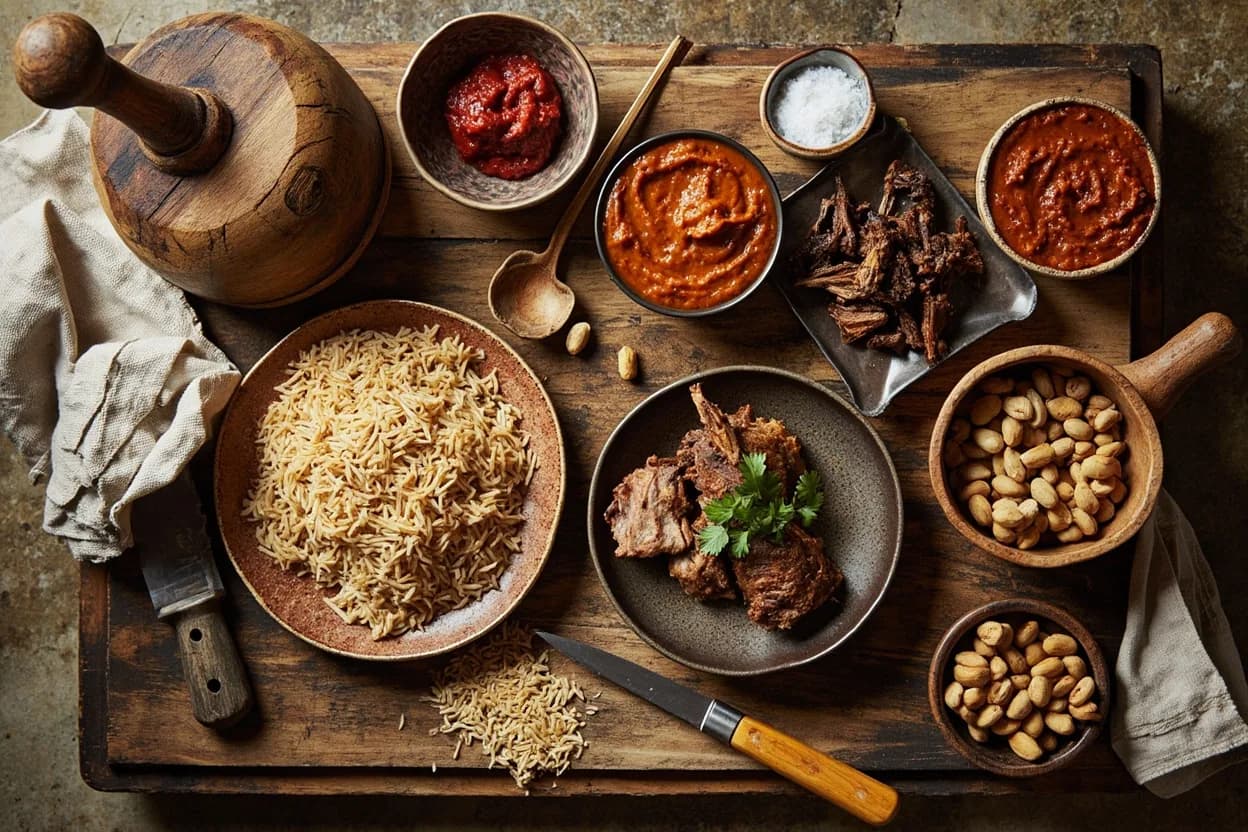
Senegalese cuisine is widely regarded as the most developed and internationally recognized cooking tradition in sub-Saharan Africa. It is centered on a small number of deeply mastered techniques applied to rice, fish (fresh and dried), lamb, peanuts, and a vegetable base that reflects centuries of both Atlantic trade and trans-Saharan exchange. The dominant flavor principles are layered: a concentrated tomato-onion-garlic base (typically fermented with nététou, the local locust bean paste), the deep savoriness of guedj (fermented dried fish), and the richness of peanut or palm oil. Thiéboudienne — rice cooked in a reddish fish broth with vegetables — is the national dish and a technical achievement of one-pot cooking that requires specific mastery of layering flavor, timing, and the prized crispy rice crust (xoon) at the bottom.
The flavour base
Tomato-onion base fermented with nététou (locust bean paste) and enriched with guedj (dried fermented fish); peanut and palm oil as primary fats
Pantry staples
Key ingredients
Signature techniques
Signature dishes
Senegalese on the table
At the table
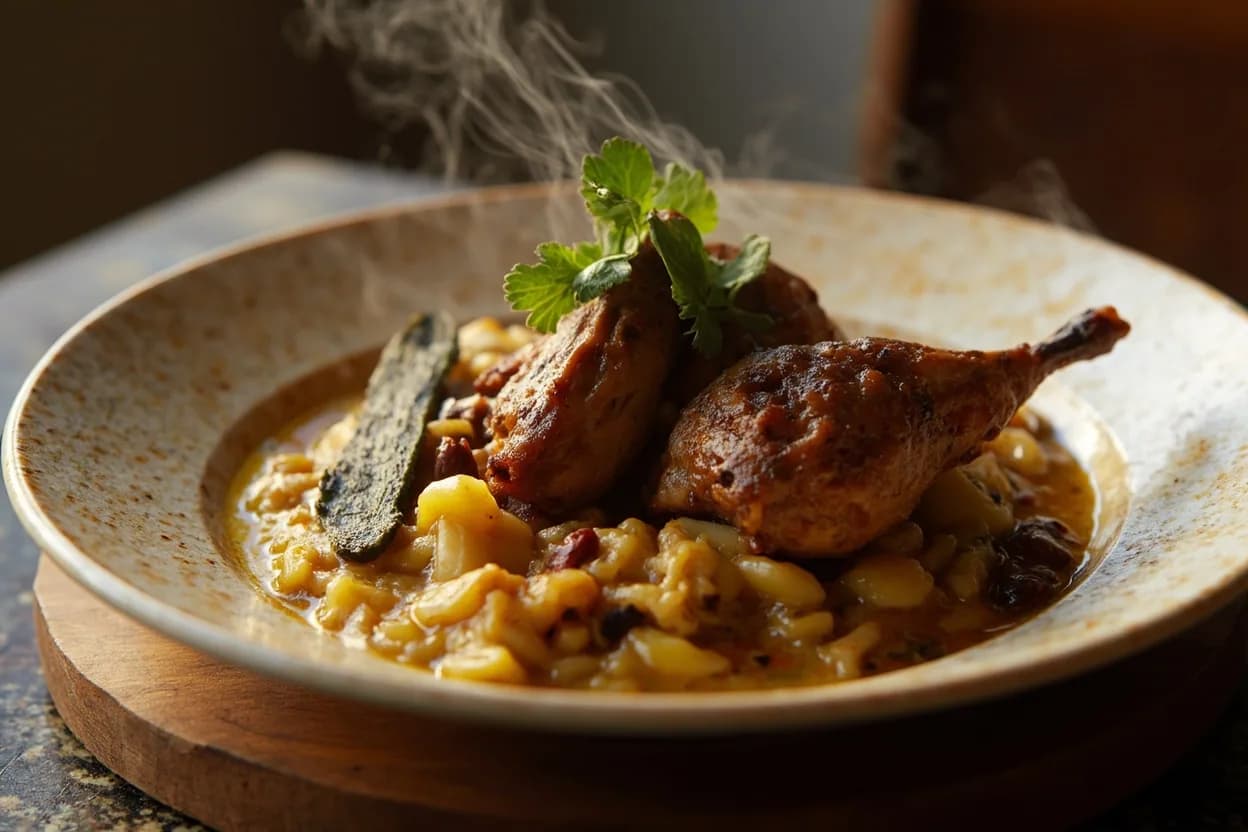
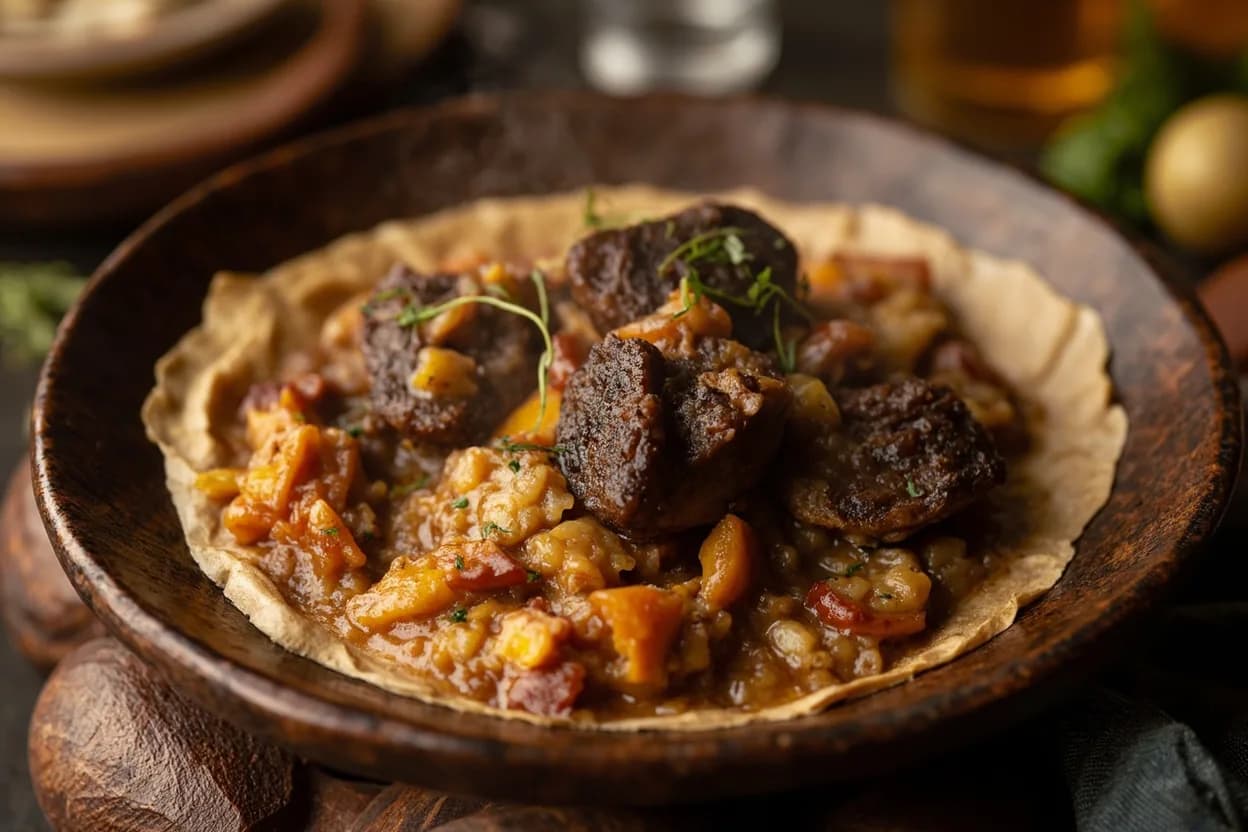
The classic meal is a single large communal bowl of rice and protein placed on the floor, eaten sitting around it with the right hand. Each diner eats from their section; the center holds the most prized pieces. Lunch is the main meal of the day. Hospitality (teranga) is culturally central — a guest must always be offered food. The attaya green tea ceremony, poured three times in ascending sweetness, closes social gatherings.
History & context
Senegal's position at the westernmost point of continental Africa made it the principal Atlantic trade gateway of the Sahel. The Kingdom of Jolof and subsequent Wolof states developed sophisticated court cuisines by the 15th century. Portuguese and later French colonization (17th–20th century) introduced new ingredients — tomatoes, peanuts (groundnuts brought from the Americas via Europe), and chili — that were absorbed and made fundamental. Dakar became a major French colonial capital, and the creole exchange between Wolof culinary tradition and French technique produced a restaurant culture more developed than anywhere else in West Africa. Senegalese diaspora communities in France, Italy, and the United States began driving the cuisine's global profile in the 1990s–2000s; by the 2020s, Dakar restaurants were appearing on international best-lists.
Regional variations
- Casamance (south)
More palm oil, more pork (influenced by Christian and animist Diola communities), river fish, and palm wine; kassel (smoked fish stew) is a regional specialty
- Saint-Louis (north)
The oldest French colonial city; refined hybrid of Wolof and French technique; yassa originated here; sophisticated fish preparations
- Dakar urban
Most cosmopolitan expression; blends Wolof, Lebou, French, Lebanese, and Vietnamese influences; high-end restaurants and street food equally influential
Related cuisines
- Gambian
Gambia is geographically enclosed by Senegal and shares virtually identical Wolof-based cooking traditions with minor dialect variations
- Guinean
Shared peanut stew (mafé/maafe) and rice culture; Guinea-Bissau has creole Portuguese inflections
- Mauritanian
Northern neighbor with Moorish and Saharan influences; sharing of fermented fish and millet traditions along the coast
Canonical recipes
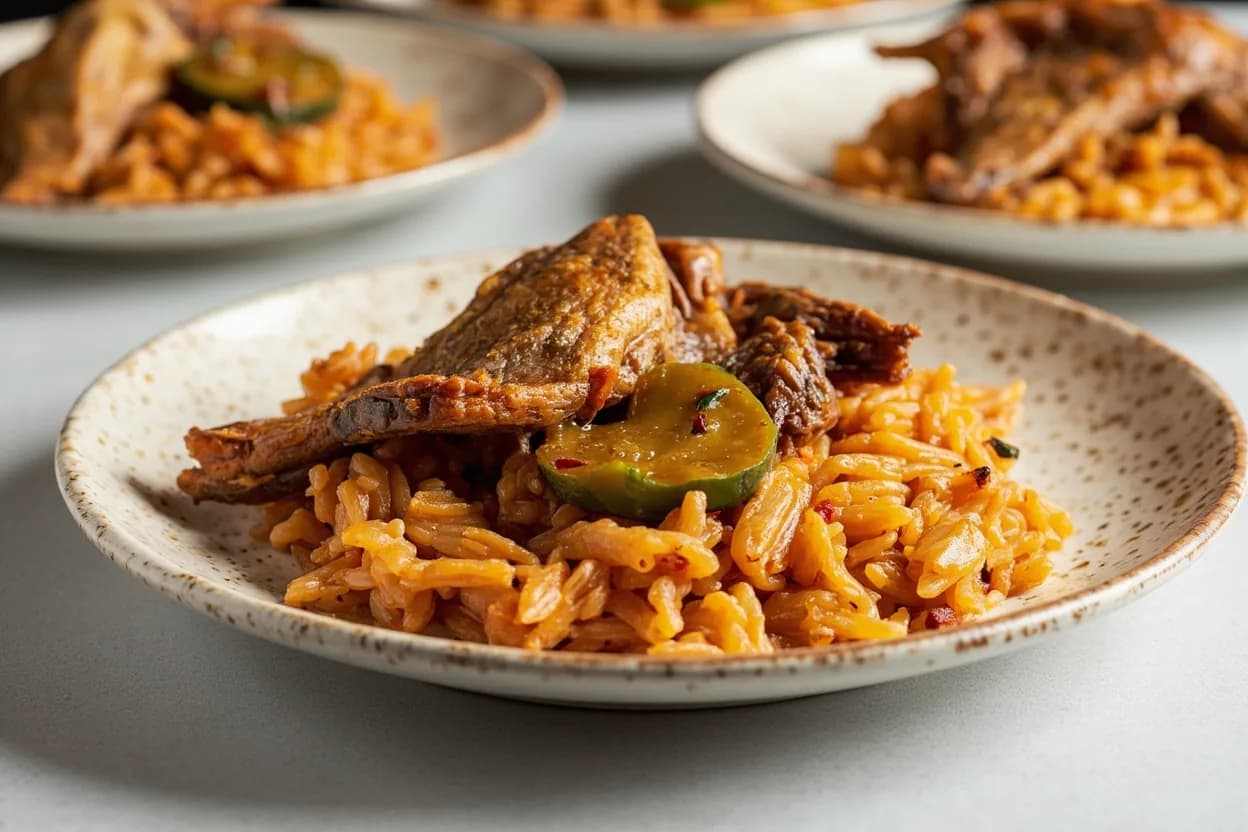
The dishes that define Senegalese, documented in the Canon.
References
- 1.Pierre Thiam, 'Yolélé: Recipes from the Heart of Senegal' (2008)
- 2.Jessica B. Harris, 'The Africa Cookbook' (1998)
- 3.Maricel Presilla, 'Gran Cocina Latina' (2012) — Afro-Atlantic context
Confidence: high
Notes
Thiéboudienne
Thiéboudienne (also spelled ceebu jen — Wolof for 'rice and fish') is recognized by UNESCO as Intangible Cultural Heritage of Senegal (2021). Its technique requires cooking whole fish stuffed with a blend of parsley, garlic, and chili (rof) in a base of concentrated tomato and fermented seasoning, then removing the fish and using the same pot to cook rice in the enriched broth until it absorbs all moisture. The prized xoon — the caramelized crust of rice at the pot's bottom — is distributed to honored guests.
Teranga
Teranga, the Wolof concept of boundless hospitality, structures Senegalese food culture at every level. To refuse food offered by a host is a significant social slight; meals are designed to be more than enough for everyone present, and the act of sharing from a common bowl is explicitly communal rather than merely practical.