South Asia
Sri Lankan
Also: Ceylon cuisine, Lankan cooking, Sinhala cuisine, Jaffna cuisine
An island cuisine built on coconut milk, volcanic black pepper, and roasted curry powder that diverges sharply from South Indian neighbors through its own Sinhalese, Tamil, Burgher, and Malay culinary identities.
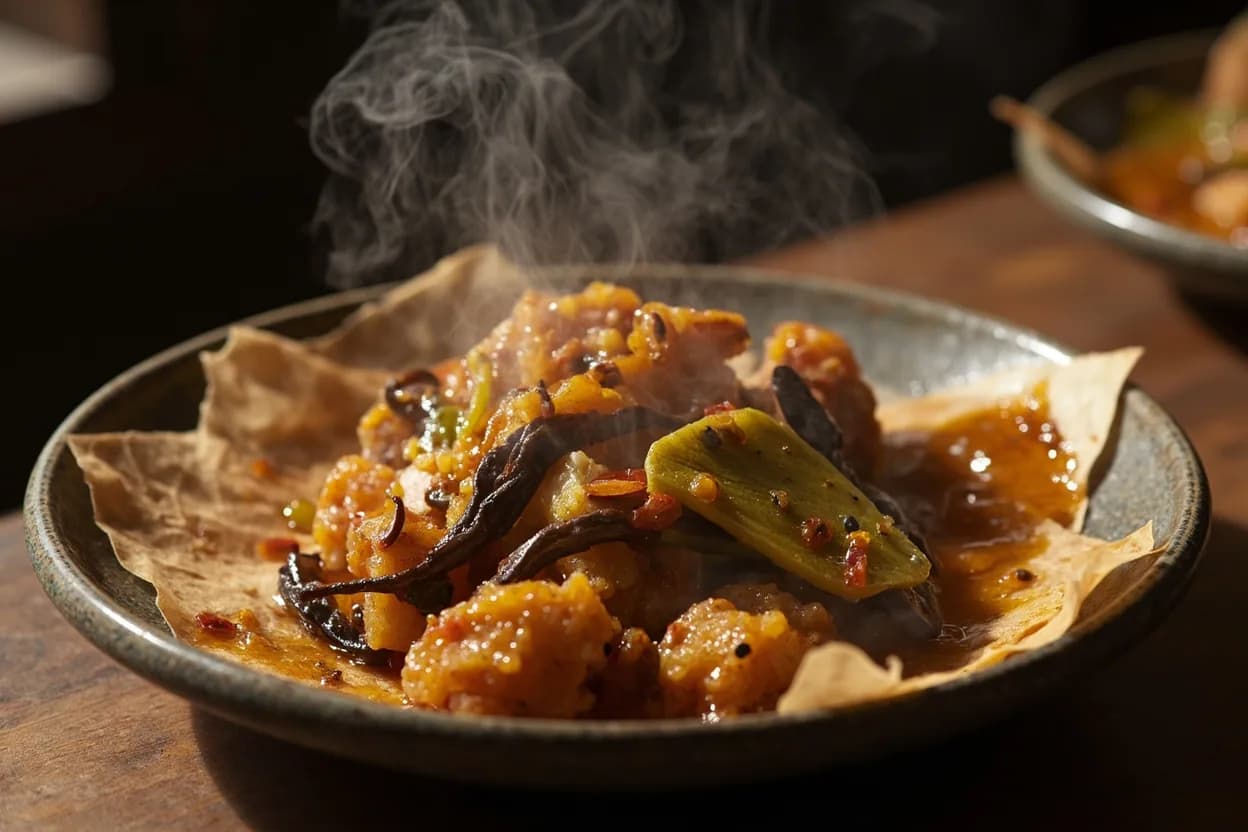
Sri Lankan cuisine is the cooking of the island of Sri Lanka (formerly Ceylon), shaped by its position as a maritime trading hub in the Indian Ocean. What distinguishes it from South Indian cooking — its nearest neighbor — is the heavy use of coconut in every form (milk, oil, scraped, toasted), the signature 'black curry' powder made from roasted-dark spices, the prevalence of rice-and-curry meals served on banana leaf or enamel tray, and a suite of uniquely Lankan preparations including hoppers (appa), kottu roti, and string hoppers. The island's Sinhalese majority, Sri Lankan Tamil minority, Burgher (Eurasian) community, and Sri Lankan Moor population have each contributed distinct cooking traditions. Sri Lankan curries are almost always hotter and deeper than South Indian counterparts, and the cuisine's street-food register — kottu roti, wade, isso wade — is as technically precise as its home-cooking repertoire.
The flavour base
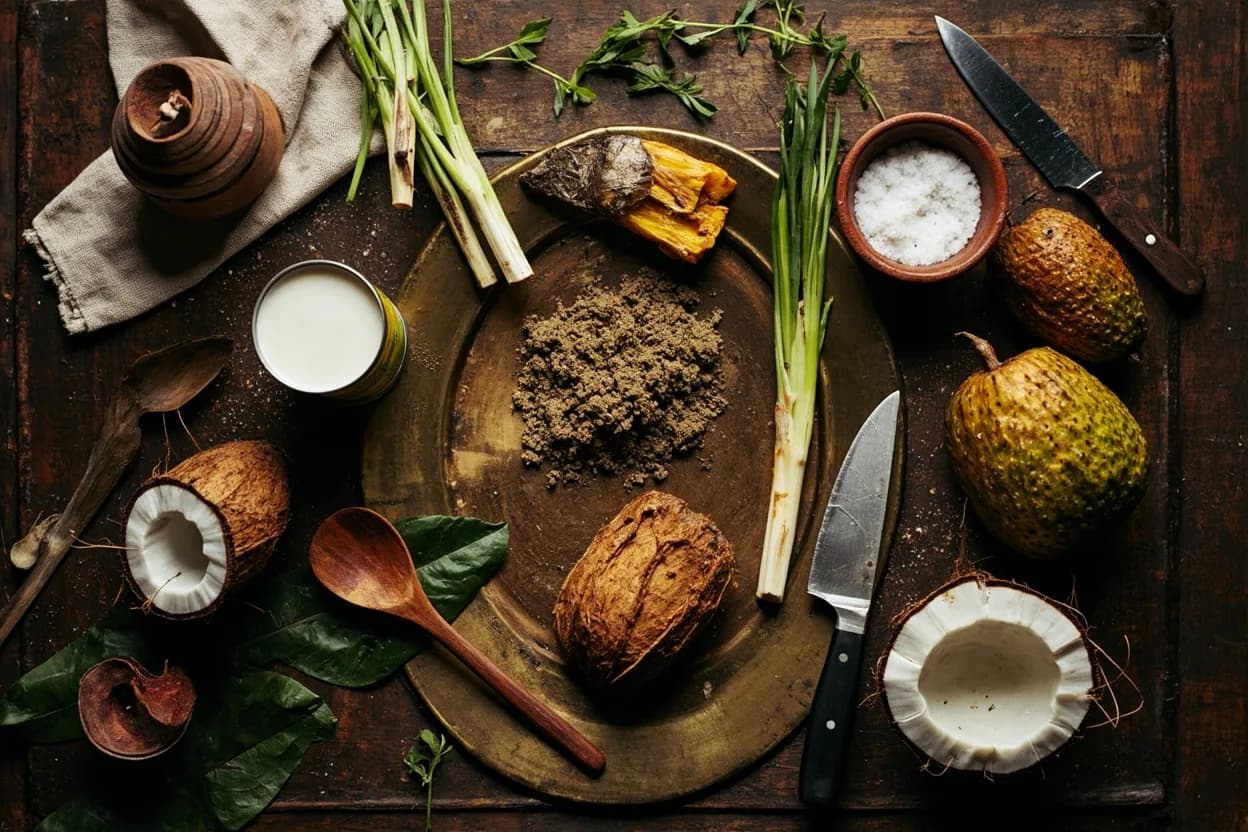
Tempered shallots and curry leaves in coconut oil; coconut milk as the sauce medium; roasted black curry powder (with charred coconut and black pepper) as the deep spice layer; pandan and lemongrass for fragrance
Pantry staples
Key ingredients
Signature techniques
Signature dishes
Sri Lankan on the table
At the table
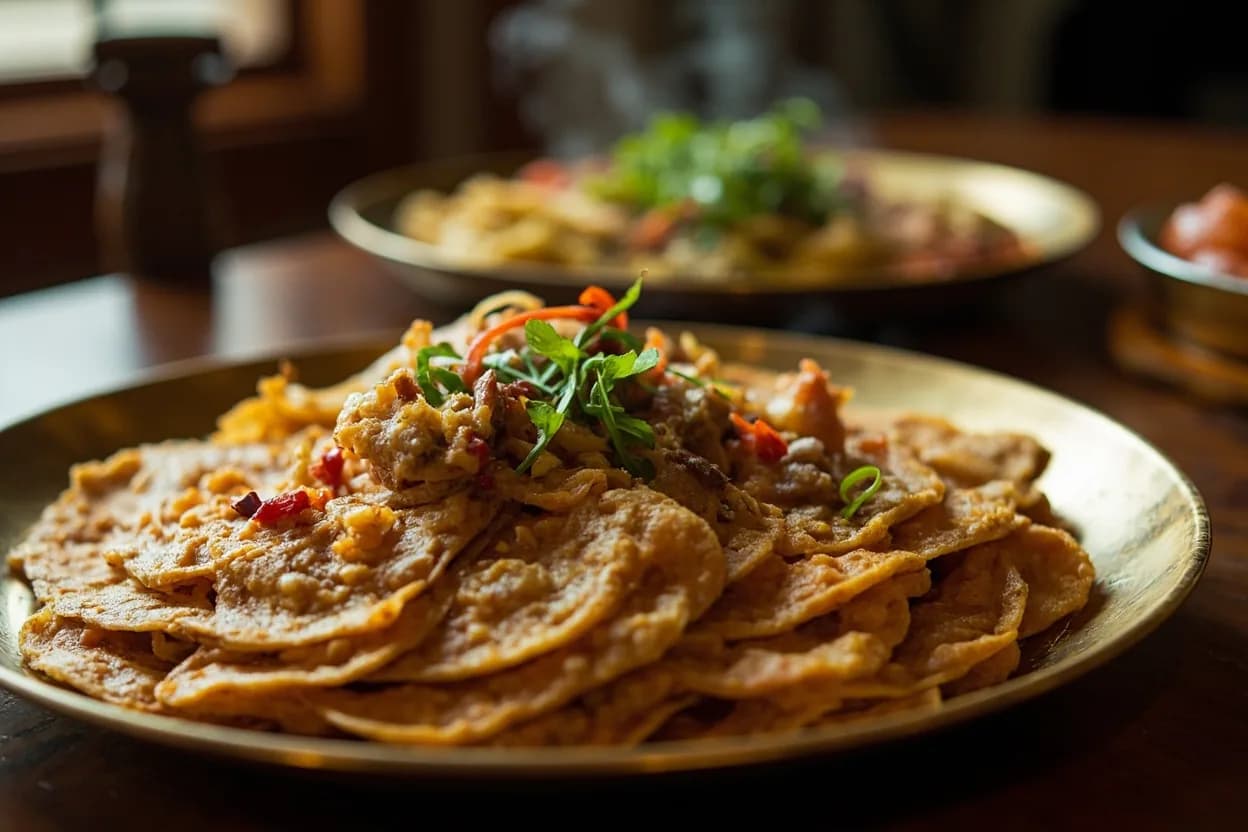
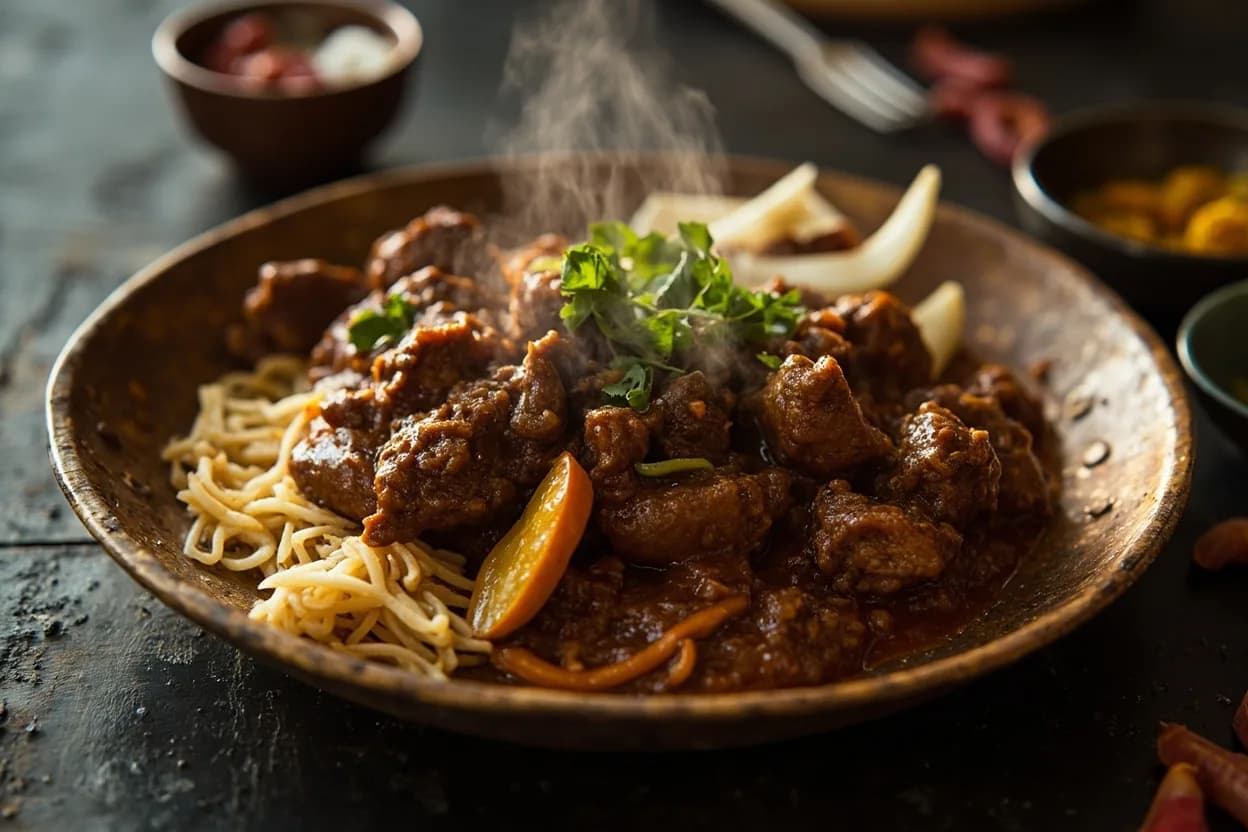
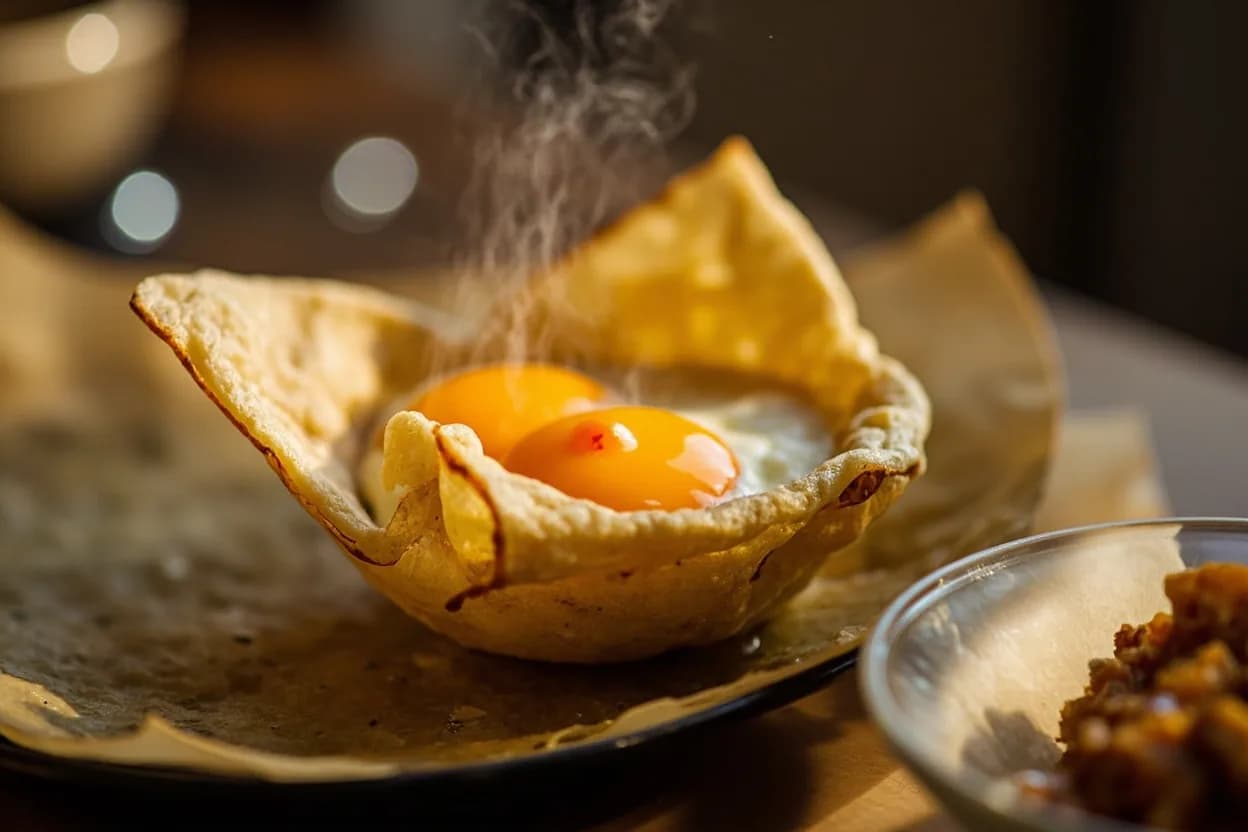
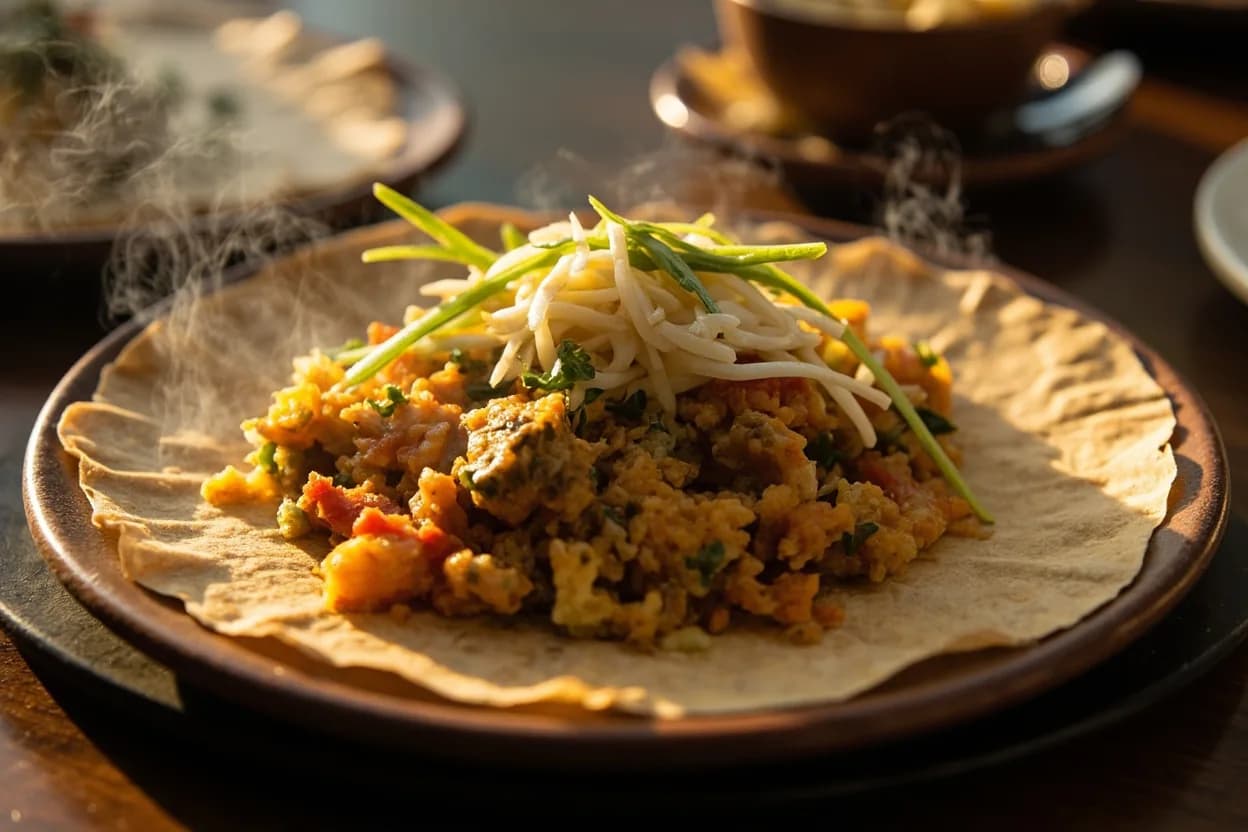
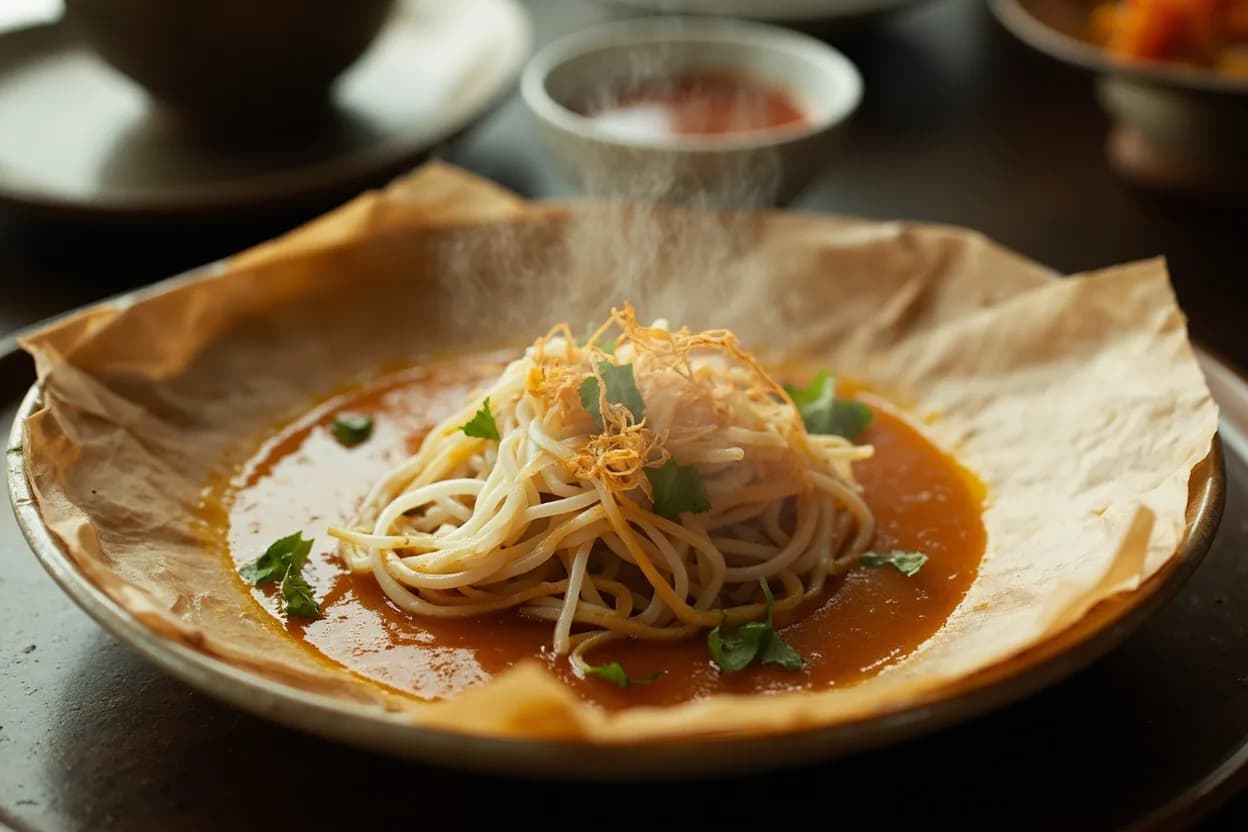
The standard Sri Lankan meal is rice-and-curry: a mound of red or white rice surrounded by three to five curries (one protein, two or three vegetables), sambol (usually pol sambol, a coconut-chilli relish), and a cooling milk curry (kiri hodi). Everything is served simultaneously and eaten together, not sequentially. Breakfast is a distinct register: hoppers, string hoppers, pittu (steamed rice-flour cylinder), or pol roti with sambol. Street food operates separately: kottu roti, wade, isso wade (shrimp fritters), and short eats (bakery snacks including rolls, cutlets, Chinese rolls).
History & context
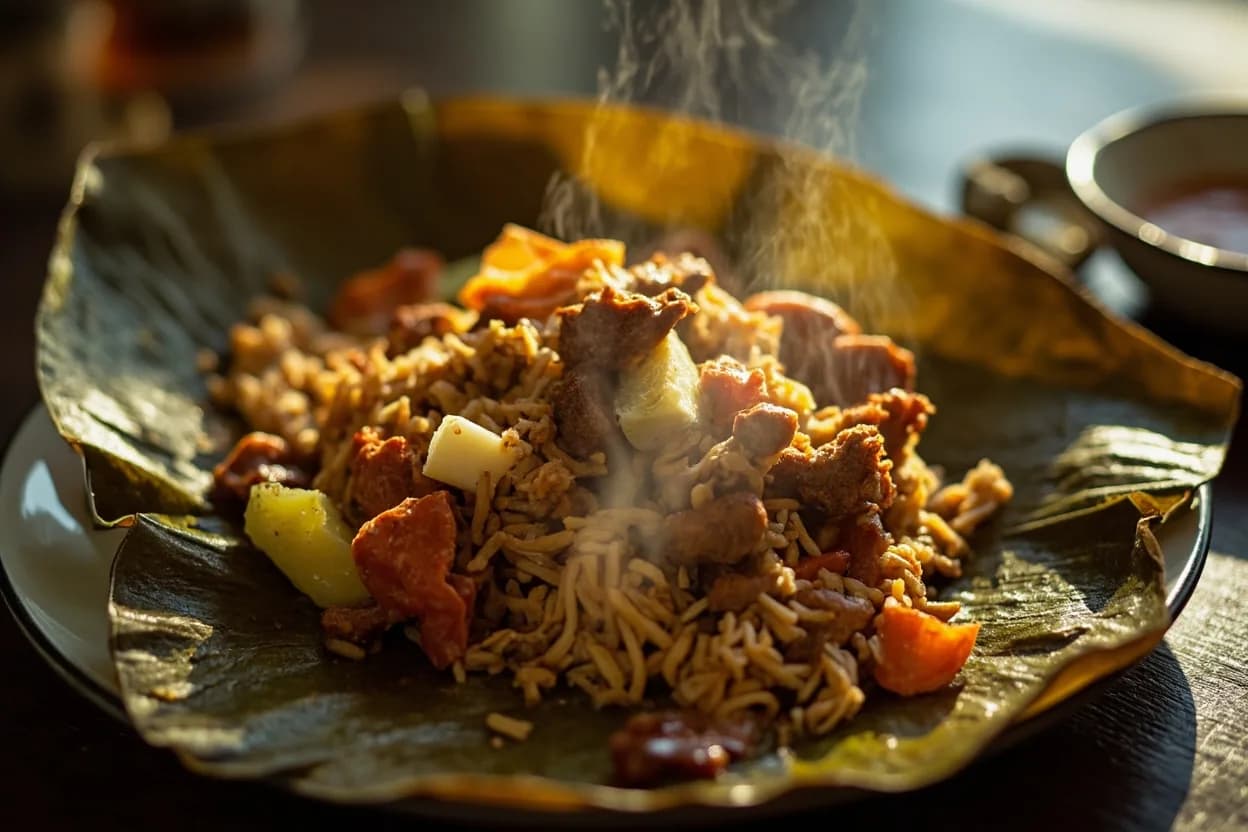
Sri Lanka's culinary identity was formed by its dual role as an Indian Ocean entrepôt and a planting colony. Arab, Malay, Portuguese, Dutch, and British presences each left traceable culinary imprints. The Portuguese (1505–1658) introduced tempering techniques and vinegar-pickling (wambatu moju, the pickled eggplant dish, reflects this). The Dutch (1658–1796) Burgher community developed lamprais — rice, three curries, and condiments wrapped in a banana leaf parcel and baked, a direct Dutch-Indonesian inflection. The British plantation economy displaced subsistence agriculture in the highlands, restructuring food supply. The Sinhalese culinary tradition, rooted in Pali Buddhist dietary ethics, prizes fresh vegetables and moderate fish use; the Sri Lankan Tamil tradition (centered in Jaffna) reflects tight kinship with South Indian Brahmin and Shaivite food cultures but with distinct spice profiles and a heavier reliance on palmyra palm products. The Sri Lankan Moor (Muslim) tradition brings biryani and watalappan (coconut custard) from its Arab-Malay heritage.
Regional variations
- Jaffna (Northern Sri Lanka)
Distinctly Tamil character; heavier use of palmyra palm products (toddy, jaggery); Jaffna crab curry with its fragrant roasted spice blend is the region's crown dish; drier curry preparations
- Colombo and the coast
More cosmopolitan; strong Burgher and Malay influence; short eats bakery culture; lamprais; Chinese rolls as street snacks
- Kandy and the Hill Country
Cooler climate; more vegetable-forward; strong Sinhalese Buddhist restraint; gotukola and kale-like greens more prominent
- Southern province (Galle, Matara)
Distinct seafood preparations; strong use of goraka (Malabar tamarind) as souring agent instead of tamarind; slightly hotter profile
Related cuisines
Closest cultural cousin; shared idiyappam, dosai, and Tamil cooking substrata, but Sri Lankan spice profiles roast darker
- Kerala
Similar coconut-oil and Maldive fish base; stew and milk curry parallels; both sit on Malayalam-coastal trade routes
- Indonesian / Malay
Malay community influence visible in watalappan, kiri bath, and the banana-leaf parcel tradition that shaped lamprais
Canonical recipes
The dishes that define Sri Lankan, documented in the Canon.
References
- 1.The Food of Sri Lanka — Douglas Bullis and Wendy Hutton
- 2.Sri Lanka: The Cookbook — Prakash K. Sivanathan and Niranjala Ellawala Iyer
- 3.Colombo Food: Sri Lanka's Favourite Recipes — Dharshini David
- 4.Cradle of Civilisation and the Culinary Arts of Sri Lanka — Ministry of Cultural Affairs, Colombo
Confidence: high
Notes
Black vs. red curry powder
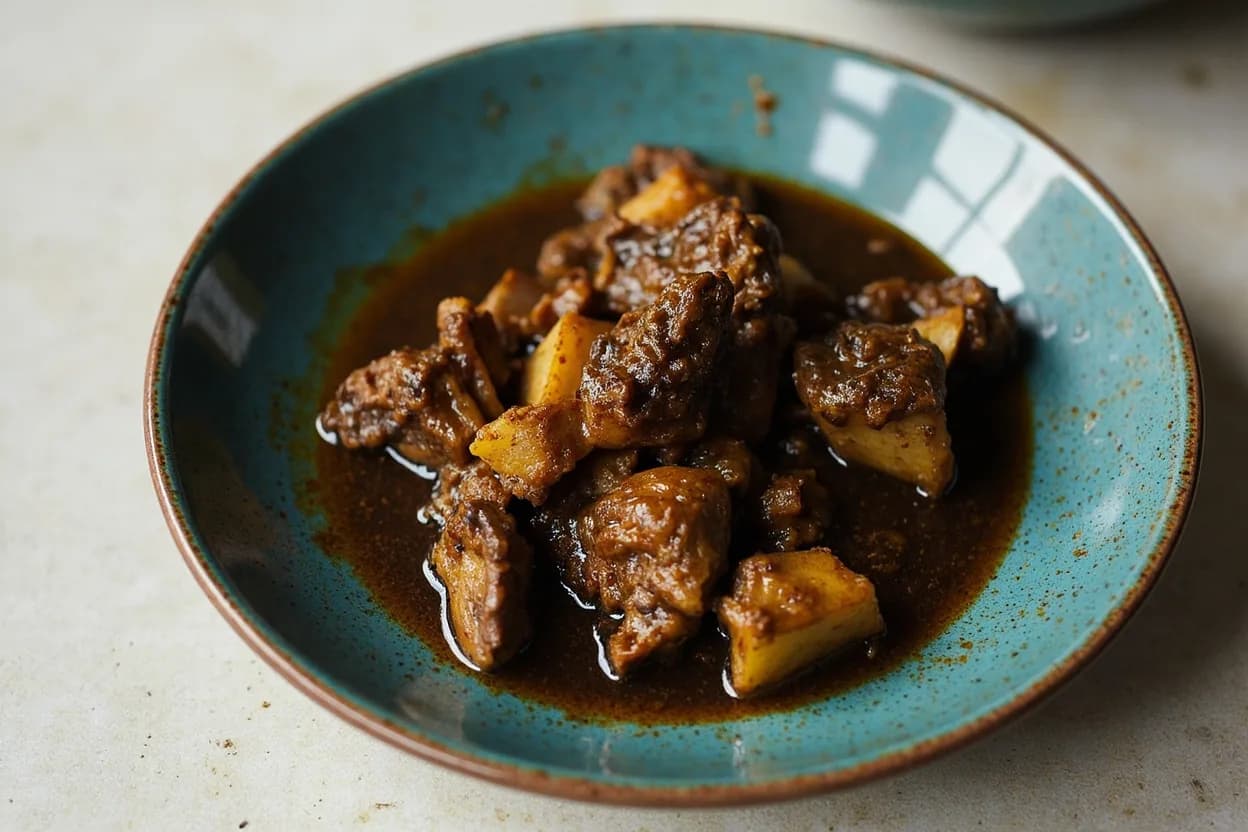
Sri Lankan curry powder exists on a roast spectrum. 'Raw' (unroasted) curry powder, golden-toned, is used for delicate preparations like chicken and fish. 'Roasted' curry powder, which includes charred coconut, is ground to a near-black powder with deep, smoky bitterness and is used for beef, pork, and game. Most South Indian curry powders would not substitute — the toasted-coconut element is structurally essential to Sri Lankan black curry.
Maldive fish as umami infrastructure
Dried, cured, and fermented tuna from the Maldives — Maldive fish — functions in Sri Lankan cooking as kombu does in Japanese dashi or as nam pla does in Thai cooking: it is the hidden backbone of savory depth. Pol sambol (coconut sambol), seeni sambol (caramelized onion relish), and many kiri hodi recipes rely on it. The trade route between Sri Lanka and the Maldives that supplied this ingredient is centuries old.