East Africa / Nile Valley
Sudanese
Also: Sudani, Cuisine of Sudan
A Nile Valley cuisine anchored in ful medames, sorghum kisra, and slow-simmered mullah stews that weave together Saharan, pastoral African, and Arab threads.
Sudanese cuisine is shaped by the convergence of the Nile, the vast Sahel scrubland, and centuries of Arab, Nubian, and sub-Saharan pastoral exchange. Legumes—especially fava beans—form the protein backbone across social classes. Fermented sorghum (kissra flatbread) and the pungent dried-okra seasoning waika give dishes an earthy depth unusual elsewhere in East Africa. Meals are communal, served on a large tray called a sufra, and the culture of coffee ceremony (jabana) and spiced tea mirrors the region's meeting of African and Arabian hospitality traditions.
The flavour base
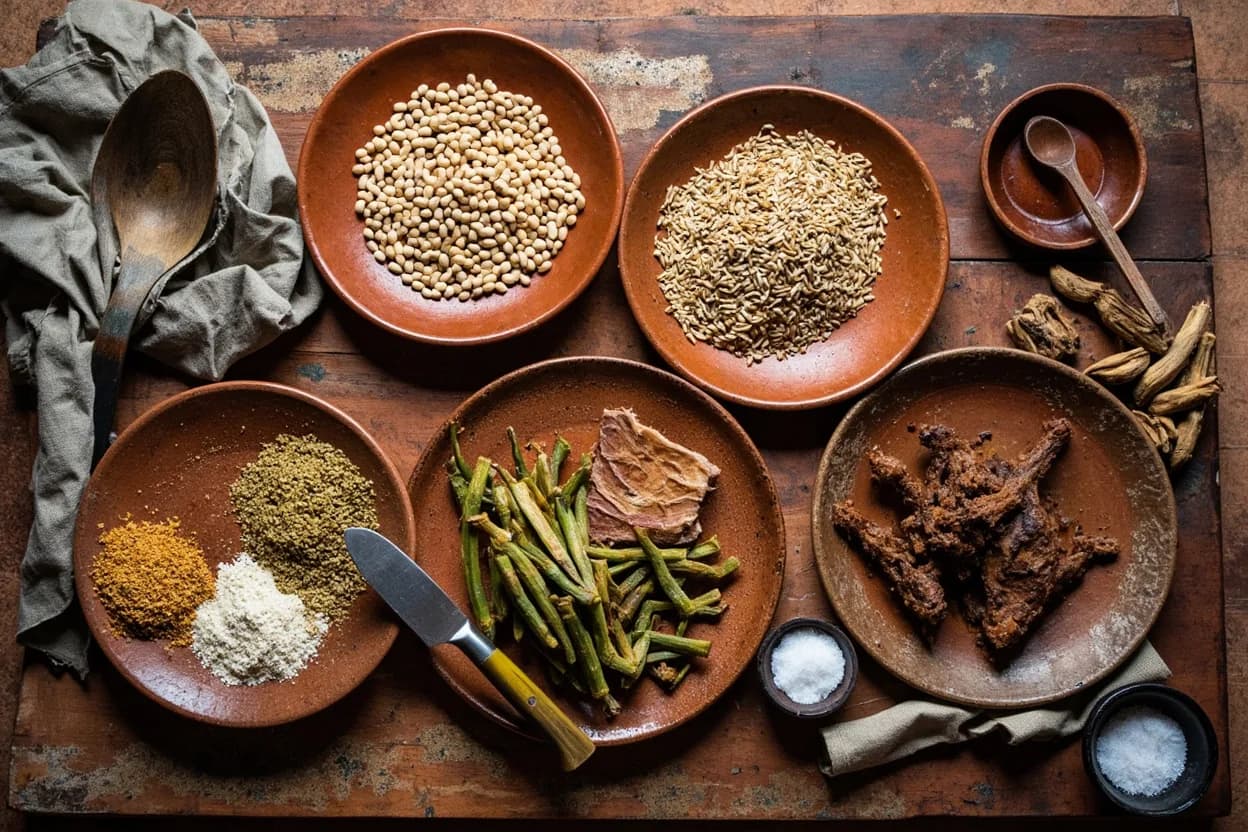
Rendered onion, tomato, and dried fermented okra (waika) form the foundational stew base; garlic, fenugreek, and cumin underpin most savory preparations.
Pantry staples
Key ingredients
Signature techniques
Signature dishes
Sudanese on the table
At the table
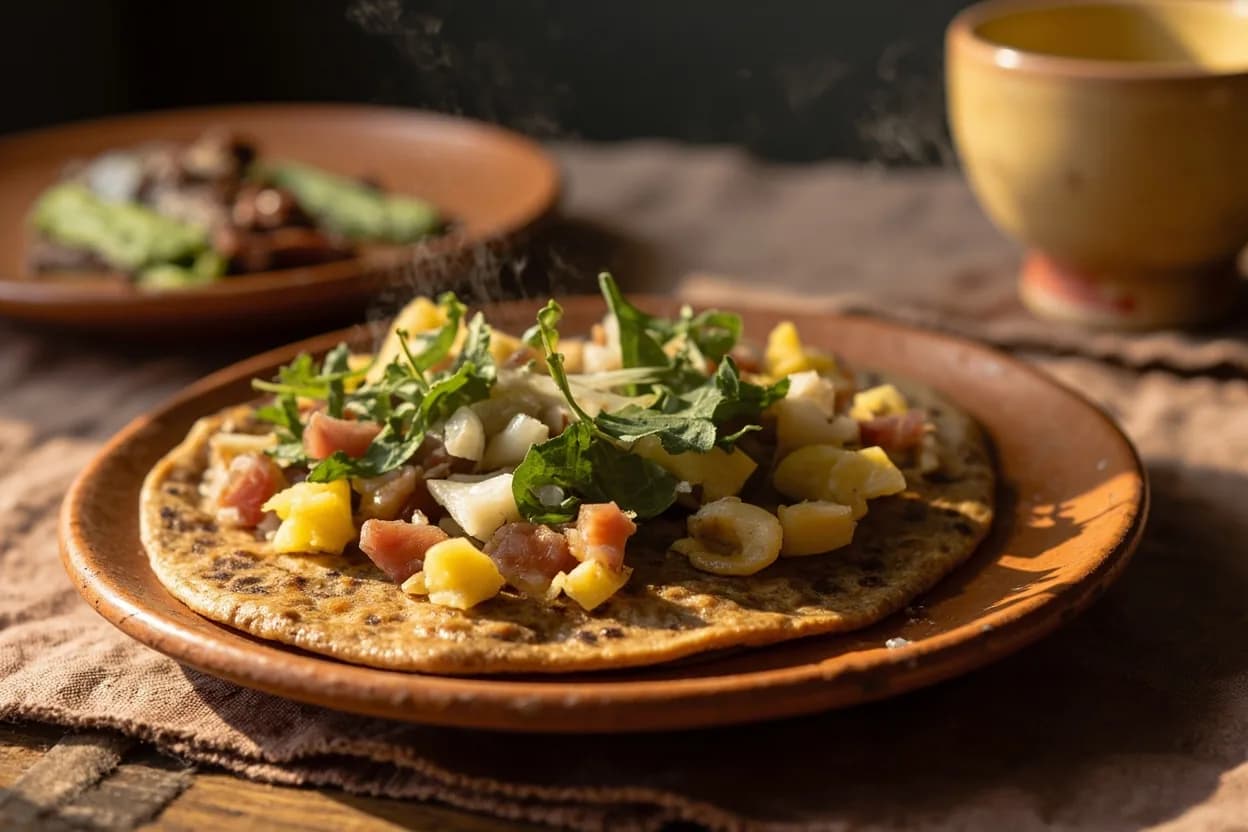
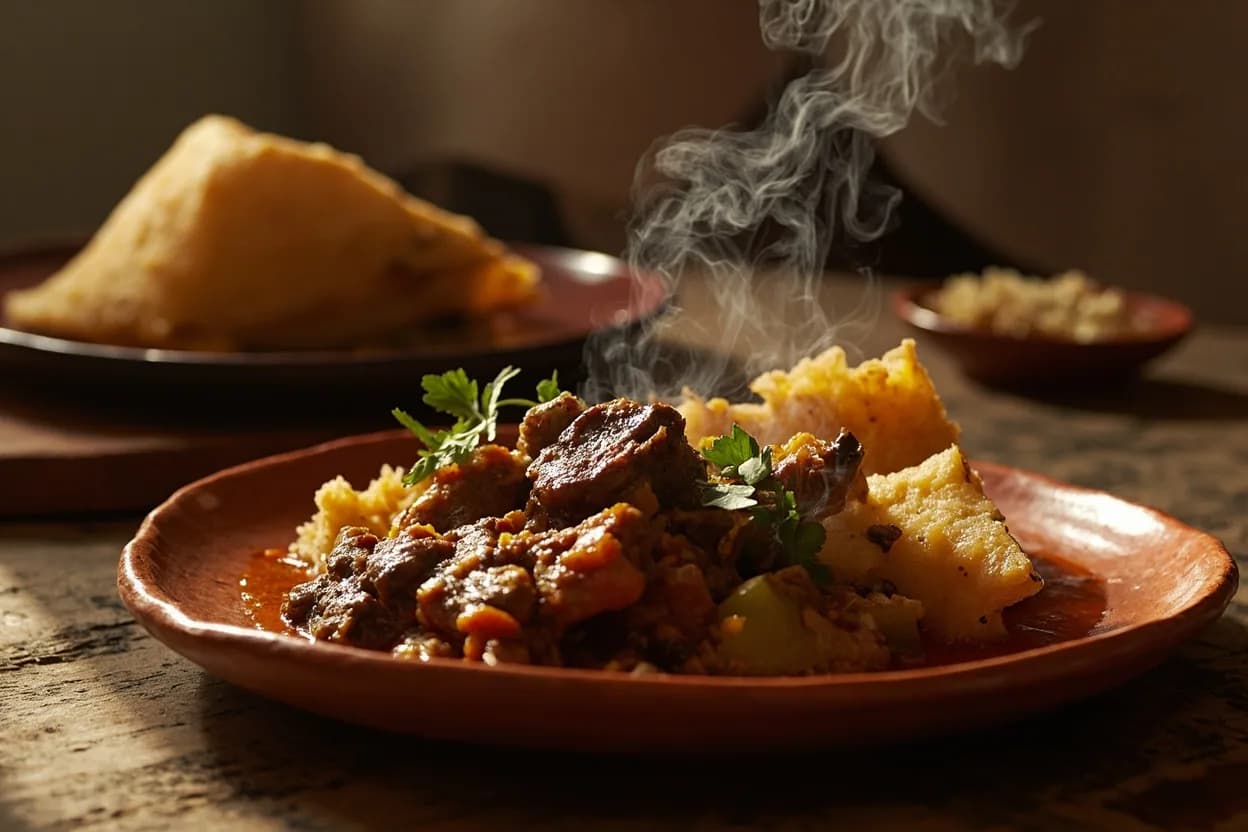
The main meal is typically at midday. Dishes are laid out simultaneously on a communal tray (sufra) on the floor or a low table; each person tears kisra or gurasa to scoop stew. Breakfast centers on ful medames with oil and egg. Sweetened tea and coffee with ginger (gahwa) punctuate the day; dates are an everyday snack.
History & context
Sudan's culinary identity traces to the ancient Nubian kingdoms of Kush and Meroe along the Nile, where sorghum cultivation predates recorded history. Arab traders and the spread of Islam from the 7th century onward layered in legume-centered cuisine and spice use aligned with Hijazi and Egyptian practices. The Funj Sultanate (1504–1821) and subsequent Ottoman-Egyptian and British colonial periods influenced urban cooking without displacing the pastoral staple crops—sorghum, millet, and fava—that feed rural majorities. South Sudan's secession in 2011 separated distinct traditions, leaving Khartoum cuisine to integrate Nubian, Darfurian, Nuba Mountain, and Arab Nile Valley strands.
Regional variations
- Nile Valley / Khartoum
Urban cooking with more Egyptian influence—ful medames as daily staple, rice alongside kisra, and refined mullah preparations.
- Darfur
Drier Sahelian cooking with heavier reliance on millet asida, dried meat (sharmout), and peanut-enriched stews.
- Nubian North
Distinct Nubian traditions: date-heavy diet, Nile fish preparations, and the slow-baked bread regeifah.
- Nuba Mountains
Fermented grain porridges, wild greens, and minimal spicing reflecting isolated highland tradition.
- Eastern Sudan (Beja)
Semi-nomadic pastoral cooking centered on camel and goat milk, dried meat, and simple millet porridges.
Related cuisines
- Egyptian
Shared ful medames culture and Nile Valley agricultural heritage; Egyptian influence is strongest in northern Sudanese cities.
- Ethiopian
Common use of sorghum and legume stews; trade routes along the Ethiopian Plateau created culinary overlap in border regions.
Arab spice trade brought fenugreek, cumin, and lamb preparations echoed in Sudanese urban cooking.
- Chadian
Shared Sahelian staples—millet asida, dried okra stews—along the western border.
Canonical recipes
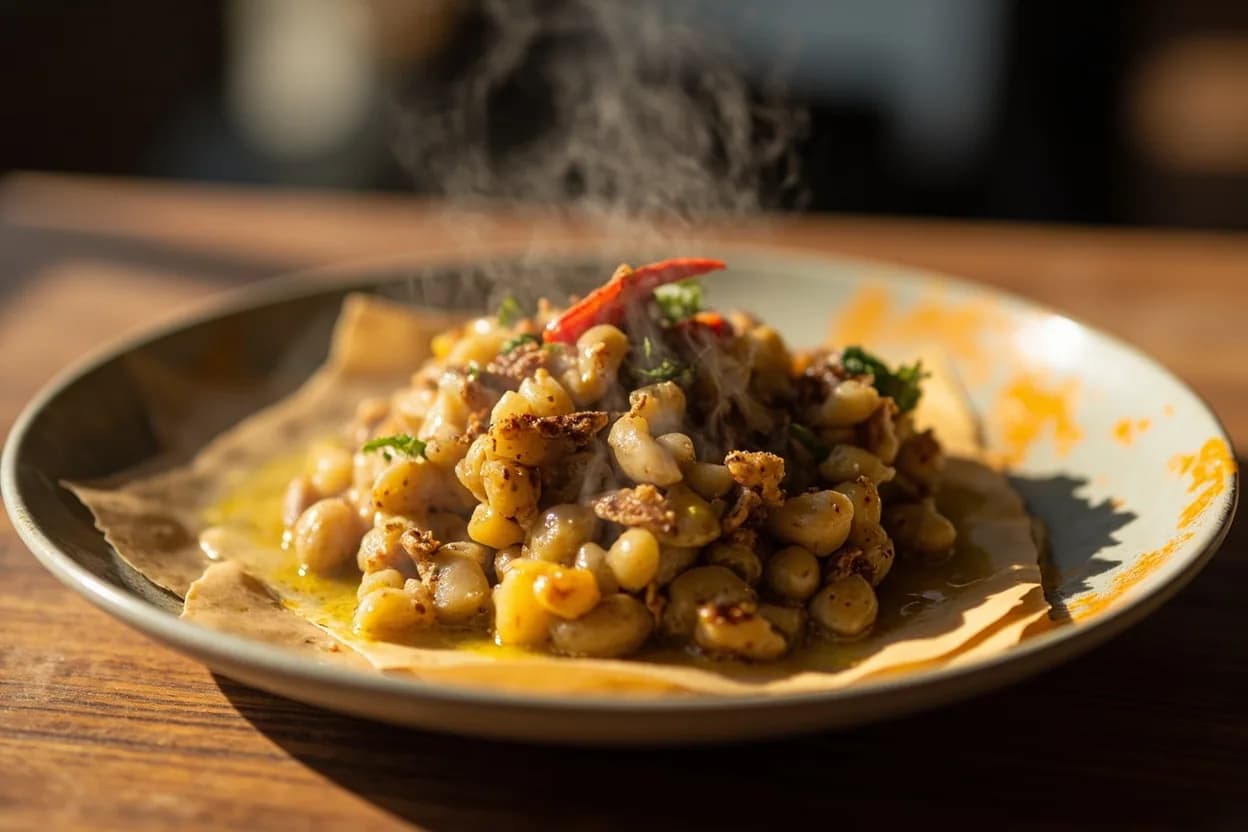
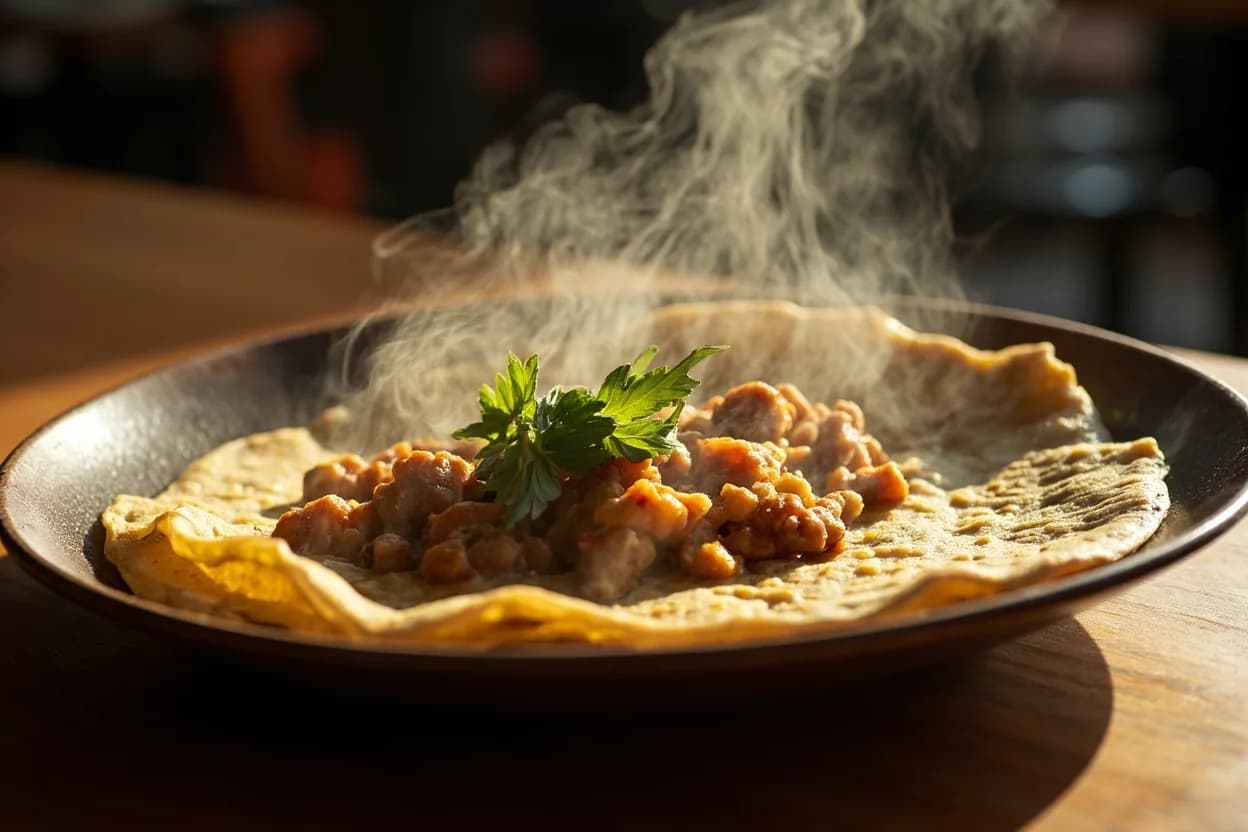
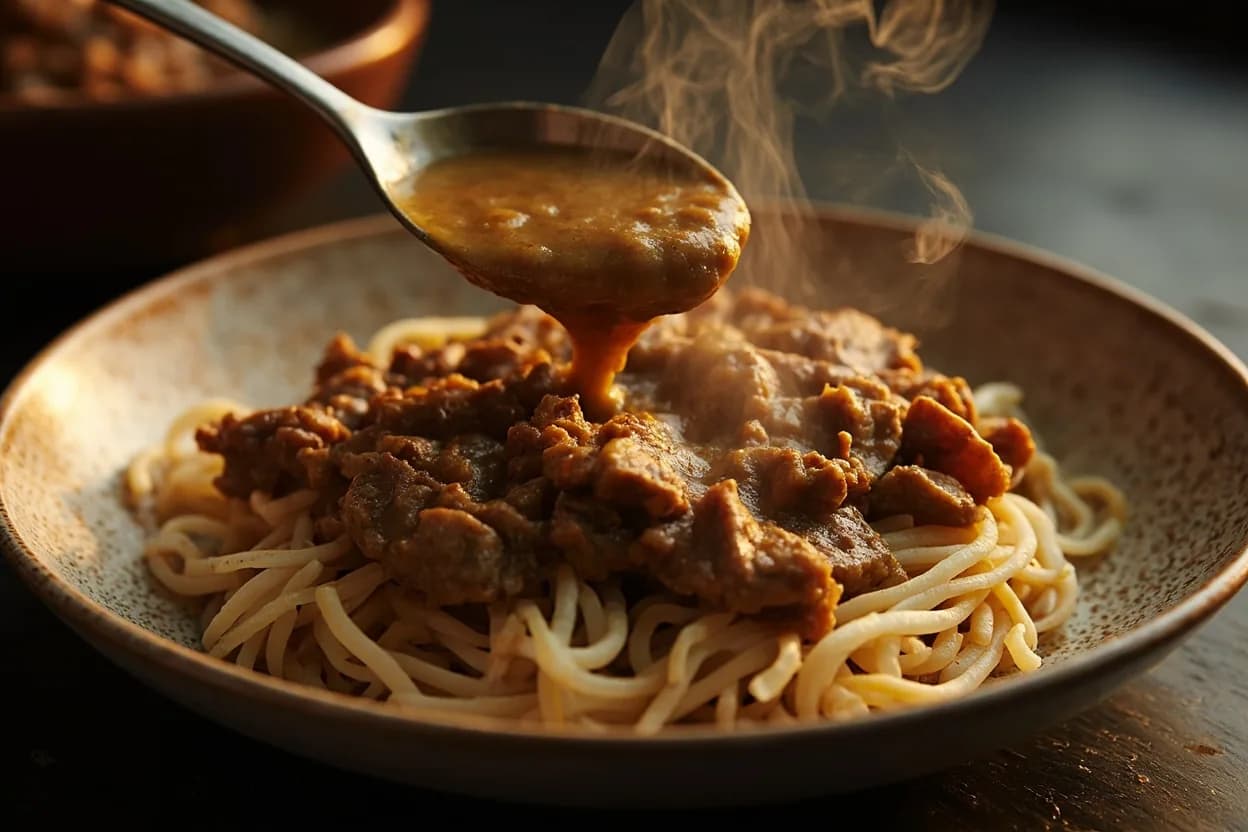
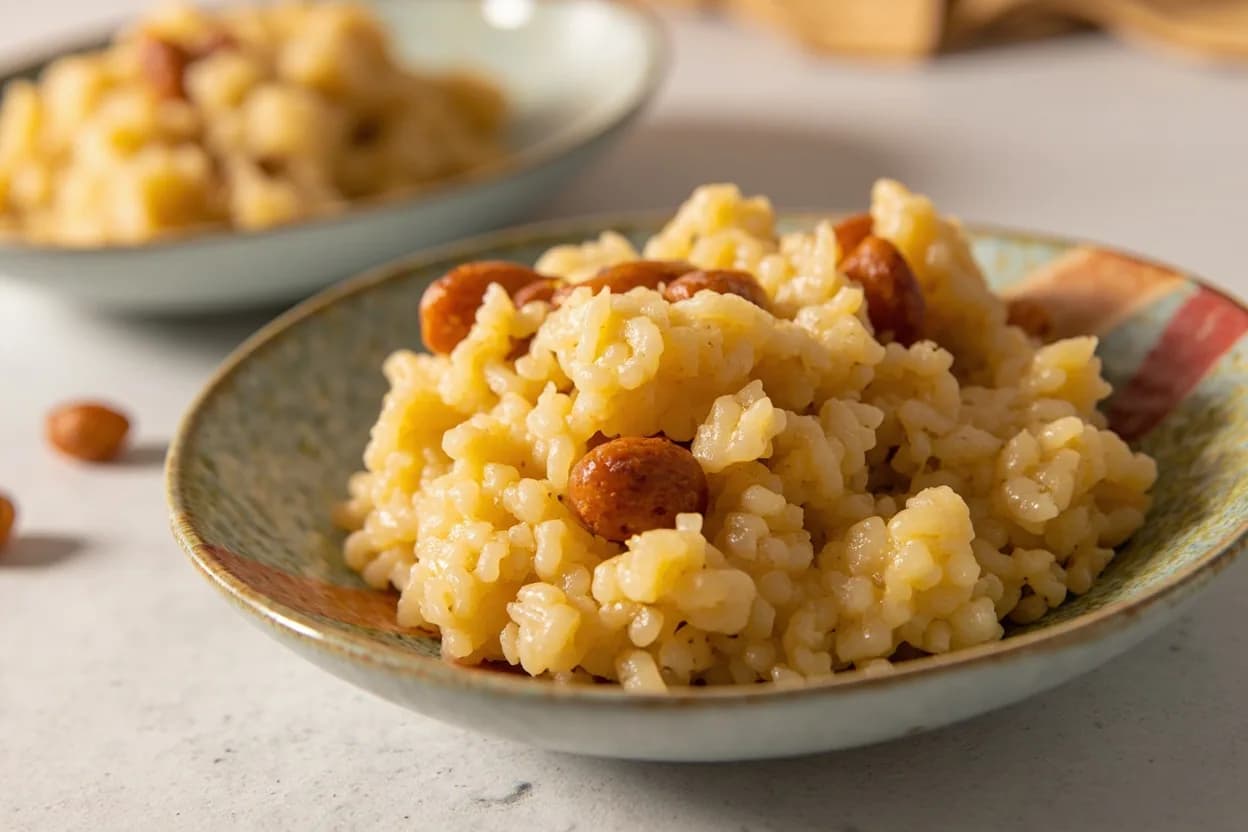
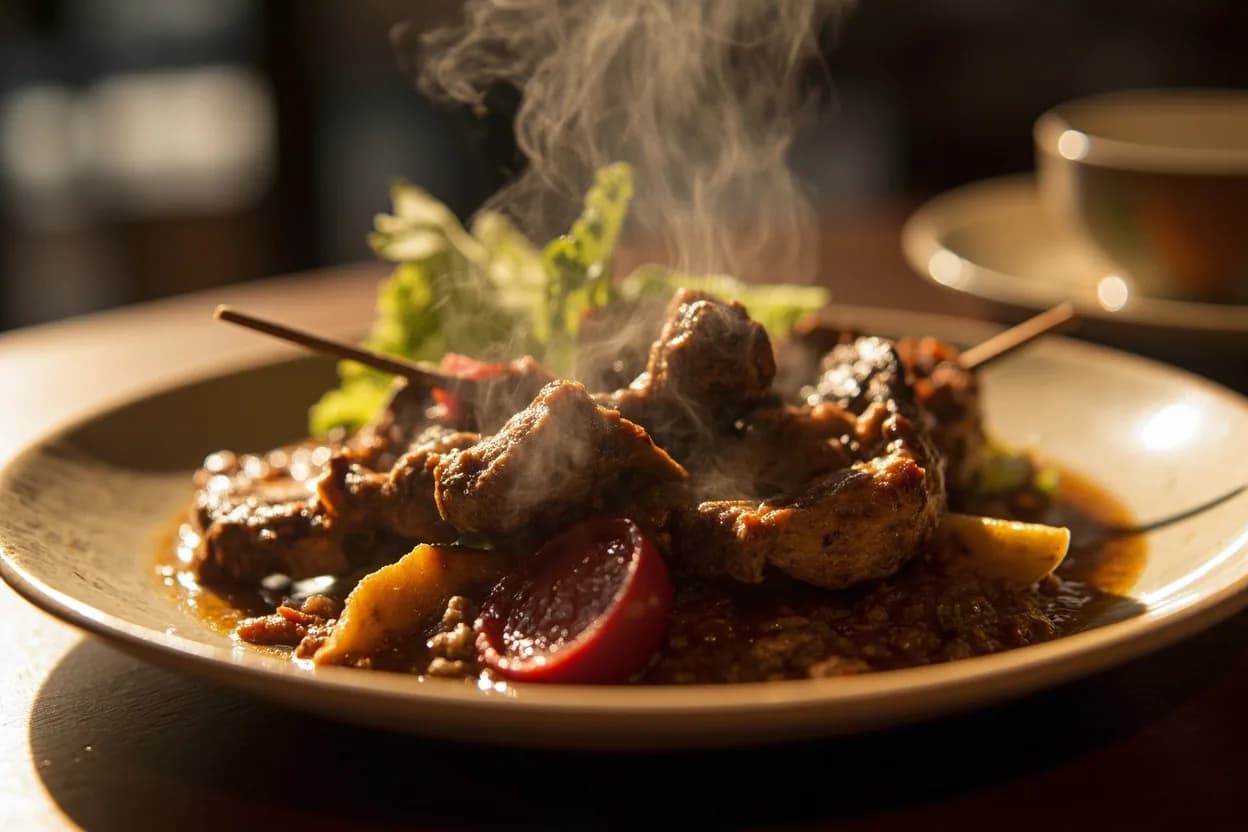
The dishes that define Sudanese, documented in the Canon.
References
- 1.Claudia Roden, 'The New Book of Middle Eastern Food', Knopf, 2000
- 2.Magda Mostafa, 'Sudanese Traditional Cooking', self-published manuscript, Khartoum, 2005
- 3.FAO, 'Traditional Food Plants of Sudan', FAO Plant Production and Protection Paper, 1999
Confidence: high
Notes
The role of waika
Waika—sun-dried, powdered okra—is Sudan's most distinctive pantry item. It thickens mullah stew while contributing a deep, fermented savouriness with no Western equivalent; it functions similarly to how dashi defines Japanese broths.
Communal eating etiquette
Eating from a shared tray is both a practical and deeply social act. The best morsels (meat, egg) are placed by the host nearest honored guests; refusing a second helping requires explicit thanks.