Middle East
Yemeni
Also: Yemeni cuisine, South Arabian cuisine, Hadhrami cuisine
Ancient, aromatic, and fiercely local — a saffron-and-spice-driven cuisine shaped by the incense trade, the mountains of Sana'a, and the oldest coffee culture in the world.
Yemeni cuisine is one of the Arab world's most distinctive and least Westernized food traditions. It is defined by the spice blend hawayij (a cumin-forward compound deployed in everything from coffee to stews), slow pit or clay-oven cooking, honey-drenched breads, and a structural reliance on lamb and flatbread. Unlike the more olive oil-driven Levantine cooking or the rice-centered Gulf cuisines, Yemen synthesizes African influences (via the Red Sea), Indian spice contact (via the ancient frankincense and spice trade routes), and a harsh highland terroir that prizes preservation, fermentation, and long slow heat. The result is deeply layered, aromatic, and proudly local.
The flavour base
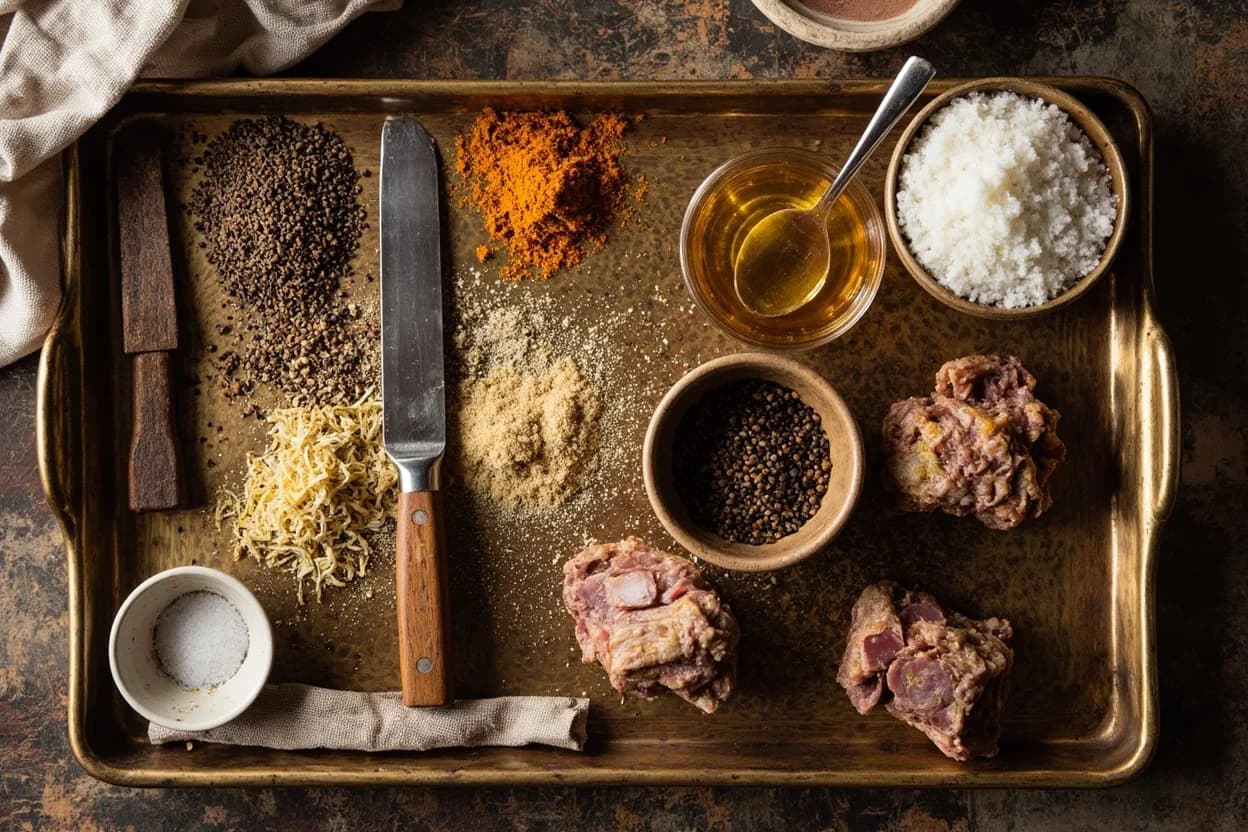
Hawayij — a spice blend of cumin, black pepper, turmeric, and cardamom (with coriander and caraway in some regional forms) — is Yemen's defining flavor grammar. It appears in salta (national stew), coffee (qishr), meat rubs, and bread doughs. Saffron, honey, and clarified butter (smen) amplify the richness; fenugreek-based hulba (a frothed sauce) adds bitter funk.
Pantry staples
Key ingredients
Signature techniques
Signature dishes
Yemeni on the table
At the table
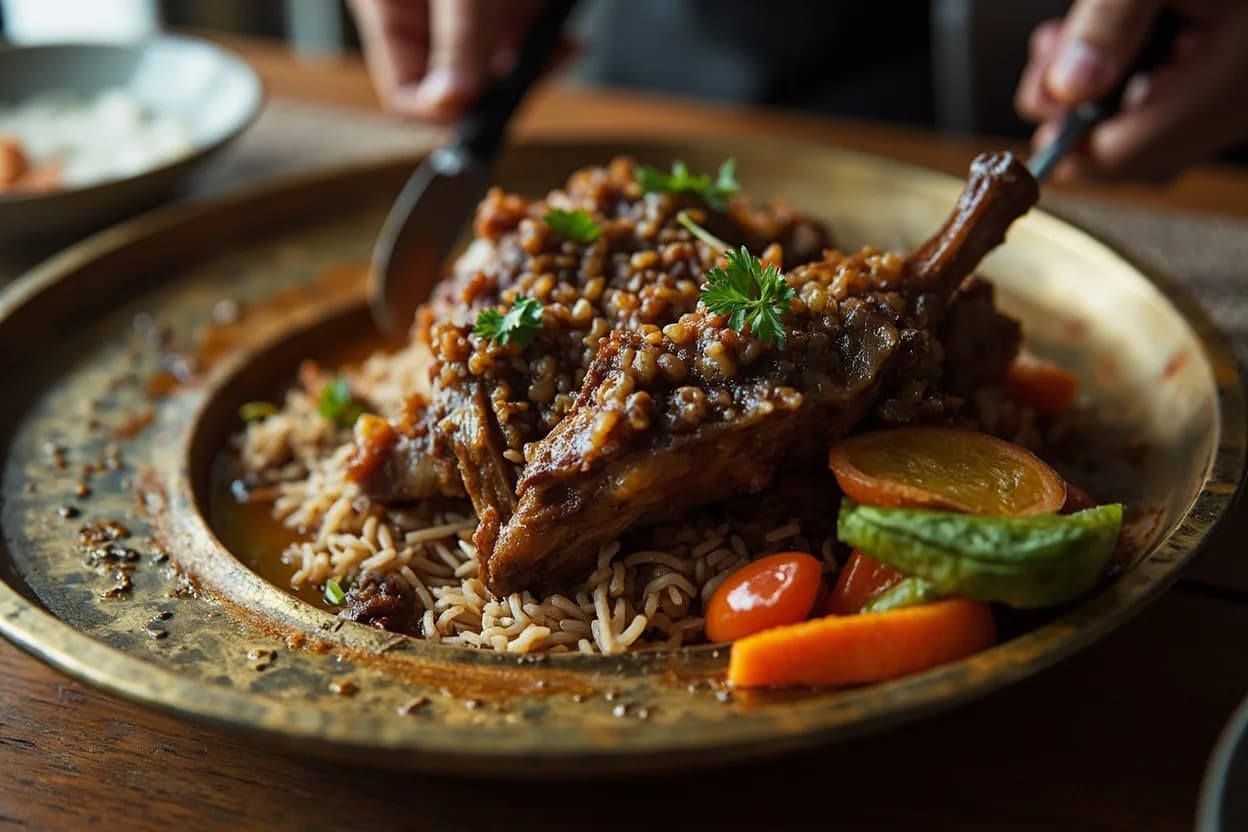
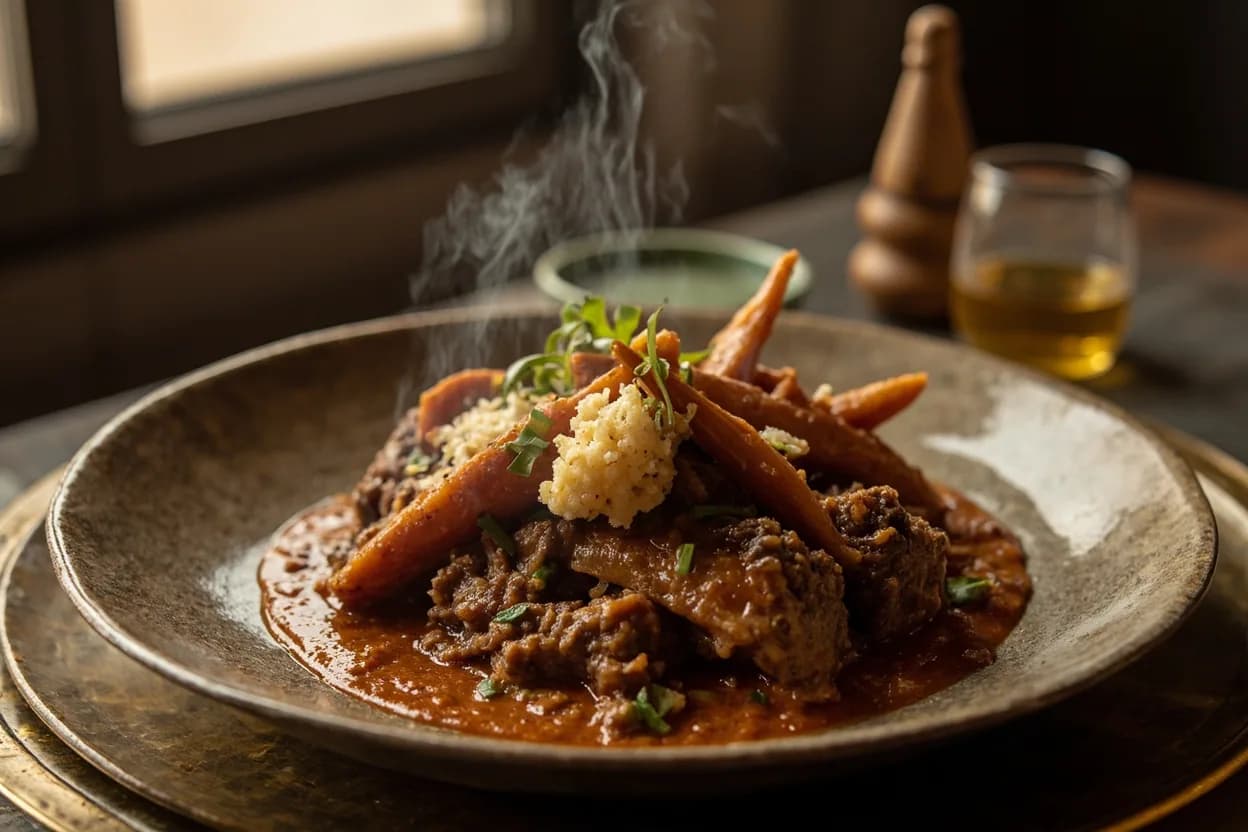
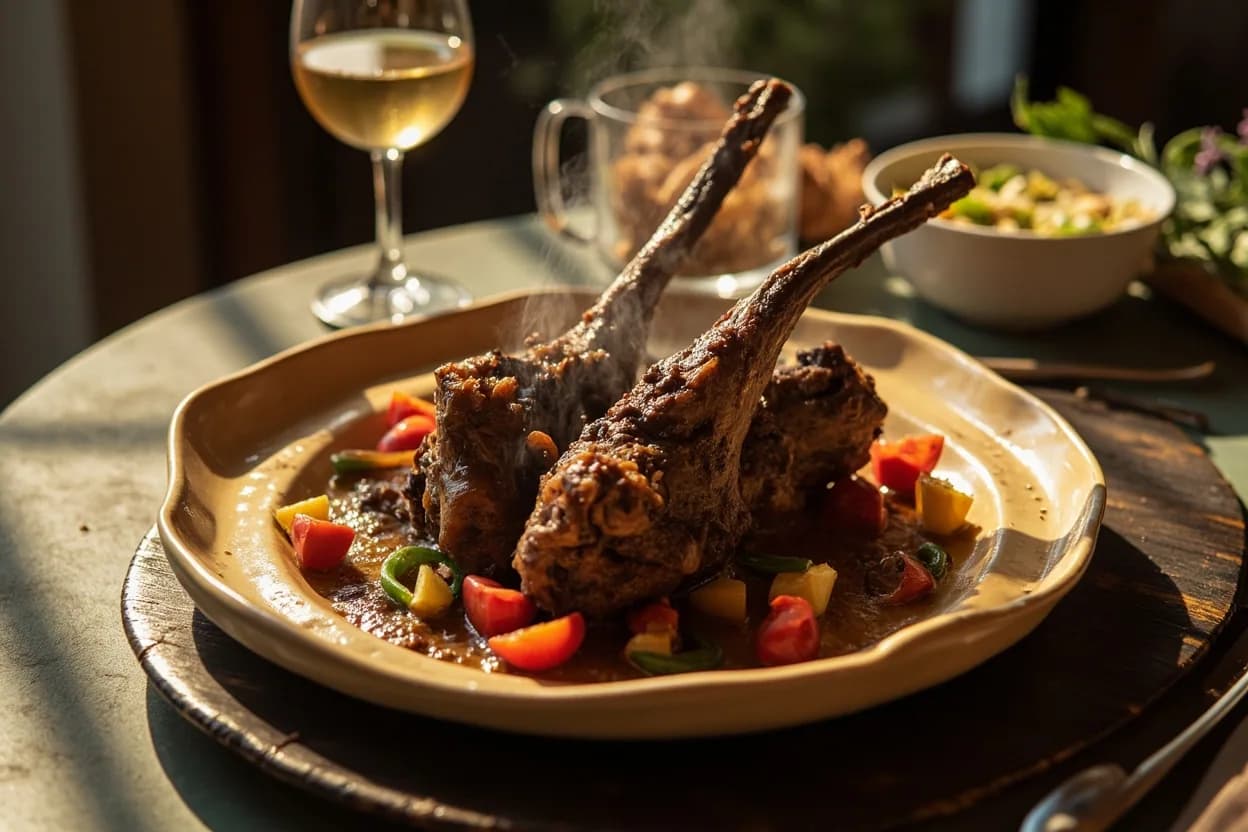
Meals are communal and floor-seated, with large shared trays. Lunch is the primary meal: a central stew or roasted meat, rice or flatbread, sahawiq (green chili paste), and saltah or fahsa in a stone mortar. Lahoh is the standard breakfast with honey and butter. Coffee culture is unique: Yemenis drink qishr (coffee husks spiced with ginger) rather than roasted coffee, reserving the bean for export — a reminder that Yemen's port of Mocha gave the world its first commercial coffee trade.
History & context
Yemen sits at one of the ancient world's great crossroads — the southwestern corner of the Arabian Peninsula, where Indian Ocean trade routes carrying spice, frankincense, and coffee converged with African Red Sea trade. The ancient Sabaean civilization (the kingdom of Sheba) controlled spice routes for millennia, enriching Yemeni cooking with Indian aromatics early. The port of Mocha (al-Mukha) shipped coffee to the world from the 15th century, making Yemen the original global coffee culture. Ottoman occupation (1538–1636, 1872–1918) added rice traditions and stew structures. Hadhramaut, the eastern region, generated a diaspora across Southeast Asia and East Africa that carried Yemeni recipes into Indonesian, Malay, and Swahili cooking. The cuisine remains one of the most historically layered yet least documented in the Arab world.
Regional variations
- Sana'a (Highlands)
Urban, sophisticated: saltah and fahsa in stone mortars, elaborate honey pastries, saffron-tinted rice dishes.
- Aden (South)
Port city with British colonial overlay and Indian Ocean influence: curried dishes, rice with ghee, more liberal spice palate.
- Hadramawt (East)
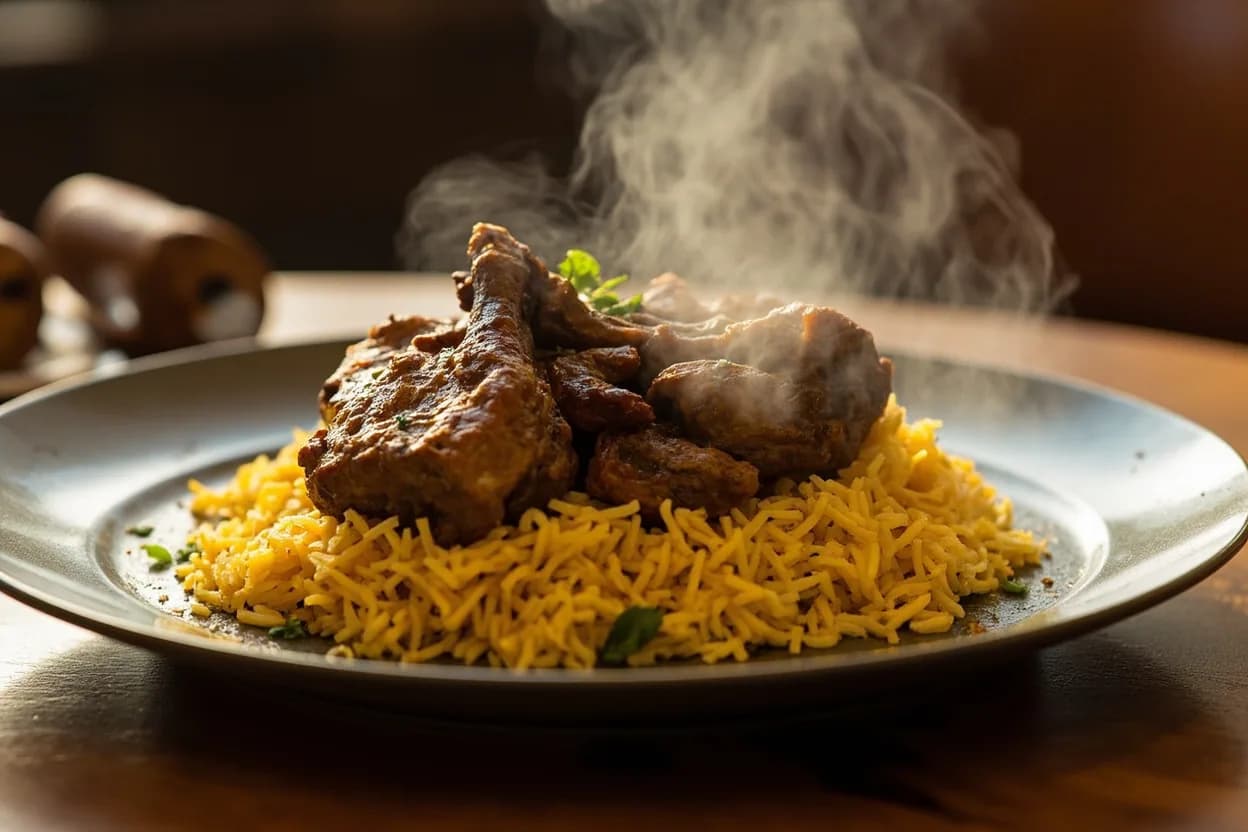
Distinguished by haneeth slow-roast, spit-roasted fish, and a diaspora-influenced spice repertoire; rice dominates over flatbread.
- Tihama (Coast)
Red Sea-adjacent; more African influence, lighter flatbreads, grilled fish, sorghum-based dishes.
Related cuisines
- Saudi (Hejaz)
Mandi was introduced to the broader Gulf from Yemen; significant overlap in slow-roasted lamb and rice pilaf.
- Ethiopian / Somali
Red Sea proximity created bidirectional exchange — injera-style lahoh and coffee culture share roots.
Hadrami diaspora traders carried Yemeni spice and slow-cook techniques into southern Indian Muslim cooking.
- Indonesian
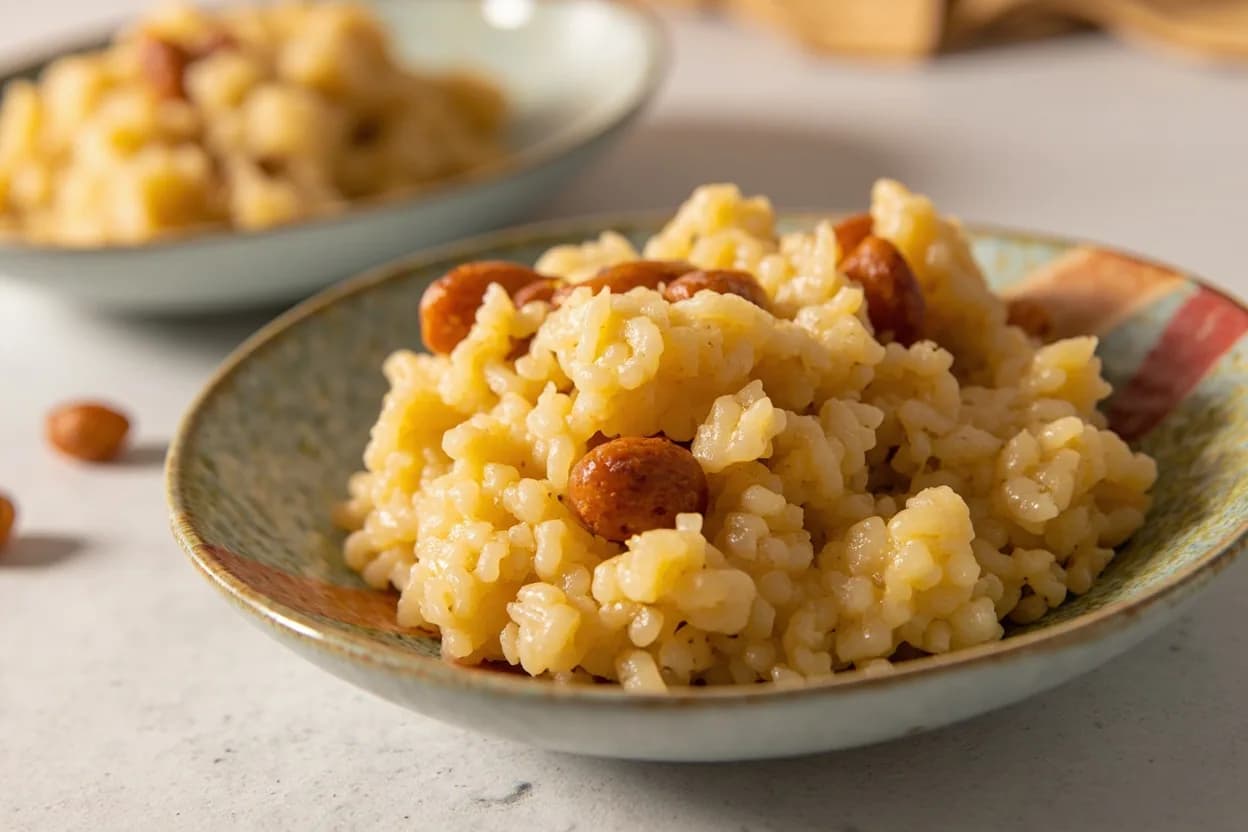
Hadrami Yemeni settlers in Java and Sumatra transplanted lamb and rice stew traditions into nasi kebuli and related dishes.
Canonical recipes
The dishes that define Yemeni, documented in the Canon.


References
- 1.Feast: Food of the Islamic World — Anissa Helou
- 2.The Arabian Nights Cookbook — Habeeb Salloum and Leila Salloum Elias
- 3.Yemen: Travels in Dictionary Land — Tim Mackintosh-Smith (cultural context)
- 4.Yemeni Cuisine (academic survey) — Claudia Roden, A Book of Middle Eastern Food
Confidence: high
Notes
Saltah: the stone mortar dish
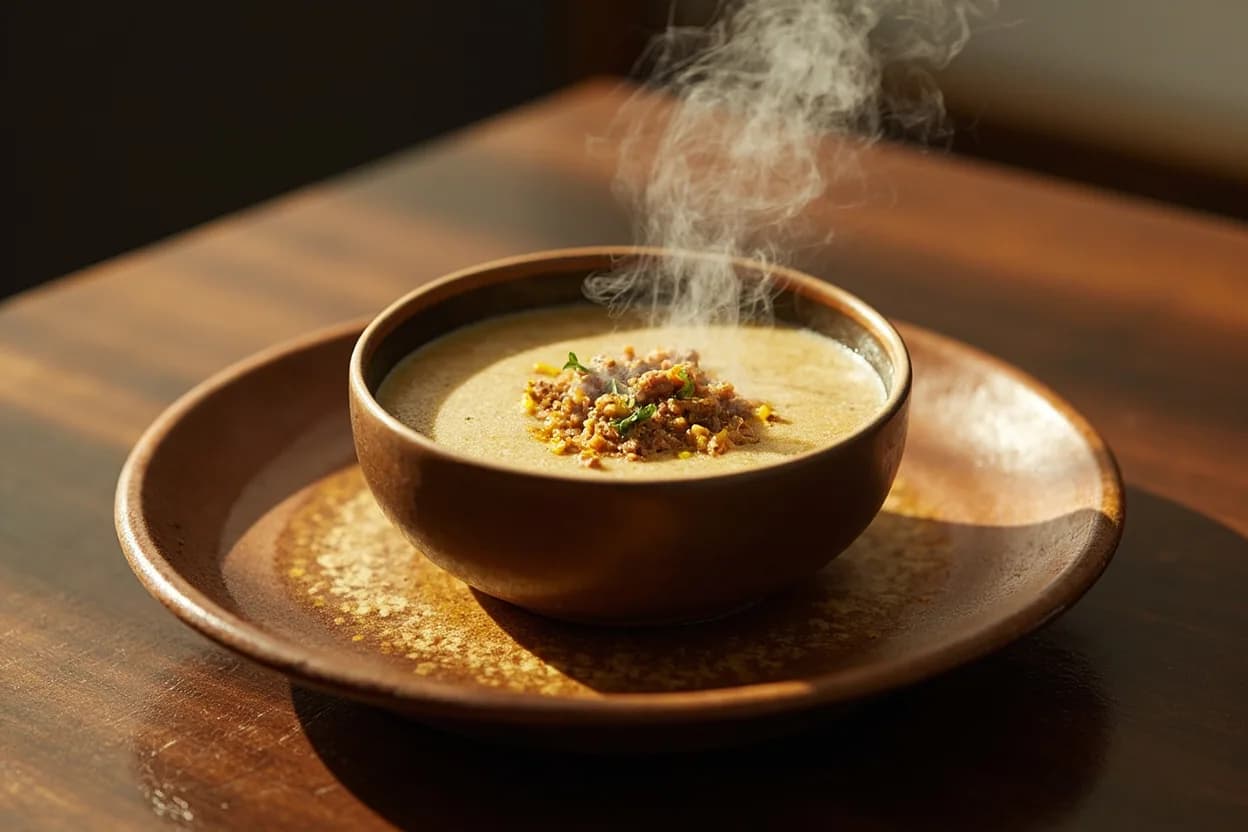
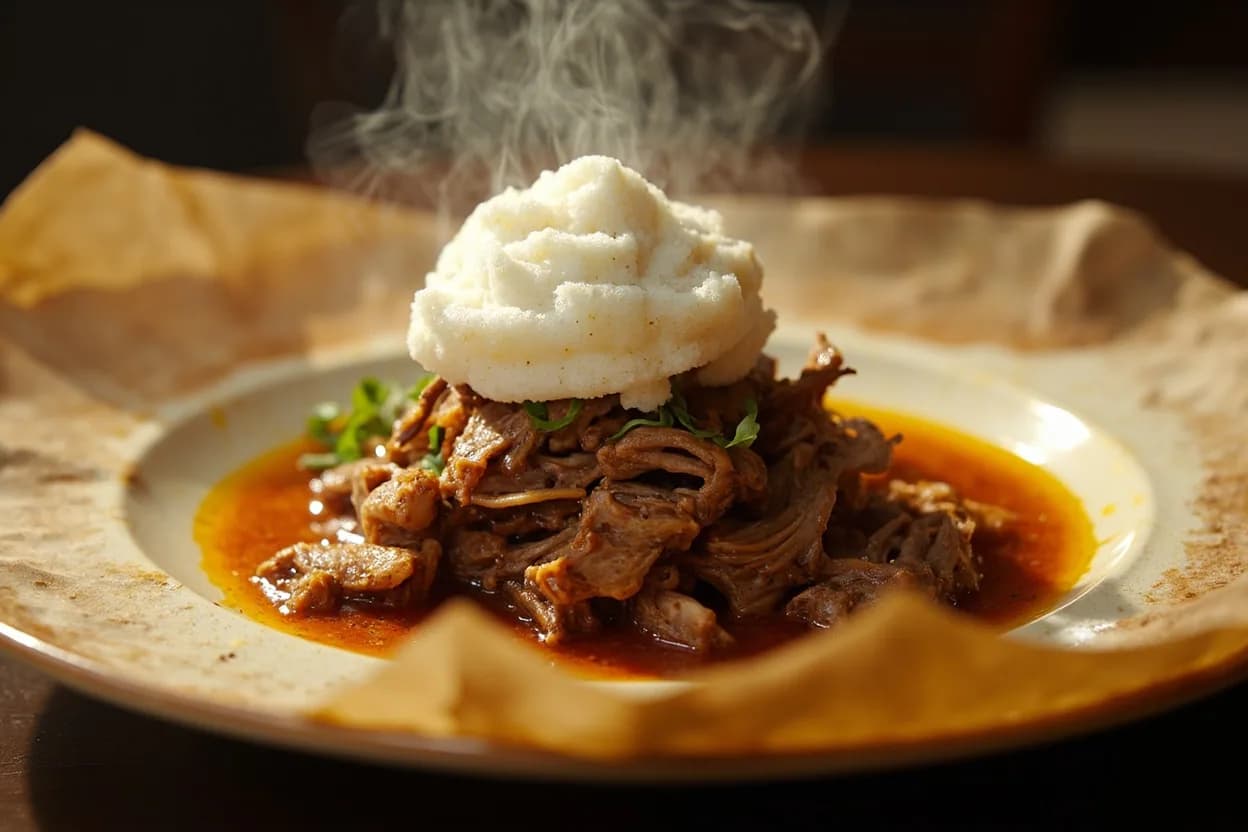
Saltah is Yemen's national dish and one of the Arab world's most unusual preparations: a thick meat broth base is simmered down, vegetables added, then frothed hulba (whipped fenugreek paste) is spooned on top and the whole dish is returned to flame briefly until the top sets into a green bubbling froth. It is brought to the table in the stone mortar in which it cooked, scooped with flatbread. The hulba froth is bitter, funky, and irreplaceable — there is no substitute.
Hawayij and coffee
Hawayij is used in Yemeni coffee (bun) as a spice additive, but the more traditional Yemeni drink is qishr — coffee husks (not beans) brewed with ginger and sugar. Mocha, the port, lent its name to global coffee vocabulary, yet Yemenis themselves typically reserved the roasted bean for trade and consumed the husk decoction domestically. This reversal is one of food history's more ironic twists.