South Asia
Hyderabadi
Also: Hyderabadi cuisine, Nizami cuisine, Deccani cuisine
The grand cuisine of the Deccan Nizams — a layered synthesis of Mughal grandeur, Persian elegance, and native Telugu flavors centered on the world's most celebrated biryani.
Hyderabadi cuisine emerged from the courts of the Nizams of Hyderabad (established 1724), who ruled the largest princely state in British India and maintained one of the subcontinent's most sophisticated culinary cultures. The cuisine fuses Mughal court cooking — dum technique, aromatic spicing, rich gravies — with the sour, tamarind-sharp traditions of Telugu cooking and the dried-fruit elegance of Persian banquet culture. It is characterized by a bold use of whole and ground spices, liberal fried onions (birista) as a textural garnish and flavor base, and a tension between richness (ghee, cream, nuts) and brightness (lime, coriander, green chilli). The dum biryani — meat and parboiled rice sealed together to finish-cook in their own steam — is the cuisine's crowning achievement and a benchmark dish worldwide.
The flavour base
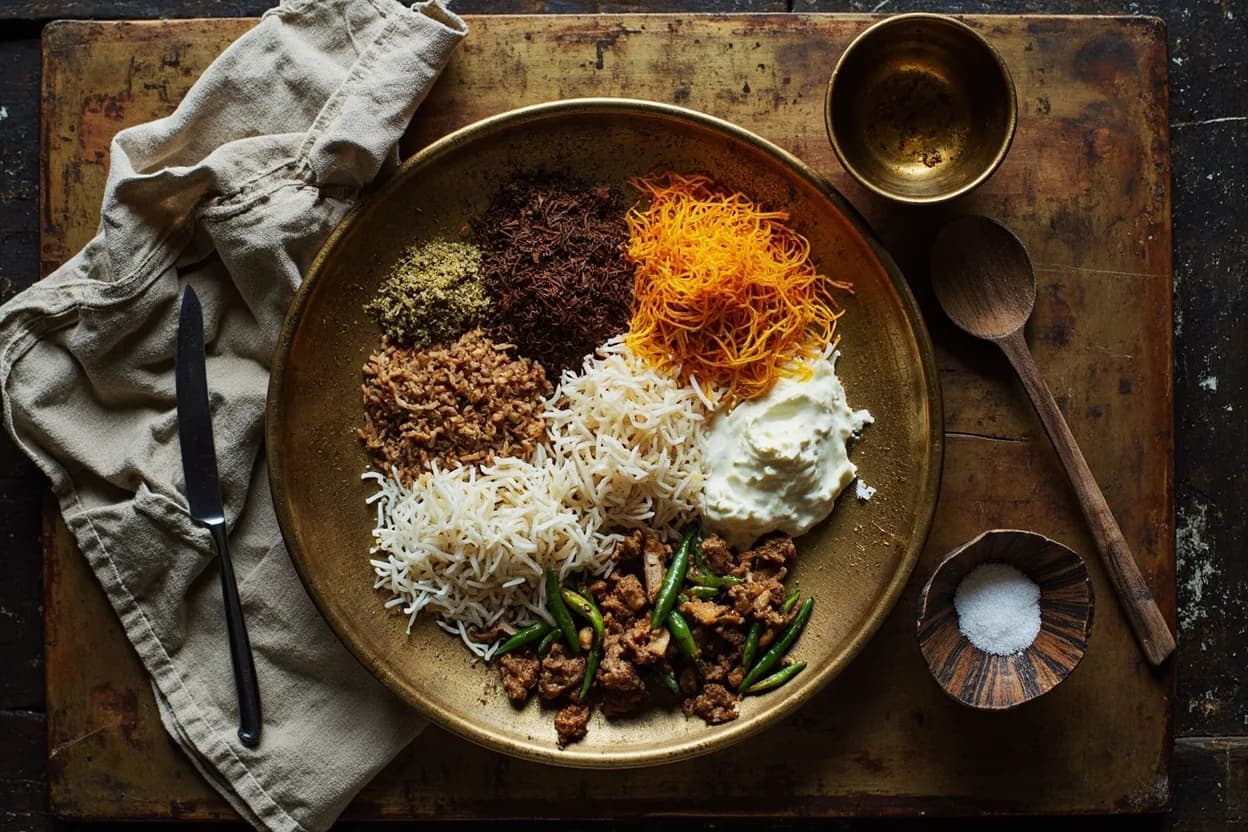
Fried onion (birista), yoghurt, and ginger-garlic paste form the masala foundation; tamarind or raw mango provide sourness; whole spices (star anise, dagad phool — stone flower lichen — mace, kewra) give the distinctive Hyderabadi aroma.
Pantry staples
Key ingredients
Signature techniques
Signature dishes
Hyderabadi on the table

At the table
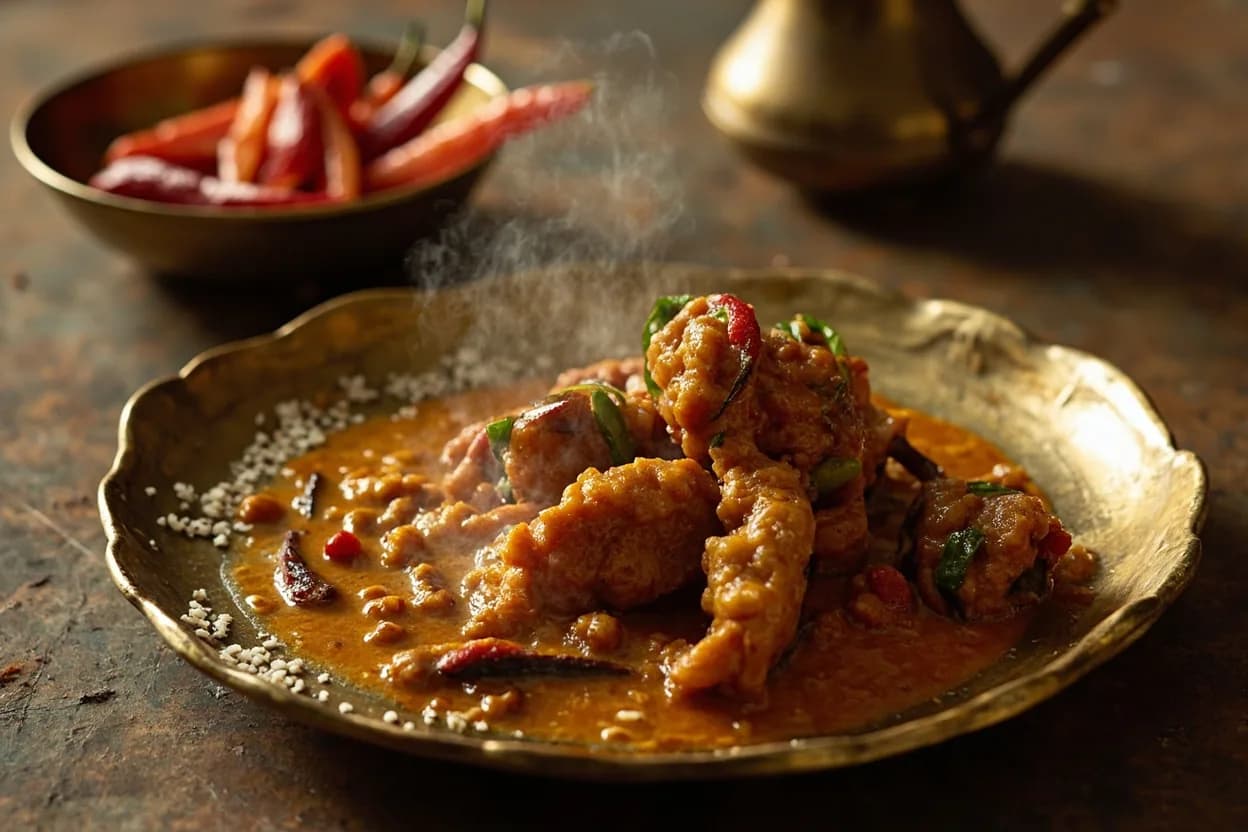
Formal Nizami meals were elaborate multi-course spreads. Everyday Hyderabadi eating centers on rice — biryani or steamed rice with salan (curry), dal, and raita. Biryani is typically accompanied by mirchi ka salan and cooling dahi chutney. Meals end with a dessert (double ka meetha or qubani ka meetha) and kahwa or irani chai (the city's beloved tea-and-cream blend from its Persian-influenced Irani cafés).
History & context
The Asaf Jahi dynasty founded Hyderabad in 1724 as a successor state to the Mughal Deccan, and their court became one of the wealthiest in the world. The Nizams employed dedicated rakabdars (royal cooks) who developed the kacchi biryani method specifically for the court — distinct from the Lucknowi pakki (pre-cooked meat) biryani. Telugu, Marathi, and Kannada culinary traditions of the surrounding Deccan filtered into court cooking over generations, introducing tamarind, coconut, and dried chilli heat. The cuisine also absorbed Persian influences through diplomacy, trade, and the Hyderabadi aristocratic practice of employing Persian-trained khansamas. When Hyderabad acceded to India in 1948, the court culture dispersed, but restaurant culture (and the city's biryani restaurants) carried the cuisine to mass popularity. Today Hyderabadi biryani is arguably the most ordered single dish on India's food delivery platforms.
Regional variations
- Kacchi biryani (raw-meat method)
The 'true' Hyderabadi style: raw marinated mutton layered with parboiled rice, then sealed and dum-cooked; meat and rice finish together, the steam exchanging flavor.
- Hyderabadi Hindu / Marwari adaptations
Vegetarian variants use potato, paneer, or raw banana in the biryani; salan is made with vegetables rather than meat but retains the tamarind-peanut gravy structure.
- Old City vs. New City
The original Old City restaurants (around Charminar) maintain traditional spice weights and hand-slaughtered whole-animal sourcing; New City versions often use commercial spice blends and are lighter.
Related cuisines
- Mughal
Direct ancestor: dum technique, aromatic spice canon, and birista-enriched gravies all derive from Mughal court cooking.
- Telugu
Indigenous Deccan tradition that contributed tamarind, sesame-peanut gravies, and green chilli heat to the Nizami kitchen.
- Lucknowi (Awadhi)
Rival dum biryani tradition using the pakki (pre-cooked) method; both claim Mughal ancestry but diverge in technique and spice profile.
- Persian
Dried fruit in rice dishes, kewra-saffron flavoring, and the culture of elaborate rice-and-meat feasts trace to Persian courtly influence.
Canonical recipes
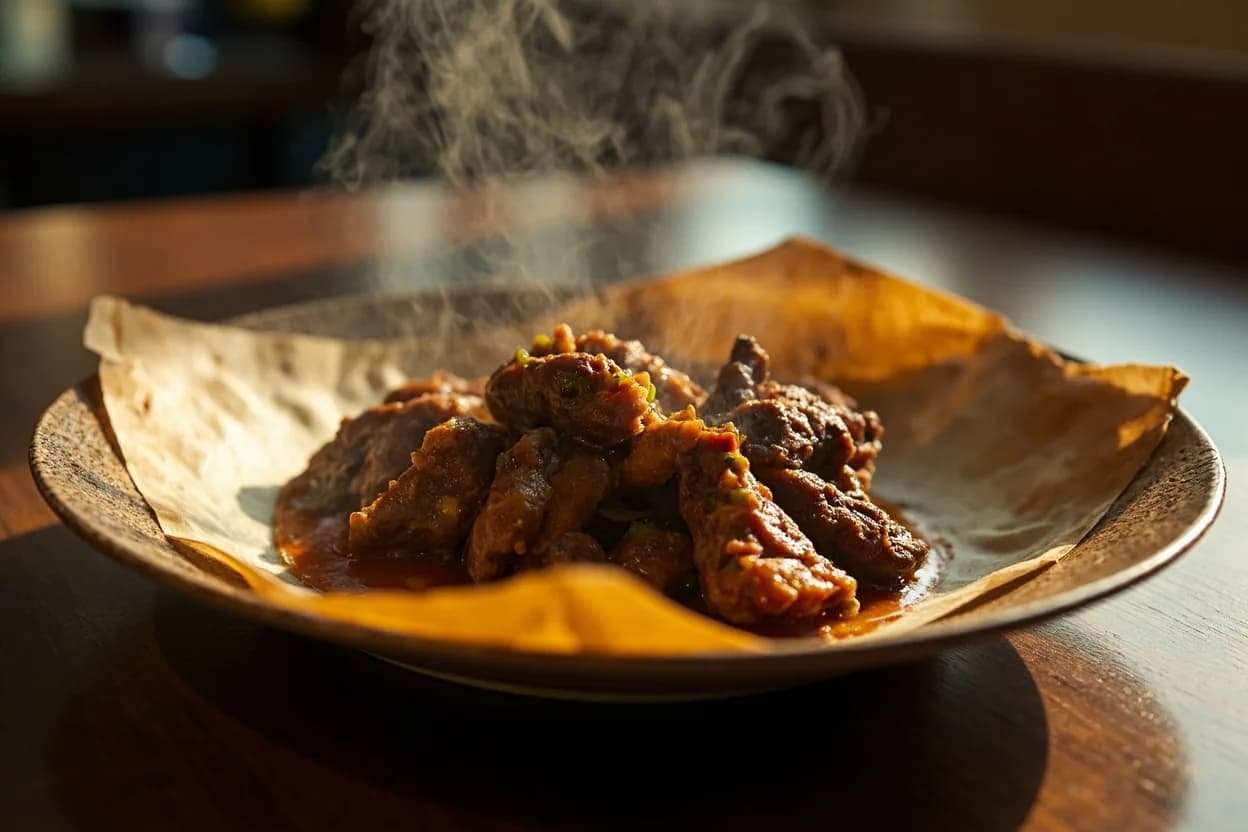
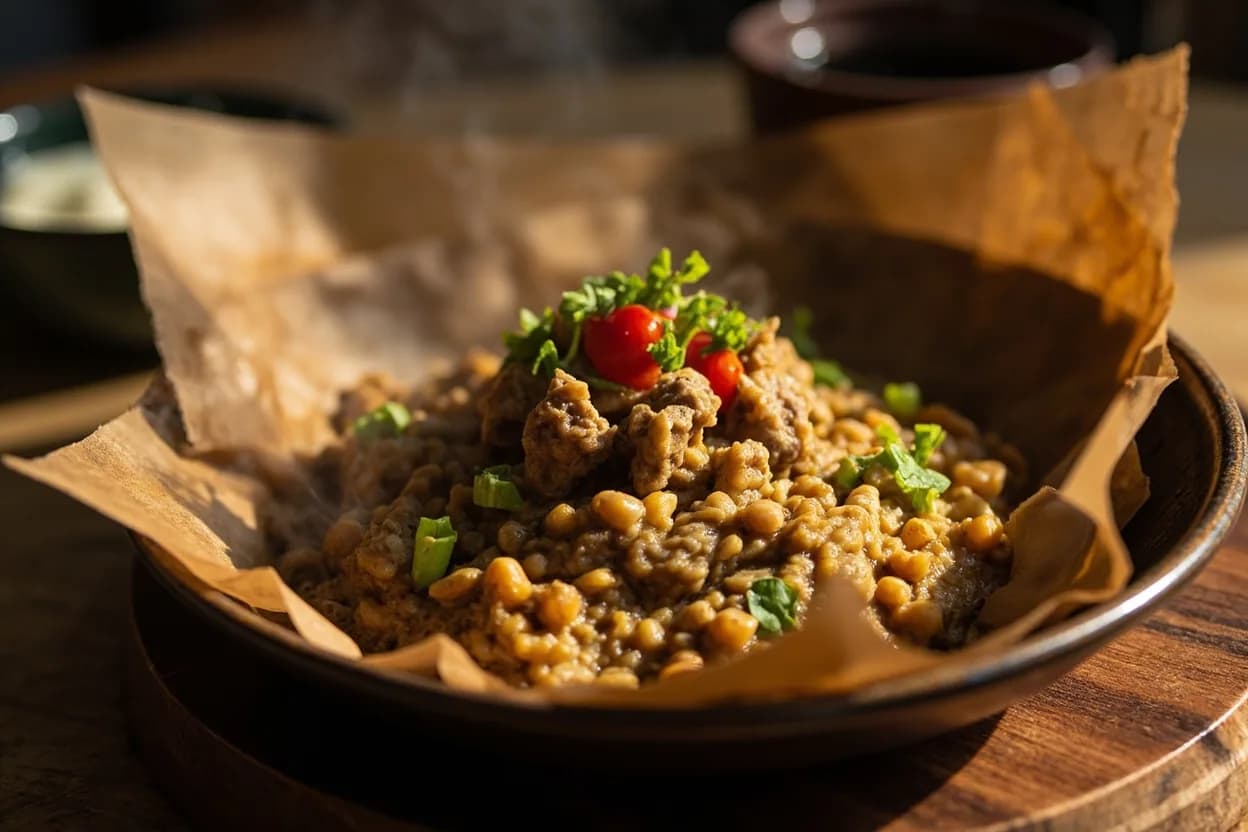
The dishes that define Hyderabadi, documented in the Canon.
References
- 1.Pratibha Karan — Biryani (2009)
- 2.Colleen Taylor Sen — Feasts and Fasts: A History of Food in India (2015)
- 3.Bilkees I. Latif — The Essential Andhra Cookbook (1994)
- 4.Abdul Halim Sharar — Lucknow: The Last Phase of an Oriental Culture (tr. E.S. Harcourt & Fakhir Hussain, 1975)
Confidence: high
Notes
Dagad phool — the secret ingredient
Stone flower (Parmotrema perlatum), a lichen sold dried in Hyderabadi spice markets, contributes a mossy, earthy undertone with faint smokiness that is instantly recognizable in authentic biryani and meat curries. It is rarely used outside Hyderabadi and Chettinad cooking and has no close substitute.
Irani cafés
Persian migrants who arrived in Hyderabad in the 19th and early 20th centuries established the city's beloved Irani chai khanas — cafés serving a milky, simmered tea (not the Kolkata/Mumbai version) alongside Osmania biscuits and bun maska. These cafés became the city's public living rooms and remain a key part of Hyderabadi food identity.