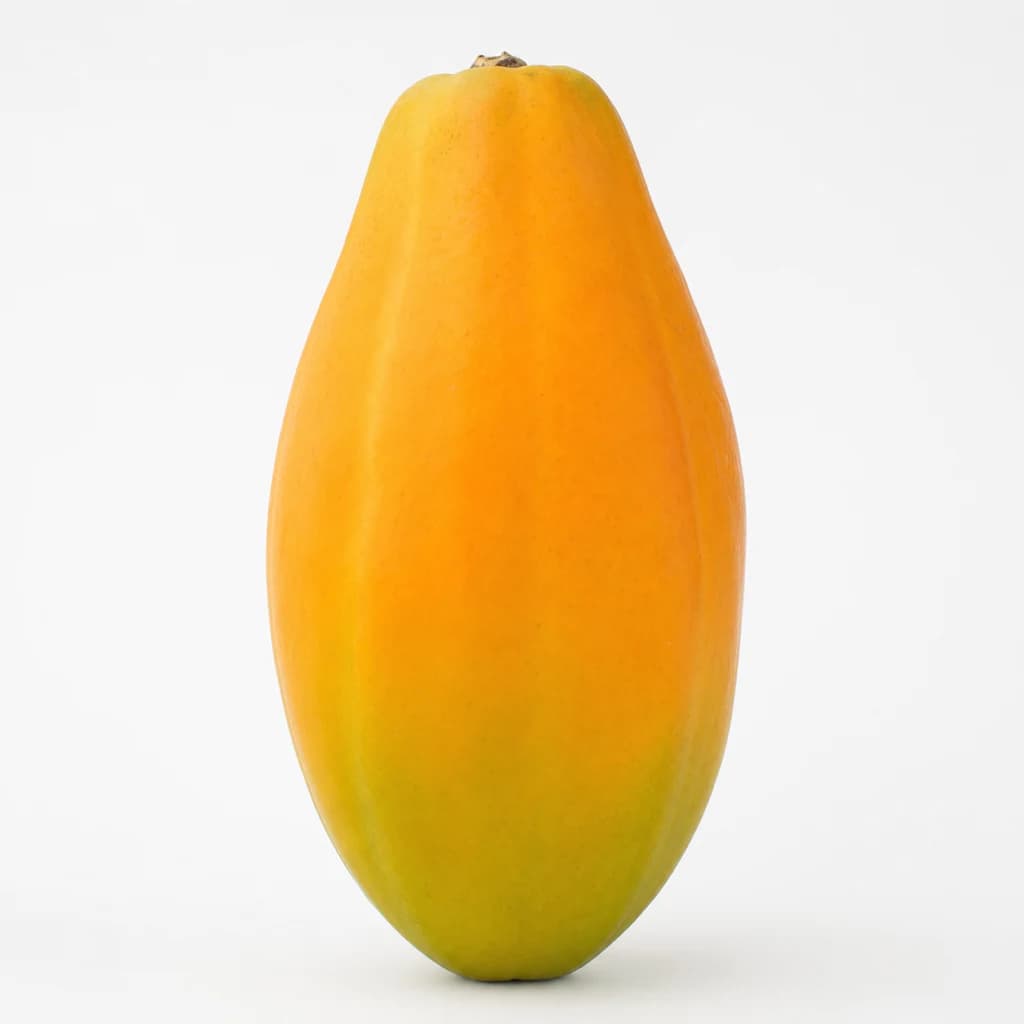
Natural form
A ripe whole papaya showing its oval shape, yellow-orange skin, and smooth exterior.
Shows the reader what a ripe papaya looks like before cutting — size, shape, and skin color are the primary recognition cues.
Produce
Papaya
Tropical fruit eaten ripe and sweet, or shredded green for tangy Southeast Asian salads.
Papaya is a soft tropical fruit with orange flesh and black seeds, sweet and musky when ripe. Ripe, it is eaten fresh with lime; unripe and green, it is shredded into crunchy salads like Thai som tam. It contains the enzyme papain, which tenderizes meat and aids digestion.
Papaya is a tropical fruit from the Carica papaya tree, native to Central America and southern Mexico, now grown throughout the tropics and in warm subtropical regions like Florida and Hawaii. The fruit ranges from the small, pear-shaped Hawaiian Solo—about a pound and the standard American supermarket variety—to the Mexican type, which can weigh over ten pounds. At its core, papaya is defined by a duality: ripe, it is perfumed and musky-sweet, the flesh ranging from deep coral to sunset orange; unripe and green, it is firm, mildly vegetal, and sharply tangy. That duality makes it one of the most versatile tropical ingredients in the kitchen, at home in both sweet and savory contexts.
What sets papaya apart from other tropical fruits is papain, a proteolytic enzyme found in the latex and in green flesh. Papain breaks down protein strands, which is why green papaya is a natural meat tenderizer—it works more gently than mechanical pounding, penetrating the fibers without tearing them. The same enzyme makes papaya a hazard around gelatin desserts, which it will prevent from setting. The seeds, too, are edible and distinctive: black, glossy, and peppery, they can be dried and ground as a spice or used whole in dressings and marinades. Understanding how the fruit's enzyme behaves is the key to using papaya well.
Ripe papaya should feel heavy for its size, yield slightly to palm pressure, and show yellow-to-orange skin with little to no green. Cut flesh ranges from pale orange to deep coral depending on variety. The fruit bruises easily once cut, so handle it gently and eat cut papaya within a day or two.
- Measured in
- piece
- Storage
- Fridge
Types & varieties
Small, pear-shaped; reddish-orange flesh; the standard U.S. supermarket variety. Sweet, consistent size, few seeds.
Large Mexican variety; reddish-pink flesh; intensely flavored; widely grown in Latin America and the Caribbean.
Small, yellow-skinned with orange or reddish flesh; very sweet; common in home gardens in Hawaii and Southeast Asia.
Large (5–20 lbs), green-skinned; yellow or orange flesh; used green in savory dishes or eaten ripe.
Taiwanese hybrid; large, firm, good for both fresh eating and processing.
Large-fruited Hawaiian type; bright red flesh; excellent for eating fresh.
The Papain Enzyme in Practice
Papain is most active in slightly acidic to neutral conditions, and the classic technique for green papaya meat tenderizing involves pairing shredded or scored fruit with lime or lemon juice. Score the flesh and let it sit in acid for 20–30 minutes before cooking, and the enzyme will work into the meat effectively. Papain denatures with heat, so for maximum tenderizing power, let the papaya work at room temperature before applying heat. Be aware that papain will prevent gelatin from setting—keep papaya entirely away from gelatin-based desserts and aspics.
- Score green papaya flesh and rest in acid for 20–30 minutes before cooking for best tenderizing.
- Papain denatures with heat; tenderizing works best before cooking, not during.
- Never add papaya to gelatin desserts—it will prevent the gel from setting.
Latex Allergy Warning
Papaya latex and the papain enzyme are known allergens for people with natural rubber latex sensitivity, a condition sometimes called latex-fruit syndrome. Reactions can range from mild oral irritation to systemic symptoms. When cooking for guests or in a professional setting, ask about latex allergies or omit papaya if the audience is unknown. This is not a minor caveat—it's a legitimate health concern that responsible cooks take seriously.
- Latex-fruit syndrome: people allergic to natural rubber latex may react to papaya.
- Symptoms range from oral itching and swelling to systemic reactions.
- Ask about latex allergies when serving papaya to unfamiliar guests.
Working with Papaya Seeds
Papaya seeds are entirely edible and deserve to be more widely used. They are black, glossy, and have a peppery, slightly bitter flavor reminiscent of black pepper and mustard. To use them: scoop from the ripe fruit, rinse thoroughly, and pat dry. Spread on a paper towel or baking sheet to dry at room temperature for a day or two, then grind in a spice grinder or mortar. Ensure good air circulation during drying to prevent mold. The ground seeds work well in vinaigrettes, marinades, and salad dressings where you want a pungent kick. Whole fresh seeds can be tossed into guacamole or grain salads for texture and heat. One medium papaya yields roughly a tablespoon of fresh seeds.
- Rinse and dry seeds thoroughly before drying or using fresh.
- Dry at room temperature for 1–2 days, then grind as you would peppercorns.
- Ground seeds substitute for black pepper in dressings and marinades; use sparingly at first.
Common uses
Tips & pitfalls
- Ripe papaya should yield slightly to palm pressure and have yellow-orange skin. Avoid buying fully green fruit if you want to eat it within a day or two—papaya does not ripen significantly off the tree.
- Green papaya for salads must be firm with no give. Test near the stem end, which is the last part to soften.
- To speed ripening, place papaya in a paper bag at room temperature. The trapped ethylene gas accelerates the process.
- Once cut, store flesh-side down on a plate, cover loosely, and refrigerate. Consume within 24–48 hours for best texture and flavor.
- Seed a ripe papaya by halving lengthwise and scooping the gelatinous center with a spoon. Rinse seeds well if saving them for cooking.
- Score green papaya flesh and let it sit in lime or lemon juice for 20–30 minutes before cooking—the enzyme works best in slightly acidic conditions.
- Papain prevents gelatin from setting. Never combine papaya with gelatin-based desserts or aspics.
- Handle cut papaya gently; it bruises readily and bruises turn bitter and mushy quickly.
- Store whole ripe papaya away from ethylene-sensitive produce like apples and bananas, which it will cause to ripen and spoil prematurely.
- Pair ripe papaya with acidic, cooling, or spicy elements to balance its musky sweetness and prevent it from tasting flat.
Nutrition
Energy
180 kJ · per 100 g
Where the calories come from
Protein
0.5g
1% DV
Carbs
10.8g
4% DV
Fat
0.3g
0% DV
Fiber
1.7g
6% DV
Sugars
7.8g
of which
Sodium
8mg
0% DV
Source · USDA FoodData Central · Papayas, raw
View on FDC →In the shops
Matched grocery products
No matched grocery products for Papaya yet.
Good to know
- Scientific name
- Carica papaya
- Origin
- Central America and southern Mexico
- Peak season
- Year-round in tropical regions; summer into fall in subtropical areas (Florida, Hawaii)
- Typical size
- Hawaiian (Solo): 1–2 lbs, 6–8 inches long; Mexican: up to 10+ lbs
- Flavor
- Ripe: sweet, musky, subtropical; Green: mild, vegetal, slightly bitter
- Key enzyme
- Papain (in latex and unripe flesh) — a proteolytic enzyme that tenderizes meat
- Edible seeds
- Black, peppery seeds used as spice; can be dried and ground
- Storage (ripe)
- Refrigerate whole, up to 1 week; eat within 1–2 days once cut
- Storage (green)
- Room temperature for 1–2 weeks or refrigerated for 2–3 weeks
- Yield
- Flesh is roughly 70–75% of whole fruit weight
Substitutes
- Mango — Similar tropical sweetness and creamy texture; best as a fresh-eating substitute in salads and desserts.
- Melon (cantaloupe or honeydew) — Comparable sweetness and moisture content; works well in fruit salads or breakfast bowls when papaya is unavailable.
- Kiwi (for green papaya) — Similar shredded texture; lacks the vegetal tang but acceptable in salads where green papaya is called for.
Pairs with
Also called
Mamão · Pawpaw · Green Papaya
Appears in these dishes
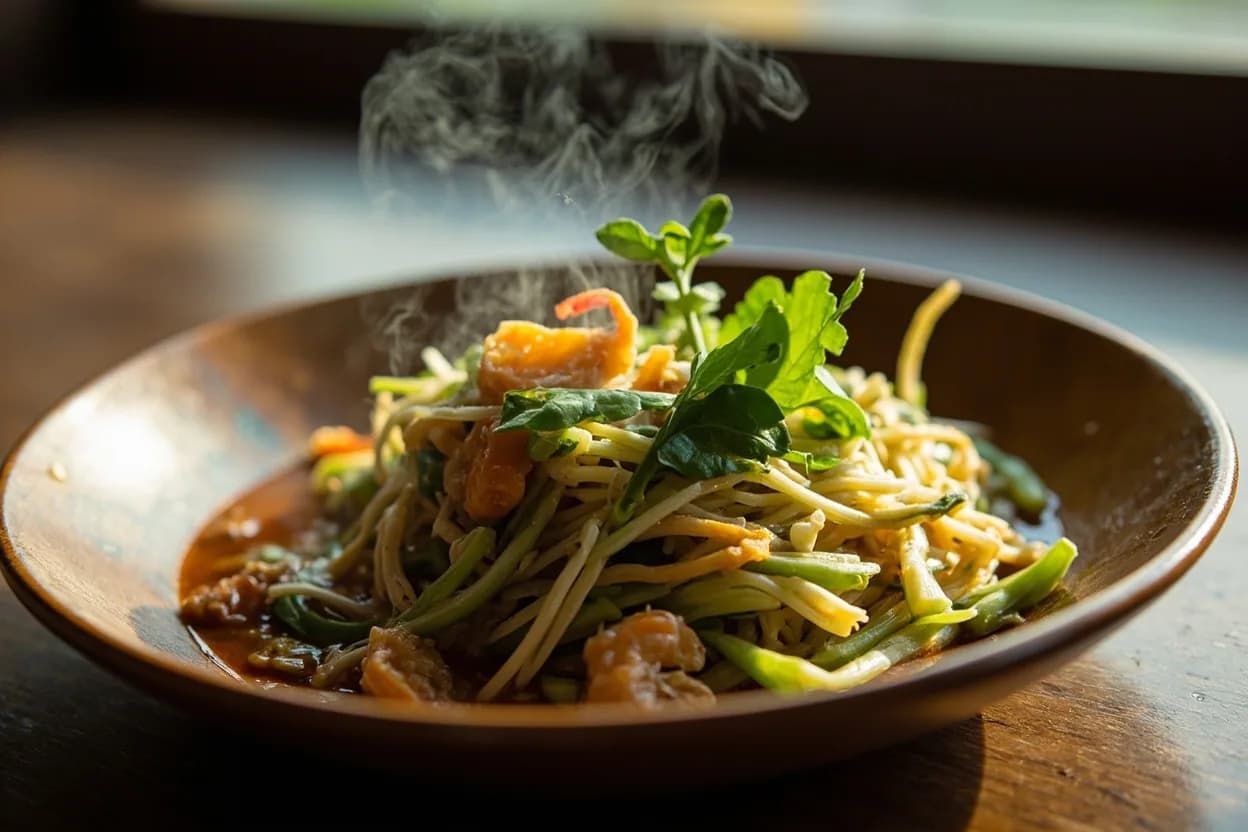
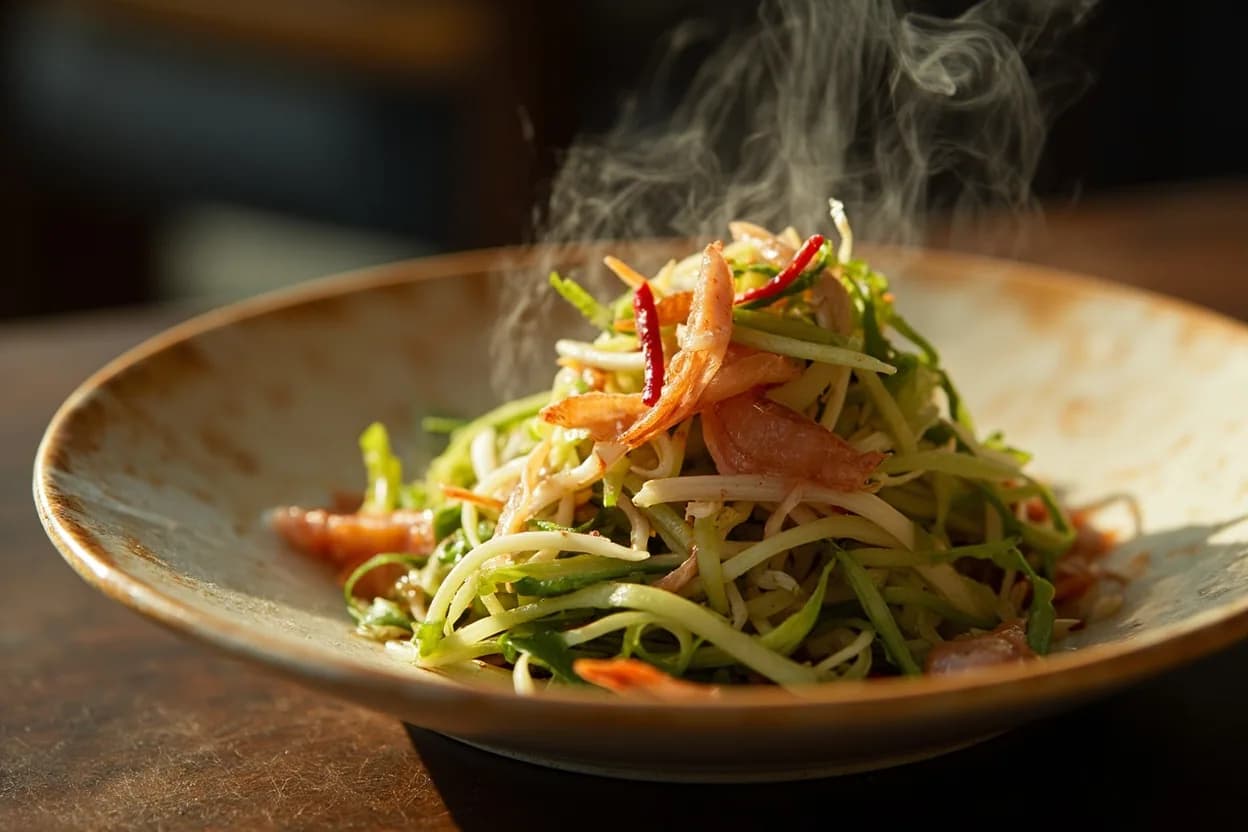
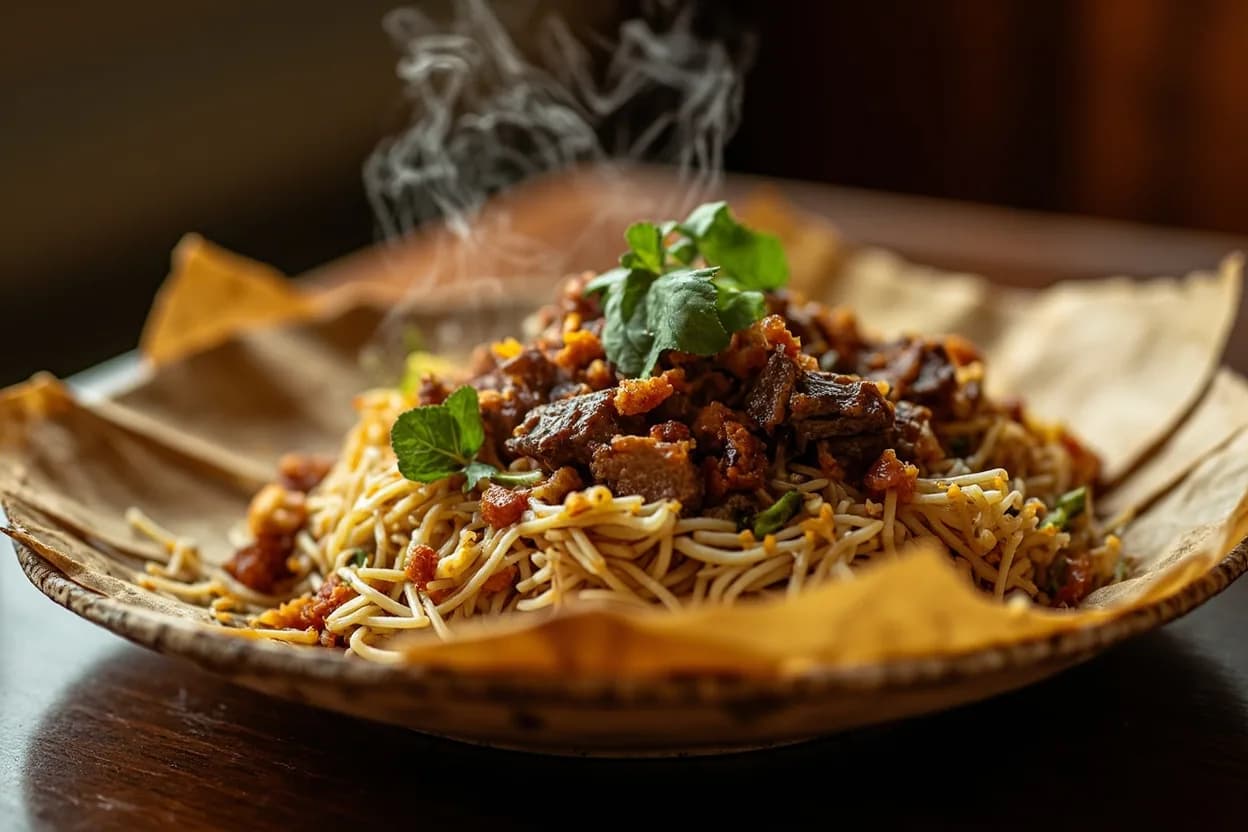
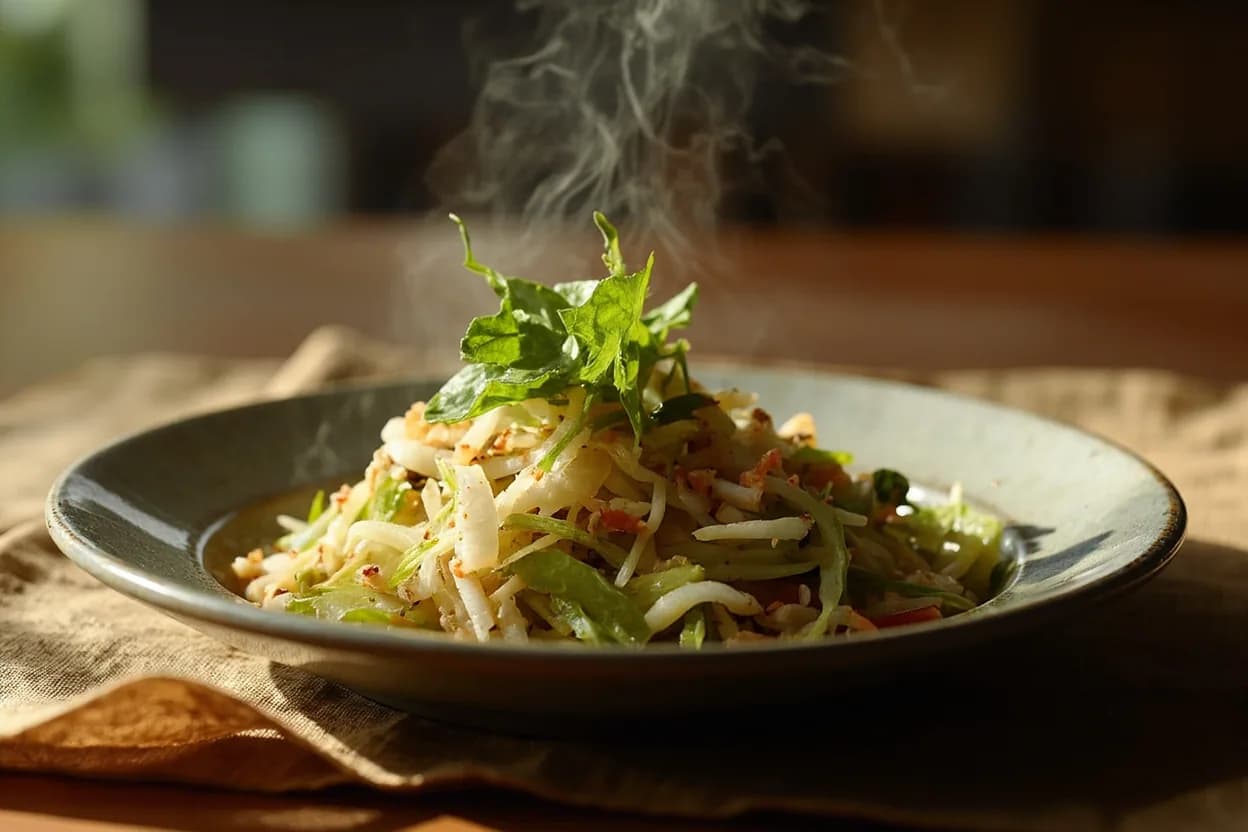
Related
Tomato
Juicy, sun-sweet fruit for sauces, salads, and slow-cooked depth
Yellow Onion
The aromatic backbone of soups, sofritos, and braises
Garlic
Pungent cloves that perfume nearly every savory dish
Lemon
Bright, acidic citrus that wakes up almost any dish
Potato
Humble, hearty staple — roast, mash, fry, or boil
Carrot
Sweet, crunchy root — raw, roasted, or the base of a sofrito
Cucumber
Cool, crisp, and watery — for salads, pickles, and tzatziki

Lettuce
Crisp leaves for salads, wraps, and a fresh crunch