Southeast Asia
Southern Thai
Also: Pak Tai cuisine, Thai-Muslim cuisine, South Thailand cooking
Thailand's most intense regional cuisine — turmeric-stained, coconut-rich, and shaped by centuries of maritime spice trade and Malay-Muslim influence.
Southern Thai cuisine is the boldest, most pungent, and most distinctly spiced of Thailand's regional traditions. Occupying the narrow Kra Peninsula between the Gulf of Thailand and the Andaman Sea, the south is a zone of cultural convergence: Buddhist Thai, Malay-Muslim, Chinese Hokkien, and Tamil communities have all contributed to a culinary tradition of remarkable complexity. Turmeric is used in near-industrial quantities, giving curries their vivid yellow hue; fresh and dried chilies are used with greater intensity than anywhere else in Thailand; and the local reliance on fermented shrimp paste (kapi) reaches its apex here. The substantial Muslim minority — comprising over 80% of the population in the four southernmost provinces — has shaped a robust Halal cooking tradition that bridges Thai and Malaysian culinary worlds.
The flavour base
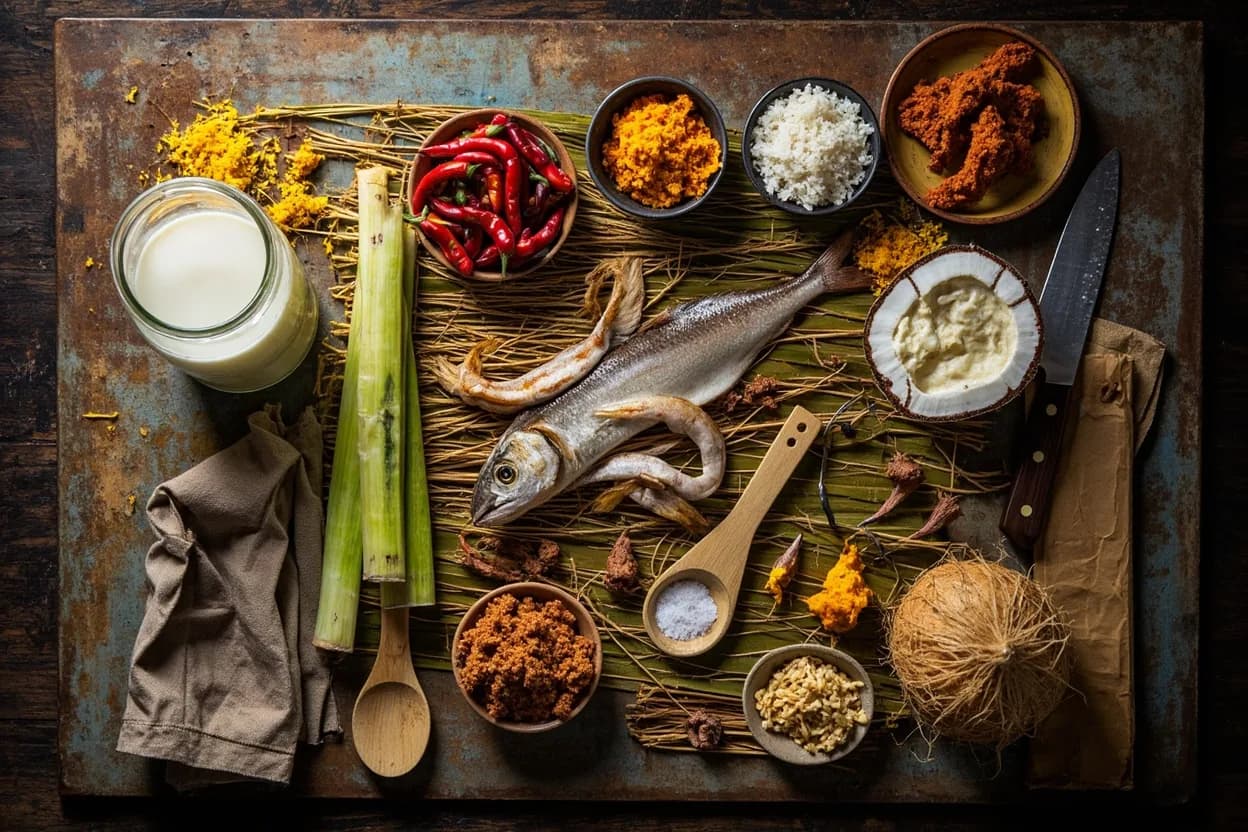
Turmeric, shrimp paste (kapi), fresh and dried chilies, and coconut milk form the essential quartet; in Muslim-inflected dishes, dried whole spices (cardamom, cumin, cinnamon, star anise) replace or supplement this base, creating the distinctive curry pastes of massaman and yellow curry.
Pantry staples
Key ingredients
Signature techniques
Signature dishes
Southern Thai on the table

At the table
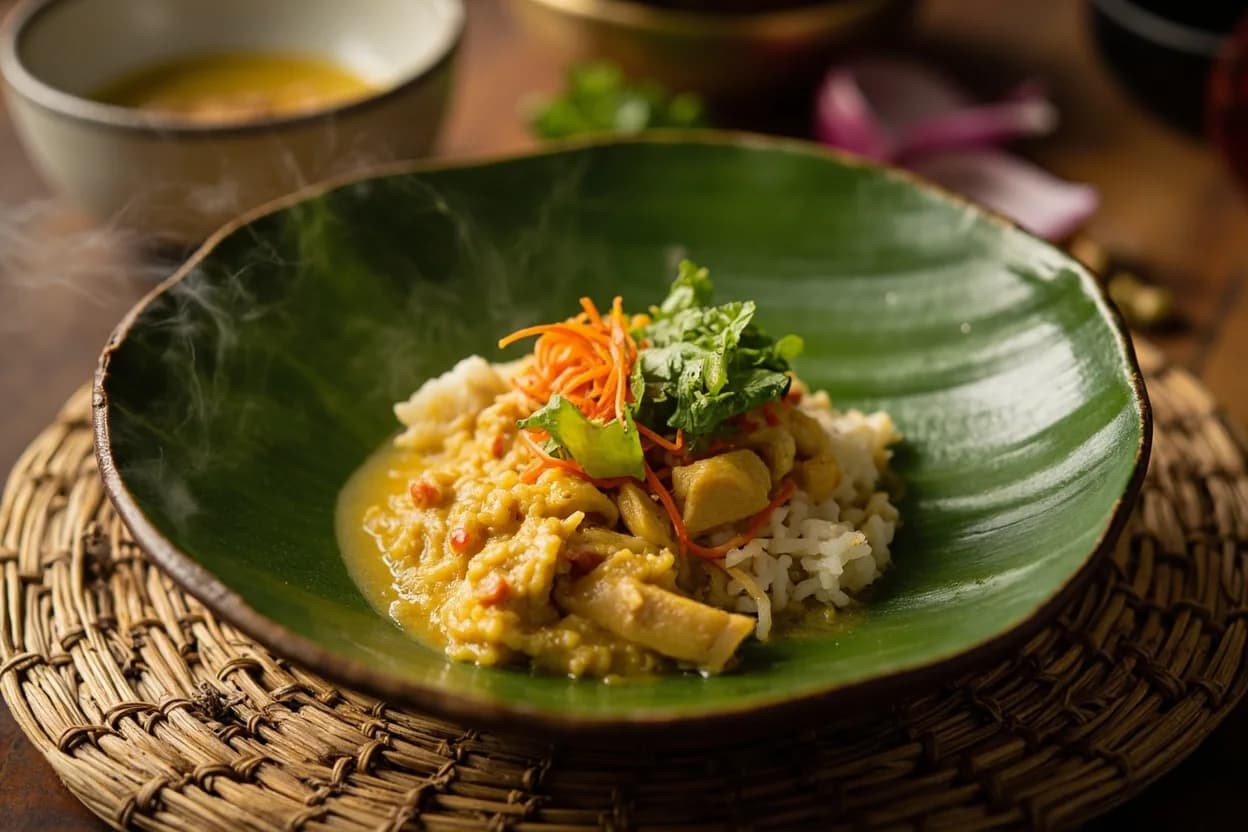
Meals typically feature jasmine rice (not sticky rice, unlike the north and northeast) with multiple shared curries and side dishes. In Muslim households, rice is often served with a single substantial curry — massaman, kaeng kari — plus a simple vegetable dish. Roti, introduced via Indian and Malay influence, is eaten as both a bread accompaniment and as a sweet street snack with condensed milk.
History & context
The southern peninsula's geography — a narrow land bridge straddling two seas — made it a critical maritime trade corridor between China, India, and the Middle East for two millennia. Srivijaya, the Buddhist maritime empire centered in Palembang and later at Nakhon Si Thammarat, controlled these sea lanes from the 7th to 13th centuries, facilitating the spread of Indian spices and culinary techniques. The subsequent rise of Islamized Malay sultanates along the Malay Peninsula gradually converted much of the south's population to Islam, introducing the dried whole spice vocabulary that defines massaman and yellow curry. Portuguese traders in the 16th century reinforced chili culture, and Chinese Hokkien settlers added a braising and preserved-protein tradition. The 20th century rubber and tin economies brought Tamil laborers, whose influence is visible in the roti and biryani traditions of Hat Yai and Pattani.
Regional variations
- Surat Thani / Upper South
Transitional zone; coconut milk curries predominate, turmeric less extreme, more central Thai influence
- Nakhon Si Thammarat
Historical capital of the south; considered the most culinarily refined; khao yam originates here
- Pattani / Deep South (Malay border provinces)
Majority-Muslim; food is essentially indistinguishable from Kelantanese Malaysian cuisine; nasi dagang and ayam percik are local staples
- Hat Yai / Songkhla
Commercial hub with strong Hokkien Chinese presence; dim sum culture, Hokkien-style braised dishes, and halal market coexist
Related cuisines
- Malaysian (Kelantanese)
Deep South Thai and Kelantan share essentially the same population, language, and food divided by a colonial border
Both traditions arrived at coconut-milk curries with dried whole spices via Indian Ocean trade routes
Some royal dishes trace to the south — massaman was a court favorite brought by Persian-Malay diplomats
Canonical recipes
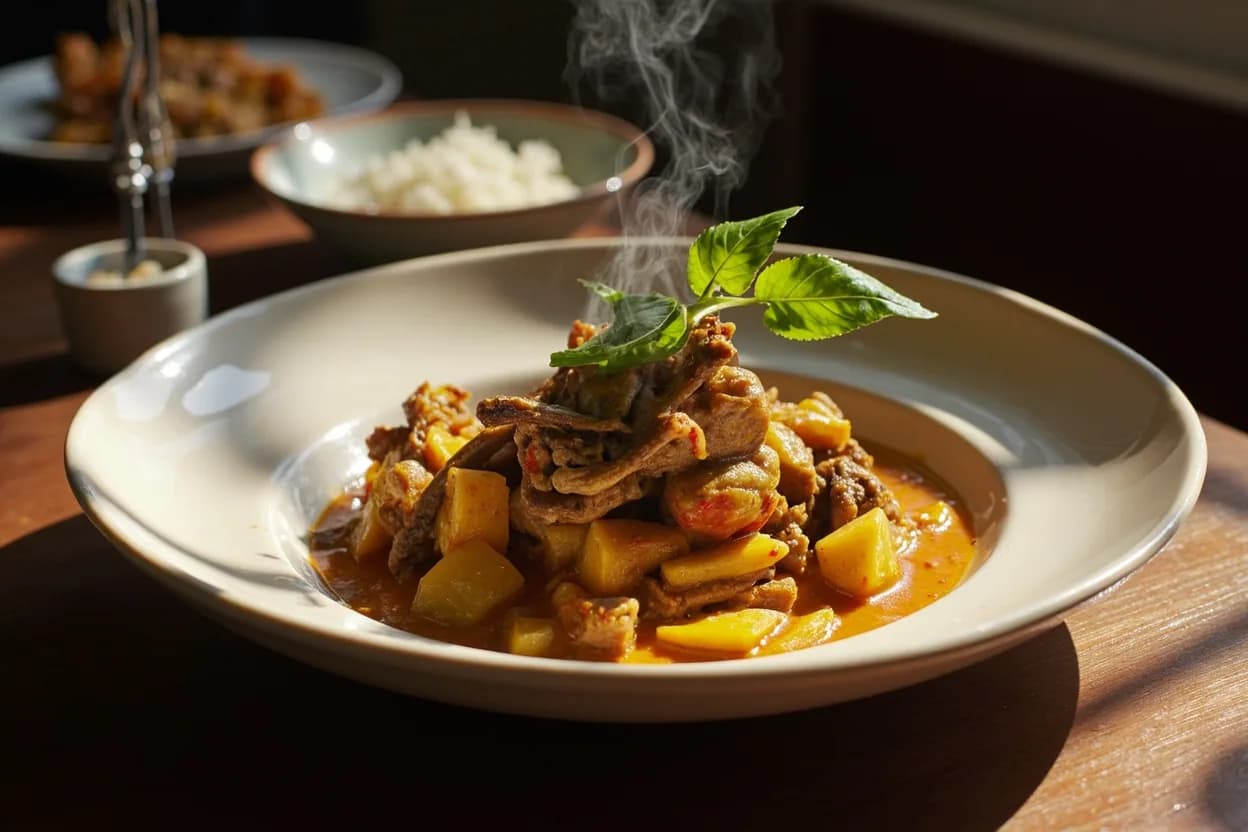
The dishes that define Southern Thai, documented in the Canon.
References
- 1.Thai Food — David Thompson (Pavilion Books, 2002)
- 2.Cradle of Flavor: Home Cooking from the Spice Islands of Indonesia, Malaysia, and Singapore — James Oseland (W.W. Norton, 2006)
- 3.The Food of Thailand — Wendy Hutton (Periplus Editions, 2000)
Confidence: high
Notes
Gaeng tai pla
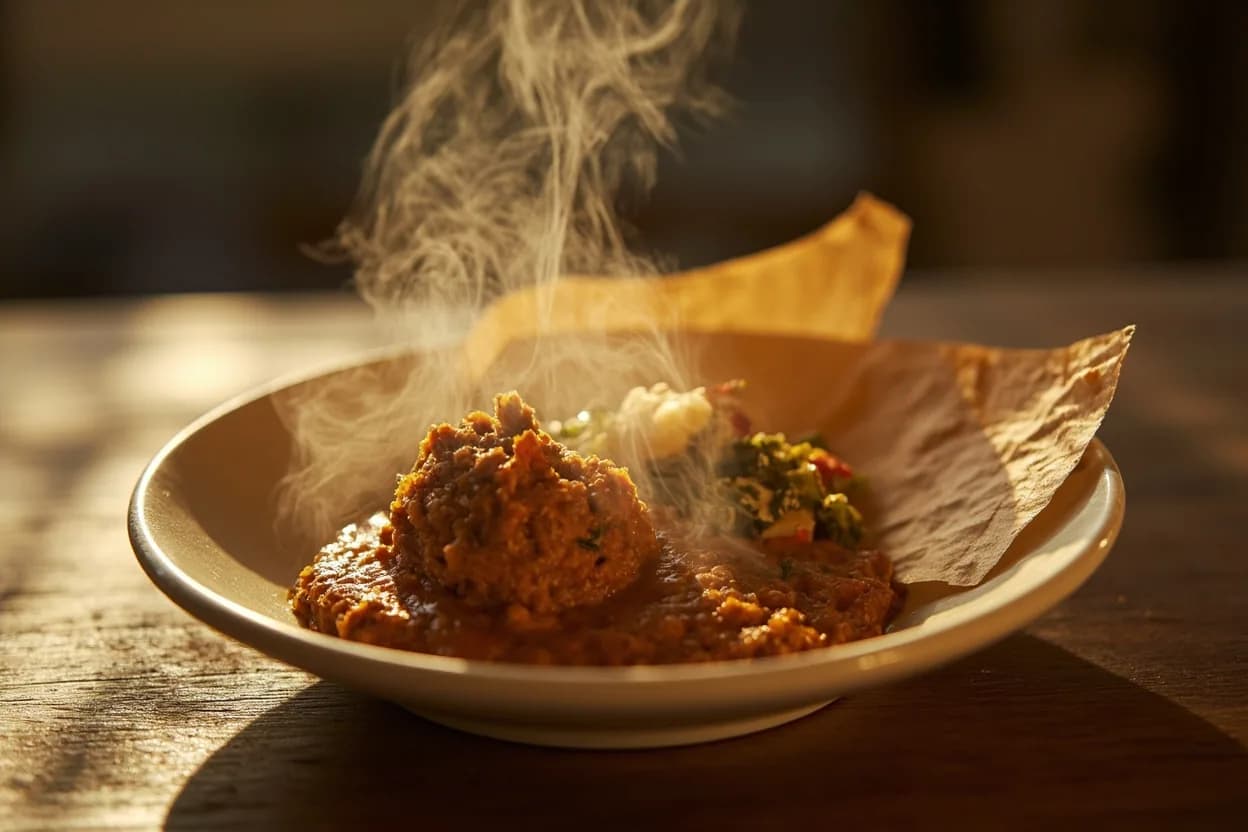
Perhaps the most challenging dish in the southern repertoire, gaeng tai pla is a curry of fermented fish innards (tai pla) with vegetables. Its sulfuric, intensely funky aroma shocks the uninitiated; to southern Thai cooks it is comfort food of the highest order. The dish cannot be approximated with substitutions — the ingredient defines the dish entirely.
Halal and Buddhist kitchens
The south's culinary identity is genuinely bicultural: Buddhist Thai households use pork freely and access seafood without restriction, while Muslim households maintain strict Halal practice and build an equally rich cuisine around beef, chicken, and lamb. Both communities share turmeric-based curries and coconut milk; the spice vocabulary diverges primarily in the dried whole spice additions of Halal massaman and kaeng kari.