Southeast Asia
Royal Thai Court Cuisine
Also: Ahaan chao wang, Thai palace cuisine, Bangkok court cooking
The meticulously refined cooking of the Chakri court — intricate garnishes, delicate balance, and a tradition that codified Thai cuisine into its most elegant form.
Royal Thai court cuisine (ahaan chao wang) is the culinary tradition developed over five centuries in the palaces of Ayutthaya and Bangkok. It represents an extreme elaboration of Thai cooking's core principles — sour, salty, sweet, spicy balance — filtered through demands for visual beauty, technical precision, and ingredient refinement. Court cooks elevated everyday Thai dishes into spectacles: curries were made with fresh-squeezed coconut cream, not tinned; proteins were meticulously boned and carved; vegetables and fruits became sculptural objects. The tradition produced both rarefied dishes exclusive to the palace (chuchee fish, mee krob, thong yip) and refined versions of dishes later popularized throughout the country. Much of what the world recognizes as 'classic Thai food' passed through the court filter on its way to the general population.
The flavour base
The quintessential Thai balance of kapi (shrimp paste), galangal, lemongrass, kaffir lime leaf, and fresh chilies forms the aromatic base — but at court, each element is prepared to maximum freshness and quality. Coconut cream, separated and cracked in the pan before adding curry paste, is the defining technique that distinguishes palace curries from rustic versions.
Pantry staples
Key ingredients
Signature techniques
Signature dishes
Royal Thai Court Cuisine on the table
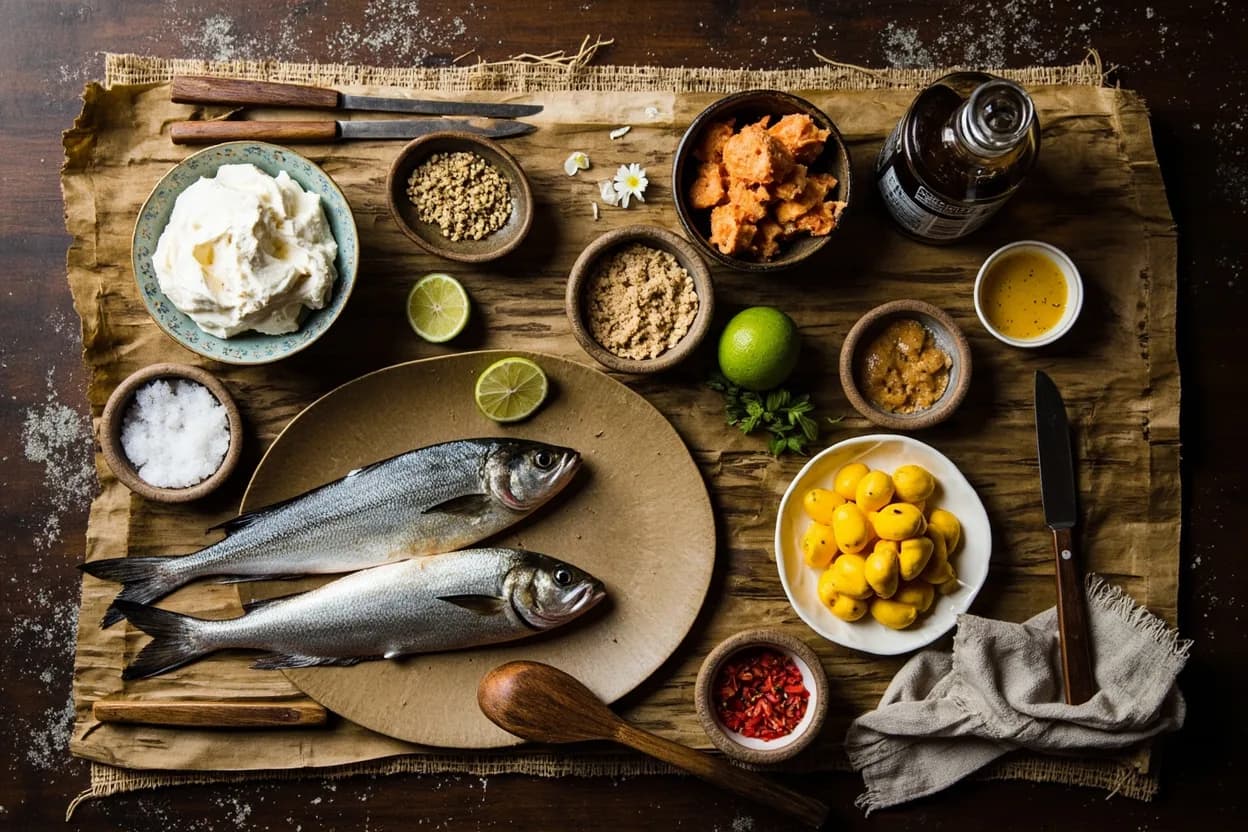
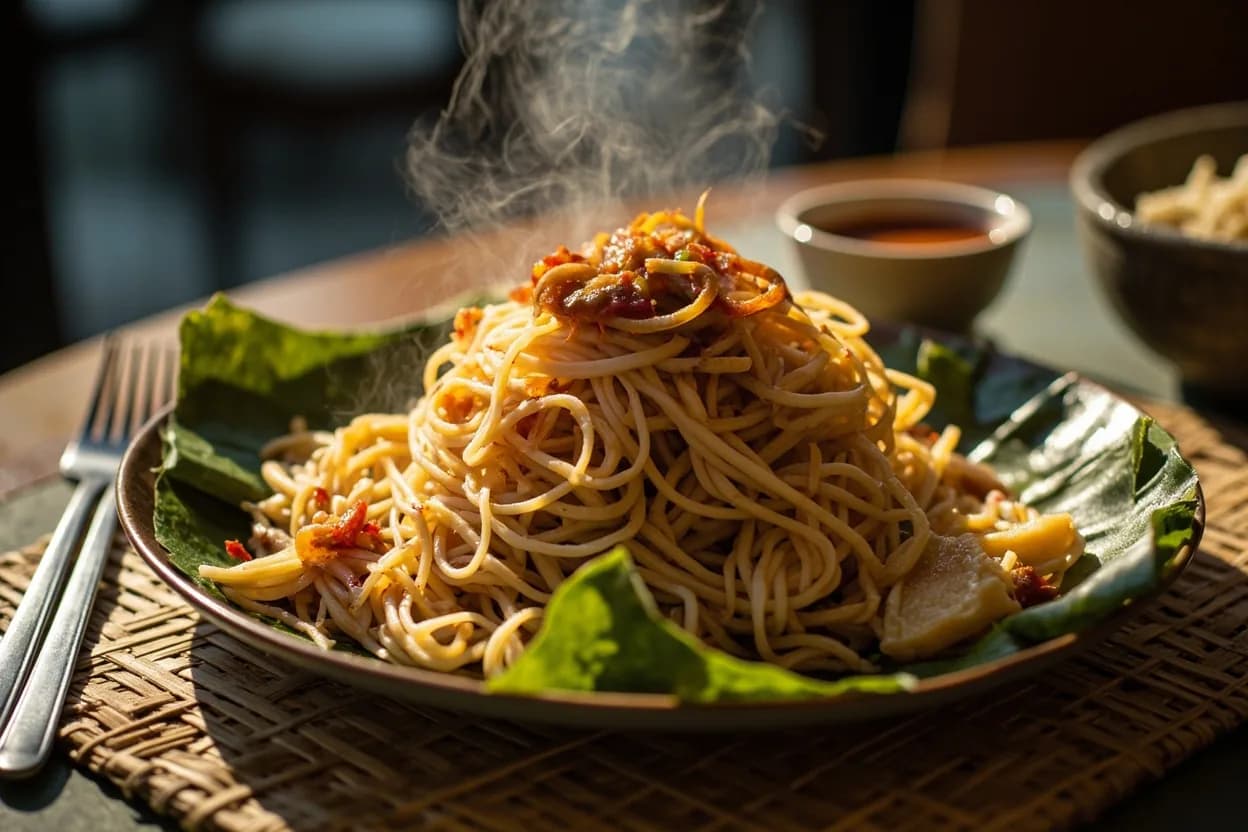
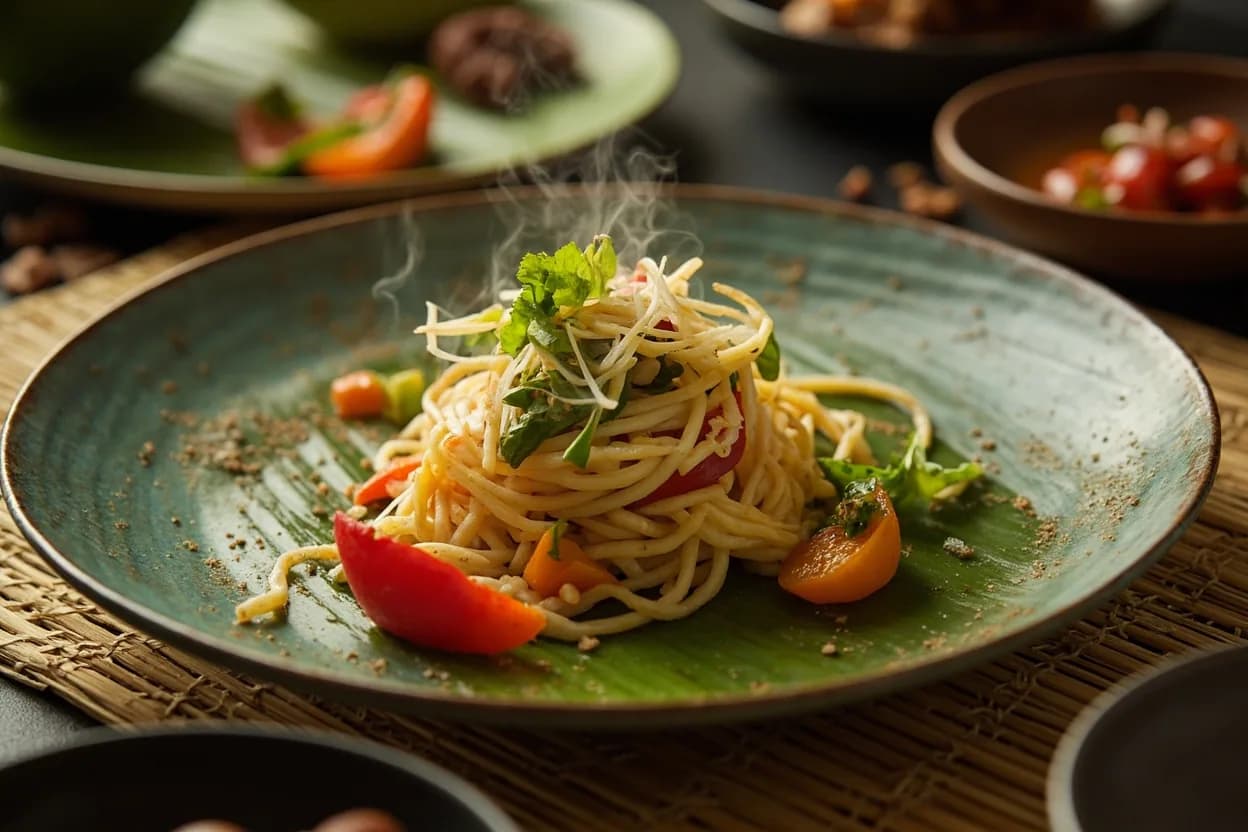
At the table
Court meals were elaborate, multi-dish affairs served on tiered lacquer trays or low gilded tables. Dishes arrived simultaneously rather than in courses; the visual arrangement — carved vegetables, color-coordinated garnishes, flower-petal decorations — was as important as flavor. A royal meal might include a soup, two or three curries of different heat levels, a stir-fry, a salad, relishes, and multiple rice preparations, followed by seasonal fruit carved into flowers and at least two or three golden egg-yolk confections.
History & context
The foundations of Thai court cooking were laid in the Ayutthaya period (1351–1767), where the royal kitchen absorbed influences from Chinese, Indian, Portuguese, and Persian emissaries. Portuguese traders in the 16th century introduced egg-yolk-based sweets (foi thong, thong yip derive directly from Portuguese ovos moles); Chinese techniques informed noodle dishes and stir-frying. When Ayutthaya fell to Burma in 1767, surviving court cooks relocated to Thonburi and then Bangkok, carrying the tradition intact. The Chakri dynasty's Bangkok court (established 1782) formalized and codified the cuisine, particularly under King Rama II (himself a noted poet and aesthete) and Rama V, who opened Thailand to greater international influence. Lady Plean Pasonakorn's seminal early 20th century cookbook preserved court recipes for the first time in written form accessible beyond palace walls. Today the tradition is maintained by culinary schools, the royal household, and a small number of family-run restaurants and hotels.
Regional variations
- Ayutthaya period (historical)
Pre-Bangkok court tradition; stronger Chinese and Indian influence; use of more whole spices; some dishes no longer prepared
- Early Rattanakosin (Rama I–III)
Consolidation period; Portuguese egg sweets fully integrated; carving traditions codified
- Late Rattanakosin / modernized court
Rama V era opened to French and international influence; incorporation of some Western service conventions alongside traditional dishes
Related cuisines
Court cuisine is the refined apex of central Thai cooking; most classic central Thai dishes passed through or were shaped by court tradition
- Portuguese-influenced Asian cuisines
Egg-yolk sweets (foi thong, thong yip) are direct descendants of Portuguese ovos moles, introduced via 16th century trade missions
- Royal Cambodian (Khmer court)
Shared Angkorian-era cultural substrate and parallel court elaboration of similar Southeast Asian flavor profiles
References
- 1.Thai Food — David Thompson (Pavilion Books, 2002)
- 2.The Principles of Thai Cookery — M.L. Sirichalerm Svasti (Chefdee, 2011)
- 3.Dok Mai Sot: The Book of Royal Thai Cuisine — Thanpuying Prapa Sophonpanich (2007)
Confidence: high
Notes
Kae sa lak (fruit and vegetable carving)
The art of carving fruits and vegetables into lotus flowers, swans, and foliage arrangements is among the most technically demanding skills in the Thai culinary tradition. Originating in the court, it was considered an essential accomplishment for noblewomen, and formal competitions were held within the palace. Today the skill is taught at culinary institutes and used in fine-dining garnishes, though the full complexity of court-level carving is increasingly rare.
Coconut cream technique
The defining technical marker of true court-style curries is 'cracking' the coconut cream — heating thick coconut cream in the wok until the oil separates (the cream 'breaks'), then frying the curry paste in that rendered coconut oil before adding the rest of the cream and proteins. This step, which takes patience and quality fresh cream, produces a depth of flavor and glossy sheen absent from curries made by simply simmering paste in unbroken coconut milk.