Produce
Jicama
Crisp, juicy Mexican root eaten raw with lime and chili, or stir-fried.
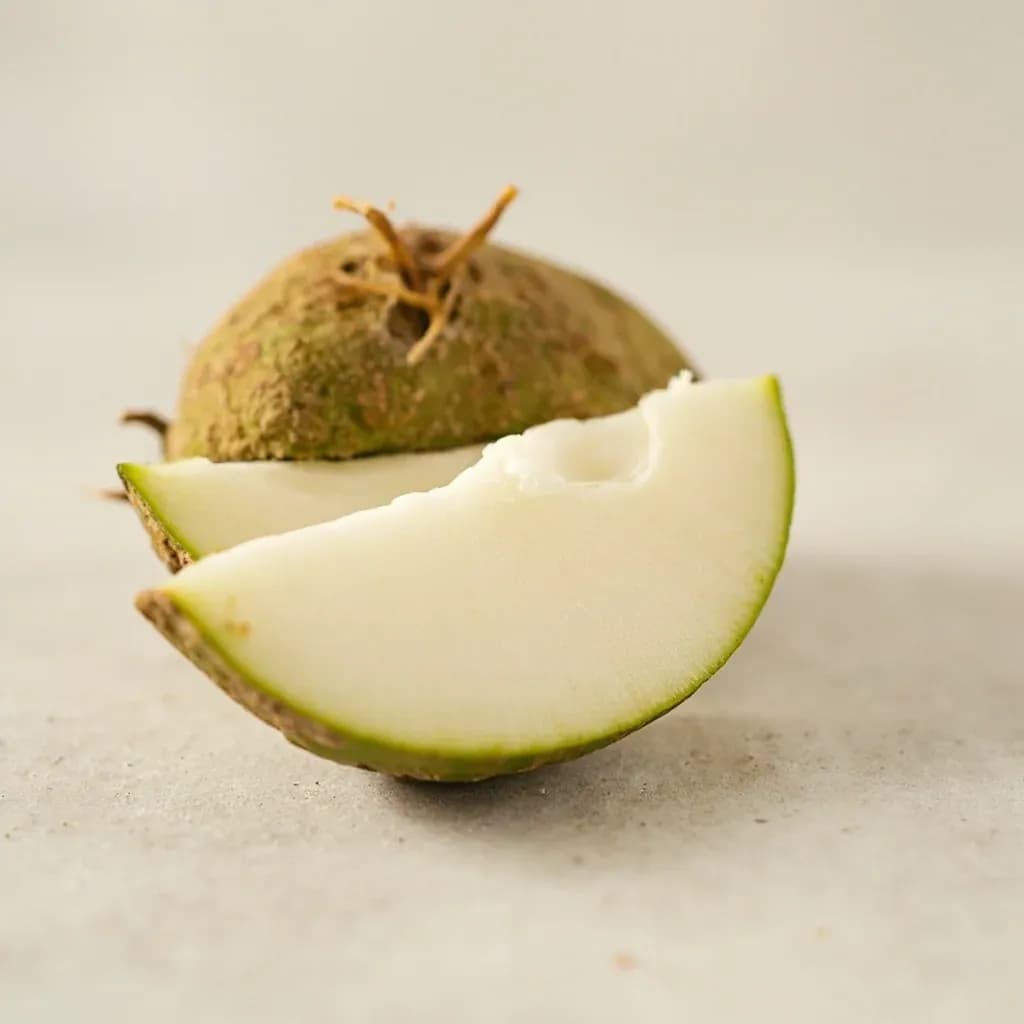
Jicama is a round root vegetable with thin brown skin and crisp, white, juicy flesh that tastes mildly sweet and starchy, like a cross between an apple and a water chestnut. In Mexico it is sliced raw and dressed with lime, chili, and salt, and it stays crunchy in slaws, salads, and stir-fries. It can be eaten raw or cooked, and its texture holds up well in both.
Jicama is a tuberous root vegetable from the legume family, native to Mexico and Central America where it has been cultivated since pre-Columbian times. Despite being a legume, the edible portion is the underground root rather than seeds or pods—the same plant produces toxic seeds and pods that must be avoided. The root grows on a vine that can extend 3–4 feet into loose, sandy soil, and it typically weighs 1 to 3 pounds at harvest. Mexico remains the primary commercial producer, though it is also grown in California, Hawaii, the Philippines, and Southeast Asia.
The flesh is crisp, juicy, and crunchy with a mildly sweet, nutty flavor often compared to raw pear or water chestnut. This makes it unusual among roots: most require cooking to become palatable, but jicama is at its best raw, when its cellular structure delivers that signature snap. When cooked, it holds up reasonably well if treated gently—brief stir-frying or adding to soups in the last minutes of cooking preserves its texture better than prolonged heat.
The entire papery skin, along with leaves, seeds, and immature pods, contains rotenone—a natural insecticide toxic to humans and animals if ingested in quantity. Complete peeling is non-negotiable before any preparation. Once peeled, approximately 75–80% of the root is edible, and the yield is generous for a root vegetable.
- Measured in
- piece
- Storage
- Fridge
Types & varieties
The standard variety found in most markets; mild and crisp
A separate species (Pachyrhizus ahipa) with slightly sweeter flavor, native to South America
Selecting and Storing
Choose firm, dense roots that feel heavy for their size. Avoid any with soft spots, wrinkles, cracks, or visible blemishes—these indicate age or improper storage. The skin should be thin and papery without discoloration. Store unpeeled jicama loosely wrapped in the crisper drawer of your refrigerator; it will keep 2 to 3 weeks. At room temperature, use within a week. Once peeled and cut, wrap tightly and use within 1–2 days, as exposed flesh begins to lose moisture and the signature crunch degrades rapidly.
- Firm and dense with no soft spots or wrinkles
- Heavy for its size indicates good moisture content
- Refrigerate unpeeled for longest shelf life
- Use cut pieces within 1–2 days
Common uses
Tips & pitfalls
- Always peel completely—the thin, papery skin is toxic and must be removed entirely before any preparation.
- Choose firm, dense roots; avoid any with soft spots, wrinkles, or blemishes.
- Store unpeeled in the crisper drawer of the refrigerator, wrapped loosely in plastic.
- Peel and cut just before serving if serving raw to prevent moisture loss and maintain maximum crunch.
- When cooking, add near the end of cooking time to preserve texture—overcooked jicama becomes mushy and loses its appeal.
- To easily peel, score the skin around the circumference and peel in strips with a sharp peeler or paring knife.
- If jicama tastes bitter, it is past its prime or was improperly stored—discard and select a fresher specimen.
Nutrition
Energy
117 kJ · per 100 g
Where the calories come from
Protein
0.9g
2% DV
Carbs
6.4g
2% DV
Fat
0.1g
0% DV
Fiber
1.8g
6% DV
Sugars
3.8g
of which
Sodium
67mg
3% DV
Source · USDA FoodData Central · Turnips, raw
View on FDC →In the shops
Matched grocery products
No matched grocery products for Jicama yet.
Good to know
- Scientific name
- Pachyrhizus erosus
- Family
- Fabaceae (legume family)
- Origin
- Mexico and Central America, cultivated since pre-Columbian times
- Flavor
- Mildly sweet, nutty; reminiscent of raw pear or water chestnut
- Typical size
- 1 to 3 pounds (up to 5 pounds)
- Peak season
- Fall through early spring; available year-round
- Shelf life
- 2 to 3 weeks refrigerated; up to 1 week at room temperature
- Caution
- Skin, leaves, seeds, and pods contain rotenone and are toxic—must be completely peeled
- Yield
- Approximately 75–80% edible after peeling
Substitutes
- Water chestnut — Similar crunch and neutral flavor; best for stir-fries and raw applications
- Asian pear — Comparable texture and subtle sweetness; works well raw
- Celery root — Acceptable texture substitute but stronger flavor
- Jerusalem artichoke (sunchoke) — Similar crunch when raw; slightly nuttier flavor
Pairs with
Also called
Mexican Turnip · Yam Bean
Related

Tomato
Juicy, sun-sweet fruit for sauces, salads, and slow-cooked depth

Yellow Onion
The aromatic backbone of soups, sofritos, and braises

Garlic
Pungent cloves that perfume nearly every savory dish

Lemon
Bright, acidic citrus that wakes up almost any dish

Potato
Humble, hearty staple — roast, mash, fry, or boil

Carrot
Sweet, crunchy root — raw, roasted, or the base of a sofrito

Cucumber
Cool, crisp, and watery — for salads, pickles, and tzatziki

Lettuce
Crisp leaves for salads, wraps, and a fresh crunch