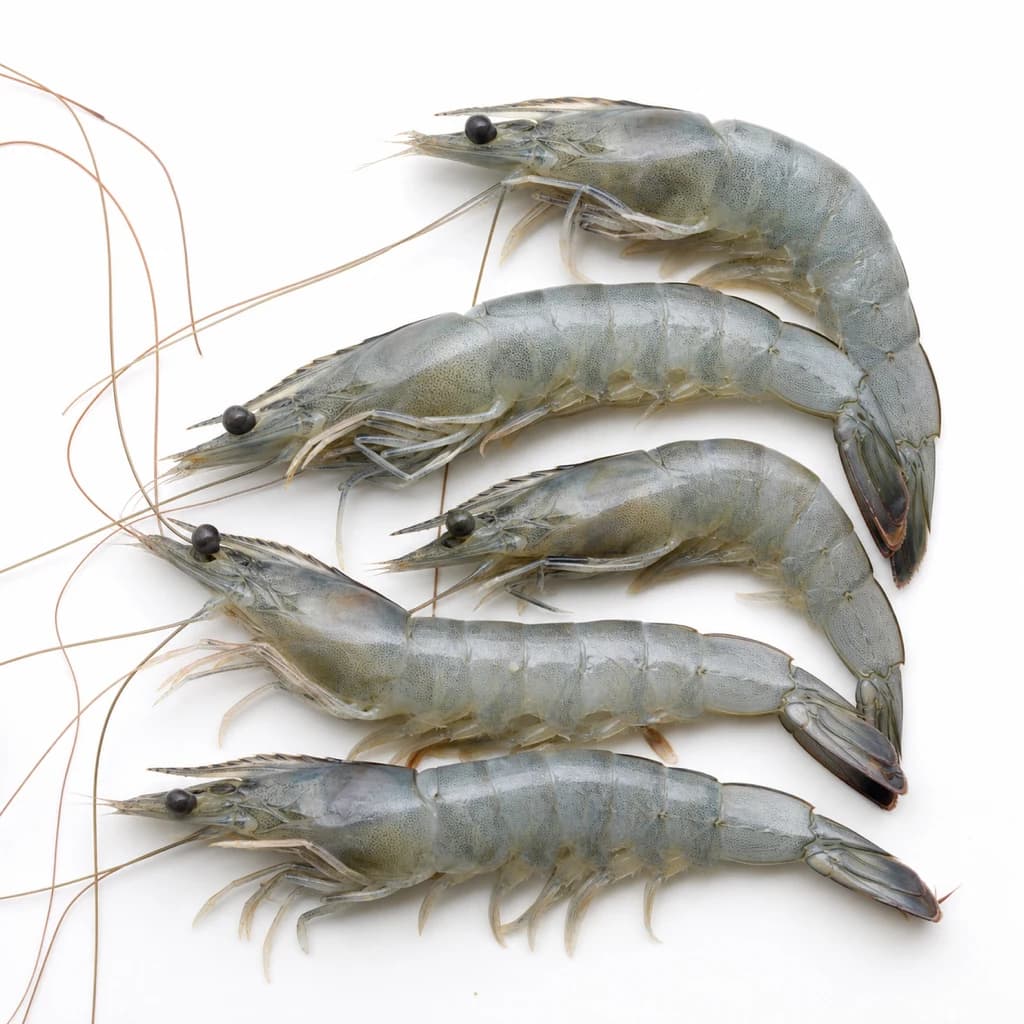
Natural form
Whole raw prawns with shells and heads intact, showing their natural blue-grey translucent form.
Shows the reader exactly what an unprocessed prawn looks like at purchase — the defining size, coloration, shell texture, and long antennae that distinguish prawns from smaller shrimp.
Proteins
Prawn
Sweet, fast-cooking shellfish — grilled, stir-fried, curried, or simmered into soups and rice dishes.
Prawns are large, sweet-fleshed crustaceans closely related to shrimp and used across coastal cuisines. They cook in just a few minutes — grilled, sautéed in garlic, stir-fried, or simmered into curries, paellas, and soups. Their shells and heads make a flavorful stock, and overcooking turns them rubbery.
Prawns are decapod crustaceans prized in kitchens worldwide for their sweet, delicate flavor and rapid cooking time. The terms "prawn" and "shrimp" overlap significantly in commercial use: British English typically reserves "prawn" for larger specimens, while American usage generally applies it to any sizeable shrimp. In practice, a prawn is defined more by size and species than by any strict biological distinction. Their meat turns from translucent to opaque when cooked, developing a firm, succulent texture with a satisfying snap when done right. The key challenge with prawns is timing — they cook in minutes and go from tender to rubbery just as quickly, making them unforgiving but quick to master.
Prawns are extraordinarily versatile: they take well to high-heat methods like grilling and stir-frying, benefit from gentle poaching, and hold their shape in long-simmered dishes when added at the end. Their natural sweetness pairs with bold flavors — garlic, chili, citrus, coconut — without being overwhelmed. The shell insulates the meat during cooking and adds flavor to the final dish; leaving it on for grilling or steaming produces superior results. Commercially, the most important species are Black Tiger and Whiteleg prawns, which dominate aquaculture, while wild spot, northern, and king prawns command premium prices for their superior flavor. Freshness is paramount: a clean ocean scent indicates quality, while any ammonia or fishiness signals age.
In the kitchen, prawns behave predictably when you understand their signals. They curl during cooking, and the degree of curl tells you exactly where they are: a loose C-shape means they are just done, a straight line or tight O indicates overcooked and tough. This single visual cue eliminates guesswork. Because they cook so quickly, prawns are ideal for weeknight meals yet impressive enough for company — whether simply sautéed in garlic butter, grilled with compound herb butter, or woven into complex curries and risottos.
- Measured in
- g
- Storage
- Fridge
Allergens
Types & varieties
Large (up to 12 inches), distinctive black-striped shell, firm meat, sweet flavor. Common in Asia and aquaculture.
Mild, sweet, firm. The most widely farmed prawn globally. Clean, light-colored shell.
Large, sweet, and meaty. Term covers several large species including Pandalus platyceros (spot prawn) and tropical varieties.
Same as Black Tiger; named for characteristic stripes on the carapace.
Small to medium, sweet, and tender. Also called Maine prawn in the US. Wild-caught, seasonal.
Common in UK and Europe. Full-flavored, firm texture. Often sold cooked or raw.
Smaller variety, delicate flavor. Often sold cooked and peeled. Common in prawn cocktails.
Wild Pacific species, large, sweet, and prized. Typically sold raw with heads on.
Vibrant blue when raw, turning pink when cooked. Sweet, firm. Farmed in Latin America.
French term for large shrimp/prawns, often sold head-on. Usually Pandalus or Penaeus species.
Actually a langoustine (Nephrops norvegicus), sold as prawn tails in many markets. Sweet, delicate.
Generic term for extra-large prawns, typically 6+ inches. Sold head-on or peeled.
Choosing Prawns
Freshness is the single most important factor when buying prawns. Raw prawns should have a clean, ocean-breeze smell — not fishy, not ammonia-like. The shell should be translucent and glistening, without black spots or yellowing, which indicate oxidation or age. Avoid any with a slimy film or separated flesh. Frozen prawns are a reliable option when fresh is unavailable; look for individually quick frozen (IQF) prawns for the best quality and easiest portioning. If a package shows frost burn or ice crystals, the prawns have been stored too long or at improper temperatures.
Size matters depending on your purpose. Large and jumbo prawns (U/15 to 21/25 per pound) are ideal for grilling, stuffing, and presentations where the prawn is the star. Medium prawns (31/40) work well in stir-fries, curries, and pasta. Small prawns (61/70) are best for tacos, salads, and popcorn prawns where size is less critical.
Responsibly sourced prawns carry certifications such as ASC (Aquaculture Stewardship Council) or BAP (Best Aquaculture Practices). Farmed prawns dominate the global supply, so choosing certified options ensures better environmental and labor standards.
- Smell for clean ocean scent — never fishy or ammonia
- Avoid shells with black spots or yellowing
- Choose IQF frozen prawns for consistent quality and easy storage
- Match size to your recipe: jumbo for grilling, medium for stir-fries, small for tacos and salads
- Look for ASC or BAP certification for responsibly farmed prawns
Preparing Prawns
Deveining is essential for prawns larger than medium size. The dark digestive tract running along the curve of the prawn contains grit and sand that creates an unpleasant texture. Use a small, sharp knife or a deveining tool to make a shallow cut along the back, then lift out the vein with the tip of the knife or your fingers. Leave the shell on for grilling and steaming — it insulates the meat, adds flavor, and prevents the prawns from drying out. Peel it off at the table or before serving.
To peel easily: pinch off the legs first, then work the shell off from the underside toward the tail, leaving the last segment of shell on if you want the classic fan-tail presentation. The head, if still attached, can be twisted off easily and contains flavorful tomalley — eat it if the prawn is fresh, or discard if you prefer. Rinsing peeled prawns briefly in cold water and patting them dry improves browning in sautéed preparations.
Marinating prawns works quickly due to their small size and porous flesh. Even 15–30 minutes in acid, oil, and seasonings penetrates adequately. However, avoid acid-heavy marinades for more than an hour, as the citric acid or vinegar will begin to "cook" the surface and turn the prawns mushy.
- Always devein prawns larger than medium size
- Leave shells on for grilling and steaming to protect the meat
- Peel by removing legs first, then shell from underside toward tail
- Pat dry after peeling to improve browning in sautéed dishes
- Marinate for 15–30 minutes; avoid acid marinades longer than an hour
Common uses
Tips & pitfalls
- Buy raw prawns with a clean, ocean-breeze smell—never fishy or ammonia-like
- Avoid prawns with black spots or yellowing shells, indicating oxidation or age
- Always devein prawns larger than medium size to remove the digestive tract and avoid gritty texture
- Cook prawns until they curl into a C shape; a U-shape (straight) or O means overcooked and rubbery
- Do not overcook: 2–3 minutes per side on high heat, or 90 seconds in actively simmering liquid
- Bring prawns to room temperature 15–20 minutes before cooking for even results
- Leave shells on when grilling or steaming to protect the meat and add flavor
- Add prawns at the end of long-cooking dishes to prevent overcooking
- Use a quick ice bath after cooking to stop carryover heat and preserve a tender texture
- To peel easily, pinch off the legs, then remove the shell from the tail, leaving the last segment for presentation
- Frozen prawns should be thawed overnight in the refrigerator or under cold running water—never at room temperature
- Pat raw prawns dry before cooking to encourage browning and caramelization
- If grilling with shells, oil the grates well and clean immediately after cooking to prevent sticking
- For skewers, run two parallel prongs through each prawn to prevent spinning
Nutrition
Energy
356 kJ · per 100 g
Where the calories come from
Protein
20.1g
40% DV
Carbs
0g
0% DV
Fat
0.5g
1% DV
Sodium
119mg
5% DV
Source · USDA FoodData Central · Crustaceans, shrimp, raw
View on FDC →In the shops
Matched grocery products
No matched grocery products for Prawn yet.
Good to know
- Type
- Crustacean (decapod)
- Flavor
- Sweet, delicate, briny with a clean taste
- Texture
- Firm and succulent with a slight snap when properly cooked
- Typical Size
- 3–8 inches (7–20 cm) whole; 1–3 oz (28–85 g) per prawn after processing
- Yield
- About 60–70% meat after peeling and deveining
- Shelf Life (fresh)
- 1–2 days refrigerated; freeze for up to 3 months
- Shelf Life (cooked)
- 3–4 days refrigerated
- Cooking Difficulty
- Easy, but quick to overcook — timing is everything
- Typical Equipment
- Grill, skillet, wok, or poaching pot
- Peak Season
- Year-round; varies by species and region
- Major Producers
- India, Vietnam, Indonesia, Ecuador, Thailand
- Sizing
- US sizing: U/15 (jumbo) down to 61/70 per pound
Substitutes
- Shrimp — The closest substitute; typically smaller but interchangeable in most recipes. Use 2–3 small shrimp per medium prawn.
- Langoustine — Slightly sweeter, more delicate. Direct substitute in elegant dishes.
- Scallops — Sea or bay scallops offer similar sweet, quick-cooking qualities. Sear or grill.
- Lobster Tail — Similar sweet, briny flavor with a firmer, more substantial texture. Cut or slice for even cooking.
- Crawfish — Smaller and slightly earthier, but works well in Cajun dishes, boils, and bisques.
- Small Octopus — Requires longer cooking but offers a similar sweet flavor profile in Mediterranean preparations.
Pairs with
Also called
Prawns · Shrimp
Appears in these dishes
Related

Egg
The kitchen's everything ingredient — bind, leaven, enrich, or fry

Chicken Breast
Lean, quick-cooking white meat for everyday dinners

Ground Beef
Versatile minced beef for burgers, ragù, tacos, and meatballs

Pork Loin
Lean, tender roasting cut that stays juicy with care

Salmon
Rich, rosy fish that roasts, grills, or cures beautifully

Egg White
Pure protein that whips to airy peaks for meringue and more

Egg Yolk
Rich, golden yolk for custards, mayonnaise, and pasta

Quail Egg
Tiny, speckled eggs for garnishing and elegant bites