Proteins
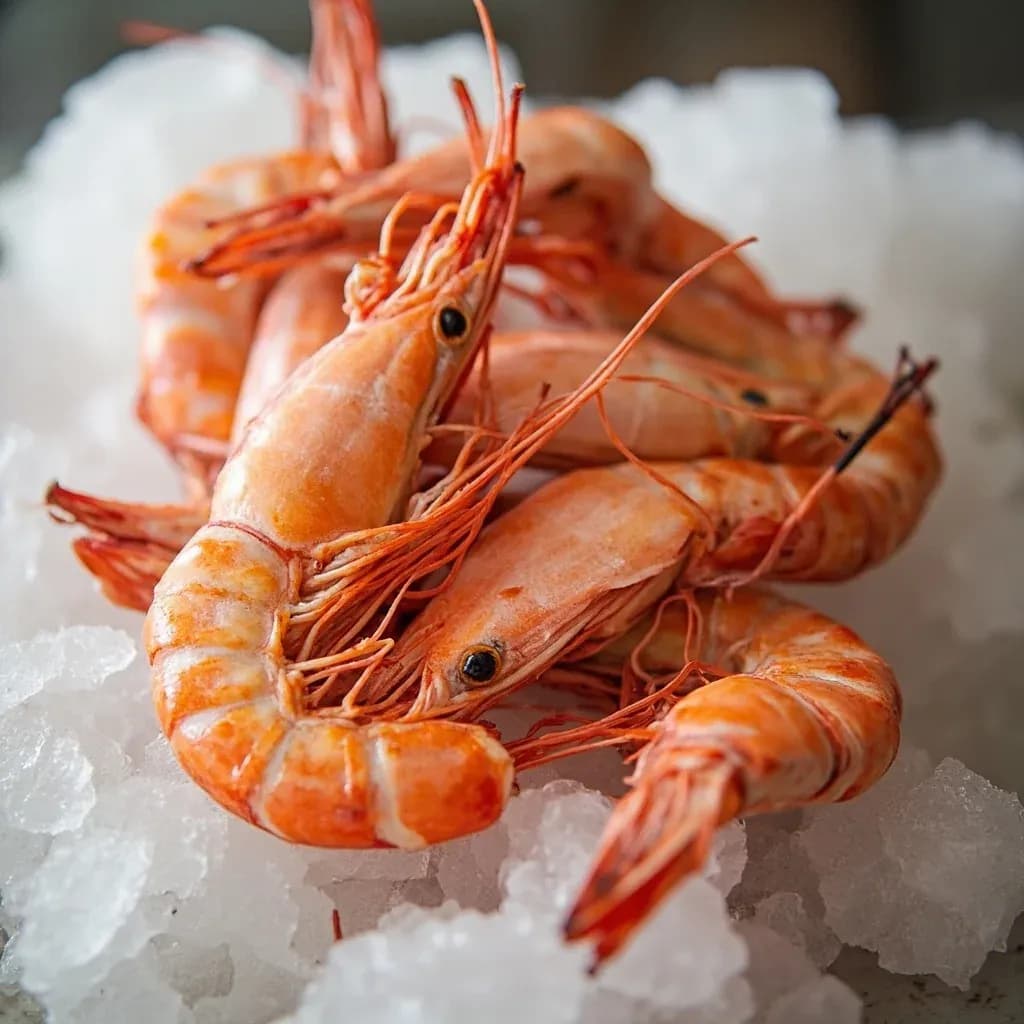
King Prawn
Large, meaty prawns with sweet flesh, ideal for grilling and curries.
King prawns are large prawns with firm, sweet, meaty flesh that holds up well to bold cooking. They are grilled, pan-fried with garlic, or simmered into curries and stir-fries where their size makes them a centerpiece. Cooking them in the shell helps protect the flesh and intensifies the flavor.
King prawn is a commercial size grade rather than a single species. In British and European retail it denotes a large raw or cooked prawn in the heavier count ranges — roughly U/15 to 21/25 per kg — most often Penaeus monodon (the black or giant tiger prawn) or the now-ubiquitous farmed Litopenaeus vannamei (whiteleg). In the United States the same animal is sold as jumbo or extra-large shrimp, and on Mediterranean menus 'gambas' or 'gamberi' usually refer to the local Penaeus kerathurus, traditionally grilled whole on the shell.
What sets king prawns apart from smaller shrimps is the ratio of meat to shell and the way the flesh holds its shape under heat. The muscle is dense, lightly sweet and far less iodine-edged than smaller brown shrimps, and it turns from translucent grey-green to an even coral pink the moment the proteins set. Because the pieces are large, they tolerate fierce direct heat — plancha, barbecue, smoking-hot pan — without vanishing, which is why they dominate dishes where a whole, handsome prawn is the point of the plate. They are equally happy simmered in a coconut curry or laid out raw as sashimi, but their size also makes them easy to ruin: a minute too long and the flesh tightens, water weeps out, and what should be juicy becomes chalky.
- Measured in
- g
- Storage
- Fridge
Allergens
Types & varieties
The traditional 'king prawn' in many markets; dark-striped shell, robust flavor, widely farmed in Southeast Asia.
The workhorse of the frozen aisle; milder, slightly softer flesh, the default UK and European supermarket 'king prawn'.
Common along the east African and Indian coast; medium-to-large, used in curries and biryanis.
Wild-caught in the western Indian Ocean; dense flesh, prized in Gulf and South Indian kitchens.
Smaller and more delicate; occasionally graded as king in the 21/25 range.
Often Penaeus kerathurus; the premium choice for grilling whole and eating shell and all.
Buying and storage
Fresh raw king prawns should smell cleanly of the sea with no trace of ammonia; the flesh should be firm and springy, not slack or papery, and the shells, if present, glossy and intact. Pre-cooked peeled prawns are convenient but easy to overcook on reheating, so buy raw whenever the dish allows and only reach for the cooked kind for cold preparations such as salads, sandwiches or a quickly dressed seafood cocktail.
- Keep fresh prawns on ice or at 0–4 °C and cook within 1–2 days.
- Frozen prawns keep up to 6 months at –18 °C; thaw overnight in the fridge, never in warm water.
- A short brine (1 tbsp salt per 400 ml water, 15 min) seasons evenly and firms the flesh for a better 'snap' on the bite.
Shell-on versus peeled
How you buy your king prawn dictates the dish. Shell-on, head-on prawns are the ones to reach for when the prawn itself is the star — grilled on the plancha, barbecued, or sizzled in olive oil with garlic and chilli. The shell insulates the flesh, traps moisture, and contributes a lot of flavor through the head and body fat. Headless shell-on is the all-rounder: easy to devein, holds together in curries and stews, and still gives up plenty of flavor to the sauce. Peeled raw tails are the right call when you want quick, even cooking — stir-fries, pasta, tempura — or a clean sear without the bother of shelling at the table.
Preparing king prawns
Two small jobs are worth doing well. First, devein: with a sharp paring knife, make a shallow cut along the back of the prawn and lift out the dark intestinal thread with the tip of the knife. It is edible on very small prawns but gritty on large ones, and the cut also lets the prawn open flat for even grilling. Second, decide whether to keep the head. On for flavor and presentation, off for speed and convenience. The shells and heads you remove are not waste — roasted until fragrant, then simmered with aromatics, they make the foundation of a deeply savory bisque or a far better paella than plain stock.
Common uses
Tips & pitfalls
- Buy raw and cook yourself: pre-cooked king prawns overcook and turn rubbery on reheating.
- Keep the shell on for grilling and barbecues — it insulates the flesh and adds flavor; peel just before eating.
- Score along the back with a small knife to remove the vein and to open the prawn flat for even, fast cooking.
- Cook on fierce, direct heat: 2–3 minutes per side is usually enough; pull them off as soon as the flesh turns pink and opaque.
- Do not walk away from the pan — overcooking by as little as a minute tightens the meat and turns it chalky.
- Marinate briefly (15–30 minutes); long soaks in citrus or vinegar 'cook' the surface and make it mushy.
- Pat the prawns dry before searing; surface moisture prevents browning and gives a pale, steamed texture.
- Save the heads and shells: roast, then simmer for a deeply flavored bisque base or to enrich a paella.
- If frozen, thaw overnight in the fridge, not in warm water, to preserve texture and avoid mushiness.
Nutrition
Nutrition
No USDA FoodData Central match for King Prawn yet. We surface a per-100 g profile once a generic whole-food entry is matched and verified.
In the shops
Matched grocery products
No matched grocery products for King Prawn yet.
Good to know
- Common species
- Most often Penaeus monodon (giant tiger prawn) or Litopenaeus vannamei (whiteleg); 'king prawn' is a commercial size grade, not a single species.
- Typical size
- Roughly 25–40 g each, sold by count such as U/15, 16/20 or 21/25 per kg.
- Form sold
- Raw whole (head-on or headless), raw peeled, cooked and peeled, IQF, or in brine.
- Color when raw
- Translucent grey-green to bluish; turns pink and opaque when cooked.
- Flavor
- Sweet, clean, less iodine-like than smaller brown shrimps; firm, meaty texture.
- Nutrition (per 100 g, raw)
- About 99 kcal, 24 g protein, 0.3 g fat; rich in selenium, vitamin B12 and iodine.
- Yield
- Meat is roughly 40–45% of whole weight; around 55–60% for headless shell-on.
- Cooking time
- Whole on the shell: 2–4 min per side on high heat; peeled: 1–2 min total.
- Allergens
- Crustacean shellfish — a major allergen with frequent cross-reactivity to other crustaceans and molluscs.
Substitutes
- Langoustines / Dublin Bay prawns — Closer to scampi than to true prawns, but the sweet flesh works in the same grilled or butter-bathed treatments.
- Large tiger prawns or jumbo shrimps — The most direct swap; adjust cooking time to size, anywhere from 1 to 4 minutes per side.
- Raw lobster tail — Meatier and richer; a good stand-in when you want a more luxurious version of a grilled prawn dish.
- Crayfish tail meat — Sweet and tender; best in pasta, risotto and salads rather than high-heat grilling.
- Frozen mixed seafood (calamari, mussels, large prawns) — Use in paella or cioppino; flavor and texture are not identical but the dish still works.
Pairs with
Also called
Jumbo Prawns
Appears in these dishes
Related
Egg
The kitchen's everything ingredient — bind, leaven, enrich, or fry
Chicken Breast
Lean, quick-cooking white meat for everyday dinners

Ground Beef
Versatile minced beef for burgers, ragù, tacos, and meatballs
Pork Loin
Lean, tender roasting cut that stays juicy with care
Salmon
Rich, rosy fish that roasts, grills, or cures beautifully

Egg White
Pure protein that whips to airy peaks for meringue and more
Egg Yolk
Rich, golden yolk for custards, mayonnaise, and pasta

Quail Egg
Tiny, speckled eggs for garnishing and elegant bites