Natural form
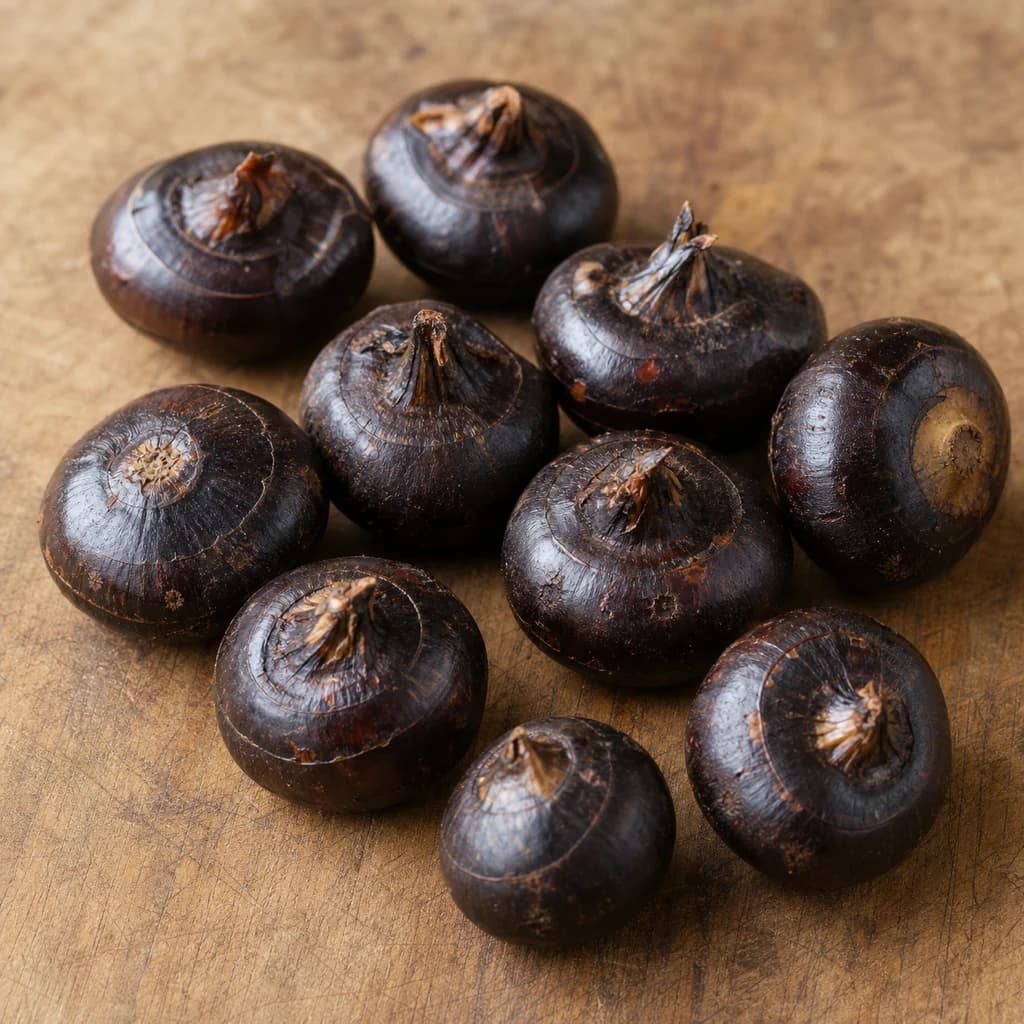
Fresh water chestnuts: small, dark brown, bulb-shaped tubers with papery outer skin.
Shows the reader exactly what raw water chestnuts look like before any preparation, establishing the defining visual form.
Produce
Water Chestnut
Crunchy aquatic tuber that stays crisp when cooked, used in Asian stir-fries.
Water chestnut is a small, brown aquatic tuber with crisp, white, slightly sweet flesh that retains its crunch even after cooking. It is sliced into Chinese stir-fries, dumpling fillings, and dim sum, and ground into water-chestnut flour or starch. The South Asian singhara is a related but distinct horned water caltrop.
Water chestnut is a corm—the underground storage organ of a sedge plant—not a nut, despite its name. The edible portion grows submerged in muddy pond beds, where the plant develops a rounded, potato-like tuber covered in papery brown skin. Its interior flesh is pure white, crisp, and aqueous, with a mildly sweet, faintly mineral flavor that functions more as texture than taste. What makes the water chestnut remarkable is its exceptional resistance to heat: the corm's cell walls are reinforced with ferulic acid cross-links and a protein called tuberin that prevents collapse at high temperatures, allowing it to retain a satisfying crunch even in a vigorously hot wok. This quality has made it indispensable in Chinese and broader Asian cooking for over two millennia, particularly in Cantonese cuisine where textural contrast is prized alongside flavor. Beyond its savory applications, the corm mills into a fine, gluten-free flour used as a thickener and in traditional sweet soups called tong sui, demonstrating a versatility that belies its simple, clean character.
- Measured in
- piece
- Storage
- Fridge
Types & varieties
The standard culinary variety (Eleocharis dulcis); medium to large corms, 2.5–4 cm diameter; white flesh, excellent crunch. Most common in markets worldwide.
Slightly smaller corms with a milder, more delicate flavor. Same species but a distinct cultivar group adapted to cooler growing conditions.
Eleocharis coloradoensis; smaller, wild-harvested corms. Rarely appears in commercial trade; primarily a foraging crop.
The Science of Crispness
The water chestnut's famous crunch is not inherent to its flesh but is a product of its unique cellular architecture. The corm's cell walls contain ferulic acid that cross-links hemicellulose fibers, creating a rigid scaffolding that holds its shape under heat stress. Simultaneously, a storage protein called tuberin appears to inhibit the enzymatic breakdown of pectin between cells. When you bite into a properly cooked water chestnut, you are rupturing intact cells that have remained separate and turgid—the defining sensation of fresh crunch. Boiling or steaming, however, introduces water directly to these cell walls and, over sufficient time, overcomes this structural resistance, producing the floury, soft texture that is the opposite of the desired quality. This is why cooking method is not negotiable if crunch is the goal.
- High-heat, dry cooking (wok-frying, deep-frying) preserves cell wall integrity
- Moist cooking (boiling, steaming) over 10 minutes breaks down ferulic acid cross-links
- Cut size matters: larger pieces have less surface area exposed to moisture
Fresh vs. Processed
Fresh water chestnuts are undeniably superior for any application where texture is the point. Canned water chestnuts undergo a pre-cooking process during sterilization, which partially gelatinizes their starches and weakens cell walls. The result is never crisp—only softer or slightly chewier. Frozen water chestnuts fare somewhat better because flash-freezing causes less structural damage, but they will still be noticeably softer than fresh when cooked. Use canned and frozen only in preparations where softness is acceptable: braises, brothy soups, or when the corms are minced fine enough that texture becomes irrelevant. When using canned chestnuts in a stir-fry, drain and pat them completely dry, then quick-fry in very hot oil—this will improve texture slightly, though it cannot match fresh.
- Fresh: white flesh, papery brown skin, firm when pressed; refrigerator life 2 weeks maximum
- Canned: pre-cooked, pre-peeled; acceptable only in soft-texture dishes
- Frozen: preferable to canned for cooked applications; thaw and pat dry before using
Common uses
Tips & pitfalls
- Always buy fresh when possible—canned chestnuts are pre-cooked during sterilization and will never regain crispness, only varying degrees of softness
- Peel fresh corms with a small paring knife or vegetable peeler; the papery brown skin flakes off easily, revealing white flesh beneath
- To maximize crunch, cook fresh chestnuts in very hot oil (200°C/400°F or above) for minimal time—wok-frying is ideal; add them in the last 1–2 minutes of cooking
- If boiling or braising is unavoidable, cut pieces larger to reduce exposed surface area and cook for no more than 10 minutes
- Store unpeeled fresh corms in a perforated bag in the refrigerator—they desiccate quickly at room temperature and lose sweetness after 2 weeks
- When slicing raw for salads, submerge pieces in acidulated water (water with a squeeze of lemon juice) to prevent browning and preserve the white color
- Frozen water chestnuts are acceptable for cooked applications but will be noticeably softer than fresh; avoid using them in raw preparations
Nutrition
Nutrition
No USDA FoodData Central match for Water Chestnut yet. We surface a per-100 g profile once a generic whole-food entry is matched and verified.
In the shops
Matched grocery products
No matched grocery products for Water Chestnut yet.
Good to know
- Scientific name
- Eleocharis dulcis (Chinese water chestnut)
- Plant family
- Cyperaceae (sedge family)
- Edible part
- Corm—an underground tuber, not a nut
- Origin
- Southeast Asia; cultivated in China for over 2,000 years, especially Guangdong and Fujian provinces
- Leading producer
- China; also grown in Australia, India, Hawaii, and Florida (US)
- Harvest season
- Late fall through winter when foliage browns
- Why it stays crisp
- Cell walls reinforced with ferulic acid cross-links; contains tuberin protein that resists heat breakdown
- Yield
- Peeling fresh corms yields approximately 70–75% edible flesh
Substitutes
- Jícama — The closest substitute for raw or quick-cooked uses; similar crisp texture and mild sweetness, though slightly denser and sweeter
- Bamboo shoots (thinly sliced) — Comparable crunch in stir-fries, but with a distinctly vegetal flavor; use canned and rinse thoroughly before cooking
- Daikon radish (raw, julienned) — Provides excellent crunch in raw preparations; sharper, more peppery flavor than water chestnut's mild sweetness
- Sunchokes (raw) — Good crunch but with a nutty, sweeter flavor; oxidizes quickly—work with acidulated water
- Canned water chestnuts (emergency only) — Acceptable in soups and braises where texture is not critical; drain, pat dry, and quick-fry in hot oil to improve texture slightly
Pairs with
Also called
Singhara · Singhara (Water Caltrop) · Matai
Appears in these dishes
Related
Tomato
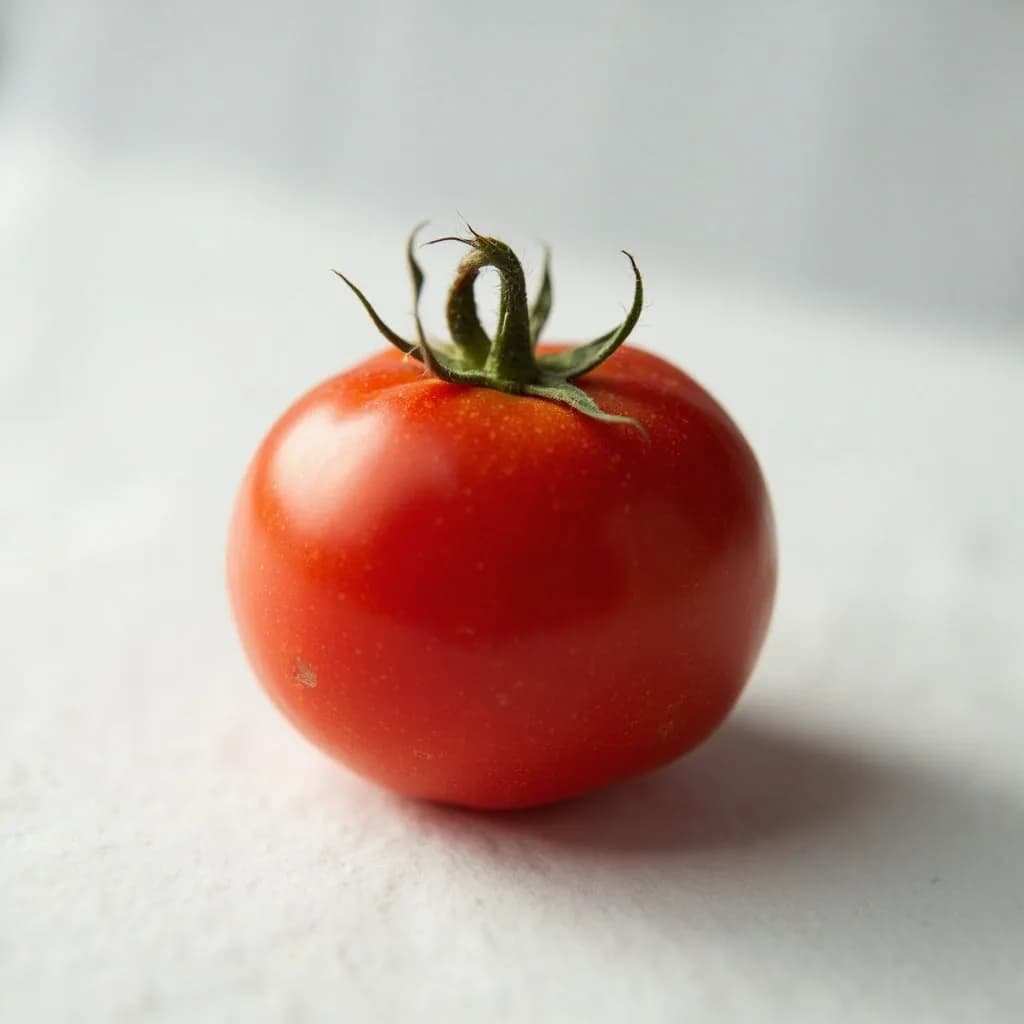
Juicy, sun-sweet fruit for sauces, salads, and slow-cooked depth
Yellow Onion
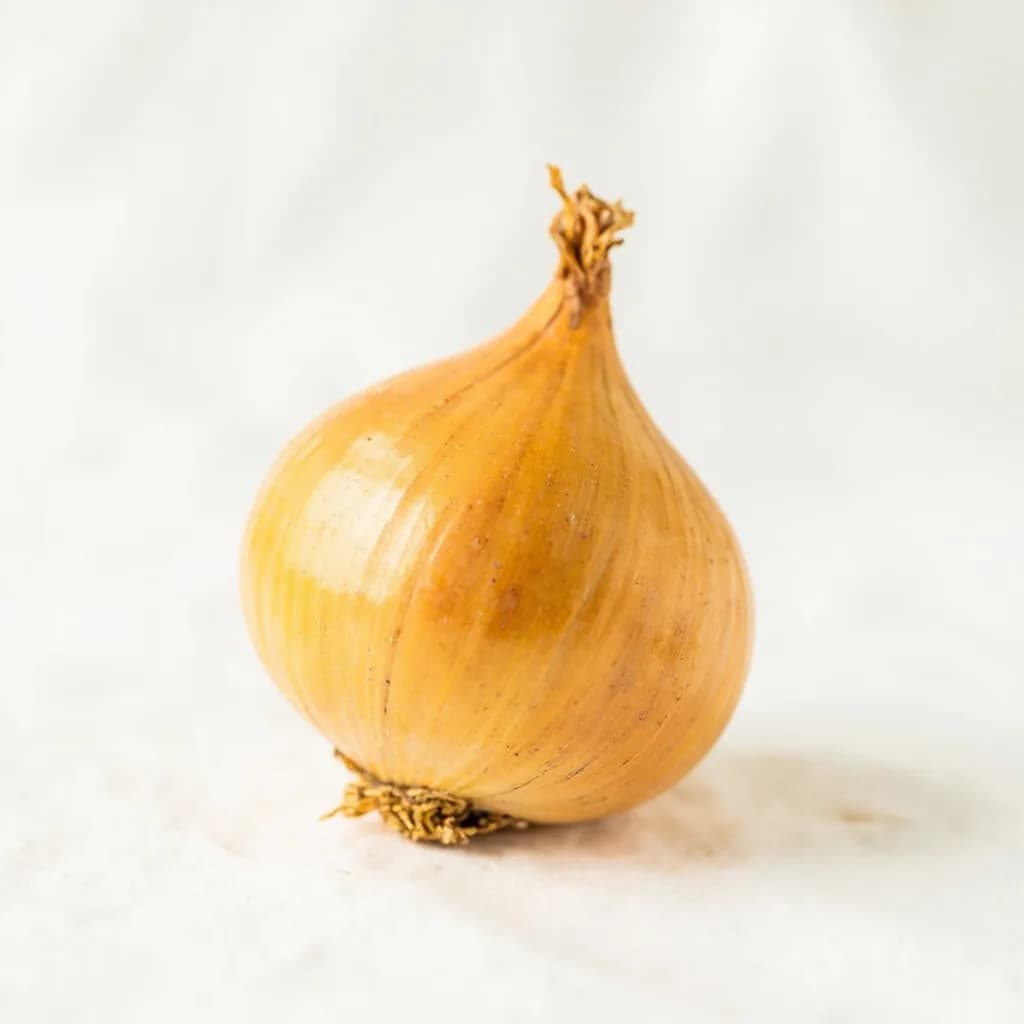
The aromatic backbone of soups, sofritos, and braises
Garlic
Pungent cloves that perfume nearly every savory dish
Lemon
Bright, acidic citrus that wakes up almost any dish
Potato
Humble, hearty staple — roast, mash, fry, or boil
Carrot
Sweet, crunchy root — raw, roasted, or the base of a sofrito
Cucumber
Cool, crisp, and watery — for salads, pickles, and tzatziki

Lettuce
Crisp leaves for salads, wraps, and a fresh crunch