Southeast Asia
Indonesian Balinese
Also: Balinese cuisine, Masakan Bali, Balinese Hindu cooking
Bali's ceremonially rooted Hindu kitchen, where slow-cooked suckling pig, base genep spice paste, and ancestor-offering food sit at the center of an island culture unlike anywhere else in Indonesia.
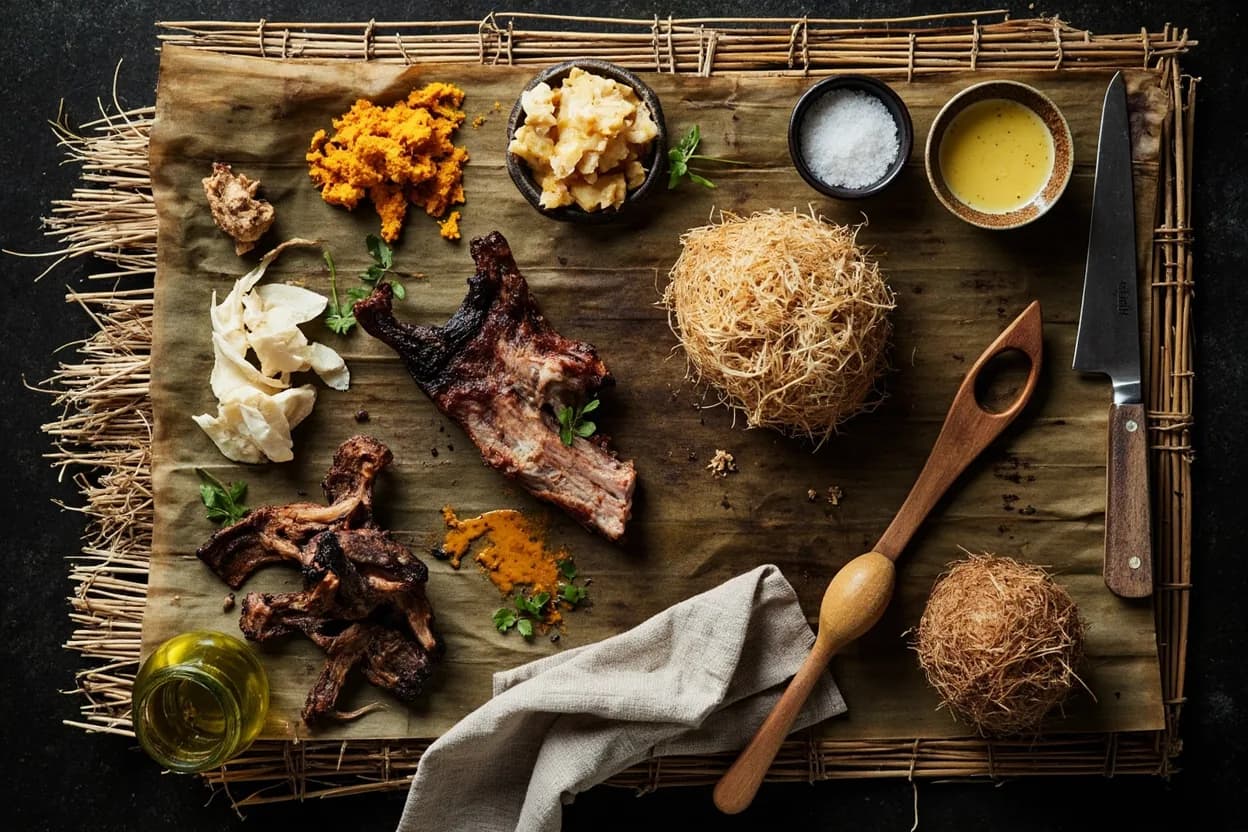
Balinese cuisine is the cooking tradition of the island of Bali, Indonesia's principal Hindu majority island amid a predominantly Muslim archipelago. The Hindu religious context is inseparable from the food: Balinese cooking exists in two registered registers — food for the gods (offered first, daily, at every household shrine) and food for people, with the ceremonial dishes providing the prestige canon. Pork is the royal and ceremonial meat — babi guling (spit-roasted suckling pig) and lawar (minced pork salad with spiced grated coconut and sometimes fresh blood) are the defining festival dishes. The base spice system is unusually complex: base genep (the 'complete base') can include 20+ ingredients and underpins the majority of cooked dishes. Unlike most of mainland Southeast Asia, Balinese cooking uses virtually no fish sauce; seasoning comes instead from salt, terasi (shrimp paste used in moderation), and the inherent richness of coconut oil-fried spice pastes.
The flavour base
Base genep — a foundational spice paste of shallots, garlic, galangal, fresh turmeric, ginger, lesser galangal (kencur), lemongrass, chiles, candlenut, and dried shrimp paste, fried in coconut oil.
Pantry staples
Key ingredients
Signature techniques
Signature dishes
Indonesian Balinese on the table

At the table
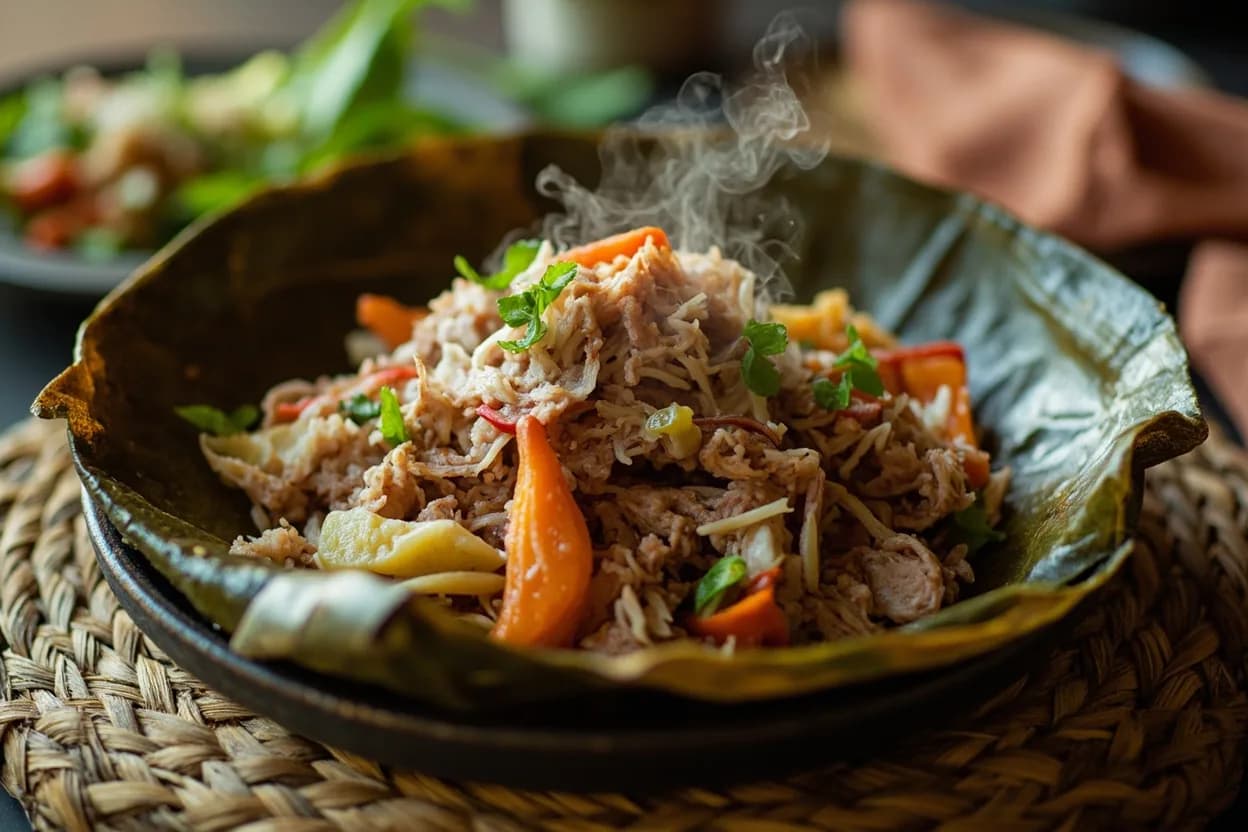
Balinese daily eating is informal: rice (nasi) with one or two side dishes, eaten at room temperature, often from a banana-leaf wrap (nasi jinggo or nasi bungkus) purchased from a warungs (food stall). The ceremonial calendar overlays this with elaborate communal feasts — odalan (temple anniversaries), ngaben (cremation), and tooth-filing ceremonies all demand specific dishes prepared in large quantities by banjar (village community group) men cooking together. The ceremonial meal is notably patriarchal in preparation while daily home cooking is women's domain.
History & context
Bali's culinary identity was shaped by its status as a refuge for Majapahit Hindu-Javanese court culture after Islam spread across Java in the 15th and 16th centuries. The Balinese Hindu nobility brought refined court cuisine, Sanskrit-influenced ritual food culture, and an elaborate caste-linked dietary hierarchy. The Dutch colonial presence (from 1906) was relatively brief and had less culinary impact than in Java; Bali was partially protected by its geography and its designation as a cultural 'museum' by Dutch administrators. The 20th-century tourism boom brought a new layer — warungs catering to international visitors recontextualized babi guling and nasi campur as Bali's 'national dishes' for foreign audiences, while the ceremonial tradition remained largely intact within village religious life.
Regional variations
- North Bali (Singaraja)
Historically more cosmopolitan from Dutch and Chinese trade; slightly more Chinese-influenced cooking, different spice intensities.
- Karangasem (east)
Considered the heartland of traditional Balinese cooking; lawar and betutu here are least modified by tourism influence.
- Ubud and central highlands
Tourist-facing adaptations most common; vegetarian and vegan Balinese food (inherently unusual — Bali is deeply meat-centric ceremonially) developed here for Western visitors.
- Nusa Penida / coastal
More seafood-dominant; grilled fish preparations with sambal matah (raw shallot-lemongrass sambal) are the local signature.
Related cuisines
- Javanese
Shares the broader Indonesian spice vocabulary and rice-centered meal structure; Balinese cuisine descends from Majapahit Java court traditions.
Both rely on complex spice pastes and coconut oil cooking, though Padang is Muslim and pork-free while Bali centers on pork ceremonially.
Shares base aromatics (galangal, lemongrass, turmeric, coconut), but diverges sharply on protein (Malay is halal) and religious food context.
References
- 1.Bali: A Paradise Created — Adrian Vickers (Periplus, 1989)
- 2.The Food of Indonesia — Murdoch Books Test Kitchen (Periplus, 2008)
- 3.Indonesian Regional Cooking — Sri Owen (Frances Lincoln, 1994)
- 4.Bali: Morning of the World — Janet De Neefe (HarperCollins, 2003)
- 5.Secrets of Bali — Jonathan Copeland (Monsoon Books, 2010)
Confidence: high
Notes
Lawar and the blood question
Traditional lawar (particularly lawar merah, 'red lawar') incorporates fresh animal blood mixed with the spiced grated coconut and minced meat immediately after slaughter. This is a ceremonially significant element tied to the potency of fresh offerings. Tourist-facing restaurants omit the blood entirely (producing lawar putih, 'white lawar') and this version now predominates outside village ceremonial contexts. The blood version remains the traditional marker of ritual authenticity.
Kencur: the Balinese aromatic signature
Kencur (Kaempferia galanga, 'lesser galangal' or 'sand ginger') is the aromatic that most distinctively marks Balinese food from other Indonesian regional cuisines. Raw, it is sharply camphor-like and almost medicinal; cooked in base genep, it mellows into a faintly sweet, earthy note that is unmistakably Balinese. Its use in base genep pastes in significantly higher proportions than in other Indonesian regional cooking is a reliable identifier of the cuisine.