Middle East
Khorasani
Also: Khorasan cuisine, Northeast Persian, Greater Khorasan
The austere and aromatic cooking of Iran's ancient northeastern heartland, where Silk Road caravans shaped a cuisine of saffron rice, slow-braised lamb, and Central Asian textural contrast.
Khorasani cuisine is the cooking tradition of Iran's northeastern province of Khorasan — a vast historical region that at its greatest extent spanned into modern Afghanistan, Turkmenistan, and Uzbekistan. Historically one of the most powerful provinces of the Persian Empire and a major Silk Road hub, Khorasan developed a cuisine that is simultaneously more austere and more Central Asian-inflected than the cuisines of central and southern Iran. It relies on long-braised lamb and camel, fermented dairy products, saffron-laden rice dishes, and a distinctive use of dried herbs and whey (kashk). The cooking is less sweet-sour than western Iranian food and more aligned with the robust, grain-forward traditions of Central Asia.
The flavour base
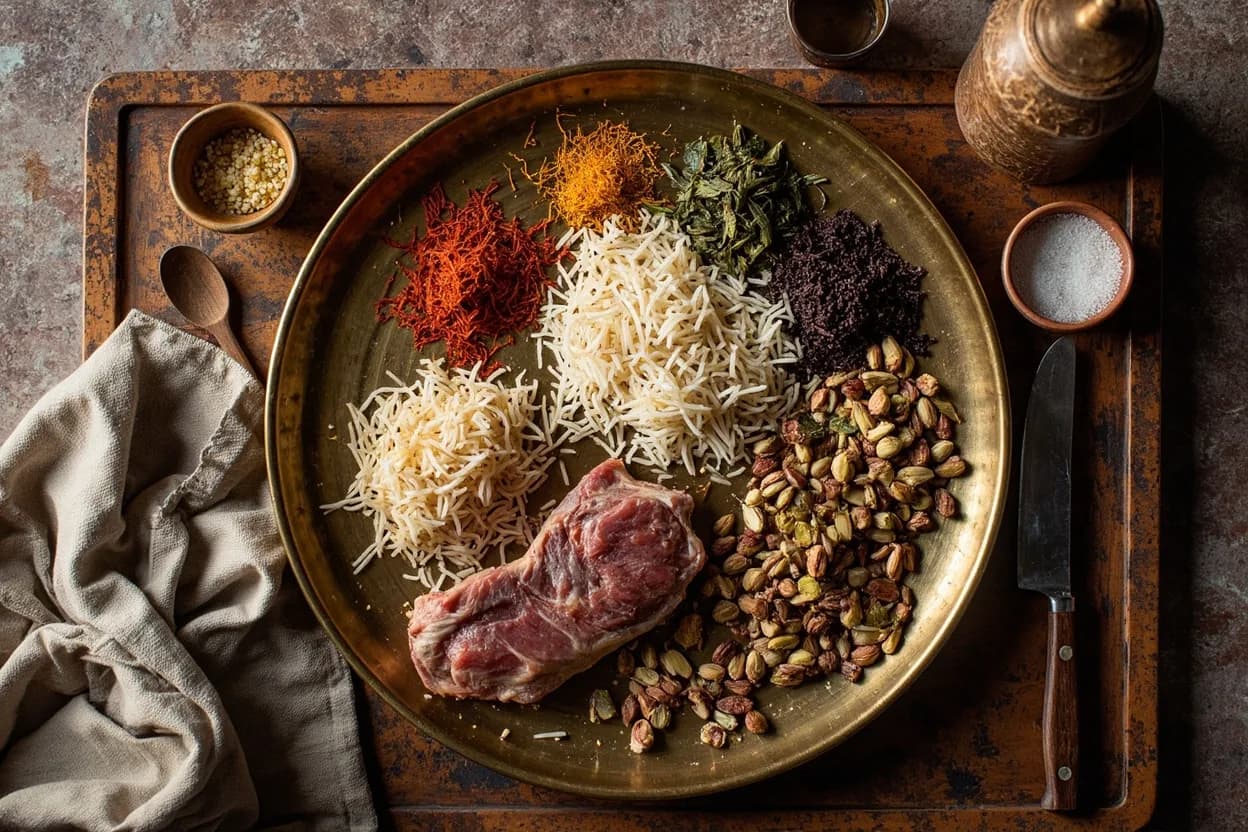
Slow-rendered lamb fat and onion, turmeric-forward, enriched with saffron; dried herbs (fenugreek, dried coriander), and dried kashk (fermented whey) add fermented depth.
Pantry staples
Key ingredients
Signature techniques
Signature dishes
Khorasani on the table

At the table
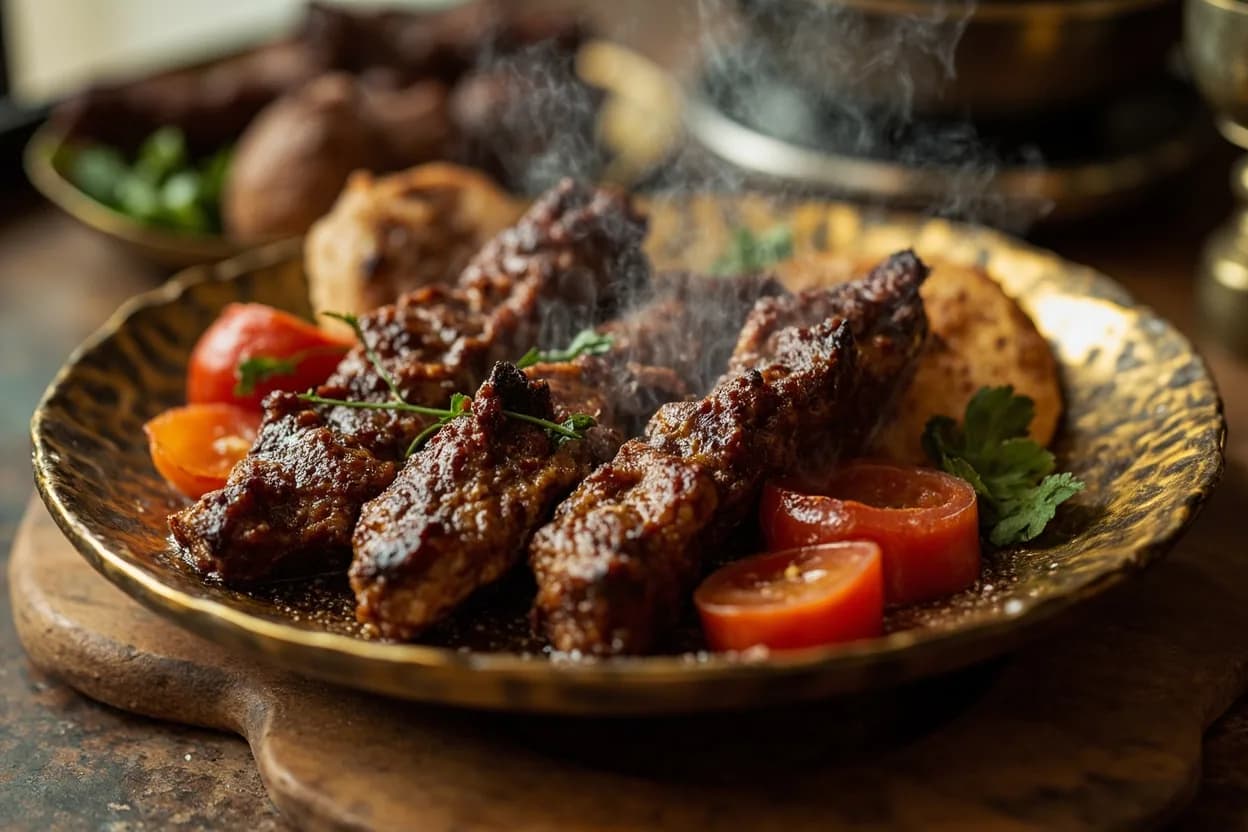
Meals are anchor-and-side: a central rice dish or thick soup is the main event, surrounded by pickles, fresh herbs (sabzi khordan), and flatbread. In rural Khorasan, communal dishes eaten from a shared cloth on the floor remain common. Pilgrimage-city Mashhad has elaborate restaurant culture owing to millions of annual Imam Reza shrine visitors, producing grand versions of traditional dishes.
History & context
Khorasan was the breadbasket and intellectual center of the Persian world during the Samanid and Ghaznavid periods (9th–12th centuries), producing poets like Ferdowsi and Rumi alongside a sophisticated court cuisine. Arab conquest in the 7th century and later Mongol invasion (13th century) brought culinary disruptions and introductions — Central Asian grain combinations, fermented dairy emphasis, and new spice routes. The city of Nishapur was a major Silk Road node, and Merv (now in Turkmenistan) was among the world's largest medieval cities. This cosmopolitan history left a cuisine that integrates Persian, Turkic, and Arab elements more fluidly than other Iranian regions. Mashhad, Iran's second city and holiest shrine, gives the cuisine enormous reach through pilgrimage food culture.
Regional variations
- Mashhad
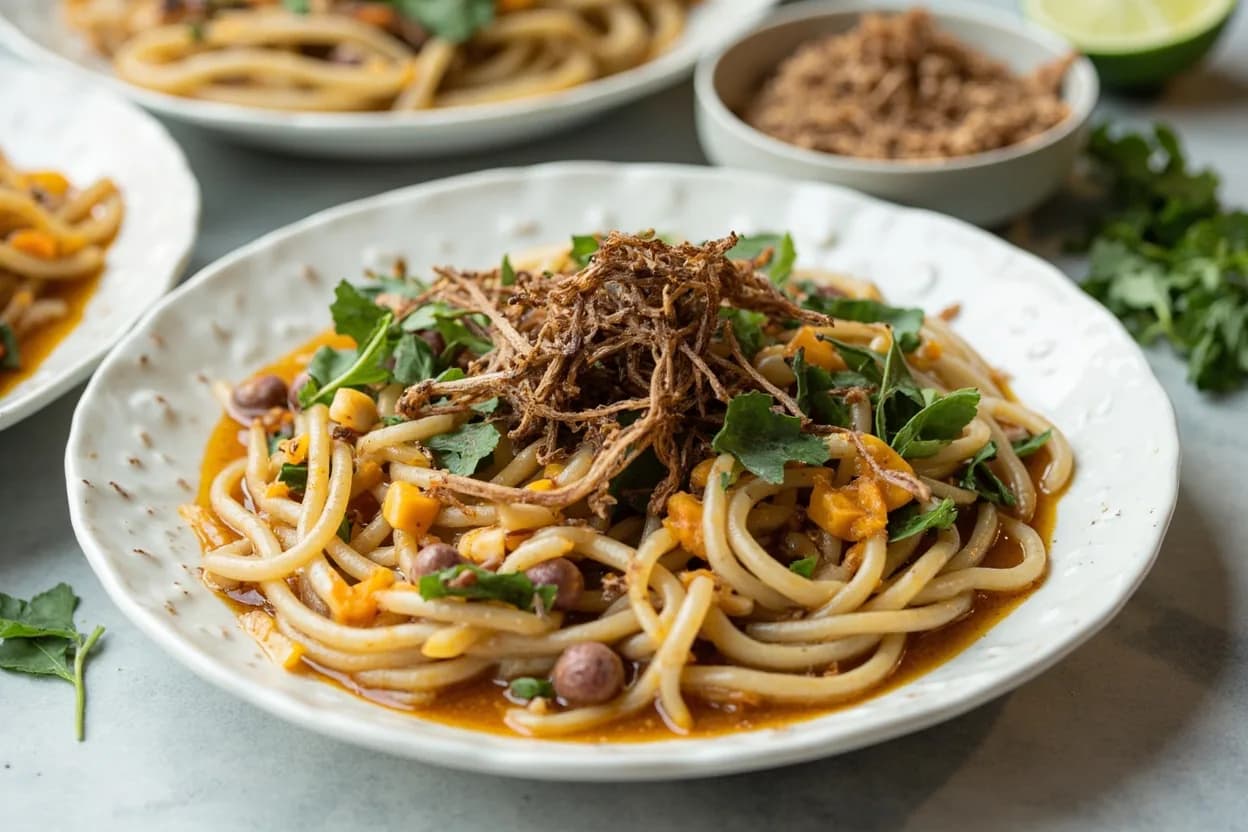
City-refined cuisine with elaborate rice dishes; shole mashhadi and jeweled rice variants are iconic.
- Birjand (South Khorasan)
Saffron-growing heartland; purer saffron-rice preparations and dried fruit use; closer to Afghan border flavors.
- Sabzevar
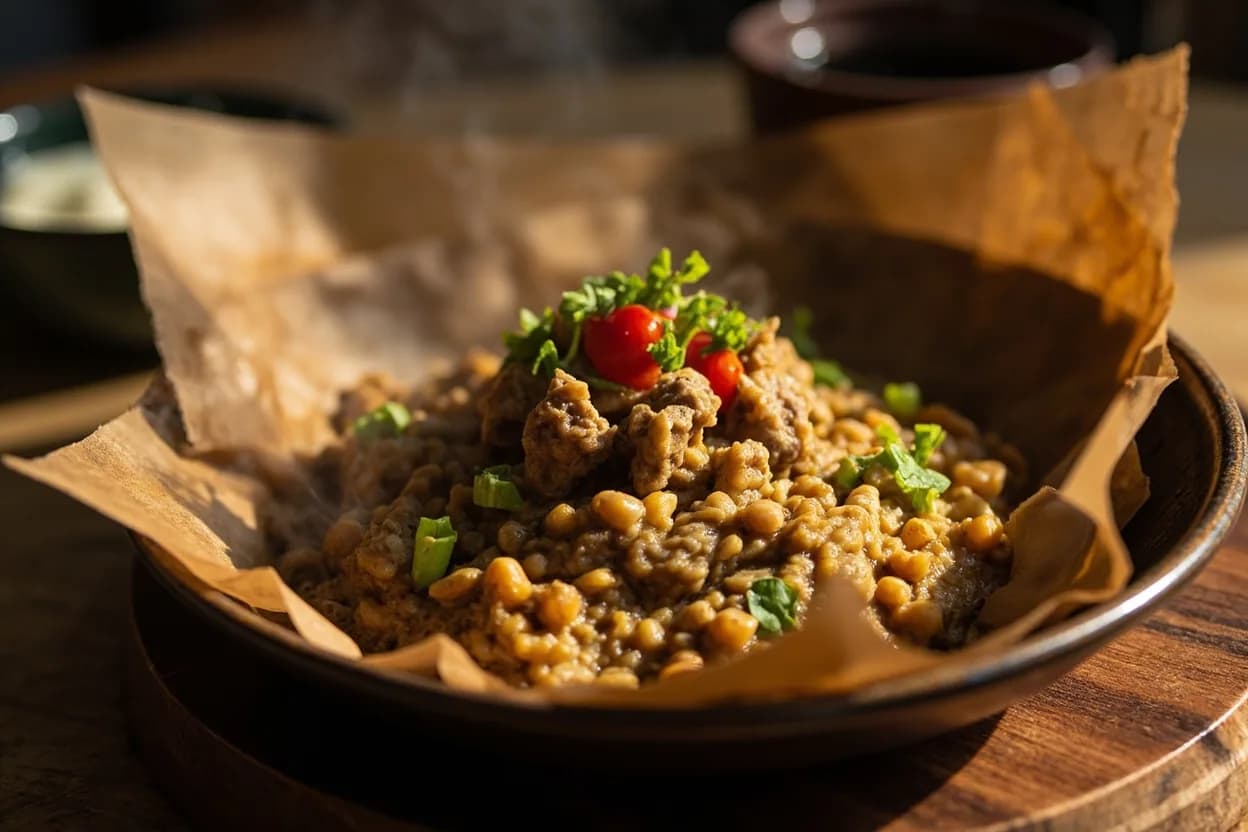
Known for thick herb soups and wheat-based porridges; traditional halim preparation site.
- Torbat-e-Heydarieh
Garlic-forward preparations; strong influence of dried herbs; known for local saffron and barberry cultivation.
Related cuisines
Shares the qabuli pilaf logic, lamb-and-spice combinations, and Central Asian textile influences; historical Greater Khorasan overlaps both.
- Uzbek
Parallel plov traditions, caul-fat use, and lamb-centric cooking from shared Silk Road heritage.
Contrasts sharply — Khorasani is dry and grain-forward; Gilaki is lush, herb-heavy, and fish-centered.
Khorasani is a regional sub-tradition within the Iranian family but with distinctly more austere and Central Asian character.
Canonical recipes
The dishes that define Khorasani, documented in the Canon.
References
- 1.Food of Life: Ancient Persian and Modern Iranian Cooking and Ceremonies — Najmieh Batmanglij (2011)
- 2.Taste of Persia — Naomi Duguid (2016)
- 3.The Oxford Companion to Food — Alan Davidson, 3rd ed. (2014)
- 4.A History of Iranian Cooking — M.R. Ghanoonparvar (1982)
Confidence: medium
Notes
Saffron terroir
The Birjand and Qaen areas of South Khorasan produce Iran's most prized saffron — arguably the world's finest. It is used not as a luxury but as a pantry staple in Khorasani cooking, stirred into rice water, bloomed in warm water, and painted onto finished dishes for color.
Pilgrimage food economy
Mashhad receives over 25 million pilgrims annually visiting the shrine of Imam Reza. This has created a distinct pilgrimage-food culture: enormous cauldrons of halim and shole ghalamkar prepared as votive offerings (nazri), distributed free to visitors, shaping the cuisine's scale and communal character.