East Asia
Korean-Chinese (Junghwa Cuisine)
Also: 중화요리, Junghwa Yori, Korean Chinese food, 청요리, Cheong Yori
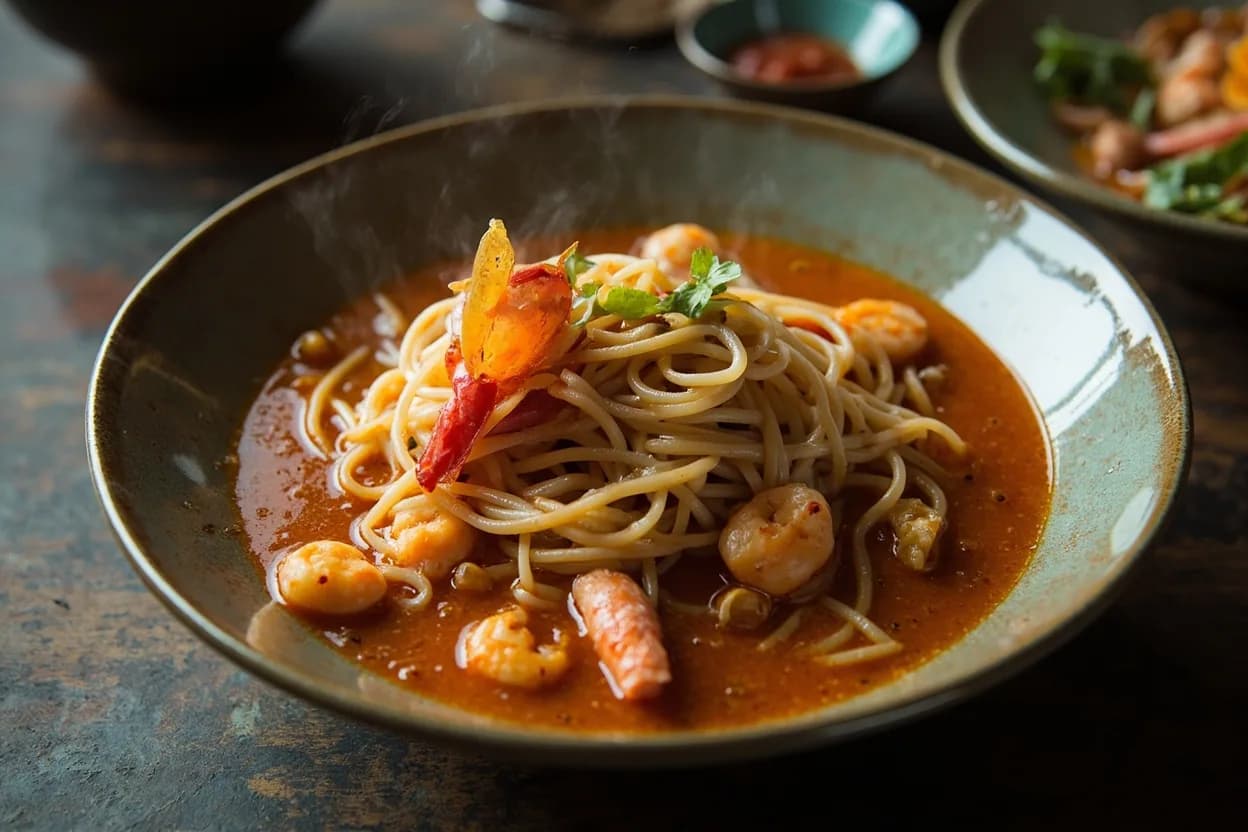
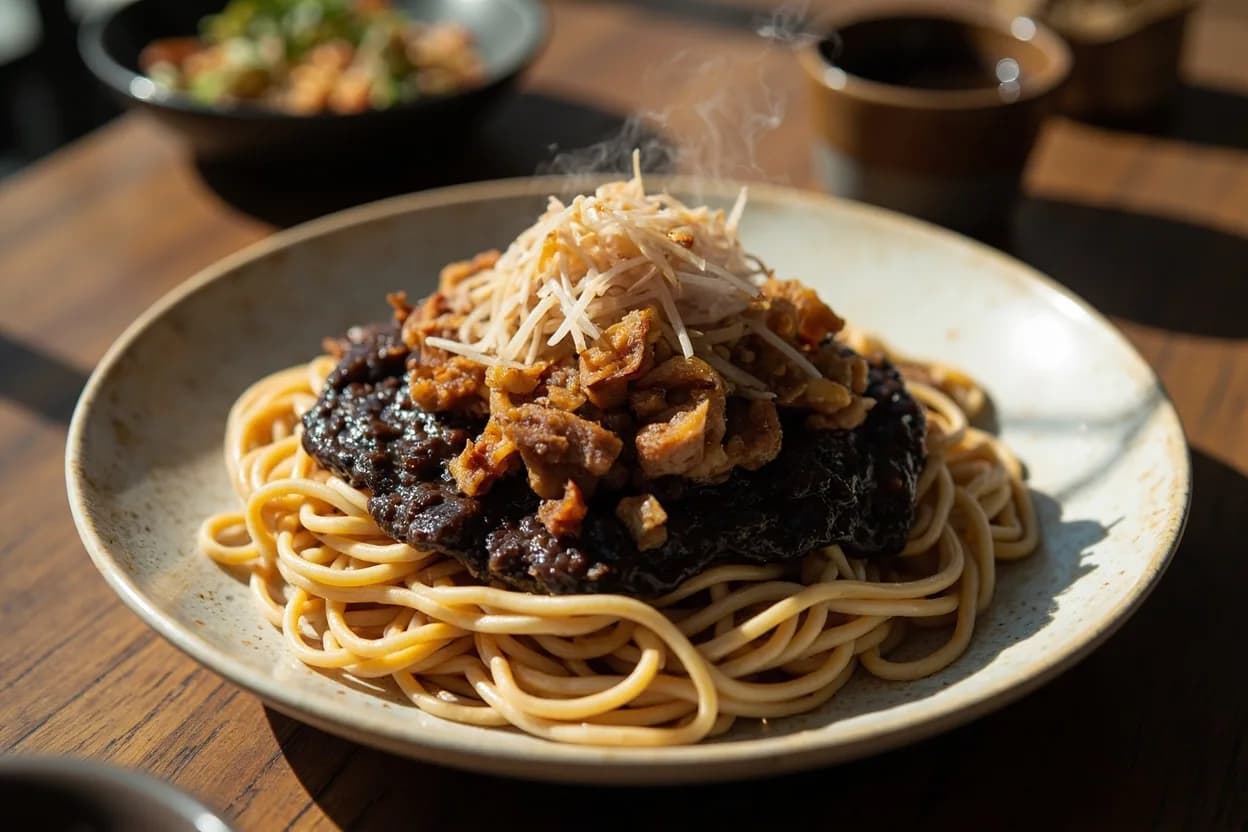
Korea's beloved Chinese-derived comfort canon — jajangmyeon's black bean noodles, jjamppong's fiery seafood soup, and a century-old localization that became entirely its own thing.
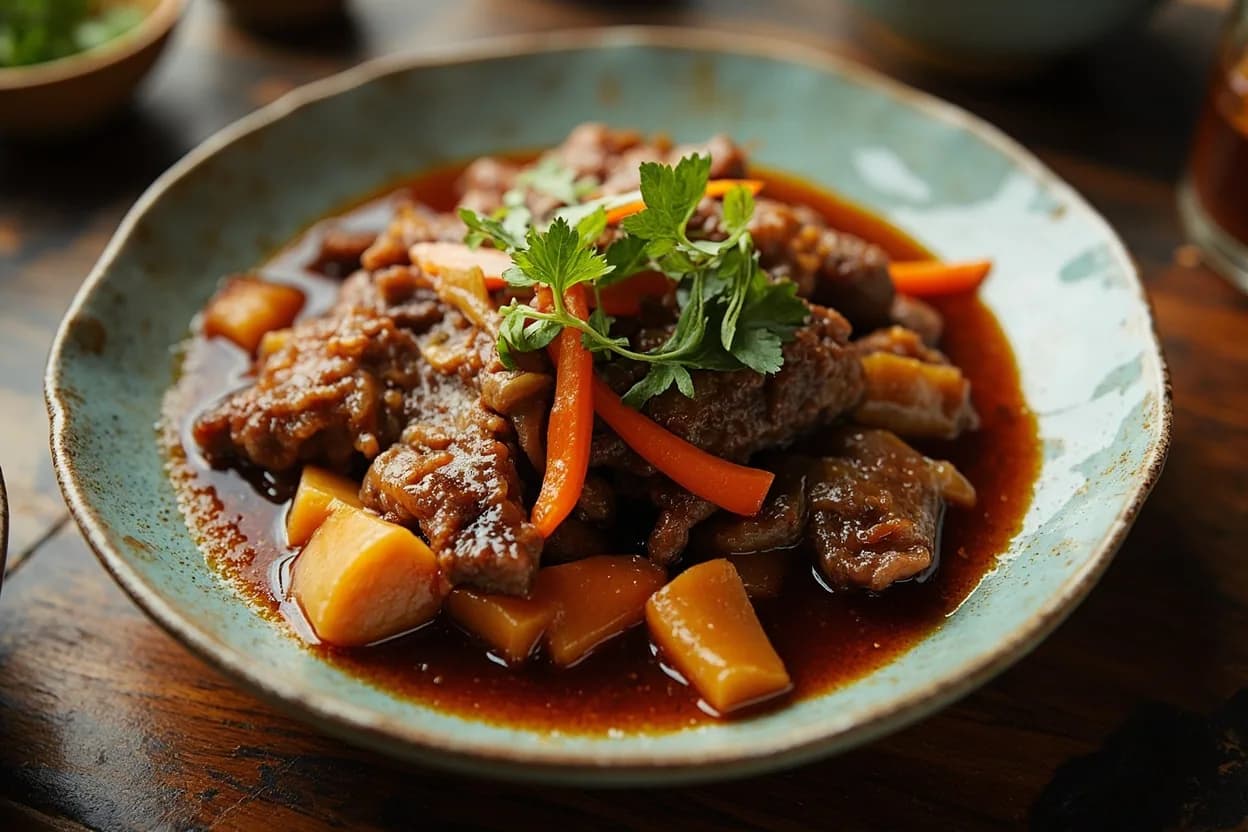
Junghwa yori (中華料理) is Korea's distinct Chinese-influenced restaurant cuisine, developed by Shandong Chinese immigrants (Hwagyo) who arrived in Korea in the late 19th century. Unlike authentic Chinese regional cuisines, junghwa yori underwent a thoroughgoing Korean localization: jajangmyeon's black bean sauce became sweeter and stickier than Chinese zhajiangmian; jjamppong became far spicier than any Chinese predecessor; tangsuyuk's sweet-and-sour pork or beef uses a distinctly Korean batter and sauce ratio. The result is a cuisine that Koreans experience as deeply familiar and comforting, not as 'Chinese food' in any ethnically authentic sense. Junghwa restaurants (typically called 'Chinese restaurants' in Korea but serving this distinct hybrid menu) are ubiquitous across the country and deeply embedded in Korean food memory.
The flavour base
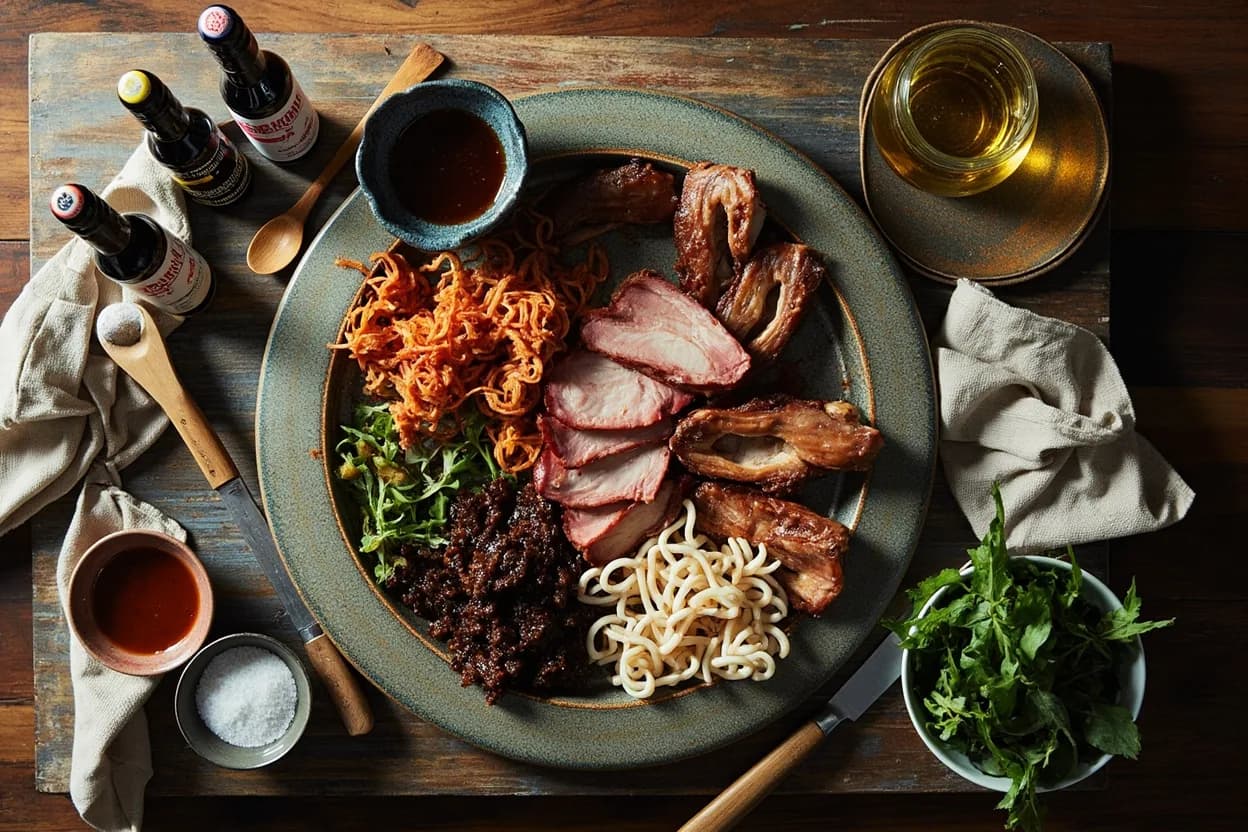
Chunjang (fermented black bean paste, the localized version of Chinese douchi-based tianmianjiang) is the defining ingredient; gochugaru and gochujang add Korean heat; garlic, ginger, and scallion form the aromatic base; oyster sauce and soy sauce provide umami depth; cornstarch slurries give characteristic glossy sauces.
Pantry staples
Key ingredients
Signature techniques
Signature dishes
Korean-Chinese (Junghwa Cuisine) on the table
At the table
Junghwa restaurants are sit-down casual dining establishments with a core menu of approximately 20–40 dishes. The classic order is either jajangmyeon or jjamppong (a cultural binary — 'jajang or jjam' is a standing joke about indecision) with tangsuyuk shared as a side dish. Delivery (baedal) is deeply embedded in Korean Chinese food culture — junghwa was one of Korea's first cuisines to have a formalized restaurant delivery system, predating modern food-delivery apps by decades.
History & context
Shandong Chinese merchants and laborers arrived in Korea via the port of Incheon beginning in 1882 following the Korea-China treaty of commerce. They established restaurants serving adapted versions of their home cooking for both expatriate and Korean customers. Jajangmyeon was documented by the 1910s in Incheon's Chinatown. Under Japanese colonial rule (1910–1945) and subsequent Korean governments, Chinese-Koreans (Hwagyo) faced severe economic restrictions — barred from owning property, restricted in business types — which paradoxically concentrated their economic activity in restaurants. After the Korean War, jajangmyeon became a cheap, filling comfort food for working-class Koreans and was price-regulated by the government as a 'people's food' through the 1970s. April 14th is now celebrated as 'Black Day' in Korea, when single people eat jajangmyeon alone — a satirical holiday that underscores the dish's cultural saturation.
Regional variations
- Incheon Chinatown
The origin point; Incheon jajangmyeon is considered the most authentic Korean-Chinese style, with older restaurants dating to the early 20th century.
- Seoul variants
Seoul's Junghwa restaurants often serve japgokbap (mixed grain) and have developed dry-style variations; delivery culture is most intense here.
- Busan-style jjamppong
Southern coastal influence; Busan jjamppong tends toward heavier seafood loading and slightly different spice balance.
Related cuisines
- Shandong Cuisine (Lu Cai)
The direct ancestor: Shandong immigrants brought techniques and base recipes that were then heavily localized over a century.
- Chinese-American Cuisine
Parallel phenomenon: Chinese immigrant food adapted to local taste contexts, creating a new cuisine distinct from its origin — both are comfort canons in their host countries.
Junghwa yori migrated with Korean diaspora communities; Los Angeles has Korean-Chinese restaurants serving the same localized menu.
Canonical recipes
The dishes that define Korean-Chinese (Junghwa Cuisine), documented in the Canon.
References
- 1.Eating Korean: From Barbecue to Kimchi — Cecilia Hae-Jin Lee
- 2.The Koreatown Cookbook — Deuki Hong and Matt Rodbard
- 3.Korea: The Impossible Country — Daniel Tudor (cultural context)
- 4.Korean Food Culture — Ministry of Culture, Sports and Tourism (Korea)
Confidence: high
Notes
Jajang vs. zhajiang: two different dishes
Chinese zhajiangmian (炸酱面) uses tianmianjiang (sweet wheat paste) with ground pork and cucumber in a relatively dry, chunky sauce. Korean jajangmyeon uses chunjang (fermented black bean paste) sautéed with pork and vegetables in a thick, glossy, caramel-sweet sauce that coats noodles completely. The dishes share a name and concept but have diverged so thoroughly that Korean-Chinese restaurants in China serving jajangmyeon are considered a distinct Korean food, not Chinese.
The pour-over debate (부먹 vs 찍먹)
Tangsuyuk is served with sweet-and-sour sauce, and Koreans have a passionate national debate about whether to pour the sauce directly over the fried pork (부먹 — 'pour and eat') or dip each piece individually (찍먹 — 'dip and eat'). The dip camp argues pouring makes the batter soggy; the pour camp argues dipping is inefficient. This debate is a fixture of Korean internet culture and reflects the cuisine's deep integration into everyday life.