North America
Korean Diaspora Cuisine (LA Koreatown)
Also: Korean-American Cuisine, K-Town Food, LA Korean Food, 미국 한국 음식
The Korean-American culinary world that turned tabletop BBQ into a global icon, invented the Korean taco, and forged a distinct identity from two cultures in the streets of Los Angeles.
Korean diaspora cuisine in Los Angeles represents one of the most significant and culturally productive immigrant food transformations in American culinary history. It is neither Korean nor American food, but a synthesis: LA's Koreatown, concentrated around Olympic and Western Avenues, contains the highest density of Korean restaurants outside Korea and has been the incubator of innovations that have influenced global food culture. The cuisine maintains Korean fundamentals — ssam wraps, kimchi fermentation, KBBQ tabletop grilling, doenjang and gochujang — while adapting to American ingredient availability, multicultural LA palates, and the specific pressures of running restaurants in a diverse, competitive urban market. Critically, it has also generated genuinely new forms: the Korean-Mexican taco truck, the Korean fried chicken wave, and the galbi-and-rice plate lunch adapted from Hawaiian plate lunch via Korean immigrant communities.
The flavour base
The Korean triad of gochujang, doenjang, and ganjang remains the core; but LA Korean food adds American fat (butter finishing on galbi, cheese incorporation into Korean-Mexican fusion), citrus from California's abundance, and cross-cultural flavor borrowing from the Latino, Japanese-American, and African-American communities that share the neighborhood.
Pantry staples
Key ingredients
Signature techniques
Signature dishes
Korean Diaspora Cuisine (LA Koreatown) on the table

At the table
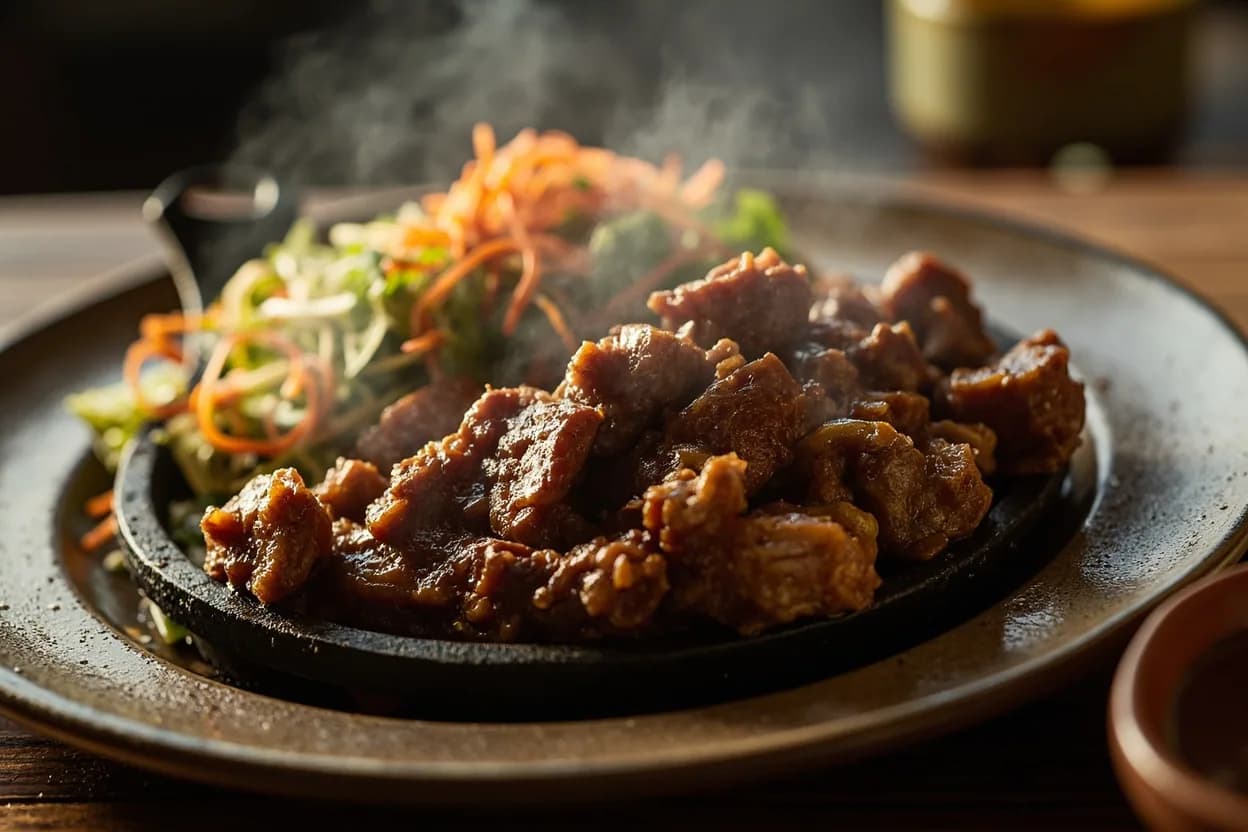
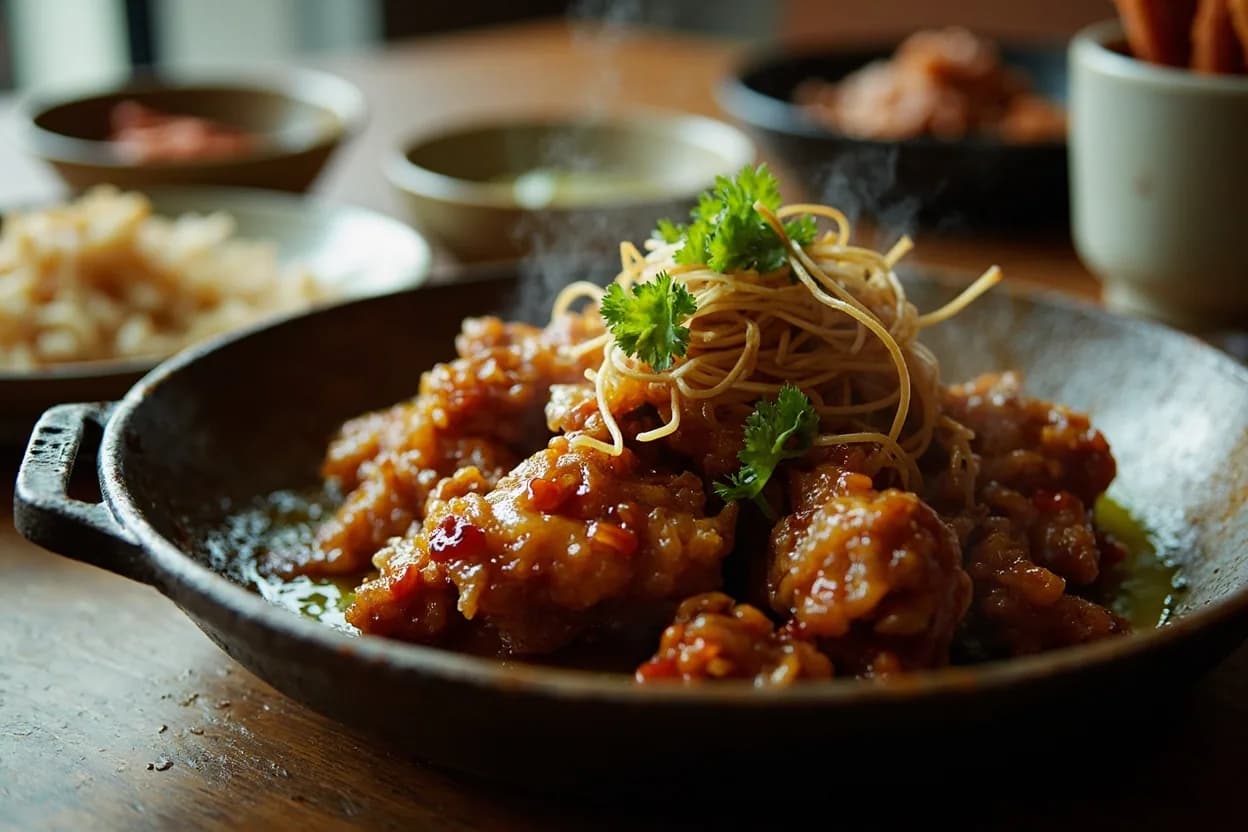
LA Korean food spans multiple formats. KBBQ restaurants are large, sociable, multi-hour experiences centered on tabletop grilling with communal banchan and multiple meat cuts ordered in succession. Lunch in Koreatown leans toward rice-bowl or noodle restaurants (seolleongtang, naengmyeon). Korean fried chicken is a late-night and delivery culture staple. Taco trucks operate independently from restaurant culture and are street-food and lunch-crowd oriented. The H-Mart supermarket ecosystem supplies home cooks with the full Korean pantry, and Korean convenience store snack culture (kimbap, tteokbokki) has its own distinct consumer base.
History & context
Korean immigration to the United States began significantly after the 1965 Immigration and Nationality Act, which lifted national-origin quotas. Los Angeles became the largest Korean community outside Korea, concentrated initially in the Koreatown neighborhood which emerged in the 1970s. The 1992 LA Riots devastated Koreatown — Korean-owned businesses suffered disproportionate damage — but the community rebuilt, and the neighborhood re-emerged as a culinary and cultural hub through the 2000s. The pivotal external catalyst was Roy Choi's Kogi BBQ truck (launched 2008), which fused Korean BBQ with Mexican taqueria tradition and went viral via Twitter, becoming the founding moment of the modern food-truck movement and introducing Korean flavors to a generation of Americans who had never eaten Korean food. The Korean wave (Hallyu) cultural phenomenon — K-pop, K-dramas, Korean cinema — drove global demand for Korean food through the 2010s and 2020s, and LA Koreatown functioned as the most visible American gateway. Korean fried chicken chains (Kyochon, bb.q, Bonchon) subsequently expanded across the US from their LA bases.
Regional variations
- Koreatown proper (Mid-Wilshire)
Density of traditional Korean restaurants, tofu houses, KBBQ halls, and late-night fried chicken spots; most traditional Korean-American dining.
- Kogi BBQ taco truck network
Mobile, multi-truck operation across LA; the innovation lab of Korean-Mexican fusion; rotating menu includes Korean quesadillas and kimchi quesadillas.
- SGV (San Gabriel Valley) Korean food
Korean food in the broader LA diaspora; slightly different demographic, more Korean-Chinese junghwa options, food court culture in Korean-owned malls.
- New York Koreatown (K-Town, 32nd St)
Smaller but concentrated; KBBQ heavy; slightly different menu emphasis with more late-night alcohol culture (somaek: soju-beer cocktail).
Related cuisines
- Korean Cuisine (mainland)
The root; LA Korean food maintains the pantry and techniques but diverges in fusion applications, portion scale, and American ingredient adaptations.
Junghwa restaurants operate in Koreatown alongside mainstream Korean restaurants, serving the same diaspora community with familiar comfort food.
- Mexican-American Cuisine
The taco truck and street-food culture of LA provided the infrastructure and format that Kogi BBQ appropriated for Korean fusion; the two communities have overlapping labor and food cultures in LA.
- Japanese-American Cuisine
Japanese-American plate lunch culture in Hawaii influenced Korean plate lunch adaptations; shared soy-sesame flavor grammar and rice-with-protein format.
Canonical recipes
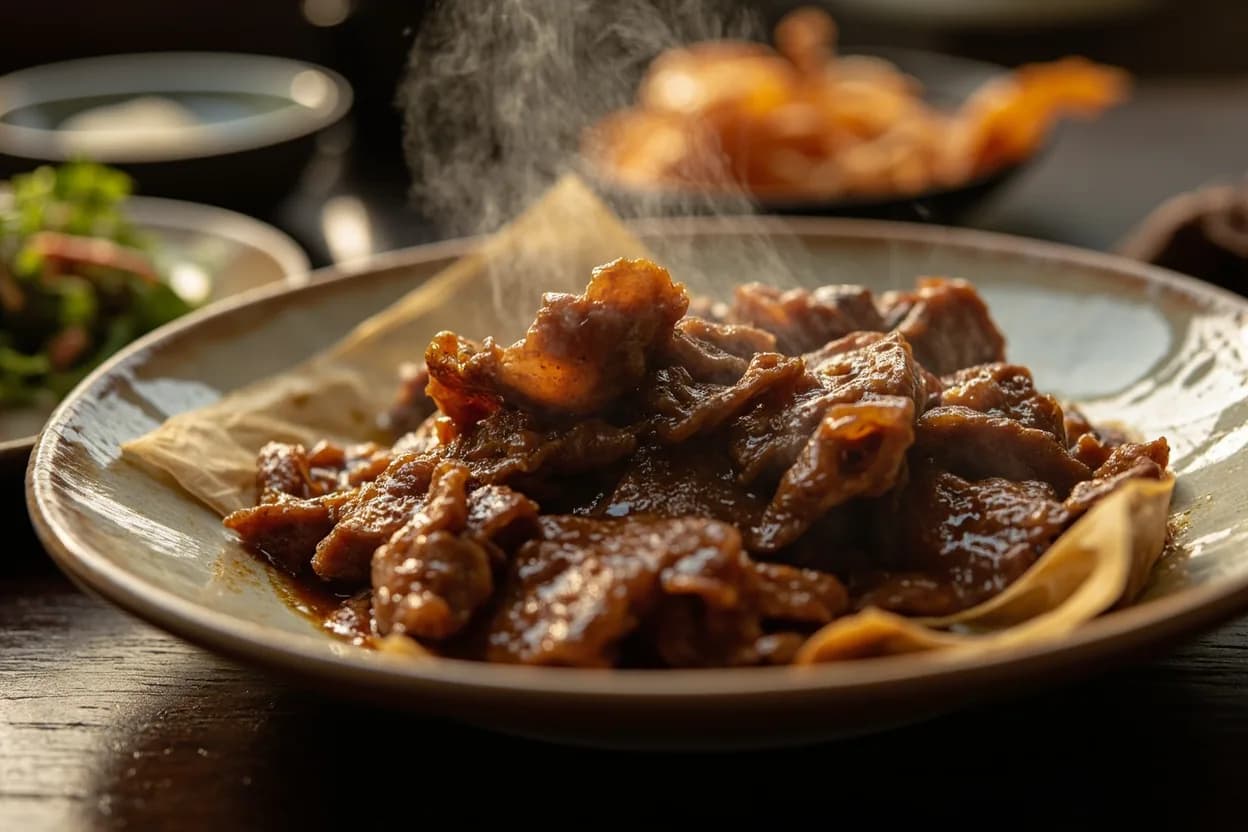
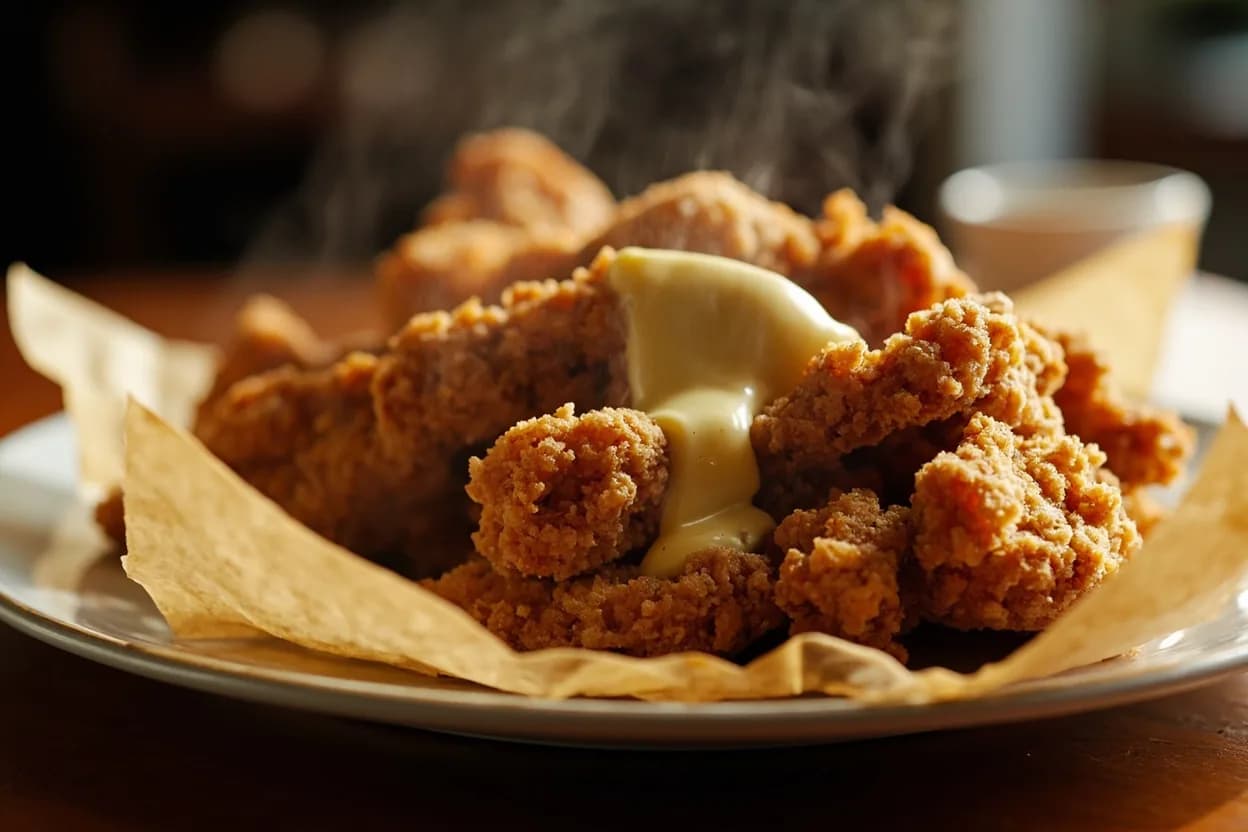
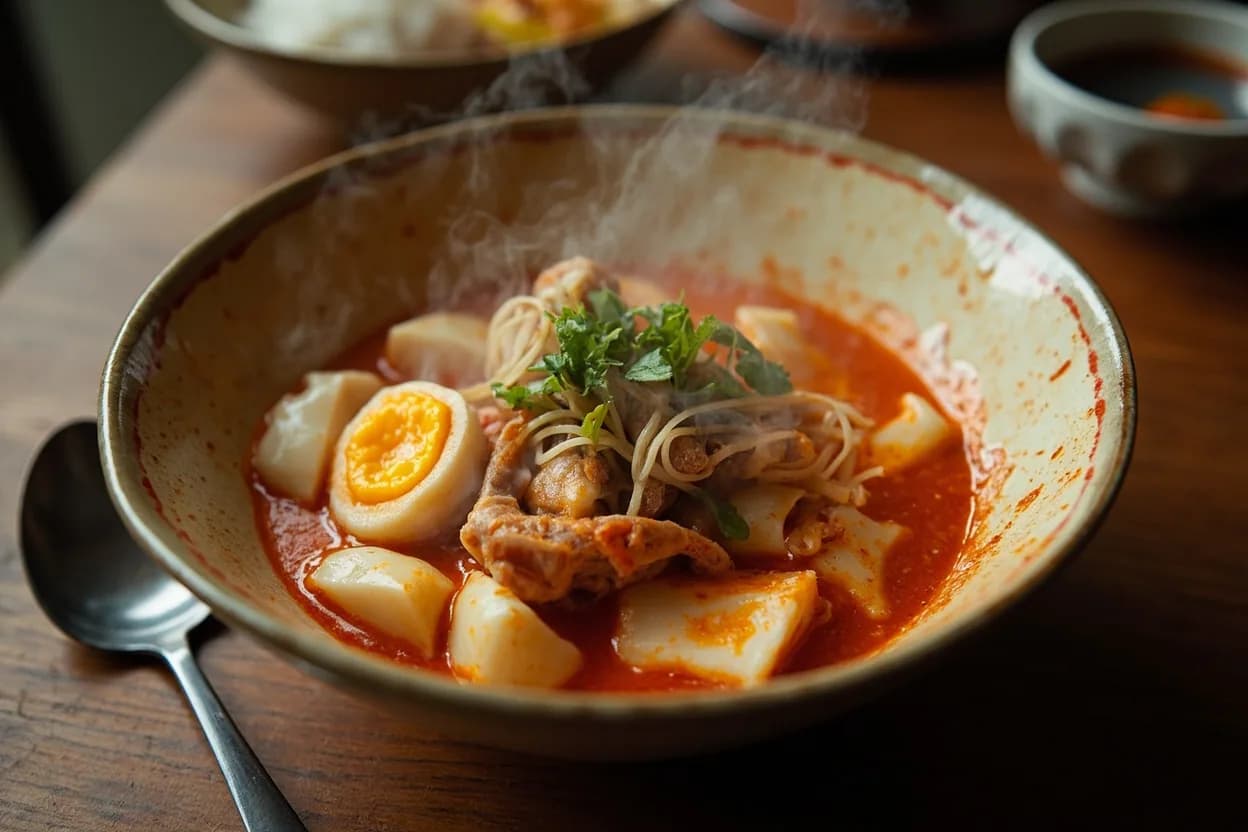
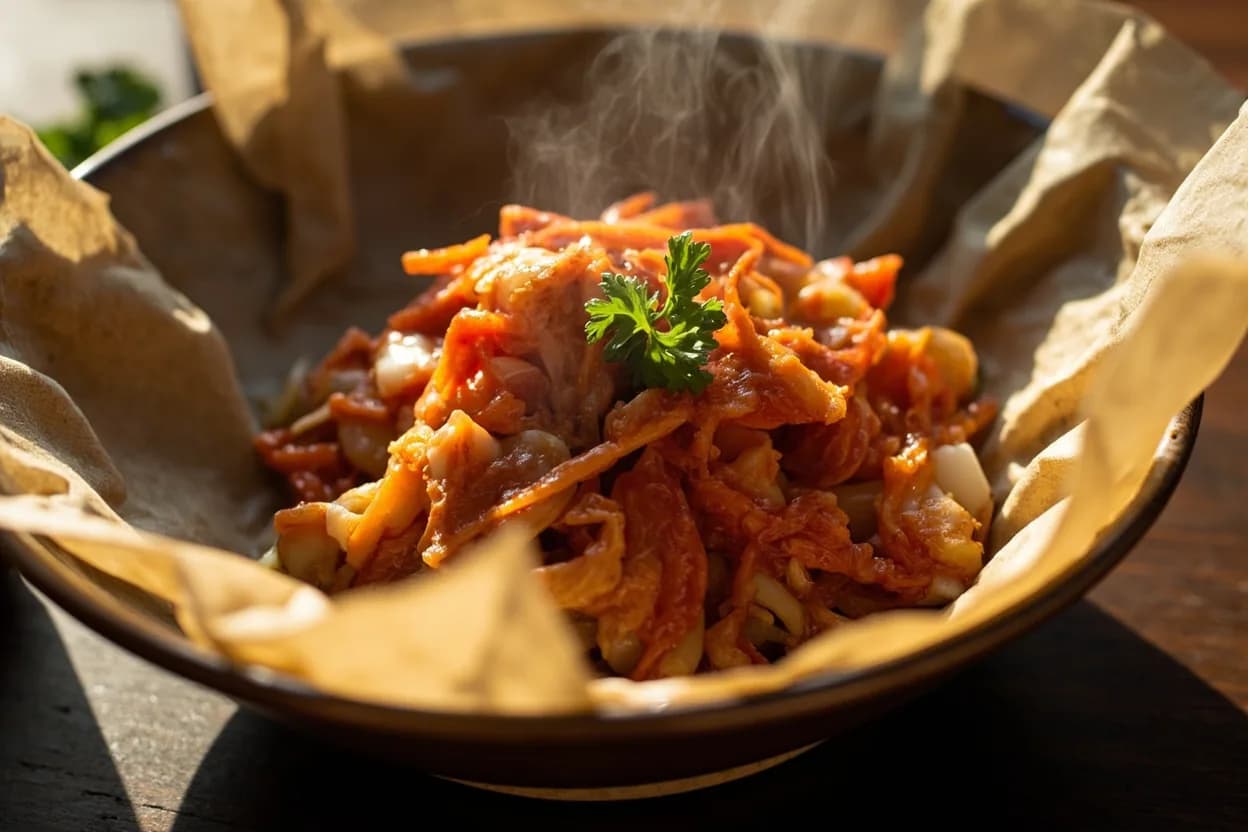
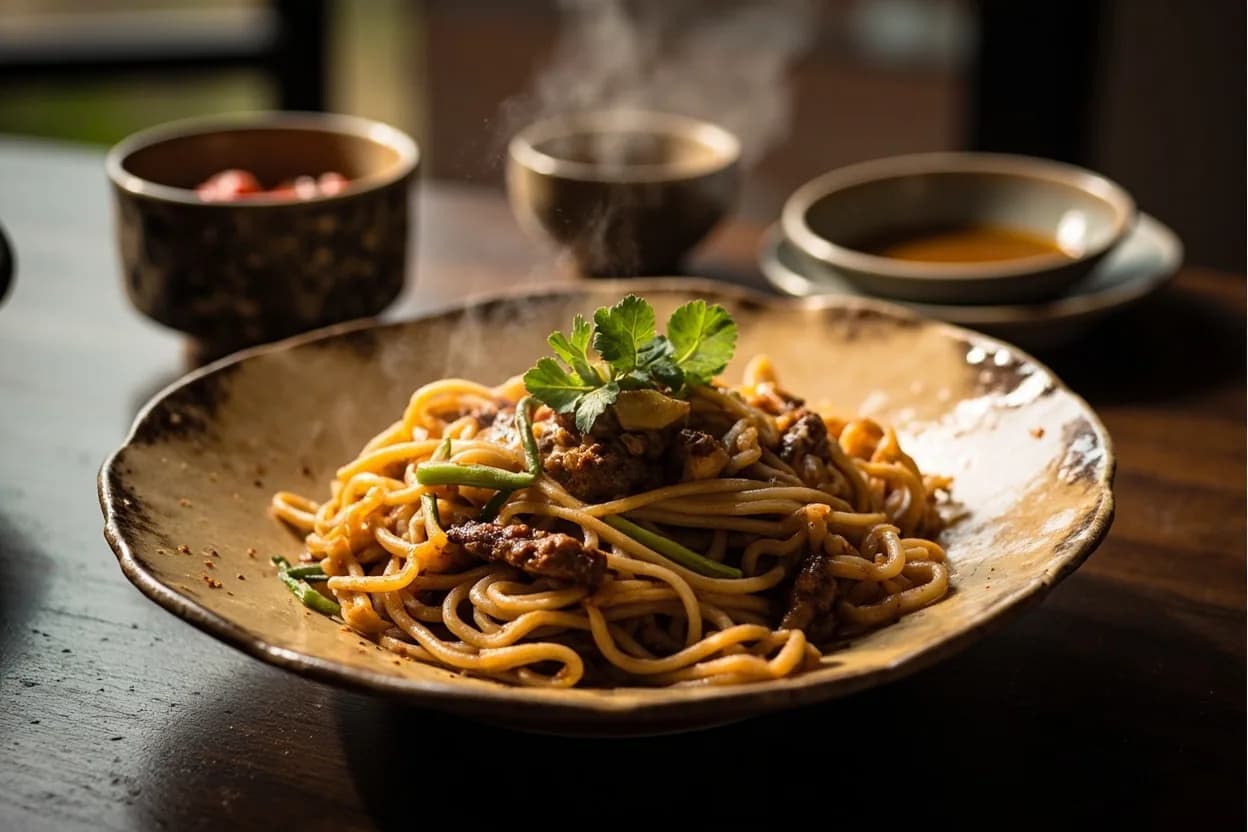
The dishes that define Korean Diaspora Cuisine (LA Koreatown), documented in the Canon.
References
- 1.The Koreatown Cookbook — Deuki Hong and Matt Rodbard
- 2.L.A. Son: My Life, My City, My Food — Roy Choi
- 3.Korea: The Impossible Country — Daniel Tudor
- 4.The United States of Arugula — David Kamp (Korean-American food context)
- 5.Koreatown: A Cookbook — Deuki Hong and Matt Rodbard (expanded edition)
Confidence: high
Notes
LA galbi vs. Korean galbi
The flanken-cut short rib — sliced across the bone to produce a thin strip with three bone cross-sections — is sometimes called 'LA-style' even in Korea, because Korean immigrants in LA adapted the cut from Latin American carnicerías that already offered it. The cut sears fast on high-heat tabletop grills and caramelizes its soy-pear marinade more effectively than a thicker cut. It has since been re-exported to Korea as a distinct preparation.
The Kogi moment
When Roy Choi launched Kogi BBQ in November 2008 — a fusion taco truck using Twitter to announce locations — it was covered by the LA Times within weeks and generated lines of 300+ people. Kogi is considered the founding event of both the modern food truck movement and the mainstream popularization of Korean food in America. The Korean taco (Korean BBQ meat, kimchi salsa, sriracha mayo, cilantro-onion, in a corn tortilla) is a genuinely new dish, not a fusion gimmick — it works because ssam (Korean wrap culture) and taco culture share identical structural logic: protein + acid + fresh herb + starch wrapper.