East Asia
Korean (Joseon Court & Regional)
Also: Korean cuisine, 한국 요리, Joseon royal cuisine, gungmyeong yori
A cuisine of profound fermentation depth and aesthetic restraint, spanning the twelve-course refinement of the Joseon royal court to the fiery regional diversity of Jeonju's bibimbap, Gyeongsang's raw fish, and Jeju's wind-dried horse meat.
Korean cuisine encompasses the full spectrum of culinary practice on the Korean peninsula, from the sookmyung (royal court cuisine) codified under the Joseon dynasty (1392–1897) to the vibrant regional cooking traditions of the country's eight provinces. Its foundational architecture is the jang system — fermented soybean pastes (doenjang), fermented chili paste (gochujang), and soy sauce (ganjang) — which function as the primary seasoning, umami base, and flavor architecture for the entire cuisine. Equally central is the banchan system: every Korean meal, from a humble home table to a palace banquet, is composed of rice, soup or stew, and an array of small dishes (banchan) of varying complexity. Korean cuisine is also the world's most sophisticated practitioner of lacto-fermented vegetable preservation, of which kimchi is the most global example among hundreds.
The flavour base
The jang ferments are the grammar of Korean cooking: doenjang (fermented soybean paste) provides deep umami and funk; gochujang (fermented chili-soybean paste) provides heat, sweetness, and fermented depth; ganjang (soy sauce) provides salt and complexity. Sesame oil and toasted sesame seeds finish most dishes. Garlic and green onion are near-universal aromatics. For court cuisine, the heat of chili is moderated and replaced with subtle aromatics — jujubes, pine nuts, and flower garnishes.
Pantry staples
Key ingredients
Signature techniques
Signature dishes
Korean (Joseon Court & Regional) on the table
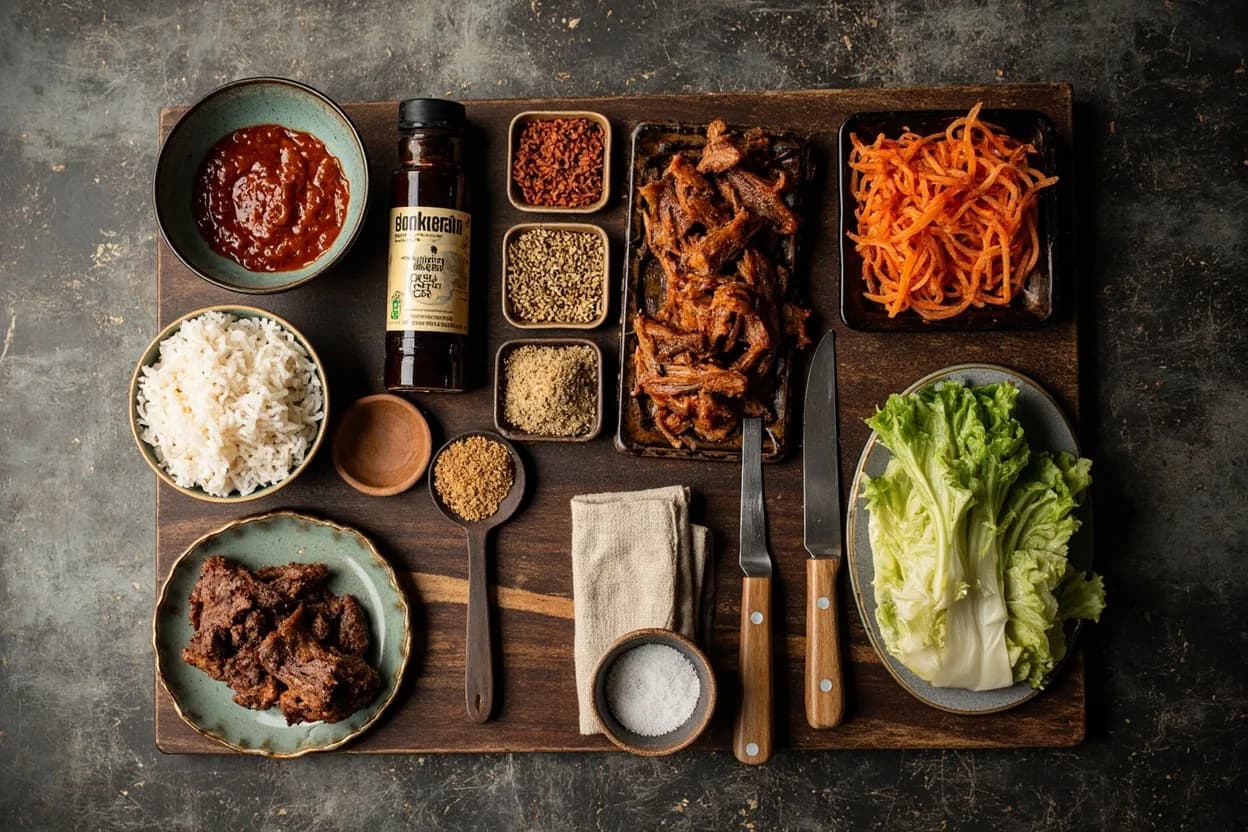
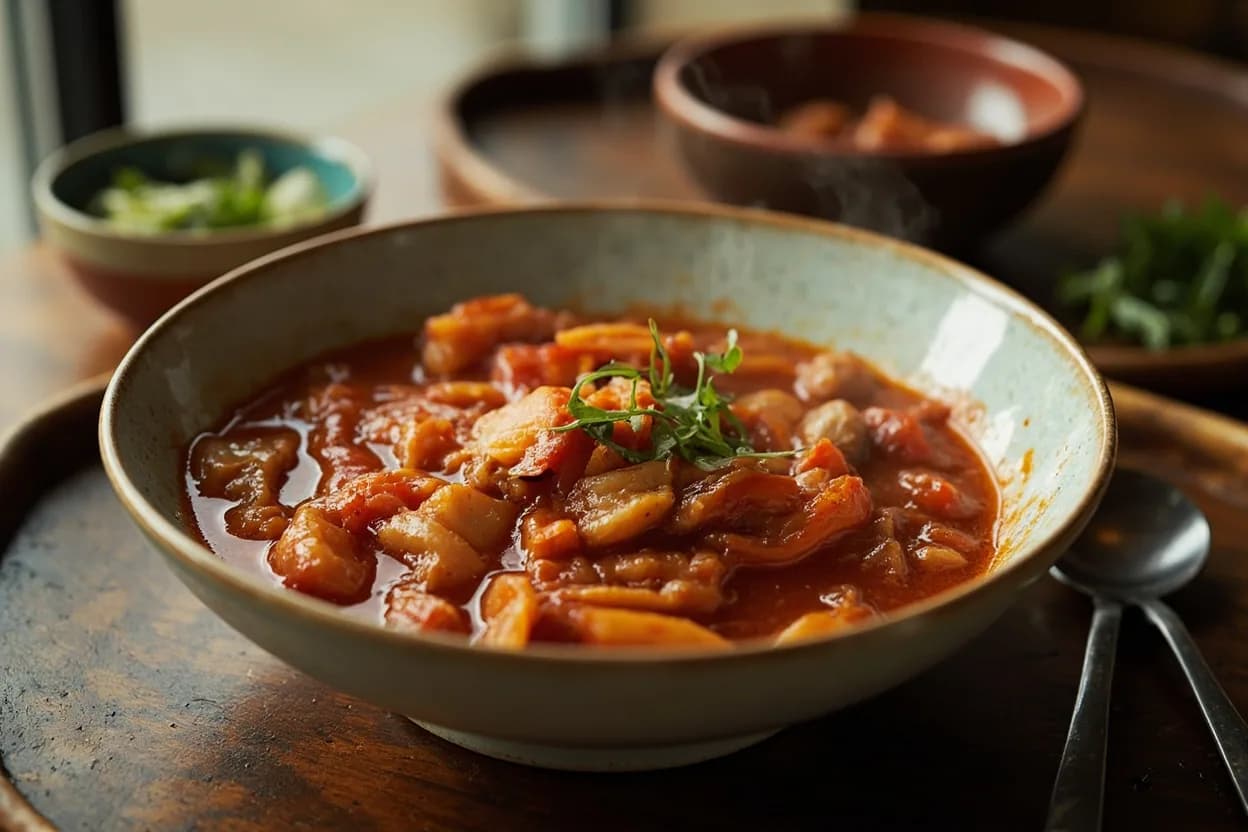
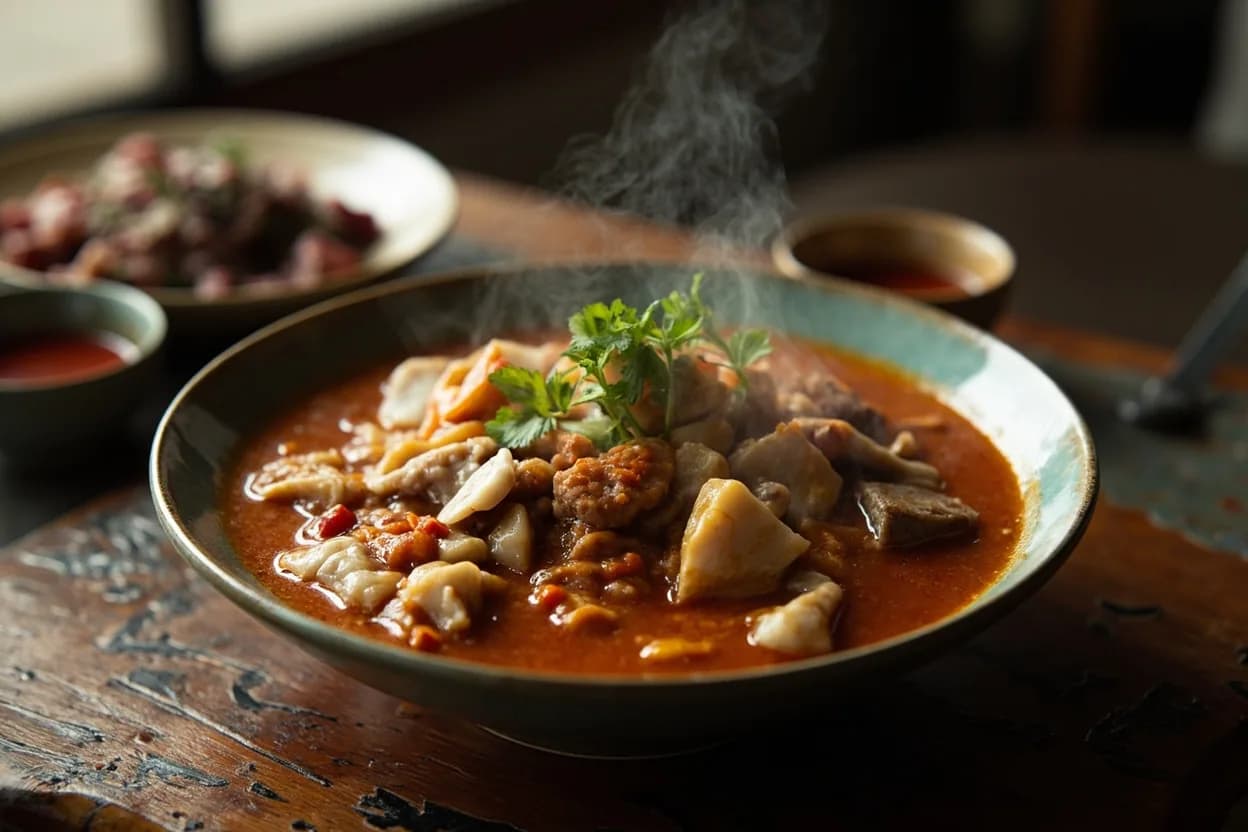
At the table
Every Korean meal is built on the bap-guk-banchan framework: steamed rice (bap) and soup or stew (guk or jjigae) plus a varied array of banchan (side dishes) served simultaneously rather than sequentially. The number and variety of banchan signals the occasion: a simple home meal has 3–5 banchan; a formal meal or restaurant spread may have 8–12; the Joseon royal table (sura) set 12 categories of dishes (십이첩반상, sibicheopbansang). Meals are eaten with chopsticks and a long-handled spoon; the spoon is the utensil of primary importance, used for rice and soup. Kimchi is present at virtually every meal. Alcohol (makgeolli, soju, or beer) accompanies socializing meals; barley or corn tea (bori-cha, oksusu-cha) is the daily table beverage.
History & context
The foundations of Korean cuisine were established in the Three Kingdoms period (57 BC–668 AD), when fermented soybean products, kimchi precursors (using salt, not chili), and rice cultivation were documented. The Goryeo dynasty (918–1392) refined Buddhist vegetarian temple cuisine and established the culture of elaborate banquets. The Joseon dynasty (1392–1897) was the golden era of culinary codification: court cuisine (gungjung yori) was systematized with 12-course banquet formats, the Eumsik dimibang (1670, by Lady Jang Gyehyang) was the first Korean cookbook written by a woman, and Gyuhap chongseo (1815, Lady Bingheogak Yi) documented hundreds of recipes. Chili peppers arrived from Japan via the Imjin War (1592–1598) and were rapidly absorbed into kimchi and jang culture, creating gochugaru and gochujang as we know them today. Japanese colonial rule (1910–1945) disrupted but did not erase the tradition. Post-liberation, the North-South division separated regional cuisines; South Korean prosperity fueled a restaurant culture that now extends globally through Korean diaspora and the Korean Wave (Hallyu).
Regional variations
- Jeonju (North Jeolla Province)
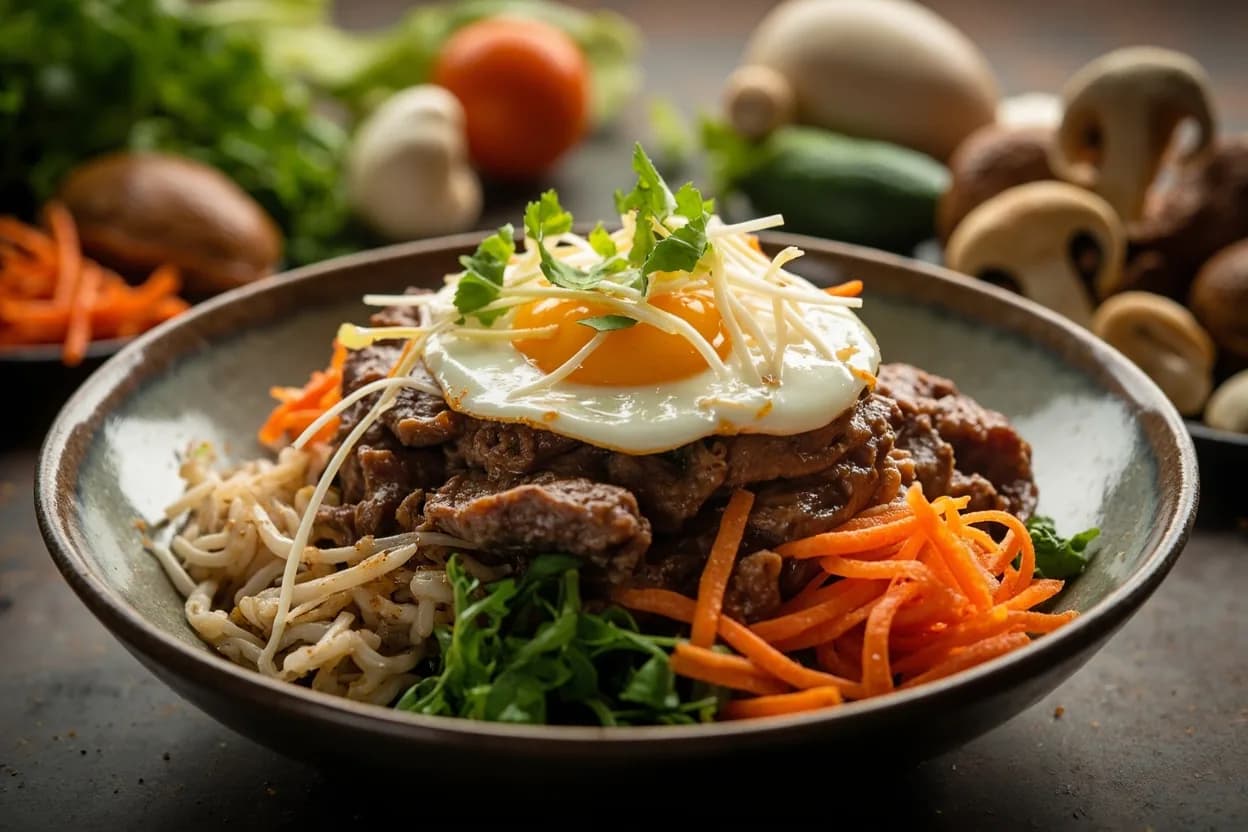
Considered the gastronomic capital of Korea; home of the definitive bibimbap (Jeonju bibimbap, with 30+ banchan) and hanjeongsik (full Korean table service). Cuisine is rich, complex, and sweet-savory; uses abundant quantities of sesame oil and jangajji (pickled vegetables).
- Gyeongsang Province (Southeast)
The boldest, saltiest, and spiciest regional style; known for raw and marinated seafood (hoe), dried fish, and aggressively salted kimchi. Dongrae pajeon (green onion pancake) and milmyeon (wheat noodles in cold broth) are Busan signatures.
- Jeju Island
Island cuisine shaped by ocean and wind; abalone porridge (jeonbok juk), raw sea urchin and conch, haenyeo (female diver) seafood traditions, and endemic black pork (heukdwaeji). Wind-dried horse meat (maeyuk) is unique to Jeju. Less chili than mainland; cleaner, more pristine flavors.
- Pyongyang (North Korea, historical)
Before partition, Pyongyang naengmyeon (cold buckwheat noodles in pheasant or beef broth) was the city's signature; Northern Korean cuisine is generally milder and less spicy than Southern, with greater use of vinegar and cold preparations.
- Seoul (Joseon royal court lineage)
As the 500-year capital, Seoul cuisine synthesized all regional styles and maintained court-cuisine refinement; sinseollo (royal hot pot), gujeolpan (nine-sectioned lacquerware dish), and ttok (rice cake) confectionery traditions are Seoul's crown.
- Gangwon Province (Northeast)
Mountain and coastal combine; naengmyeon uses local buckwheat; ojingeo-sundae (squid stuffed with glass noodles); abundant wild mountain vegetables (chwinamul, gosari); simpler preparation than Jeonju.
Related cuisines
- Japanese
Shared roots in rice-centered table culture, fermented soy products, and raw fish; diverged through distinct spice palettes (Korea's chili heat vs. Japan's dashi/mirin delicacy) and fermentation philosophies.
- Chinese
Chinese influence shaped early Korean court cuisine — noodles, dumpling culture (mandu from Chinese jiaozi), and stir-fry techniques — but Korea developed a fundamentally distinct fermentation-first identity.
- Japanese (temple vegetarian / shojin)
Korean temple cuisine (사찰음식, sachal eumsik) parallels Japanese shojin ryori in vegetable focus, seasonal awareness, and anti-waste philosophy — both derived from Buddhist practice.
Canonical recipes
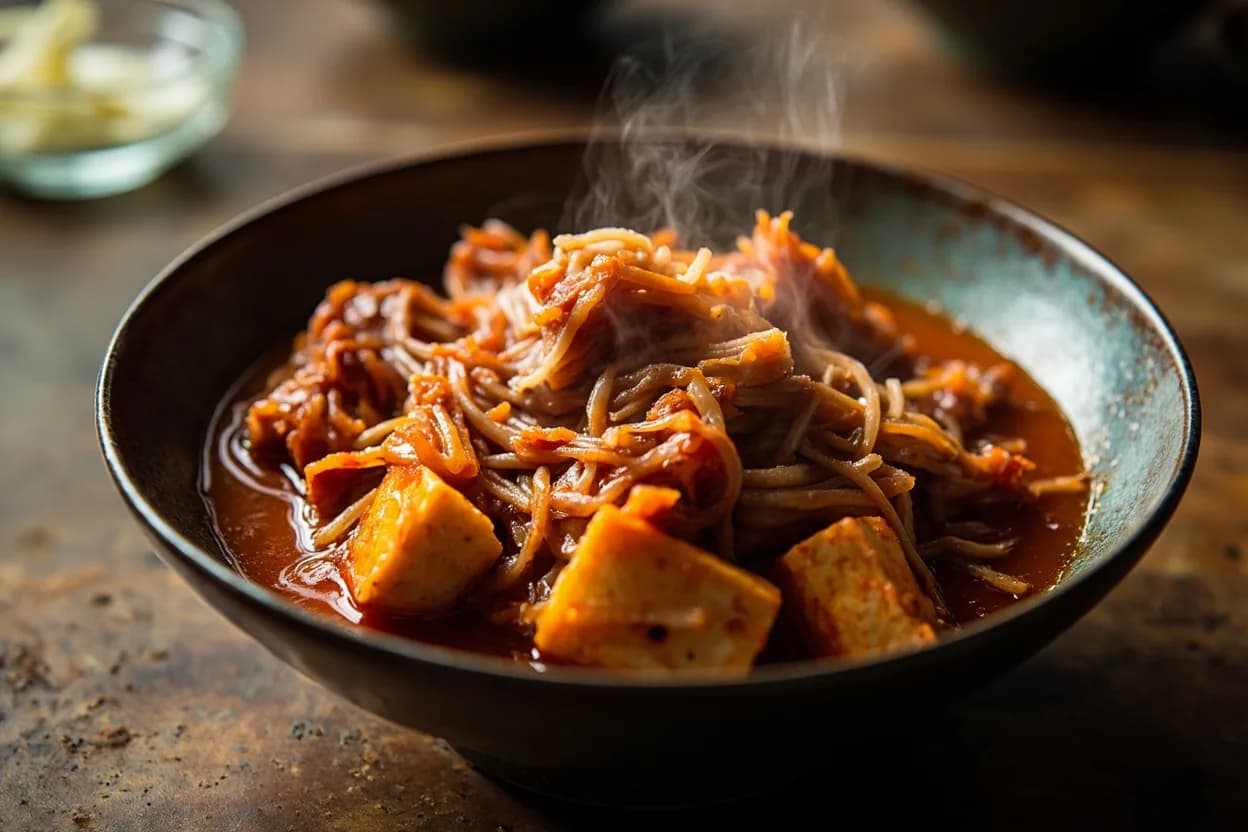
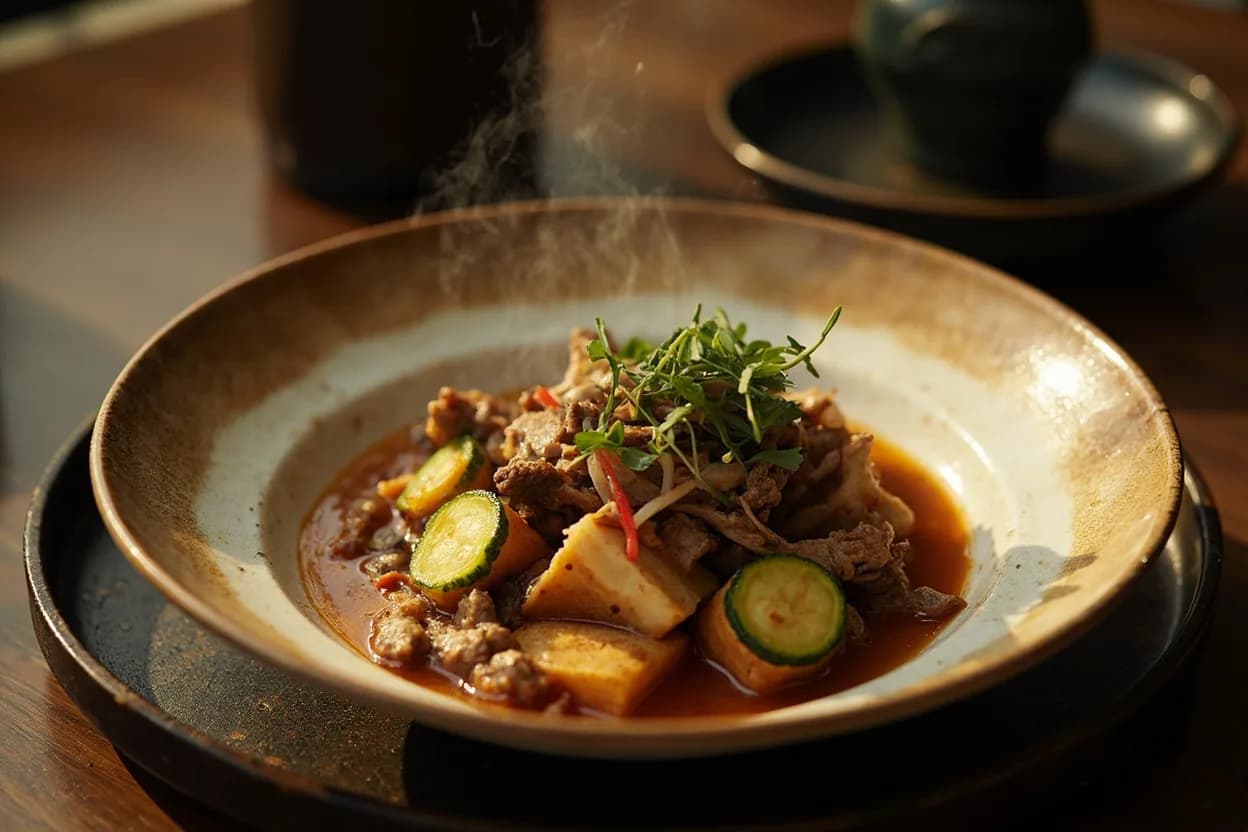
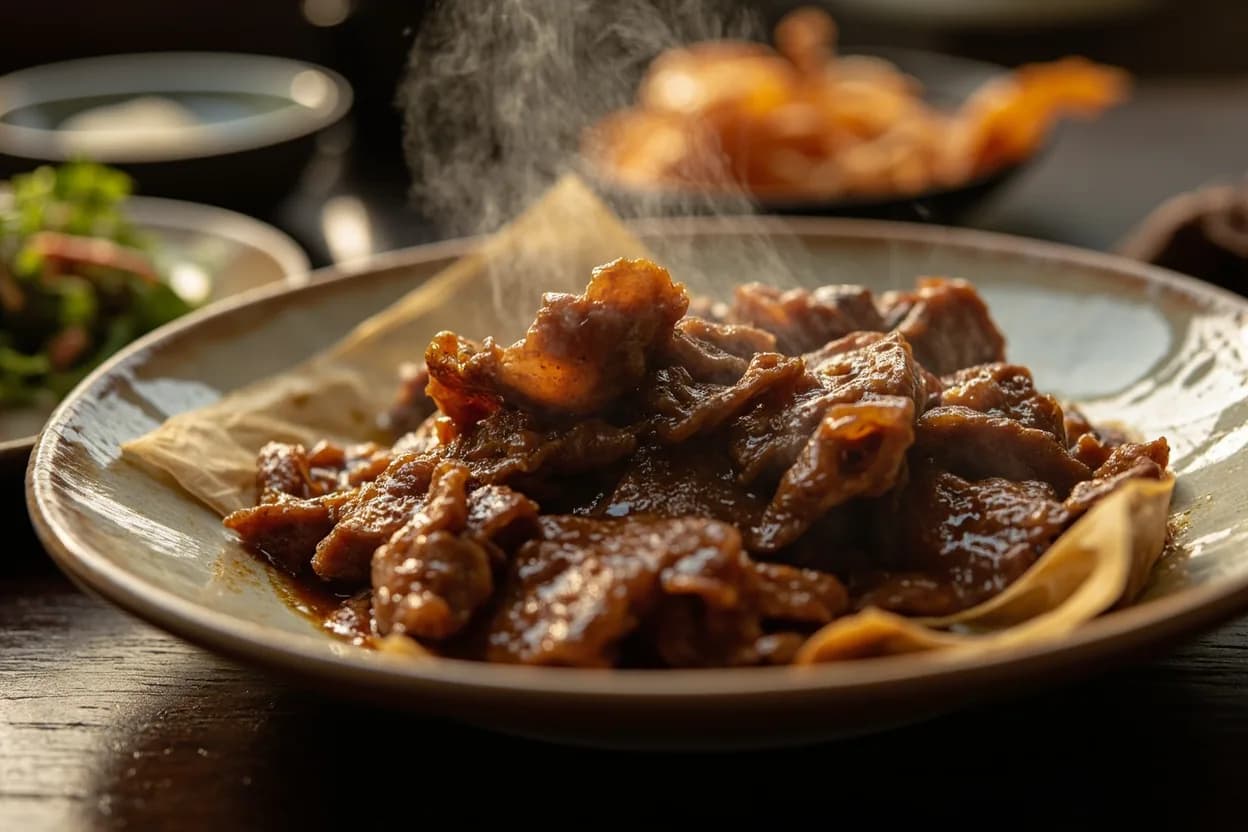
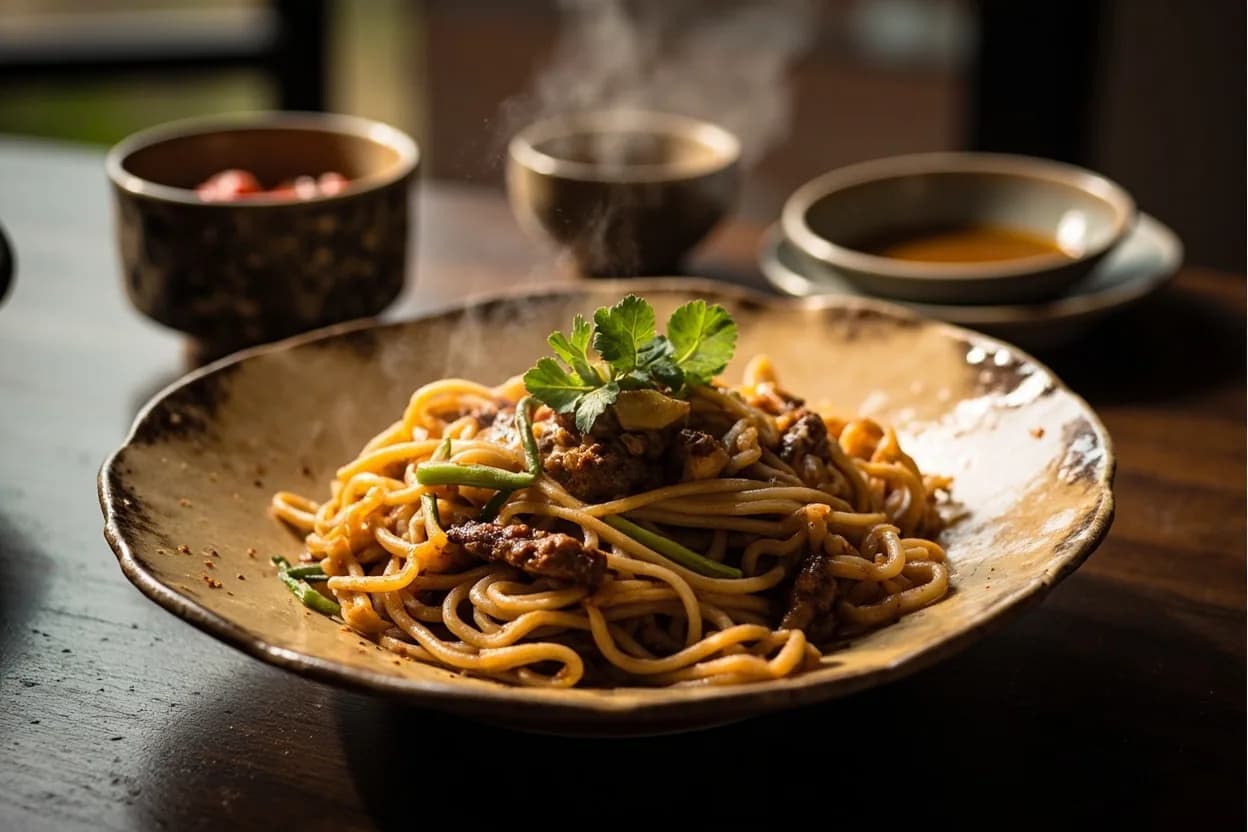
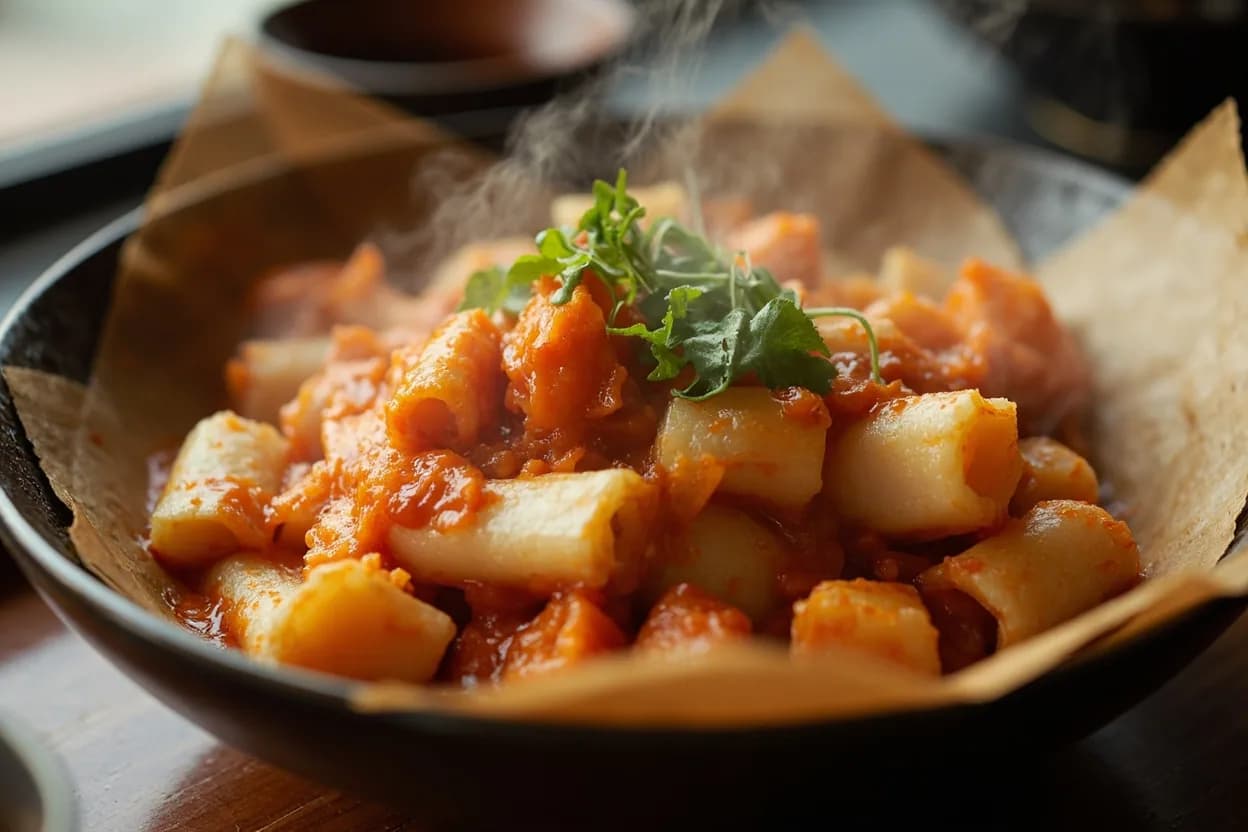
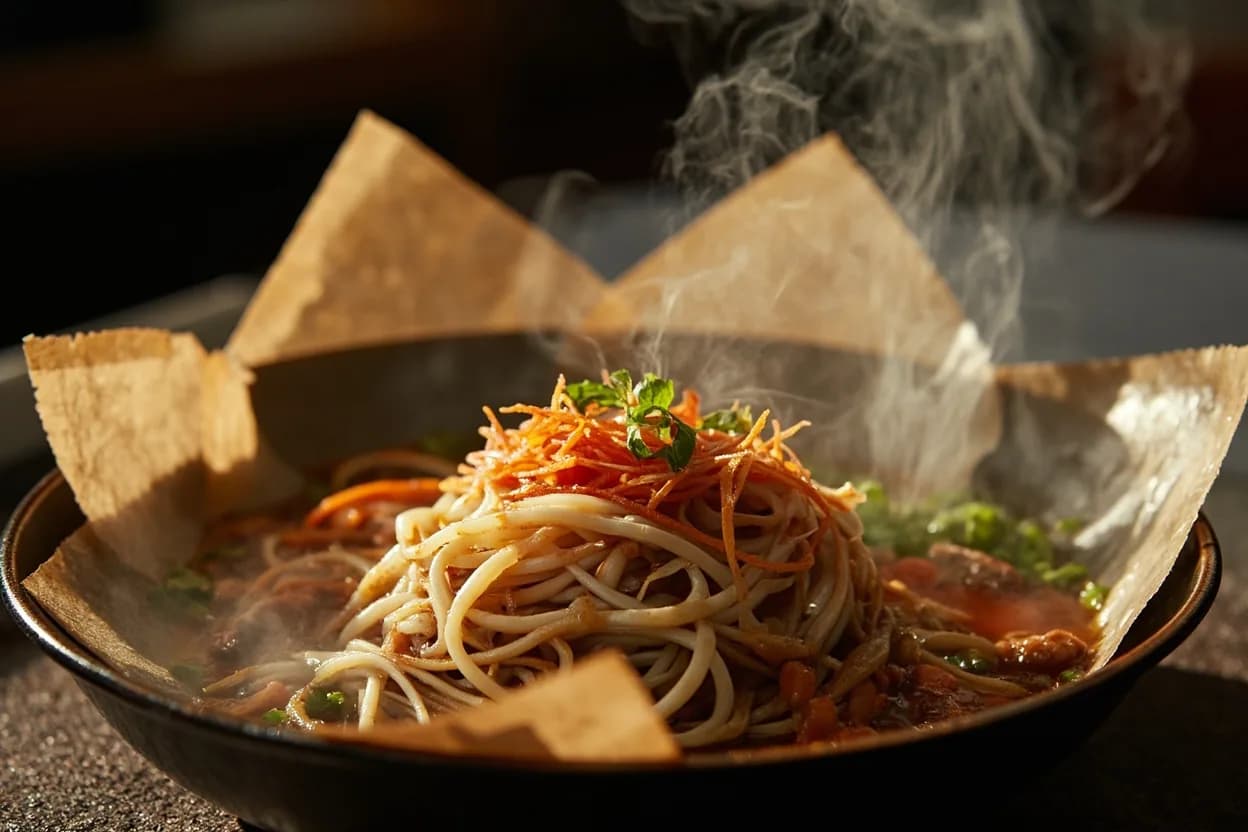
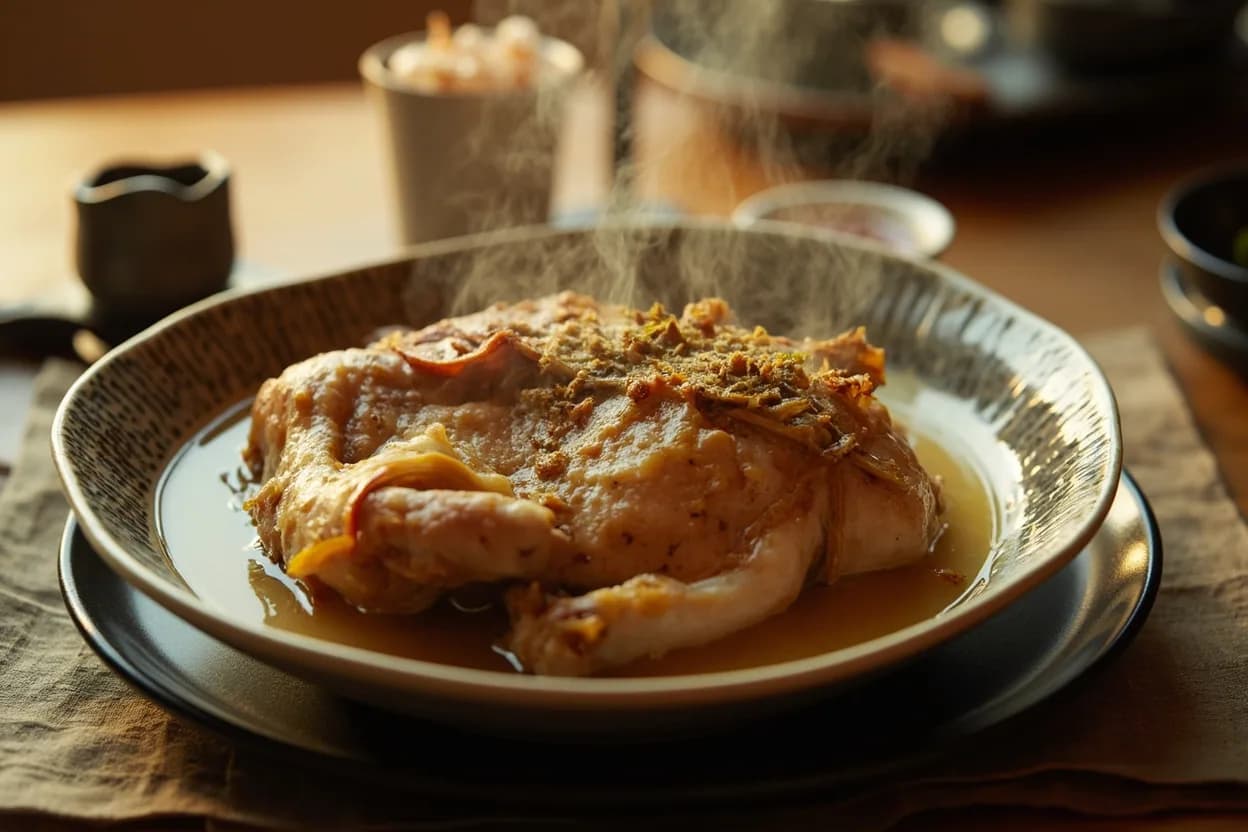
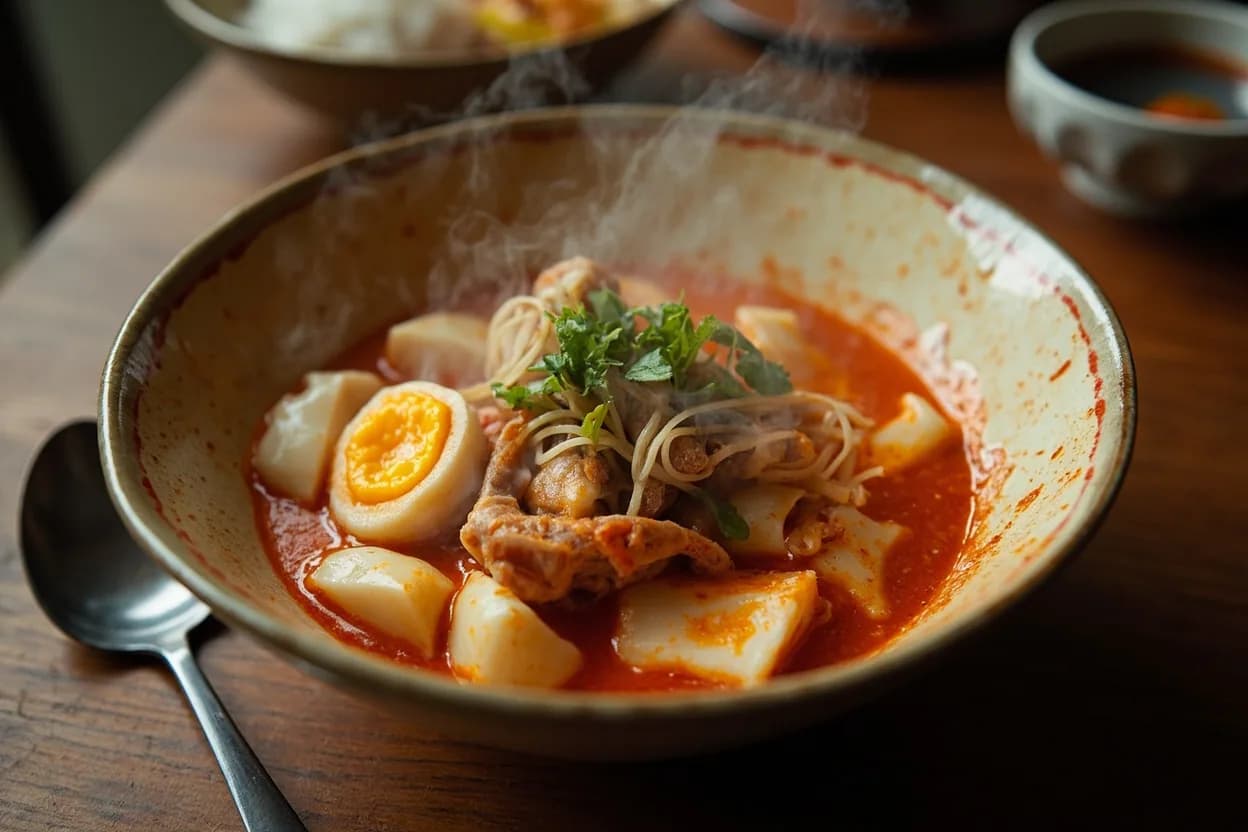
The dishes that define Korean (Joseon Court & Regional), documented in the Canon.
References
- 1.The Korean Kitchen — Copeland Marks (1993)
- 2.Korean Food Culture — Han Bok-ryeo (2005)
- 3.Eumsik dimibang (음식디미방) — Lady Jang Gyehyang (1670)
- 4.The Kimchi Cookbook — Lauryn Chun (2012)
- 5.My Korea: Traditional Flavors, Modern Recipes — Hooni Kim (2020)
- 6.Koreatown: A Cookbook — Deuki Hong & Matt Rodbard (2016)
Confidence: high
Notes
Joseon royal court cuisine
The sura (수라) — Joseon royal table — represented Korean cuisine's zenith. A full royal meal set twelve categories of dishes (십이첩반상) including rice in two forms, three soups, two stews, three types of kimchi, three fermented seafood preparations (jeotgal), and multiple banchan of vegetables, meat, and fish. Each dish was tested for poison before service and prepared by royal court ladies (sura ganggung) trained for years in culinary arts. This tradition was revived and documented by Han Bok-ryeo (1942–2017), designated a National Intangible Cultural Heritage holder, who ran the Joseon royal cuisine school in Seoul.
The jang fermentation calendar
Traditional Korean households followed a fermentation calendar rooted in the lunar new year. Meju (compressed soybean blocks) were made in late autumn, hung to dry and ferment with beneficial molds through winter, then submerged in salted water in earthen pots (onggi) in early spring. After months of maturation, the liquid was drawn off as ganjang (soy sauce) and the remaining solids pressed into doenjang (paste). Gochujang was made separately, mixing doenjang base with chili and malt. This annual cycle of fermentation — producing the three jang that season the entire year's cooking — was considered the most important domestic skill a household could maintain.