East Asia
Korean Temple Food (Sachal Eumsik)
Also: 사찰음식, Sachal Eumsik, Buddhist Temple Cuisine, Korean Buddhist Food
Korea's ancient monastic cuisine — entirely plant-based, free of the five pungent roots, built on fermented vegetables, foraged greens, and meditative restraint.
Sachal eumsik is the ritual and daily food of Korea's Buddhist monasteries, evolved over 1,700 years since Buddhism arrived from China in the 4th century CE. It is strictly vegan — no meat, fish, or animal products — and additionally excludes the five pungent vegetables (o-sin-chae): garlic, green onions, onions, leeks, and chives, which Buddhist teaching holds arouse desire or aggression. The cuisine relies instead on wild-foraged mountain greens (sanchae), dried mushrooms, fermented pastes without animal stock, seasonal vegetables, tofu, and grains. Fermentation is the primary technique for building depth in the absence of meat and alliums. Temple food is not merely a dietary restriction but a practice — eating is inseparable from mindfulness, gratitude, and non-harm.
The flavour base
Dried mushroom and kelp dashi (free of anchovies, unlike secular Korean stock); doenjang and ganjang aged without fish sauce; perilla oil and sesame oil; pine nuts and walnuts for richness; wild greens and root vegetables for earthiness.
Pantry staples
Key ingredients
Signature techniques
Signature dishes
Korean Temple Food (Sachal Eumsik) on the table

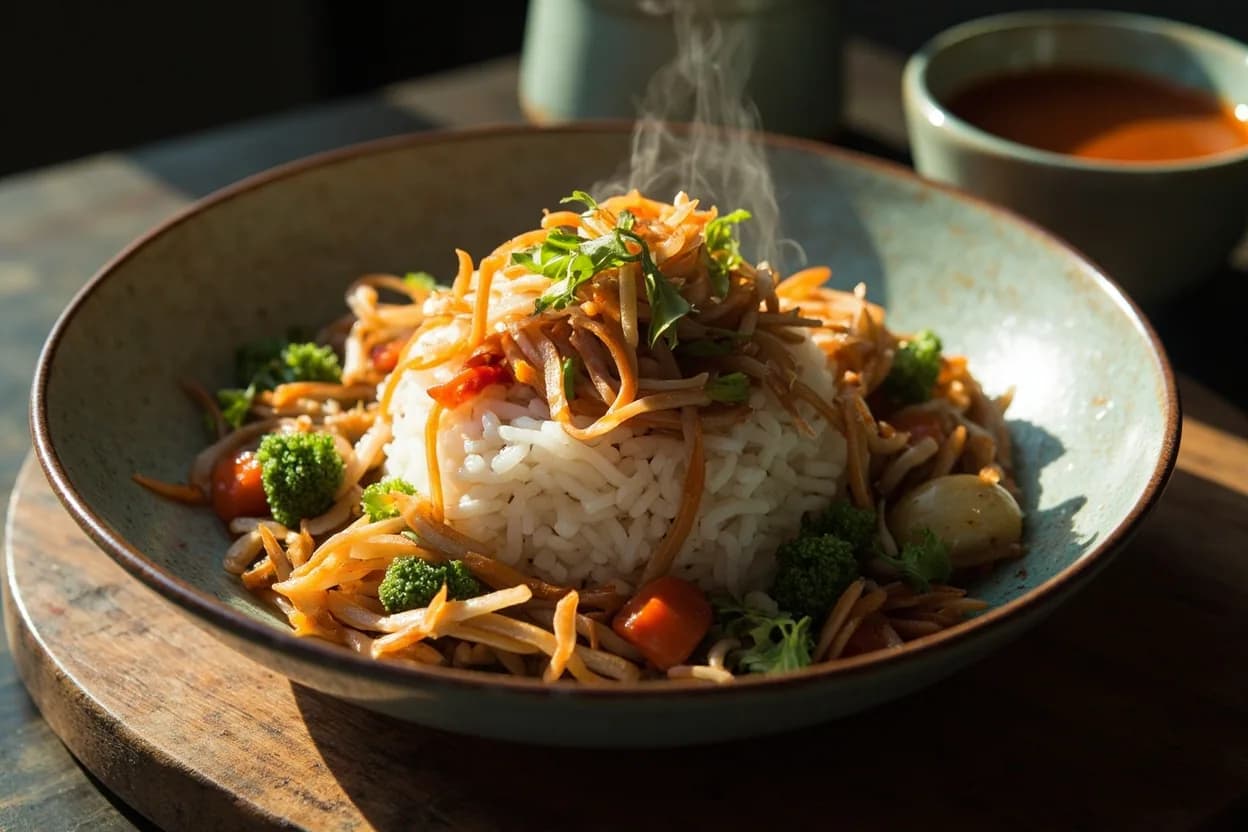
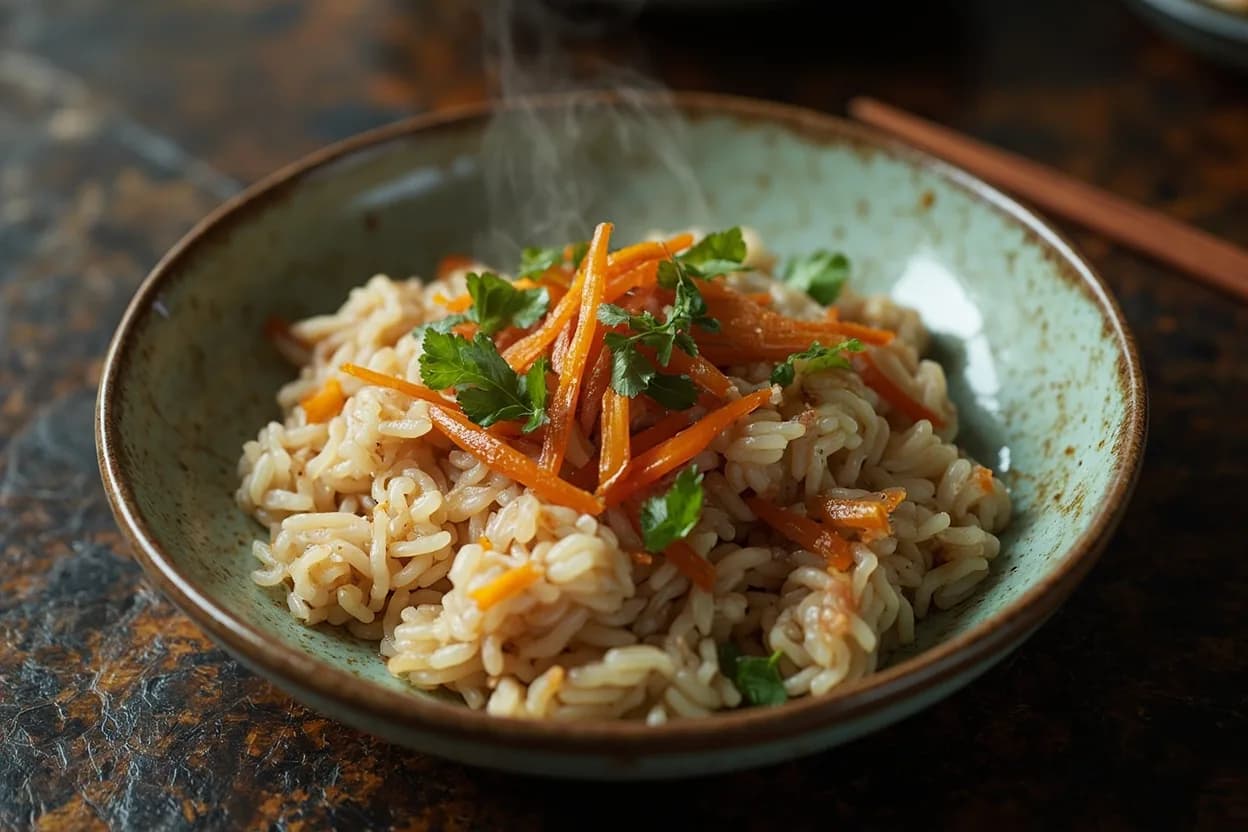
At the table
Temple meals are eaten in absolute silence as a formal practice called barugongyang. Monastics eat from a set of four nested wooden bowls (baru), measuring portions carefully with no waste — every grain must be consumed. Meals are three times daily: a light morning rice gruel, a midday main meal, and an evening light meal. No eating after sunset is the traditional rule. In modern temple-stay programs open to the public, the silence and baru discipline are maintained as an integral experience.
History & context
Buddhism entered the Korean peninsula via the Goguryeo kingdom (372 CE) and spread rapidly through the Three Kingdoms period. Monasteries became centers of agricultural innovation as well as spiritual practice, developing systematic approaches to fermenting vegetables without animal products during periods when temple populations were large and self-sufficient. During the Joseon dynasty (1392–1897), when Neo-Confucianism displaced Buddhism from state favor, monasteries retreated to mountain locations (sanshachel) and deepened their reliance on foraged mountain greens. This isolation paradoxically preserved techniques that urban Korean cuisine abandoned. The 20th century revival — particularly through Monk Jeong Kwan, who was featured in Chef's Table (2017) — brought sachal eumsik global attention. UNESCO inscribed Korean kimjang (kimchi-making culture) in 2013, and temple food is increasingly recognized as a distinct heritage strand within it.
Regional variations
- Jogyesa lineage (Seoul)
Urban temple food adapted for public temple restaurants; more approachable presentations, same doctrinal rules.
- Chunjinam hermitage / Chunhyangseon
Jeong Kwan's hermitage at Chunjinam (Chunhyang Temple, South Jeolla) is the most internationally renowned; deeply seasonal, highly artistic plating.
- Mountain temple variants
Higher-altitude temples in Gangwon and North Gyeongsang emphasize pine needle, acorn, and chesnut preparations specific to those forests.
Related cuisines
Shares deep fermentation culture and mountain green repertoire; secular Jeolla cuisine evolved partly from monastic foundations.
- Japanese Shojin Ryori
Direct Buddhist dietary cousin: same no-meat, no-allium rules imported via the same Chinese Buddhist transmission; Japanese form is more codified in presentation.
- Chinese Buddhist Vegetarian Cuisine
The ultimate ancestral source; Chinese monastery cuisine introduced tofu, wheat gluten (seitan), and the five-pungent prohibition to Korea.
References
- 1.The Korean Kitchen: Classic Recipes from the Land of the Morning Calm — Copeland Marks
- 2.Simple Korean Food: Temple Food — Wookwan (Korean Buddhist cultural center publication)
- 3.Chef's Table, Season 3: Jeong Kwan — Netflix documentary, 2017
- 4.Korean Temple Food: The Wookwan Way — Wookwan
- 5.UNESCO Intangible Cultural Heritage — Kimjang inscription, 2013
Confidence: high
Notes
The five pungent vegetables
The prohibition on garlic, green onions, onions, leeks, and chives (o-sin-chae) derives from the Surangama Sutra, which teaches that these vegetables stimulate desire when eaten raw and aggression when eaten cooked. This single rule is the defining constraint that separates temple food from secular Korean vegetarian cooking and demands entirely different flavor-building strategies.
Jeong Kwan and the global moment
Monk Jeong Kwan of Chunjinam hermitage became the most internationally famous face of sachal eumsik after her Chef's Table episode. Eric Ripert of Le Bernardin called her food 'the best I've ever eaten.' She does not consider herself a chef — cooking is dharma practice, not culinary art, in her framing — which is itself central to understanding what makes temple food distinct.