South Asia
Kerala (Nair & Brahmin Traditions)
Also: Kerala cuisine, Malayali cuisine, Keralite cooking
Coconut-saturated, curry-leaf-scented cooking from India's southernmost coast: appam with stew, fish molee, avial, and the elaborate vegetarian sadya feast that is one of the world's great meals.
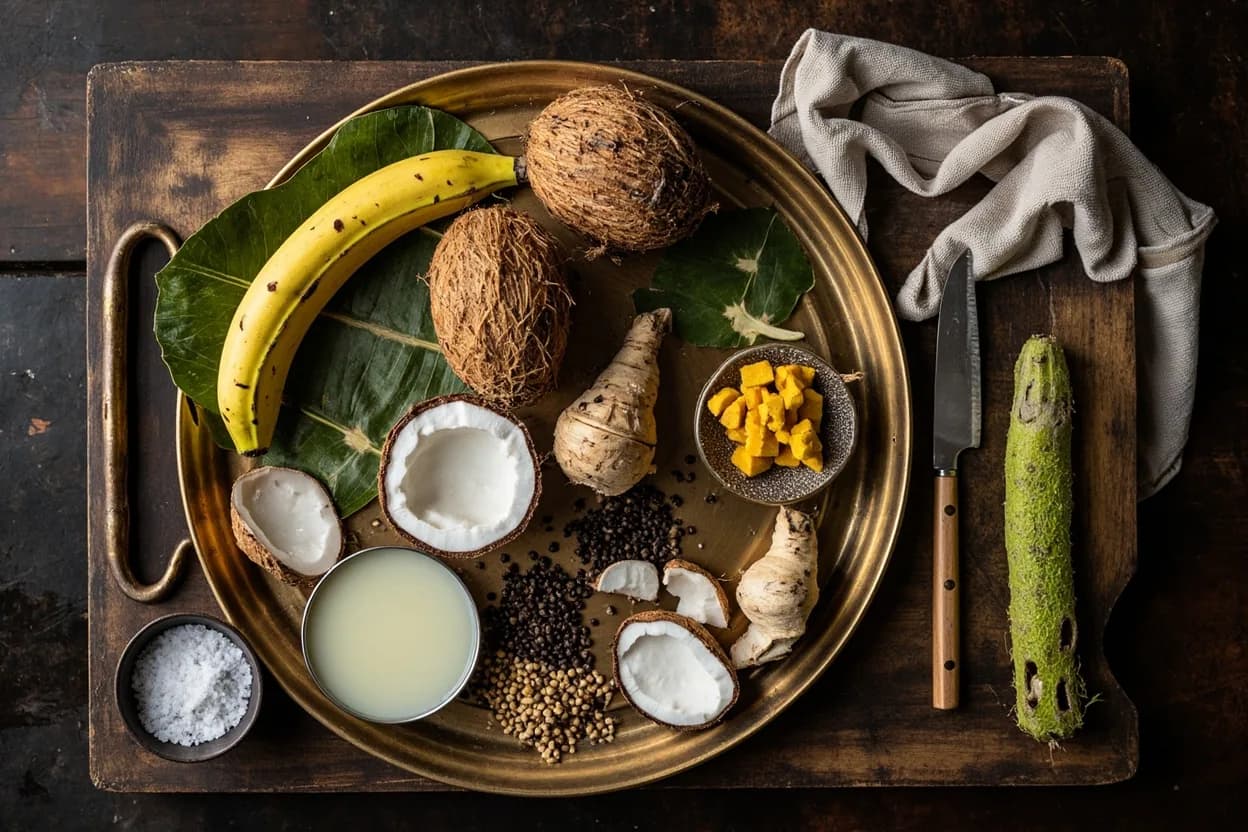
Kerala cuisine is defined by three ingredients more than any other Indian regional tradition: coconut (as oil, milk, grated, and fresh cream), curry leaf, and black pepper (Kerala was the historic source of the global pepper trade). The cooking is layered along caste and community lines — Brahmin (Nambudiri) cooking is strictly lacto-vegetarian and uses no onion or garlic; Nair cooking incorporates fish, egg, and sometimes chicken but follows similar aromatic principles; Syrian Christian, Mappila Muslim, and coastal fishing communities are meat-dominant with their own techniques. What unifies Kerala food is the sadya: a vegetarian feast of 20–30 dishes served on banana leaf on festival occasions, built around rice and an orchestrated sequence of coconut-based vegetable dishes.
The flavour base
Coconut oil base with fresh coconut milk or grated coconut in most gravies; mustard seeds and curry leaves as the canonical tempering; black pepper and green chilli for heat; no tomato in older Brahmin traditions (tamarind or kokum for souring).
Pantry staples
Key ingredients
Signature techniques
Signature dishes
Kerala (Nair & Brahmin Traditions) on the table
At the table
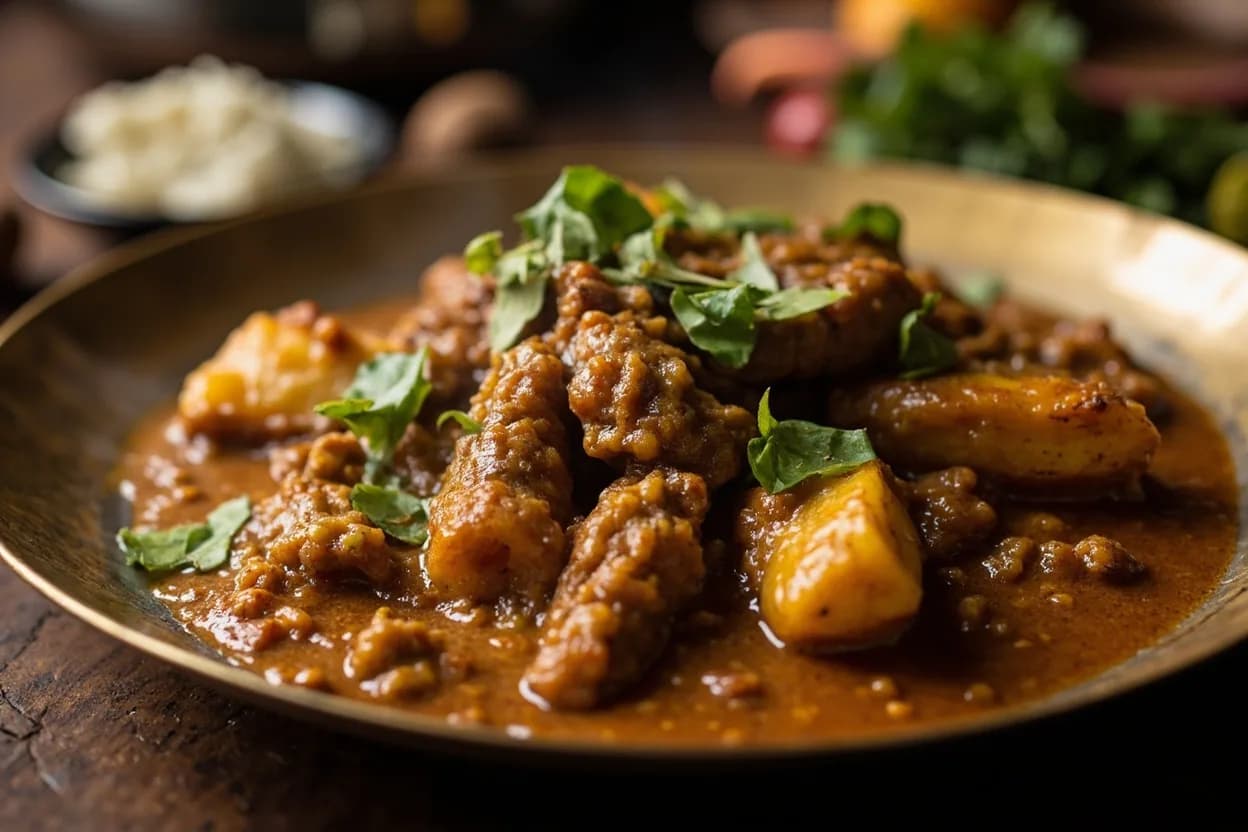
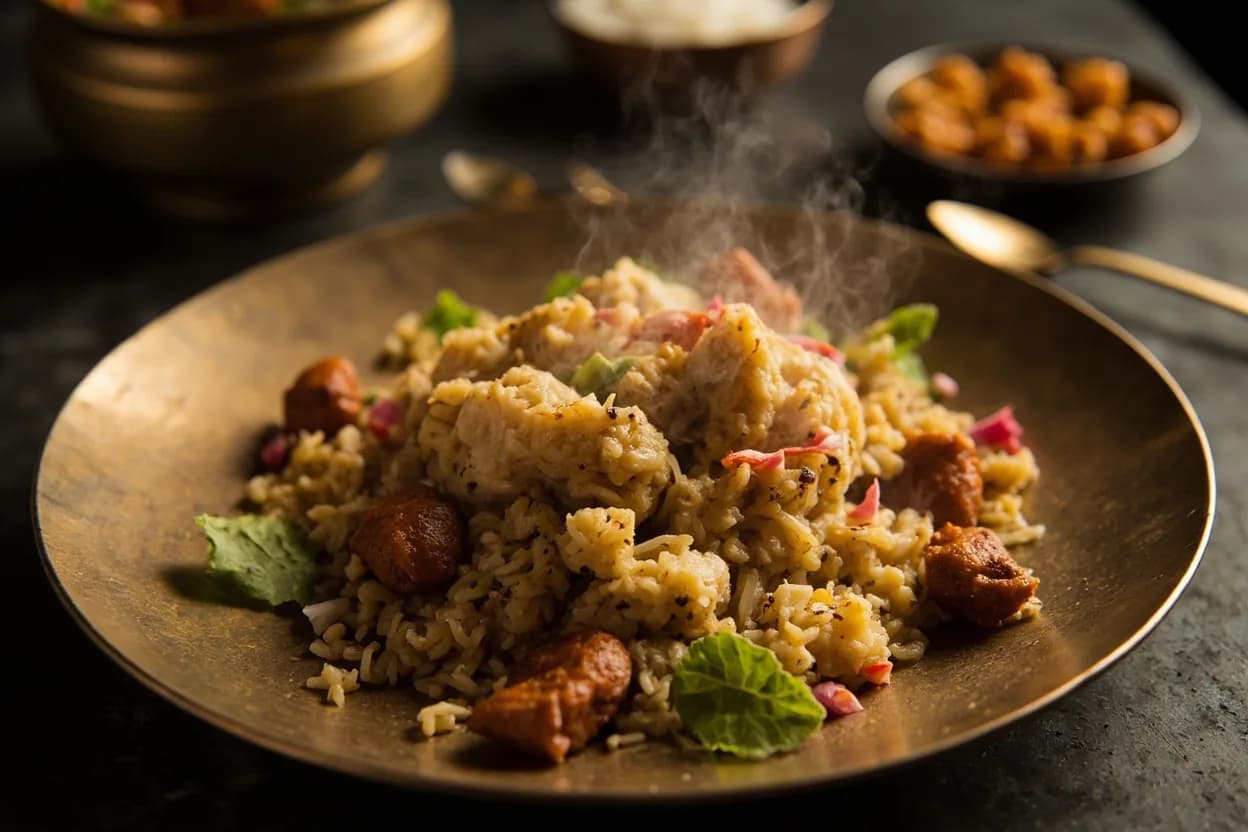
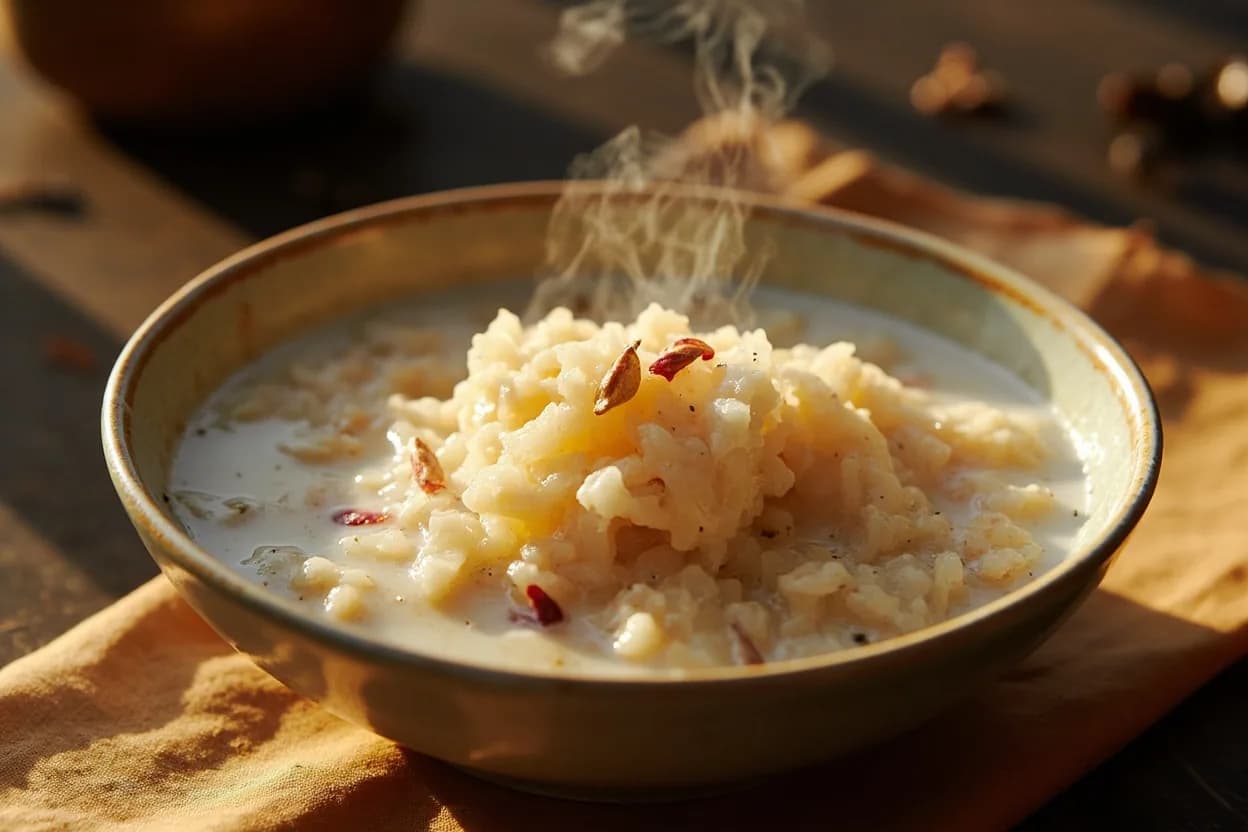
Daily Kerala meals center on rice (often red Palakkadan matta rice for Nair households) with fish curry, a thoran, sambar or dal, and papadum. Breakfast is distinct from the plains — puttu (steamed rice-coconut cylinders), idiyappam (string hoppers), or appam with coconut milk and banana are common morning staples. The sadya, served at Onam and weddings, is the cuisine's highest expression: 26 dishes in Brahmin Nambudiri tradition, served in a strict sequence that places bitter before sour before sweet, ending with payasam.
History & context
Kerala's position as the source of black pepper, cardamom, and cinnamon made it the pivot of the ancient spice trade and brought Arab, Chinese, Jewish, and later Portuguese traders to its coast. The Syrian Christian community, claiming origin from St. Thomas's 52 CE mission, developed a distinct meat-forward cuisine that blends Syrian liturgical food traditions with local spices. The Zamorin rulers of Kozhikode (Calicut) hosted Arab Mappila traders, whose moplah cuisine (featuring biryani, halwa, and coconut-braised meats) is a distinct sub-tradition. Portuguese contact in the 1500s introduced chillies, tomatoes, and vinegar, all of which were absorbed differently by each community — Brahmin cooking resisted them longest. Kerala's 19th-century social reform movements, which challenged caste hierarchies, also democratized food access; the sadya, once reserved for upper-caste celebrations, is now served at Onam for all communities.
Regional variations
- Nambudiri Brahmin
The most austere: no onion, no garlic, no fish. Coconut milk, black pepper, and fresh vegetables; elaborate temple food and festival sweets.
- Nair
Incorporates fish, egg, and chicken alongside the coconut-vegetable base; fish molee and meen curry are household staples. Represents the mainstream Kerala home kitchen.
- Malabar (Mappila Muslim)
Northern Kerala; rice-wheat hybrid cuisine; Malabar biryani, prawn fry, and pathiri (thin rice bread) reflect the Arab-Kerala synthesis.
- Syrian Christian (Nasrani)
Thrissur-Kottayam belt; pork vindaloo-like preparations, duck roast in coconut masala, beef fry; the most meat-forward Kerala tradition.
- Kuttanad backwaters
Fish, prawns, and duck dominate; cooking in toddy and raw mango; seasonal meen manga curry is iconic.
Related cuisines
Shares the Dravidian base of rice, lentils, curry leaf, and tamarind but diverges radically in fat (coconut oil vs sesame), grain form (puttu/appam vs idli/dosa), and spice register.
Strong cross-pollination in string hoppers (idiyappam), coconut milk gravies, and black pepper use; the Jaffna Tamil tradition is closest.
Both cuisines absorbed Portuguese contact and produce distinctive coconut-vinegar fish preparations; Goan xec xec and Kerala fish molee occupy similar conceptual territory.
Canonical recipes
The dishes that define Kerala (Nair & Brahmin Traditions), documented in the Canon.
References
- 1.The Penguin Food Guide to India — Charmaine O'Brien
- 2.Flavours of Kerala — Lathika George
- 3.Indian Food: A Historical Companion — K.T. Achaya
- 4.Feasts and Fasts: A History of Food in India — Colleen Taylor Sen
Confidence: high
Notes
The sadya as living architecture
A Kerala sadya is among the most systematically designed meals in world cuisine. Each of the 26–28 dishes has a fixed position on the banana leaf, a prescribed sequence of service, and a functional role in the overall digestive arc. Olan (gourd in coconut milk) provides the palate rest; papadum the textural contrast; multiple payasam variants (ada, palada, kadala) close with escalating sweetness. The sequence is not arbitrary tradition but an encoded understanding of flavor balance and digestion.
Kokum vs tamarind
Fish curries in Kerala use kudampuli (Gamboge/Garcinia cambogia, a sun-dried sour fruit) rather than tamarind for souring — it gives fish gravies a darker, more resinous tartness and is believed to have antimicrobial properties that preserve fish in the coastal humidity. This single substitution is a marker that instantly separates Kerala fish curry from Tamil fish kuzhambu.