South Asia
Goan
Also: Goa cuisine, Indo-Portuguese cuisine
India's most hybridized coastal table, where four centuries of Portuguese rule grafted vinegar, pork, and chili onto a Konkan coconut-toddy foundation.
Goan cuisine encompasses two distinct but interwoven strands: the Catholic tradition shaped by Portuguese colonization (1510–1961), which introduced vindaloo, sorpotel, and chouriço, and the parallel Hindu Saraswat tradition centered on fresh seafood, coconut milk, and rice. Together they form a cuisine uniquely tolerant of pork, beef, and toddy vinegar within South Asian cooking — hallmarked by sour-spicy-coconut layering and a festive Catholic pastry canon.
The flavour base
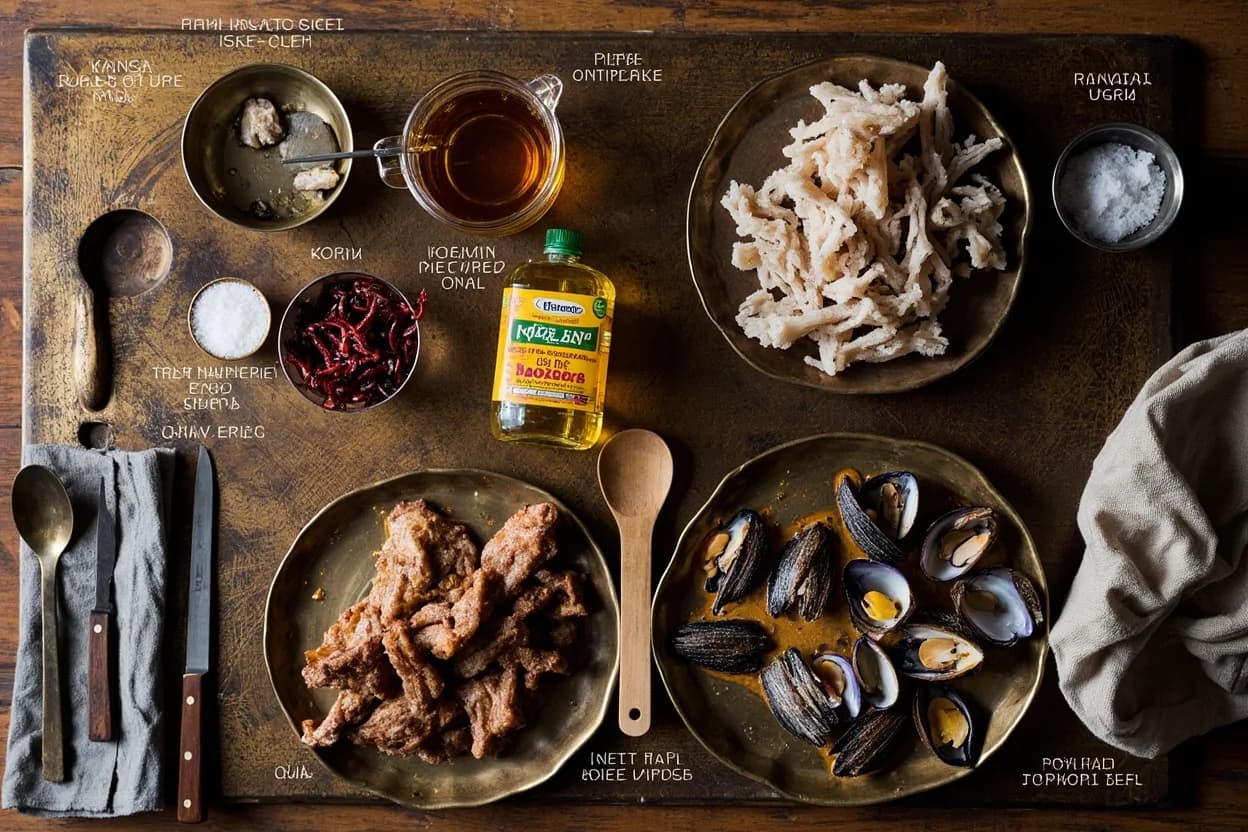
Coconut milk or grated coconut, Kashmiri chili, toddy vinegar (made from fermented palm or cashew sap), garlic, and ginger form the common grammar; Catholic dishes add recheado masala (a vinegar-chili brick paste) while Hindu dishes lean on raw coconut and tamarind.
Pantry staples
Key ingredients
Signature techniques
Signature dishes
Goan on the table

At the table
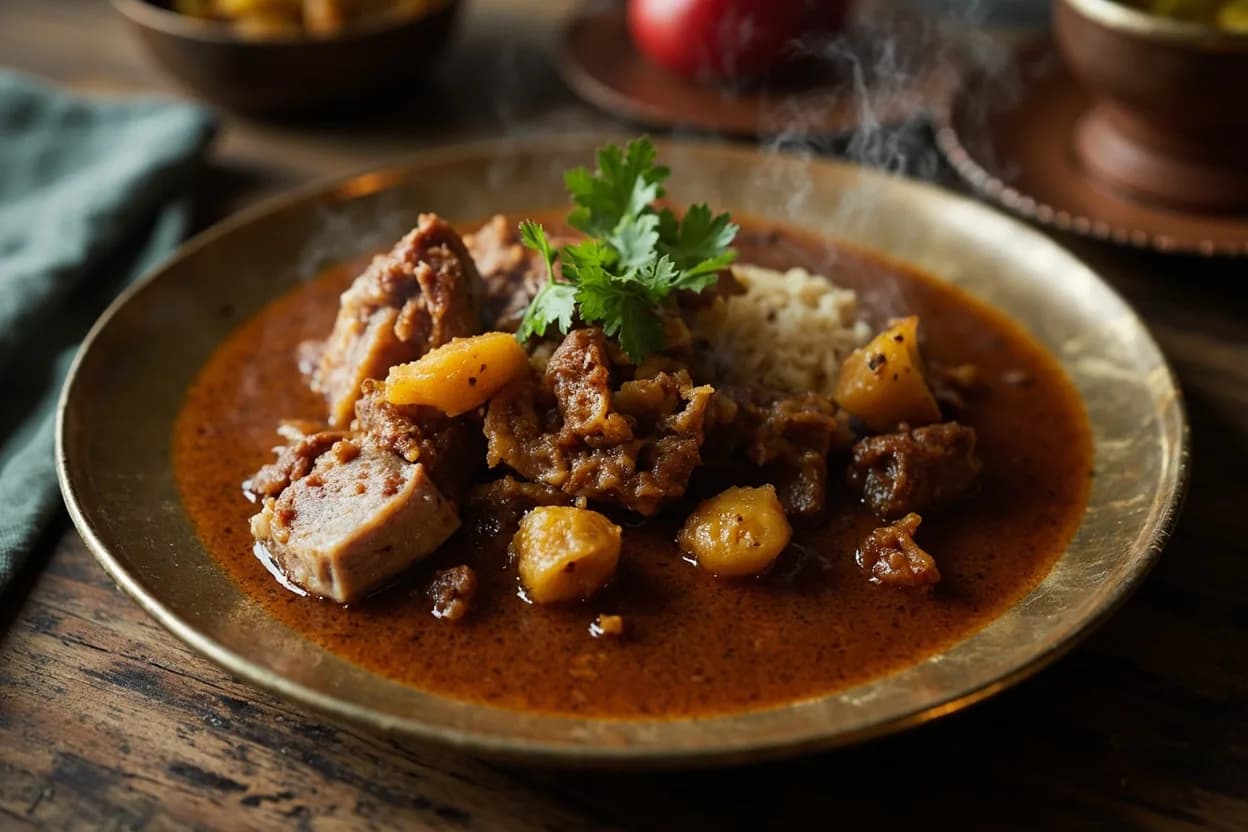
Rice is the centerpiece of every meal, accompanied by a fish or meat curry, a vegetable side (often made with coconut), and sol kadhi (a pink kokum-coconut digestive) as beverage. Feasts during Christmas and Easter add sorpotel, roast suckling pig, and bebinca in successive courses. Street food centers on prawn rissóis, choris pão (chouriço in bread rolls), and feni (cashew liquor) as the common social drink.
History & context
Goa's pre-Portuguese kitchen was a Konkan Saraswat table of fish, rice, and coconut. The Afonso de Albuquerque conquest of 1510 introduced Portuguese staples — wine vinegar, pork fat, and eventually New World chilies and cashews — and the enforced or voluntary conversion of Hindus to Catholicism created a new culinary identity. Spice-trade wealth made Goa a conduit for capsicum, tomato, and potato into the broader subcontinent. After Portuguese rule ended in 1961 and Goa became an Indian state, the cuisine resisted assimilation more than most regional traditions, partly because of the strong Catholic parish identity and the tourist economy that reinforced its distinctiveness.
Regional variations
- North Goa (Bardez)
More seafood-forward, with prawn balchão and caldeirada-style fish stews dominant; heavier Portuguese imprint.
- South Goa (Salcete)
Richer sweet tradition including bebinca and dodol; Catholic population denser, pork preparations more elaborate.
- Hindu Goan (Saraswat)
No pork or beef; centers on mackerel, clams, and jackfruit; kokum used where Catholics use vinegar; ambotik (sour-spicy fish curry) is emblematic.
Related cuisines
- Konkani
The parent coastal Hindu tradition from which Goan Hindu cooking descends.
- Portuguese
Direct colonial influence responsible for vinegar use, pork integration, and pastry forms like bebinca.
- Mangalorean Catholic
Parallel Catholic community in coastal Karnataka sharing Portuguese heritage and pork-coconut combinations.
Canonical recipes
The dishes that define Goan, documented in the Canon.
References
- 1.The Essential Goa Cookbook — Gilda Mendonsa
- 2.Goa: A Traveller's Historical and Architectural Guide — Manuel Gracias
- 3.Cuisines of India — Smita Chandra
- 4.The Food of India — Priya Wickramasinghe
Confidence: high
Notes
The vindaloo correction
The restaurant dish called vindaloo in the UK — an undifferentiated fire-bomb — is barely related to the Goan original. Authentic vindaloo (from the Portuguese carne de vinha d'alhos, meat in wine and garlic) is sour-hot and pork-forward, its acidity from toddy vinegar rather than synthetic chili paste volume.
Feni and toddy
Goa's fermented cashew feni and palm toddy are not just drinks but culinary ingredients: toddy serves as the leavening agent in sannas, and feni occasionally appears in meat marinades. Both are protected as Goa-specific geographical indicators.