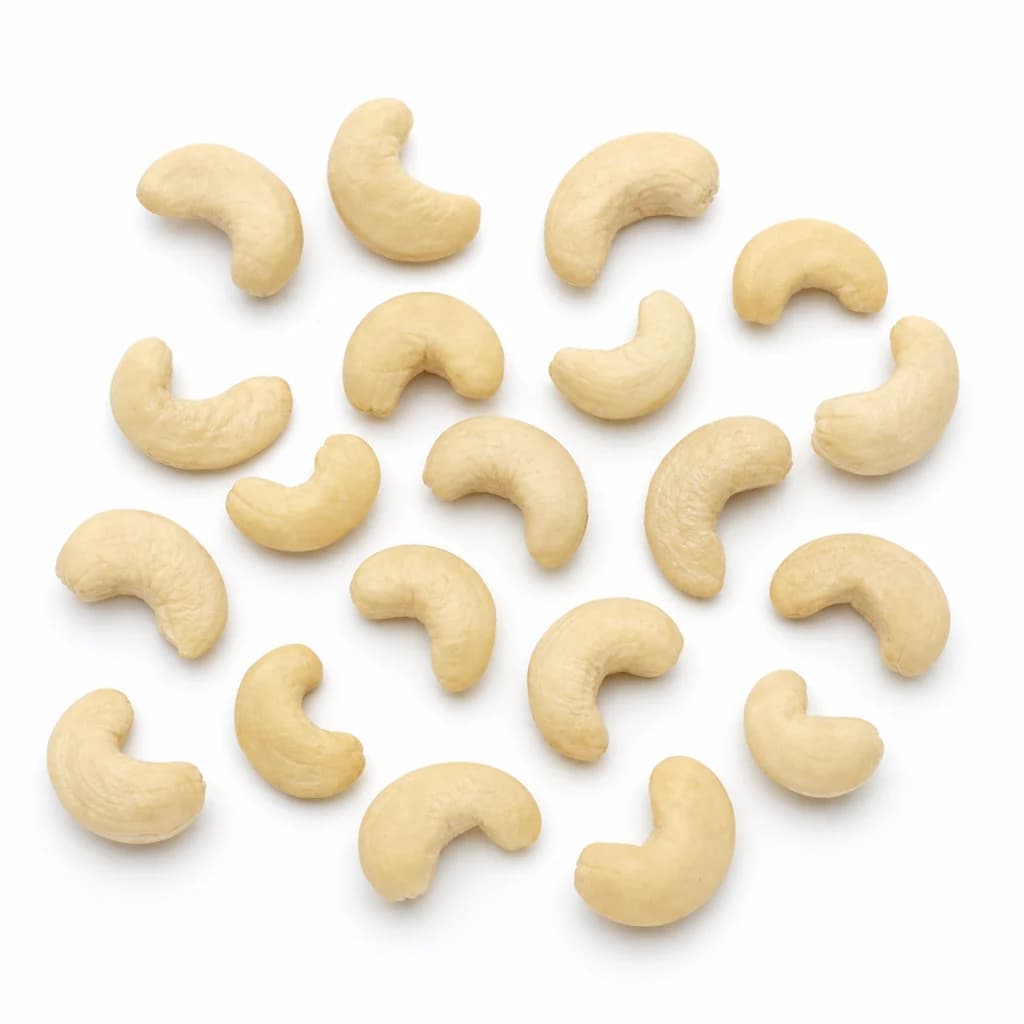
Natural form
Whole shelled cashews showing their distinctive kidney-curved shape and pale ivory color.
Teaches the reader the exact shape, color, and surface texture that makes cashews unmistakable among nuts.
Nuts
Cashew
Buttery, creamy nut for snacking, stir-fries, and sauces
Rich and buttery, cashews snack by the handful, add crunch to stir-fries, and blend into a silky dairy-free cream. Keep them airtight and cool so they don't turn.
Cashews are the famously kidney-shaped nut that grows on the bottom of the cashew apple, and they sit apart from other nuts thanks to their soft, creamy texture and mild, buttery sweetness. That creaminess is their superpower in plant-based cooking: soaked and blended, raw cashews turn into silky 'cream,' cheese, and dressings with almost no graininess — they're the single most useful nut for dairy-free richness. You never see them in the shell, because the raw shell contains a caustic, poison-ivy-related oil; the cashews you buy have been steamed and shelled, so 'raw' cashews are actually safe and lightly processed. Roasted, they're a buttery snack and the star of stir-fries; ground, they thicken Indian curries (korma) into luxurious sauces. Like all nuts they're oil-rich and best kept cool.
- Measured in
- g
- Storage
- Airtight
Allergens
Find it in
Types & varieties
Pale and soft — the essential nut for soaking and blending into creams.
Golden and buttery — for snacking and stir-fries.
Cheaper broken nuts — perfect when you'll blend or chop anyway.
How to make cashew cream
Soaking softens raw cashews so they blend completely smooth — the basis of dairy-free cream, cheese, and dressings. A high-speed blender and a long soak are the keys to silk.
- Soak raw cashews 2–4 hr (or boil 15 min) until soft, then drain
- Blend with fresh water to a thick, pourable cream
- Add lemon and salt for a tangy 'cheese'; nutritional yeast deepens it
- Use cashew pieces, not whole — they're cheaper and you're blending anyway
How to toast & store
Cashews brown faster than harder nuts, so toast gently and watch them. Their high fat content makes them prone to rancidity, so keep them cool.
- Toast low and slow — they scorch quickly at the edges
- Airtight in a cool, dark place 6 months; fridge/freezer for longer
- Smell before using; rancid cashews turn sharp and bitter
- Roast and salt your own for a fresher, less oily snack
Common uses
Tips & pitfalls
- Soak raw cashews before blending — it's the difference between grainy and silky cream.
- Use cashews for any dairy-free 'cream,' 'cheese,' or creamy dressing.
- Toast gently; they go from golden to burnt faster than harder nuts.
- Buy pieces, not wholes, when you'll blend or chop — same result, lower price.
- Grind into a paste to thicken a korma or creamy curry.
Nutrition
Energy
2314 kJ · per 100 g
Where the calories come from
Protein
18.2g
36% DV
Carbs
30.2g
11% DV
Fat
43.9g
56% DV
Fiber
3.3g
12% DV
Sugars
5.9g
of which
Sodium
12mg
1% DV
Source · USDA FoodData Central · approx. Nuts, cashew nuts, raw
View on FDC →In the shops
Matched grocery products
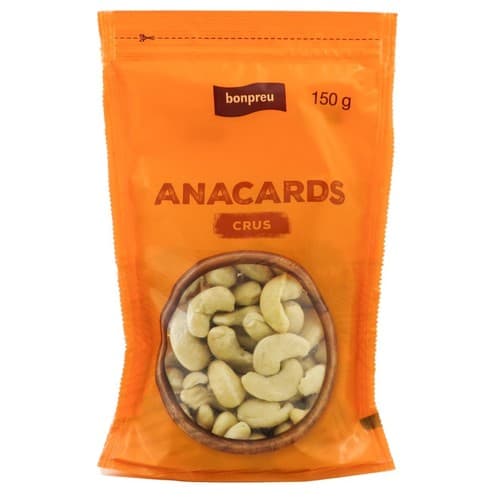 €1.99
€1.99Raw Cashews
BONPREU · kg · Bonpreu
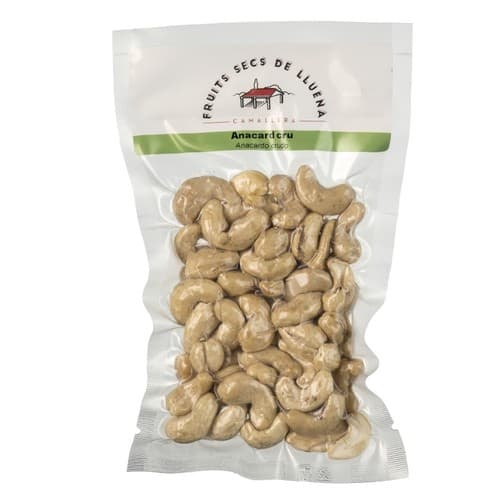 €2.55
€2.55Raw Cashews
LLUENA · kg · Bonpreu
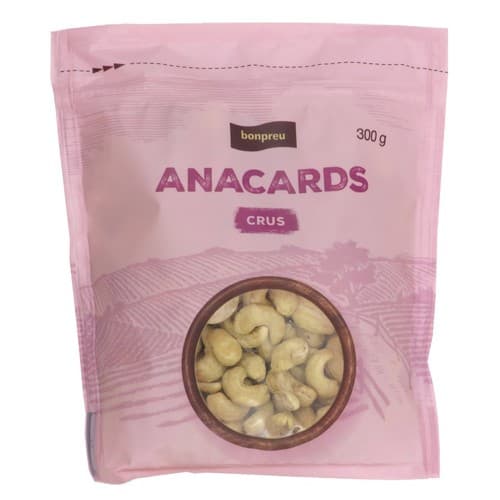 €3.99
€3.99Raw Cashews
BONPREU · kg · Bonpreu
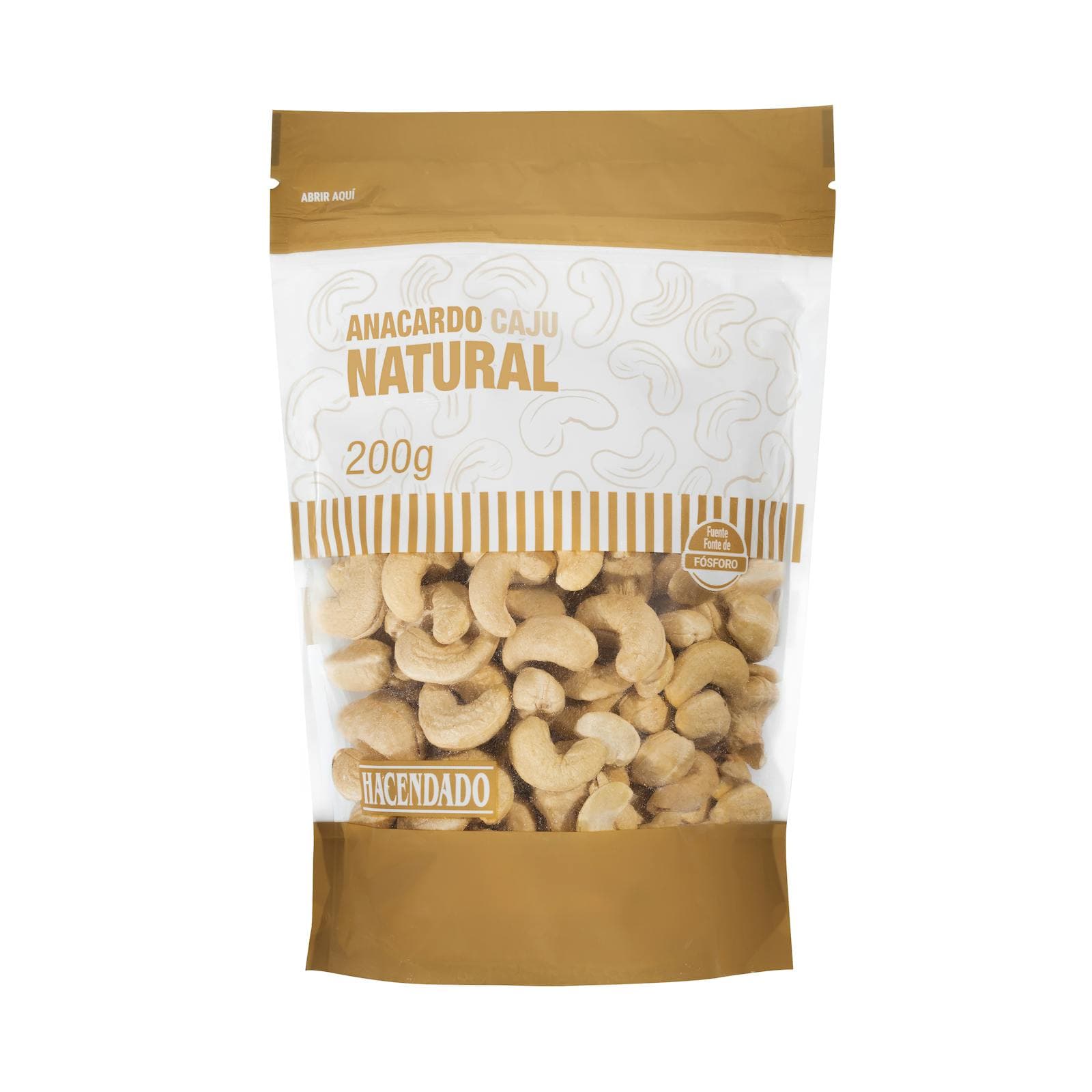 €2.70
€2.70Natural Cashew
Hacendado · 200 g · Mercadona
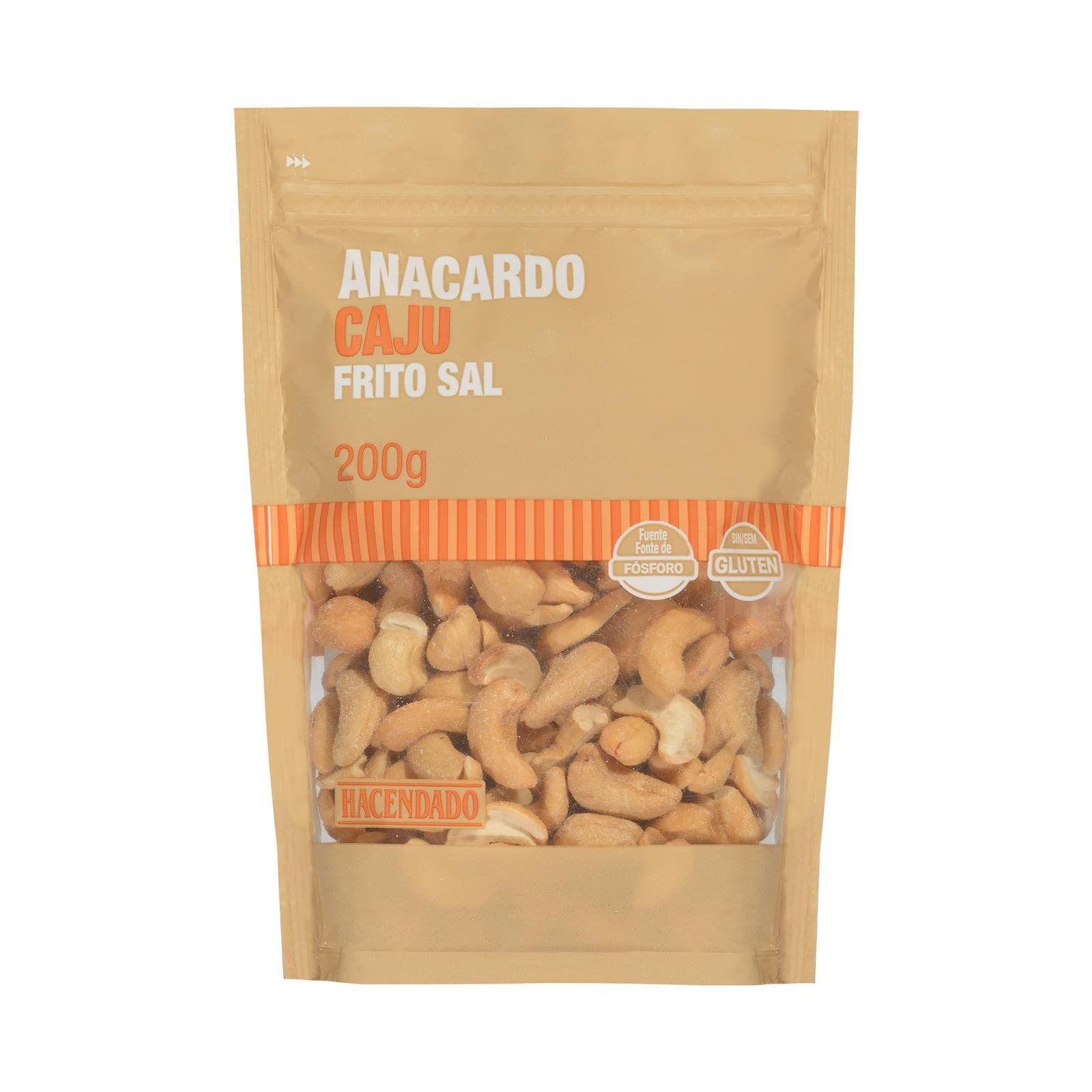 €2.80
€2.80Salted Roasted Cashews
Hacendado · 200 g · Mercadona
 €2.15
€2.15Bonpreu Raw Cashews Organic
BONPREU · kg · Bonpreu
Good to know
- Flavor & texture
- Mild, buttery, sweet; soft and creamy, less crunchy than most nuts
- How to toast
- Dry pan or 350°F (175°C) oven 6–10 min until golden (they brown fast)
- Soak?
- Yes for blending — soak raw cashews 2–4 hr (or 15 min in boiling water) for silky creams
- Nutrition
- ~553 kcal/100g; ~18g protein, ~3.3–4.1g fiber; rich in copper, magnesium & iron
- How to store
- Airtight, cool, dark ~6 months; refrigerate or freeze to prevent rancidity
Substitutes
- Macadamia nuts — Equally creamy and rich for dairy-free blends.
- Blanched almonds — A milder, slightly grainier base for creams and milks.
- Pine nuts — Soft and buttery for sauces (pricier).
Also called
anacardo · marañón
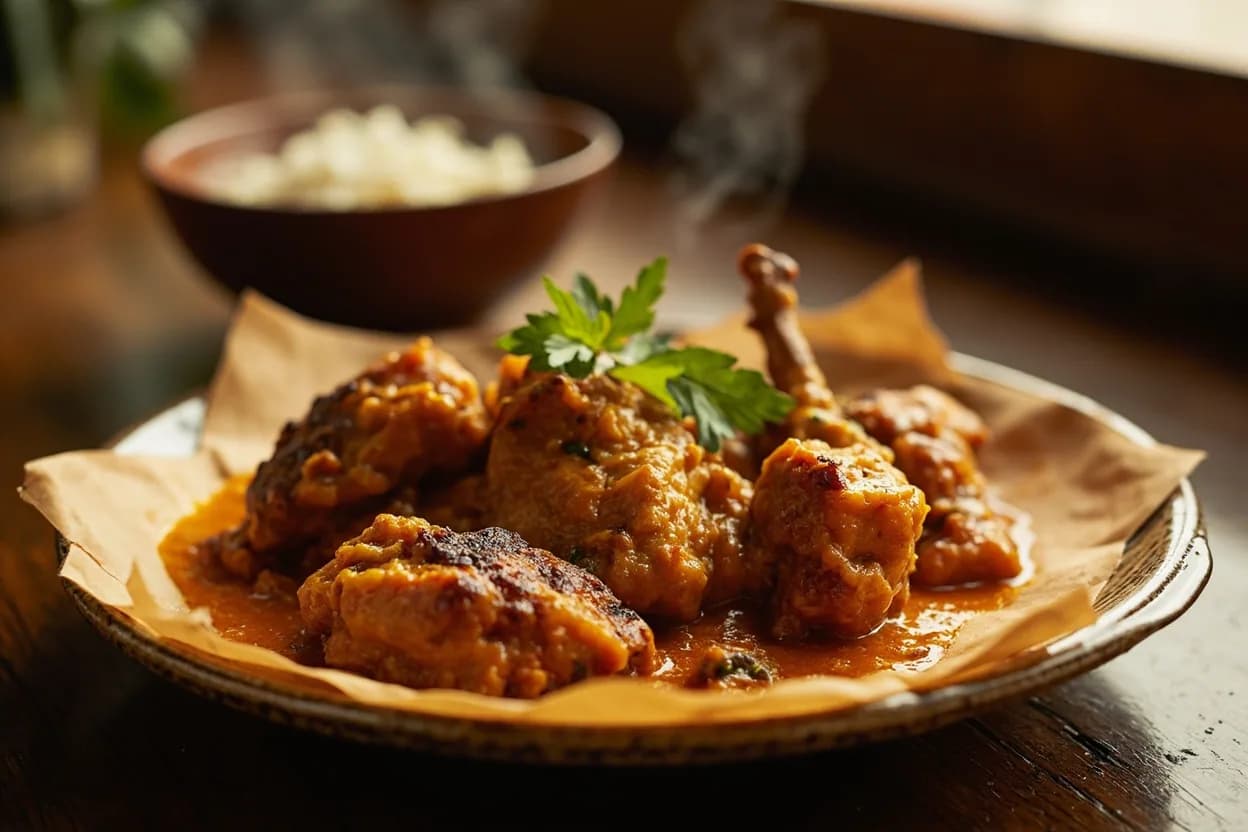
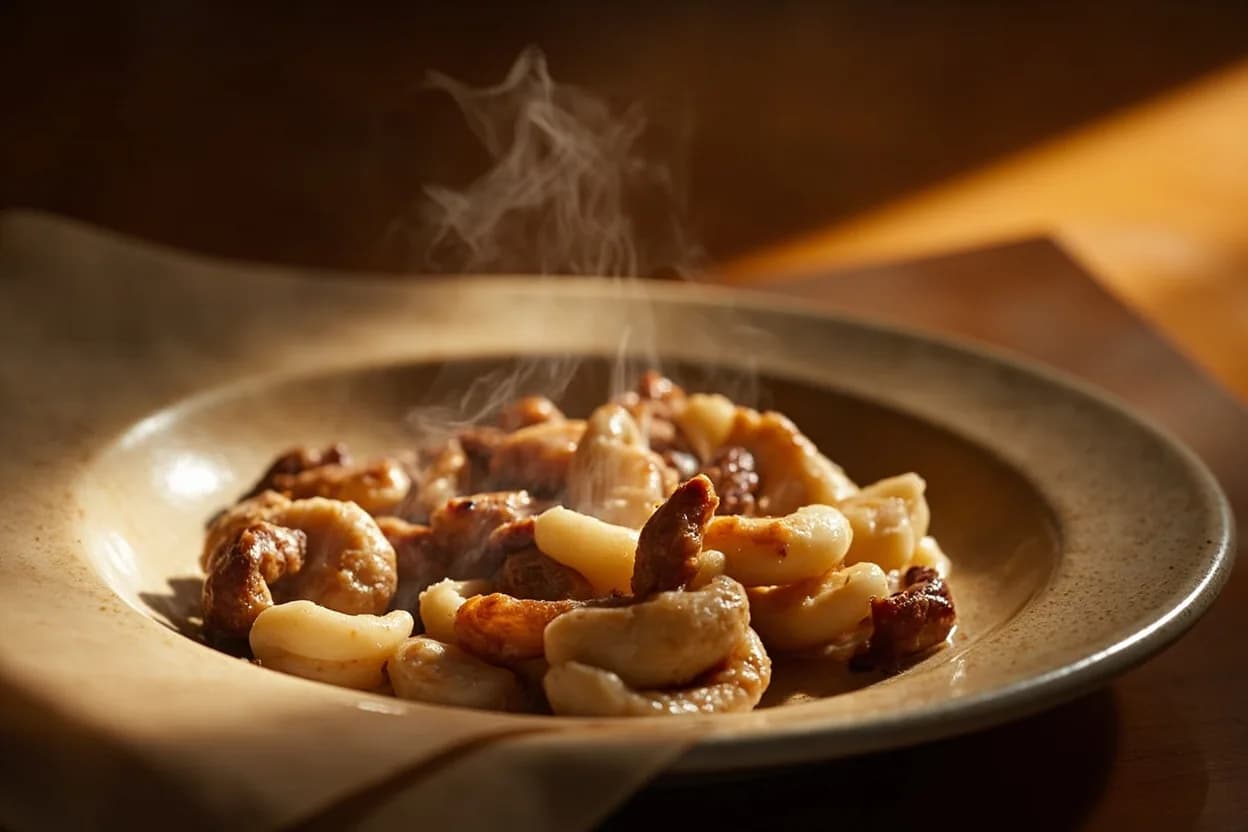
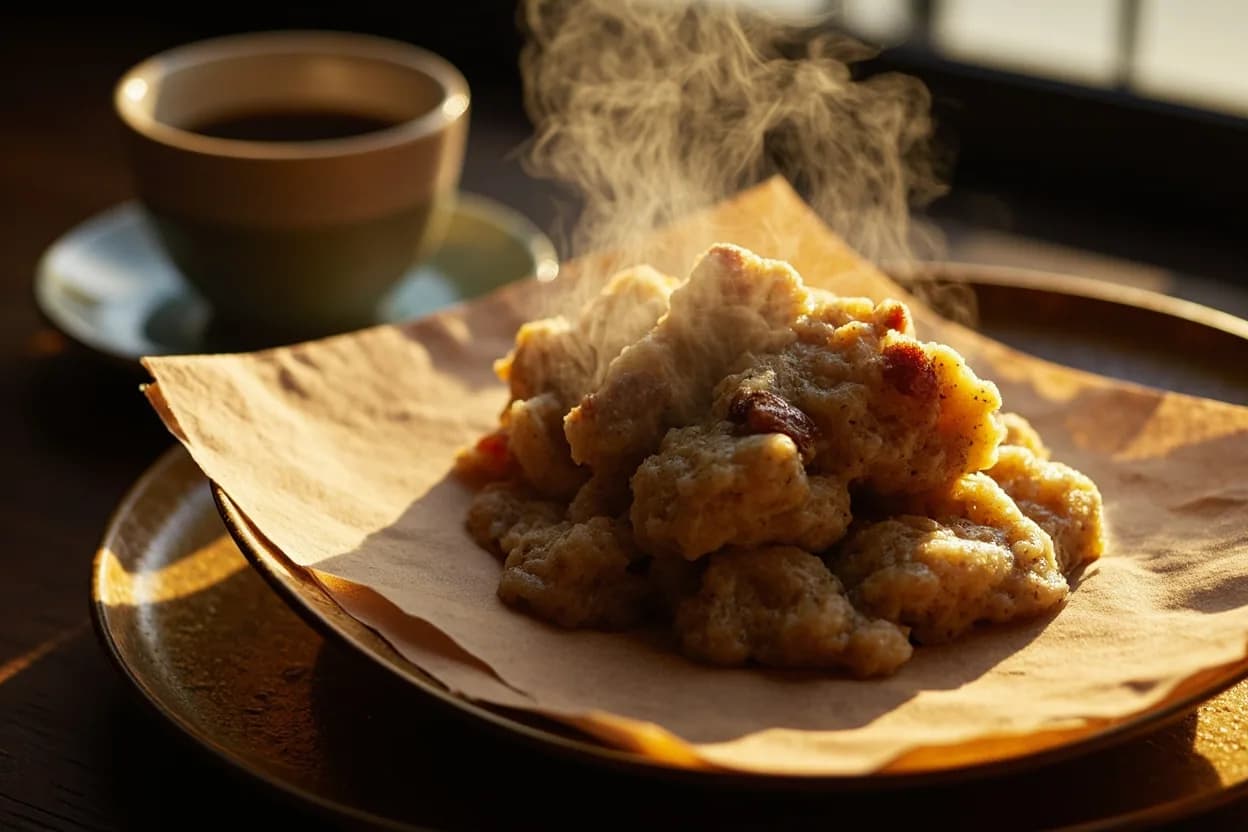
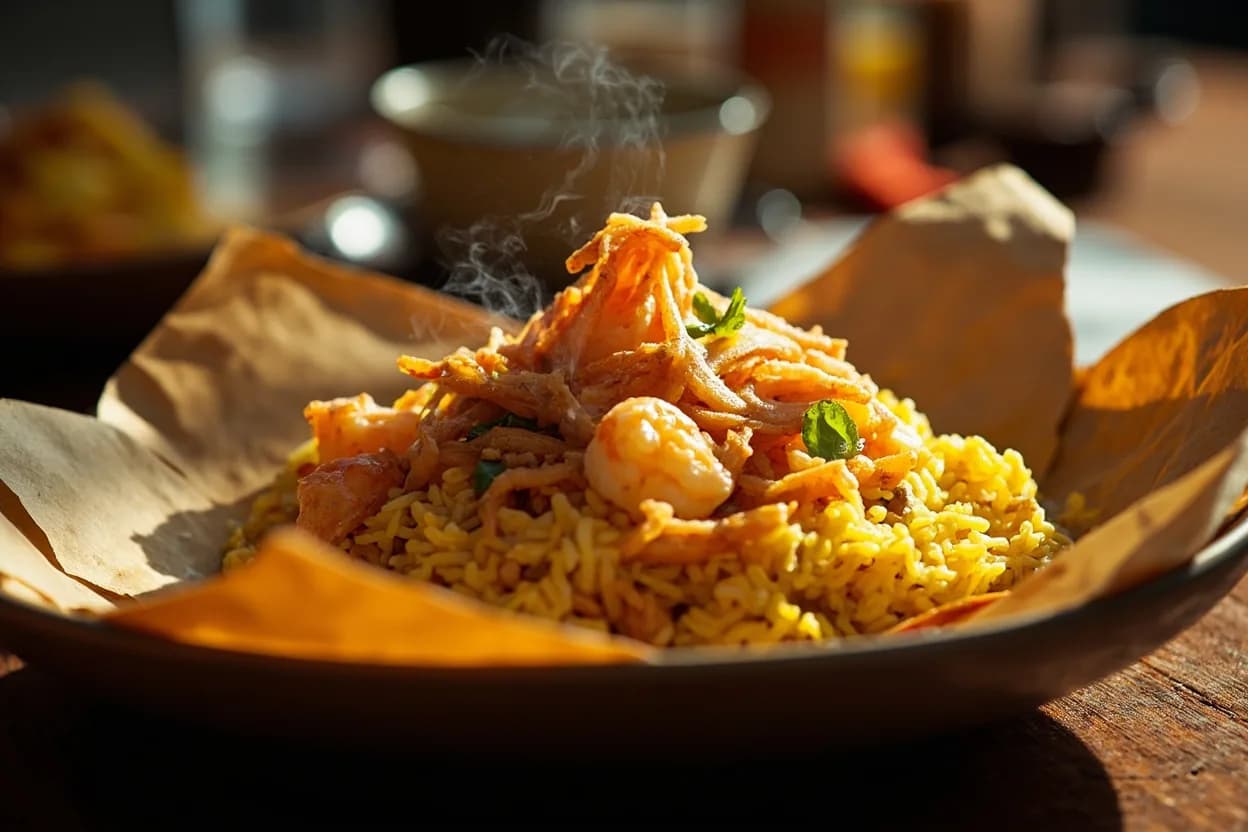
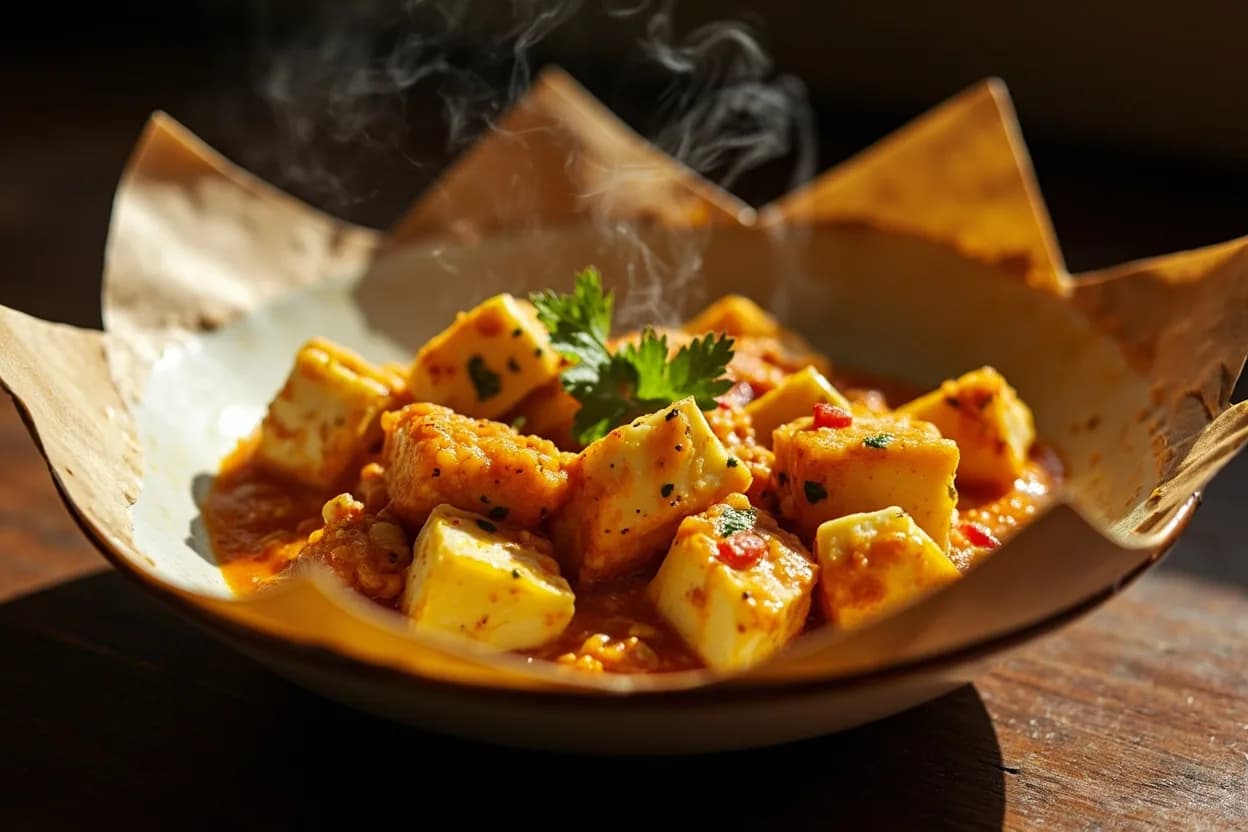
Appears in these dishes
Related

Almond
Crunchy, sweet nut for snacking, baking, and toppings
Walnut
Rich, slightly bitter nut for baking, salads, and cheese boards
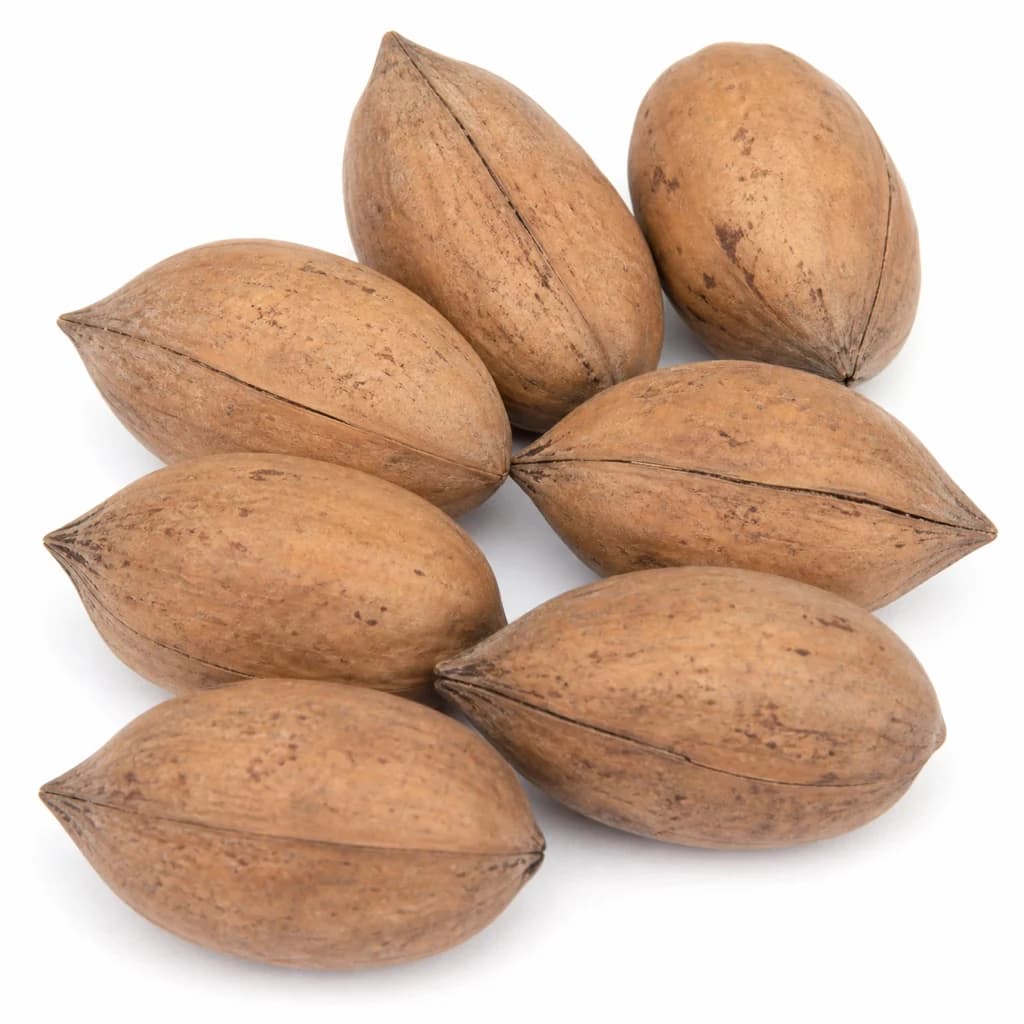
Pecan
Sweet, buttery nut for pies, candying, and salads

Pistachio
Vivid green nut for snacking, baking, and garnishing
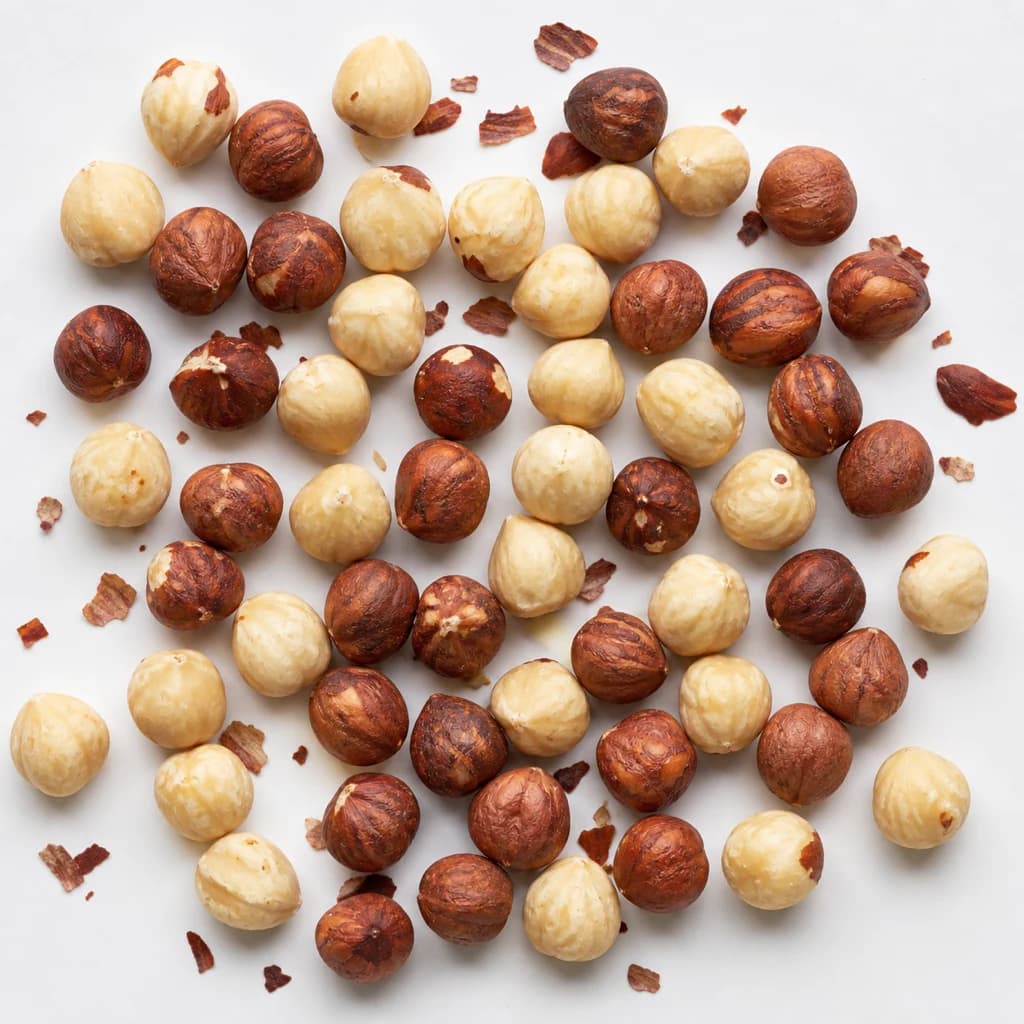
Hazelnut
Sweet, aromatic nut for chocolate pairings and baking
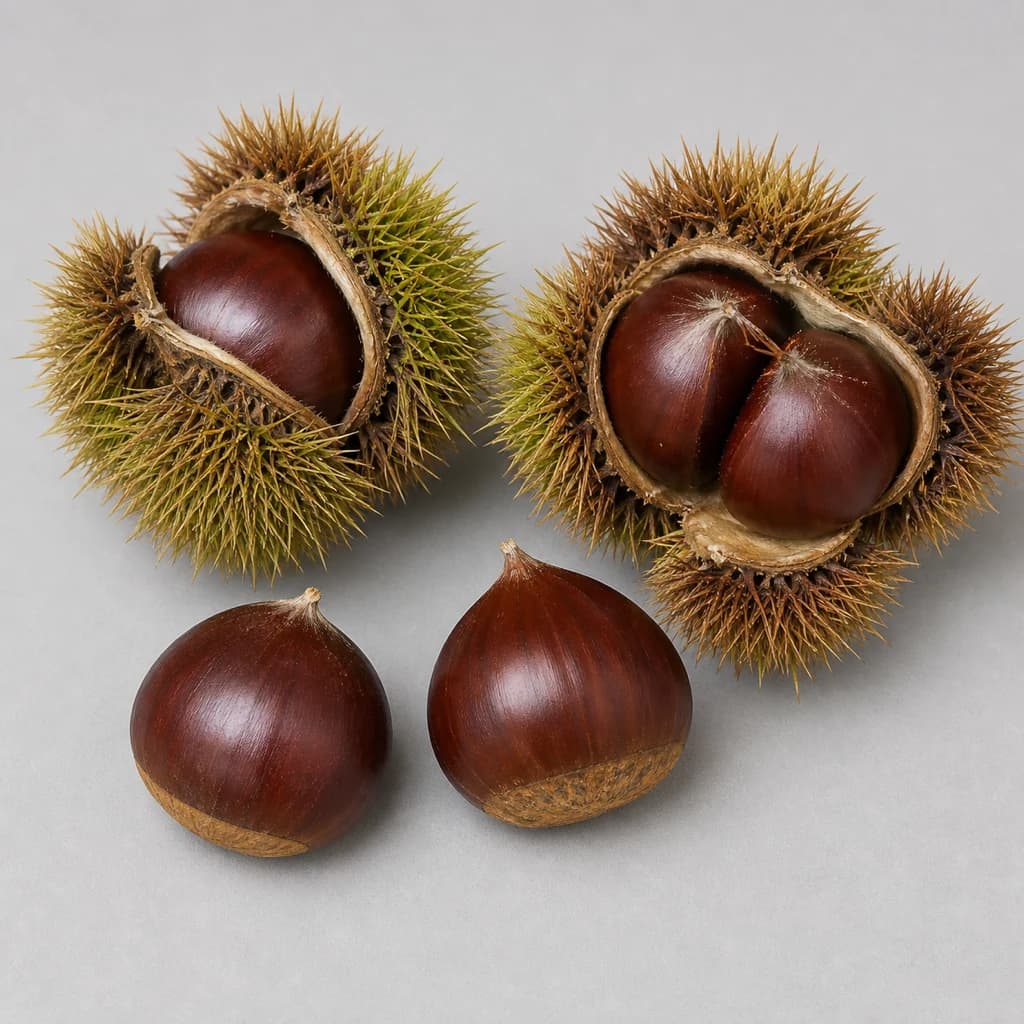
Chestnut
Starchy, sweet tree nut roasted, boiled, or pureed for stuffings and desserts.
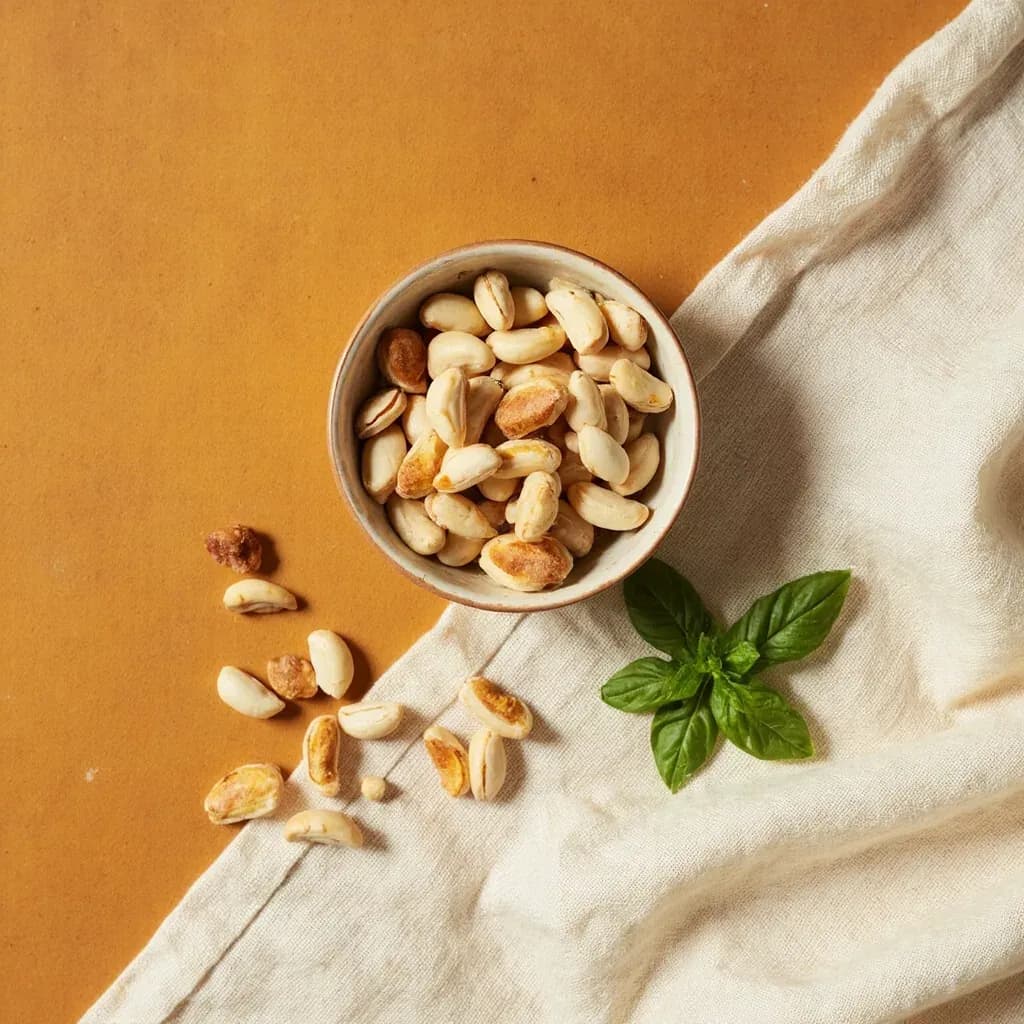
Pine Nut
Soft, buttery seed of the pine that toasts to a sweet resinous richness; the backbone of pesto, scattered over salads, pilafs, and roasted vegetables.
Macadamia Nut
Rich, buttery, very high-fat nut with a tender crunch; toasted for salads and desserts, ground into creamy sauces, or used raw to make smooth plant-based cheeses.