Nuts
Macadamia Nut
Rich, buttery, very high-fat nut with a tender crunch; toasted for salads and desserts, ground into creamy sauces, or used raw to make smooth plant-based cheeses.
The macadamia is the most oil-rich of the common tree nuts, with a kernel that runs roughly 75–78% fat by weight — a figure that explains nearly everything about how it behaves in the kitchen. Native to the subtropical rainforests of eastern Australia — and still one of the world's largest producing regions — it is now grown commercially across the tropics and subtropics, including Australia, Hawaii, South Africa, Kenya, China's Yunnan province, Guatemala, Malawi, and Vietnam. The entire world crop comes from just two closely related species (Macadamia integrifolia and Macadamia tetraphylla) and their hybrids. The kernel is pale ivory, dense, and almost waxy when raw, with a flavor that is buttery, faintly sweet, and remarkably free of the bitter or tannic notes that complicate most other nuts.
That high oil load is the nut's gift and its weakness. It carries flavor like a dairy fat, browns beautifully, and blends into a sauce as smooth as heavy cream. It also scorches in a hot pan, goes rancid faster than almonds or walnuts, and turns to paste under a food-processor blade in seconds. The nut's softness and tenderness — closer to a roasted chestnut than an almond — make it as much a textural ingredient as a flavoring one, and a toasted handful should shatter with a delicate, almost yielding crunch rather than snap sharply.
In practice, a cook should treat macadamias more like a perishable cooking fat than a shelf-stable pantry item: buy them in-shell when you can, refrigerate after opening, and toast before tasting. Raw kernels often read as flat and slightly waxy; a few minutes in a 325°F (160°C) oven transforms them into something altogether richer, more aromatic, and more useful in nearly every application.
- Measured in
- g
- Storage
- Store Airtight In A Cool Place; Refrigerate Or Freeze To Prevent Rancidity.
Allergens
Find it in
Suits
Types & varieties
Smooth-shelled; the dominant commercial species, with a slightly sweet, oily kernel.
Rough, pebbled shell; kernel quality more variable; often used as rootstock for integrifolia.
Vigorous integrifolia × tetraphylla hybrid, widely planted in South Africa and Australia; recognizable by its pinkish new growth.
Released by the Hawaii Agricultural Experiment Station; major named types include 'Purvis', 'Kau', 'Keaau', 'Mauka', 'Makai', 'Pahala', and 'Ikaika'.
'A4', 'A16', 'A38', 'Daddow', 'Own Choice', and 'Nelmak II' — bred for higher yield, uniformity, and shell crack-out.
Hybrid cultivar with a softer shell; common in Australian plantings.
Older Australian cultivars seen in heritage orchards and as reference varieties.
In the kitchen: raw, toasted, ground, and pressed
How you prepare a macadamia changes the role it plays in a dish. The same kernel can read as a textural accent, a sauce base, a dairy substitute, or a finishing oil depending on whether it goes in raw, dry-toasted, processed into a paste, or pressed. Knowing which form to reach for — and when to switch mid-recipe — is most of what there is to learn about this nut.
- Raw kernels: best for blending into sauces, vegan 'cheeses,' and smoothies. Soak in hot water 10–15 minutes for a smoother blend, or toast briefly first to deepen flavor.
- Dry-toasted: essential before using in cookies, salads, or any application where the nut is a visible accent. Toast at 325°F for 8–12 minutes, stirring once at the halfway mark.
- Coarsely chopped: ideal for crusts and crumbles. Chill the kernels first and use a sharp chef's knife — a food processor will crush them into powder.
- Ground to a paste: the starting point for macadamia butter, pralines, and sauce bases. Process with a pinch of salt and a touch of neutral oil if the paste seizes.
- Cold-pressed oil: a separate product with a smoke point of about 410°F (210°C) and a buttery, mild flavor; use for sautéing, frying, and finishing where you want richness without the texture of the nut.
Common uses
Tips & pitfalls
- Toast at 325°F (160°C) for 8–12 minutes — they scorch faster than almost any other nut because of the oil load. Pull them the moment they smell toasty; they continue to cook on the sheet pan.
- Always toast before tasting or using in a recipe. Raw kernels read as waxy and indistinct; a few dry minutes in the oven unlocks the buttery, almost dairy-like flavor.
- Buy in-shell whenever you can. The shell is the best barrier against rancidity, and an unshelled nut keeps 6–12 months at cool room temperature, versus 1–2 months shelled.
- Refrigerate after opening; macadamias go rancid faster than almonds or walnuts. For long storage, freeze in a sealed bag and bring back to room temperature in the bag to prevent condensation.
- Spread in a single layer on a sheet pan and stir once at the halfway mark — piled nuts steam and toast unevenly, and the bottom layer scorches.
- To chop cleanly, chill the kernels first and use a sharp chef's knife; a food processor will turn them to butter in seconds.
- Soak raw halves in hot water for 10–15 minutes before blending into sauces or vegan 'cheese' for a smoother, dairy-like texture without graininess.
- Don't substitute macadamia oil 1:1 for olive oil in dressings if you want a neutral carrier — its buttery character will dominate. Use it where you want that flavor: finishing fish, leaf salads, or popcorn.
Nutrition
Energy
3004 kJ · per 100 g
Where the calories come from
Protein
7.9g
16% DV
Carbs
13.8g
5% DV
Fat
75.8g
97% DV
Fiber
8.6g
31% DV
Sugars
4.6g
of which
Sodium
5mg
0% DV
Source · USDA FoodData Central · Nuts, macadamia nuts, raw
View on FDC →In the shops
Matched grocery products
No matched grocery products for Macadamia Nut yet.
Good to know
- Origin
- Native to subtropical eastern Australia; commercialized in Hawaii in the 1880s and now grown in Australia, South Africa, Kenya, China (Yunnan), the U.S. (Hawaii, California), Guatemala, Malawi, and Vietnam.
- Species
- Two commercial species: Macadamia integrifolia (smooth shell, dominant) and Macadamia tetraphylla (rough, pebbled shell, often used as rootstock); most named cultivars are hybrids.
- Fat content
- Roughly 75–78% fat by weight — the highest of any common tree nut.
- Calories
- About 200 kcal per ounce (28 g), with ~21 g fat, 2 g protein, and 2.5 g fiber.
- Flavor
- Buttery, creamy, mildly sweet, and low in bitterness; toasting deepens the flavor and crisps the texture.
- Toasting
- 325°F (160°C) for 8–12 minutes, until fragrant and pale gold; stir once at the halfway mark.
- Shelf life
- Raw kernels: 1–2 months at room temperature, 4–6 months refrigerated, up to 12 months frozen; in-shell nuts keep 6–12 months at cool room temperature.
- Form sold
- Raw whole, raw halves and pieces, dry-roasted, oil-roasted, salted; also cold-pressed oil and macadamia butter.
Substitutes
- Cashews — Closest substitute for raw sauces and vegan 'cheeses'; slightly sweeter and lower in fat — add a tablespoon of neutral oil per cup to mimic richness.
- Pecans — Best toasted substitute for desserts and salads; warmer and more caramelly, less creamy.
- Brazil nuts — Works in crusts and cookie doughs for a similarly rich, dense bite; flavor is more resinous.
- Pine nuts + butter — In pesto or cream sauces, blend toasted pine nuts with a small pat of butter to approximate the fatty, creamy mouthfeel.
- Skinned hazelnuts — Good substitute in baked goods and toasts similarly pale; reduce by about 20% because the flavor is more pronounced.
- Macadamia oil — Use when you want the flavor and fat without the texture — for instance, in place of ground macadamia in a sauce or emulsion.
Pairs with
Also called
macadamia · macadamia nuts · queensland nut
Related

Almond
Crunchy, sweet nut for snacking, baking, and toppings
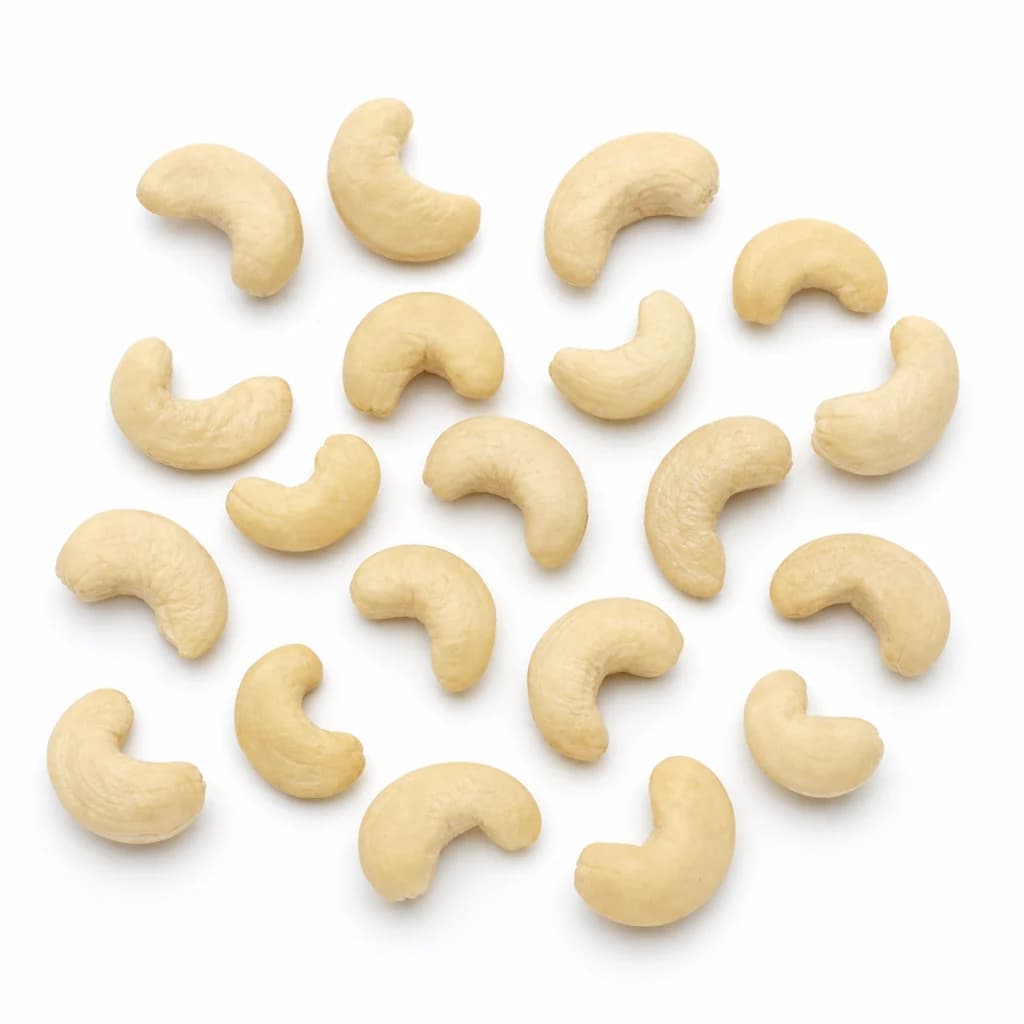
Cashew
Buttery, creamy nut for snacking, stir-fries, and sauces
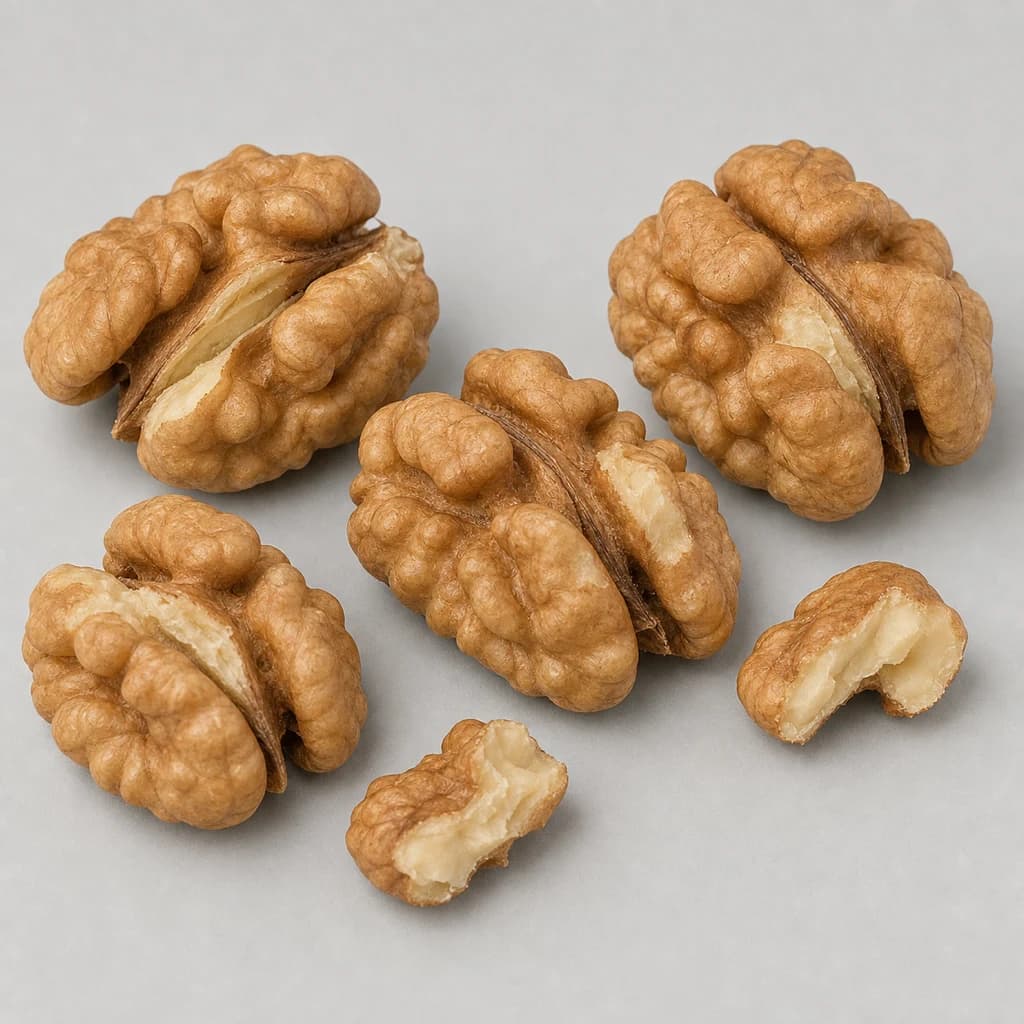
Walnut
Rich, slightly bitter nut for baking, salads, and cheese boards
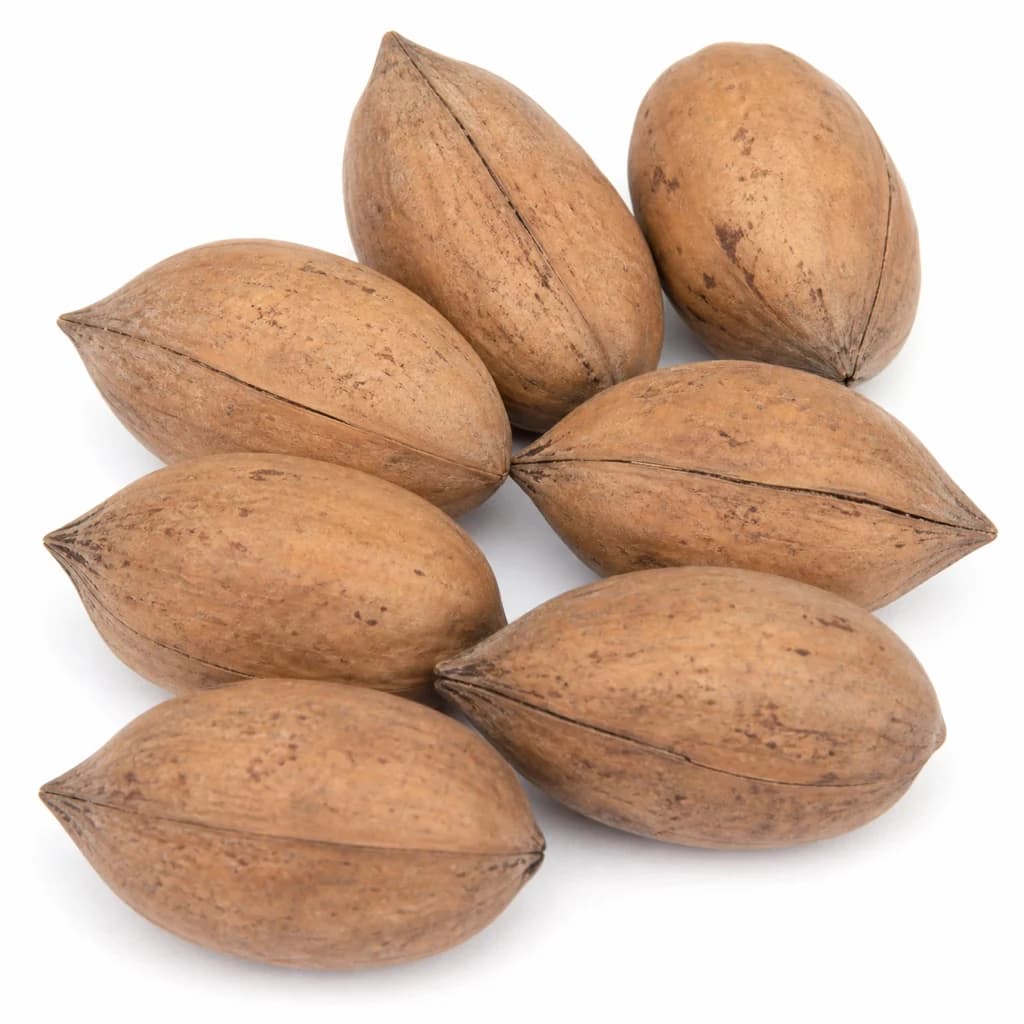
Pecan
Sweet, buttery nut for pies, candying, and salads

Pistachio
Vivid green nut for snacking, baking, and garnishing
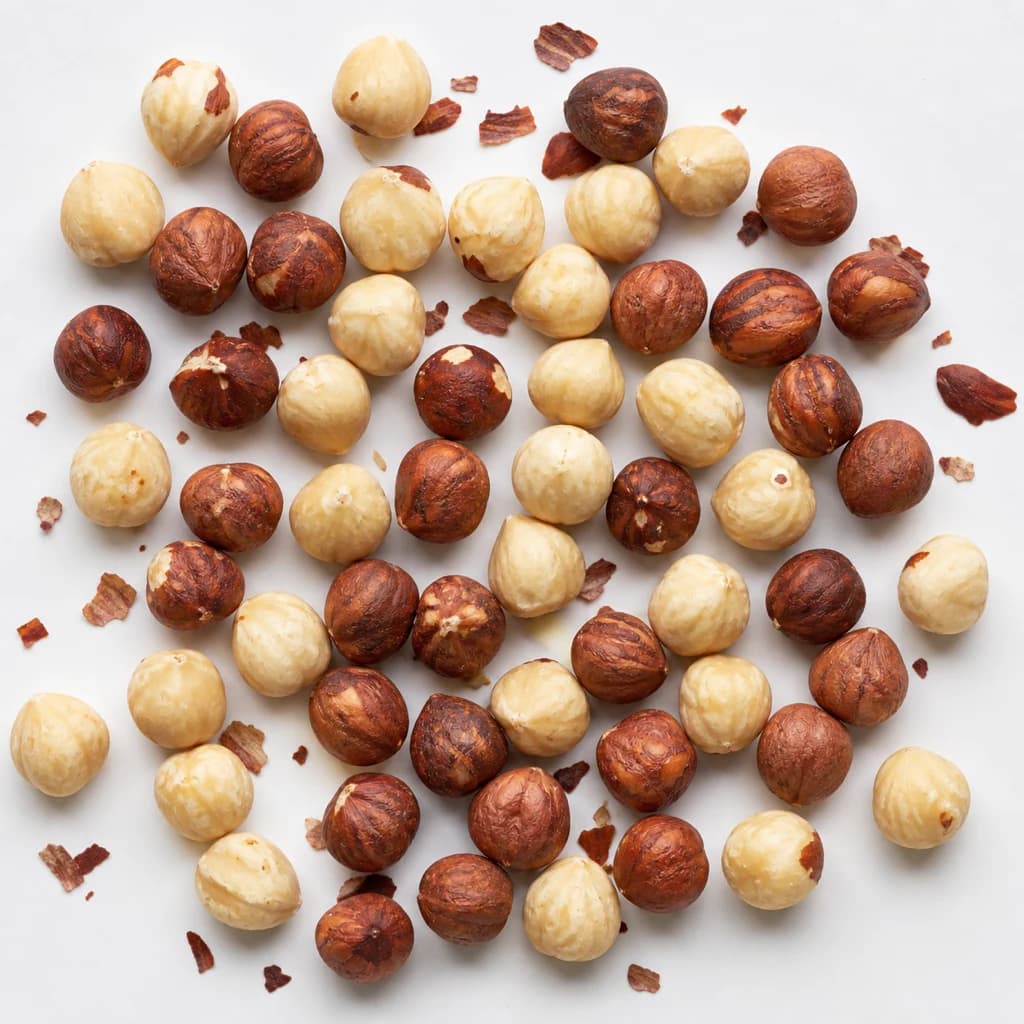
Hazelnut
Sweet, aromatic nut for chocolate pairings and baking
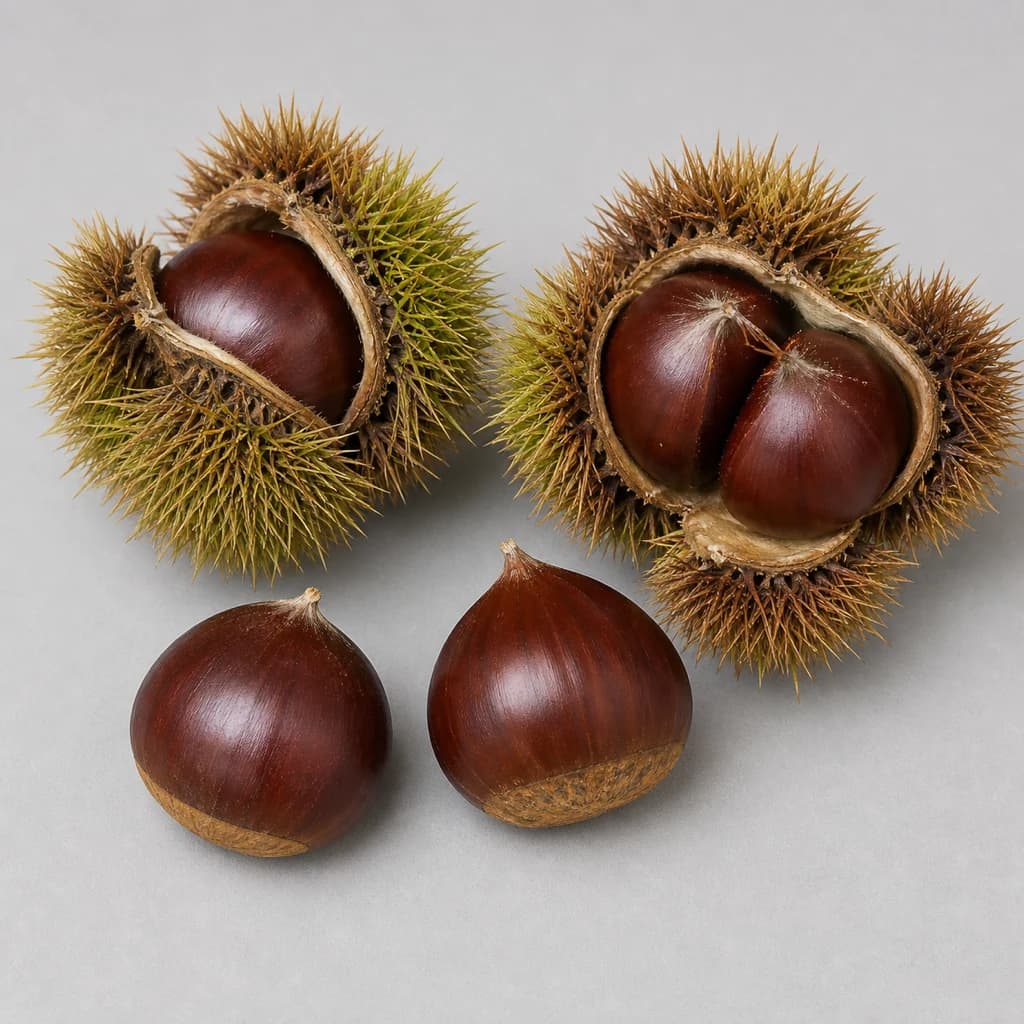
Chestnut
Starchy, sweet tree nut roasted, boiled, or pureed for stuffings and desserts.
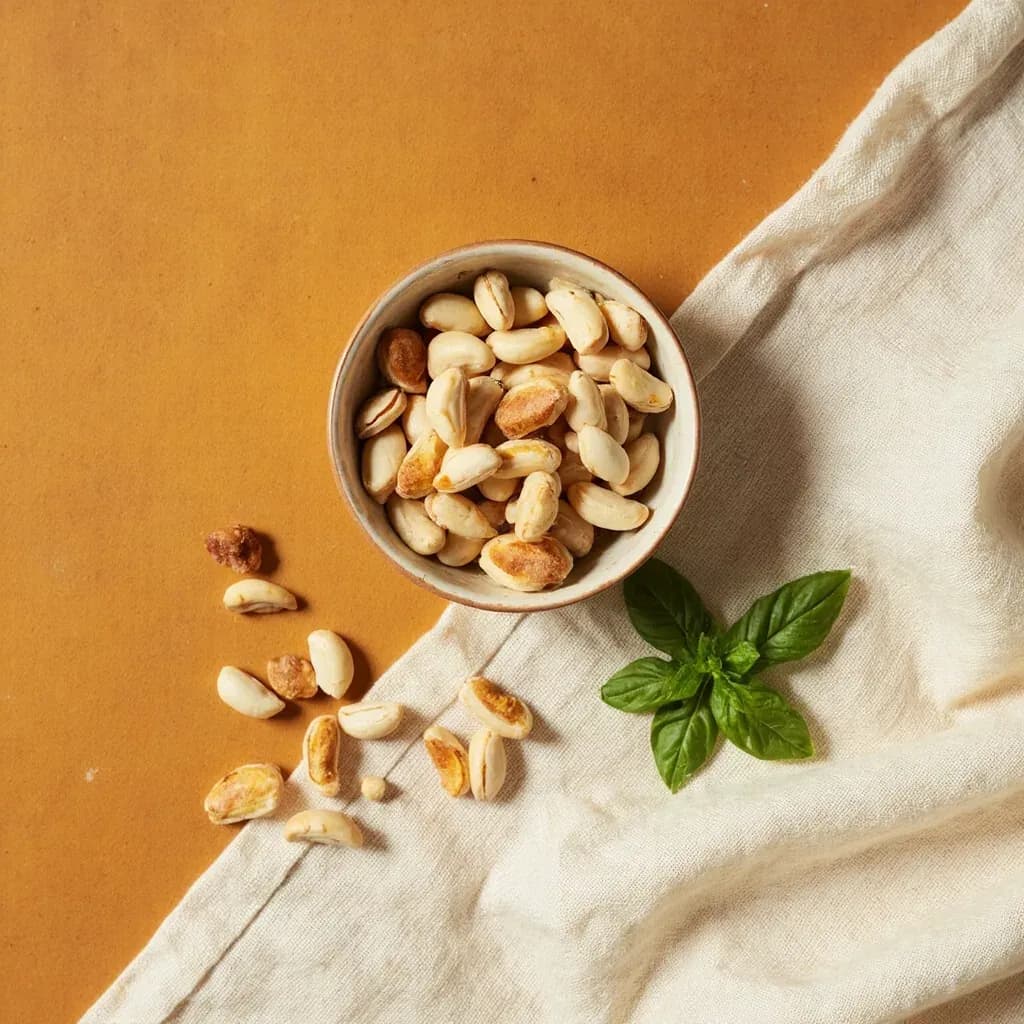
Pine Nut
Soft, buttery seed of the pine that toasts to a sweet resinous richness; the backbone of pesto, scattered over salads, pilafs, and roasted vegetables.