South Asia
Bhojpuri
Also: Bihari cuisine, Poorvanchal cuisine
The robust, grain-forward cooking of Bihar and eastern Uttar Pradesh, built on roasted sattu, woodfire-baked litti, and fierce mustard heat.
Bhojpuri cuisine is the everyday cooking of the Bhojpuri-speaking belt spanning Bihar, eastern Uttar Pradesh, and parts of Jharkhand. It is a cuisine of the land and the kiln: roasted chickpea flour (sattu) forms the nutritional backbone, litti are dough balls baked directly in coal embers, and mustard oil carries almost every savory dish. The cooking is resolutely anti-fussy — minimal dairy fat, bold raw flavors from green chillies and raw onion, and a deep tradition of dried, smoked, and charred preparation that reflects a climate of extreme seasons and a culture of outdoor labor.
The flavour base
Mustard oil tempered with panch phoron or ajwain; raw garlic and green chilli pounded into chutneys; charred eggplant or tomato as a base for chokha.
Pantry staples
Key ingredients
Signature techniques
Signature dishes
Bhojpuri on the table
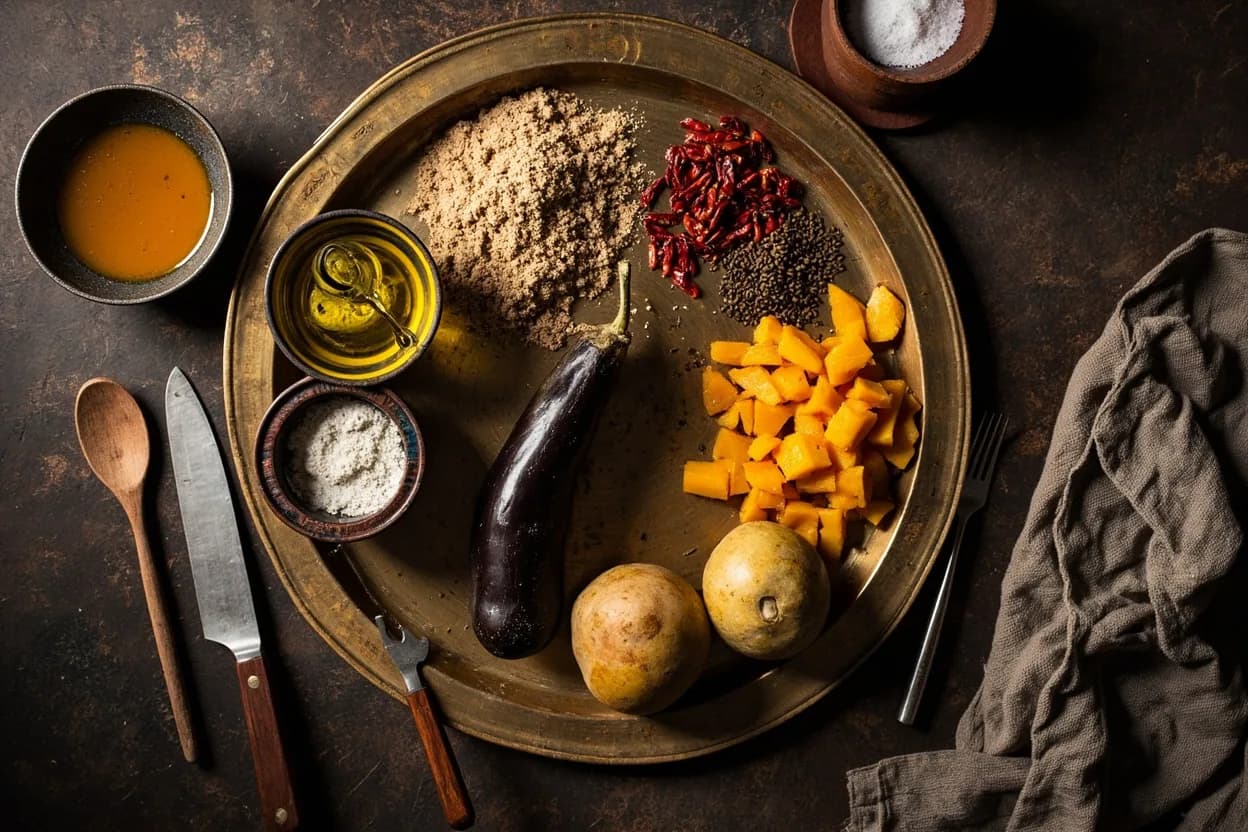
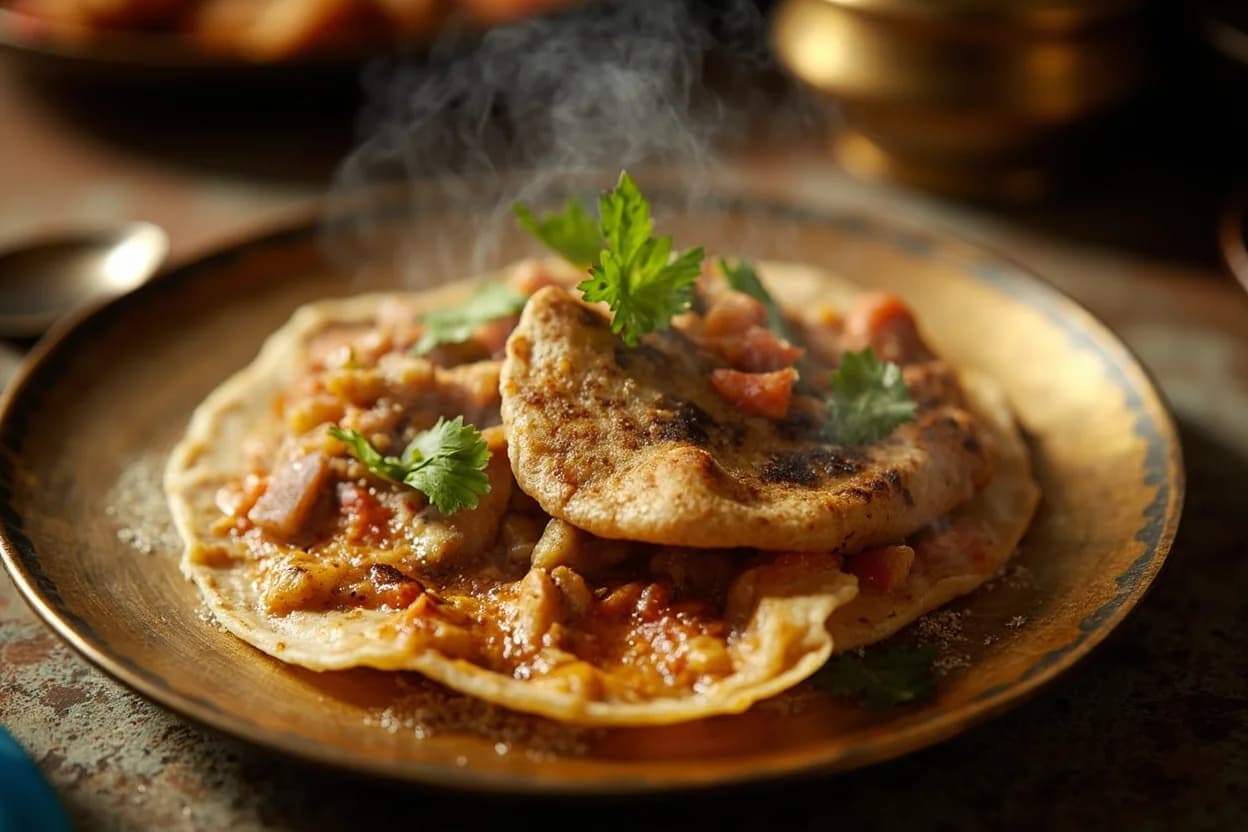
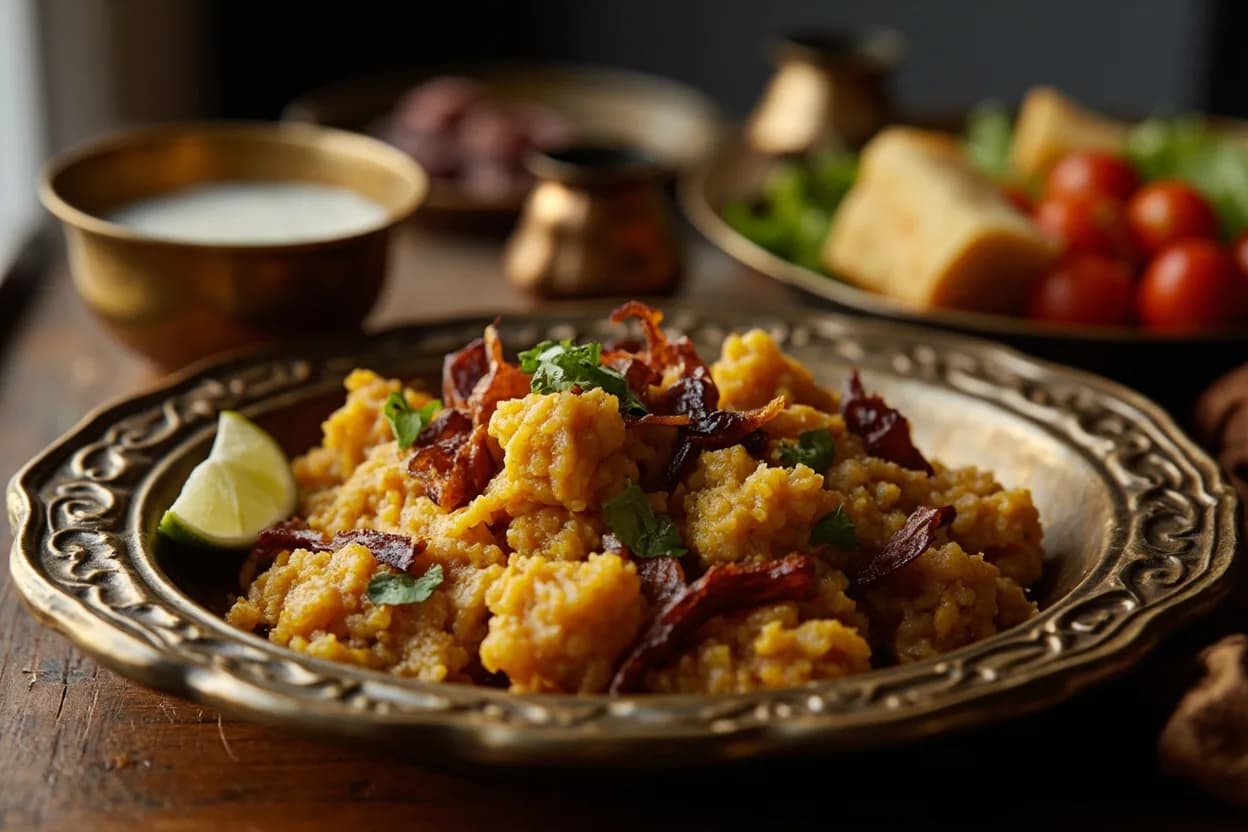
At the table
Meals are typically two main sittings — a light morning meal of sattu sharbat or leftover roti, and a full afternoon/evening meal of dal, rice or roti, a vegetable subzi, and pickle. Litti chokha is a standalone dish eaten at any hour. Festivals call for thekua, kheer, and pitha dumplings. Tea is milky and sweet, drunk frequently.
History & context
The Bhojpuri region was historically shaped by the Magadha empire, Gupta courts, and centuries of agrarian settlement in the Gangetic plain. Sattu's prominence dates to ancient times — it is mentioned in Vedic texts as a portable, sustaining food for travelers and soldiers. The coal-baked litti is a rural adaptation of the tandoor tradition suited to open fields where no clay oven was available. Bhojpuri diaspora workers carried the cuisine to Fiji, Mauritius, Trinidad, and Suriname during the colonial indenture period, where it hybridized with local pantries while retaining the sattu-litti core.
Regional variations
- Bihari proper
Heavier use of sattu, more austere; litti baked in cow-dung fire gives a distinctive smoky note.
- Poorvanchal (eastern UP)
Slightly sweeter palate; more generous with ghee in festival cooking; kadhi and bari are more elaborate.
- Jharkhand overlap
Incorporates tribal pantry elements — mahua flower, jackfruit, and rice-flour pithas feature prominently.
Related cuisines
- Awadhi
Shares the Gangetic UP geography but diverges sharply — Awadhi is courtly dum cooking; Bhojpuri is rustic and grain-forward.
- Maithili
Adjacent Bihar tradition; heavier fish use and mustard-based fish curries; closer to Bengali in some techniques.
- Chhattisgarhi
Shares a preference for rice, lentils, and simple temperings with little fat; similarly austere in spice complexity.
Canonical recipes
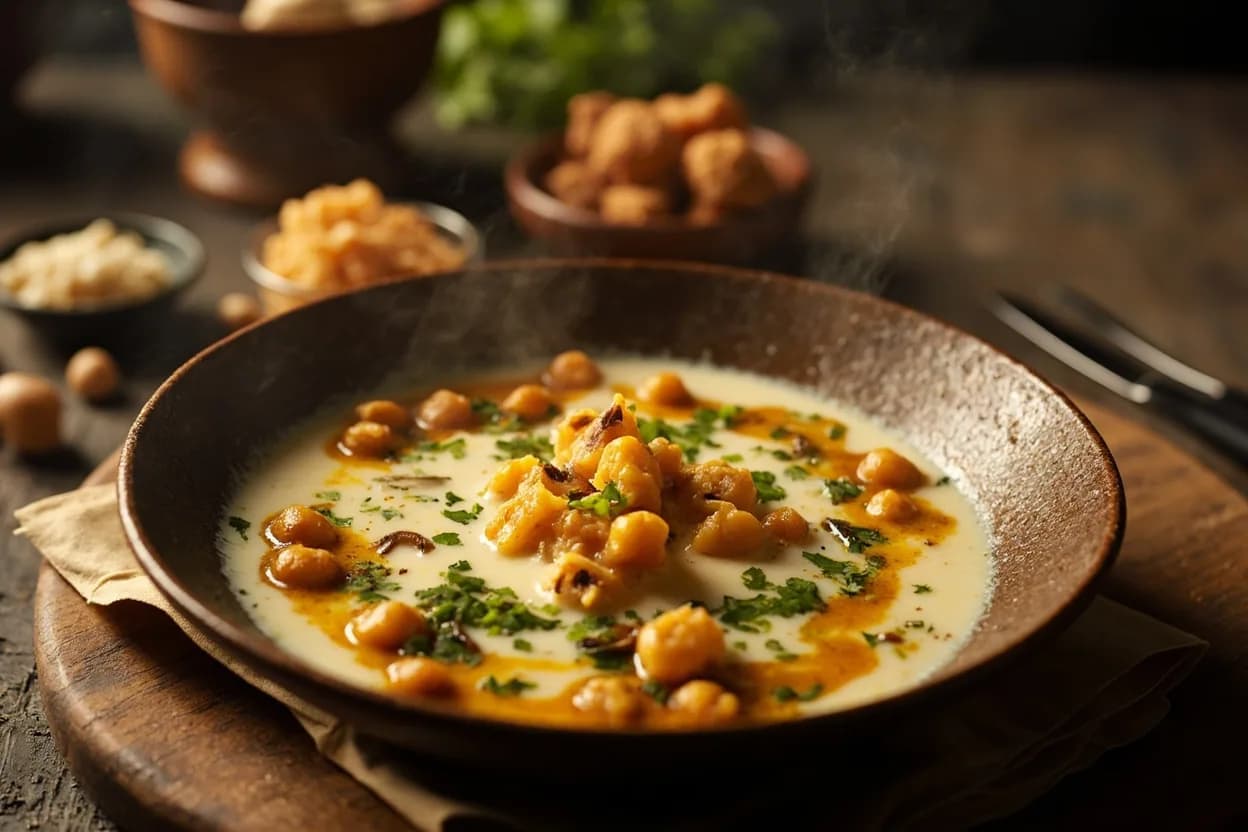
The dishes that define Bhojpuri, documented in the Canon.
References
- 1.Prawn to the Table: A Food History of India — Lizzie Collingham
- 2.The Complete Indian Cookbook — Mridula Baljekar
- 3.Feasts and Fasts: A History of Food in India — Colleen Taylor Sen
Confidence: high
Notes
Sattu as superfood
Sattu is roasted gram flour with a high protein content and low glycemic index. In the Bhojpuri belt it functions as breakfast, sports drink, stuffing, and dessert simultaneously — a nutritional cornerstone long before the concept was articulated by food science.
Diaspora persistence
Indentured laborers from the Bhojpuri belt who were transported to the Caribbean and Pacific islands in the 19th century preserved litti-chokha and sattu traditions with remarkable fidelity, adapting them to local flours and oils when the original ingredients were unavailable.