West Africa
Beninese
Also: Cuisine béninoise, Dahomean cuisine, Cuisine of Benin
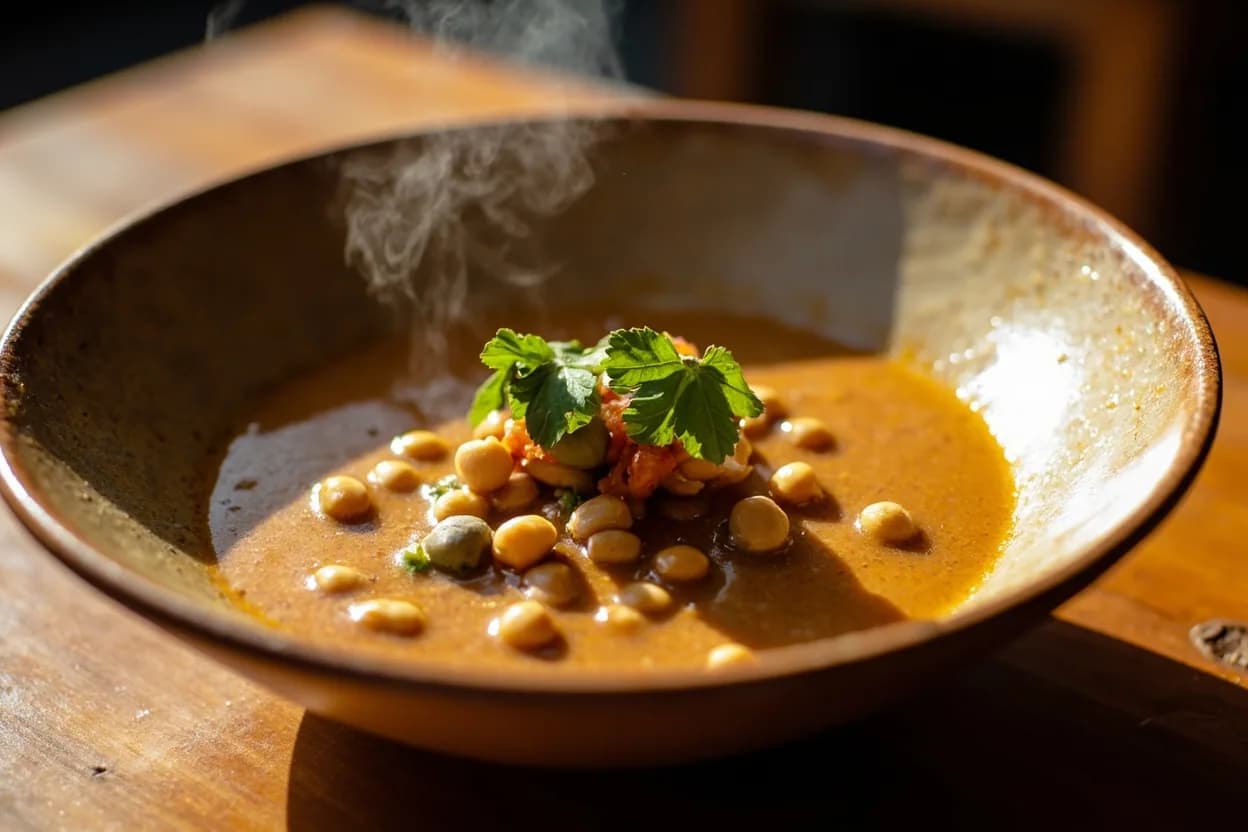
The layered cooking of the former Dahomey Kingdom — amiwo corn stew, ablo rice cakes, and sauce graine (palm nut soup) — where Fon, Yoruba, and Atlantic creole currents converge at the Bight of Benin.
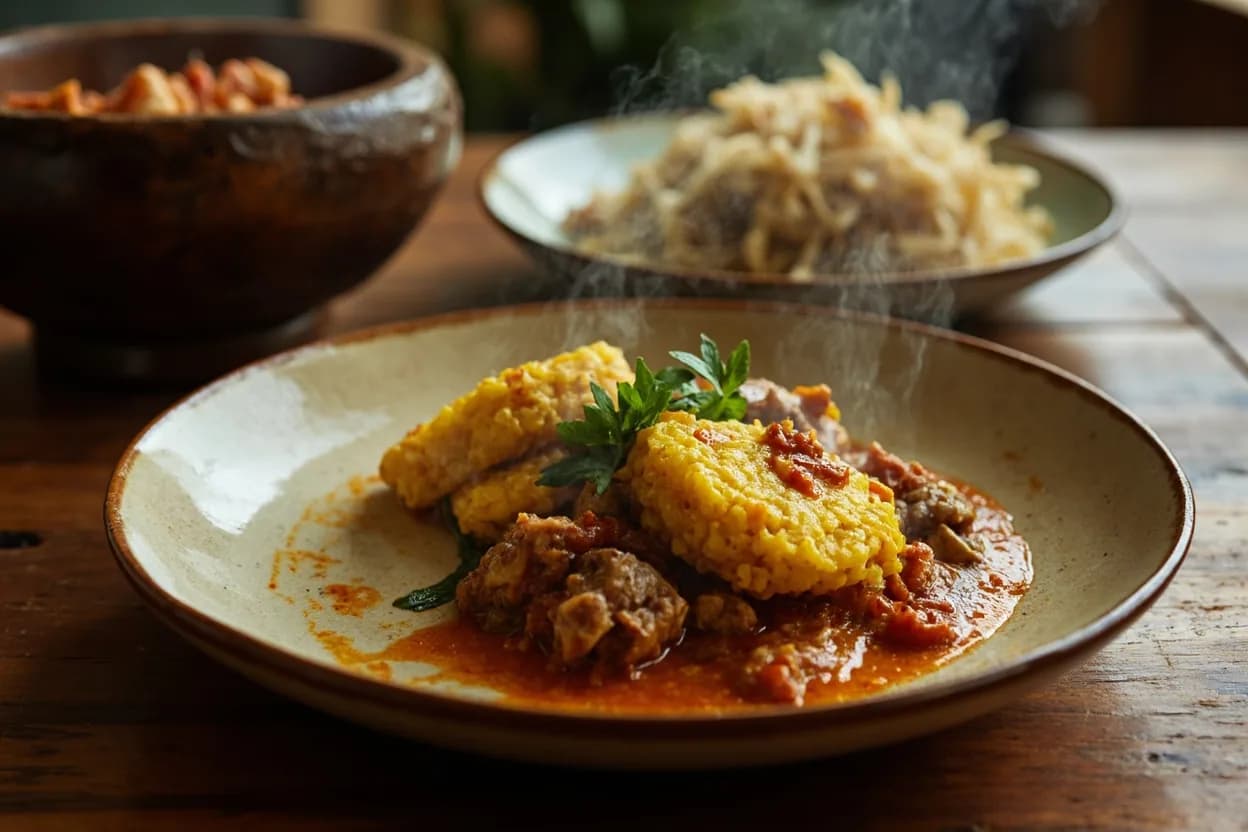
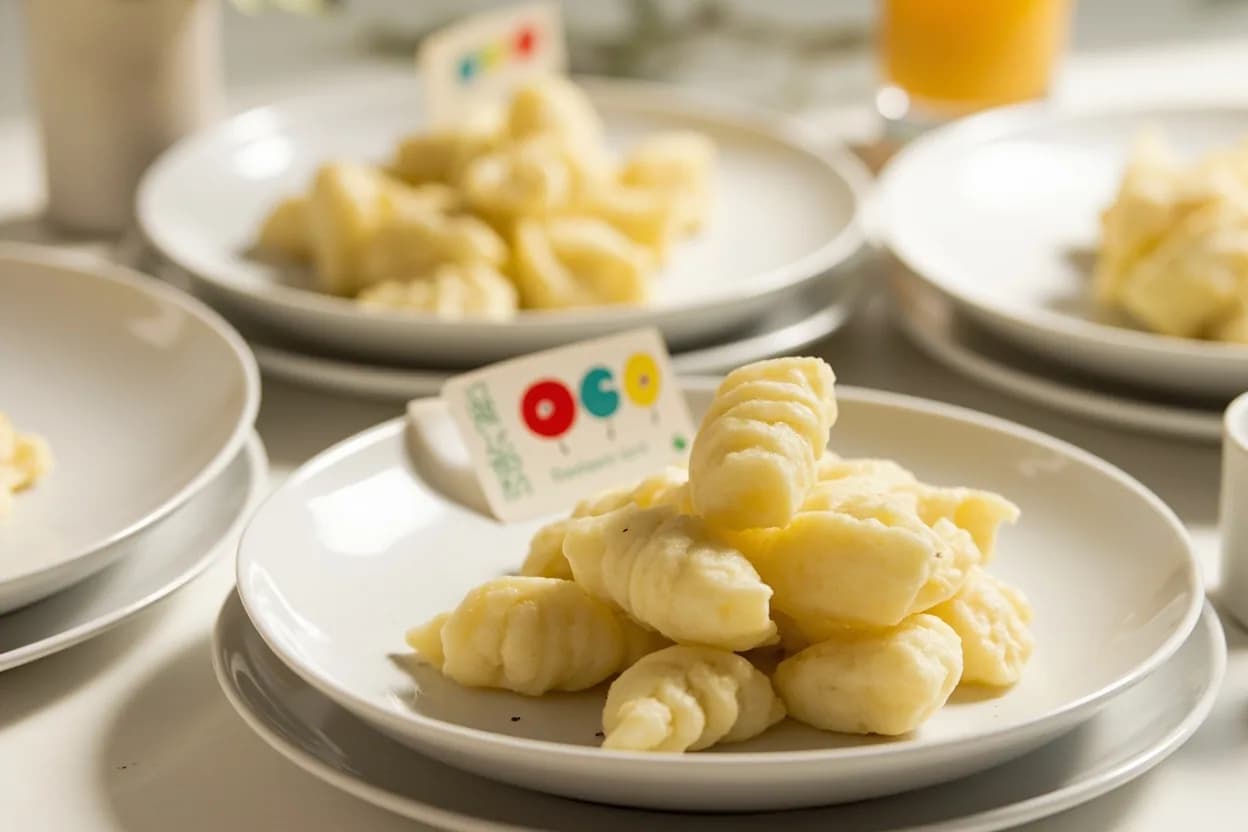
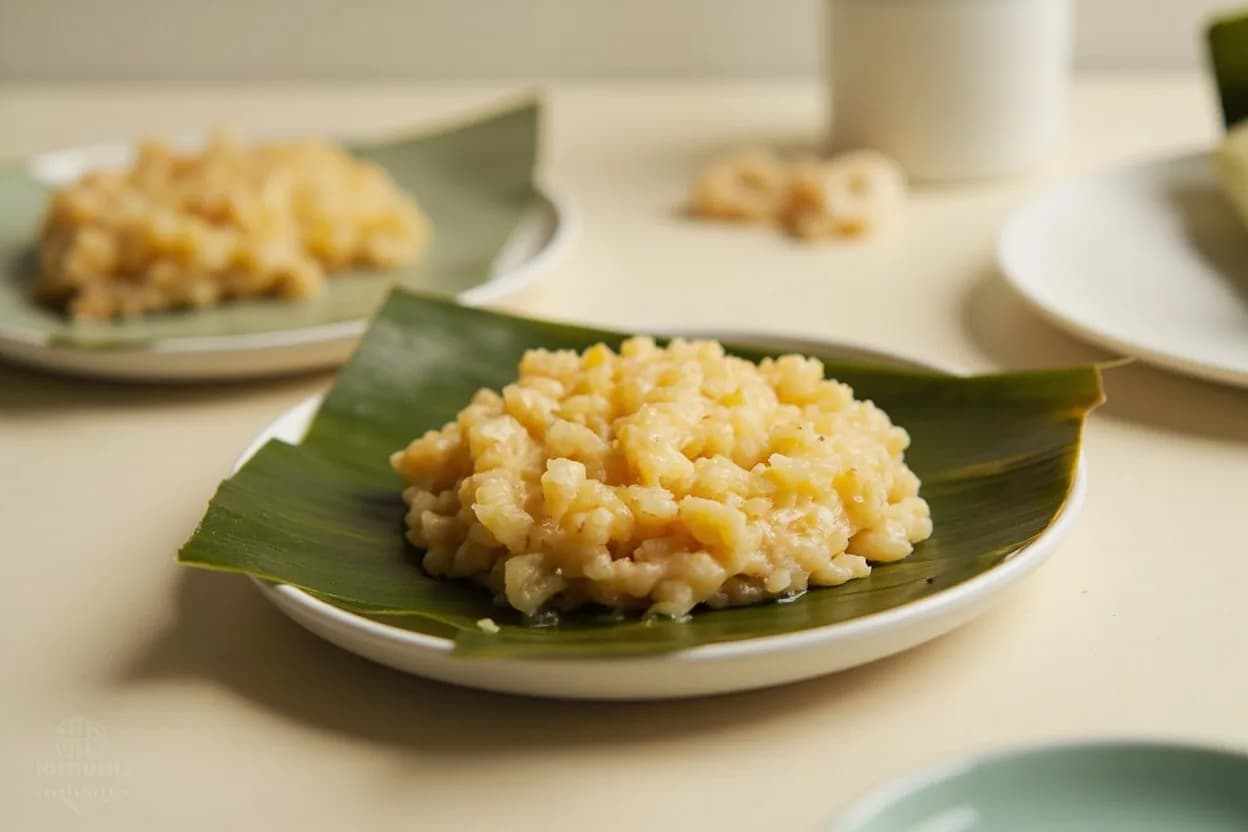
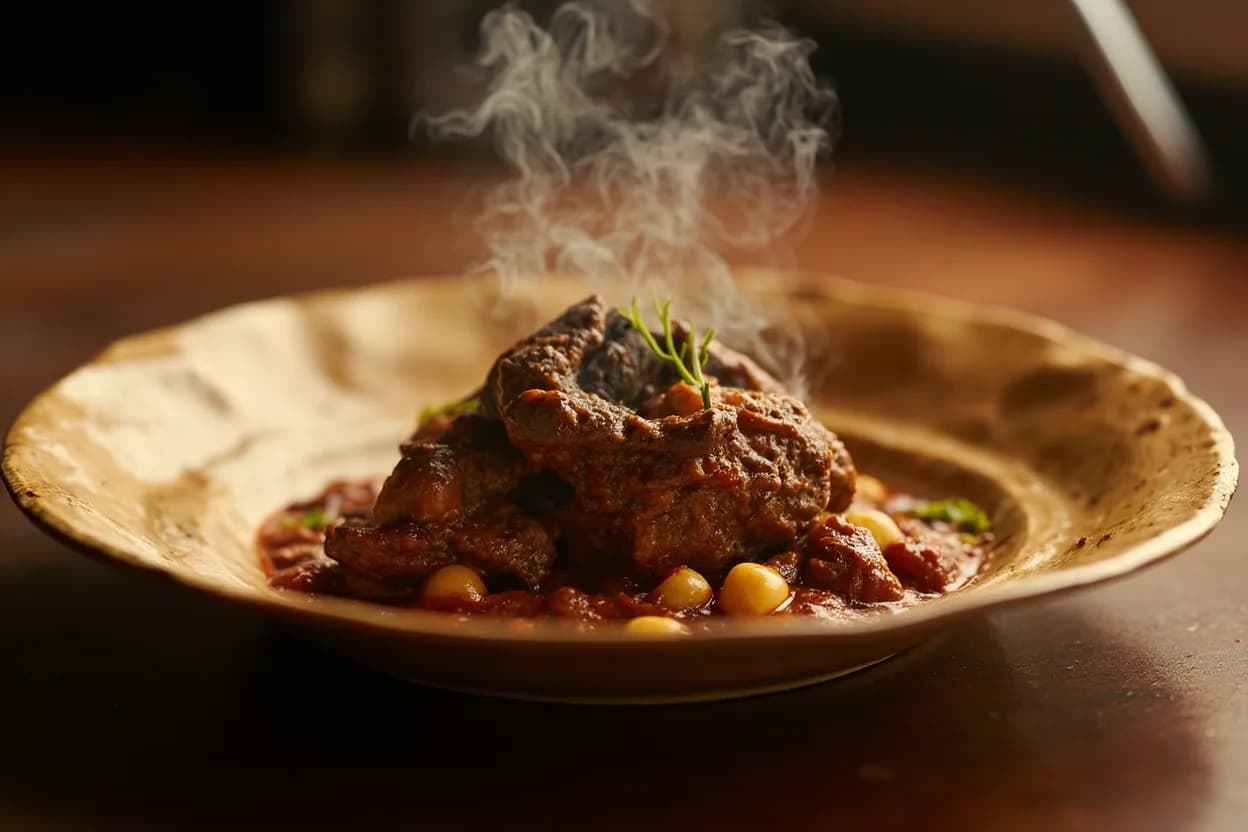
Beninese cuisine is the cooking tradition of the Republic of Benin (formerly Dahomey), a narrow coastal-to-savanna nation wedged between Nigeria and Togo. It is one of West Africa's most compositionally interesting cuisines: it inherits the sophisticated court cooking of the Fon kingdom of Dahomey, absorbs strong Yoruba influences from the southeast (particularly in Lagos-adjacent Badagry-Cotonou corridor), maintains Ewe connections in the west, and carries distinct Atlantic creole traces from the slave-trade-era port of Ouidah. Corn, palm oil, and palm nuts are the dietary pillars; amiwo (spiced cornmeal porridge), sauce graine (palm nut soup), and ablo (steamed rice cakes) are the defining preparations.
The flavour base
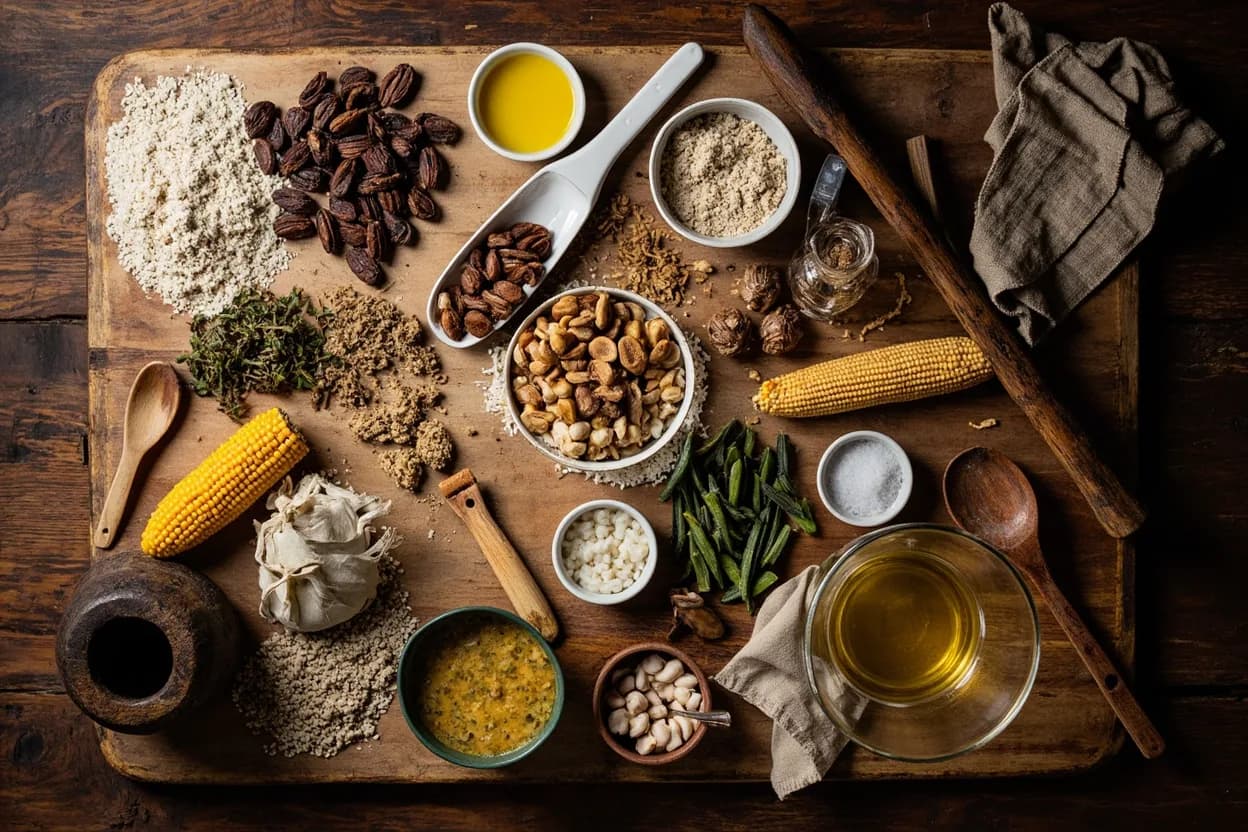
Palm fruit cream and palm oil dominate; fermented locust bean (soumbala/afitin) provides fermented umami; a tomato-onion-pepper sofrito-like reduction (called 'sauce de base') underpins most stews; dried and smoked fish amplify savory depth.
Pantry staples
Key ingredients
Signature techniques
Signature dishes
Beninese on the table

At the table
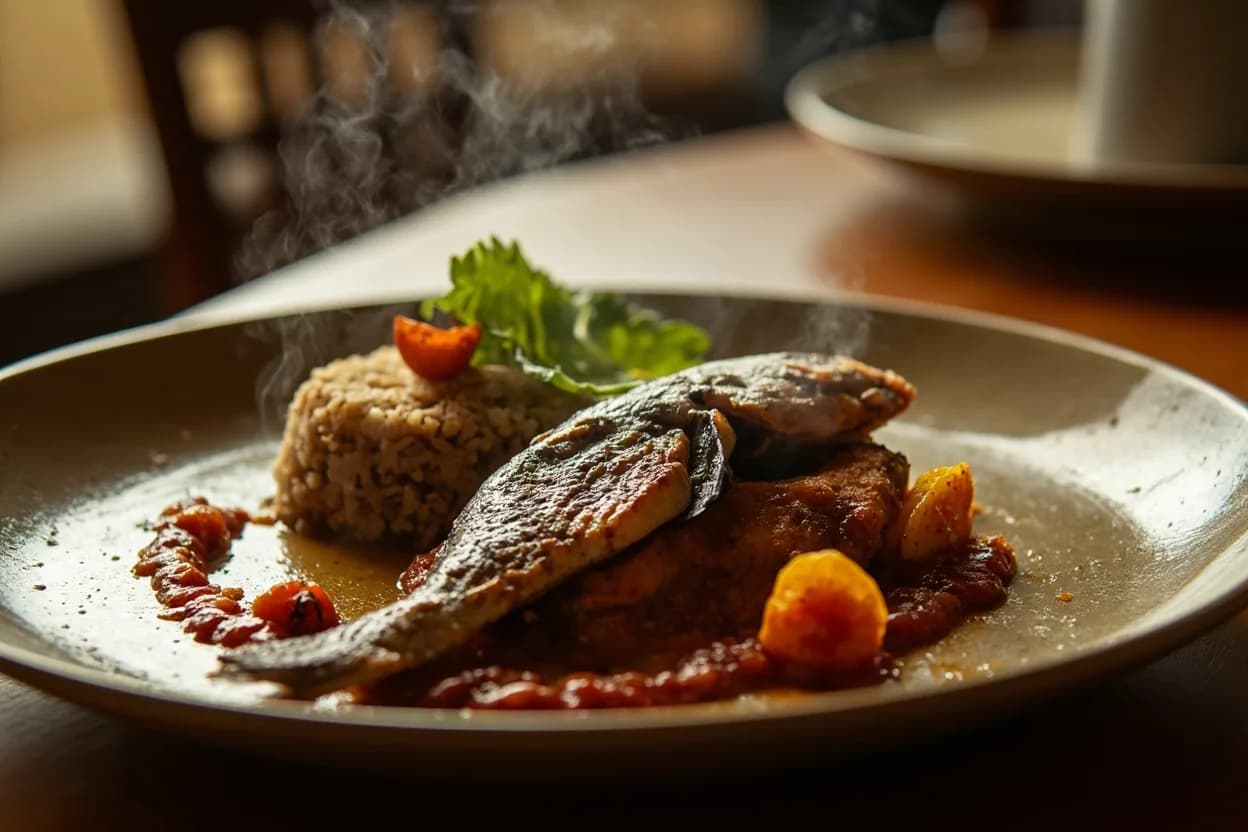
The main meal is midday. A starch — amiwo, akassa, ablo, or rice — anchors the plate, with a sauce or stew spooned over or alongside. Evening meals are lighter versions of the same. In coastal Cotonou, grilled fish with fried plantain and sauce piment is a common street-food evening meal. Beninese hospitality is table-forward: receiving guests without offering food is considered a serious breach. Sodabi (palm-wine distilled spirit) and locally brewed corn beer (tchoukoutou) accompany social meals in the north.
History & context
The Kingdom of Dahomey (c. 1600–1894), centred on Abomey, was one of the most powerful states in pre-colonial West Africa — famous for its disciplined army (including the all-female Agojie warriors), its slave-trade wealth, and an elaborate court culture. Dahomey's royal court maintained specific ceremonial dishes for ancestor veneration festivals; amiwo, still called 'Fon porridge,' has connections to these ritual contexts. The Atlantic slave trade through Ouidah (the 'Door of No Return' port) created culinary diasporas now traceable in Brazilian candomblé food offerings and Cuban Lucumí cooking. French colonial rule (1894–1960) introduced baguette, Dijon mustard, and café culture to Cotonou. Post-independence Benin's cuisine absorbed Togolese and Nigerian urban influences while preserving the Fon-Yoruba-Ewe culinary triangle in the south.
Regional variations
- Cotonou and the coastal south (Fon)
Corn-dominant; amiwo, akassa, and ablo most concentrated here; Atlantic fish (barracuda, sole, shrimp) supplement the diet; street-food culture most developed.
- Ouidah (Voodoo coast)
Atlantic creole traces; Brazilian repatriate community ('Agudas') brought back feijão de coco, acaçá (rice flour cake — directly cognate with ablo), and fritter traditions.
- Porto-Novo and the southeast (Yoruba-Goun)
Strong Yoruba influence; egusi stew, gbegiri, and amala (yam flour paste) appear alongside Fon preparations; Nigerian border trade makes Lagos ingredients available.
- Northern Benin (Bariba, Dendi)
Savanna cooking: sorghum and millet replace corn; guinea fowl and goat dominate; tchoukoutou millet beer; influence of Hausa and Dendi Islamic dietary customs (less pork, more lamb).
Related cuisines
- Togolese
Western border; shared ablo/akume tradition; fufu with palm soup crosses both countries; Ewe people span the border.
- Nigerian (Yoruba)
Porto-Novo corridor creates continuous Yoruba culinary territory; egusi, gbegiri, and amala preparations are essentially shared; the Goun sub-group of Benin is closely Yoruba-affiliated.
- Brazilian (Afro-Bahian)
Slave-trade diaspora created documented food links: acarajé traces to Beninese akara; acaçá to ablo; candomblé ritual foods preserve Fon and Yoruba preparations.
Shared fried plantain, groundnut soup, and jollof rice traditions through Ewe and Akan coastal networks.
Canonical recipes
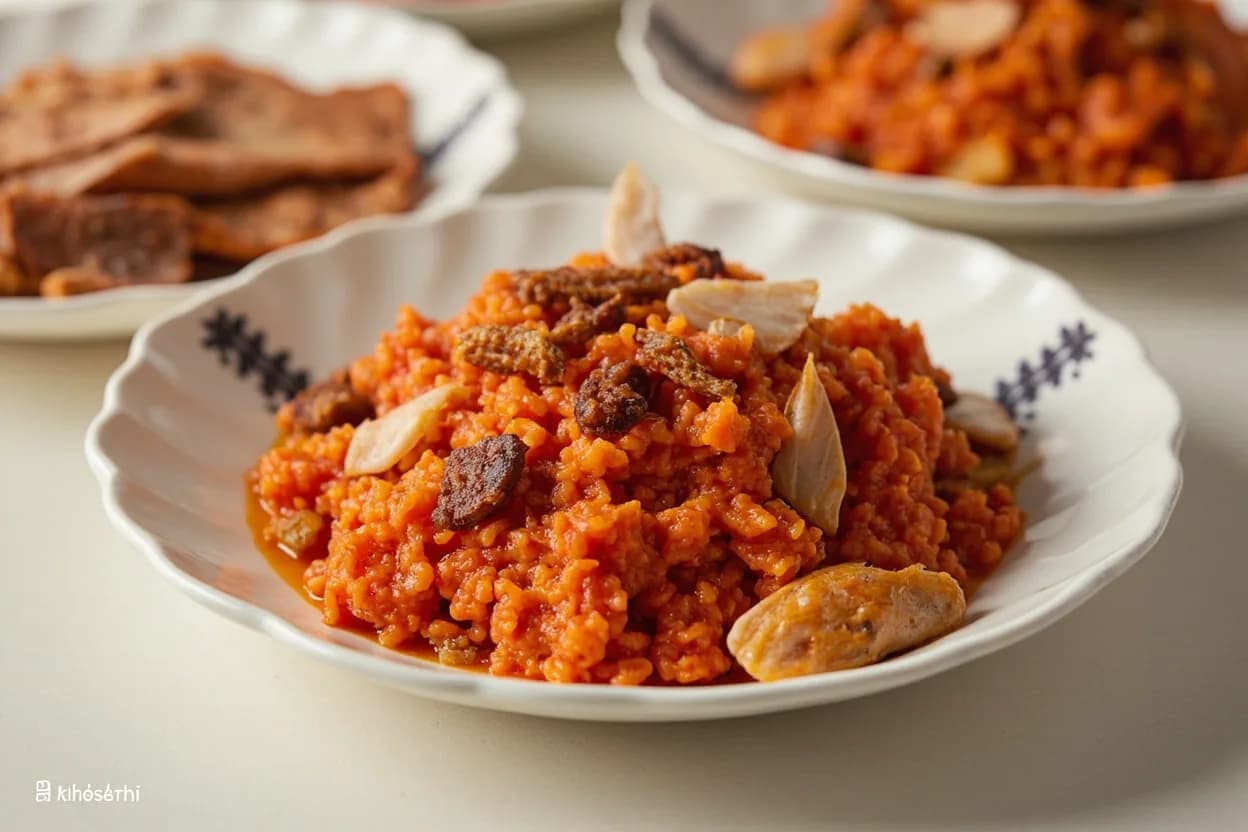
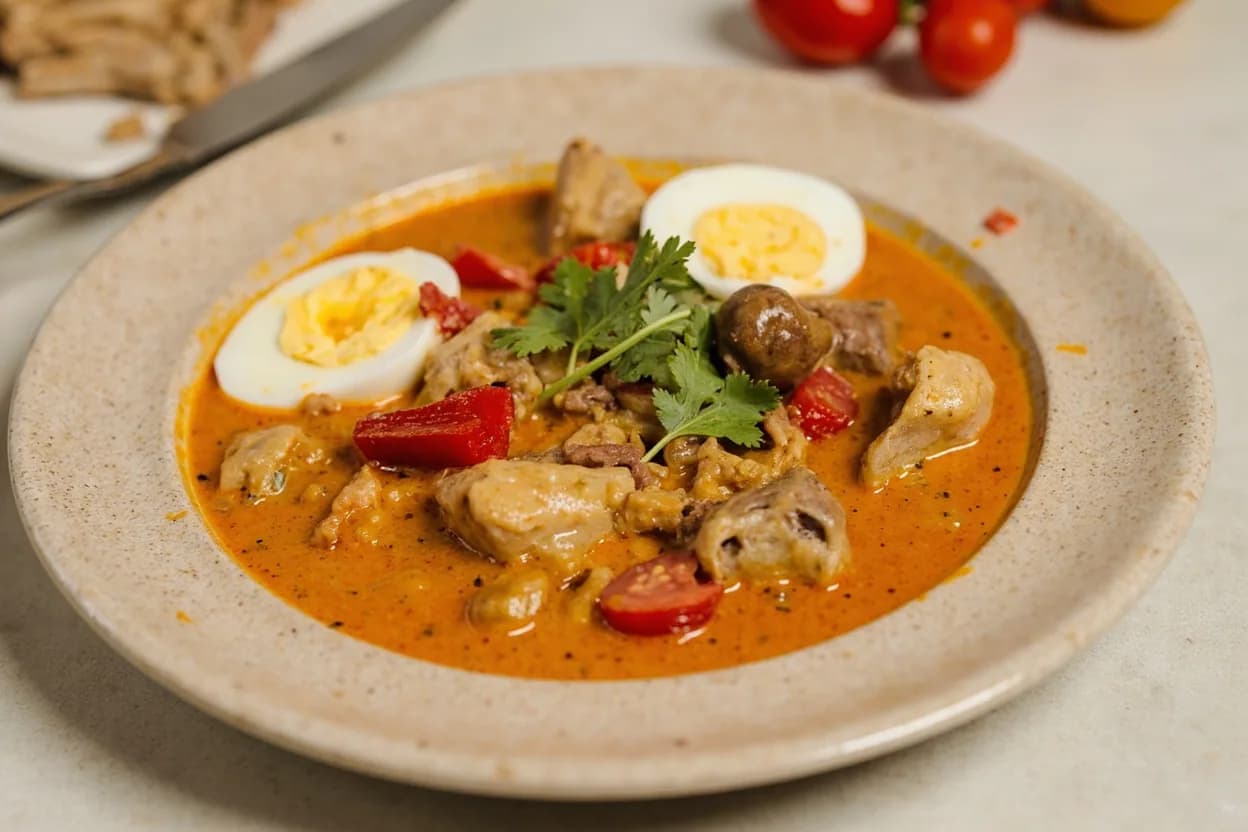
The dishes that define Beninese, documented in the Canon.
References
- 1.Yémy Coulibaly, 'Saveurs du Bénin: Recettes traditionnelles béninoises' (CNHU-HKM, Cotonou, 2008)
- 2.Jessica B. Harris, 'The Africa Cookbook: Tastes of a Continent' (Simon & Schuster, 1998)
- 3.Edna Bay, 'Wives of the Leopard: Gender, Politics and Culture in the Kingdom of Dahomey' (University of Virginia Press, 1998)
- 4.Pierre Verger, 'Flux et Reflux de la Traite des Nègres entre le Golfe de Bénin et Bahia de Tous les Saints' (Mouton, Paris, 1968)
Confidence: high
Notes
Amiwo — more than porridge
Amiwo is not simply cornmeal mush — it is a precision dish. The corn flour must be added gradually to a boiling, already-flavored liquid (tomatoes, peppers, onions, palm oil, soumbala, and smoked fish have all been cooked down before any flour enters the pot), and stirred continuously with a wooden paddle to prevent lumping. The final texture is denser than polenta but wetter than ugali — it holds a shape when scooped but yields immediately to pressure. Its flavour, already fully seasoned from the liquid, sets it apart from the neutral corn bases of neighbouring countries.
Ablo and the Atlantic rice-cake thread
Ablo — lightly fermented rice-and-corn batter steamed in small ceramic cups — belongs to a broader West African Atlantic rice-cake family that includes Sierra Leonean ogi, Togolese akume variations, and the Brazilian acaçá of Candomblé ritual. The Aguda community (returned Brazilian-Beninese descendants) in Ouidah still prepare acaçá for Candomblé ceremonies using techniques that travelled across the Atlantic in the 18th century, making Beninese rice-cake culture one of the most thoroughly documented cases of trans-Atlantic culinary continuity.