Southwest China
Guizhou (Qian Cuisine)
Also: Qian cuisine, 黔菜, Guizhou cuisine, Guizhou cai
China's most authentically sour cuisine — where fermented fish, kaolin-soured broth, and fire-hot chili collide in one of Asia's most underrated food traditions.
Guizhou cuisine is the food of one of China's poorest but most ethnically and culinarily diverse provinces. While Sichuan cuisine is famous internationally for its numbing heat and Hunan for its pure fire, Guizhou is defined by sourness first, then heat — a combination so distinctive it is summarized locally as 'bu suan bu la bu shi Guizhou cai' ('without sour and spicy, it's not Guizhou food'). This sourness is not from vinegar but from fermentation: suantang (sour broth fermented in ceramic pots), suancai (fermented vegetables), and suan yu (fermented fish) are central to the larder. The province's mountainous, landlocked terrain encouraged preservation over fresh consumption. Guizhou is home to dozens of ethnic minorities — Miao, Dong, Buyi, Yi, Gelao, Shui — each with distinct food traditions that collectively form what outsiders call 'Qian cuisine.'
The flavour base
Suantang (a naturally fermented broth of tomatoes, glutinous rice water, and wild herbs, aged in clay pots) is Guizhou's most distinctive base — it gives dishes a clean, lactic sourness unlike any vinegar. Dried and fermented chilies (pao jiao, milled into doubanjiang-like pastes) provide sustained heat. Suancai vegetables, fermented black beans, and lard round out the pantry.
Pantry staples
Key ingredients
Signature techniques
Signature dishes
Guizhou (Qian Cuisine) on the table
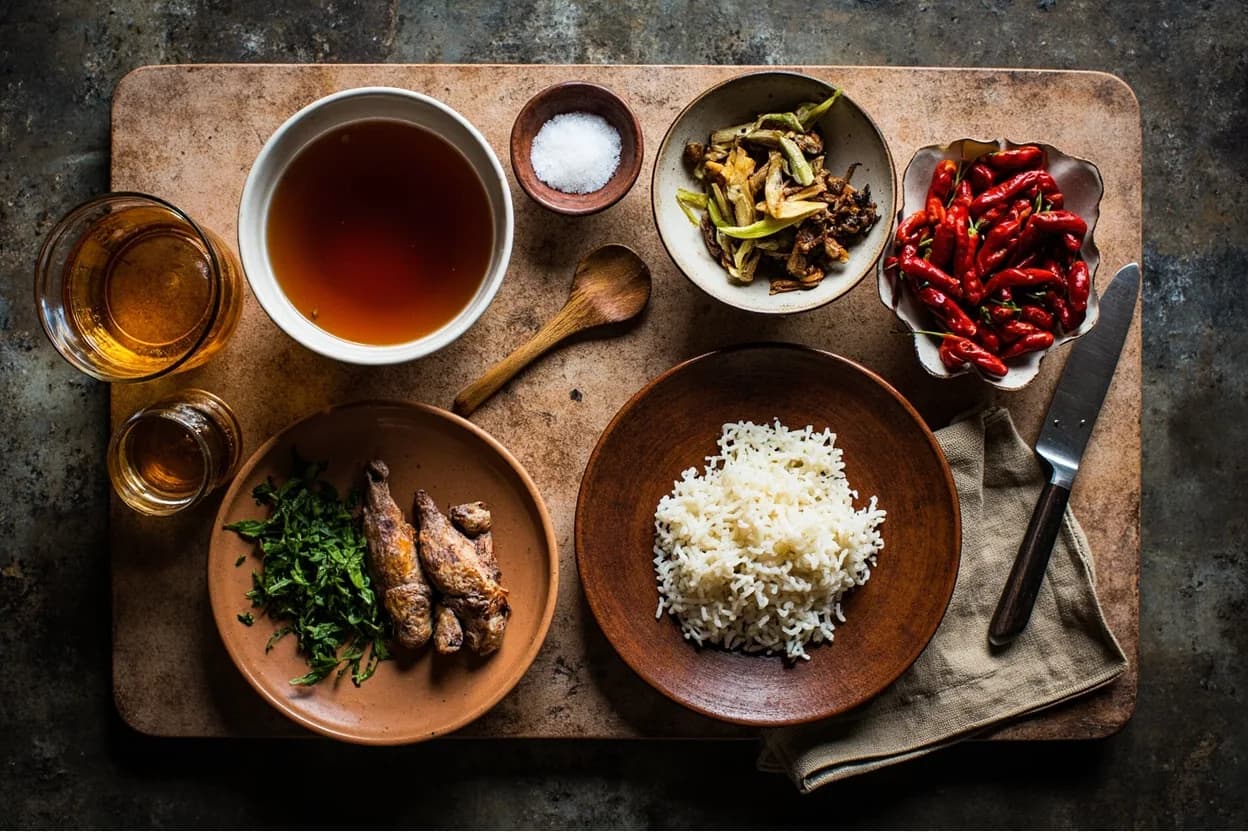
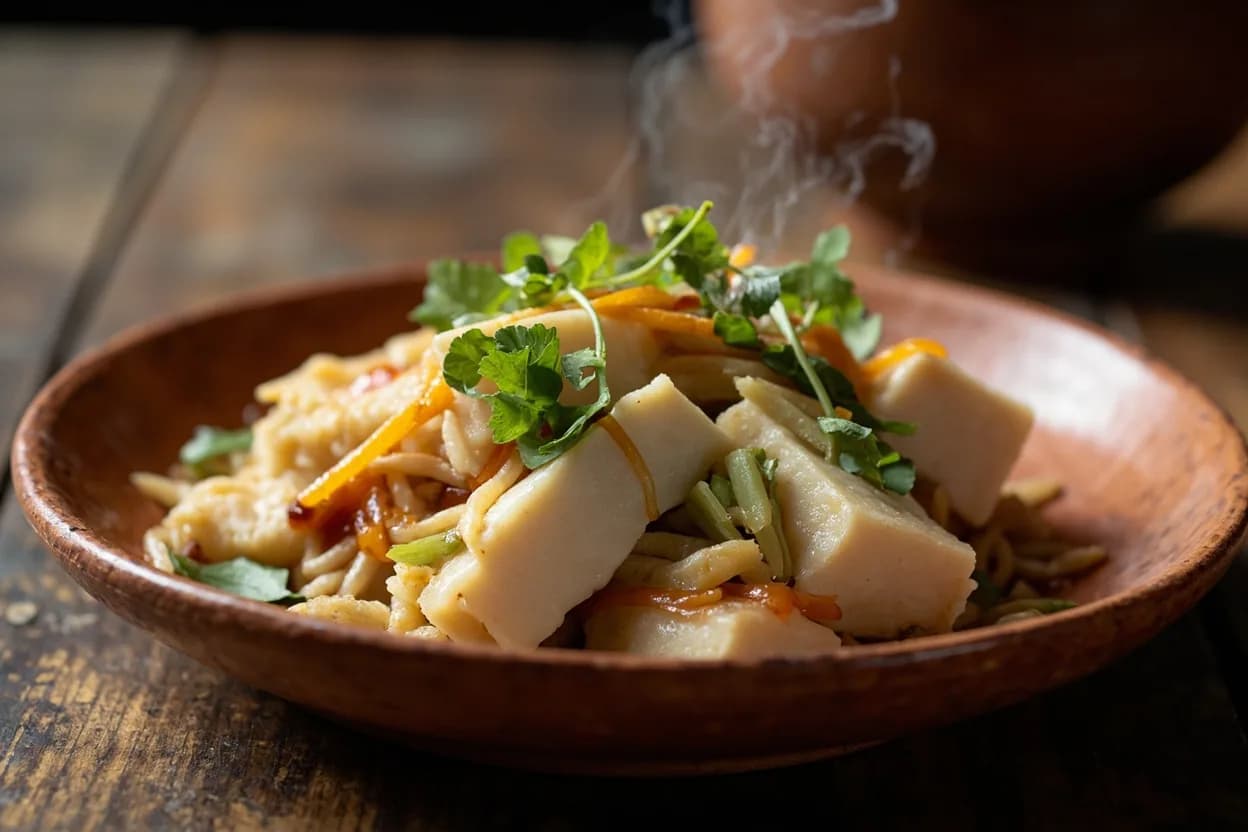
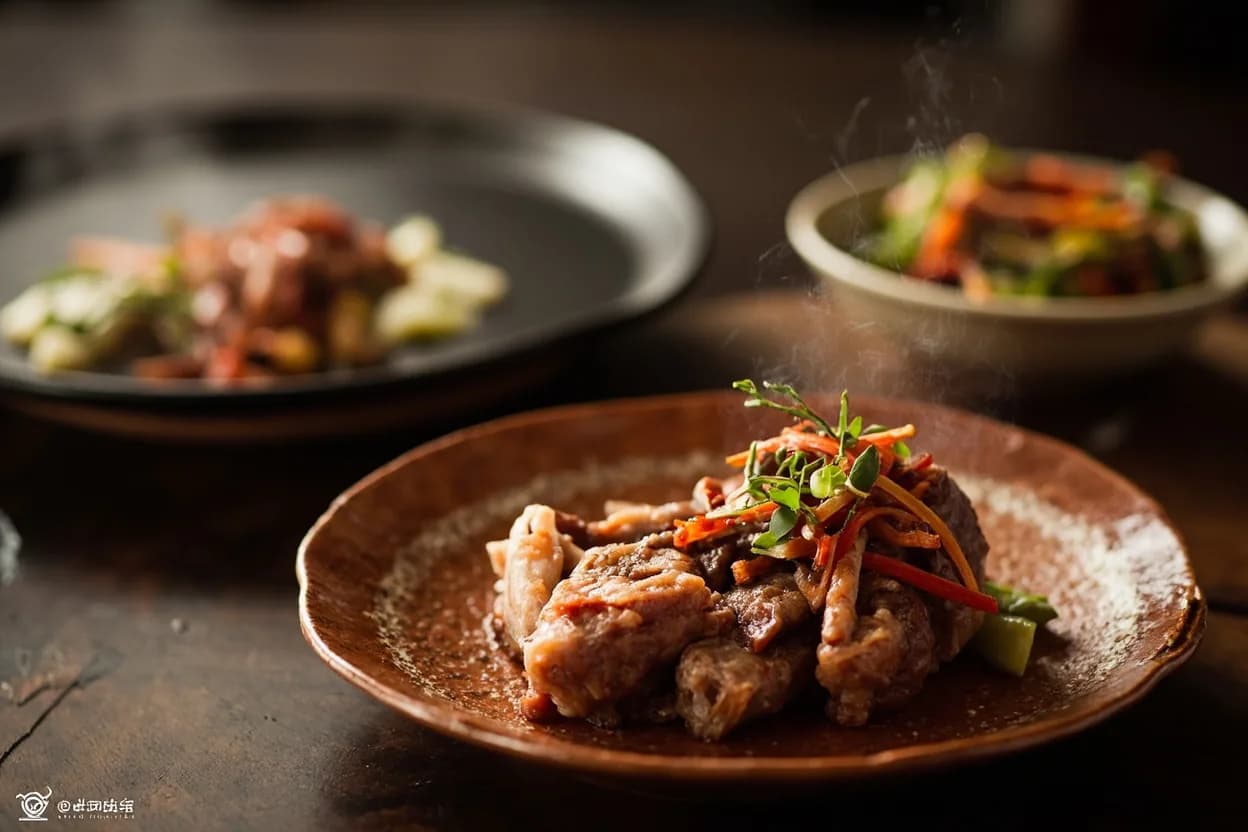
At the table
Guizhou meals are informal and communal. A shared central pot — suantang fish, hot pot, or stew — is surrounded by stir-fried greens, pickled vegetables, and fermented condiments. Glutinous rice replaces plain rice at many ethnic minority tables, sometimes eaten from shared bamboo steamers. Kaili rice wine and baijiu are drunk freely. Street food is vibrant: rice noodles in sour broth, skewers grilled over charcoal, and tofu dishes are ubiquitous throughout Guiyang, the capital.
History & context
Guizhou has been inhabited by non-Han ethnic groups for over three thousand years before Han settlement expanded southward during the Han Dynasty. The Miao (Hmong), Dong, Buyi, and Yi peoples each developed distinct food cultures rooted in the mountain terrain — fermentation was essential for preservation in the humid, landlocked highlands where food rotted quickly and supply routes were treacherous. The Ming Dynasty's colonization and military settlement introduced Han cooking techniques that merged with indigenous practices. Guizhou was long overlooked by Chinese culinary writing, which centered on the eight 'great cuisines' — Sichuan, Cantonese, Hunan, etc. — leaving Guizhou food underrepresented until the late 20th century, when its suantang fish and Miao traditions began attracting national attention. The province remains China's most ethnically rich culinary region, with 17 recognized minorities each contributing distinct recipes.
Regional variations
- Kaili / Qiandongnan (Miao and Dong heartland)
Epicenter of suantang cooking; suan yu (fermented fish) is most developed here; Kaili is considered the culinary capital of Guizhou's minority food traditions.
- Guiyang (provincial capital)
More Han-influenced; si wa wa (wrapped fresh vegetables in thin rice crepes) and spicy skewer street food are city specialties.
- Zunyi (northern Guizhou)
Strong Sichuan influence; spicy flavor profile without as much sour; famous for Zunyi red chilies and lamb noodles.
- Qiannan (Buyi territory)
Greater use of banana leaves for steaming; Buyi-style rice wine; sticky rice cakes eaten as staple.
Related cuisines
- Sichuan
Neighboring and often compared; Sichuan prioritizes numbing (mala) spice while Guizhou foregrounds sour fermentation; some technique overlap.
- Hunan
Shared chili intensity; Hunan is less fermentation-focused and more stir-fry-centric.
Adjacent southwest minority food culture; shared wild herb and mushroom traditions, fermented ingredients, and minority ethnic diversity.
- Miao / Hmong cuisines of Southeast Asia
Guizhou's Miao cuisine is ancestrally connected to the Hmong food traditions of Laos, Thailand, and Vietnam; fermented fish and glutinous rice link them.
References
- 1.Land of Fish and Rice — Fuchsia Dunlop (2016, Norton)
- 2.Beyond the Great Wall — Jeffrey Alford & Naomi Duguid (2008, Artisan)
- 3.Chinese Food — E.N. Anderson (1988, Yale University Press)
- 4.The Food of China — E.N. Anderson & Marja Anderson (1977, Yale)
Confidence: high
Notes
Suantang: Guizhou's Fermented Broth
Suantang is made by fermenting a mixture of tomatoes, wild herbs, and sometimes glutinous rice wash in sealed ceramic pots for several days. The result is a light, clean-sour broth with a lactic tang quite different from vinegar acidity. It forms the base of Guizhou's most iconic dish — suantangyu — and distinguishes Guizhou's sourness from the vinegar-sour of Shanxi or the citrus-sour of Yunnan.
Ethnic Minority Depth
No Chinese province has a more complex ethnic minority food culture. The Miao alone have dozens of regional sub-groups, each with distinct recipes: some Miao communities ferment fish for two to three years; Dong communities are known for their oil tea (youcha) breakfast; Buyi people practice a distinctive wood-ash nixtamalization on corn. This depth is largely undocumented in English-language culinary literature.